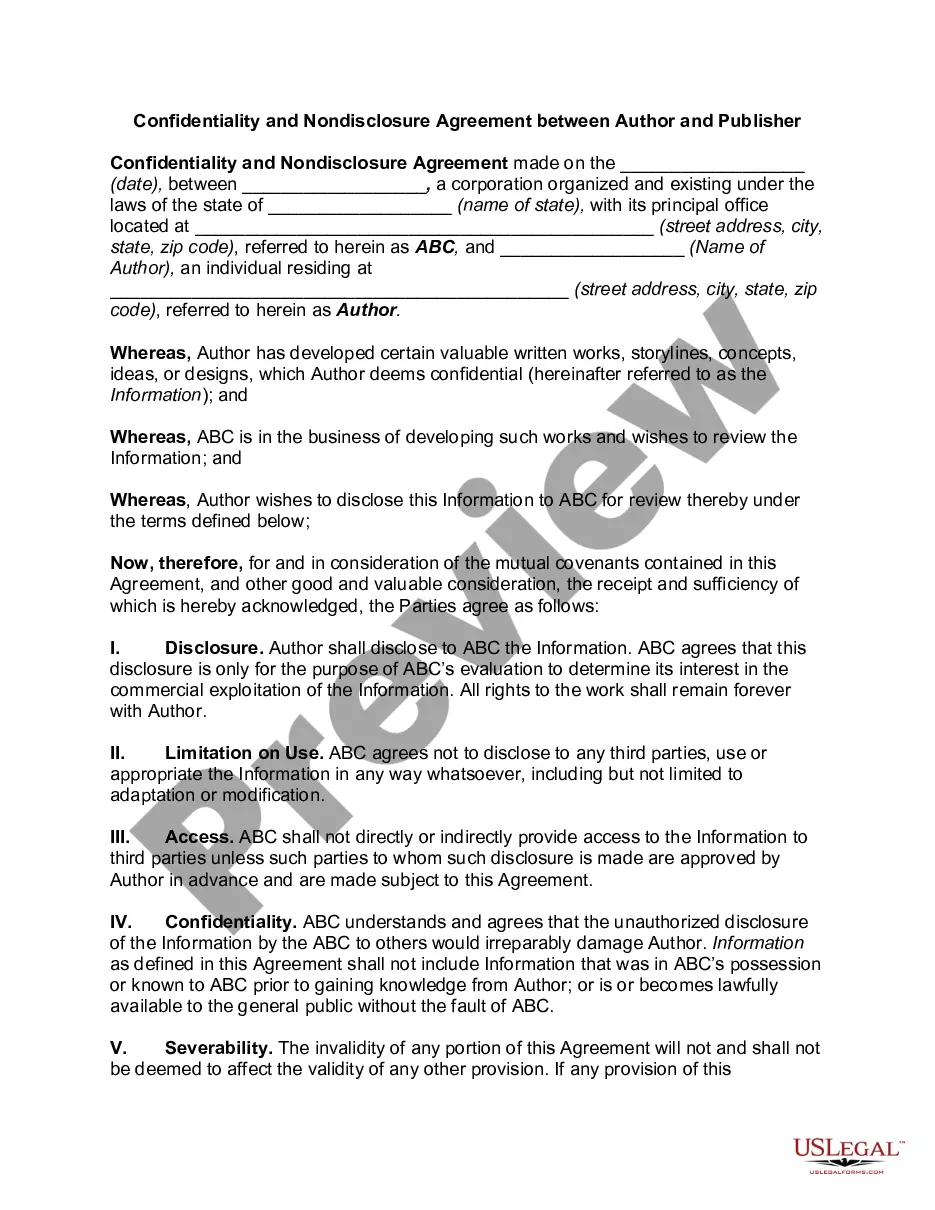
Non-Disclosure Agreement for Writers
What is this form?
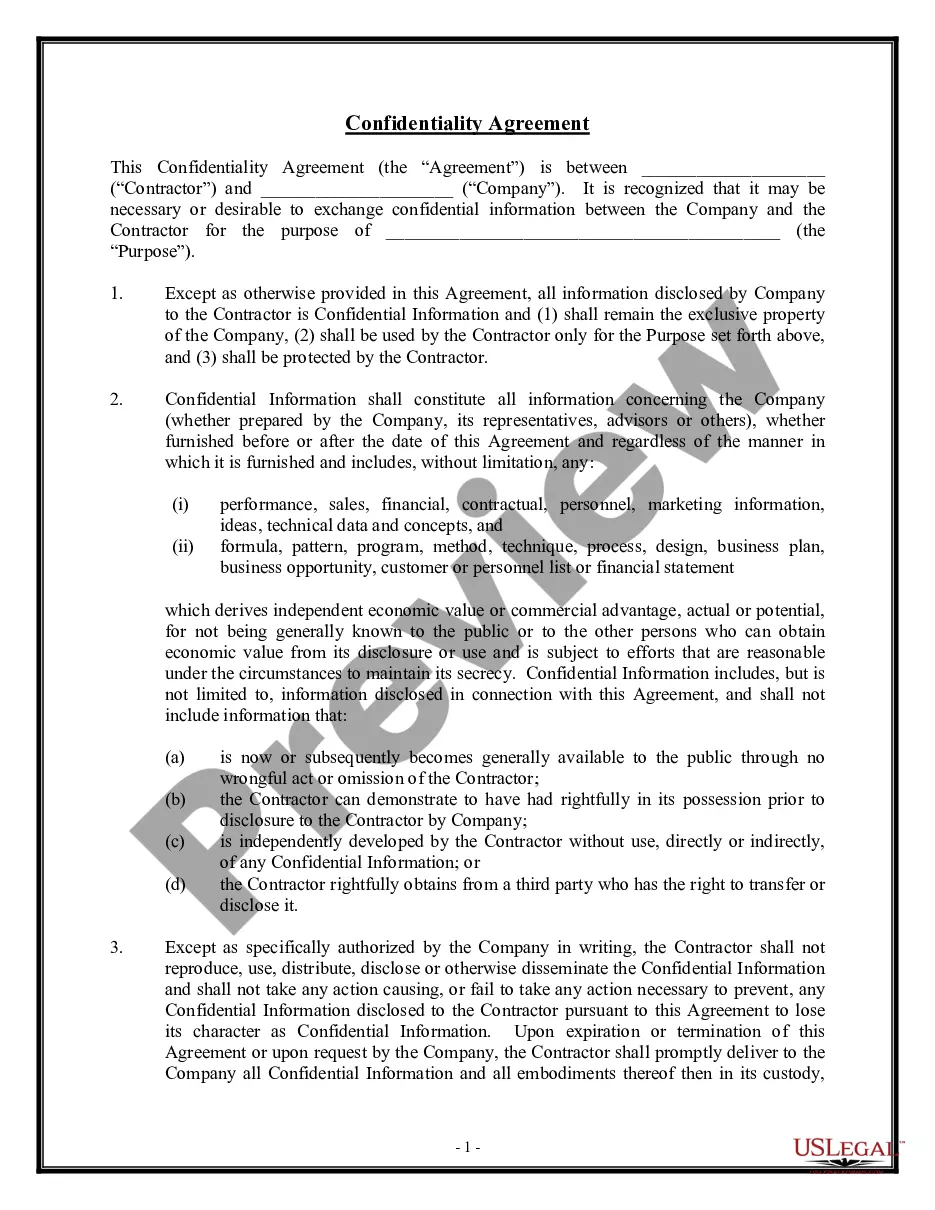
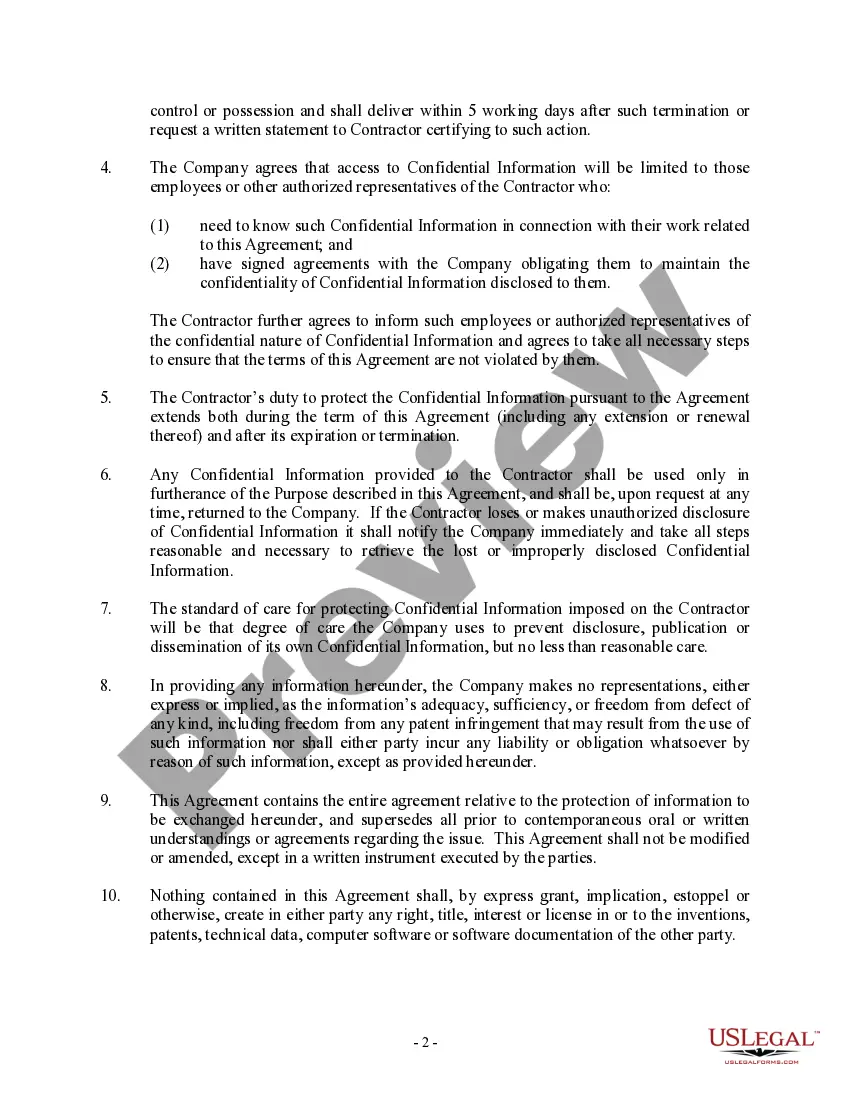
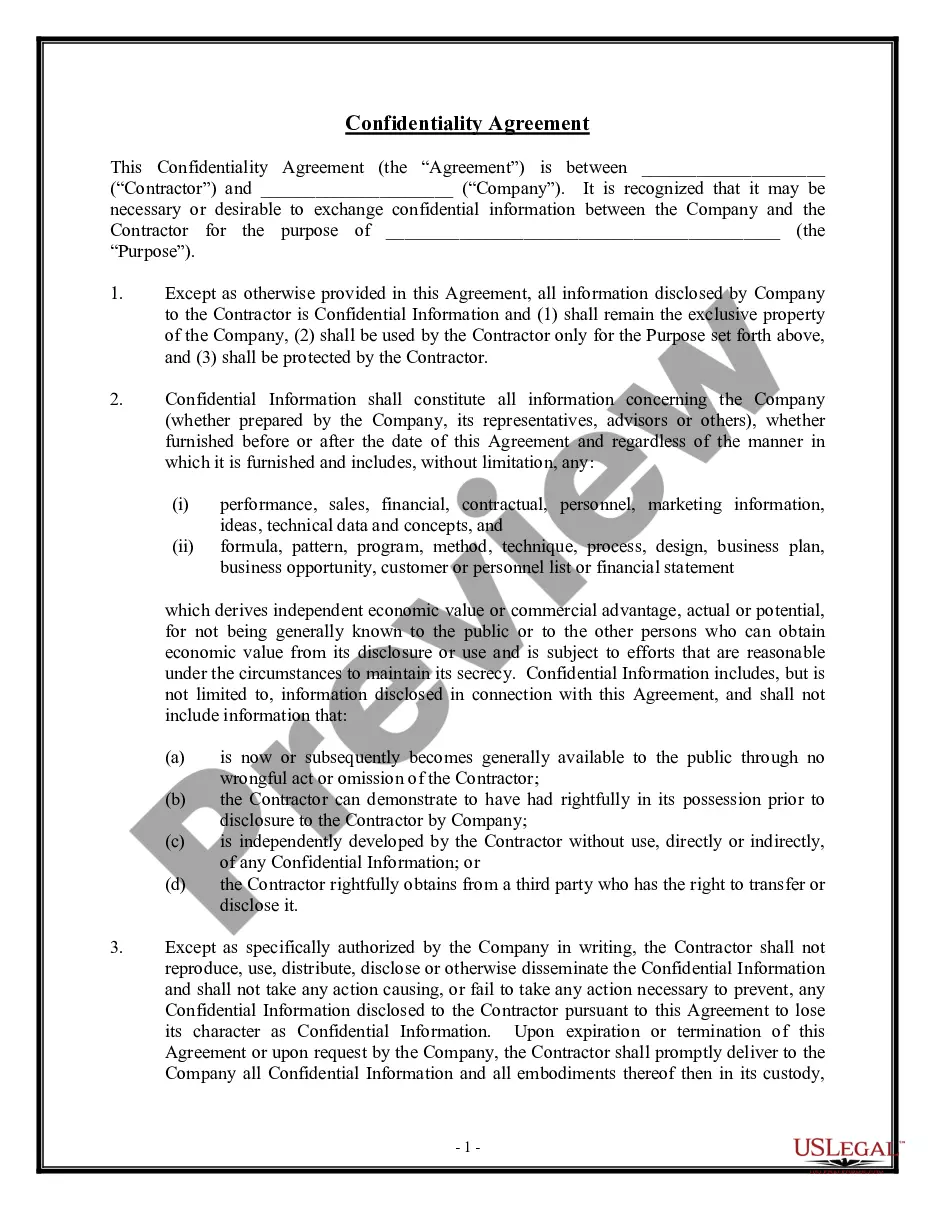
The Non-Disclosure Agreement for Writers is a legal document that helps protect the confidential information shared between a contractor, such as a writer, and a company. This agreement ensures that sensitive information remains confidential and can only be used for the specific purpose outlined in the document. Unlike other contracts, the focus here is on safeguarding intellectual property and proprietary information during the collaboration process, making it essential for writers and companies engaging in creative projects.
Main sections of this form
- Identification of the parties involved (Contractor and Company).
- A clear definition of what constitutes Confidential Information.
- Provisions on how the Confidential Information should be protected and used.
- Conditions under which the information may or may not be disclosed.
- Procedures for returning Confidential Information upon termination of the agreement.
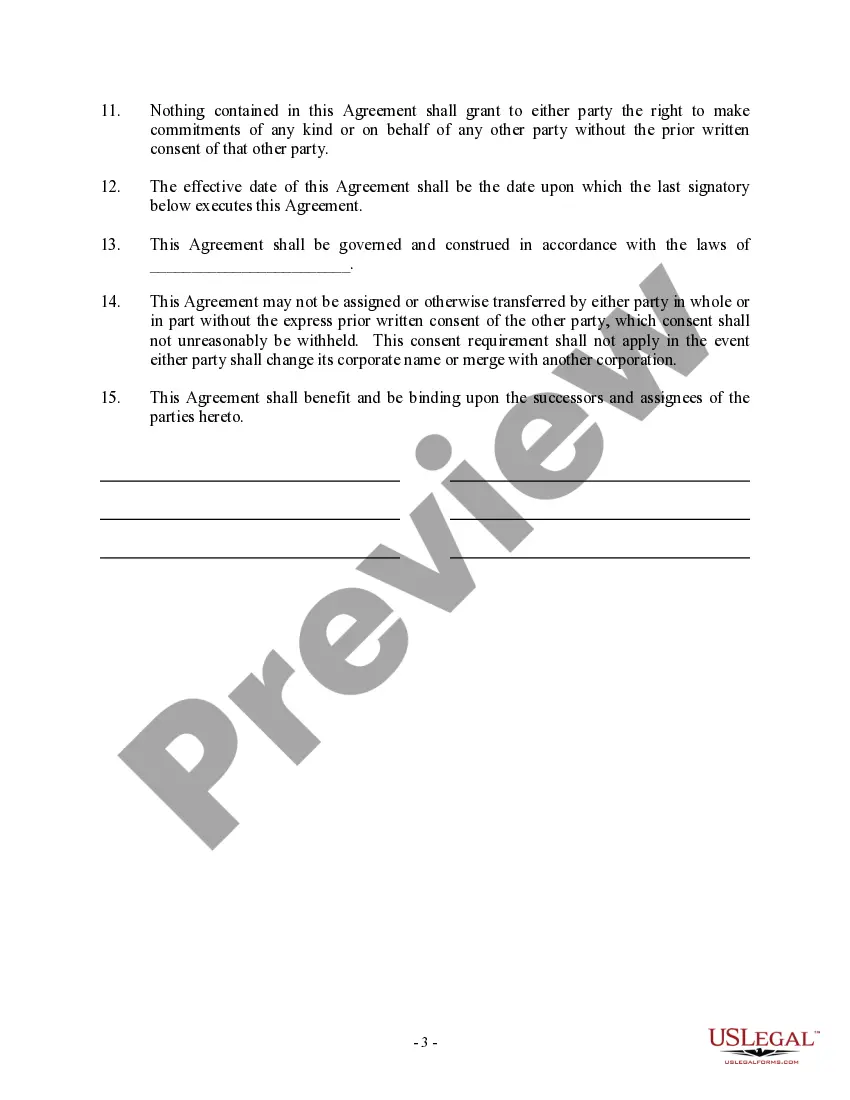
- Legal jurisdiction governing the agreement.
Situations where this form applies
This Non-Disclosure Agreement should be used whenever a writer is engaged by a company to create content that involves the sharing of sensitive information. Scenarios where this form is particularly useful include developing unique written work, discussing unpublished scripts, or sharing proprietary ideas for articles or books. Essentially, it is vital for any situation where confidential information is being shared in a professional context.
Who should use this form
- Writers seeking to protect their creative ideas and works.
- Companies hiring writers for specific projects involving confidential material.
- Freelancers in the writing industry looking to establish clear confidentiality terms with clients.
- Any parties involved in exchanging sensitive information in a collaborative effort.
How to complete this form
- Identify and fill in the names of the Contractor and the Company at the beginning of the agreement.
- Clearly state the purpose for which the Confidential Information will be shared.
- Define any specific information that will be considered Confidential Information.
- Ensure both parties sign the agreement to indicate mutual consent and understanding.
- Make provisions for the return of information upon the termination of the agreement.
Does this document require notarization?
This form does not typically require notarization unless specified by local law. However, it is important to check jurisdiction-specific requirements to ensure legal enforceability.
Get your form ready online
Our built-in tools help you complete, sign, share, and store your documents in one place.
Make edits, fill in missing information, and update formatting in US Legal Forms—just like you would in MS Word.
Download a copy, print it, send it by email, or mail it via USPS—whatever works best for your next step.
Sign and collect signatures with our SignNow integration. Send to multiple recipients, set reminders, and more. Go Premium to unlock E-Sign.
If this form requires notarization, complete it online through a secure video call—no need to meet a notary in person or wait for an appointment.
We protect your documents and personal data by following strict security and privacy standards.

Make edits, fill in missing information, and update formatting in US Legal Forms—just like you would in MS Word.

Download a copy, print it, send it by email, or mail it via USPS—whatever works best for your next step.

Sign and collect signatures with our SignNow integration. Send to multiple recipients, set reminders, and more. Go Premium to unlock E-Sign.

If this form requires notarization, complete it online through a secure video call—no need to meet a notary in person or wait for an appointment.

We protect your documents and personal data by following strict security and privacy standards.
Typical mistakes to avoid
- Failing to define what constitutes Confidential Information clearly.
- Not specifying the purpose for sharing the information.
- Leaving out signatures or failing to date the agreement.
- Not including a provision for how long confidentiality obligations will last.
Why complete this form online
- Convenient access to legal forms that can be downloaded and filled out at any time.
- Editable templates that allow customization to meet specific needs.
- Reliability of legally vetted language drafted by licensed attorneys.
Looking for another form?


Form popularity
FAQ
In summary, there's no reason why an NDA cannot be terminated if things are no longer working out between the parties. However, this doesn't mean that confidentiality obligations are automatically cancelled upon termination.
NDAs are legally enforceable contracts, but they're now coming under increased scrutiny from lawmakers, attorneys and legal experts.Companies often use them as part of an employment contract or settlement agreement to protect sensitive information like trade secrets.
Identification of the parties. Definition of what is deemed to be confidential. The scope of the confidentiality obligation by the receiving party. The exclusions from confidential treatment. The term of the agreement.
If you have any questions about what's contained in an NDA, it's OK to consult with a lawyer for advice. It's important to be aware how legal agreements work before signing or creating a document, as being well-informed can help you make the best legal decisions now and down the road.
An NDA is a legally binding contract that requires parties to keep confidentiality for a defined period of time. It's up to the parties to decide what would be considered confidential and what is not.
No, it is not necessary for the nondisclosure agreement to be "notarized", nor is it necessary under California law for the signatures on such an agreement to be "witnessed".
For an NDA to be enforceable in California, it must not be too generic or too open-ended (no time limit established), or the courts will likely throw it out.An enforceable NDA in California must include: A statement of the purpose of the NDA and the parties involved.
The cold hard truth is that most NDAs do not hold up in court. Non-Disclosure Agreements are most effective in establishing a paper trail of confidential information as it relates to partnerships, and discouraging partners from misappropriating proprietary information.