Confidentiality and Nondisclosure Agreement between Author and Publisher
What is this form?
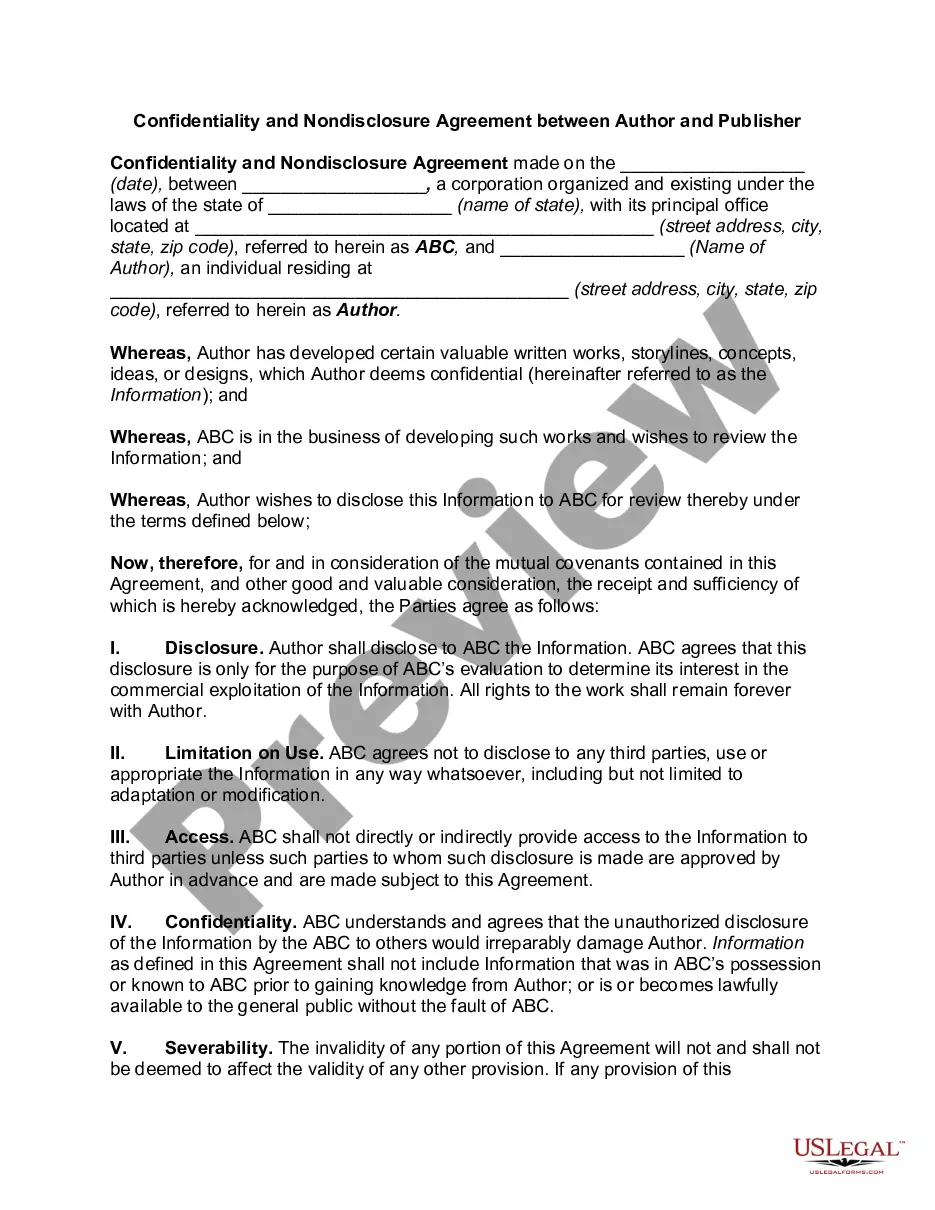
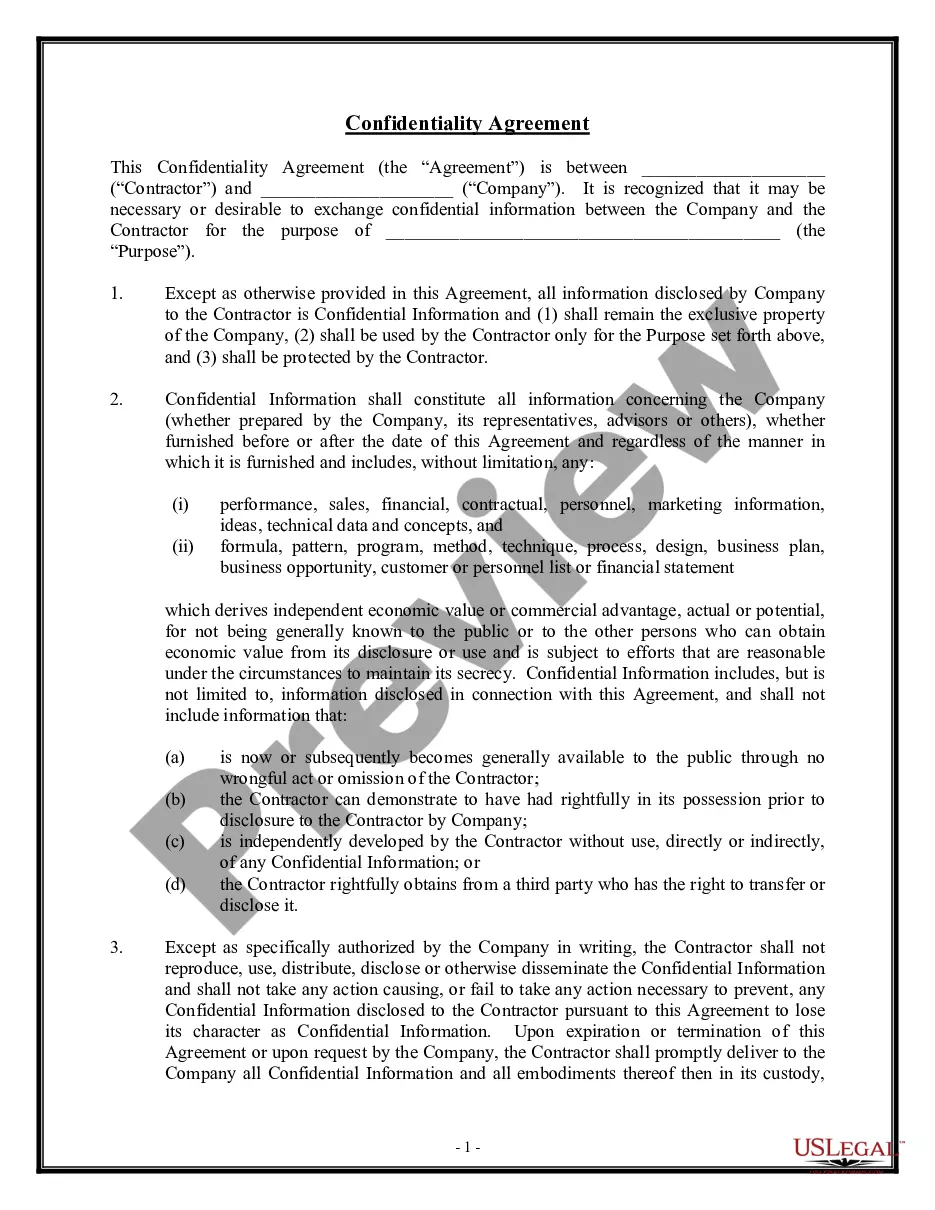
The Confidentiality and Nondisclosure Agreement between Author and Publisher is a legal contract designed to protect sensitive information shared between an author and a publisher. This agreement ensures that the publisher does not disclose or misuse the author's confidential material, such as written works, ideas, or concepts, while evaluating them for publication. Unlike general confidentiality agreements, this form specifically addresses the unique relationship and trust between authors and publishers in the publishing industry.
Key components of this form
- Disclosure: The author provides confidential information to the publisher for evaluation.
- Limitation on Use: The publisher agrees not to disclose or utilize the author's information without permission.
- Access: The publisher cannot share the information with third parties without the author's consent.
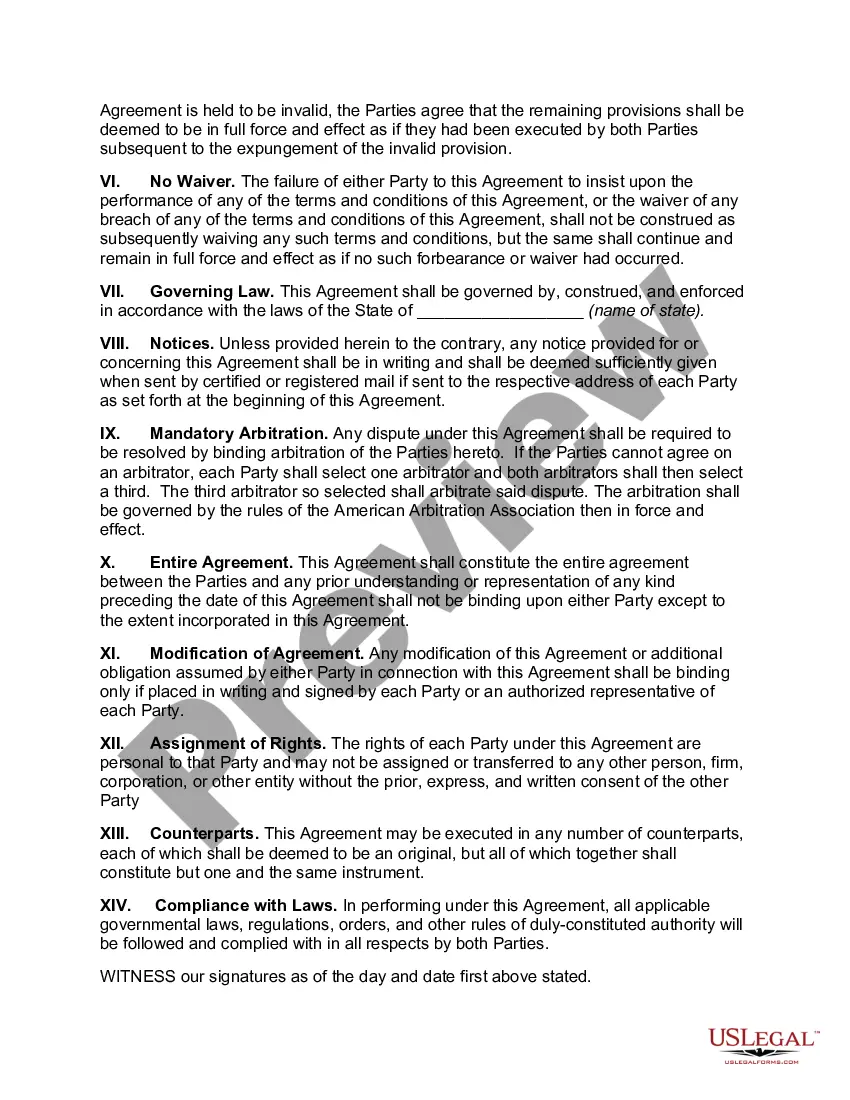
- Validity: If any part of the agreement is invalid, the remaining provisions remain enforceable.
- Governing Law: The agreement specifies the state law that governs its interpretation.

When to use this form
This form should be used whenever an author wishes to share their unpublished works, concepts, or ideas with a publisher while ensuring that their intellectual property remains protected. Situations may include initial discussions about publication, submission of manuscripts, or presentations of new concepts for potential projects.
Who this form is for
- Authors looking to protect their unpublished works.
- Publishers evaluating new material from authors.
- Literary agents acting on behalf of authors.
How to complete this form
- Identify the parties: Enter the names and addresses of the author and publisher.
- Specify the date: Fill in the date when the agreement is made.
- Detail the confidential information: Clearly describe what information the author is sharing.
- Include signatures: Both parties should sign and print their names to validate the agreement.
- Maintain a signed copy: Keep a copy of the signed agreement for record-keeping purposes.
Is notarization required?
This form does not typically require notarization unless specified by local law. It is important for both parties to keep a copy of the signed agreement for their records.
Get your form ready online
Our built-in tools help you complete, sign, share, and store your documents in one place.
Make edits, fill in missing information, and update formatting in US Legal Forms—just like you would in MS Word.
Download a copy, print it, send it by email, or mail it via USPS—whatever works best for your next step.
Sign and collect signatures with our SignNow integration. Send to multiple recipients, set reminders, and more. Go Premium to unlock E-Sign.
If this form requires notarization, complete it online through a secure video call—no need to meet a notary in person or wait for an appointment.
We protect your documents and personal data by following strict security and privacy standards.

Make edits, fill in missing information, and update formatting in US Legal Forms—just like you would in MS Word.

Download a copy, print it, send it by email, or mail it via USPS—whatever works best for your next step.

Sign and collect signatures with our SignNow integration. Send to multiple recipients, set reminders, and more. Go Premium to unlock E-Sign.

If this form requires notarization, complete it online through a secure video call—no need to meet a notary in person or wait for an appointment.

We protect your documents and personal data by following strict security and privacy standards.
Typical mistakes to avoid
- Failing to define what constitutes "confidential information."
- Neglecting to have both parties sign the agreement.
- Using outdated or incorrect versions of the form.
Benefits of completing this form online
- Convenience: Download and complete the form at your own pace.
- Editability: Easily modify the form to suit specific legal needs.
- Reliability: The form is drafted by licensed attorneys, ensuring it meets legal standards.
Looking for another form?


Form popularity
FAQ
The agreement should identify the purpose to which the recipient can put the confidential information. All other uses of the confidential information should be prohibited.This is the only effective way in which a recipient that is a company can consider the confidential information.
Confidential information is generally defined as information disclosed to an individual employee or known to that employee as a consequence of the employee's employment at a company.Confidential information can include information in any form, such as written documents/records or electronic data.
A confidentiality agreement is a legal contract or clause that is used to protect the owner proprietary or sensitive information from disclosure by others.
An employee can be required to sign an NDA or NDA-like agreement with an employer, protecting trade secrets. In fact, some employment agreements include a clause restricting employees' use and dissemination of company-owned confidential information.
Confidentiality agreements usually allow the recipient to disclose confidential information if required to do so by court order or other legal process.
1. Confidentiality Agreement is used when a higher degree of secrecy is required. Non-disclosure implies you must not disclose personal or private information. But keeping confidential implies you be more proactive in making sure information is kept secret.
A confidentiality agreement is a legal tool that binds one or more parties to non-disclosure of confidential or proprietary information. An NDA is actually a type of confidentiality agreement that establishes a confidential relationship and legally binds any signed parties to that relationship.
The cold hard truth is that most NDAs do not hold up in court. Non-Disclosure Agreements are most effective in establishing a paper trail of confidential information as it relates to partnerships, and discouraging partners from misappropriating proprietary information.
A confidentiality agreement is a legally binding contract that states two parties will not share or profit from confidential information. A business usually gives a confidentiality agreement to an employee or contractor to make sure its trade secrets or proprietary information remains private.