Utah Newly Divorced Individuals Package
What this form package covers
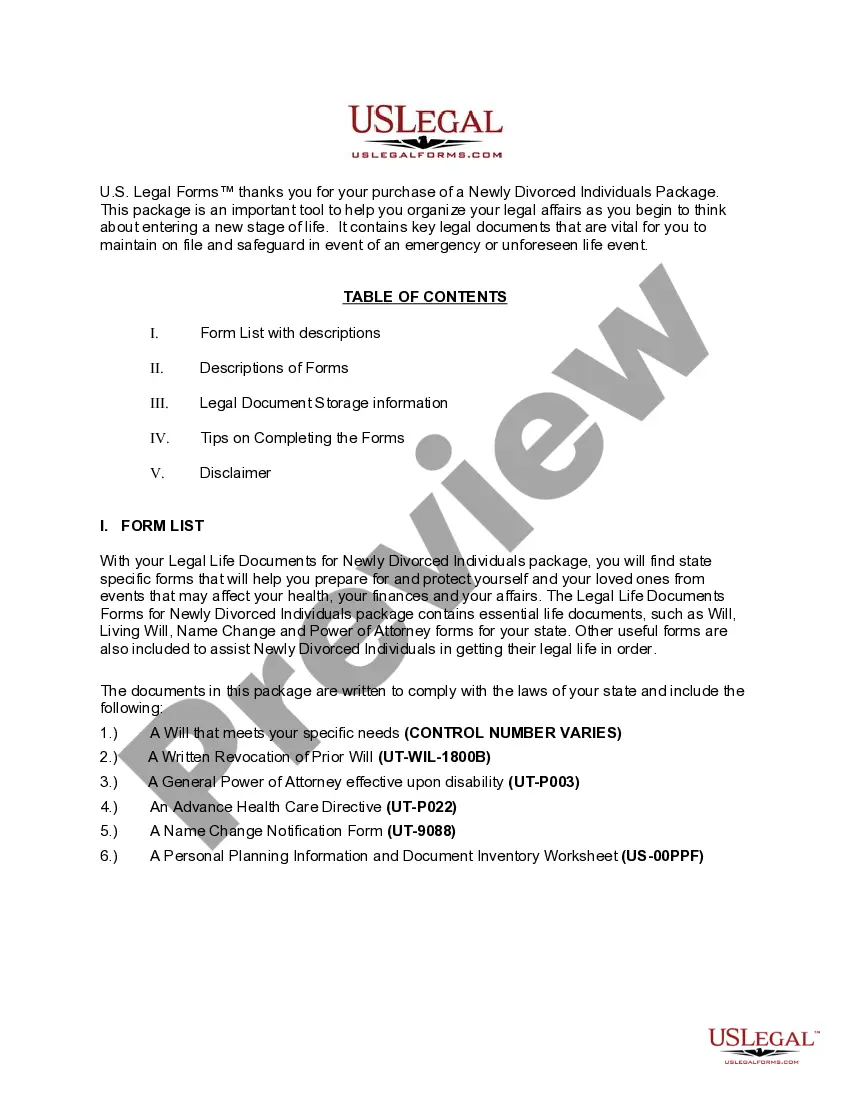
The Utah Newly Divorced Individuals Package provides essential legal documents tailored for newly divorced individuals looking to organize their legal affairs. This package includes a comprehensive set of state-specific forms designed to address your needs, making it distinct from other general legal form packages. It encompasses critical documents like a Will, Power of Attorney, and health care directives to help you manage your affairs effectively during this transitional period.
Documents contained in this package
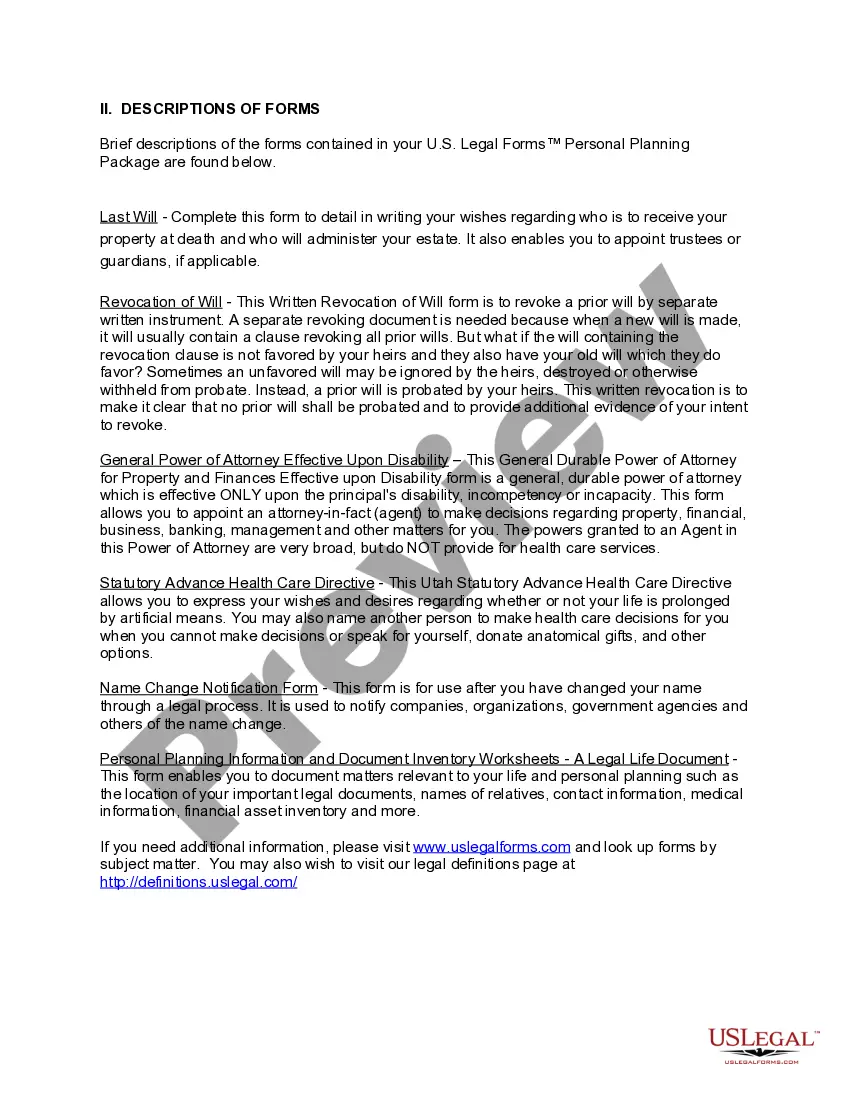
- Last Will and Testament
- Name Change Notification Form
- General Durable Power of Attorney for Property and Finances or Financial Effective upon Disability
- Statutory Advance Health Care Directive
- Written Revocation of Will
- Personal Planning Information and Document Inventory Worksheets - A Legal Life Document
Situations where these forms applies
This package is useful in various scenarios, including:
- When you have recently finalized a divorce and need to update your legal documents.
- If you wish to revoke a prior will that may no longer reflect your wishes after the divorce.
- To establish a Power of Attorney for future health and financial decisions.
- If you are changing your name after your divorce and need to notify relevant entities.
- When you want to ensure your health care preferences are documented and honored.
Intended users of this form package
- Individuals who have recently undergone a divorce in Utah.
- Those looking to secure their legal documents in the wake of personal changes.
- Anyone needing to update or create critical legal documents like a Will or Advance Health Care Directive.
- Individuals who require a general Power of Attorney for their financial and health decisions.
How to prepare this document
- Review all included forms carefully to understand the requirements.
- Fill in your personal information where indicated on each form.
- Complete the Will and any other necessary documents, ensuring all parties are identified.
- Sign and date the forms as required, according to Utah's legal standards.
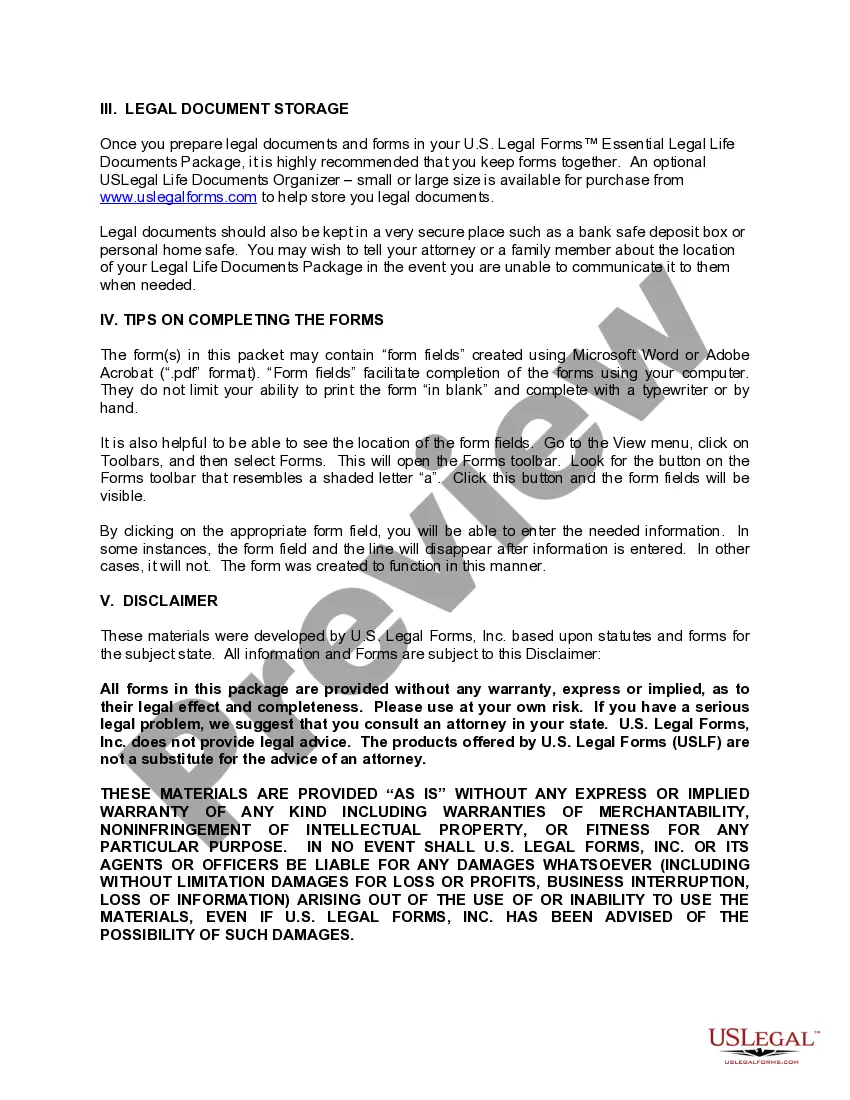
- Store the completed documents securely and inform relevant parties of their locations.
Notarization requirements for forms in this package
Some forms in this package require notarization to be legally valid. US Legal Forms provides secure online notarization powered by Notarize, allowing you to complete the process through a verified video call, available 24/7.
Get your form ready online
Our built-in tools help you complete, sign, share, and store your documents in one place.
Make edits, fill in missing information, and update formatting in US Legal Forms—just like you would in MS Word.
Download a copy, print it, send it by email, or mail it via USPS—whatever works best for your next step.
Sign and collect signatures with our SignNow integration. Send to multiple recipients, set reminders, and more. Go Premium to unlock E-Sign.
If this form requires notarization, complete it online through a secure video call—no need to meet a notary in person or wait for an appointment.
We protect your documents and personal data by following strict security and privacy standards.

Make edits, fill in missing information, and update formatting in US Legal Forms—just like you would in MS Word.

Download a copy, print it, send it by email, or mail it via USPS—whatever works best for your next step.

Sign and collect signatures with our SignNow integration. Send to multiple recipients, set reminders, and more. Go Premium to unlock E-Sign.

If this form requires notarization, complete it online through a secure video call—no need to meet a notary in person or wait for an appointment.

We protect your documents and personal data by following strict security and privacy standards.
Typical mistakes to avoid
- Failing to revoke a previous Will, which can create legal confusion.
- Not signing the documents in accordance with state requirements.
- Overlooking necessary witnesses or notarization for certain forms.
- Using outdated forms that may no longer meet legal standards in Utah.
Benefits of using this package online
- Convenience of downloading and completing forms at your own pace.
- Editability allows you to make changes easily before finalizing documents.
- Reliable quality, with documents reviewed by licensed attorneys.
- A cost-effective option, saving you up to 40% compared to purchasing forms separately.
Looking for another form?
Form popularity
FAQ
The name given to the spouse that files first for divorce is the Petitioner and the spouse that files second is called the Respondent. The clearest advantage to filing for divorce first is that at trial the Petitioner gets to present his/her evidence first.
Though you may have amicably agreed to divorce, one of you needs to start the process. That person will be the petitioner from that point on. There is no advantage or disadvantage to being either the petitioner or respondent. They are simply terms to make it easier to refer to each party during the divorce process.
One of the main legal advantages that a person gains by filing the divorce petition before his or her spouse does is that the filer can request a Standing Order from the court when filing the petition.If the matter should go to a hearing, the person who files the petition usually presents his or her case first.
You answer the divorce petition to let the court know your position in the divorce case.If you don't answer the divorce petition and you don't go to a hearing, it's still possible that the judge can grant the divorce. If that happens, the judge also can make other decisions in the divorce.
Generally no, it doesn't matter which spouse files for divorce. There is no legal advantage to filing the petition for divorce first; however, there may be strategical advantages. Whoever files the petition first chooses which court will be hearing the divorce.
Uncontested divorces, or divorces where spouses agree on all of the final terms they wish to be included in their divorce, can resolve within 30 days, but more typically are finalized between 60-90 days.
If you post the divorce documents, your spouse must sign and return to you the Acknowledgement of Service (Divorce) as proof of service. You will need to file this document at the court. If you post the documents but do not get the Acknowledgement of Service (Divorce), you must try to serve your spouse in another way.
If you file first, you control when the divorce gets filed. You can decide to cancel the divorce, as long as she hasn't filed a response. You have until your spouse files an answer to your complaint to cancel the divorce. By filing first you are the plaintiff and she will be the defendant.
You can still get a divorce even if your spouse does not want one. States do not force a couple to stay together if one person no longer wants to be married. However, it can definitely complicate the process if the other party does not want to go through with it.