Mutual Rescission Agreement
Overview of this form
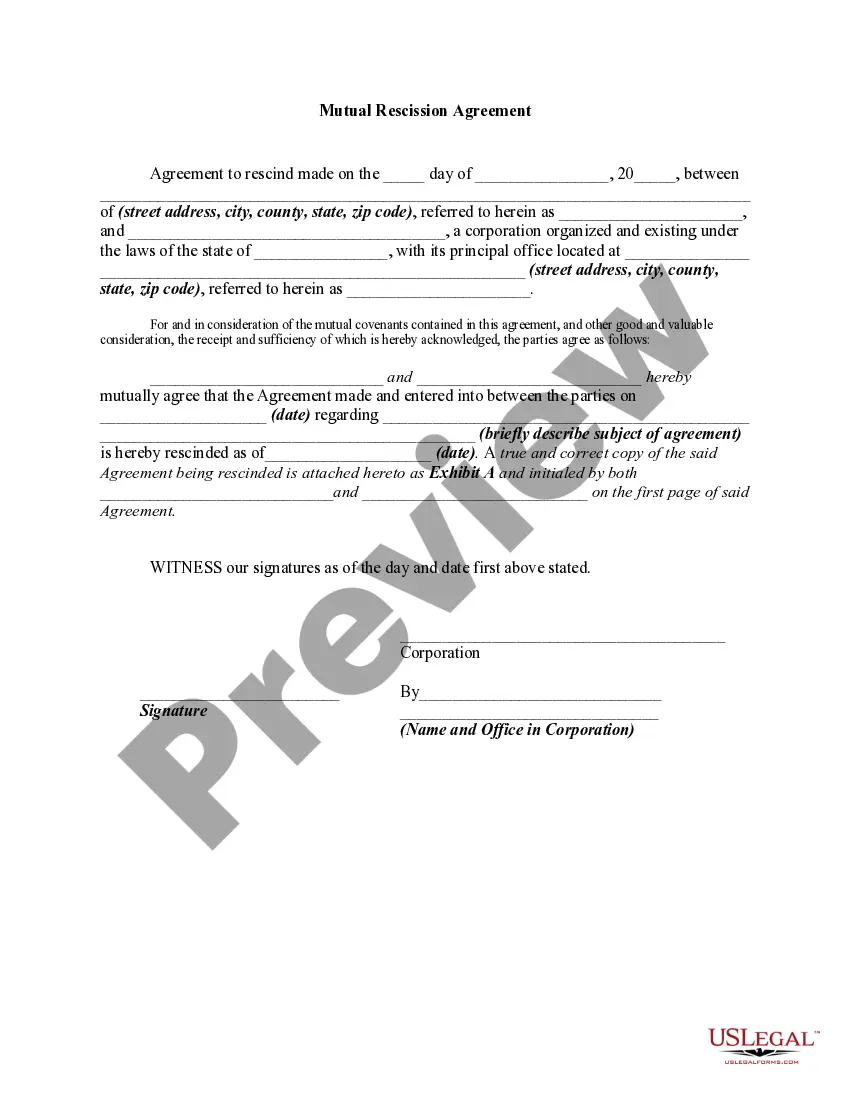
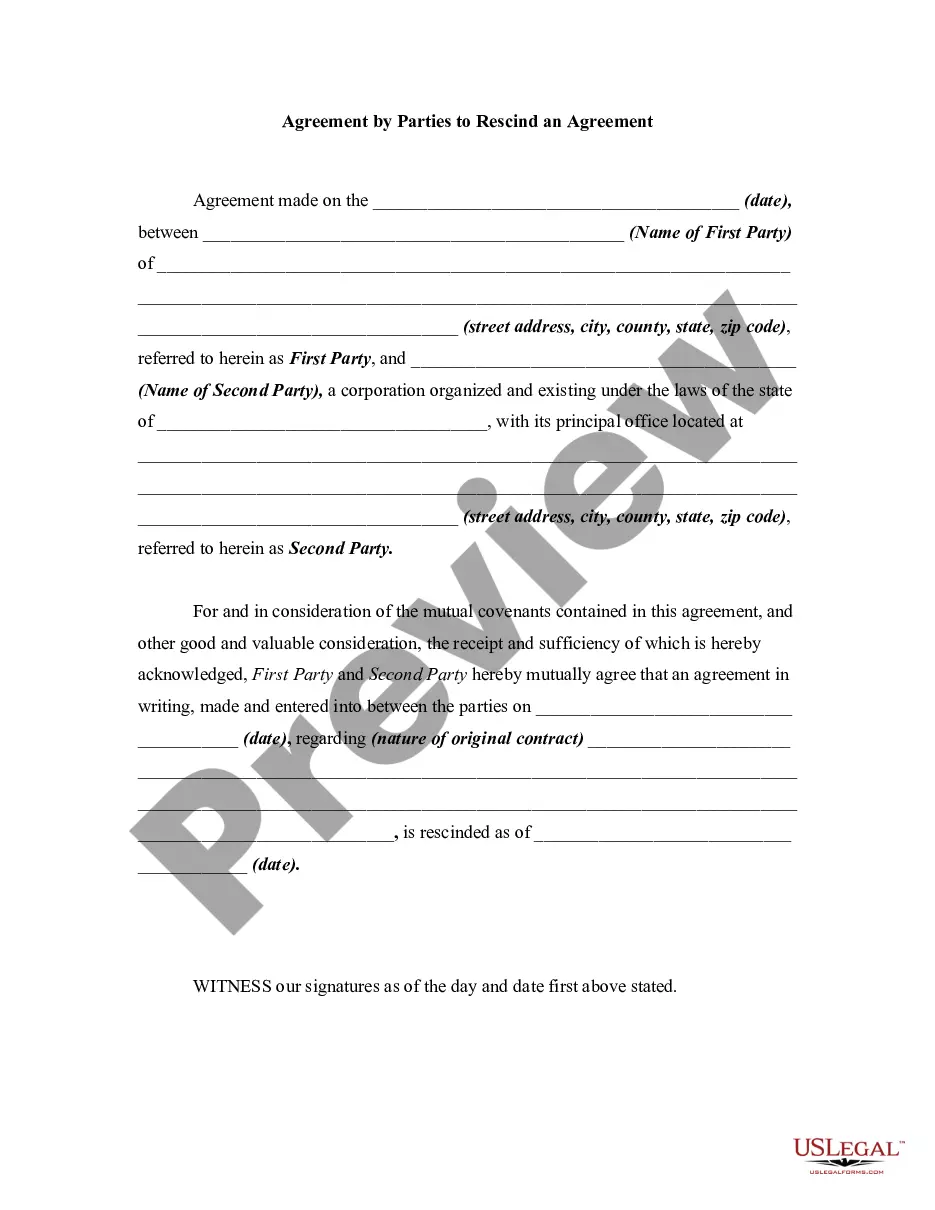
A mutual rescission agreement is a legal document that allows the parties involved to cancel or rescind a previously signed contract. This form establishes that both parties agree to revert to their positions prior to the contract's execution, effectively nullifying the original agreement. Unlike other legal documents, a rescission highlights mutual consent to dissolve contractual obligations, ensuring that both sides can return to their initial state before entering the agreement.
What’s included in this form
- Date of agreement: The specific date the rescission agreement is made.
- Identifying the parties: Names and addresses of all parties involved in the original contract.
- Description of the original agreement: A brief overview of the contract being rescinded.
- Date of original agreement: The date when the original contract was executed.
- Exhibit A: A copy of the original agreement attached and initialed by both parties.
- Signatures: Signatures from all parties to validate the rescission agreement.
When to use this document
This form is needed when both parties decide to terminate a contract that is no longer beneficial or has become impractical for any reason. Common scenarios include mutual dissatisfaction with contractual terms, changes in circumstances that make the agreement impossible to fulfill, or simply a change of mind. Utilizing this form helps to clarify that both parties consent to the cancellation, thus preventing potential future disputes.
Who needs this form
- Individuals or businesses involved in a contractual agreement.
- Parties looking to amicably dissolve a contract without legal disputes.
- Anyone who wants to ensure clear documentation of mutual consent to rescind a contract.
Steps to complete this form
- Identify the parties: Clearly state the names and addresses of all involved parties.
- Specify the contract details: Provide a brief description of the original agreement being rescinded.
- Enter the relevant dates: Fill in the date when the rescission agreement is being made and the date of the original contract.
- Attach Exhibit A: Include a copy of the original agreement and ensure it is initialed by both parties.
- Collect signatures: Ensure all parties sign the document to validate the mutual rescission.
Notarization requirements for this form
Notarization is generally not required for this form. However, certain states or situations might demand it. You can complete notarization online through US Legal Forms, powered by Notarize, using a verified video call available anytime.
Get your form ready online
Our built-in tools help you complete, sign, share, and store your documents in one place.
Make edits, fill in missing information, and update formatting in US Legal Forms—just like you would in MS Word.
Download a copy, print it, send it by email, or mail it via USPS—whatever works best for your next step.
Sign and collect signatures with our SignNow integration. Send to multiple recipients, set reminders, and more. Go Premium to unlock E-Sign.
If this form requires notarization, complete it online through a secure video call—no need to meet a notary in person or wait for an appointment.
We protect your documents and personal data by following strict security and privacy standards.

Make edits, fill in missing information, and update formatting in US Legal Forms—just like you would in MS Word.

Download a copy, print it, send it by email, or mail it via USPS—whatever works best for your next step.

Sign and collect signatures with our SignNow integration. Send to multiple recipients, set reminders, and more. Go Premium to unlock E-Sign.

If this form requires notarization, complete it online through a secure video call—no need to meet a notary in person or wait for an appointment.

We protect your documents and personal data by following strict security and privacy standards.
Common mistakes to avoid
- Failing to include the correct details of the original agreement.
- Not having all parties sign the document.
- Omitting the attachment of Exhibit A.
- Completing the form without consulting local or state-specific legal requirements.
Why use this form online
- Convenience: Download and complete the form at your own pace from any location.
- Editability: Easily customize the form to fit your specific agreement terms.
- Reliability: Forms are drafted by licensed attorneys, ensuring legal accuracy.
Looking for another form?

Form popularity
FAQ
In contract law, rescission is an equitable remedy which allows a contractual party to cancel the contract.Rescission is the unwinding of a transaction. This is done to bring the parties, as far as possible, back to the position in which they were before they entered into a contract (the status quo ante).
There are two kinds of rescission, namely rescission in equity and rescission de futuro. Also referred to as rescission ab initio, i.e., from the beginning, rescission in equity works by rolling back the contract to the initial state of affairs, before the parties in question accepted the terms of the contract.
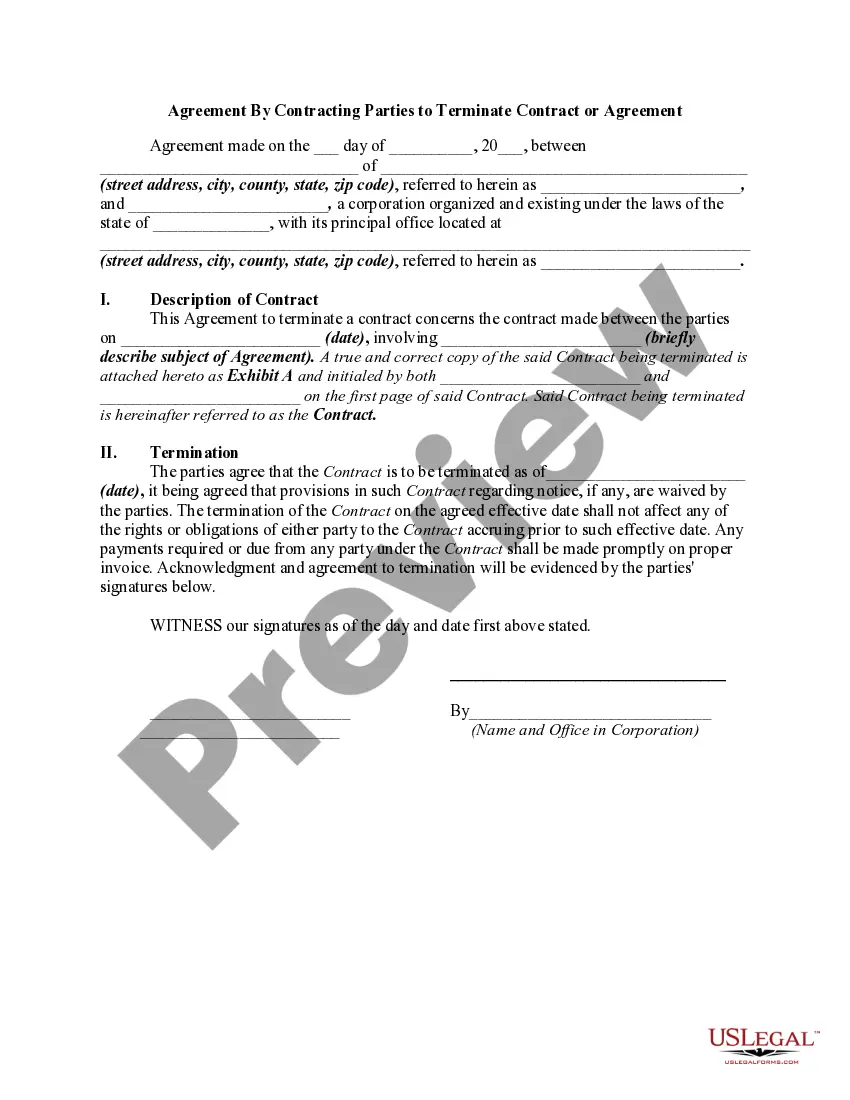
Related. Parties to an agreement always have the option of terminating the agreement by mutual assent. If the contract is no longer being followed, if the parties have ceased business operations or if the contract can no longer be faithfully performed, the parties may wish to formally terminate the agreement in writing
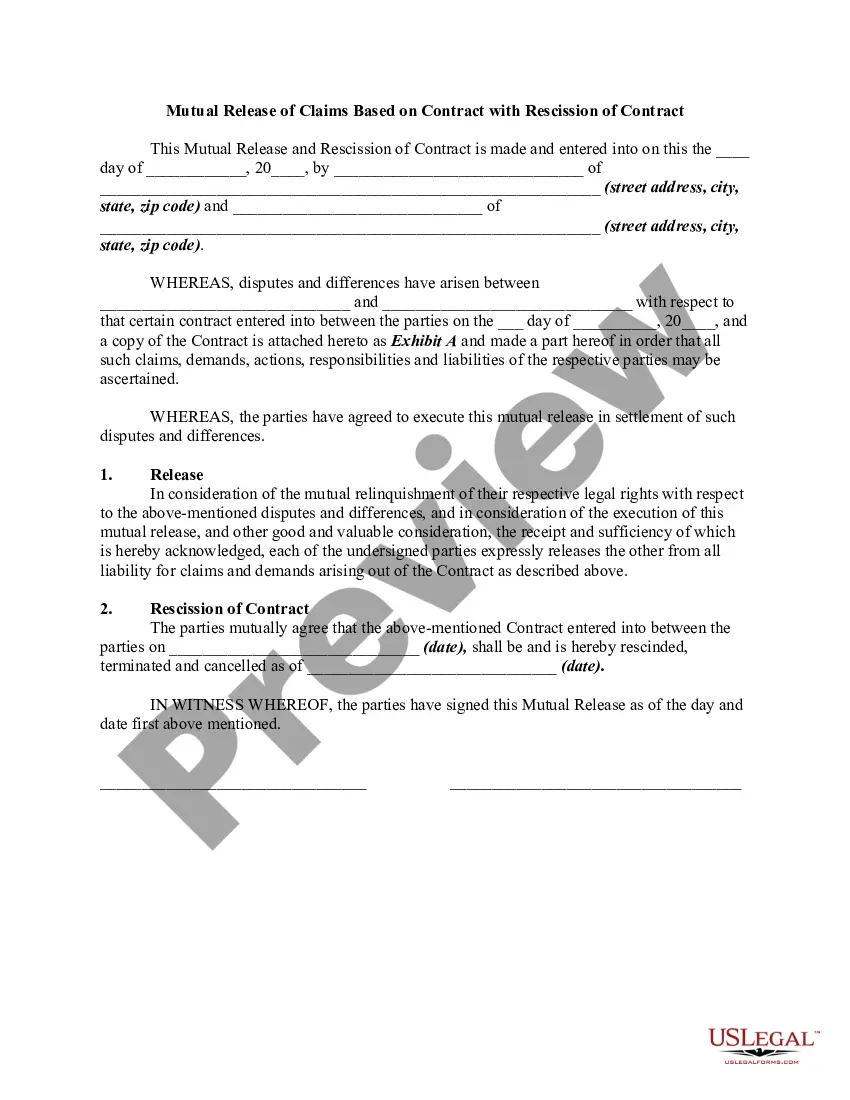
A mutual rescission and release agreement annuls the contract and releases both parties from its obligations, freeing them both up to continue business as usual without the broken contract hanging over their them.
To rescind a contract you must cancel the whole contract. You cannot rescind just one part or section of a contract. The whole contract must be ended or cancelled. In some cases, there are ways to cancel or change only part of a contract.
2011 Ans:cancellation means termination of the entire agreement by the act of parties/law.2011 rescission by agreement, is a discharge of both parties from the obligations of a contract by a new agreement made after the execution of the original contract but prior to its performance.
Rescission Example The most common example of rescission is the three-day right of rescission, in which a borrower refinancing a loan has extra time to reconsider the decision. The clock on the rescission process begins ticking the moment the contract is signed by the borrower.