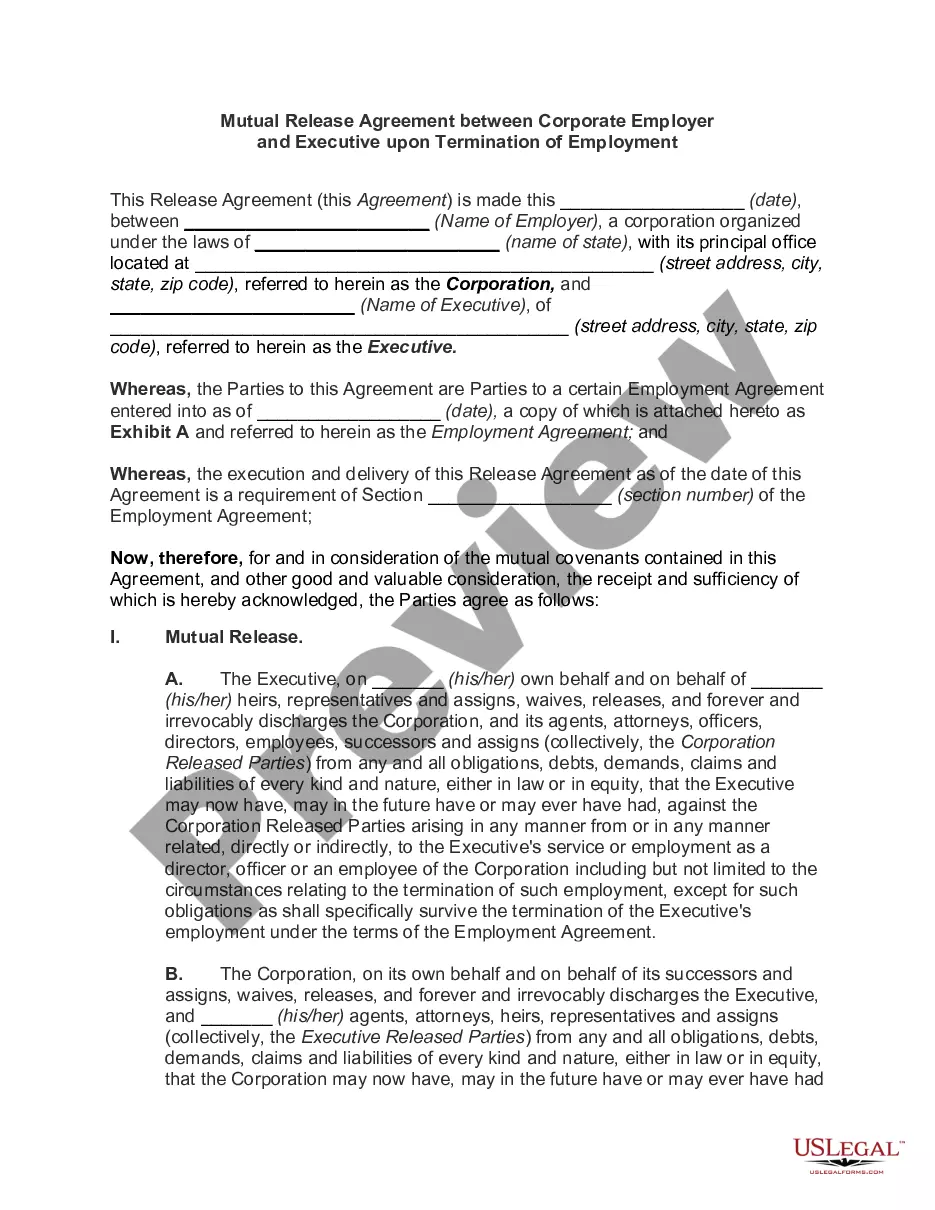
Mutual Release Agreement between Corporate Employer and Executive upon Termination of Employment
Understanding this form
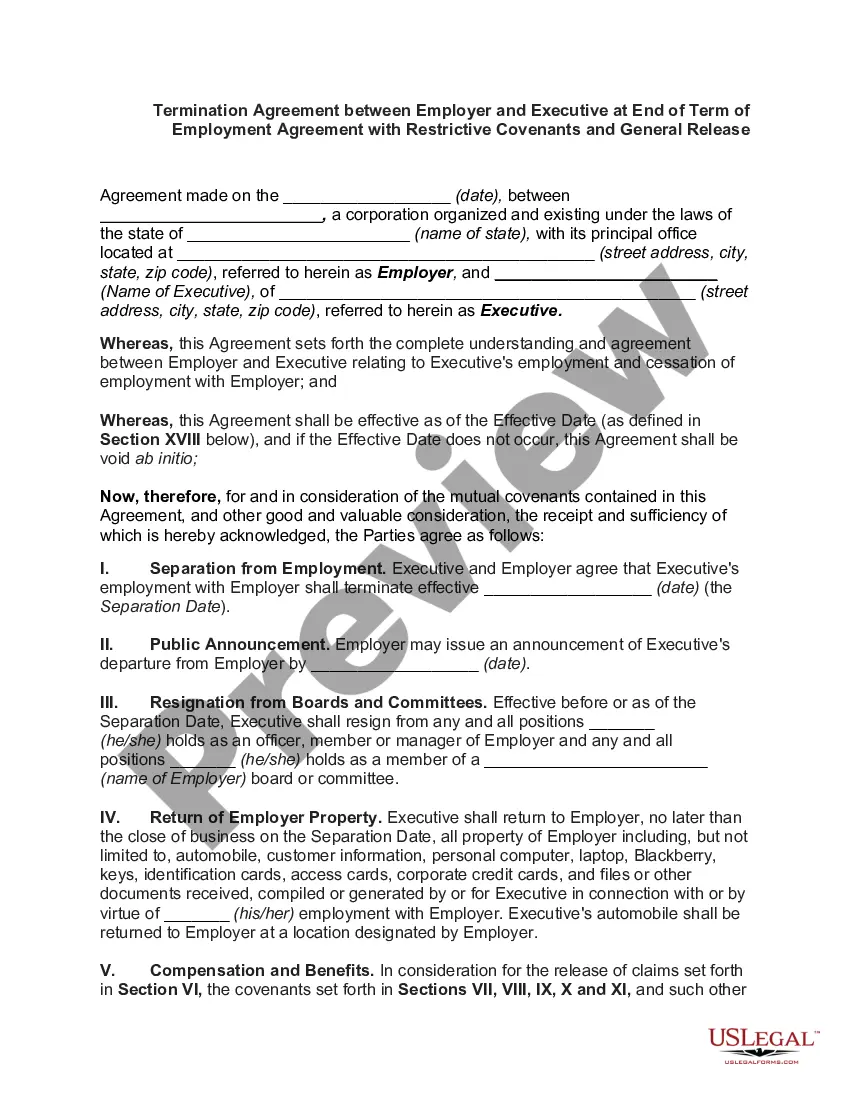
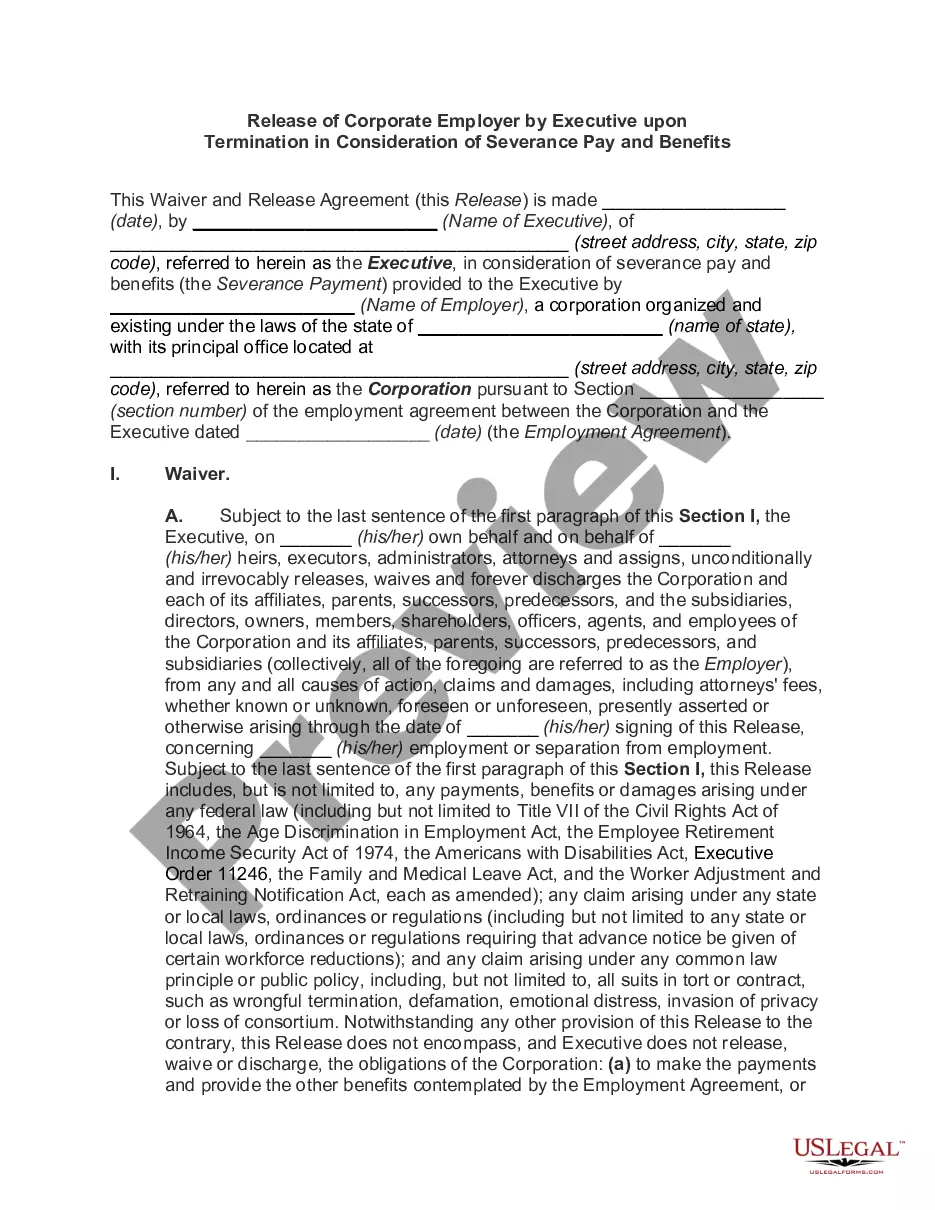
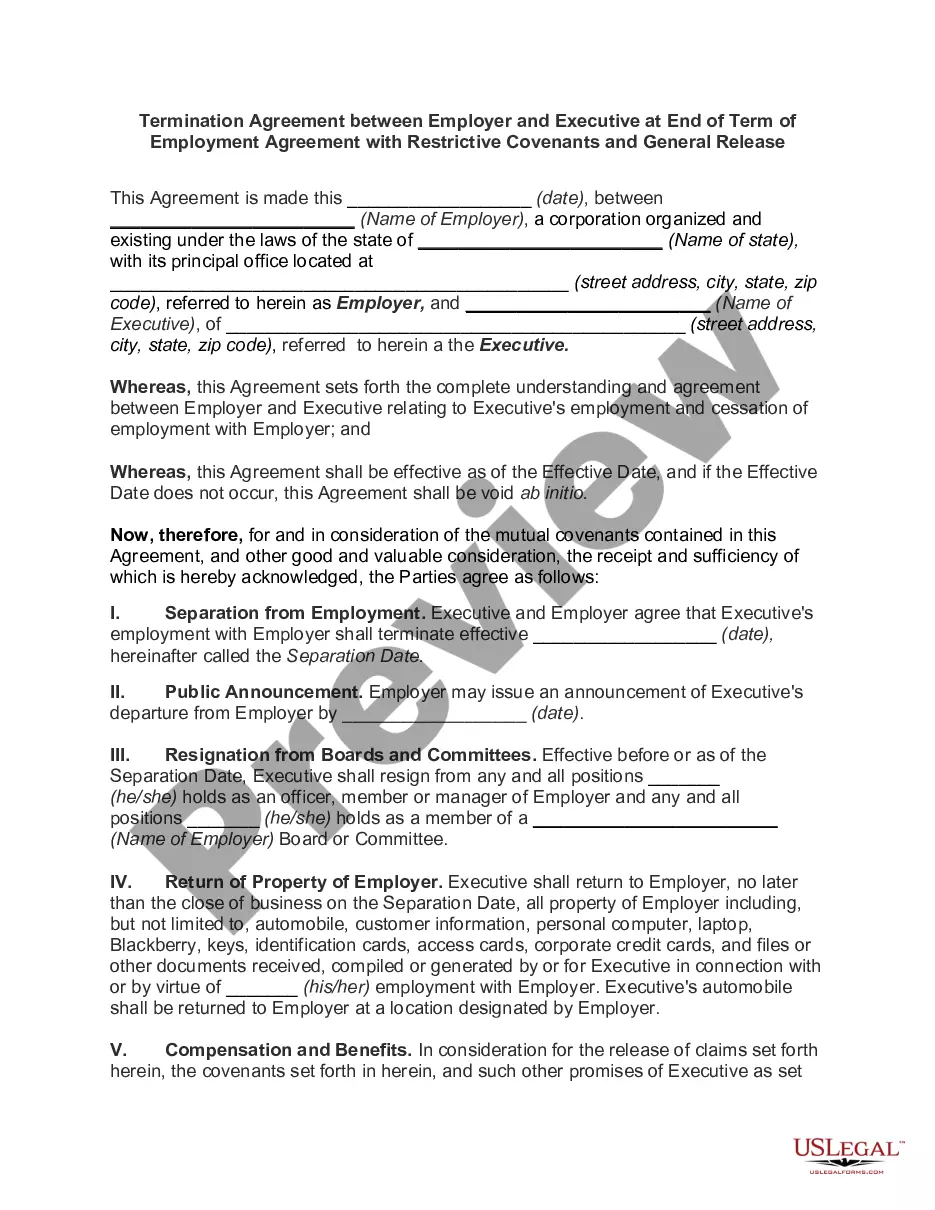
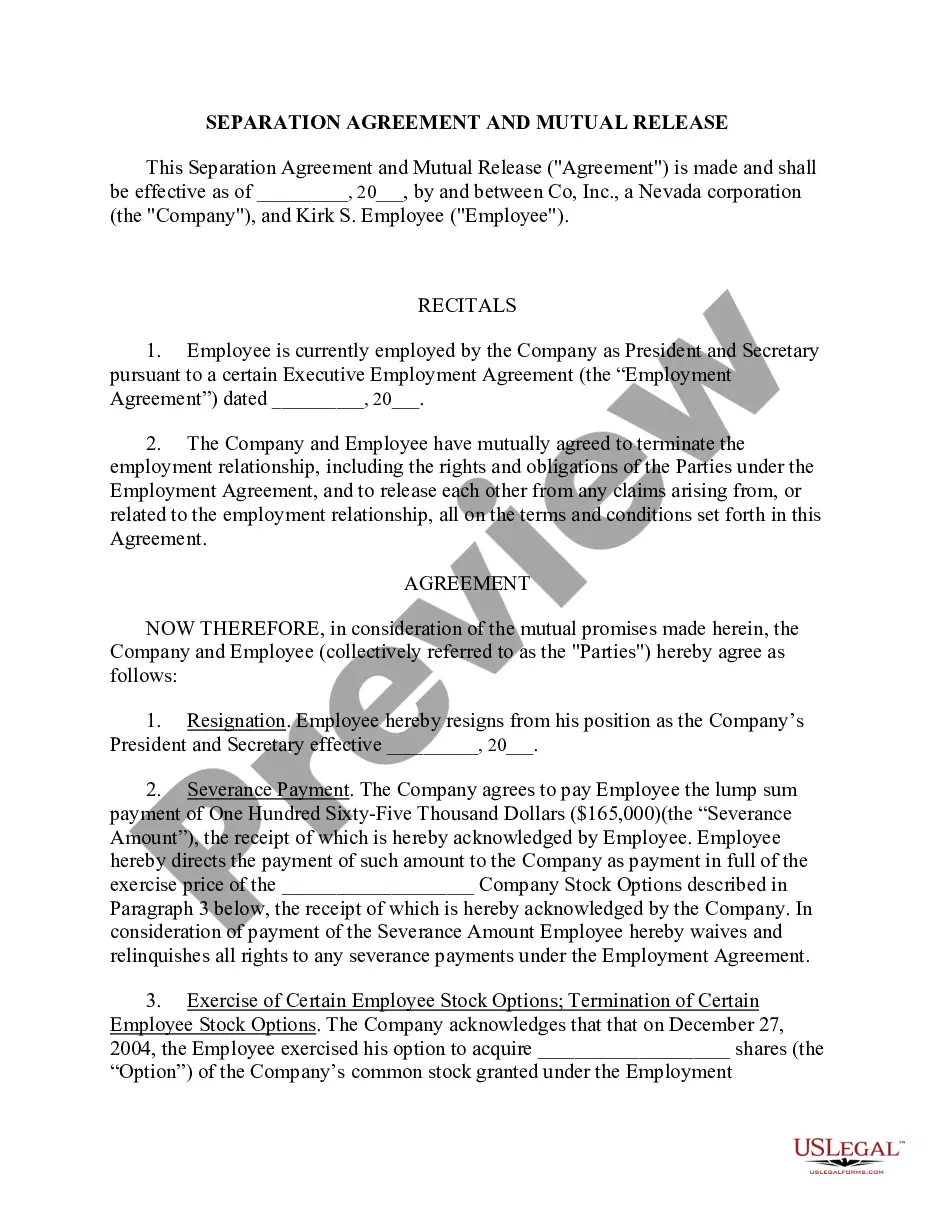
This Mutual Release Agreement between Corporate Employer and Executive upon Termination of Employment is a legal document that formalizes the release of claims between an executive and their employer once their employment relationship ends. This agreement is crucial as it ensures that both parties relinquish any future claims relating to the employment context, thereby reducing the risk of litigation. Unlike a standard termination letter, this form includes detailed mutual release clauses that protect both the employer and the executive from potential legal disputes.
Key components of this form
- Detailed identification of the parties involved, including the corporate employer and the executive.
- Clauses for mutual release of claims against each party for obligations arising from employment.
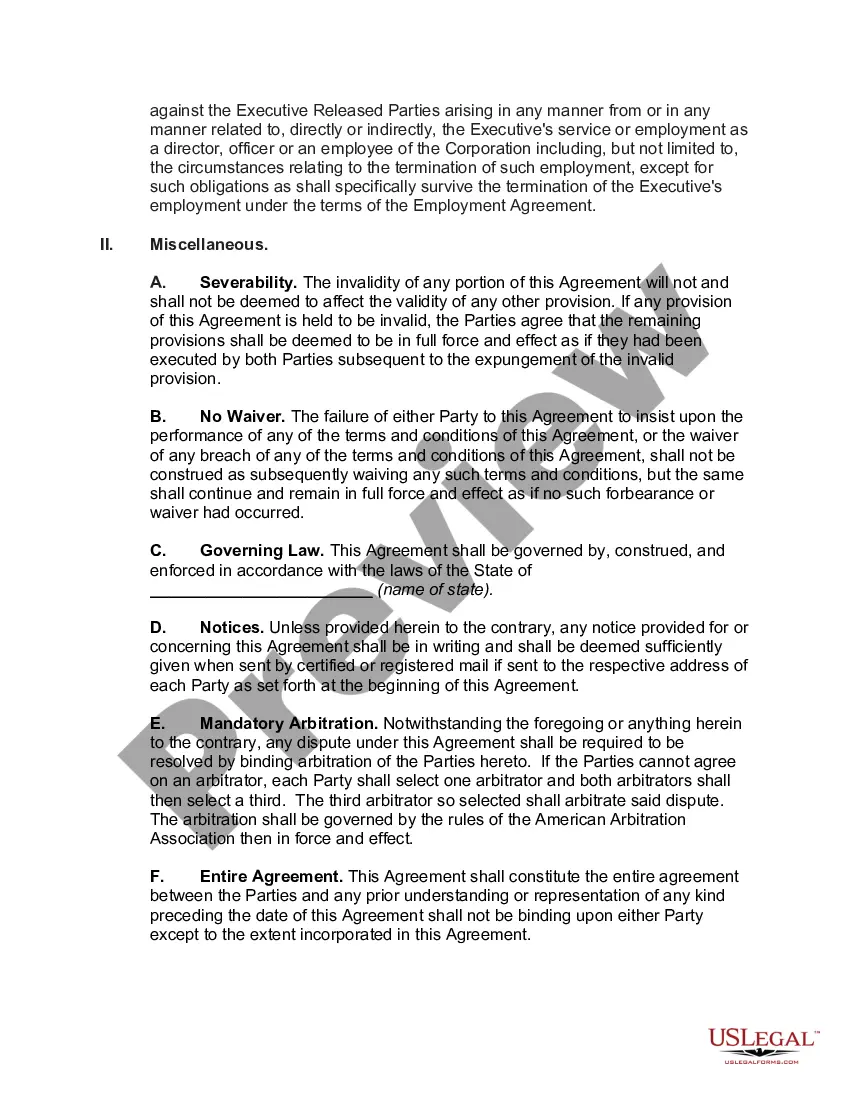
- Severability clause ensuring the validity of remaining provisions if one part is found invalid.
- Mandatory arbitration clause to resolve disputes without litigation.
- Notices section outlining how communication regarding the agreement should be conducted.

When to use this document
This form should be utilized when an executive's employment is being terminated, particularly when both parties wish to release each other from any future claims related to the employment relationship. It is particularly useful in protecting the interests of both the employer and the executive in the event of a potential dispute over the termination or other employment-related issues.
Who needs this form
- Corporate employers who are terminating an executive or high-level employee.
- Executives seeking a clear agreement on the terms of employment termination.
- Legal professionals looking to formalize termination agreements for clients in a corporate setting.
Instructions for completing this form
- Identify the parties involvedâenter the names and addresses of the corporate employer and the executive.
- Specify the effective date of the agreement at the top of the document.
- Fill in the details of the employment agreement and any specific sections mentioned in the release clauses.
- Both parties should read through the mutual release sections carefully before signing.
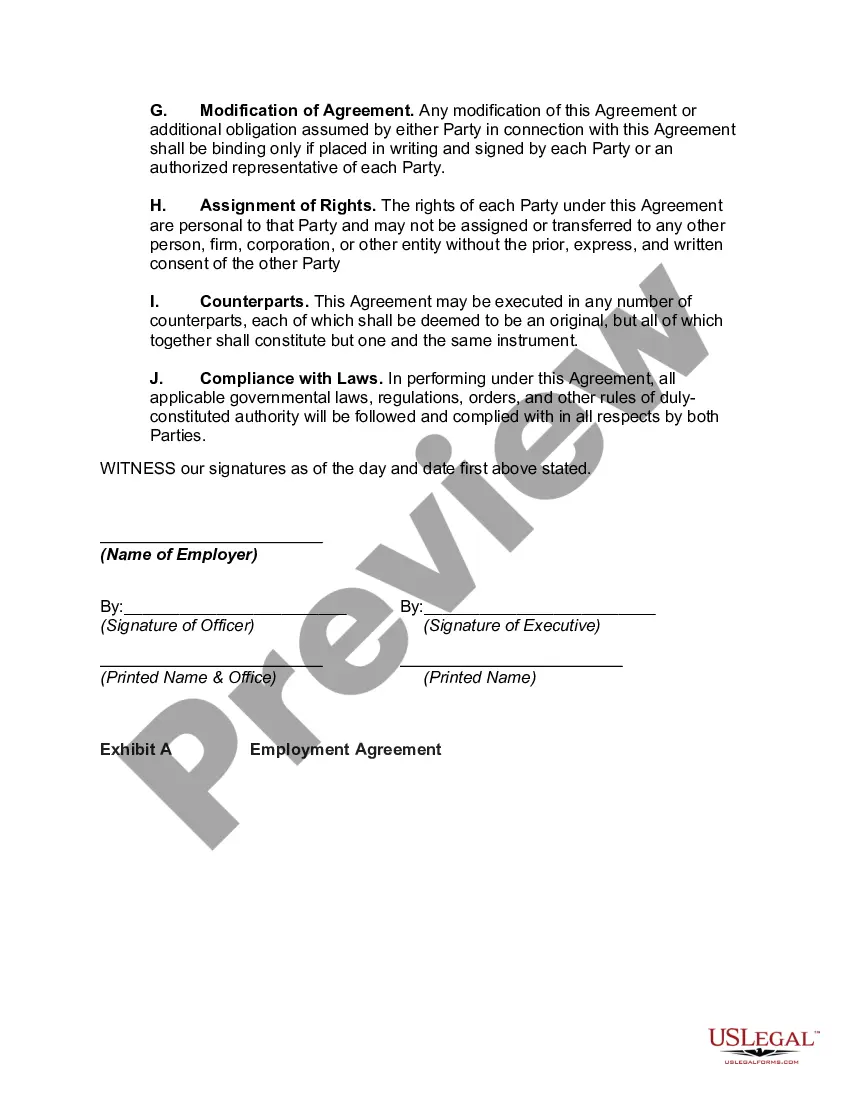
- Have the agreement signed by authorized representatives of the corporation and the executive.
Notarization requirements for this form
This form does not typically require notarization unless specified by local law. However, it is recommended that the parties review the local regulations to ensure compliance. If notarization is needed, US Legal Forms offers integrated online notarization services for convenience.
Get your form ready online
Our built-in tools help you complete, sign, share, and store your documents in one place.
Make edits, fill in missing information, and update formatting in US Legal Forms—just like you would in MS Word.
Download a copy, print it, send it by email, or mail it via USPS—whatever works best for your next step.
Sign and collect signatures with our SignNow integration. Send to multiple recipients, set reminders, and more. Go Premium to unlock E-Sign.
If this form requires notarization, complete it online through a secure video call—no need to meet a notary in person or wait for an appointment.
We protect your documents and personal data by following strict security and privacy standards.

Make edits, fill in missing information, and update formatting in US Legal Forms—just like you would in MS Word.

Download a copy, print it, send it by email, or mail it via USPS—whatever works best for your next step.

Sign and collect signatures with our SignNow integration. Send to multiple recipients, set reminders, and more. Go Premium to unlock E-Sign.

If this form requires notarization, complete it online through a secure video call—no need to meet a notary in person or wait for an appointment.

We protect your documents and personal data by following strict security and privacy standards.
Common mistakes to avoid
- Failing to specify the effective date of the release agreement.
- Not including all necessary parties in the identification section.
- Overlooking the inclusion of applicable sections from the original employment agreement.
- Not having both parties sign & date the agreement, which could lead to enforceability issues.
Why complete this form online
- Convenience of downloading and customizing the form according to specific needs.
- Ensures access to legally vetted documents created by licensed attorneys.
- Quickly complete and manage your legal documentation without needing extensive legal knowledge.
Legal use & context
- This agreement effectively prevents either party from claiming damages or other legal actions related to employment issues that might arise post-termination.
- It ensures both the employer and executive leave their working relationship on clear terms, minimizing future disputes.
- Legal enforceability may depend on adherence to specific state laws or additional formalities.
Key takeaways
- The Mutual Release Agreement protects both parties following an employment termination.
- Clear identification and signature by both parties are essential for its validity.
- Online access to this form streamlines the process of creating and finalizing legal agreements.
Looking for another form?




Form popularity
FAQ
An employee separation agreement is a legal document that lays out an understanding between a company and a terminated employee. After both parties sign, the terminated employee gives up their right to take legal action against the company in the future (i.e. suing for wrongful termination or severance pay).
A Mutual Release Agreement is a straightforward document that allows you to settle disputes quickly and professionally. No matter what your dispute, a Mutual Release Agreement allows both parties to agree to drop all claims and get out of the contract.
A mutual separation agreement is a waiver of rights by both parties to enable a soft exit of the employee. This may enable the employee to exit the company by having their reputation in place.
Constructive discharge. Firing. Layoff. Termination for cause. Termination by mutual agreement. Termination with prejudice. Termination without prejudice. Involuntary termination.
No matter what your employer tells you, you are not required to sign a severance agreement, and you are not required to do so immediately. You always have the right to consult with a lawyer, even if you are sure you understand the terms.
Separation details. An employment separation agreement should lay out some basic terms, such as identifying both parties (company and terminated employee), the final date of employment, and possibly a reason (termination, layoff, resignation, etc.).
Severance agreements are offered and signed as part of a hiring process. It becomes part of an attractive benefits package. It may include monetary stipends that are earned over time, and are paid out at the time of termination.On the other hand, a separation agreement is offered and signed at the time of termination.
Although you don't have to sign a severance agreement, your employer may make it a condition of receiving severance pay.However, in most cases, an employer is free to condition severance on the employee signing the agreement. In other words, if the employee refuses to sign, the employee won't get any severance pay.