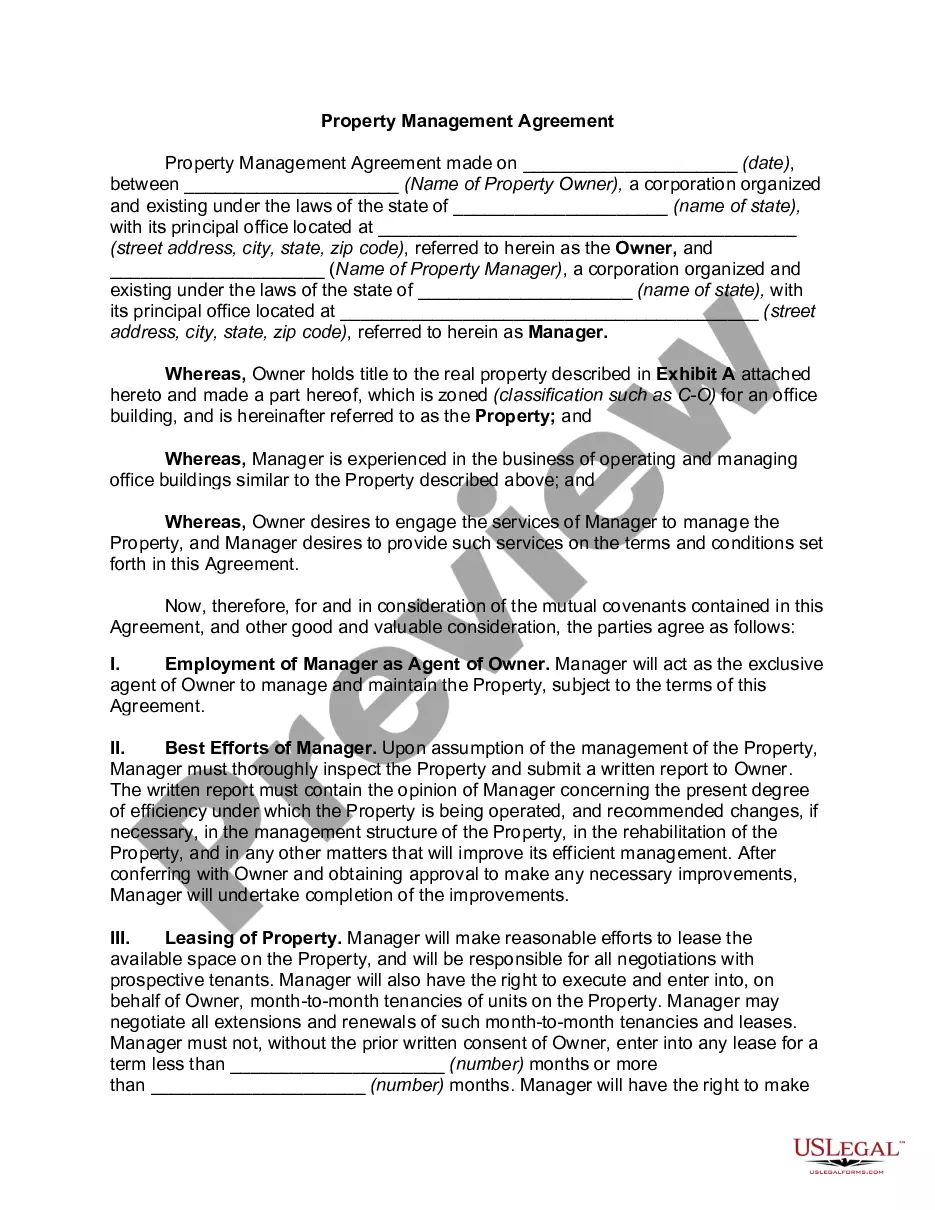
Utah Written Revocation of Will
What this document covers
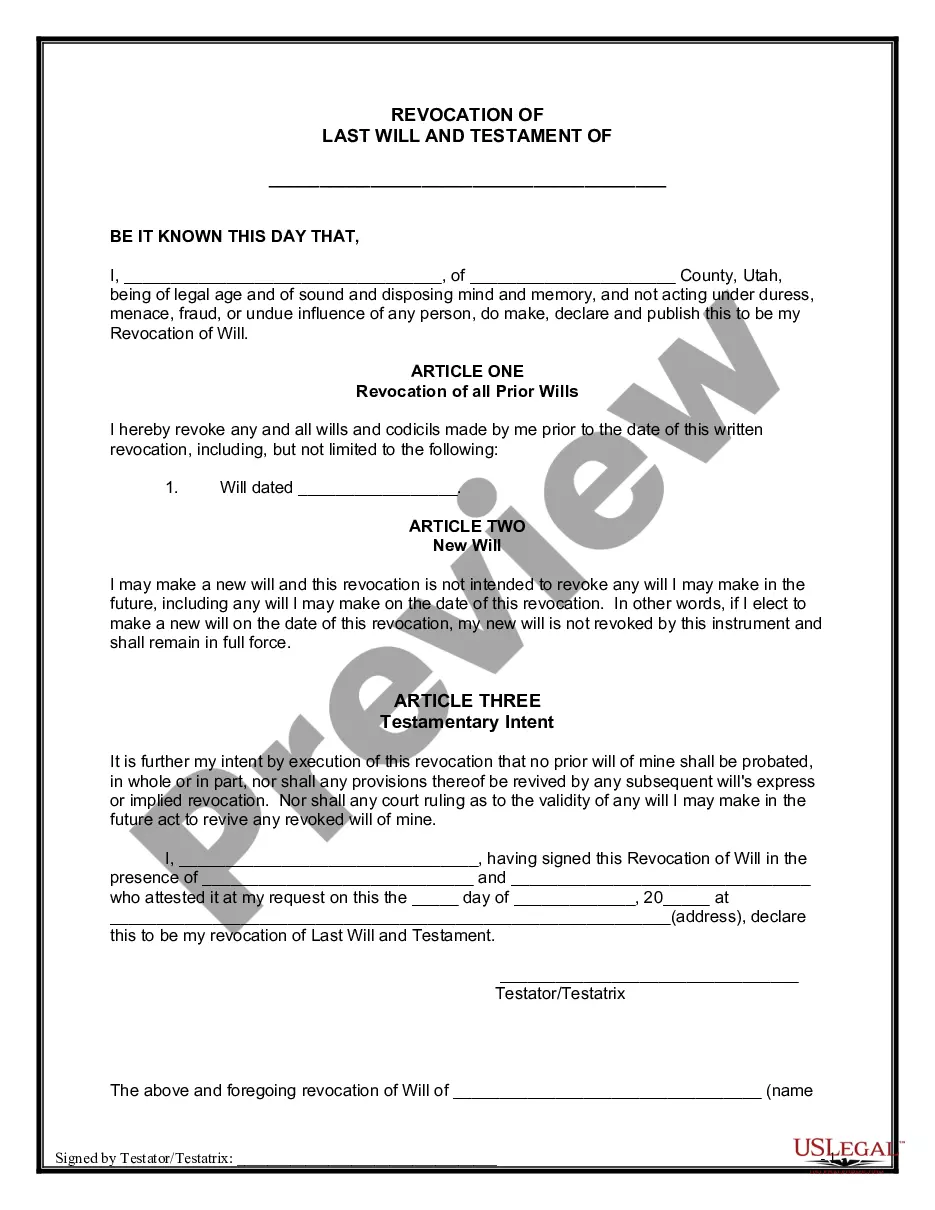
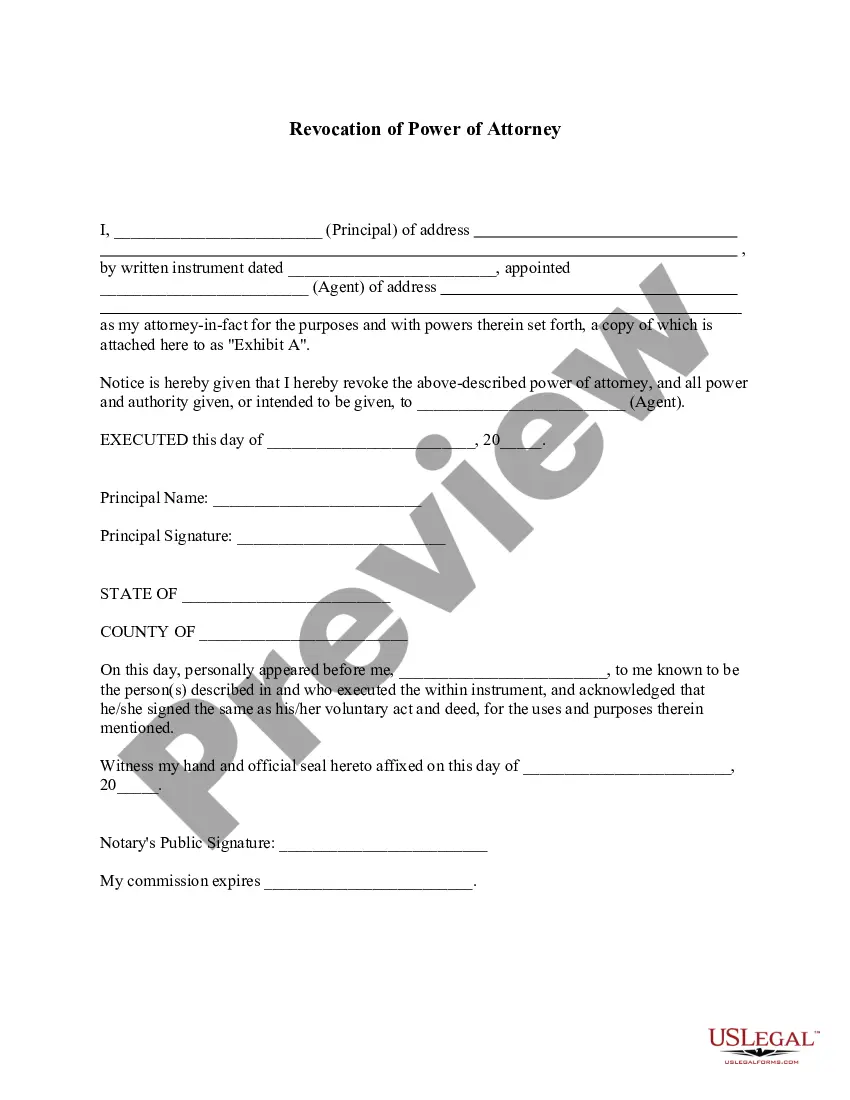
The Written Revocation of Will is a legal document used to formally revoke a previously made will. While new wills typically include a clause that revokes prior ones, this form serves as a clear statement of intent to ensure that earlier wills are not honored. By providing this separate revocation document, you prevent the possibility of your previous will being probated, especially if it differs from your true intentions and those favored by your heirs.
Main sections of this form
- Statement of revocation of all prior wills and codicils.
- A clause indicating that the revocation does not affect any future wills made.
- Testamentary intent that clearly states no prior will shall be probated.
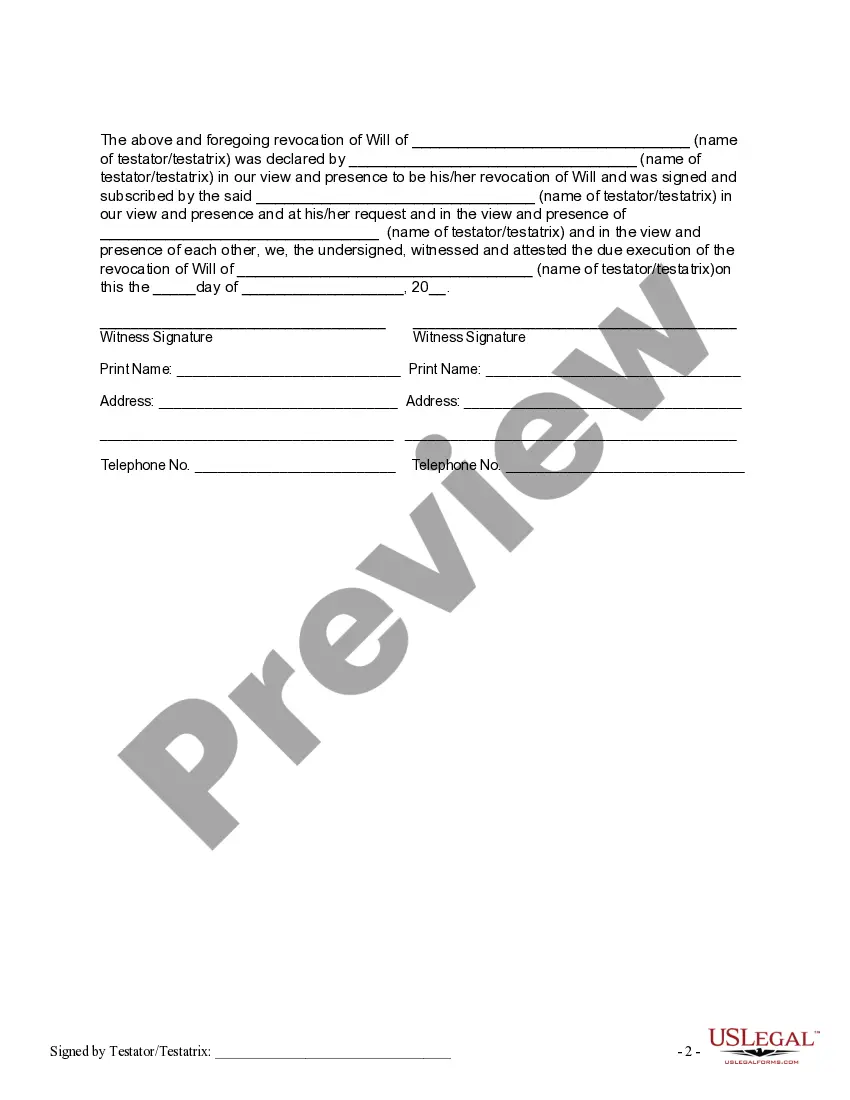
- Spaces for the testator's details and signatures of witnesses.
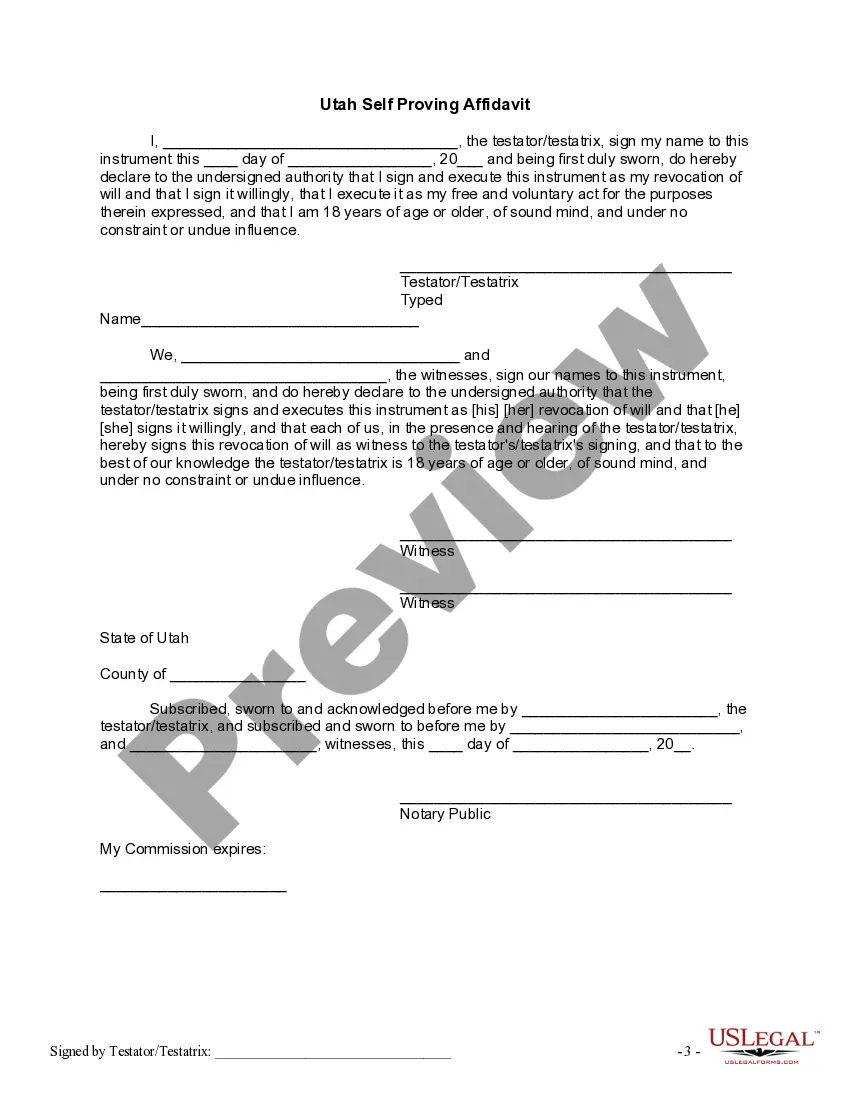
- A section for notarization to ensure legal validity.
When to use this form
This form should be used when you wish to invalidate a previous will while making it clear that your estate plans have changed. Scenarios include entering into a new marriage, experiencing a significant life change, or simply deciding that your prior wishes no longer reflect your intentions. Using this revocation form helps prevent confusion among heirs and ensures that your estate is settled according to your current wishes.
Who needs this form
- Individuals who have created a previous will and wish to revoke it.
- People experiencing life changes, such as marriage or divorce.
- Anyone wanting to clarify their current estate planning intentions.
- Those who want to ensure that their heirs have no misunderstandings regarding their last wishes.
Completing this form step by step
- Identify the parties: Enter your full name as the testator/testatrix.
- Include the date: Specify the date on which you are executing the revocation.
- List all prior wills: Clearly state any previous wills that you are revoking.
- Sign in front of witnesses: Ensure you and your witnesses sign in each other's presence.
- Complete notarization if required: If notarization is necessary, have a notary public witness your signatures.
Notarization requirements for this form
To make this form legally binding, it must be notarized. Our online notarization service, powered by Notarize, lets you verify and sign documents remotely through an encrypted video session.
Get your form ready online
Our built-in tools help you complete, sign, share, and store your documents in one place.
Make edits, fill in missing information, and update formatting in US Legal Forms—just like you would in MS Word.
Download a copy, print it, send it by email, or mail it via USPS—whatever works best for your next step.
Sign and collect signatures with our SignNow integration. Send to multiple recipients, set reminders, and more. Go Premium to unlock E-Sign.
If this form requires notarization, complete it online through a secure video call—no need to meet a notary in person or wait for an appointment.
We protect your documents and personal data by following strict security and privacy standards.

Make edits, fill in missing information, and update formatting in US Legal Forms—just like you would in MS Word.

Download a copy, print it, send it by email, or mail it via USPS—whatever works best for your next step.

Sign and collect signatures with our SignNow integration. Send to multiple recipients, set reminders, and more. Go Premium to unlock E-Sign.

If this form requires notarization, complete it online through a secure video call—no need to meet a notary in person or wait for an appointment.

We protect your documents and personal data by following strict security and privacy standards.
Typical mistakes to avoid
- Failing to sign the revocation in the presence of witnesses.
- Neglecting to date the document, which may create ambiguity.
- Not specifying all prior wills that are being revoked.
Benefits of completing this form online
- Convenience of downloading and printing the form from anywhere.
- Editability allows you to customize the document to your specific needs.
- Reliability as the forms are drafted by licensed attorneys.
Looking for another form?

Form popularity
FAQ
The most common way to revoke a will is to execute a new one that states an intent to revoke all previously made wills. To revoke a will without making a new one, tear, burn, cancel, deface, obliterate or destroy it. This must be done with the intention of revoking it, and not done accidentally.
Self-written wills are typically valid, even when handwritten, as long as they're properly witnessed and notarized, or proven in court. A handwritten will that is not witnessed or notarized is considered a holographic will. Not all states accept holographic wills .
Alberta Wills can be changed at any time simply by visiting your lawyer.In some situations, wills are automatically revoked, such as when you get married. Consider making an entirely new will when you need to make major changes and using a codicil for small changes.
Under Utah law, a will must be filed with the court with reasonable promptness after the death of the testator. Utah Code § 75-2-902. So, after you pass away, your will should be filed in your local probate court by the person named to be your personal representative (also called an executor or administrator).
The revocation clause revokes all of the wills and codicils that you (the testator) have made in the past. The purpose of the revocation clause is to prevent any of your earlier wills and codicils from having any legal effect after your new simple will is executed.
A testator can revoke a will by making changes to parts of an existing will. The newly-amended will, now called a codicil, has the effect of creating a new will because it can change key aspects of an existing will, including new beneficiaries and property designations.
Capacity: The testator must be of sound mind. Signature: The will must be signed by the testator or by someone else in the testator's name in his conscious presence, by his direction.Writing: A Utah will must be in writing. Beneficiaries: A testator can leave property to anyone.
Yes. Handwritten (holographic) wills are valid in Utah if they meet certain requirements. What do I need in a holographic will? A holographic will should be entirely in your own handwriting.
No, in Utah, you do not need to notarize your will to make it legal. However, Utah allows you to make your will "self-proving" and you'll need to go to a notary if you want to do that. A self-proving will speeds up probate because the court can accept the will without contacting the witnesses who signed it.