Utah Renunciation And Disclaimer of Property from Will by Testate
Overview of this form
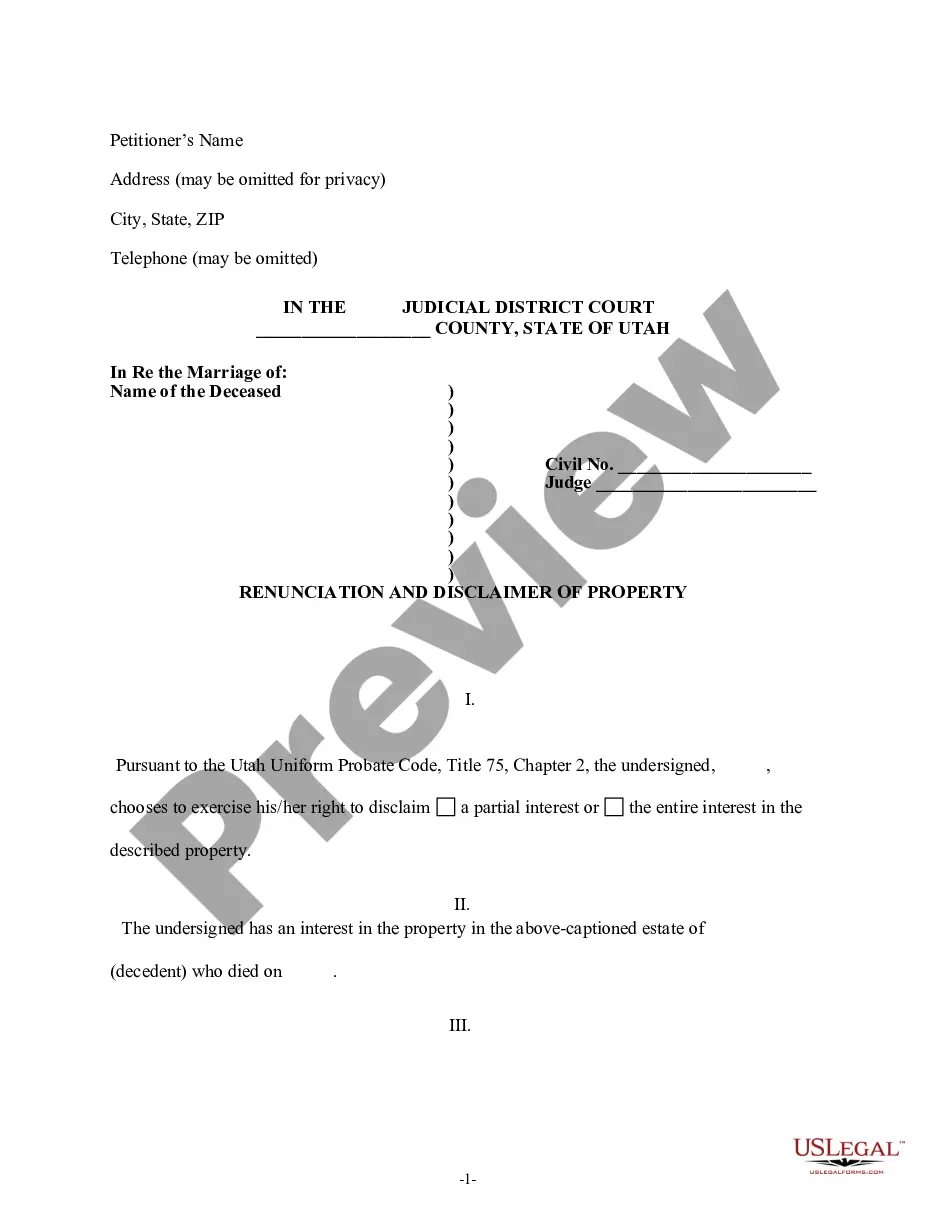
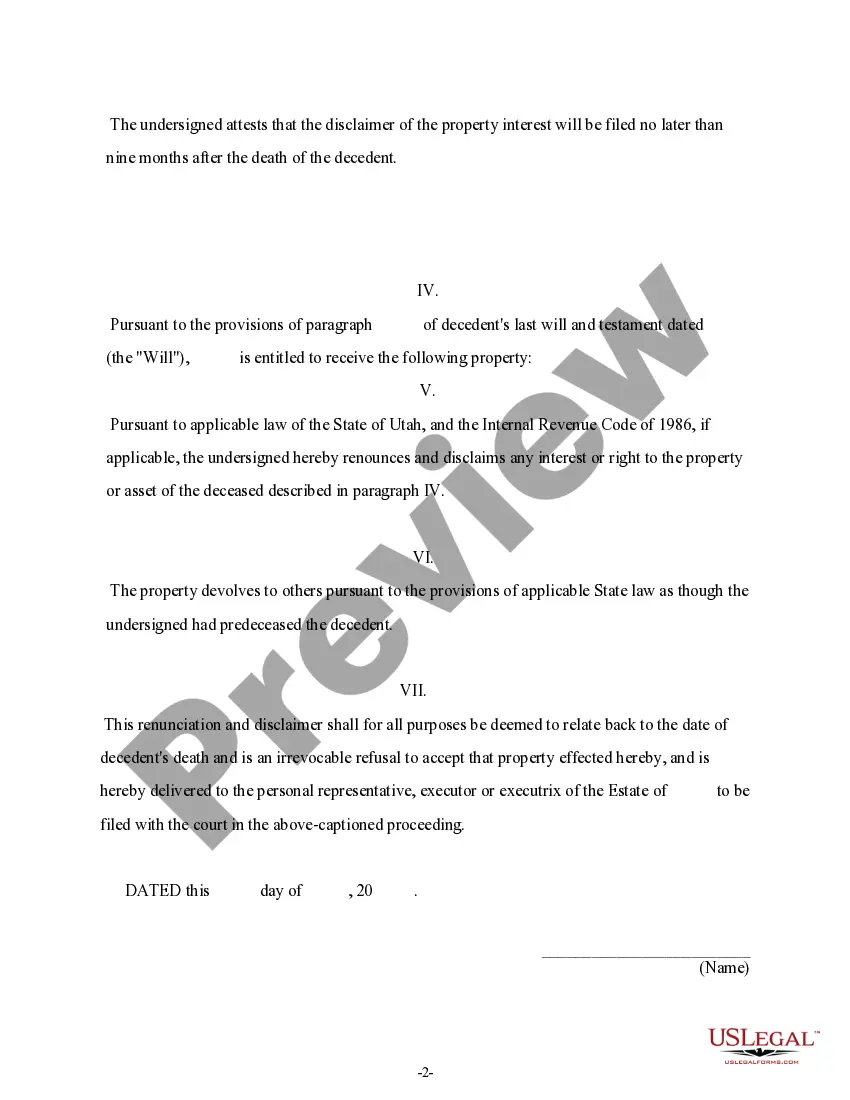
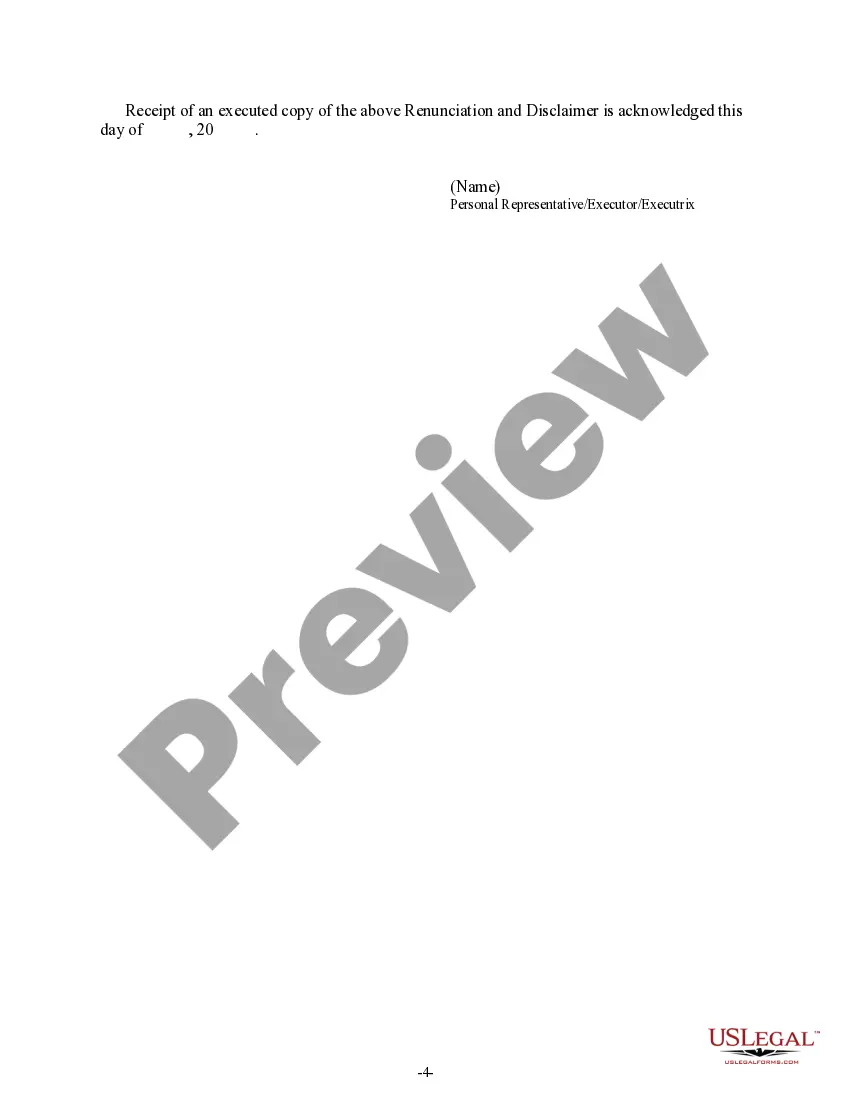
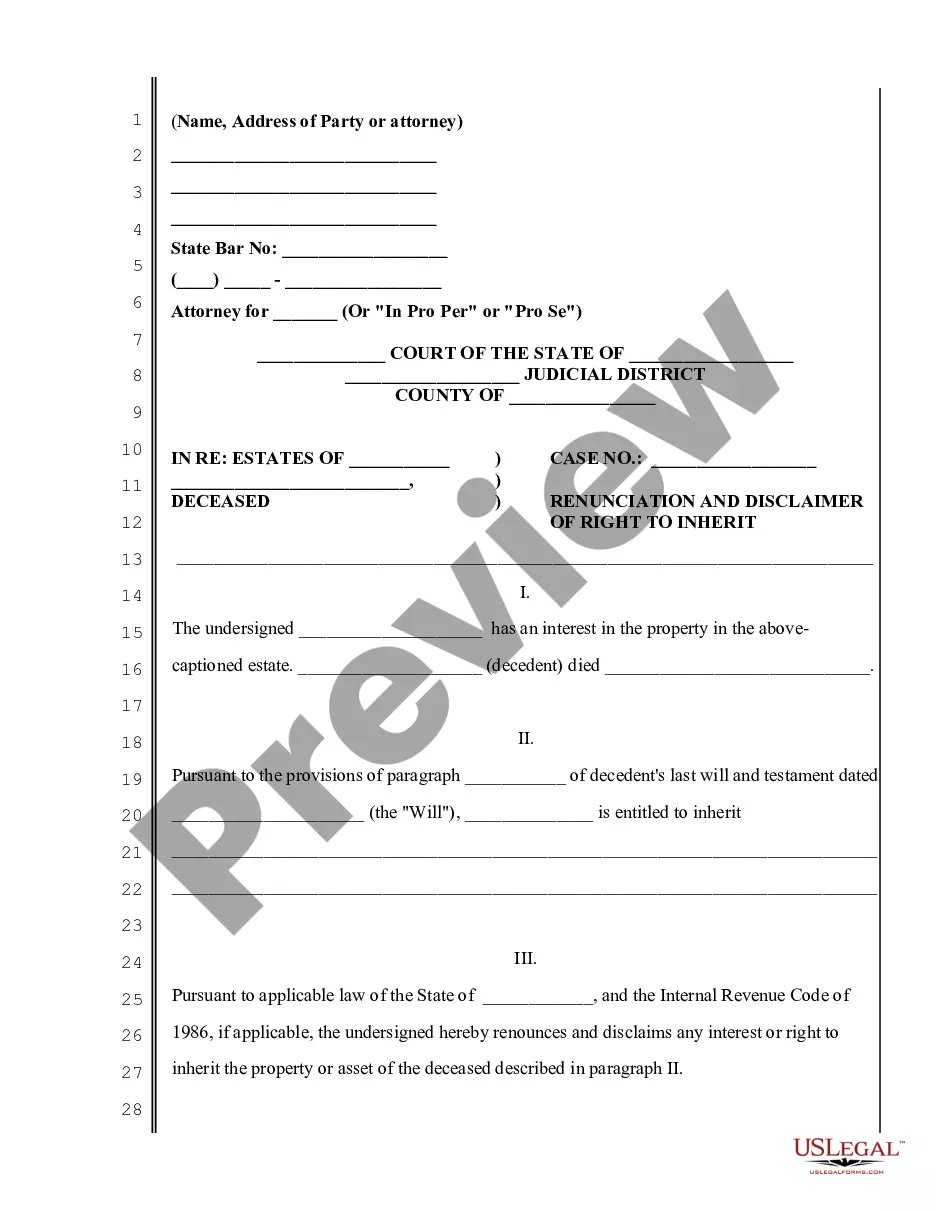
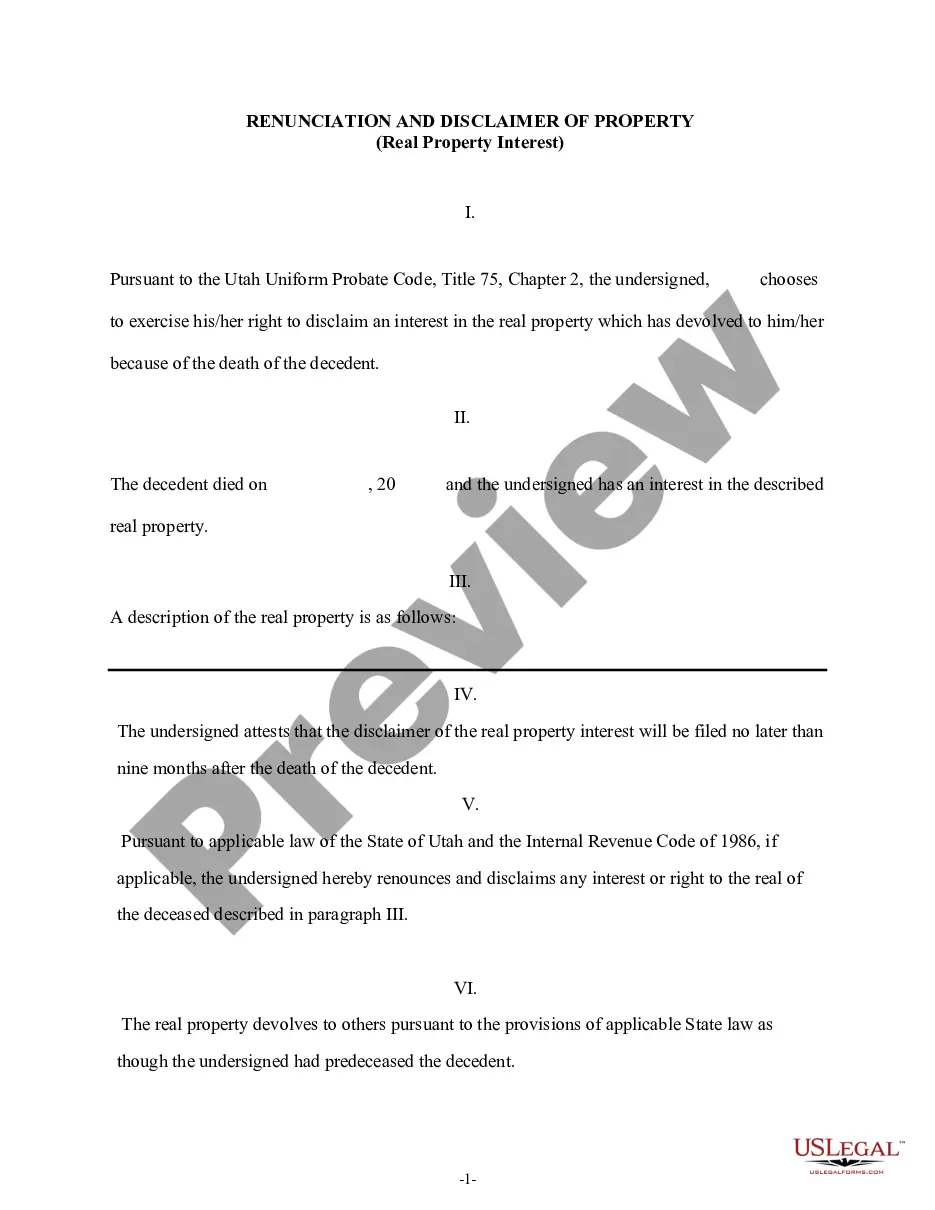
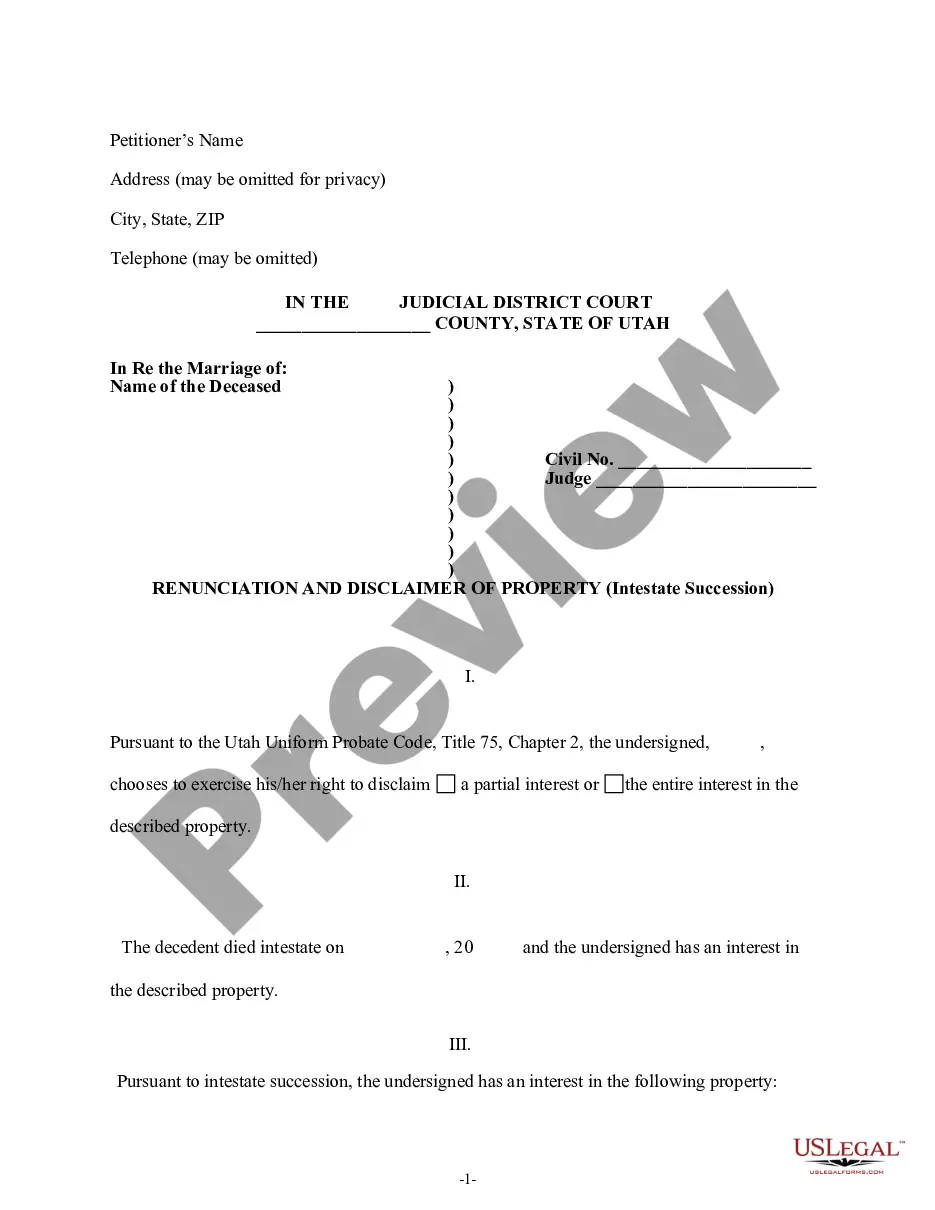
The Renunciation and Disclaimer of Property from Will by Testate is a legal document that allows a beneficiary to formally decline an inheritance received through a decedent's last will and testament. This document is important because it specifies that the property will be transferred to others, as if the beneficiary had predeceased the decedent. Unlike other forms that might simply transfer property, this one serves a distinct purpose in managing inheritance rights under the Utah Uniform Probate Code.
What’s included in this form
- Identification of the beneficiary renouncing their interest.
- Detailed description of the property being renounced.
- Declaration that the property will pass to others as if the beneficiary had predeceased the decedent.
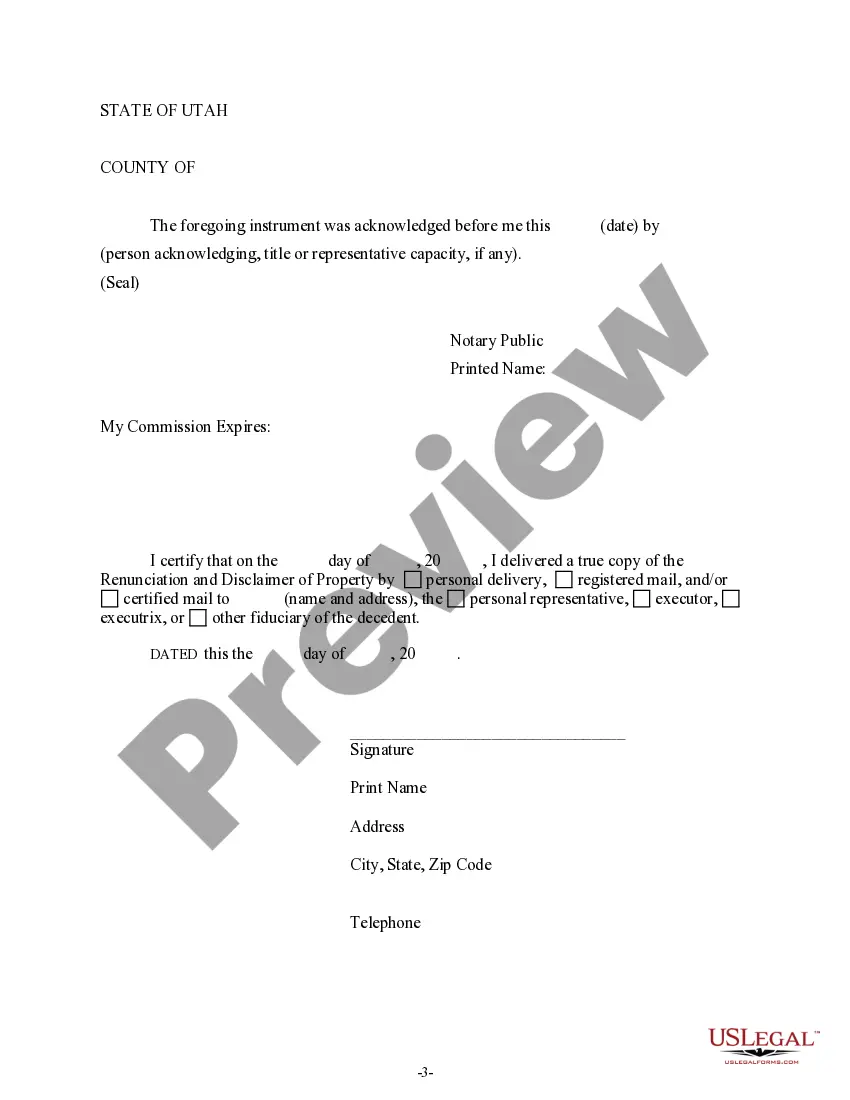
- State-specific acknowledgment requirements.
- Certificate for delivery verification of the document.
When this form is needed
This form is useful when a beneficiary receives property from a deceased person's will but wishes to refuse that inherited interest. Situations may include personal reasons for declining the inheritance, such as debts associated with the property or a desire to simplify the inheritance process for other heirs.
Intended users of this form
- Beneficiaries named in a will who wish to disclaim an inheritance.
- Individuals seeking to ensure proper legal documentation of their renunciation.
- Heirs concerned about liabilities that may come with accepting inherited property.
How to complete this form
- Identify the beneficiary who is renouncing their interest in the property.
- Specify the property in detail, including its legal description.
- Include a declaration regarding the passing of property to other beneficiaries as if the renouncing party had predeceased the decedent.
- Complete the required state-specific acknowledgment section.
- Sign and date the document to validate the renunciation.
Notarization requirements for this form
This form usually doesn’t need to be notarized. However, local laws or specific transactions may require it. Our online notarization service, powered by Notarize, lets you complete it remotely through a secure video session, available 24/7.
Get your form ready online
Our built-in tools help you complete, sign, share, and store your documents in one place.
Make edits, fill in missing information, and update formatting in US Legal Forms—just like you would in MS Word.
Download a copy, print it, send it by email, or mail it via USPS—whatever works best for your next step.
Sign and collect signatures with our SignNow integration. Send to multiple recipients, set reminders, and more. Go Premium to unlock E-Sign.
If this form requires notarization, complete it online through a secure video call—no need to meet a notary in person or wait for an appointment.
We protect your documents and personal data by following strict security and privacy standards.

Make edits, fill in missing information, and update formatting in US Legal Forms—just like you would in MS Word.

Download a copy, print it, send it by email, or mail it via USPS—whatever works best for your next step.

Sign and collect signatures with our SignNow integration. Send to multiple recipients, set reminders, and more. Go Premium to unlock E-Sign.

If this form requires notarization, complete it online through a secure video call—no need to meet a notary in person or wait for an appointment.

We protect your documents and personal data by following strict security and privacy standards.
Common mistakes to avoid
- Failing to provide a detailed description of the property.
- Not signing the document, which can lead to invalidation.
- Overlooking state-specific acknowledgment requirements.
Advantages of online completion
- Convenient access to the form at any time and from any location.
- Easy editing and customization to meet specific needs.
- Reliability of forms drafted by licensed attorneys, ensuring legal compliance.
What to keep in mind
- The Renunciation and Disclaimer of Property allows a beneficiary to decline an inheritance.
- The form ensures the property passes to other heirs as if the renouncing party had predeceased the decedent.
- It is essential for beneficiaries in Utah to follow state-specific guidelines when completing this form.
Looking for another form?
Form popularity
FAQ
Jointly owned property is treated as consisting of a both present and a future interest in the jointly owned property. Thus, a surviving spouse may disclaim the future interest in jointly owned property on the death of their spouse, including assets that were held by the spouses as tenants by the entirety.
Yes, a fiduciary can disclaim an interest in property if the will, trust or power of attorney gives the fiduciary that authority or if the appropriate probate court authorizes the disclaimer.The primary reason an executor or trustee might disclaim property passing to an estate or trust is to save death taxes.
Disclaiming means that you give up your rights to receive the inheritance. If you choose to do so, whatever assets you were meant to receive would be passed along to the next beneficiary in line. It's not typical for people to disclaim inheritance assets.
The disclaimer deed is a legal document that has legal consequences. Further, the disclaimer deed will clearly state that the spouse signing it is waiving (disclaiming) any interest in the house being purchased.
What is a Deed of Disclaimer? A Deed of Disclaimer is a document that you can execute if you wish to Disclaim an inheritance due via the Rules of Intestacy and you are not applying for probate. A typical example of this is if a spouse of a deceased would prefer the estate passes to the children.
Put the disclaimer in writing. Deliver the disclaimer to the person in control of the estate usually the executor or trustee. Complete the disclaimer within nine months of the death of the person leaving the property. Do not accept any benefit from the property you're disclaiming.
Disclaim, in a legal sense, refers to the renunciation of an interest in, or an acceptance of, inherited assets, such as property, by way of a legal instrument. A person disclaiming an interest, right, or obligation is known as a disclaimant.
In New South Wales, the Registrar General is able record the State of New South Wales as the proprietor of disclaimed land. The land will remain subject to any charges and mortgages despite the change in proprietor.