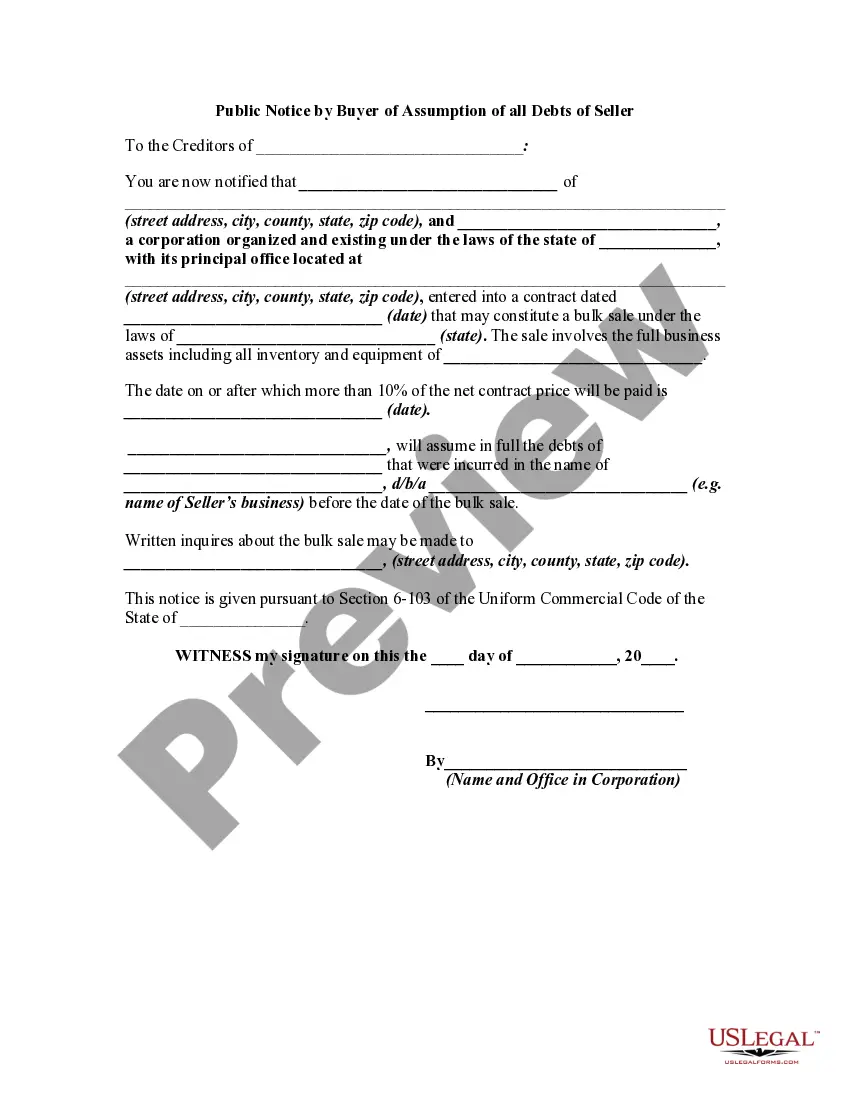
Utah Residential Construction Loan Agreement
What this document covers
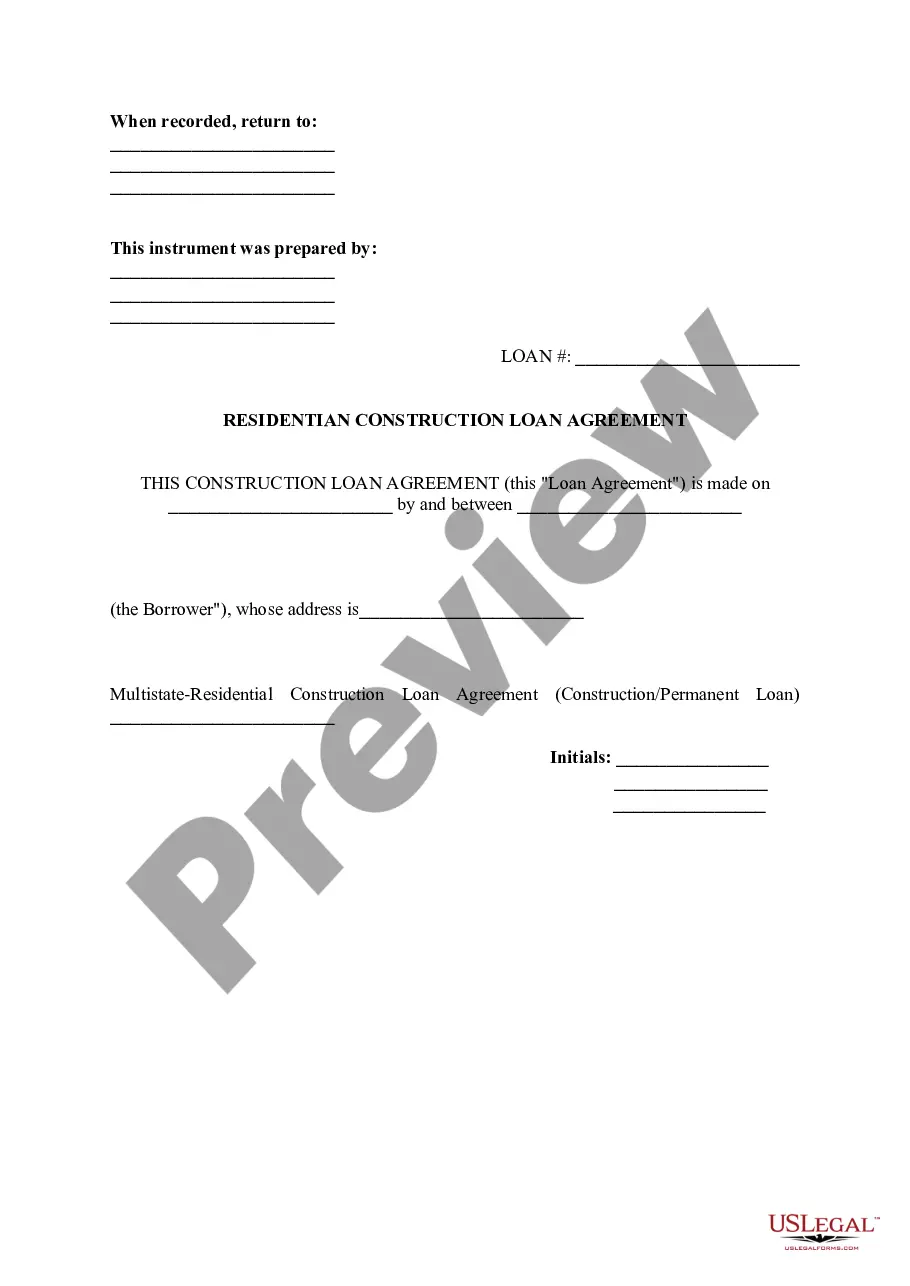
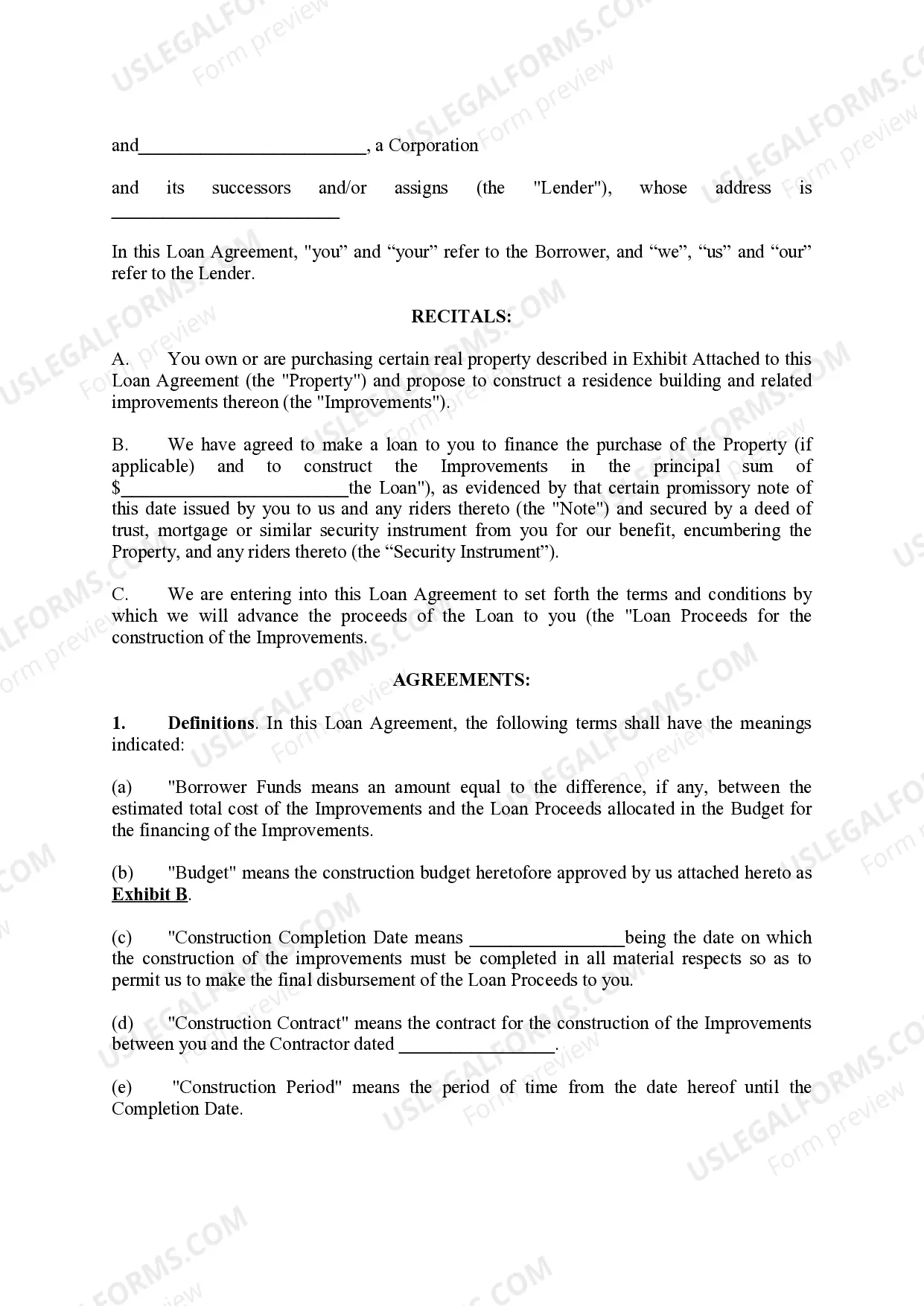
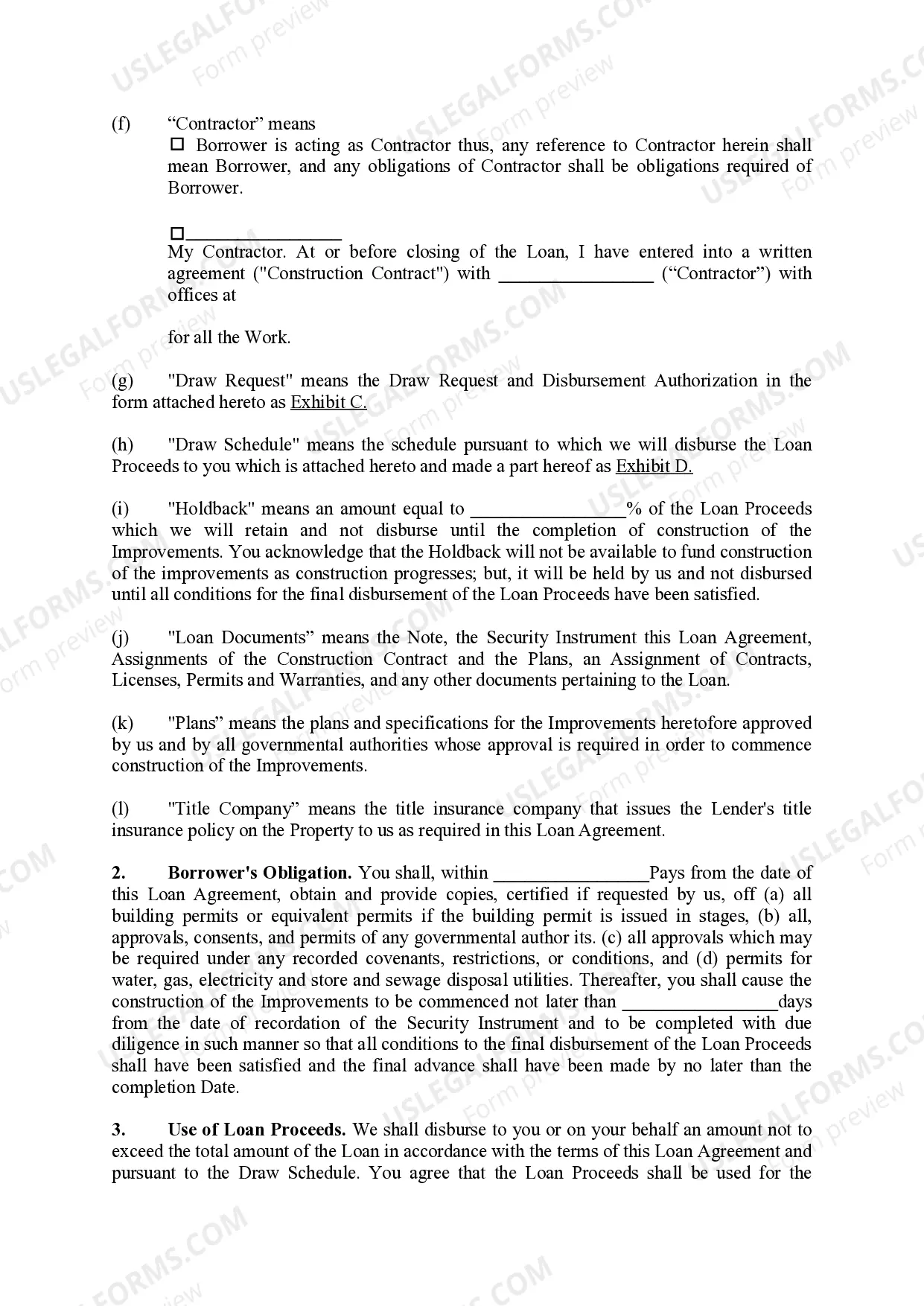
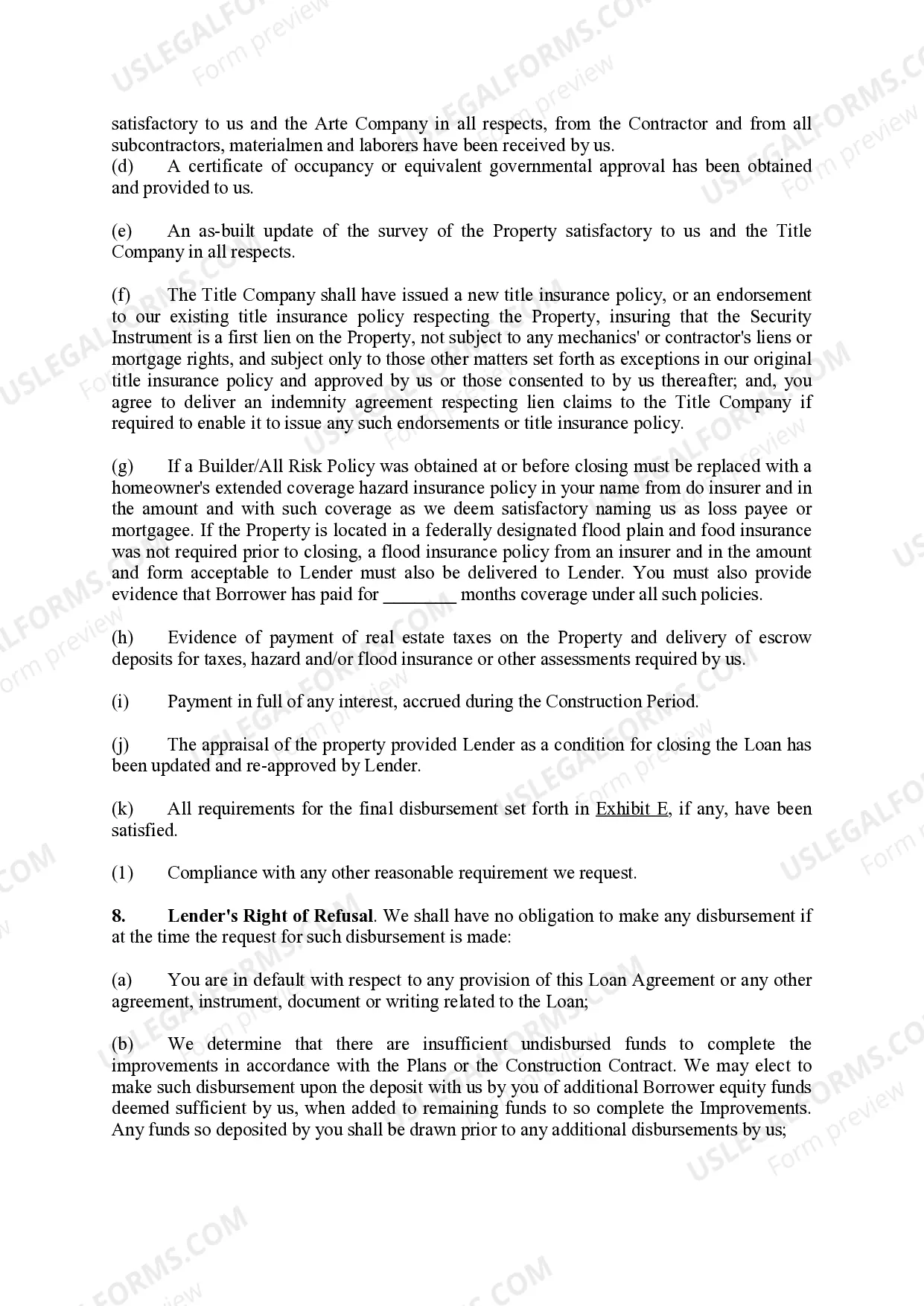
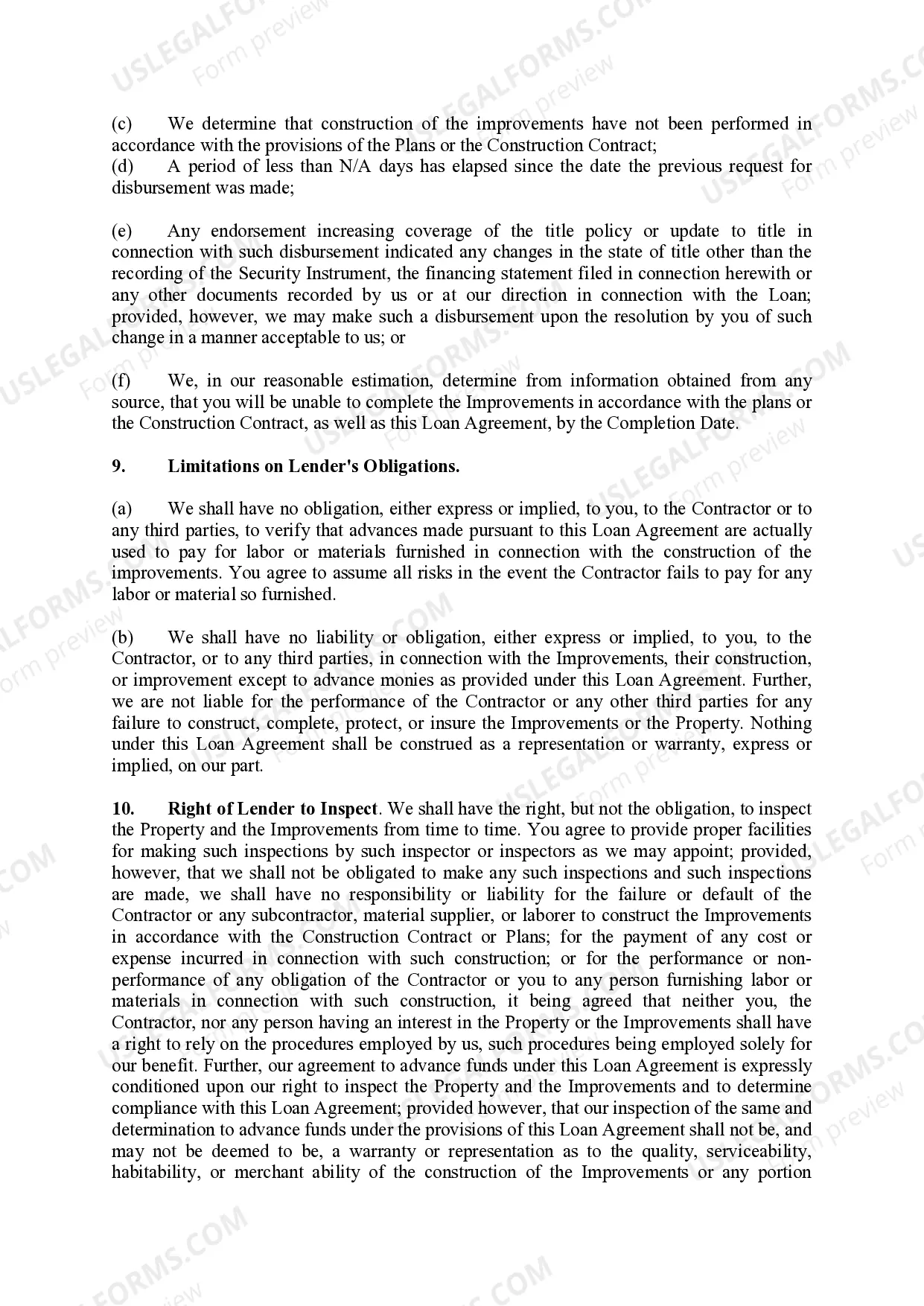
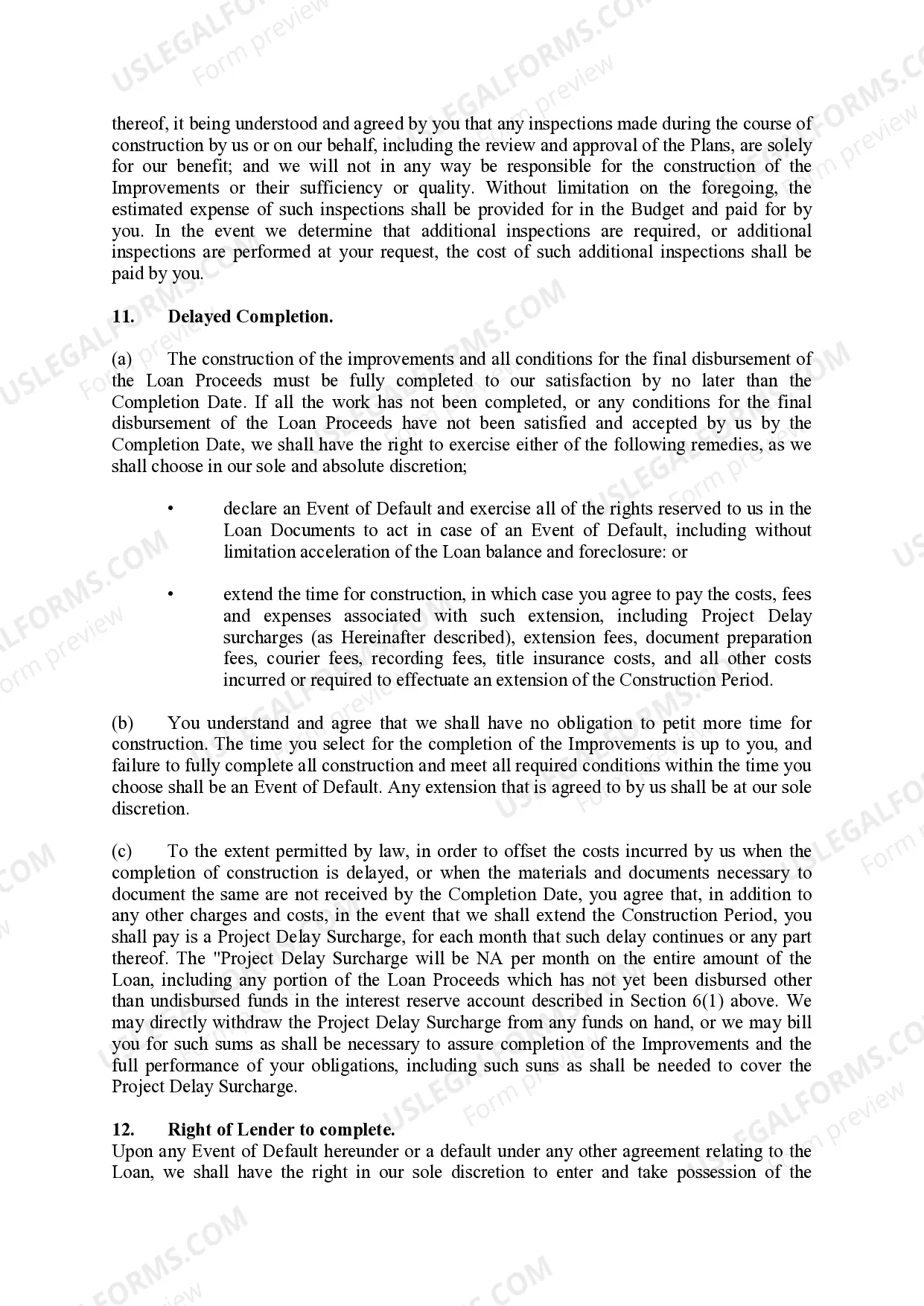
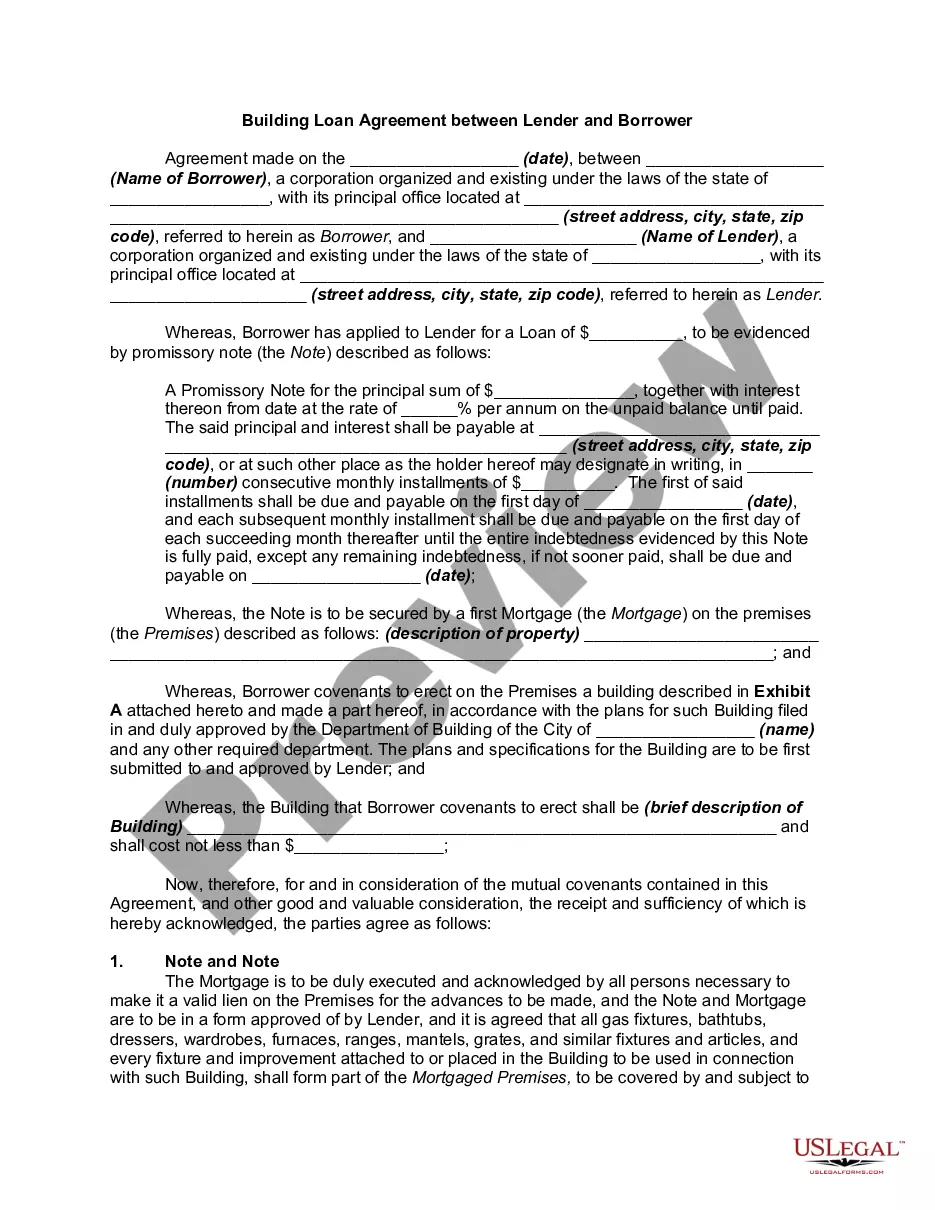
The Residential Construction Loan Agreement is a legally binding document used to establish the terms under which a borrower obtains a short-term loan for building residential properties. This form details the conditions regarding the loan amount, repayment schedules, and obligations of both parties involvedâthe borrower and the lender. Unlike conventional mortgages, this agreement focuses specifically on the construction aspects and interim financing required to complete a property project.
What’s included in this form
- Loan amount and terms
- Detailed construction budget and plans
- Borrower's obligations regarding permits and approvals
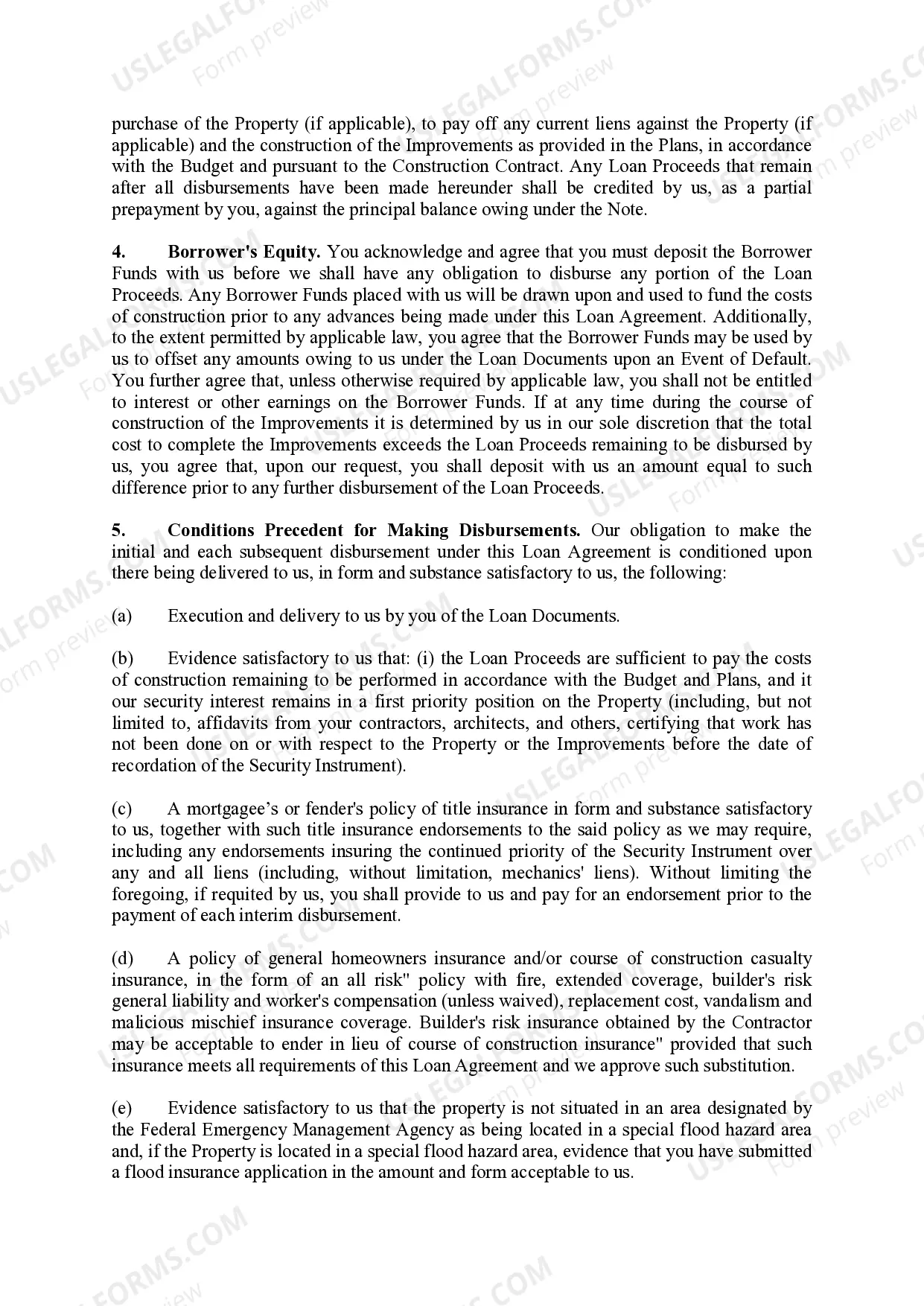
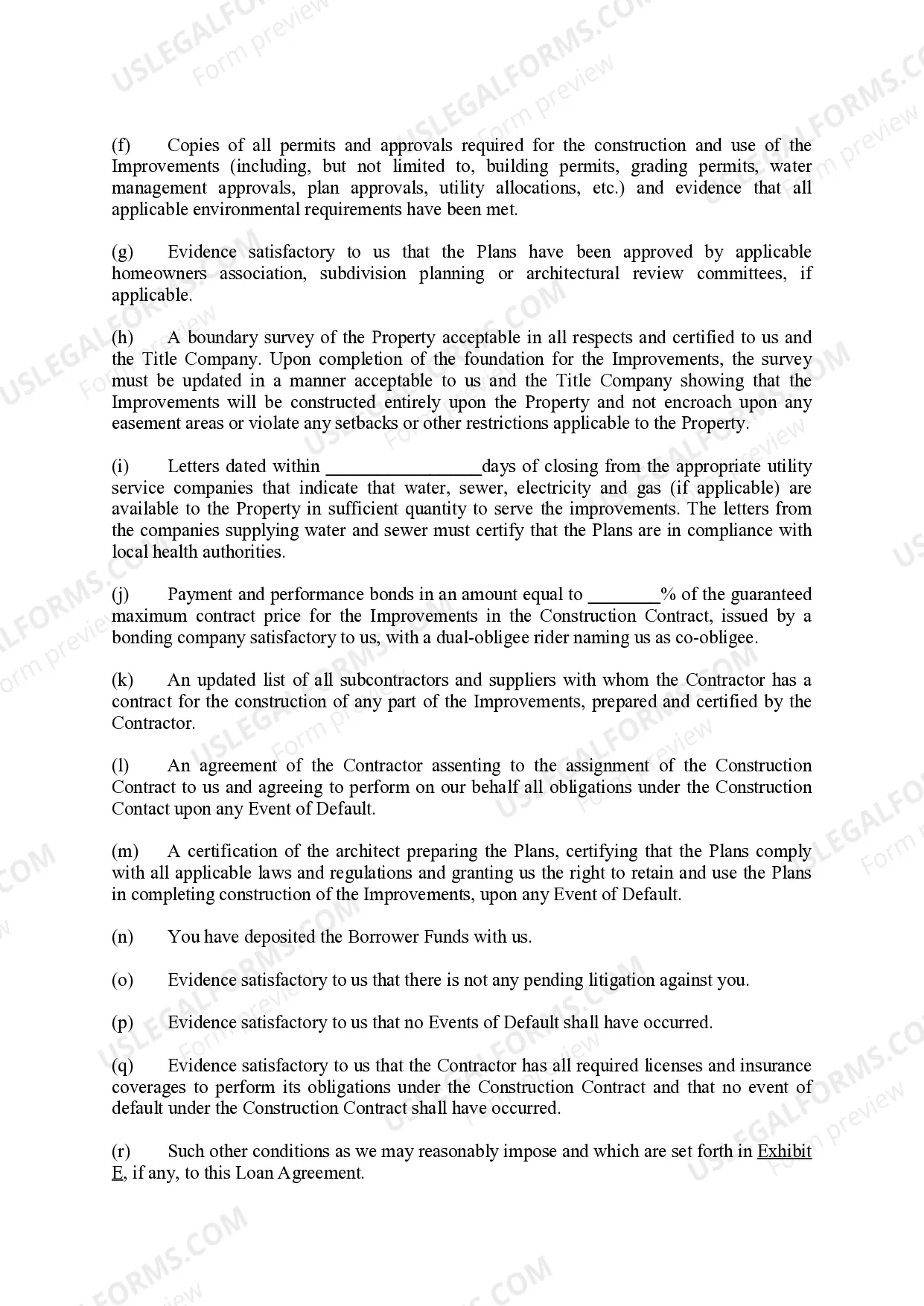
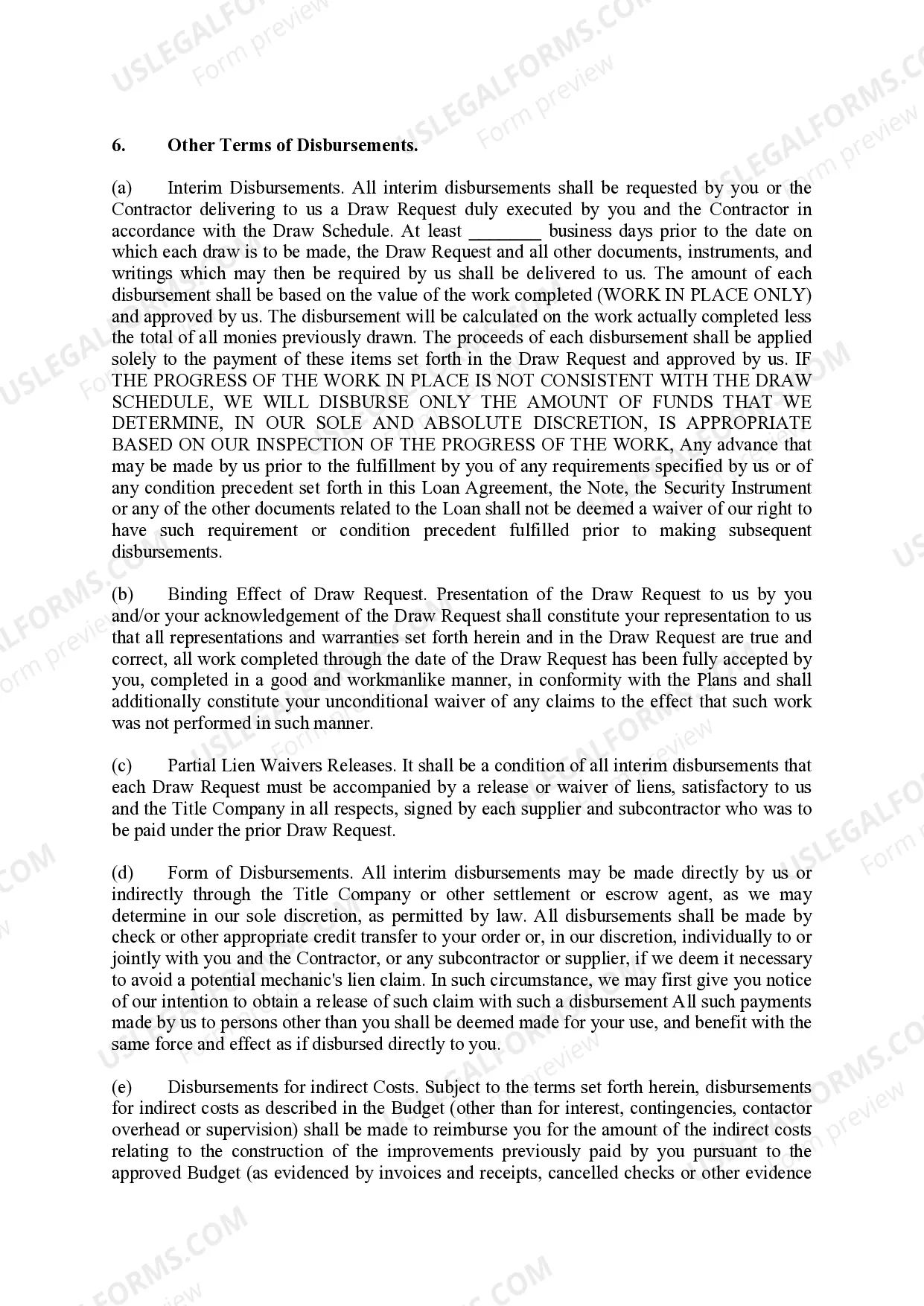
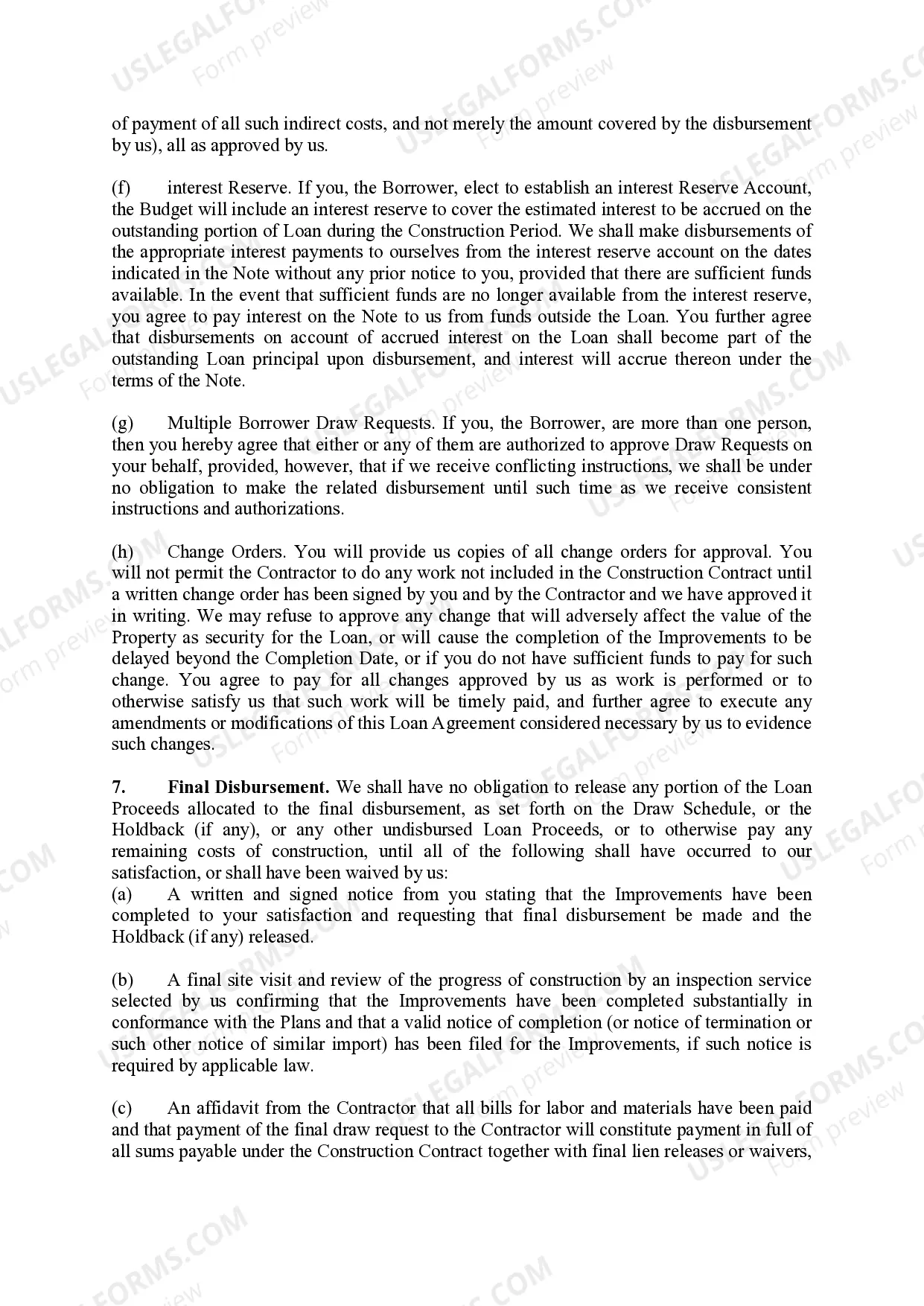
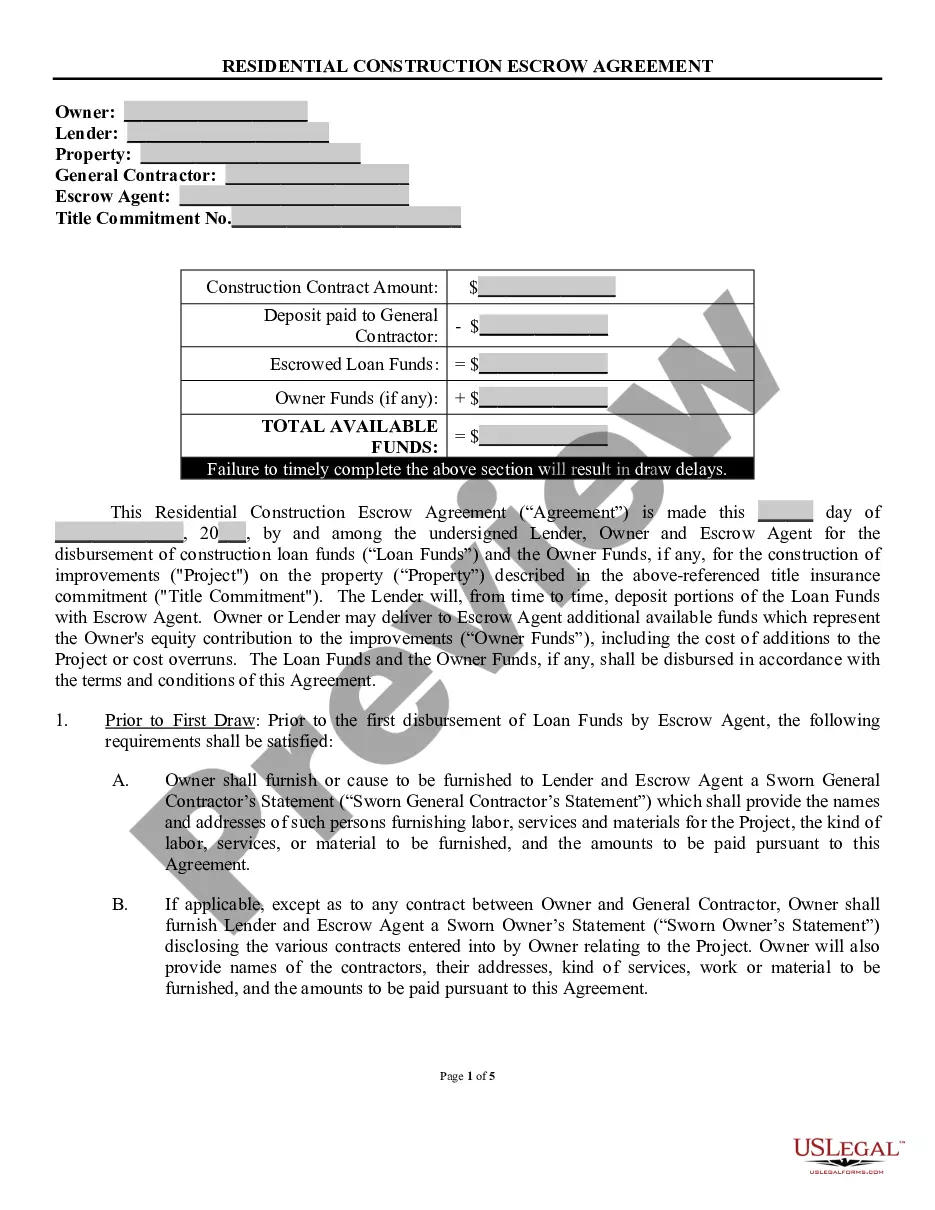
- Conditions for disbursement of loan proceeds
- Definition of project completion and inspections
- Events of default and remedies for the lender

Common use cases
This form is essential when you need to finance the construction of a new home or any major residential improvement project. It is particularly useful if you are a builder or home buyer who requires temporary financing to cover the costs of construction until more permanent financing is secured. It ensures clarity on the finances and responsibilities involved throughout the construction process.
Who this form is for
- Home buyers looking to finance construction of a new residence.
- Contractors seeking funding to complete constructions with specific financial agreements.
- Real estate developers managing residential projects requiring substantial upfront capital.
- Lenders offering construction loans to borrowers to facilitate home building efforts.
How to complete this form
- Identify the parties involved: Enter the names of the borrower and lender, along with their respective addresses.
- Specify the property details: Include legal descriptions of the property where the construction will take place.
- Outline the loan terms: Fill in the loan amount, interest rates, and repayment terms as agreed upon.
- Set completion timelines: Include deadlines for obtaining necessary permits and completing construction.
- Review and sign: Ensure that both parties sign the document and provide any required notarial certifications, if applicable.
Notarization requirements for this form
This form does not typically require notarization unless specified by local law. However, for added legal protection and to facilitate validation during the loan and construction processes, it may be beneficial to have the signatures notarized.
Get your form ready online
Our built-in tools help you complete, sign, share, and store your documents in one place.
Make edits, fill in missing information, and update formatting in US Legal Forms—just like you would in MS Word.
Download a copy, print it, send it by email, or mail it via USPS—whatever works best for your next step.
Sign and collect signatures with our SignNow integration. Send to multiple recipients, set reminders, and more. Go Premium to unlock E-Sign.
If this form requires notarization, complete it online through a secure video call—no need to meet a notary in person or wait for an appointment.
We protect your documents and personal data by following strict security and privacy standards.

Make edits, fill in missing information, and update formatting in US Legal Forms—just like you would in MS Word.

Download a copy, print it, send it by email, or mail it via USPS—whatever works best for your next step.

Sign and collect signatures with our SignNow integration. Send to multiple recipients, set reminders, and more. Go Premium to unlock E-Sign.

If this form requires notarization, complete it online through a secure video call—no need to meet a notary in person or wait for an appointment.

We protect your documents and personal data by following strict security and privacy standards.
Common mistakes
- Failing to include all relevant parties and their details in the agreement.
- Not specifying or detailing the construction budget accurately.
- Omitting the necessary documentation and permits required before construction begins.
- Ignoring local laws and requirements that might affect the construction process.
- Neglecting to have the document reviewed by a legal professional for compliance.
Why complete this form online
- Convenience of accessing and completing the form at any time.
- Editability to ensure accuracy before finalizing the document.
- Instant access to expert-crafted templates for legal security.
- Time-saving through online submission and management of documents.
- Easy storage and retrieval for future reference or updates.
Looking for another form?

Form popularity
FAQ
Private lenders may offer construction loans to qualified borrowers with a 5 to 10 percent down payment requirement.
Construction loans for residential homes They come in two types:You'll make interest-only payments during the construction phase, and when the home is built, it will roll over into a regular principal-plus-interest mortgage payment like a traditional home loan.
Traditionally financed construction loans will require a 20% down payment, but there are government agency programs that lenders can use for lower down payments. Lenders who offer VA and USDA loans are able to qualify borrowers for 0% down. For FHA loans, your down payment could be as low as 3.5%.
Since there's no physical house available for collateral with a construction loan, excellent credit is key. Many lenders also require a 20% down payment for a construction loan, and no lender will approve a loan unless they're confident the borrower can make the monthly interest payments during construction.
Typically, a score of at least 680 and a down payment of at least 20% is needed. They have higher interest rates: Construction loans typically have variable interest rates that correspond to a certain percentage over the prime rate, or the rate that banks give their best customers.
So, for instance, if the home is appraised to be worth $500,000, they will loan you $500,000 x (80% as an example) = $400,000. The down payment will be your construction costs less the value of your loan. So, if the construction is quoted to cost $500,000, your down payment will be $500,000 - $400,000 = $100,000.
It's harder to get approved for a construction loan than for a typical purchase mortgage, Moralez and Thomas say. That's because the bank is taking extra risk during the building phase, since there isn't an asset to secure the mortgage. Typical down payments are around 20%.
A home construction loan is used to cover the costs of building a home. Once the funds from the construction loan have been used and the house has been built, these loans are typically converted or refinanced into a standard, long-term mortgage loan.
Construction loans are considered higher risk. You will need strong credit and a down payment of 20% to 25%. The specific down payment requirement is determined by the cost of the land and planned construction. If you already own the land, you can use it as equity for your construction loan.