California Postnuptial Property Agreement
What is this form?
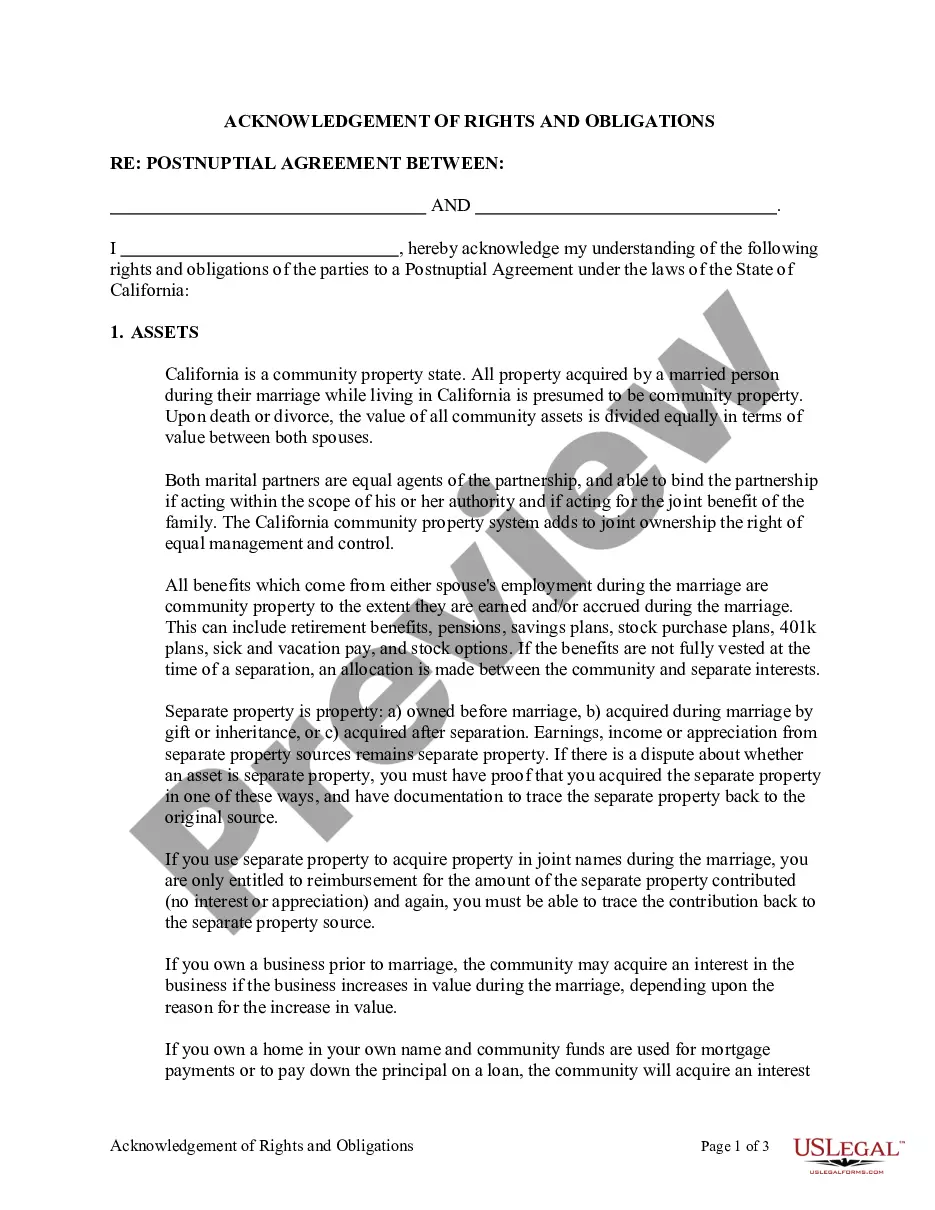
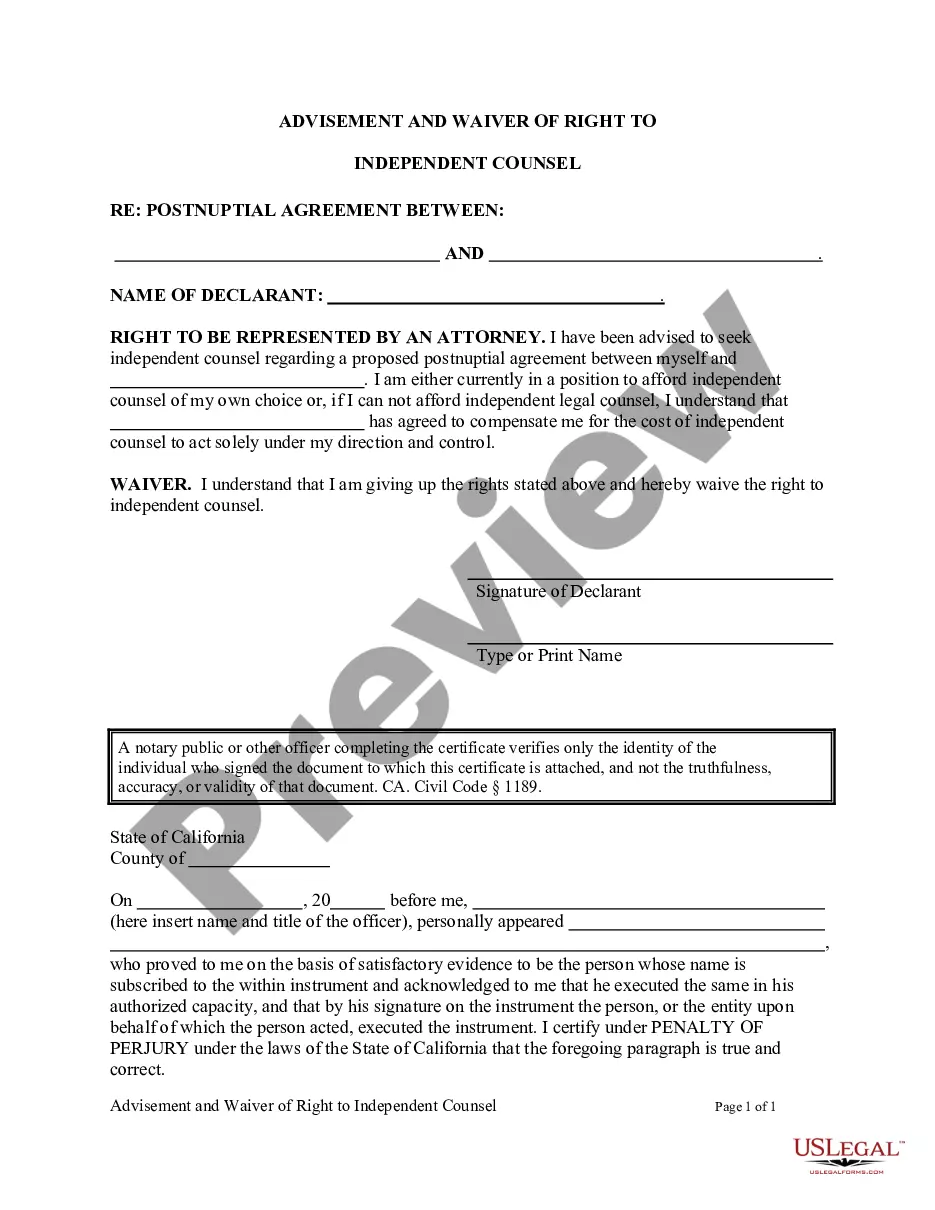
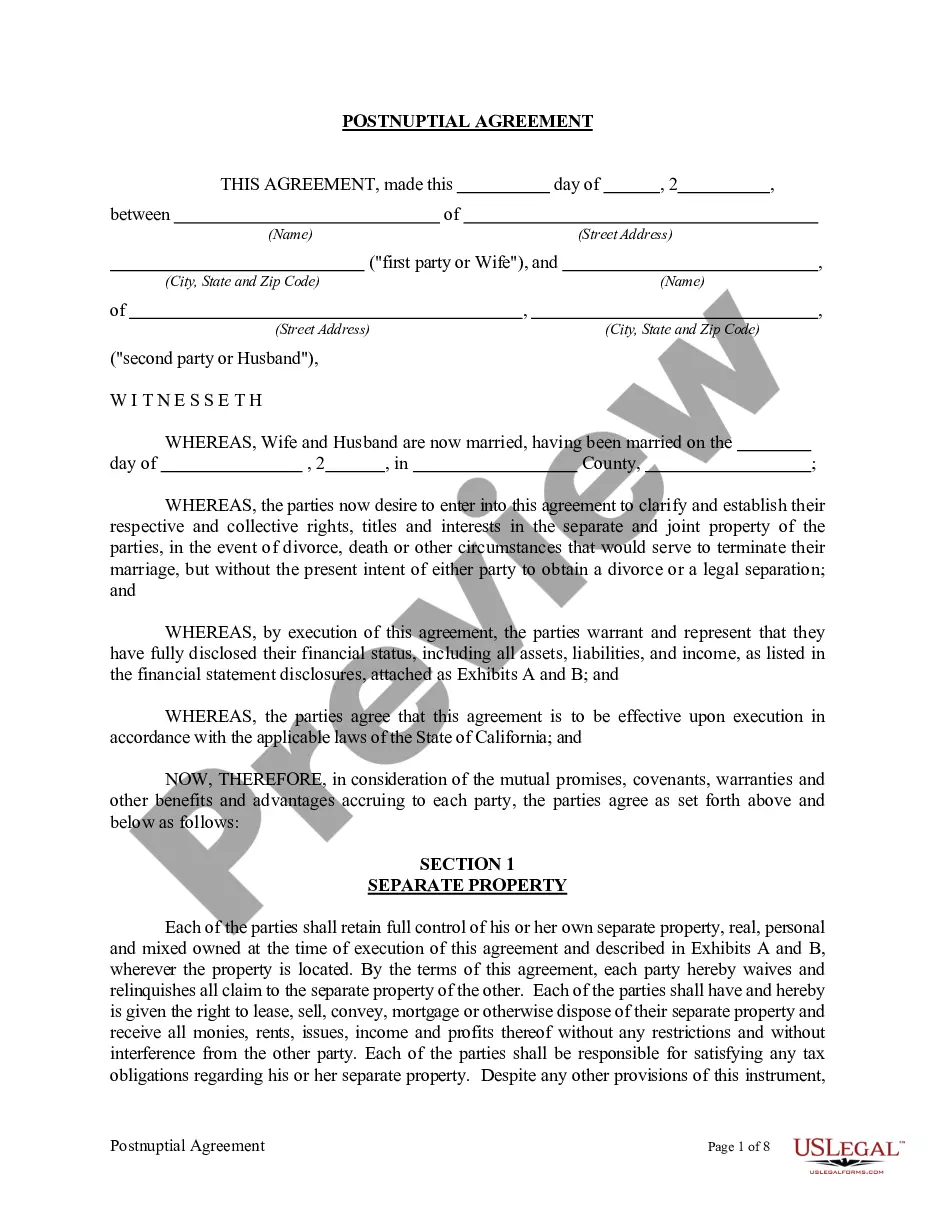
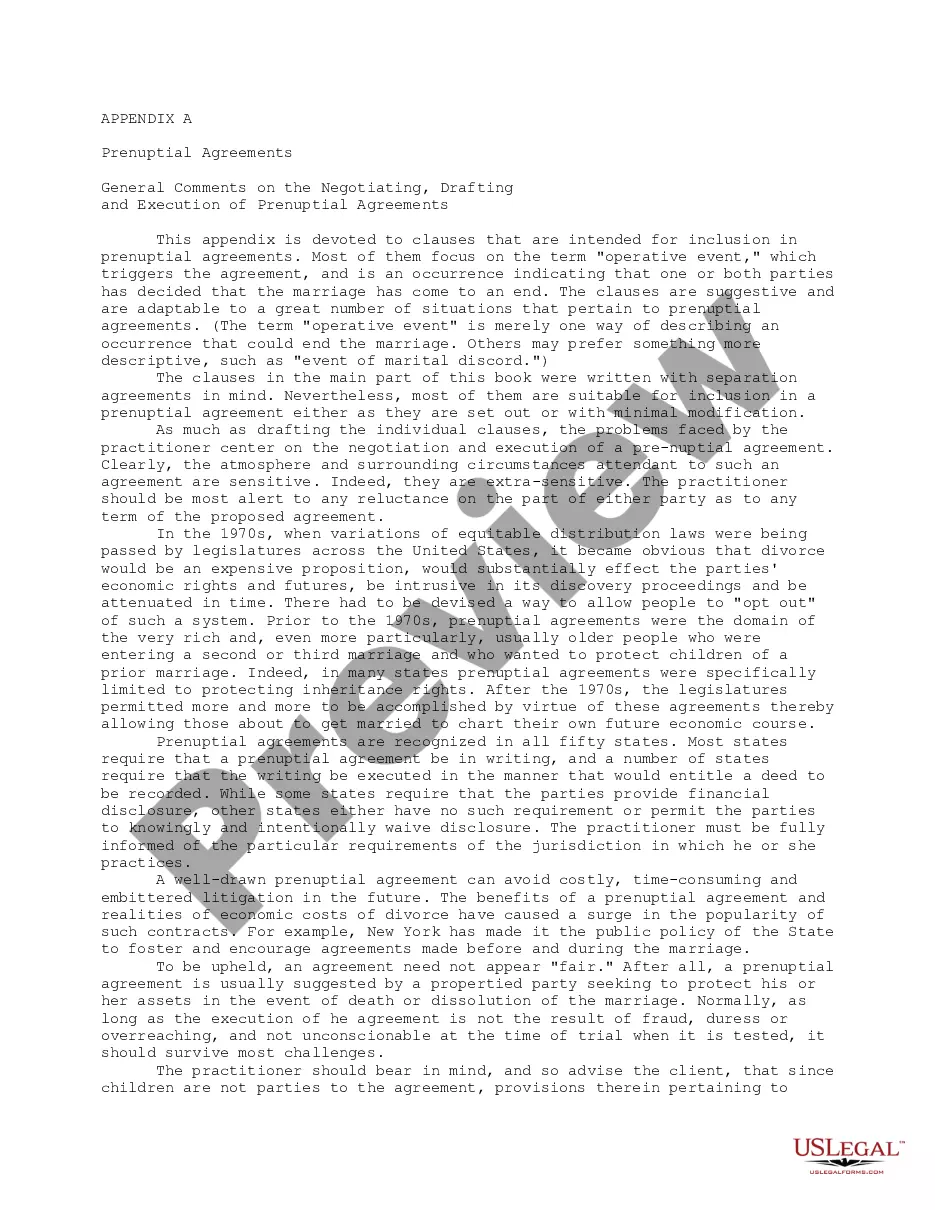
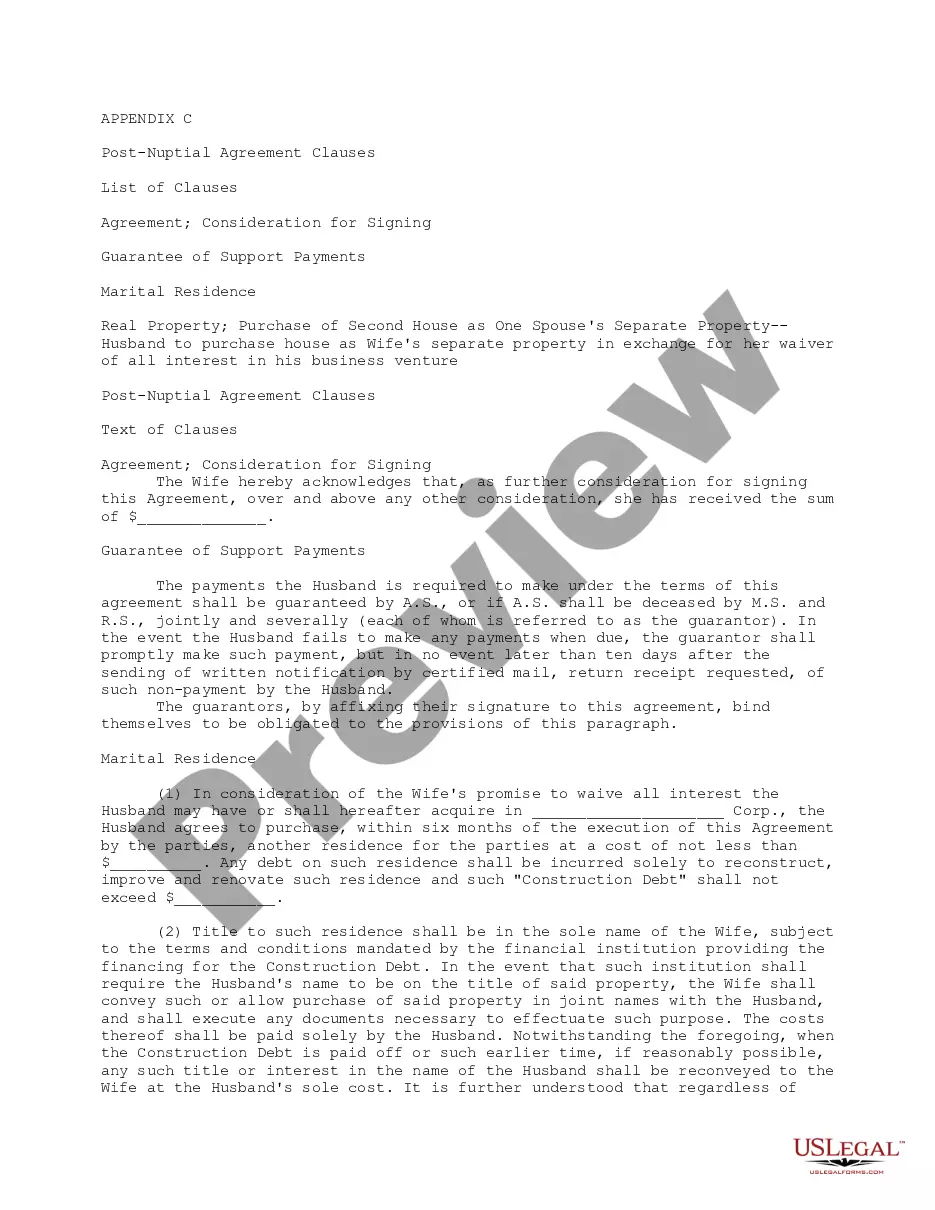
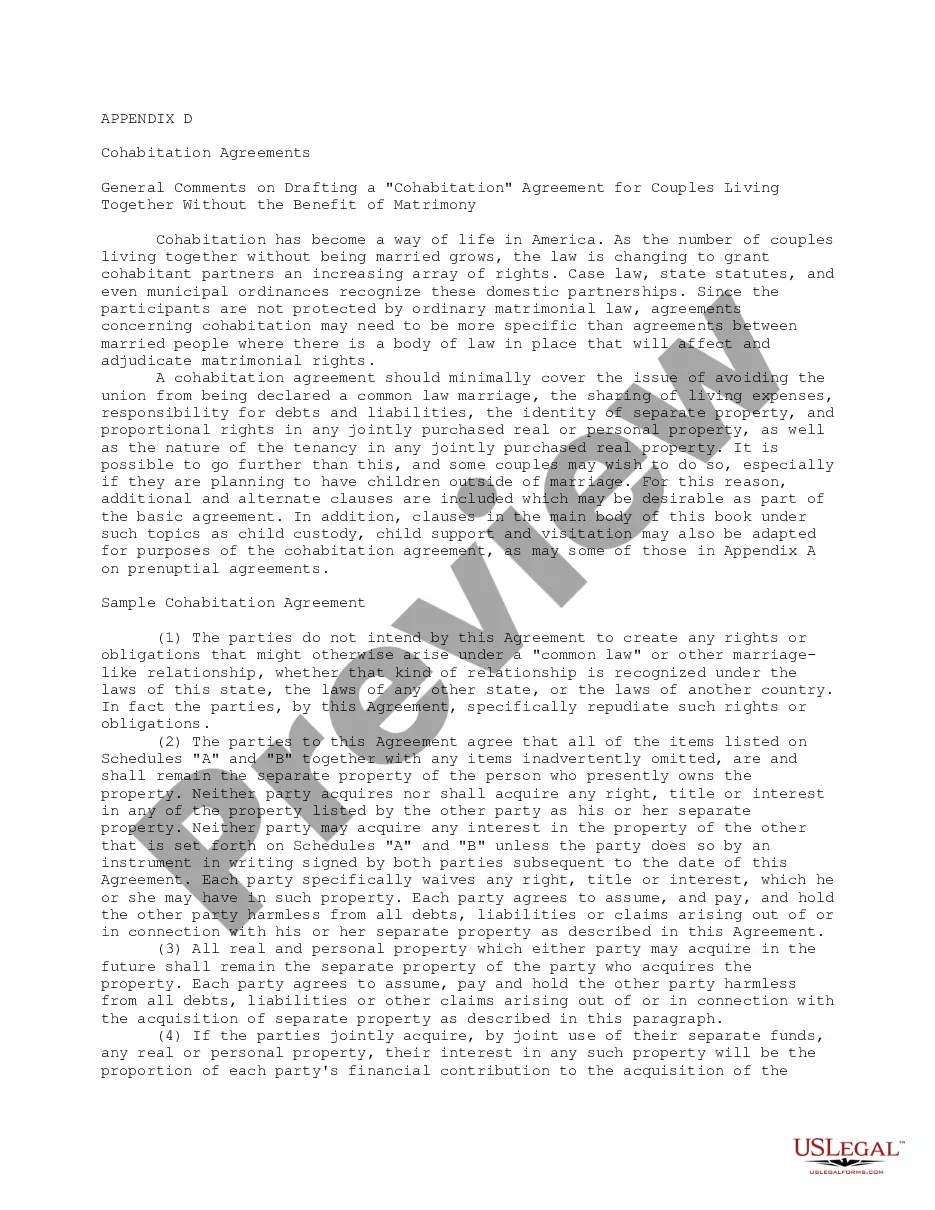
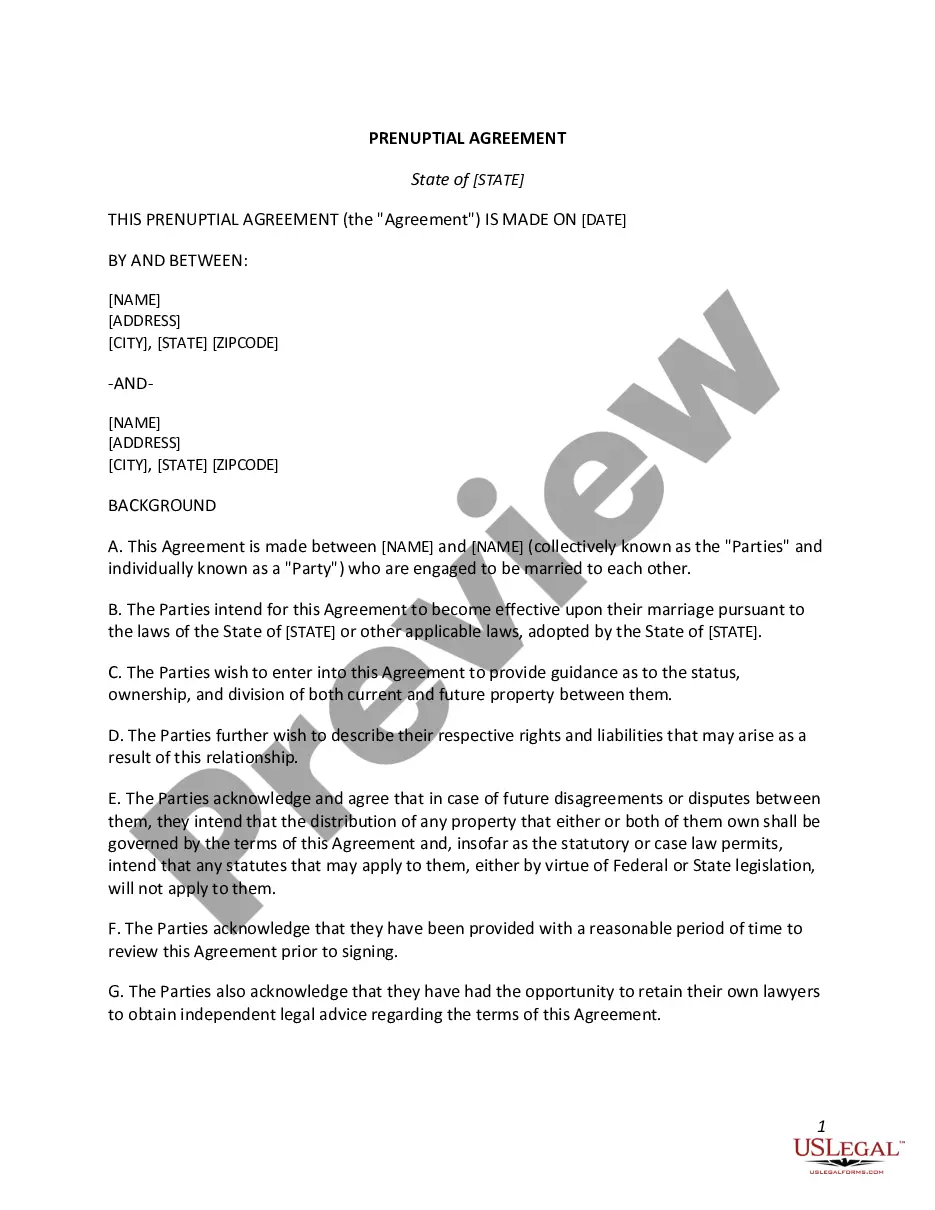
The Postnuptial Property Agreement is a legal document designed to clarify and define the rights of married couples regarding their individual and joint property. Unlike a prenuptial agreement, which is executed before marriage, this form is created after the marriage has taken place. Its primary purpose is to manage financial aspects and property rights, ensuring both parties understand their entitlements in the event of separation or divorce.
Key parts of this document
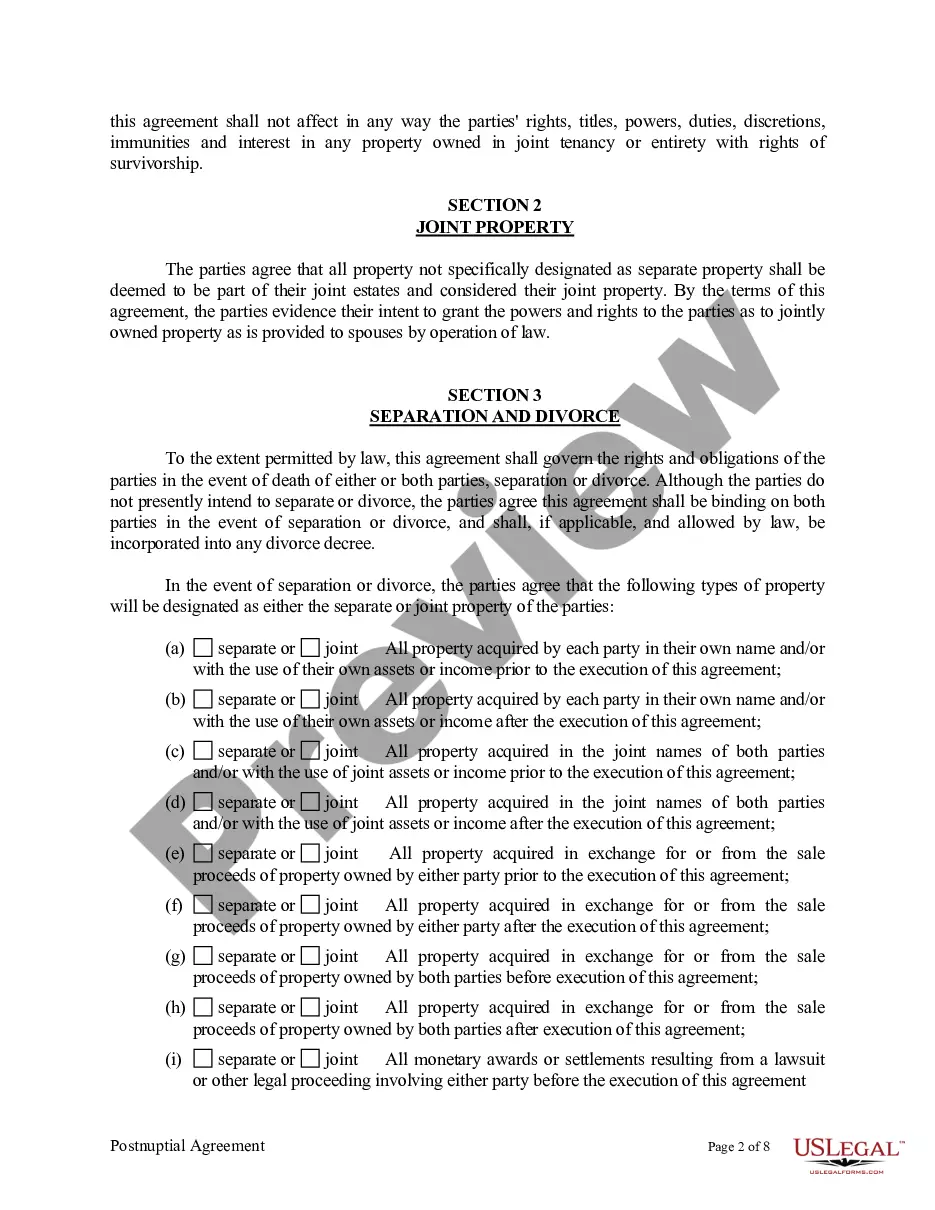
- Definitions of separate and joint property and how they are managed.
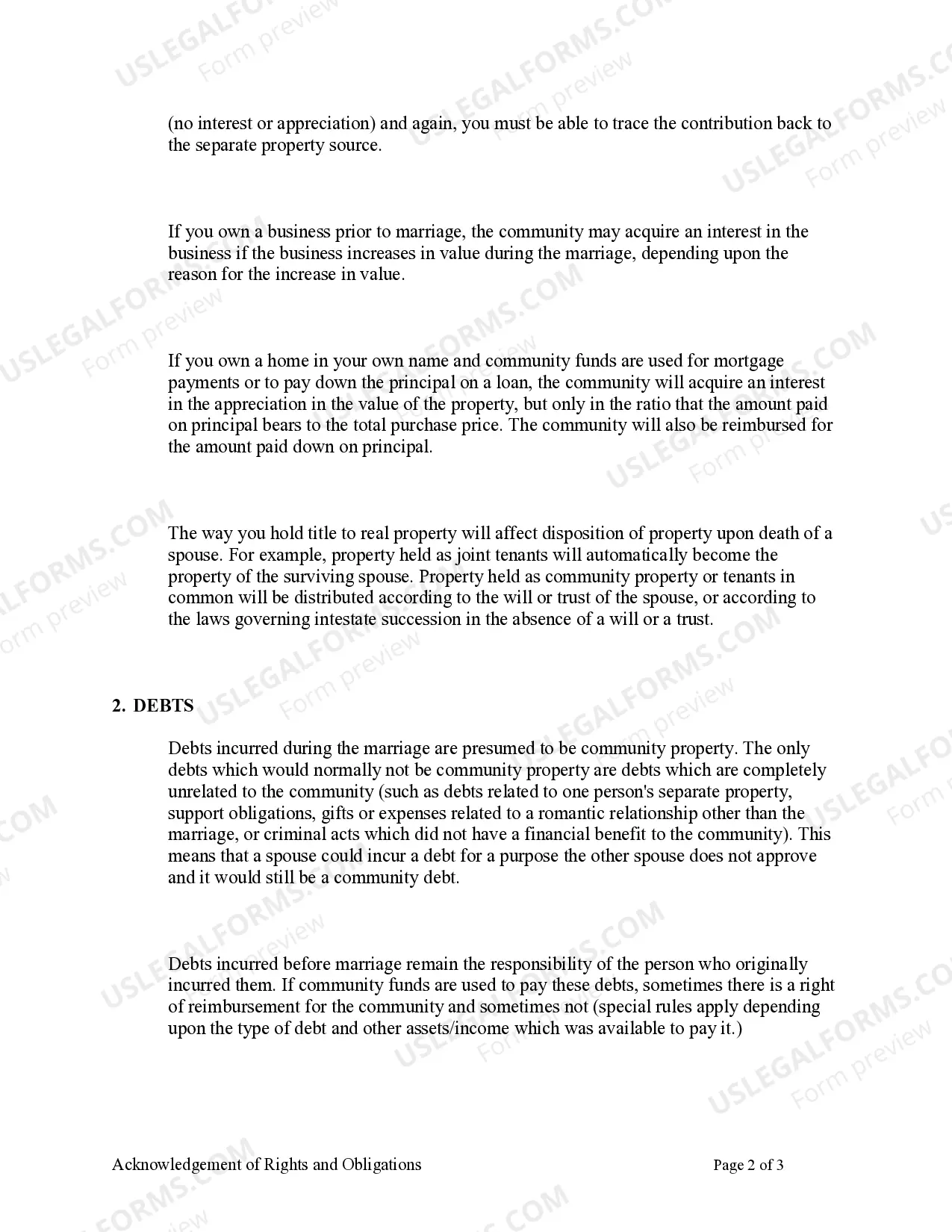
- Provisions for assets and debts incurred during the marriage.
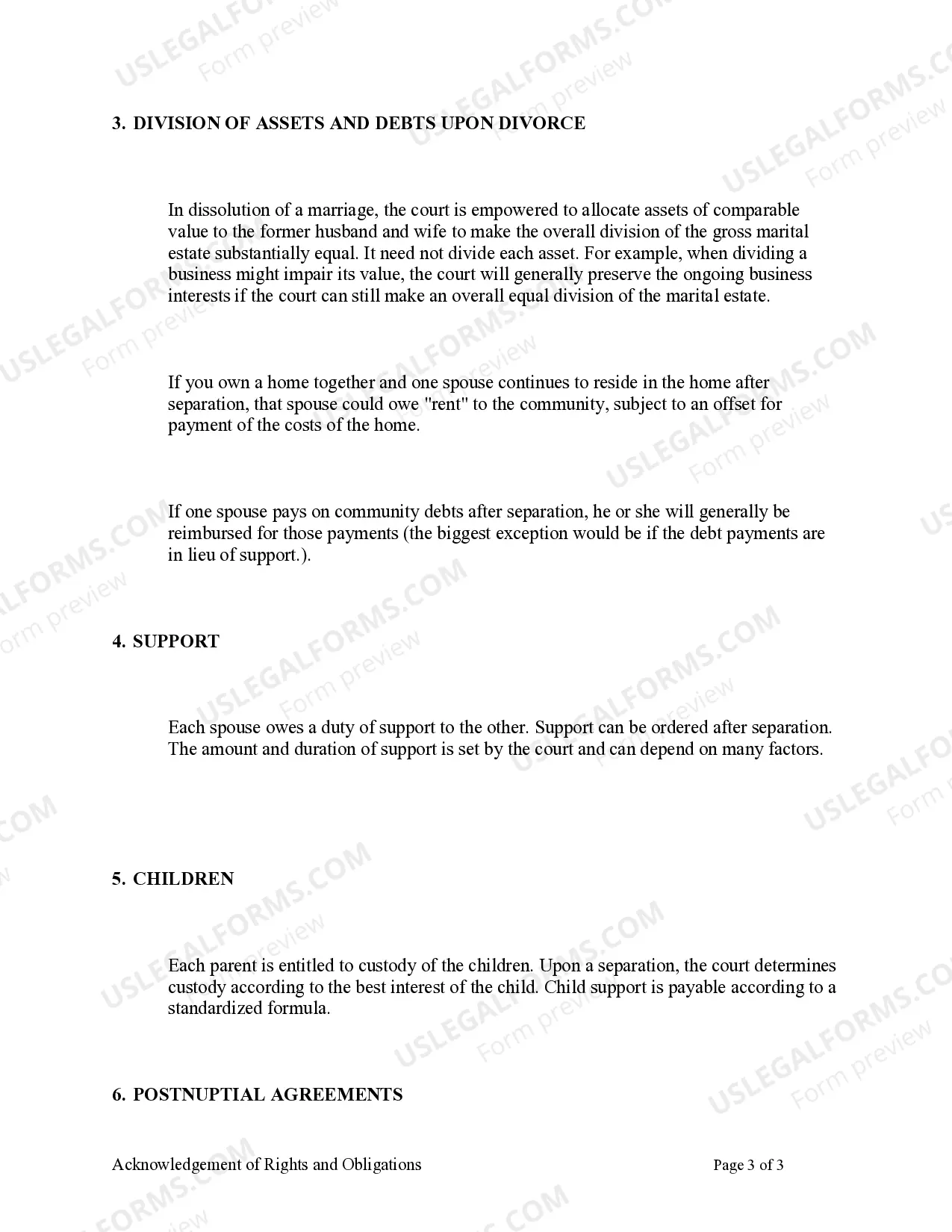
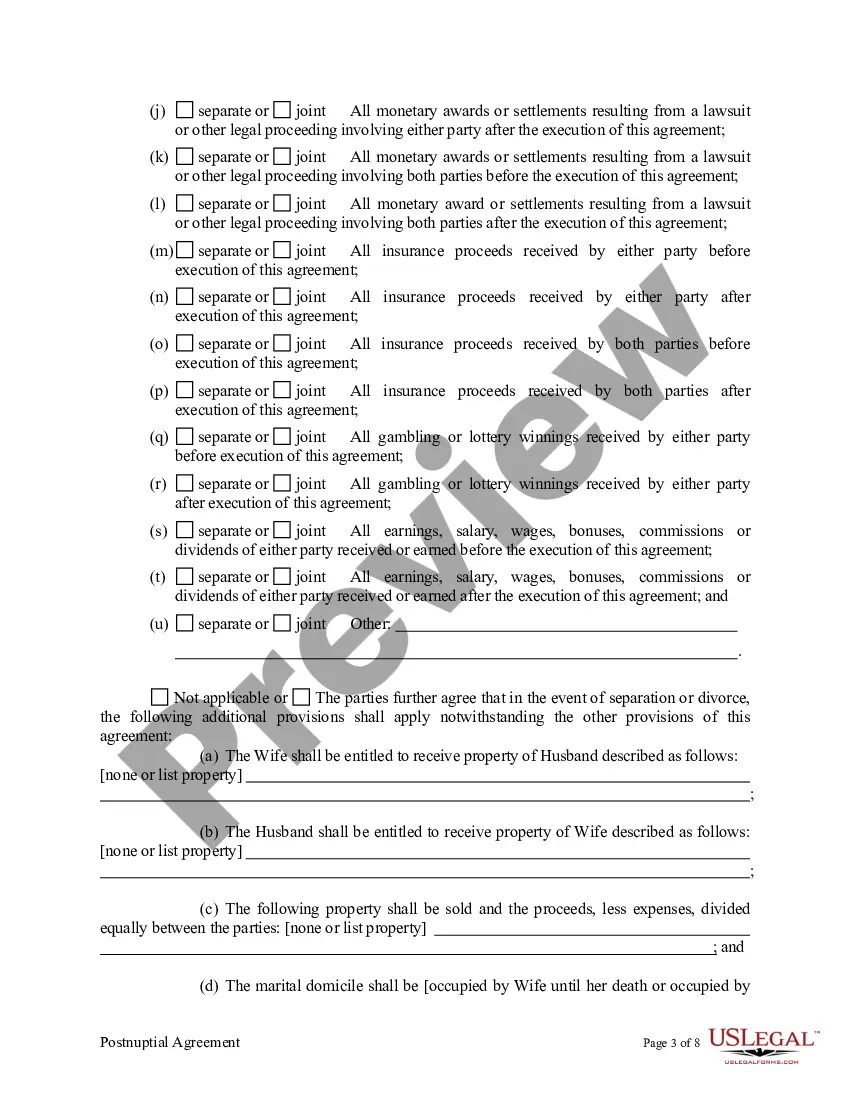
- Guidelines for division of property and support obligations upon divorce.
- Rights and responsibilities regarding children and child support.
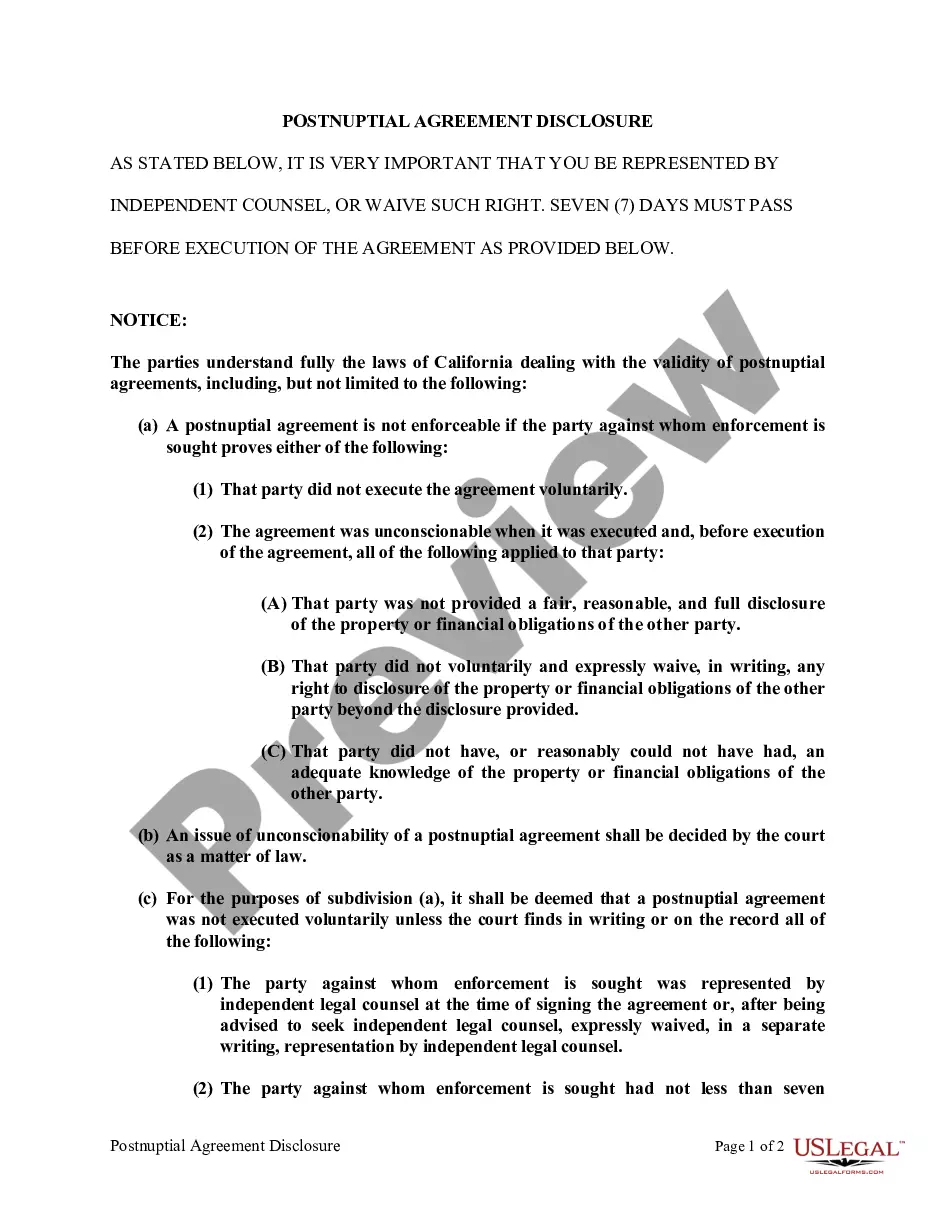
- Requirements for executing and enforcing the agreement under California law.

When this form is needed
This form is typically used in situations where a married couple wishes to clarify their property rights after marriage. It is especially useful for couples who are experiencing significant changes in their financial circumstances or who want to ensure that their individual assets are protected. The agreement can help prevent disputes over property and debts if the marriage ends in separation or divorce.
Who should use this form
- Married couples wishing to define their property rights post-marriage.
- Individuals who have substantial separate property they wish to protect.
- Couples with children who want to outline parental responsibilities and support obligations.
- Anyone looking to minimize future disputes regarding property and financial matters.
Steps to complete this form
- Identify the parties involved and gather all necessary personal information.
- List the separate and joint property owned by each party.
- Include details about debts and financial obligations incurred during the marriage.
- Outline any support obligations owed between spouses after separation or divorce.
- Have both parties review the agreement with separate legal counsel before signing.
- Sign and date the document, and ensure all requirements for execution are met.
Notarization requirements for this form
This form needs to be notarized to ensure legal validity. US Legal Forms provides secure online notarization powered by Notarize, allowing you to complete the process through a verified video call, available anytime.
Get your form ready online
Our built-in tools help you complete, sign, share, and store your documents in one place.
Make edits, fill in missing information, and update formatting in US Legal Forms—just like you would in MS Word.
Download a copy, print it, send it by email, or mail it via USPS—whatever works best for your next step.
Sign and collect signatures with our SignNow integration. Send to multiple recipients, set reminders, and more. Go Premium to unlock E-Sign.
If this form requires notarization, complete it online through a secure video call—no need to meet a notary in person or wait for an appointment.
We protect your documents and personal data by following strict security and privacy standards.

Make edits, fill in missing information, and update formatting in US Legal Forms—just like you would in MS Word.

Download a copy, print it, send it by email, or mail it via USPS—whatever works best for your next step.

Sign and collect signatures with our SignNow integration. Send to multiple recipients, set reminders, and more. Go Premium to unlock E-Sign.

If this form requires notarization, complete it online through a secure video call—no need to meet a notary in person or wait for an appointment.

We protect your documents and personal data by following strict security and privacy standards.
Mistakes to watch out for
- Not consulting with independent legal counsel for both parties prior to signing.
- Failing to fully disclose all assets and debts.
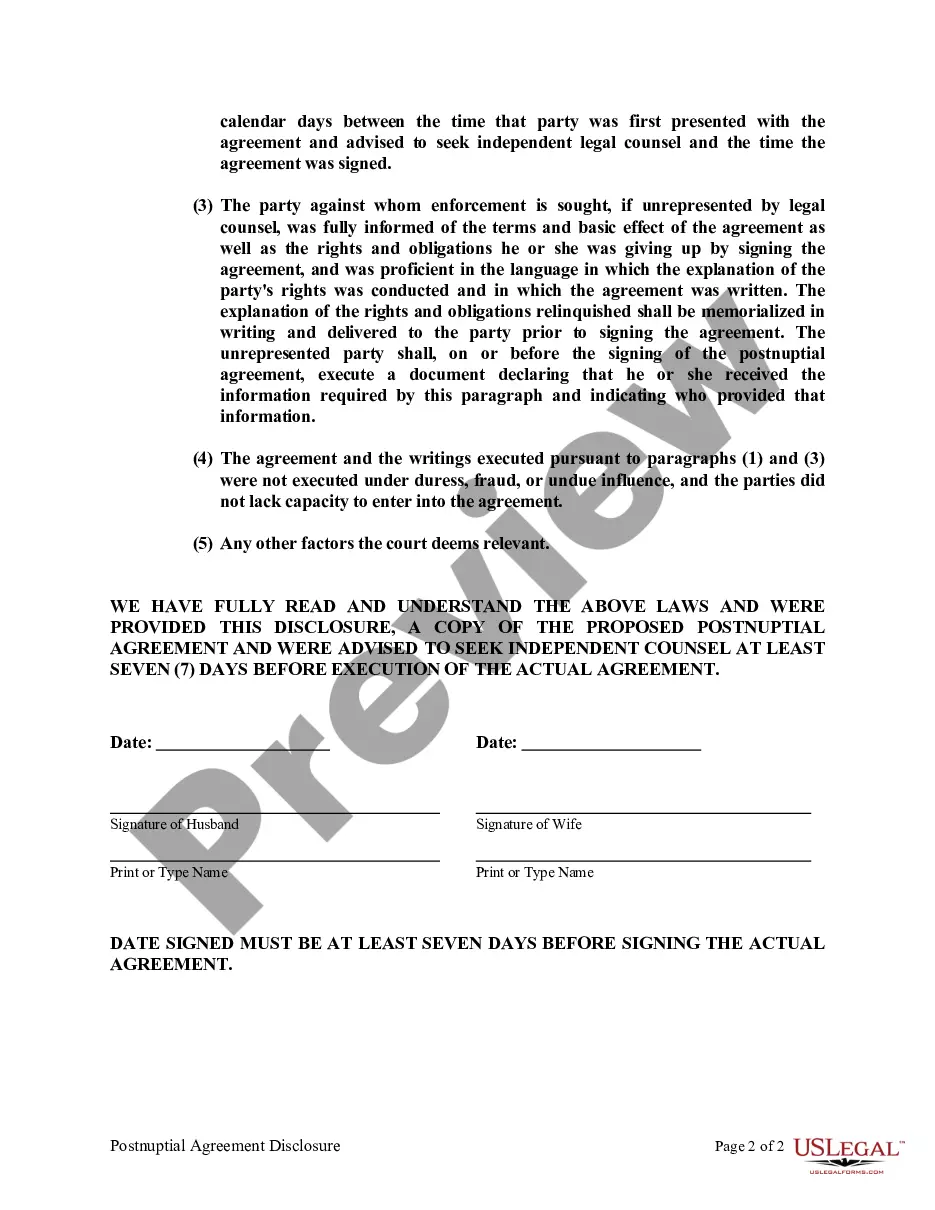
- Not allowing the required seven-day contemplation period before signing the agreement.
- Using vague language that could lead to misinterpretation of rights and obligations.
Advantages of online completion
- Convenient access to legally drafted templates tailored for California.
- Editable forms that allow you to customize content to fit your specific circumstances.
- Reliability from licensed attorneys, ensuring compliance with local laws.
- Immediate downloads to expedite the legal planning process.
What to keep in mind
- The Postnuptial Property Agreement clarifies property rights and is essential for financial planning in marriage.
- It is particularly important in community property states like California.
- Ensuring full disclosure and independent legal review is crucial for enforceability.
- The agreement must be executed properly to avoid disputes in the future.
Looking for another form?
Form popularity
FAQ
The California Postnuptial Property Agreement is a postmarital contract created after marriage to clarify a couple’s rights in separate and joint property. It covers assets and debts incurred during the marriage, how property may be divided, and related support obligations, including child-related rights. It is typically used when financial circumstances change or to reduce future disputes.
California postnuptial agreements are generally enforceable if they are entered into voluntarily, after full disclosure of assets, and properly executed under California law. This form helps couples define separate versus joint property, list assets and debts incurred during the marriage, and set rules for property division and support in the event of divorce.
California recognizes postnuptial agreements as a valid way for married couples to set terms after marriage, provided they meet basic execution and fairness requirements. This form supports creating a postnup that defines property rights, assets and debts, division of property, and any child-related rights and obligations consistent with California law.
This form is intended for married couples who want to define or adjust property rights after marriage, including protecting substantial separate property and outlining parental responsibilities and support obligations. It’s useful when financial circumstances change or when the couple wants to minimize future disputes over money and property.
Use the California Postnuptial Property Agreement after marriage when finances or assets change, to clarify how assets and debts are managed, and to set terms for division of property and support if the marriage ends. It also records who has parental responsibilities and rights related to children.
The main difference is timing: this agreement is created after marriage, while a prenuptial agreement is entered before marriage. This postnuptial form addresses property, debts, and support within an existing marriage under California law and may reflect changes since the wedding.