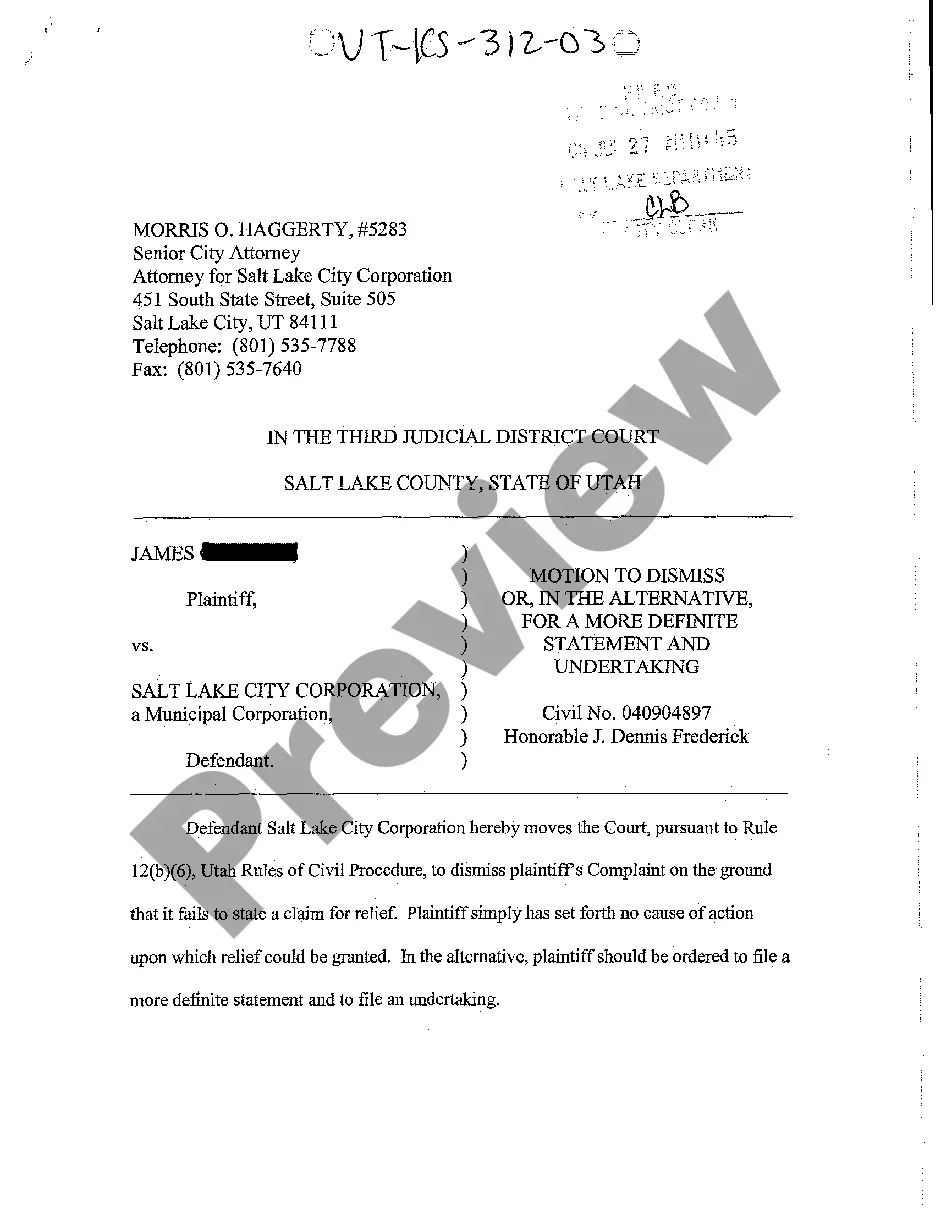
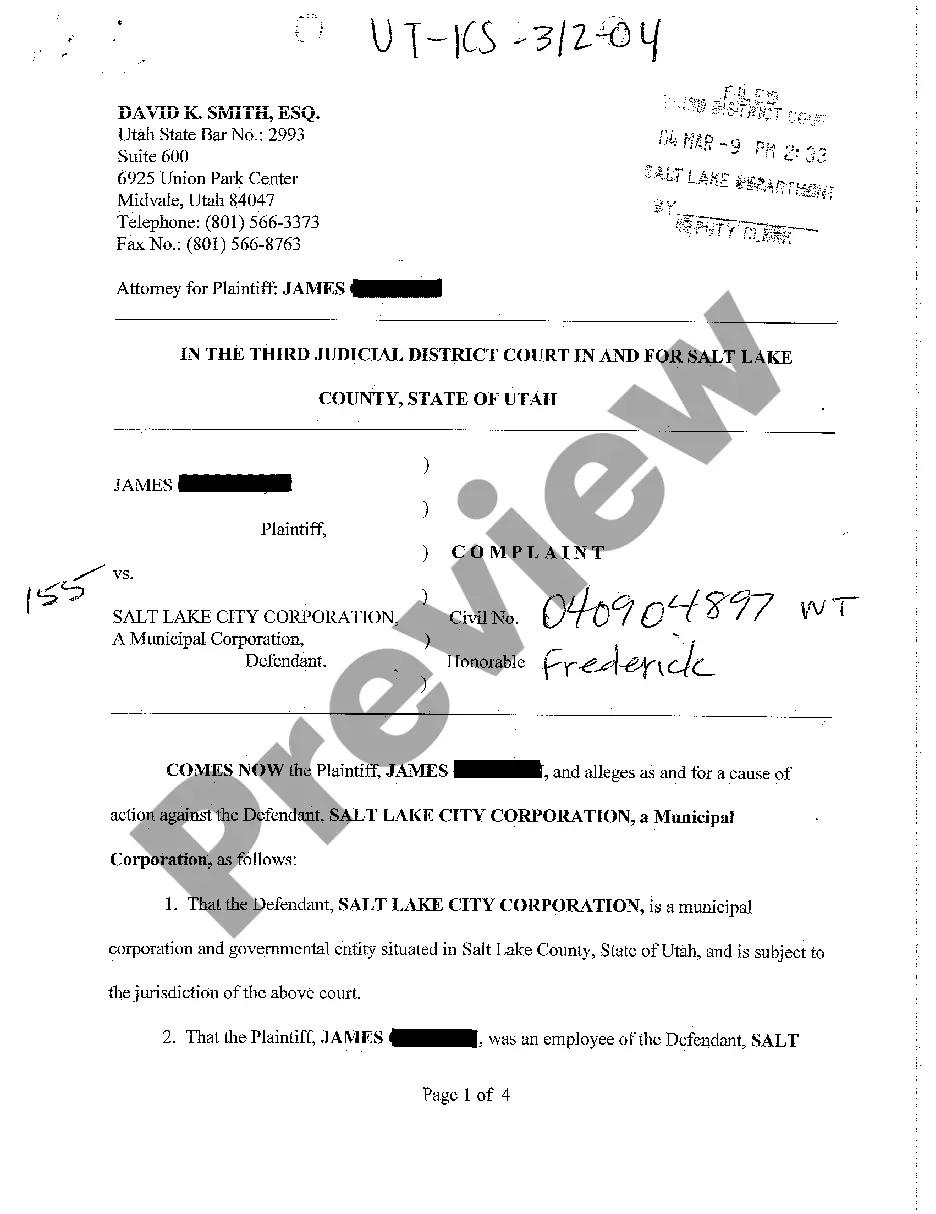
Wyoming Living Trust for Individual Who is Single, Divorced or Widow or Widower with Children

Understanding this form
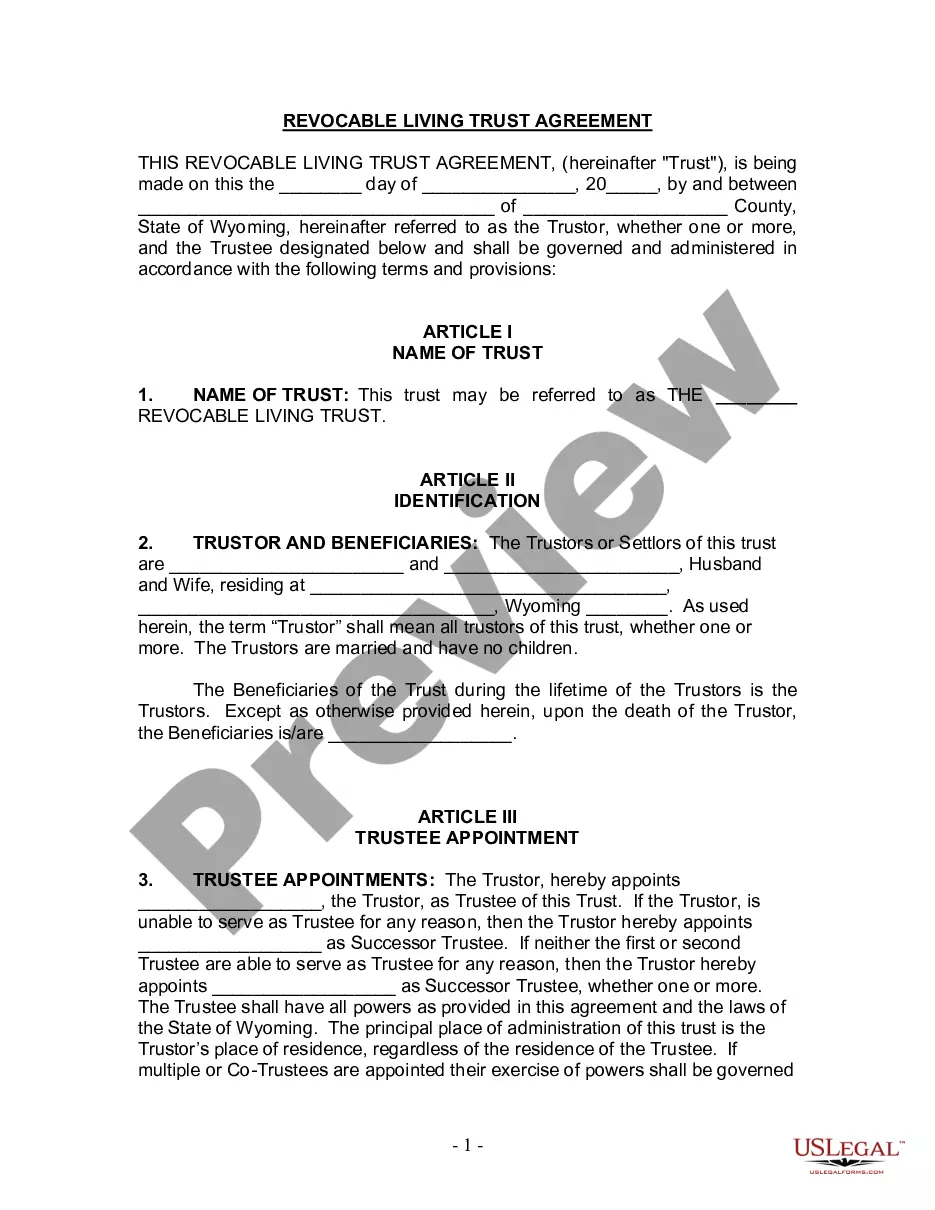
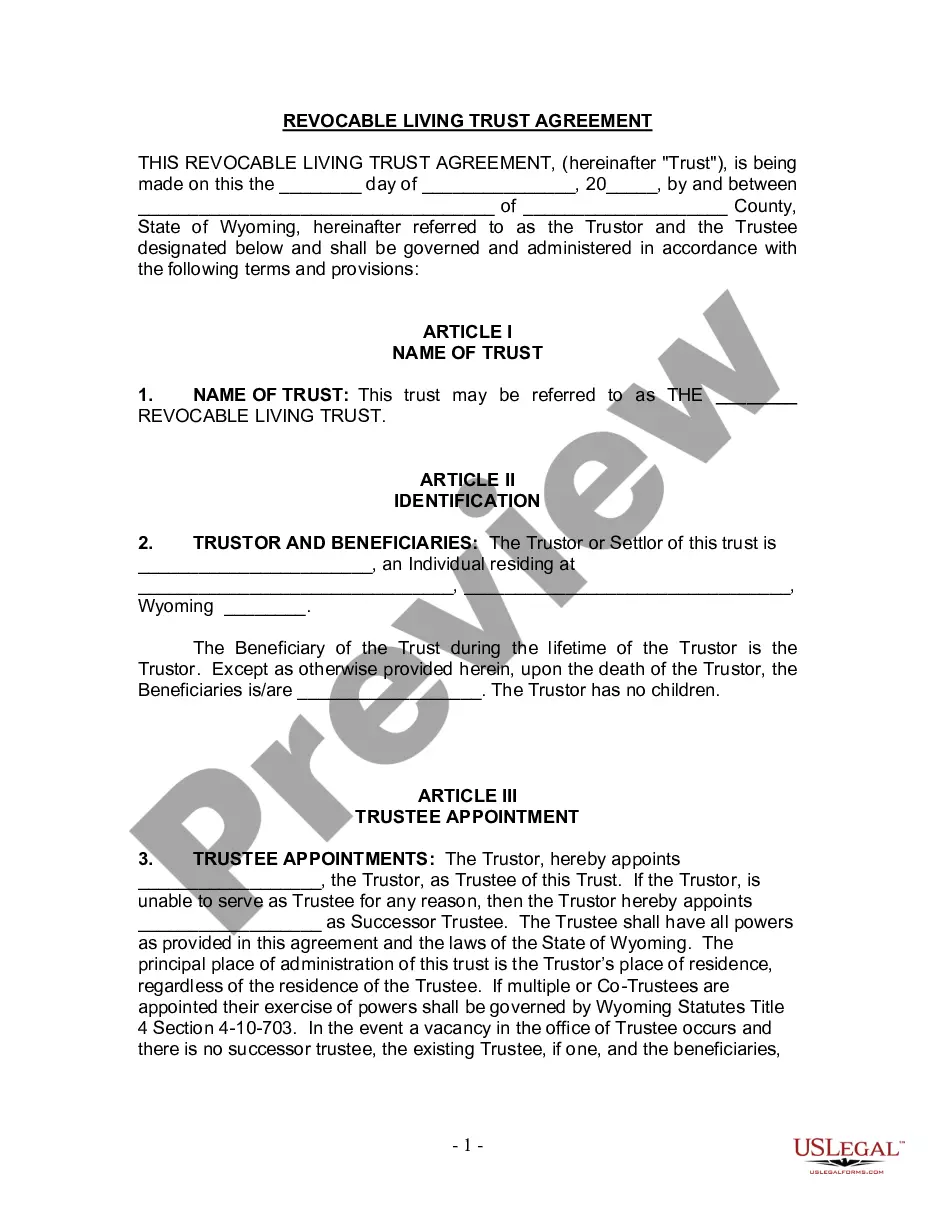
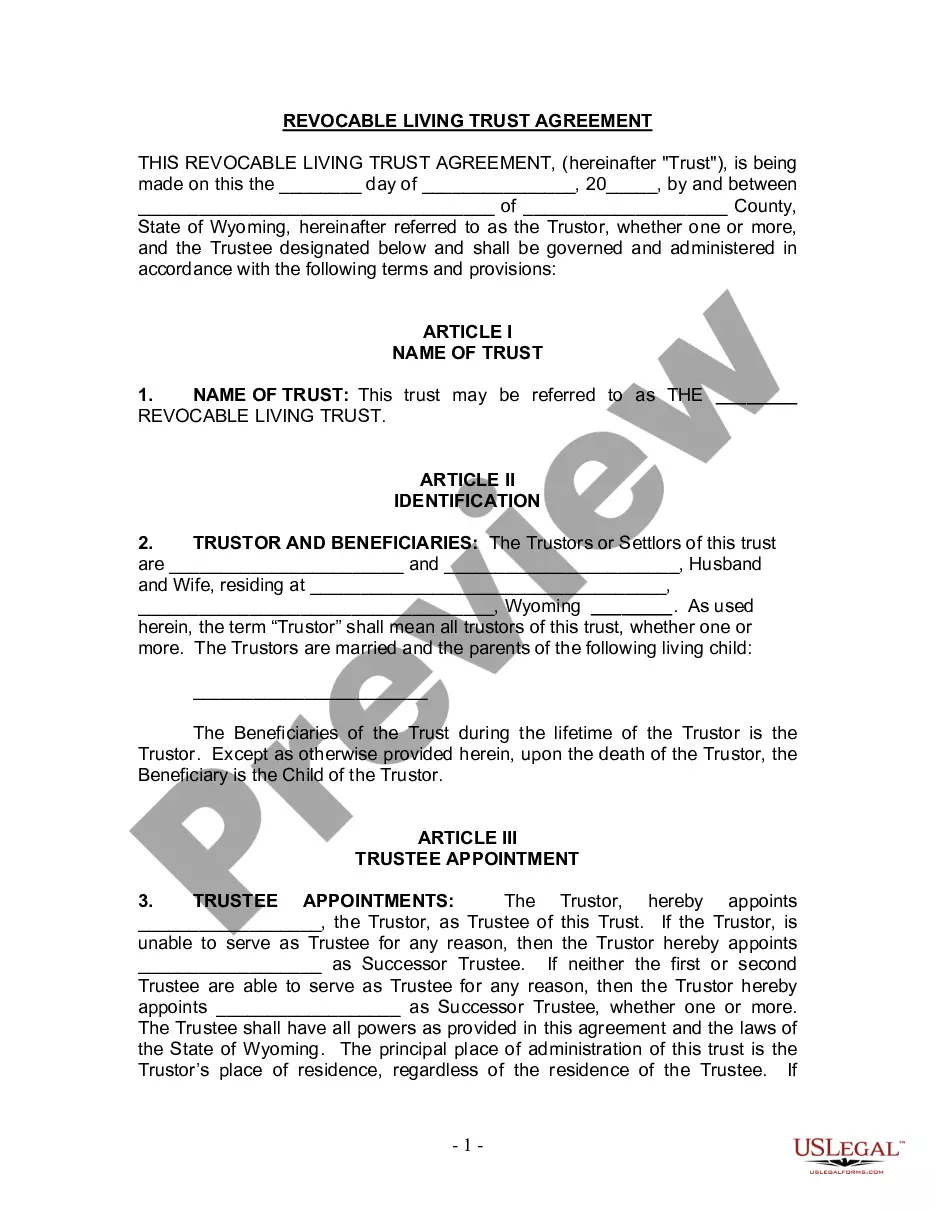
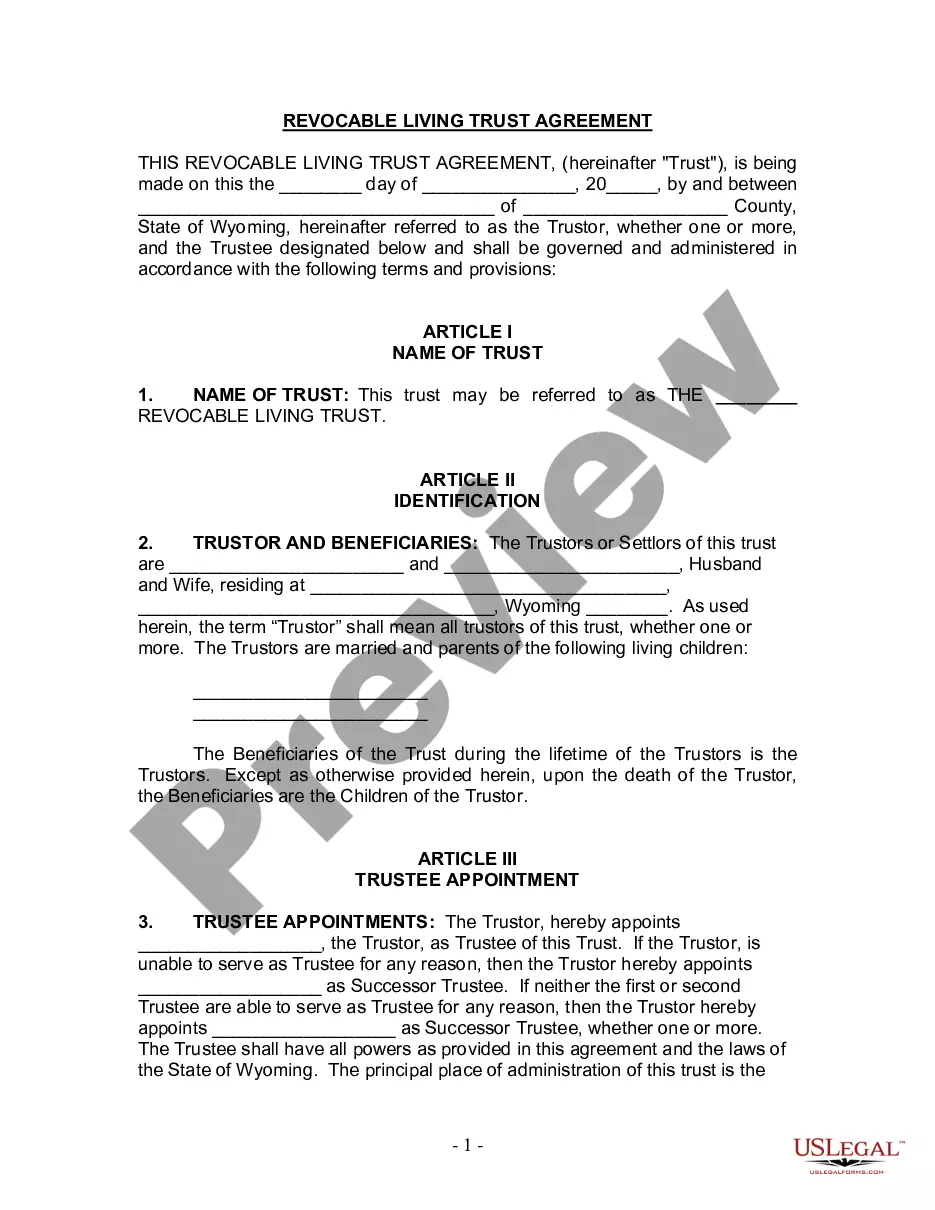
This form is a Living Trust for individuals who are single, divorced, or widows/widowers with children. A living trust is established during your lifetime and allows you to manage and distribute your assets while avoiding the probate process after your death. This document ensures that your assets are held in trust and administered by a trustee for your children's benefit, or any other beneficiaries you specify, allowing greater control and privacy over your estate compared to a will.
Form components explained
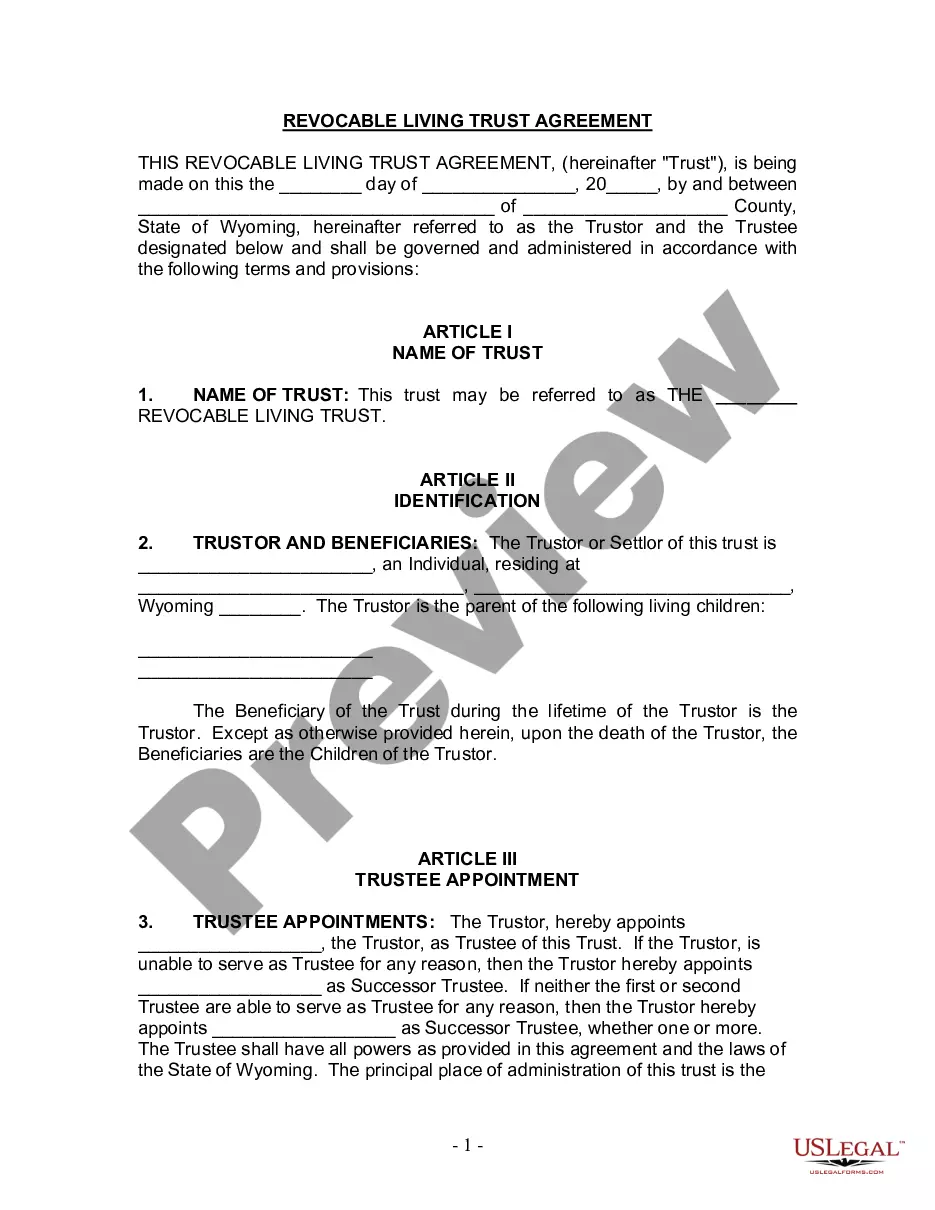
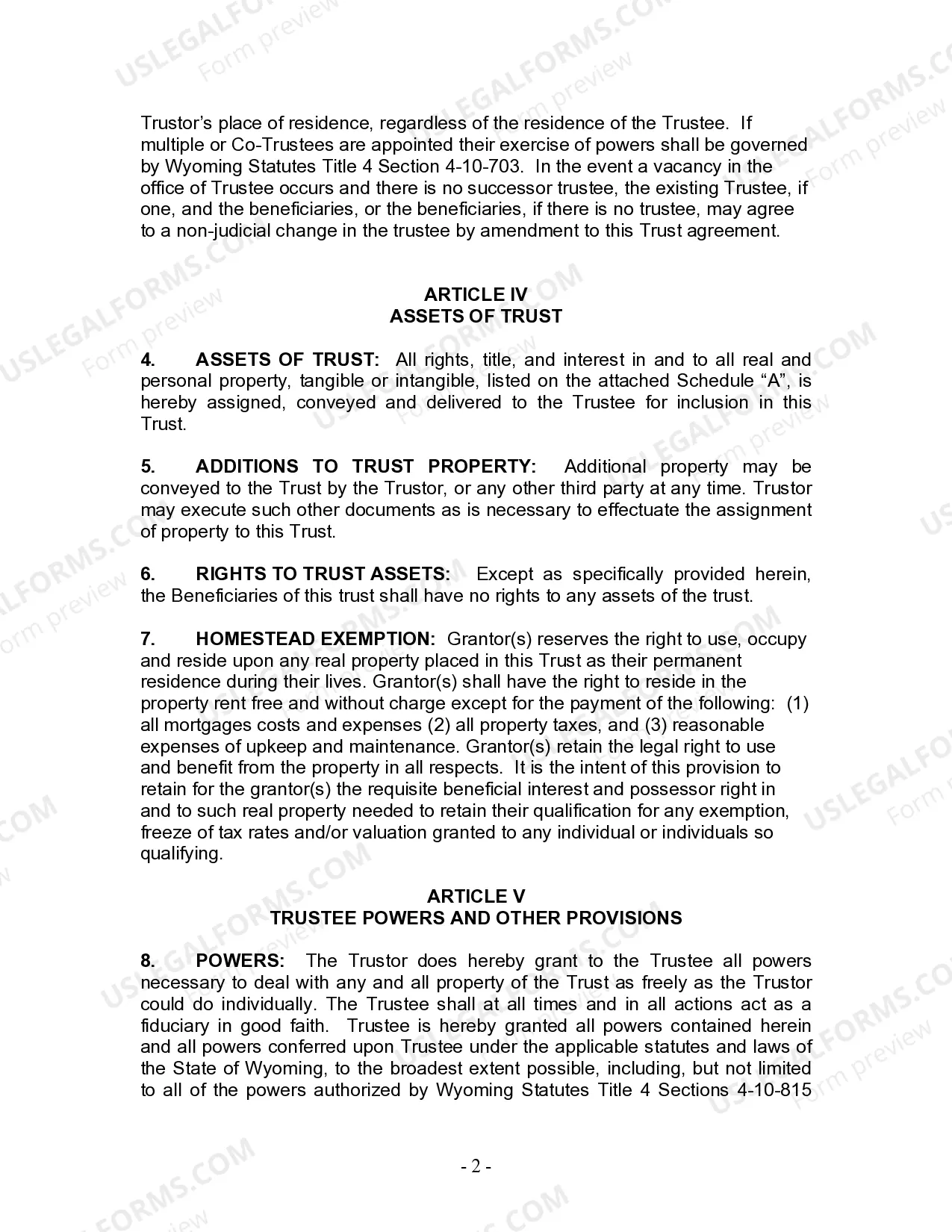
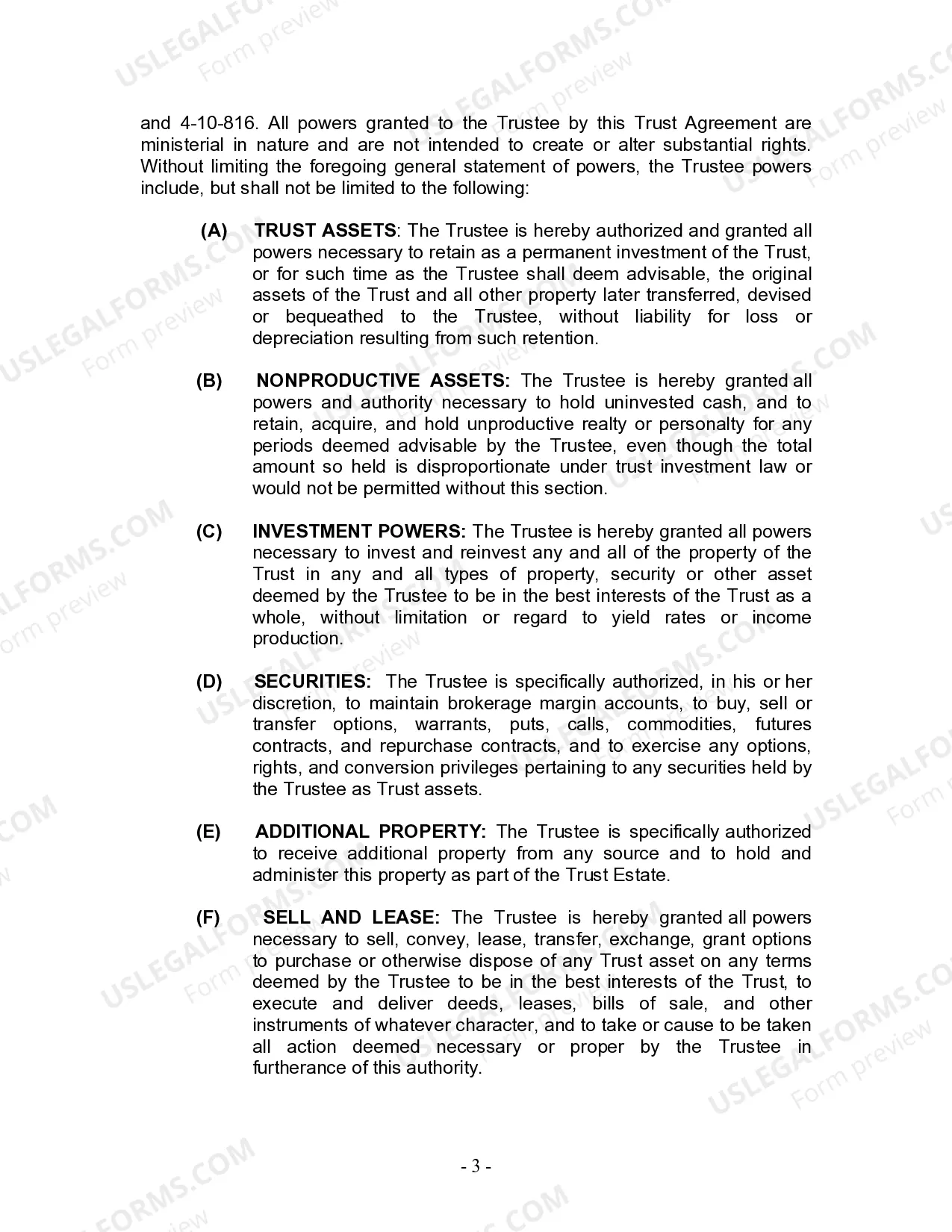
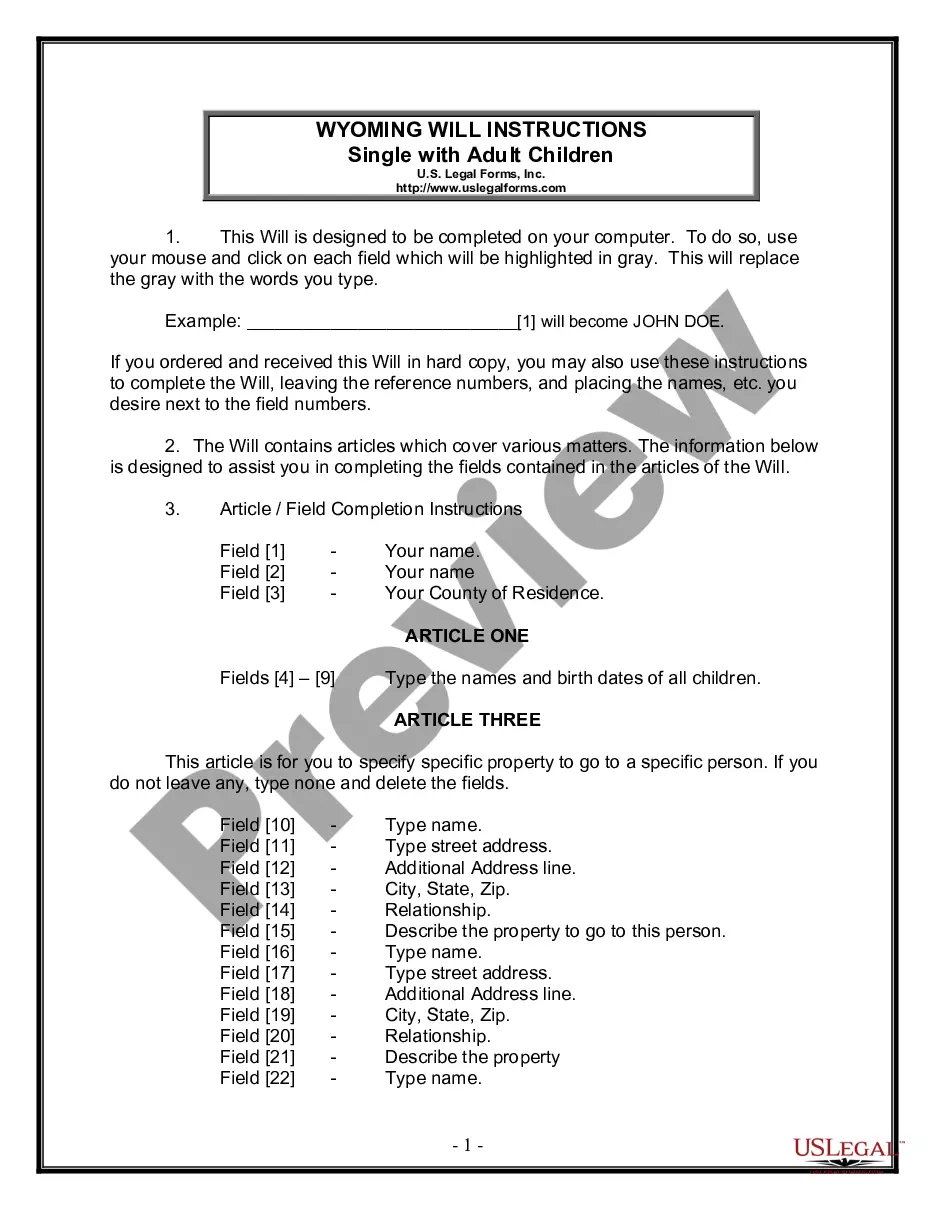
- Identification of the Trustor and Trustee, along with their powers and responsibilities.
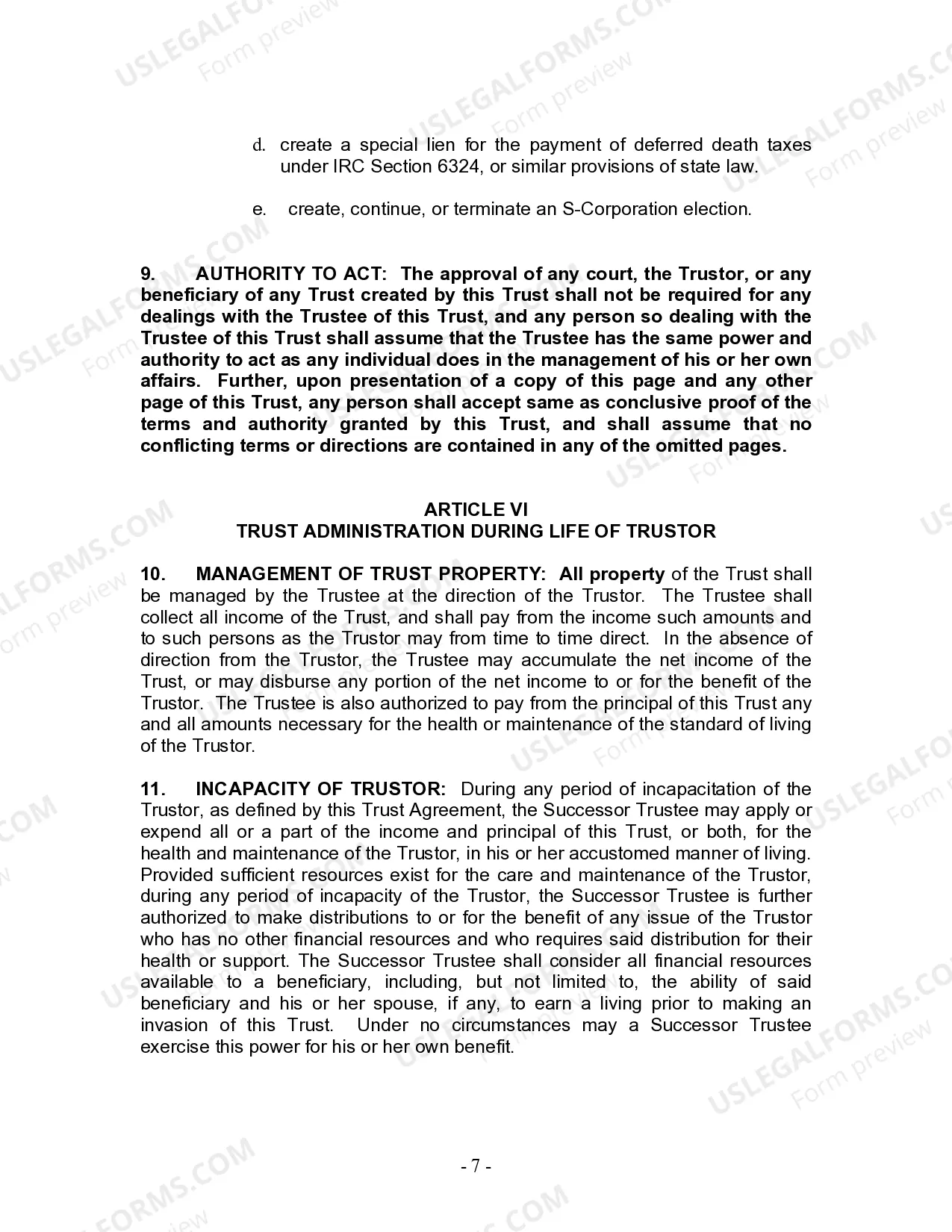
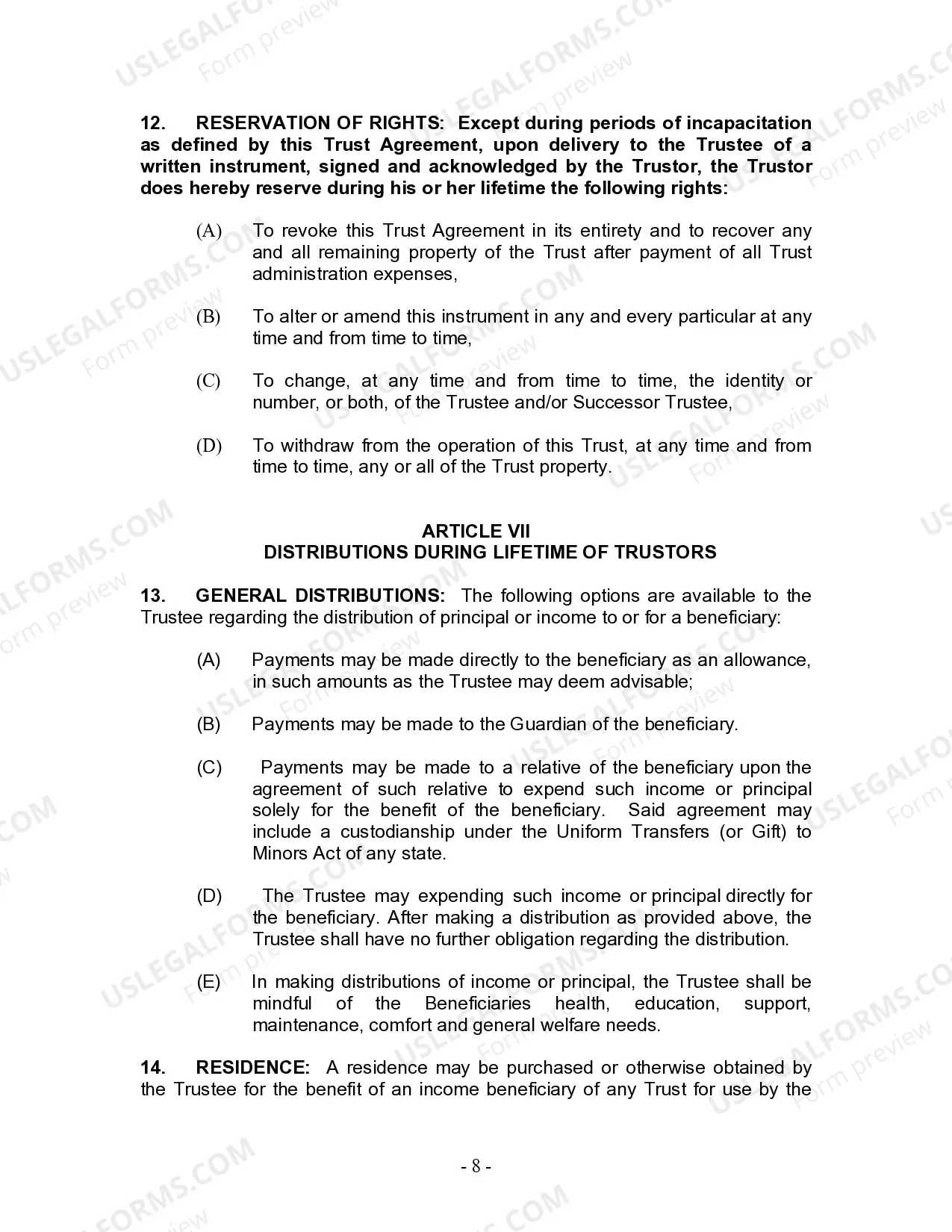
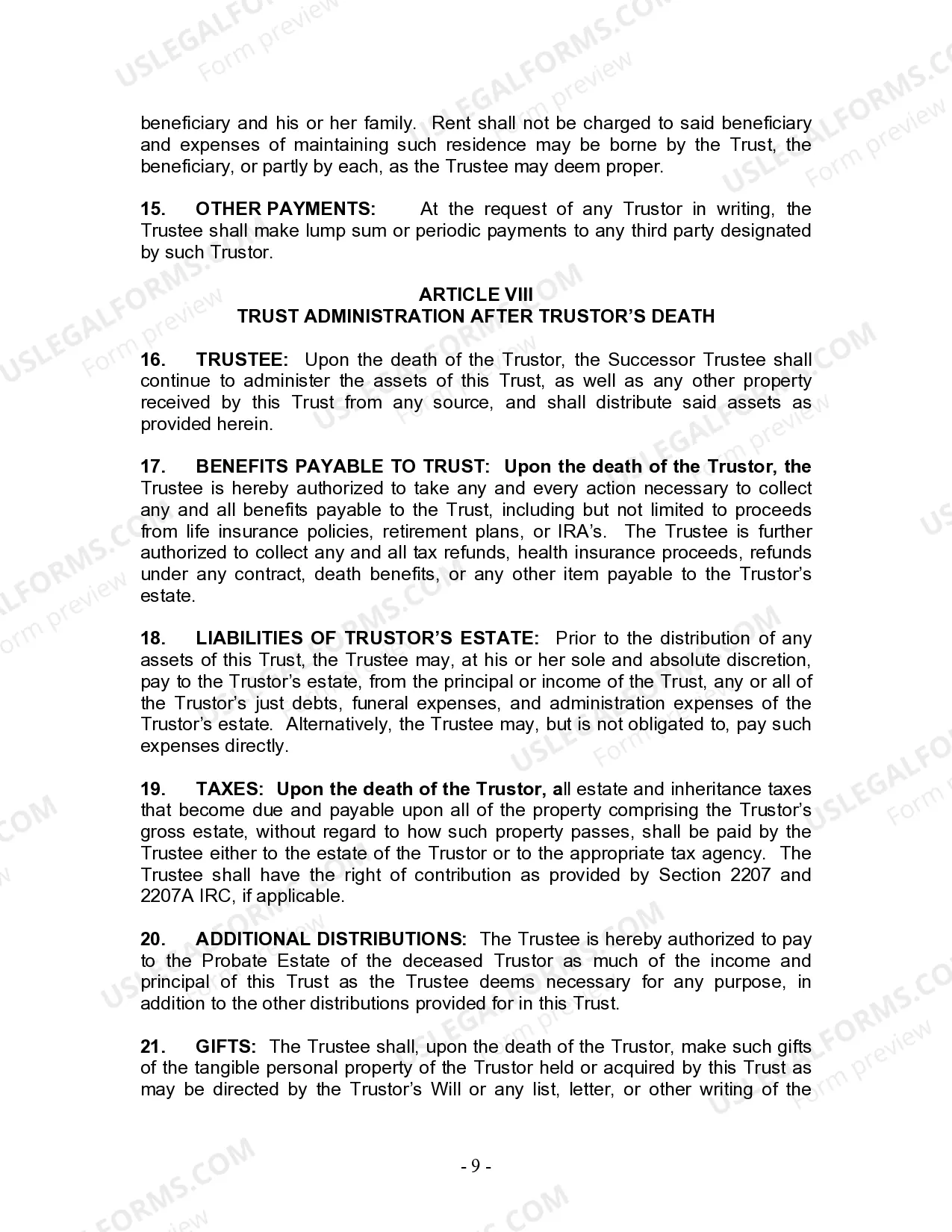
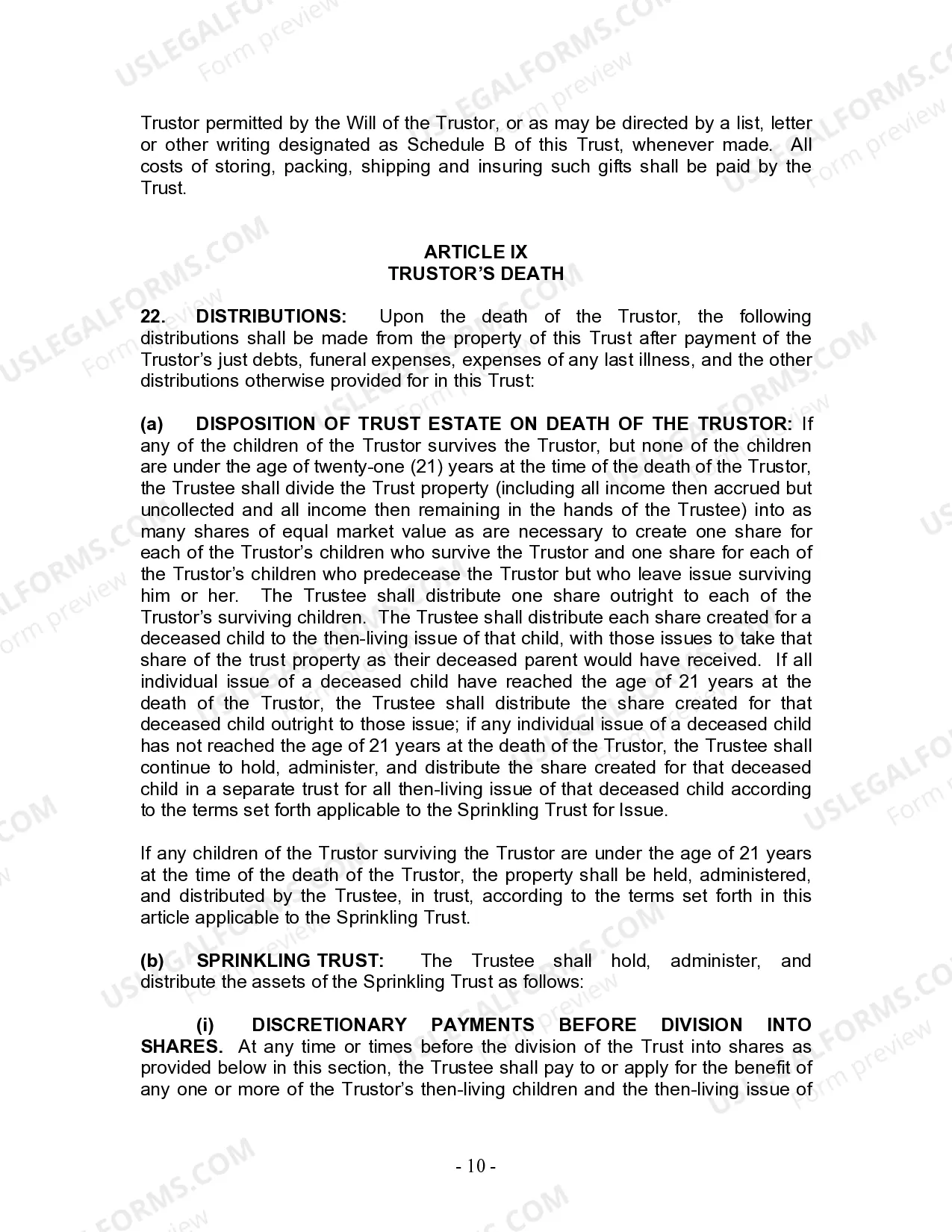
- Provisions for managing trust property during the Trustor's lifetime and the process for asset distribution upon their death.
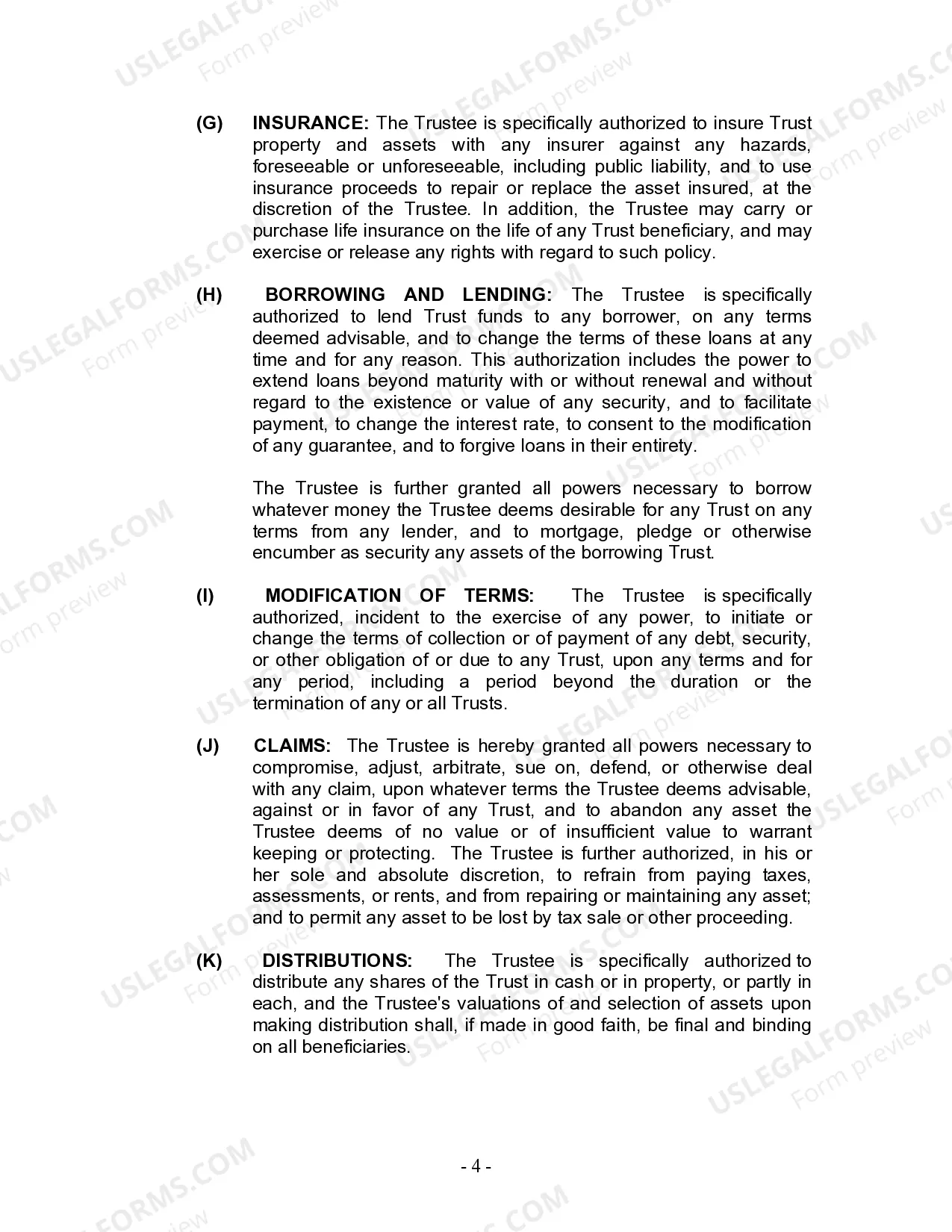
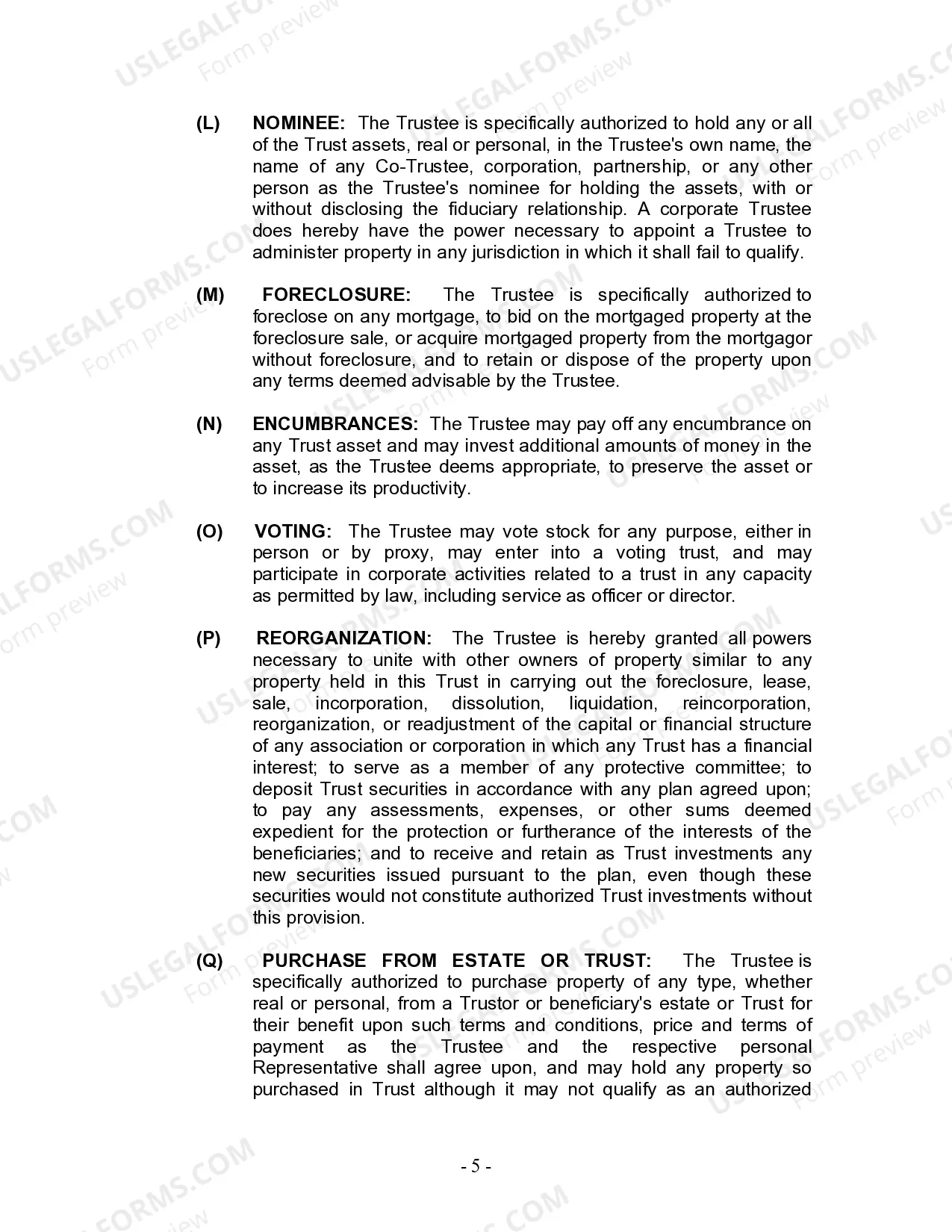
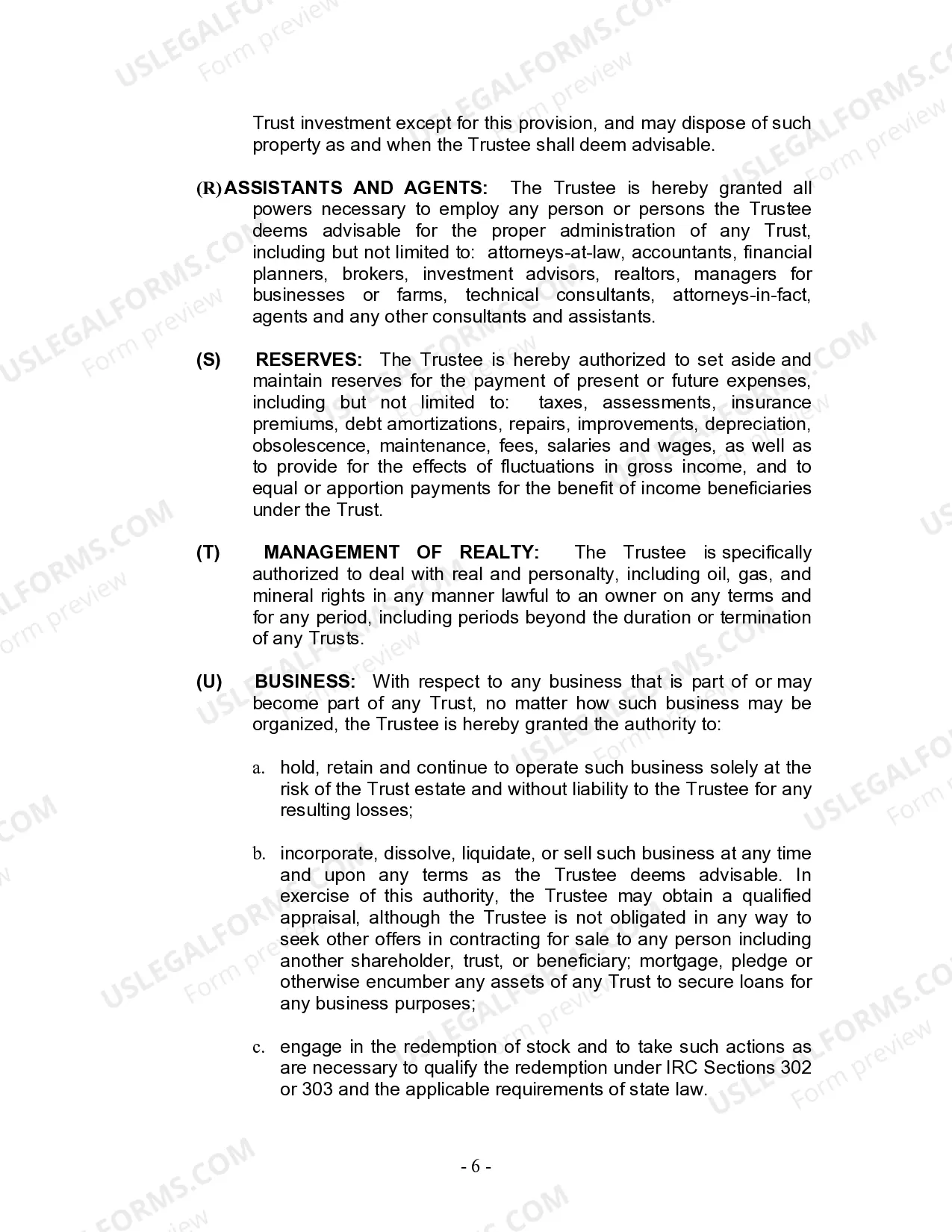
- Clauses addressing the appointment of successor trustees, and the powers granted to trustees.
- Details about how to add or manage assets within the trust during its existence.
- Provisions regarding the incapacity of the Trustor, including how assets should be handled in that scenario.
- Instructions for conducting distributions to beneficiaries both during and after the Trustor's lifetime.

When this form is needed
This form is ideal for individuals who are looking to organize their estate planning, especially those with children. It can be used in situations where the Trustor wants to ensure their assets are managed according to their wishes, provide for their children after their passing, or avoid the costly and time-consuming probate process. Utilizing this living trust can also be beneficial for individuals looking to maintain privacy regarding their estate and financial matters.
Who this form is for
This form is appropriate for:
- Individuals who are single, divorced, or widowed with children.
- Users who wish to have control over their assets and the manner of distribution upon their death.
- Those who want to avoid probate and ensure a streamlined transfer of assets to beneficiaries.
- Anyone seeking to manage their estate planning in a flexible and effective way.
Instructions for completing this form
- Identify the Trustor and Trustee(s) by entering their full names and contact information.
- List the assets you wish to place into the trust on a detailed schedule.
- Specify your children or other beneficiaries who will receive the trust assets upon your death.
- Establish the powers and responsibilities granted to the Trustee in managing the trust assets.
- Review and sign the document in the presence of a notary public if required.
Does this document require notarization?
This document requires notarization to meet legal standards. US Legal Forms provides secure online notarization powered by Notarize, allowing you to complete the process through a verified video call, available 24/7.
Get your form ready online
Our built-in tools help you complete, sign, share, and store your documents in one place.
Make edits, fill in missing information, and update formatting in US Legal Forms—just like you would in MS Word.
Download a copy, print it, send it by email, or mail it via USPS—whatever works best for your next step.
Sign and collect signatures with our SignNow integration. Send to multiple recipients, set reminders, and more. Go Premium to unlock E-Sign.
If this form requires notarization, complete it online through a secure video call—no need to meet a notary in person or wait for an appointment.
We protect your documents and personal data by following strict security and privacy standards.

Make edits, fill in missing information, and update formatting in US Legal Forms—just like you would in MS Word.

Download a copy, print it, send it by email, or mail it via USPS—whatever works best for your next step.

Sign and collect signatures with our SignNow integration. Send to multiple recipients, set reminders, and more. Go Premium to unlock E-Sign.

If this form requires notarization, complete it online through a secure video call—no need to meet a notary in person or wait for an appointment.

We protect your documents and personal data by following strict security and privacy standards.
Mistakes to watch out for
- Failing to list all assets intended for the trust, which can lead to disputes later.
- Not updating the trust after major life events, such as divorce or remarriage.
- Omitting successor trustees, which can lead to complications if the primary trustee cannot serve.
Benefits of completing this form online
- Convenient access to customizable legal documents from anywhere at any time.
- Editable formats that allow users to tailor the trust to their specific needs.
- Reliable guidance from licensed attorneys, ensuring legal compliance and accuracy.
Looking for another form?
Form popularity
FAQ
As of 2019, attorney fees can range from $1,000 to $2,500 to set up a trust, depending upon the complexity of the document and where you live. You can also hire an online service provider to set up your trust. As of 2019, you can expect to pay about $300 for an online trust.
A trust can be used to determine how a person's money should be managed and distributed while that person is alive, or after their death. A trust helps avoid taxes and probate. It can protect assets from creditors, and it can dictate the terms of an inheritance for beneficiaries.
Choose whether to make an individual or shared trust. Decide what property to include in the trust. Choose a successor trustee. Decide who will be the trust's beneficiaries who will get the trust property. Create the trust document. Sign the document in front of a notary public.
Land trusts can provide asset protection benefits by providing you with privacy of ownership for real property. Each piece of real estate can be placed into a separate land trust. If a lawsuit is associated with one piece of real estate, other properties titled to different trusts are not automatically encumbered.
A Wyoming trust is an entity that allows a third party (known as a trustee) to hold onto assets on behalf of a beneficiary or beneficiaries. The assets can be money, land, investments, anything considered an asset.
In this article: A living trust is a type of estate planning tool that allows you to transfer ownership of your assets to a separate fund while you're still alive.In some circumstances, you can use a living trust to protect money you owe to creditors.
Most trusts can be irrevocable. This type of trust can help protect your assets from creditors and lawsuits and reduce your estate taxes. If you file bankruptcy or default on a debt, assets in an irrevocable trust won't be included in bankruptcy or other court proceedings.