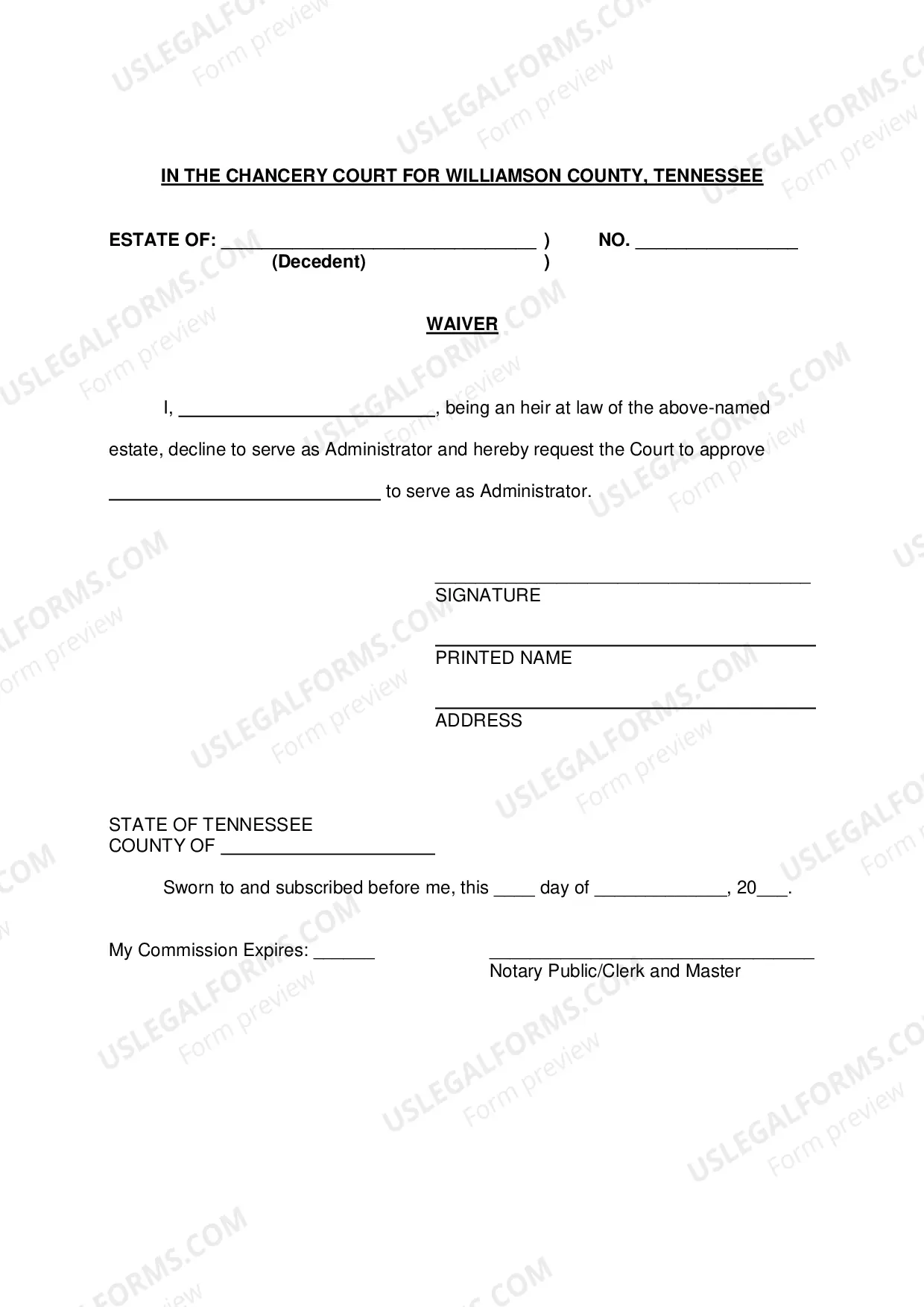
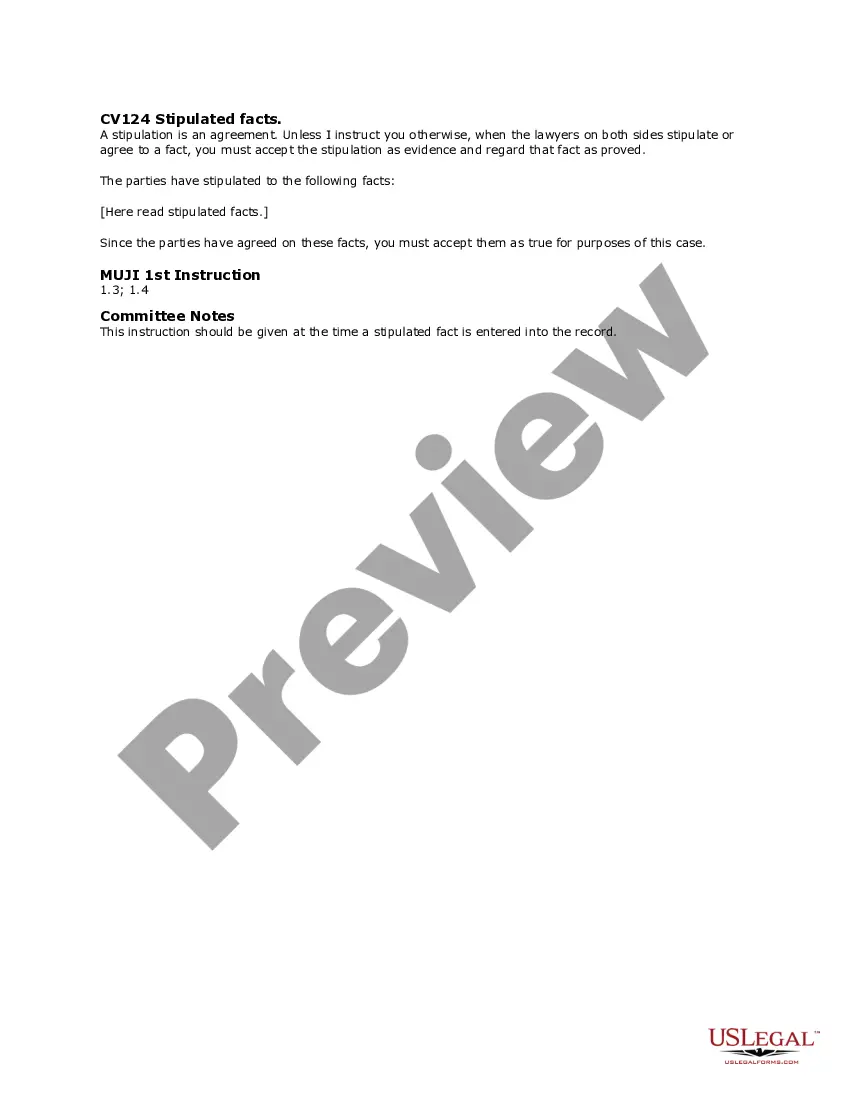
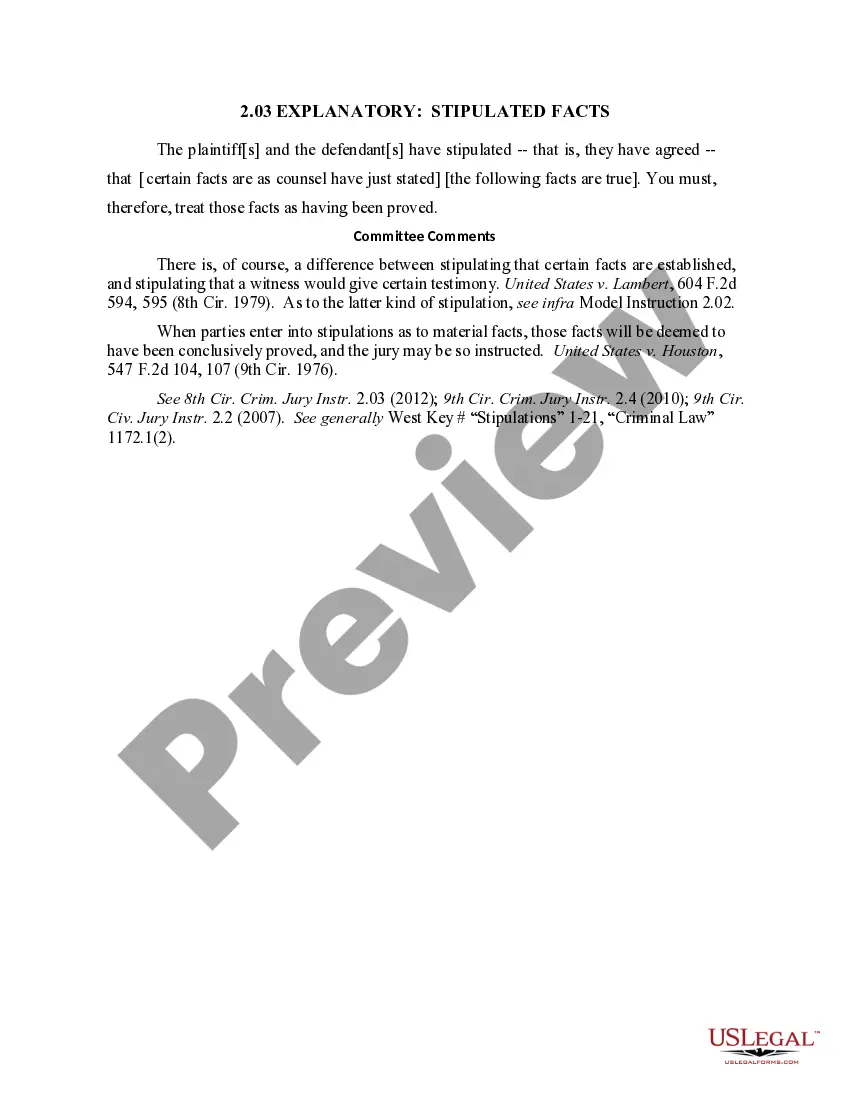
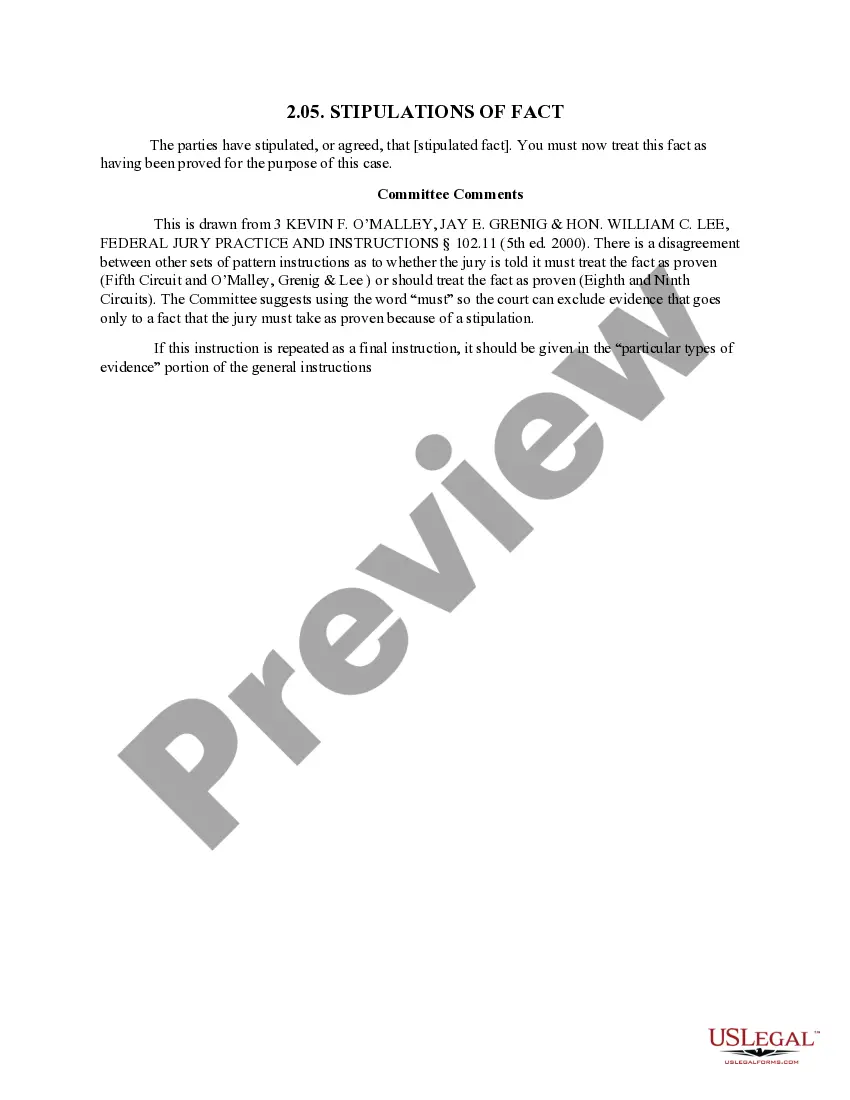
Utah Stipulated Facts is a type of evidence used in Utah courtrooms. It is a written agreement between the opposing parties that lists specific facts that are true and undisputed for the case. These facts are signed by both parties and their attorneys and are then entered into the court record. The facts can be in the form of a stipulation (an agreed-upon statement of facts) or a statement of uncontested facts. The purpose of stipulated facts is to streamline the court proceedings by removing the need for a lengthy trial to resolve disputed facts. This helps reduce the costs and time associated with a trial. Stipulated facts also help the judge to better understand the case and make a more informed decision. The most common types of stipulated facts are admissions, testimony, documents, and agreements. Admissions refer to a party’s admission of a particular fact, such as an admission that a contract was signed or that a particular event happened. Testimony refers to the statements made by witnesses or experts during trial. Documents refer to any documents presented during trial. Agreements refer to any agreements between the parties, such as a settlement agreement or a plea agreement.
Utah Stipulated facts
Description
Get your form ready online
Our built-in tools help you complete, sign, share, and store your documents in one place.
Make edits, fill in missing information, and update formatting in US Legal Forms—just like you would in MS Word.
Download a copy, print it, send it by email, or mail it via USPS—whatever works best for your next step.
Sign and collect signatures with our SignNow integration. Send to multiple recipients, set reminders, and more. Go Premium to unlock E-Sign.
If this form requires notarization, complete it online through a secure video call—no need to meet a notary in person or wait for an appointment.
We protect your documents and personal data by following strict security and privacy standards.

Make edits, fill in missing information, and update formatting in US Legal Forms—just like you would in MS Word.

Download a copy, print it, send it by email, or mail it via USPS—whatever works best for your next step.

Sign and collect signatures with our SignNow integration. Send to multiple recipients, set reminders, and more. Go Premium to unlock E-Sign.

If this form requires notarization, complete it online through a secure video call—no need to meet a notary in person or wait for an appointment.

We protect your documents and personal data by following strict security and privacy standards.
Looking for another form?

How to fill out Utah Stipulated Facts?
US Legal Forms is the most straightforward and affordable way to find appropriate legal templates. It’s the most extensive web-based library of business and individual legal paperwork drafted and verified by legal professionals. Here, you can find printable and fillable blanks that comply with national and local laws - just like your Utah Stipulated facts.
Getting your template takes only a few simple steps. Users that already have an account with a valid subscription only need to log in to the website and download the form on their device. Afterwards, they can find it in their profile in the My Forms tab.
And here’s how you can obtain a properly drafted Utah Stipulated facts if you are using US Legal Forms for the first time:
- Look at the form description or preview the document to ensure you’ve found the one corresponding to your requirements, or locate another one utilizing the search tab above.
- Click Buy now when you’re sure of its compatibility with all the requirements, and select the subscription plan you prefer most.
- Create an account with our service, sign in, and purchase your subscription using PayPal or you credit card.
- Decide on the preferred file format for your Utah Stipulated facts and download it on your device with the appropriate button.
After you save a template, you can reaccess it whenever you want - simply find it in your profile, re-download it for printing and manual completion or import it to an online editor to fill it out and sign more effectively.
Benefit from US Legal Forms, your reliable assistant in obtaining the required official documentation. Try it out!
Form popularity
FAQ
A party must state in simple, short and plain terms any defenses to each claim asserted and must admit or deny the statements in the claim. A party without knowledge or information sufficient to form a belief about the truth of a statement must so state, and this has the effect of a denial.
Rule 7 ? Pleadings allowed (b) Motions and Other Papers. (1) In General. A request for a court order must be made by motion. The motion must: (A) be in writing unless made during a hearing or trial; (B) state with particularity the grounds for seeking the order; and (C) state the relief sought.
A party may not make a motion in a memorandum opposing a motion or in a reply memorandum. A party who objects to evidence in another party's motion or memorandum may not move to strike that evidence. Instead, the party must include in the subsequent memorandum an objection to the evidence.
This rule requires disclosure of the key fact elements that are typically requested in initial interrogatories in personal injury actions. The Medicare information disclosure, including Social Security numbers, is designed to facilitate compliance with the requirements for insurers under 42 U.S.C.
A party against whom a claim, counterclaim, or cross-claim is asserted or a declaratory judgment is sought may move for summary judgment at any time. Unless the court orders otherwise, a party may file a motion for summary judgment at any time no later than 28 days after the close of all discovery.
If the nonmoving party files a written opposition, the moving party may file a reply within 7 days of the filing of the opposition to the motion, unless the court sets a different time.
This rule is the federal rule, verbatim, and changes Utah law by granting the court discretion in convictions not involving dishonesty or false statement to refuse to admit the evidence if it would be prejudicial to the defendant. Current Utah law mandates the admission of such evidence.
If the defendant is present at the initial appearance without counsel, the court must determine if the defendant is capable of retaining the services of an attorney within a reasonable time.