Utah Small Estate Heirship Affidavit for Estates under 100,000
Overview of this form
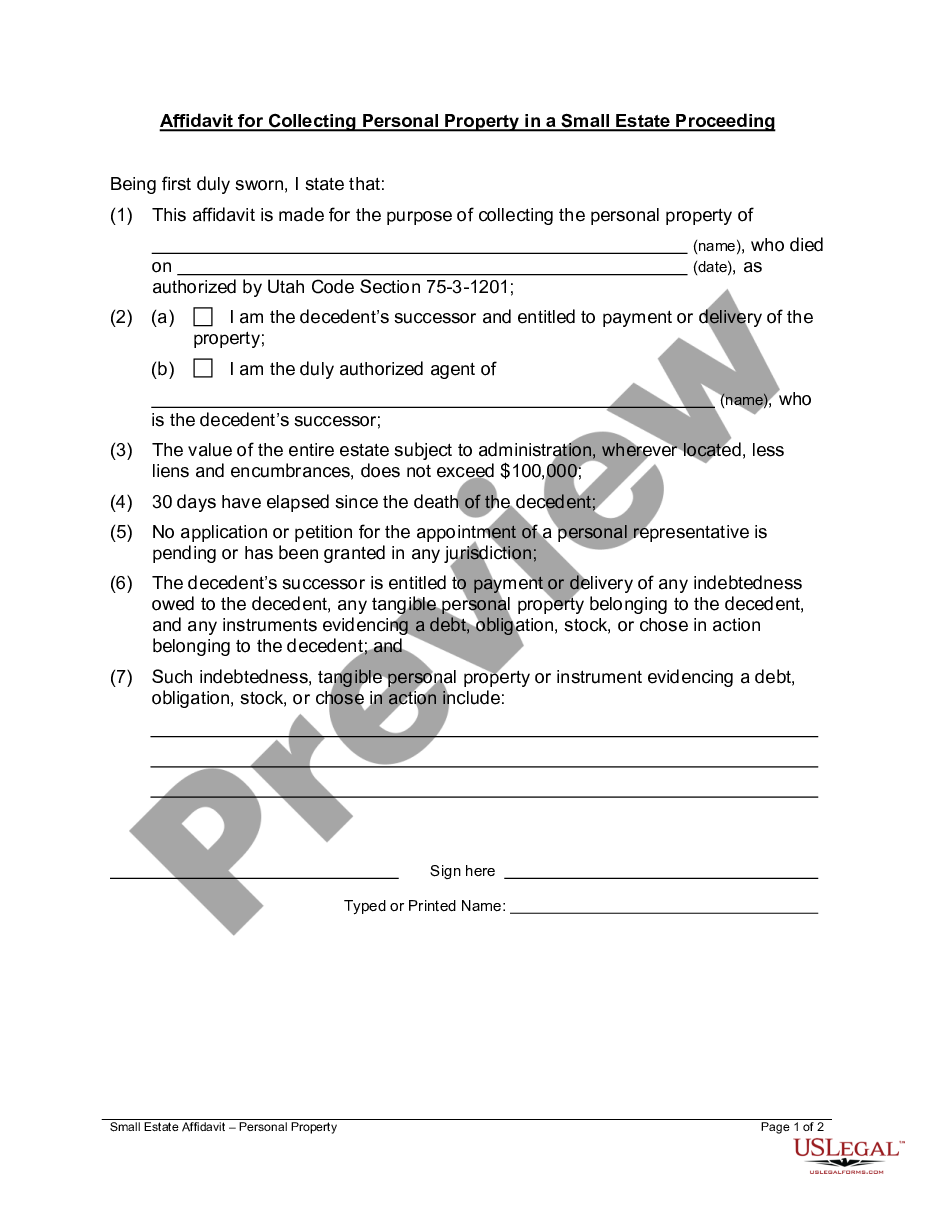
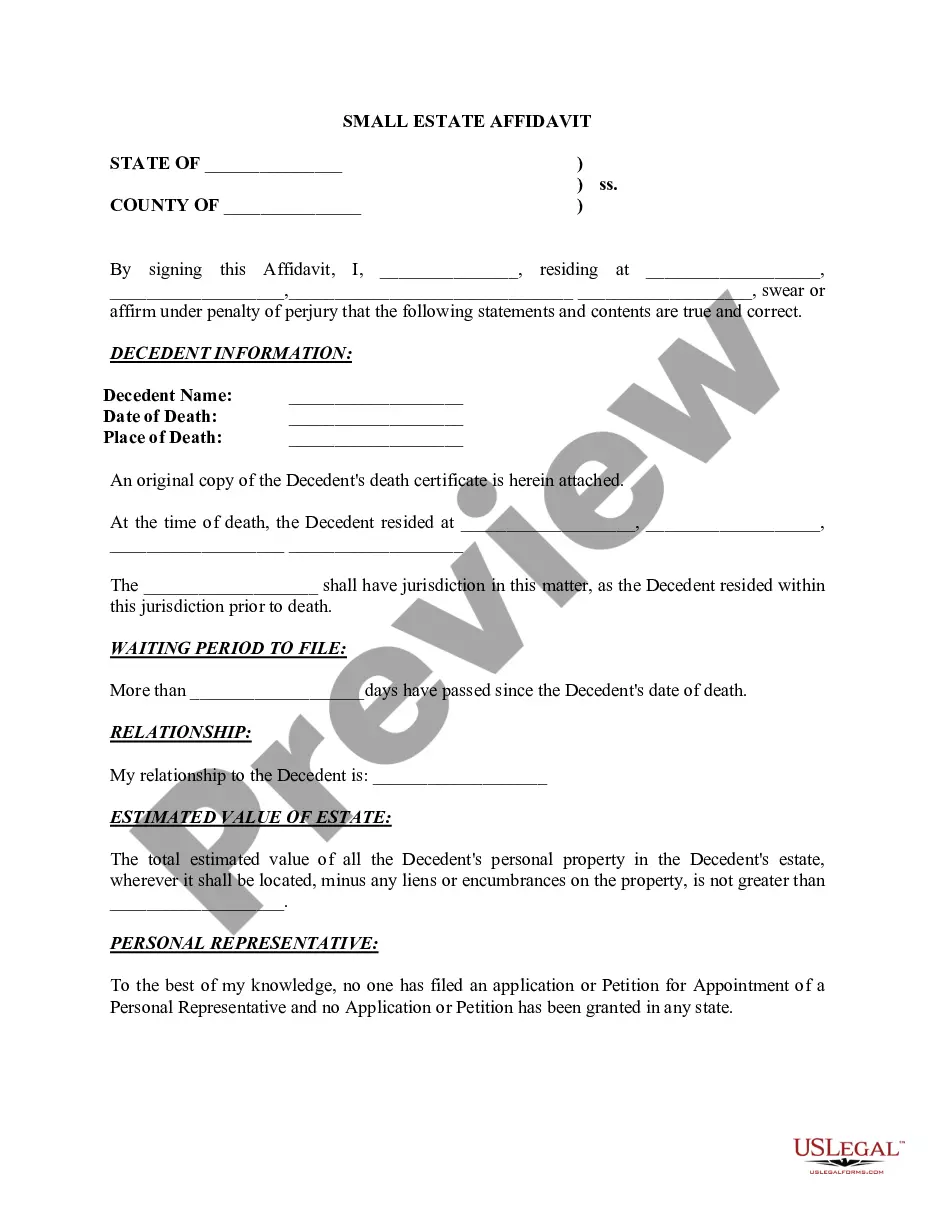
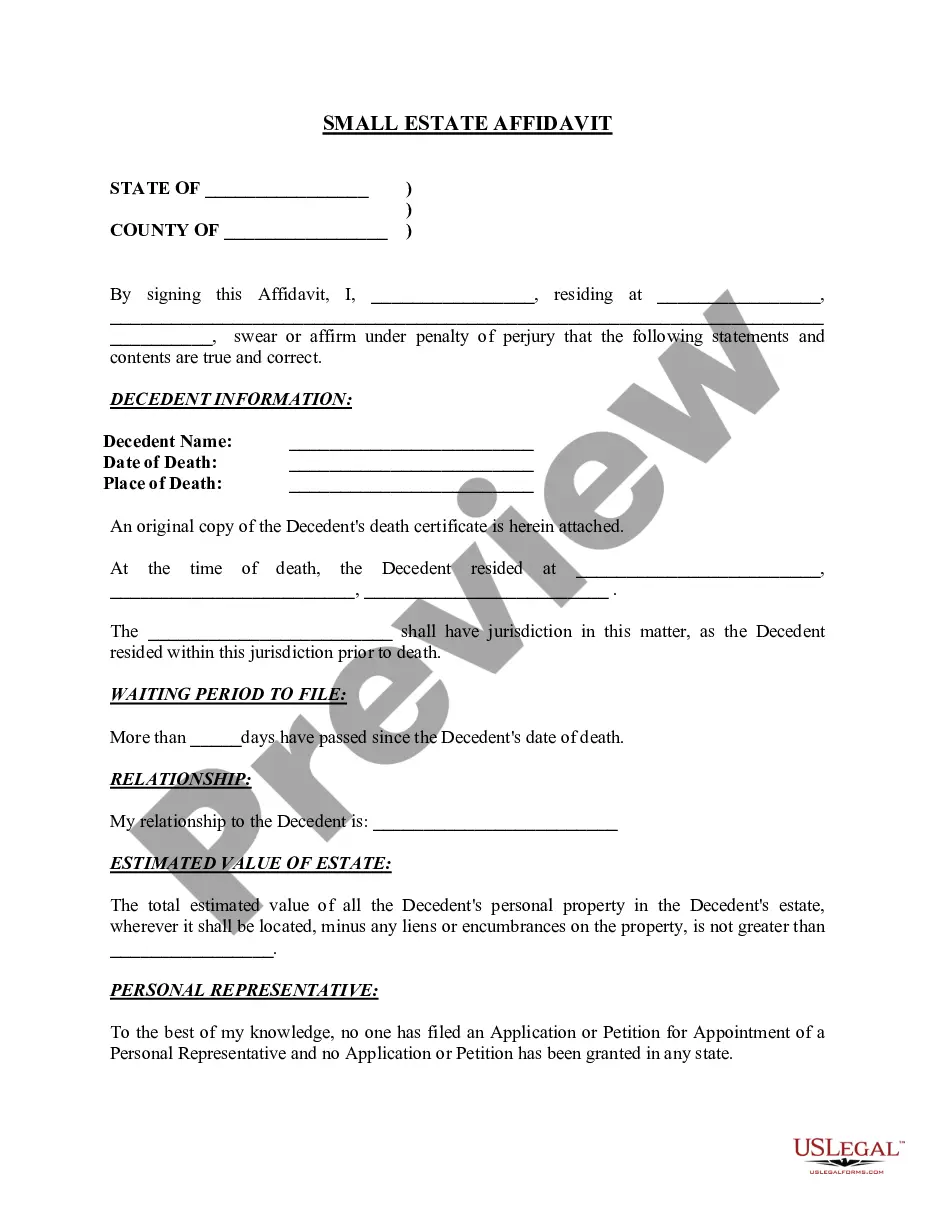
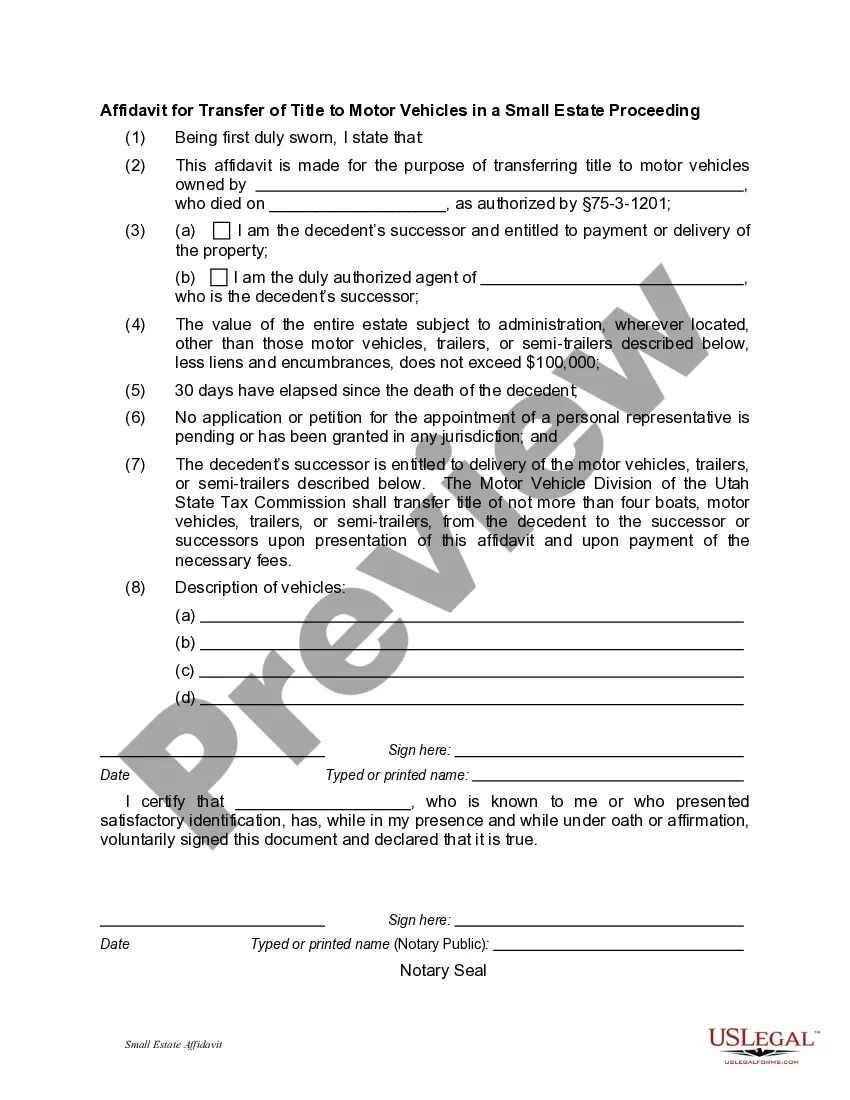
The Small Estate Heirship Affidavit is a legal document used in Utah for estates valued at less than $100,000. This form allows an interested party, typically a successor or an authorized agent, to collect the decedentâs personal property, debts, and any other assets after thirty days have elapsed since the death of the decedent. This affidavit simplifies the collection process and avoids the more complex probate procedure typically required for larger estates.
Key components of this form
- Identification of the decedent and the date of death.
- Declaration of the affiant's status as the decedent's successor or authorized agent.
- Statement affirming that the estate's total value does not exceed $100,000.
- Confirmation that thirty days have passed since the decedent's death.
- Statement that no personal representative has been appointed.
- Details about the property and debts for collection.
Common use cases
This form is used when a decedentâs estate is valued below $100,000, and you need to collect payments or property owed to them after at least thirty days have passed since their death. It's particularly useful for family members or friends who are responsible for managing the decedent's affairs without undergoing the formal probate process which can be lengthy and costly.
Who this form is for
- Individuals who are successors to an estate valued under $100,000.
- Authorized agents acting on behalf of the decedent's successor.
- Anyone needing to collect debts or property belonging to the decedent.
How to prepare this document
- Identify the decedent by entering their name and date of death.
- Declare your relationship to the decedent or your authority as their agent.
- Confirm the value of the estate does not exceed $100,000.
- Indicate that thirty days have passed since the decedent's death.
- State that no applications for a personal representative are pending.
- List the specific debts or assets you are collecting on behalf of the decedent.
Does this form need to be notarized?
This form does not typically require notarization unless specified by local law. However, having it notarized can add an extra layer of validity and may be beneficial if required by financial institutions or other parties involved in collecting the decedent's assets.
Get your form ready online
Our built-in tools help you complete, sign, share, and store your documents in one place.
Make edits, fill in missing information, and update formatting in US Legal Forms—just like you would in MS Word.
Download a copy, print it, send it by email, or mail it via USPS—whatever works best for your next step.
Sign and collect signatures with our SignNow integration. Send to multiple recipients, set reminders, and more. Go Premium to unlock E-Sign.
If this form requires notarization, complete it online through a secure video call—no need to meet a notary in person or wait for an appointment.
We protect your documents and personal data by following strict security and privacy standards.

Make edits, fill in missing information, and update formatting in US Legal Forms—just like you would in MS Word.

Download a copy, print it, send it by email, or mail it via USPS—whatever works best for your next step.

Sign and collect signatures with our SignNow integration. Send to multiple recipients, set reminders, and more. Go Premium to unlock E-Sign.

If this form requires notarization, complete it online through a secure video call—no need to meet a notary in person or wait for an appointment.

We protect your documents and personal data by following strict security and privacy standards.
Typical mistakes to avoid
- Not waiting the required thirty days after death before filing the affidavit.
- Failing to correctly identify the total value of the estate.
- Incorrectly stating the relationship to the decedent.
- Neglecting to ensure that no petition for a personal representative has been filed.
Why use this form online
- Convenience of completing the form from home.
- Editable format to ensure accurate information before submission.
- Access to legally sound documents drafted by licensed attorneys.
Summary of main points
- The Small Estate Heirship Affidavit is designed for estates valued under $100,000 in Utah.
- It simplifies the process of collecting a decedent's property and settling debts.
- Eligible users include heirs and authorized agents seeking to navigate the estate transfer process efficiently.
Looking for another form?

Form popularity
FAQ
Guadalupe County Small Estate Affidavit Checklist Individuals then fill out a form without reading the statute and without understanding Texas intestacy law. They pay a $261 filing fee and expect approval.
A simple estate with just a few, easy-to-find assets may be all wrapped up in six to eight months. A more complicated affair may take three years or more to fully settle.
Information about Small Estates Fill in this form where the person who has died ('the deceased') was domiciled in the United Kingdom (UK) and their estate qualifies as a Small Estate under the Small Estates Acts. About the person who has died. Surname.
To be able to file a small estate affidavit in Texas for a loved one, when no will was executed, you must be a person who would inherit under Texas intestacy law (this is generally the spouse and children, or other close relatives if there are no spouse or children).
The Illinois small estate affidavit provides a streamlined way for an heir-at-law of a decedent to gather and distribute the assets of the estate of a person who died, provided that no other petition to open an estate in probate court has been filed and that the assets of the person who died do not exceed $100,000.
In most states, however, there is the option to use a small estate affidavit when the assets of the estate are under a certain dollar amount, which varies by state. An attorney is not required to file a small estate affidavit, although it may be helpful to consult with one prior to filing the small estate affidavit.
Fortunately, not all property needs to go through this legal process before it passes to your heirs.The quick rule of thumb is probate is not required when the estate is small, or the property is designed to pass outside of probate. It doesn't matter if you leave a will.
When you use a small estate affidavit , you have to pay the decedent's bills before paying money to anyone else. For example, the decedent might have owed money to a credit card company when they died. If you use the small estate affidavit, you must give money from the estate to pay the credit card company.