Joint Venture Contribution Agreement
About this form
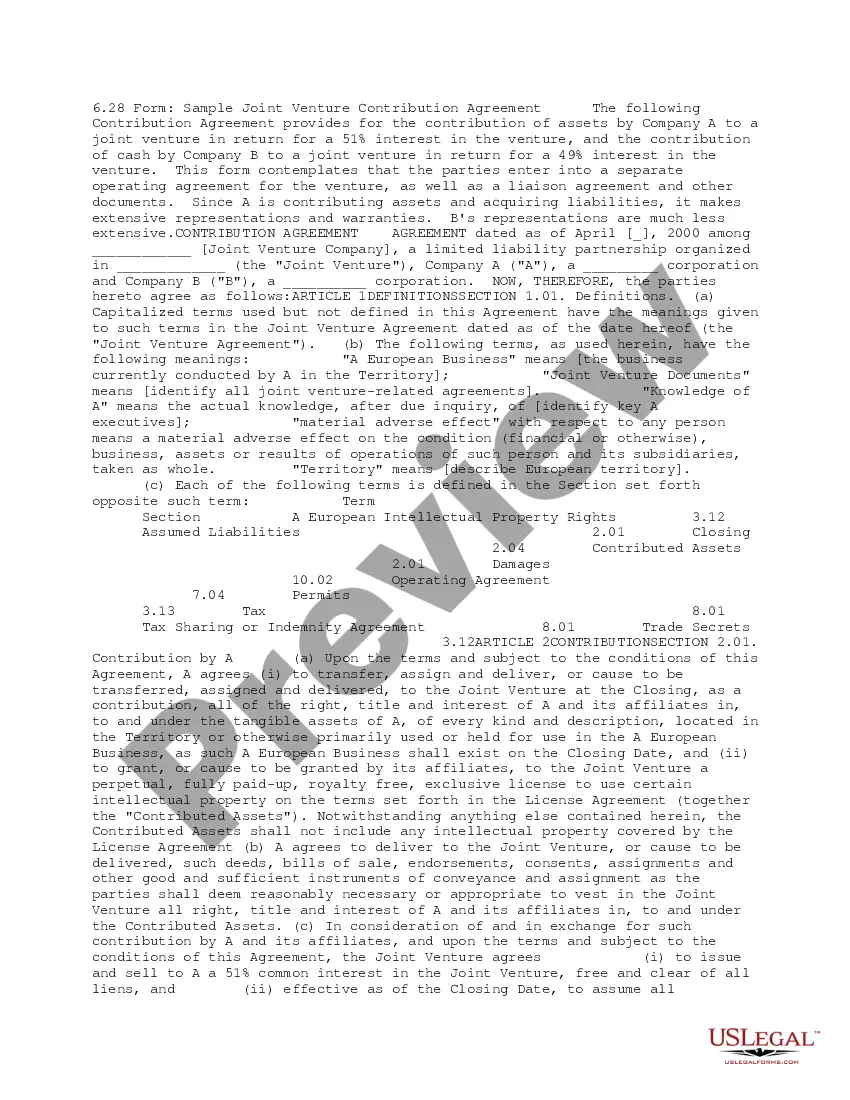
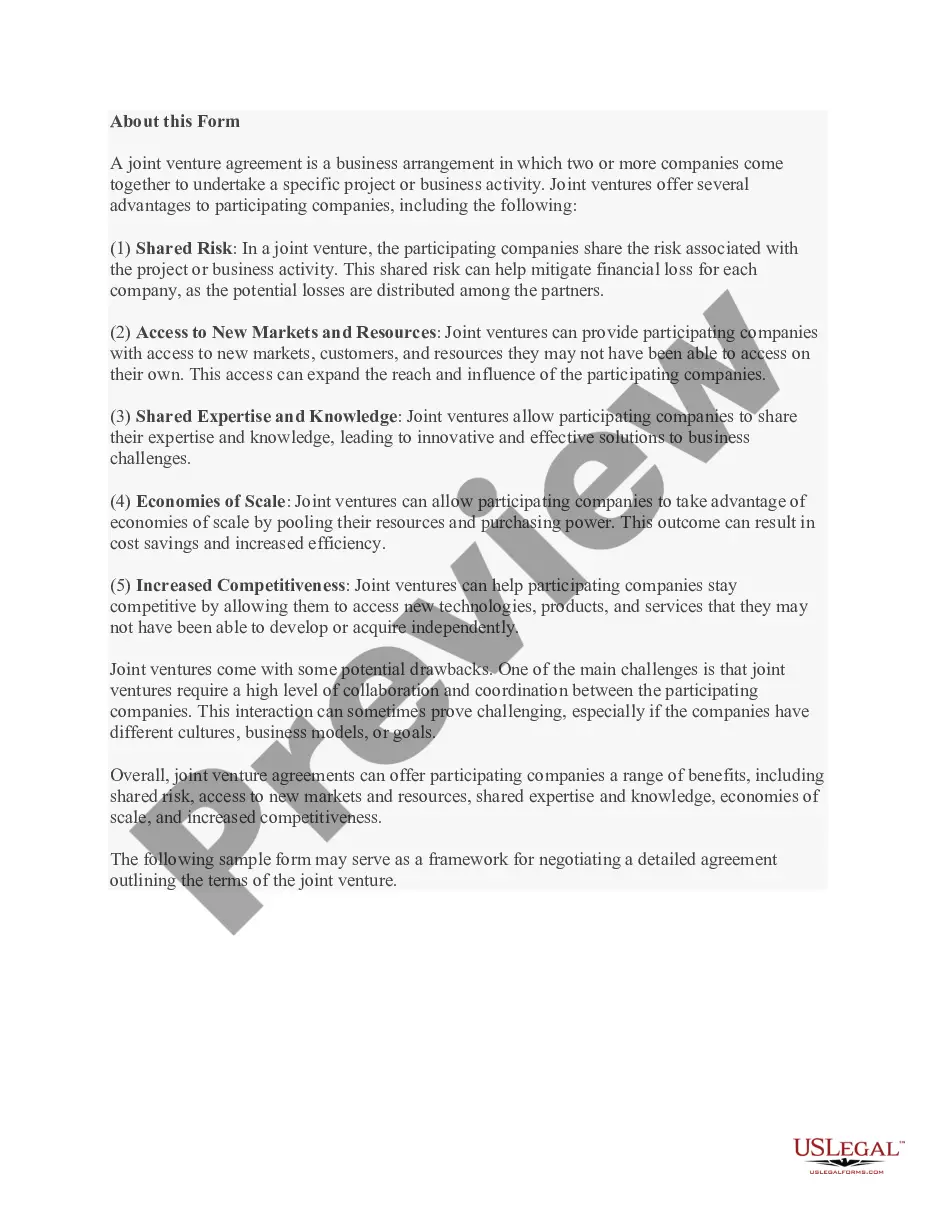
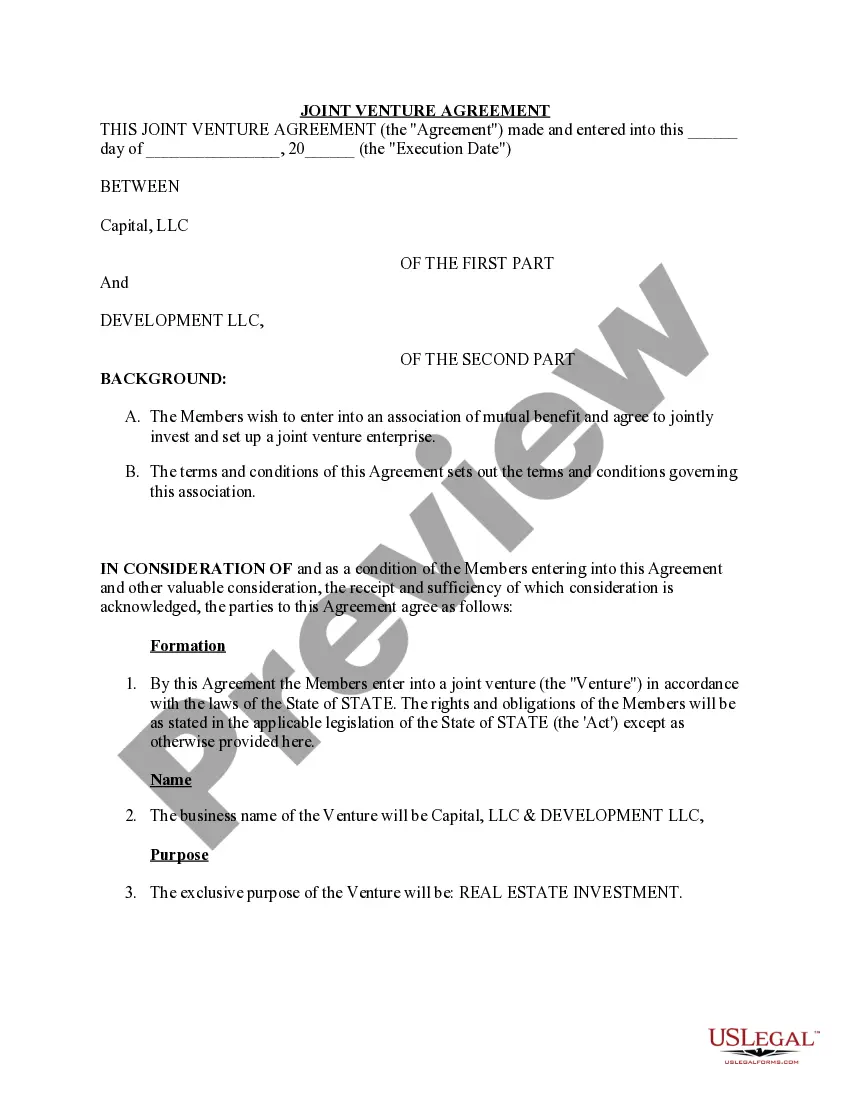
The Joint Venture Contribution Agreement is a legal document that outlines the terms under which two or more companies come together to form a joint venture. It specifies the contributions made by each party, including assets and cash, and the ownership percentage each will receive. This form is essential for establishing clear financial commitments and responsibilities, distinguishing it from other agreements that may not specify ownership stakes or contributions in detail.
Main sections of this form
- Definitions: Key terms used in the agreement are defined for clarity.
- Contribution Responsibilities: Details the specific contributions by each party, including assets from Company A and cash from Company B.
- Ownership Structure: Specifies ownership interest percentages, with Company A receiving 51% and Company B receiving 49% of the joint venture.
- Closing Conditions: Outlines the necessary conditions for the agreement to take effect, including the execution of related documents.
- Representations and Warranties: Each party must provide assurances regarding their authority and business status.










When to use this document
This form should be used when two or more companies are looking to collaborate through a joint venture, particularly when one company contributes assets and the other contributes cash. It is beneficial in scenarios such as joint projects, shared investments, or co-branding efforts that require clear agreements on the contributions and ownership stakes of the involved parties.
Who can use this document
This form is intended for:
- Business owners or company executives looking to establish a joint venture.
- Legal professionals drafting agreements for businesses involved in joint ventures.
- Investors interested in clear terms related to their contributions and ownership in a venture.
Steps to complete this form
To complete the Joint Venture Contribution Agreement, follow these steps:
- Identify the parties involved, including their full legal names and business structures.
- Specify the contributions each party will make to the joint venture.
- Enter the ownership percentages associated with each party's contributions.
- Include any closing conditions that need to be fulfilled before the agreement takes effect.
- Ensure all parties sign and date the agreement to formalize it.
Notarization requirements for this form
This form does not typically require notarization unless specified by local law. Always check local regulations to confirm if notarization is necessary for your specific situation.
Get your form ready online
Our built-in tools help you complete, sign, share, and store your documents in one place.
Make edits, fill in missing information, and update formatting in US Legal Forms—just like you would in MS Word.
Download a copy, print it, send it by email, or mail it via USPS—whatever works best for your next step.
Sign and collect signatures with our SignNow integration. Send to multiple recipients, set reminders, and more. Go Premium to unlock E-Sign.
If this form requires notarization, complete it online through a secure video call—no need to meet a notary in person or wait for an appointment.
We protect your documents and personal data by following strict security and privacy standards.

Make edits, fill in missing information, and update formatting in US Legal Forms—just like you would in MS Word.

Download a copy, print it, send it by email, or mail it via USPS—whatever works best for your next step.

Sign and collect signatures with our SignNow integration. Send to multiple recipients, set reminders, and more. Go Premium to unlock E-Sign.

If this form requires notarization, complete it online through a secure video call—no need to meet a notary in person or wait for an appointment.

We protect your documents and personal data by following strict security and privacy standards.
Mistakes to watch out for
- Failing to clearly define the contributions of each party.
- Omitting critical closing conditions that must be met.
- Not including a definition section, which can lead to misunderstandings.
- Neglecting to have all parties sign the agreement, making it unenforceable.
Why use this form online
- Convenient access to legal form templates that can be customized for your needs.
- Time-saving as the forms are ready for download and easy to fill out.
- Reliable documents drafted by licensed attorneys, ensuring legal accuracy.
Looking for another form?

Form popularity
FAQ
Joint venture are not required to file formal paperwork or documentation of status with state or federal governments. Instead, development of a joint venture is contractual and involves one business entity entering into a contract with another entity.
There isn't a set legal structure for a joint venture. That means that your business collaboration can take the form that best suits your planned project. A joint venture can either be: A contractual joint venture with no separate legal entity or.
While signing a Joint Venture agreement, the following clauses must be properly examined such as: Object and scope of the Joint Venture; Equity participation by local and foreign investors and agreement to a future issue of capital; Management Committee; Financial arrangements; The composition of the board and
Proportional Consolidation Method of Joint Venture Accounting. Joint ventures are accounted for using equity accounting (same as associates), but also occasionally using proportional consolidation.The joint venture is brought into the group accounts on a proportionate line by line basis between sales and net income.
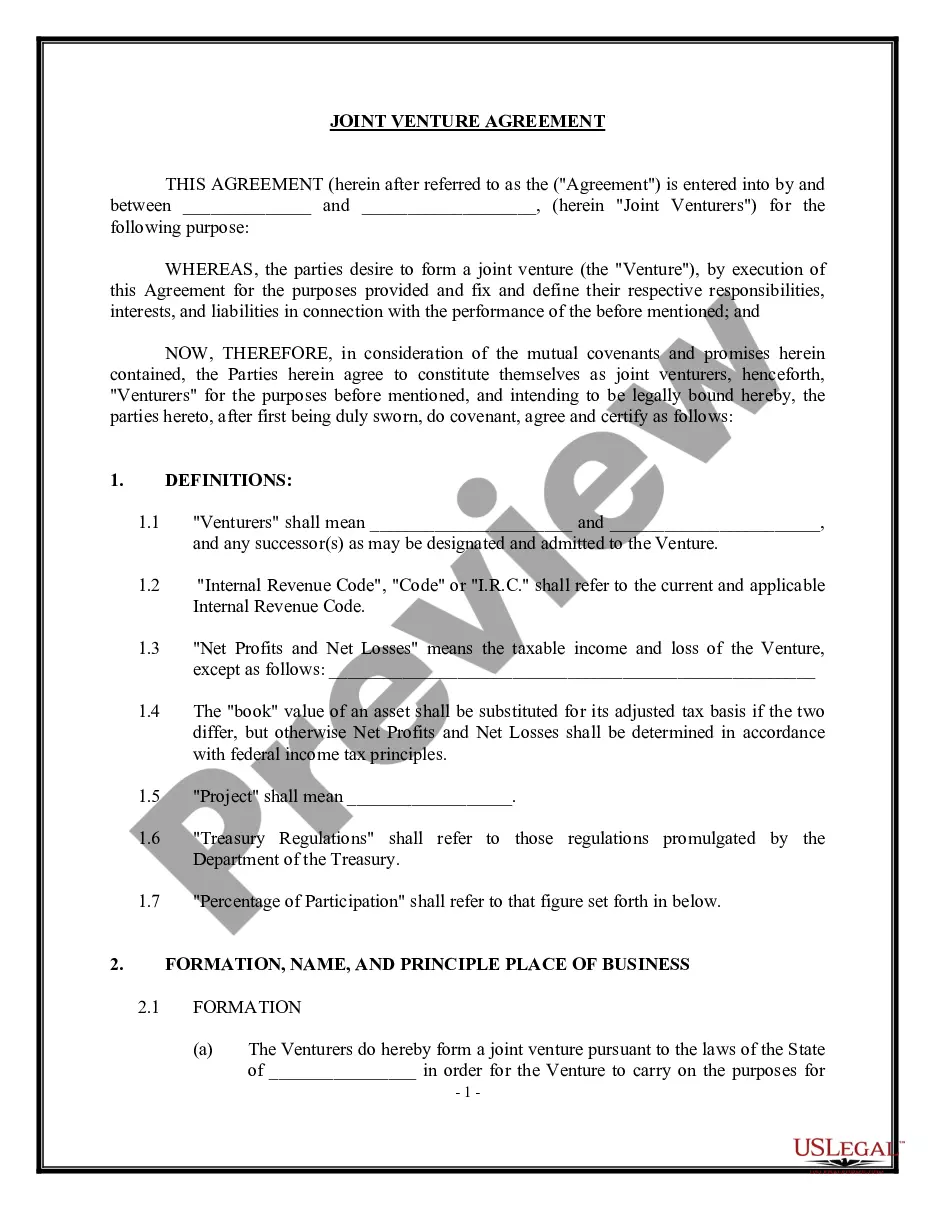
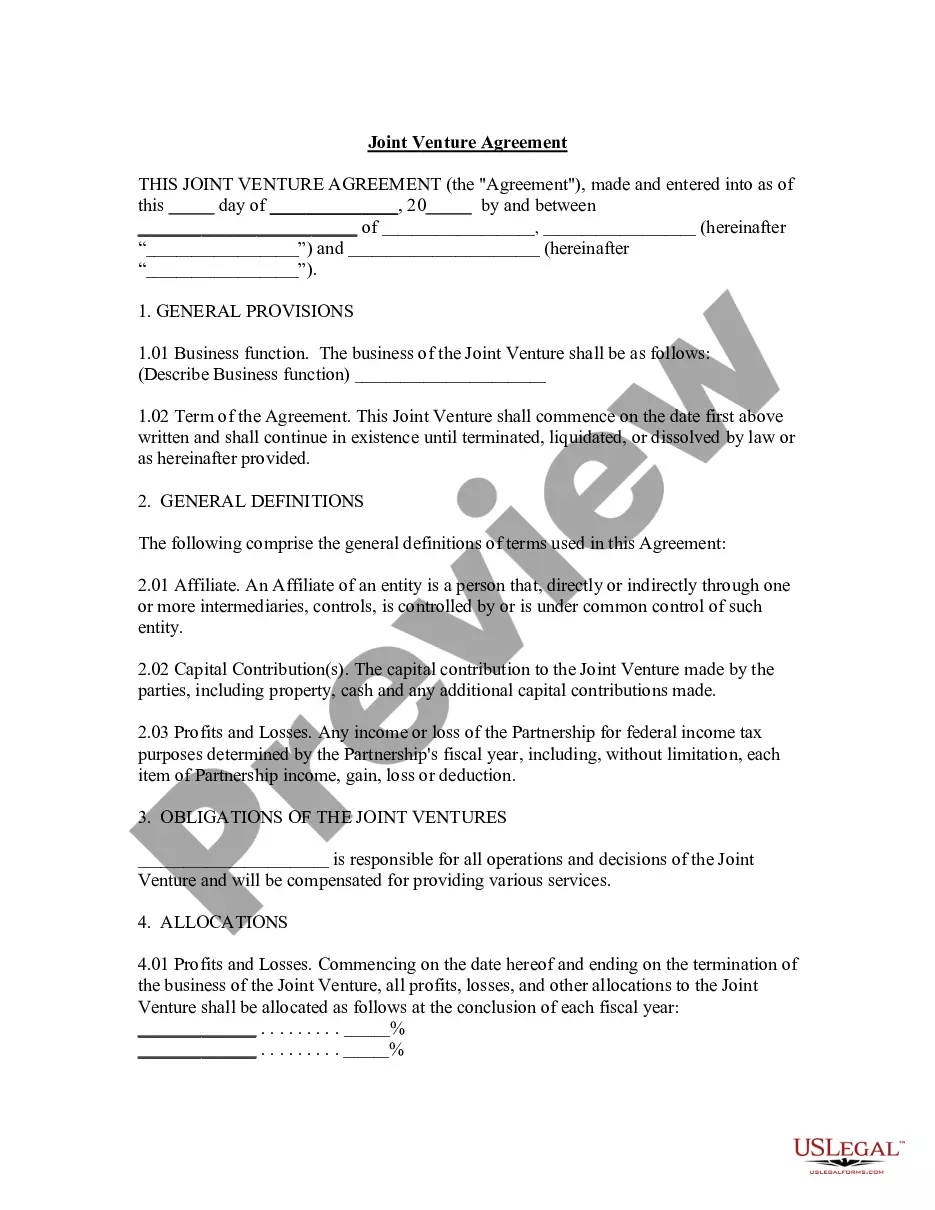
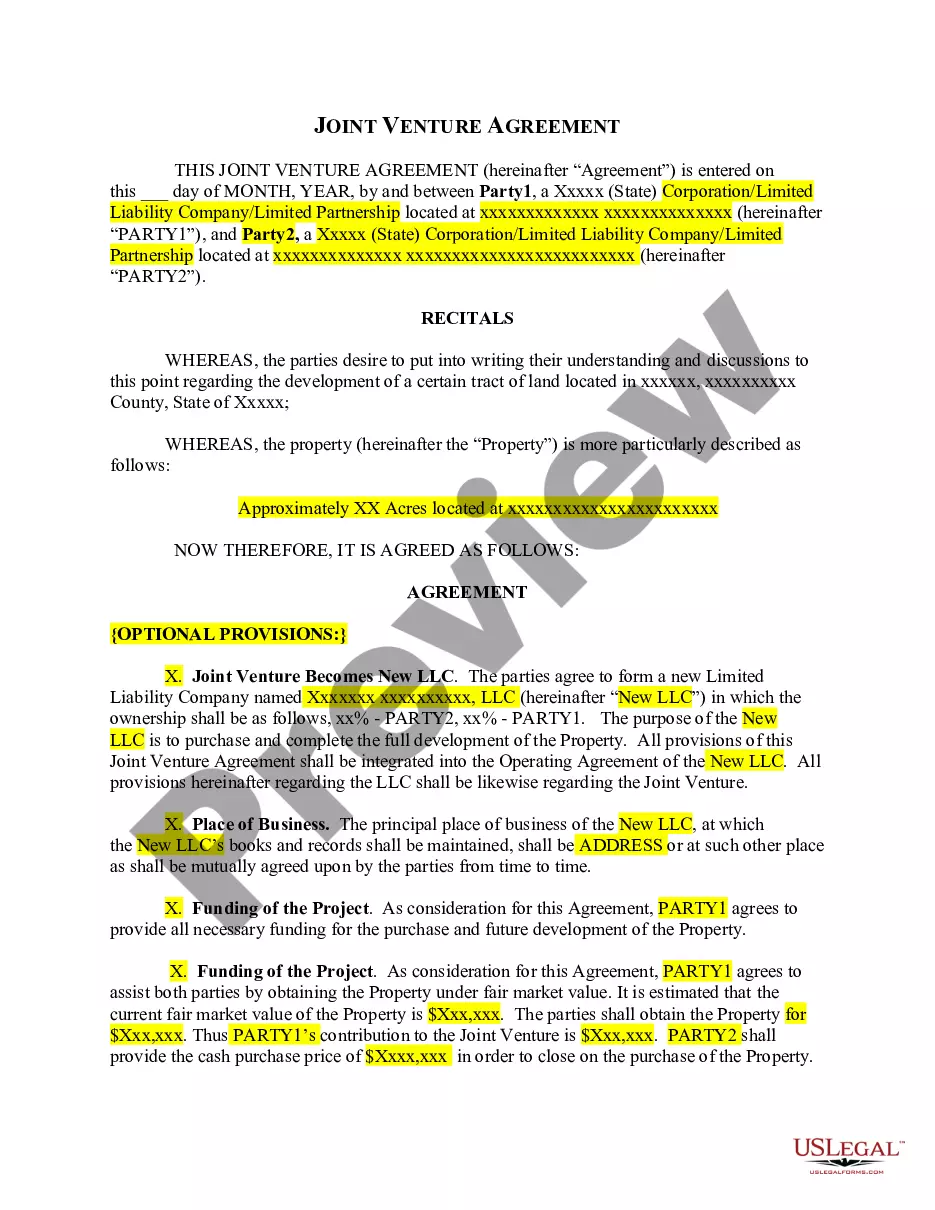
FORMATION. The joint venture formed by this Agreement (the Joint Venture) will conduct its business under the name JOINT VENTURE NAME, and will have its registered address at ADDRESS. PURPOSE. CONTRIBUTIONS. DISTRIBUTION OF PROFITS. MANAGEMENT. RESPONSIBILITIES OF THE PARTIES. NON-EXCLUSIVITY. TERM.
Joint ventures are usually formed by two businesses with complementary strengths. For example, a technology company may create a partnership with a marketing company to bring an innovative product to market.
If you receive income from a joint venture, you must report it to the Internal Revenue Service on your personal return because joint ventures do not file their own returns. Only spouses can elect that the IRS treat their enterprise as a qualified joint venture instead of a partnership.
A joint venture (JV) is a business arrangement in which two or more parties agree to pool their resources for the purpose of accomplishing a specific task. This task can be a new project or any other business activity.However, the venture is its own entity, separate from the participants' other business interests.
Because any profits made from a joint venture flow through to the individual members of the venture, the portion of the profit that each member receives is claimed on that member's individual or corporate tax returns. The venture itself does not make a tax filing on any of the funds that flow through it.