Pipelines - Laying and Burying
Overview of this form
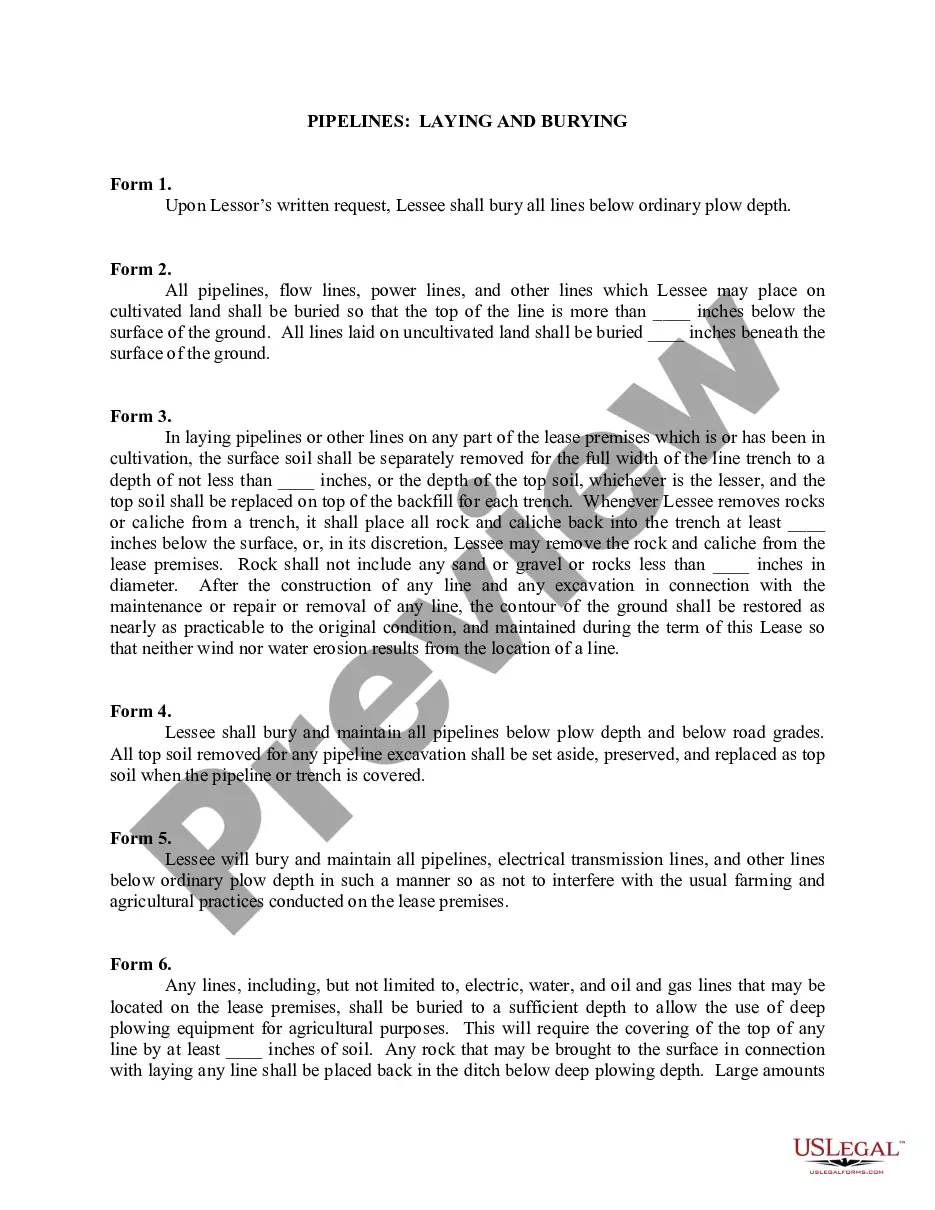
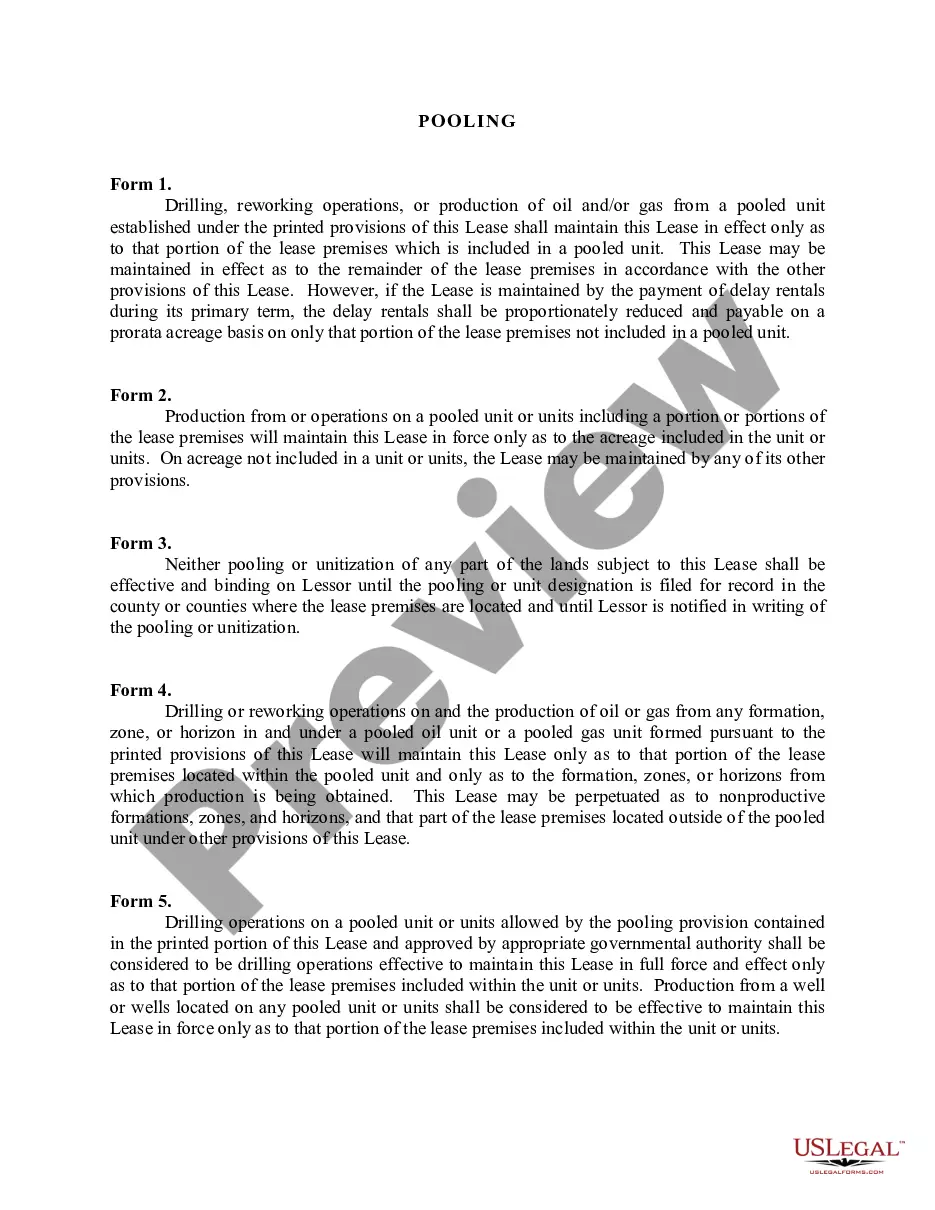
The Pipelines - Laying and Burying form is a lease rider used in oil and gas leasing transactions. It allows lessors to impose specific requirements and limitations on the lessee regarding the installation and maintenance of pipelines and related infrastructure. Unlike standard lease agreements, this form addresses concerns specific to the use of cultivated and uncultivated land, thereby protecting agricultural practices and land integrity.
Form components explained
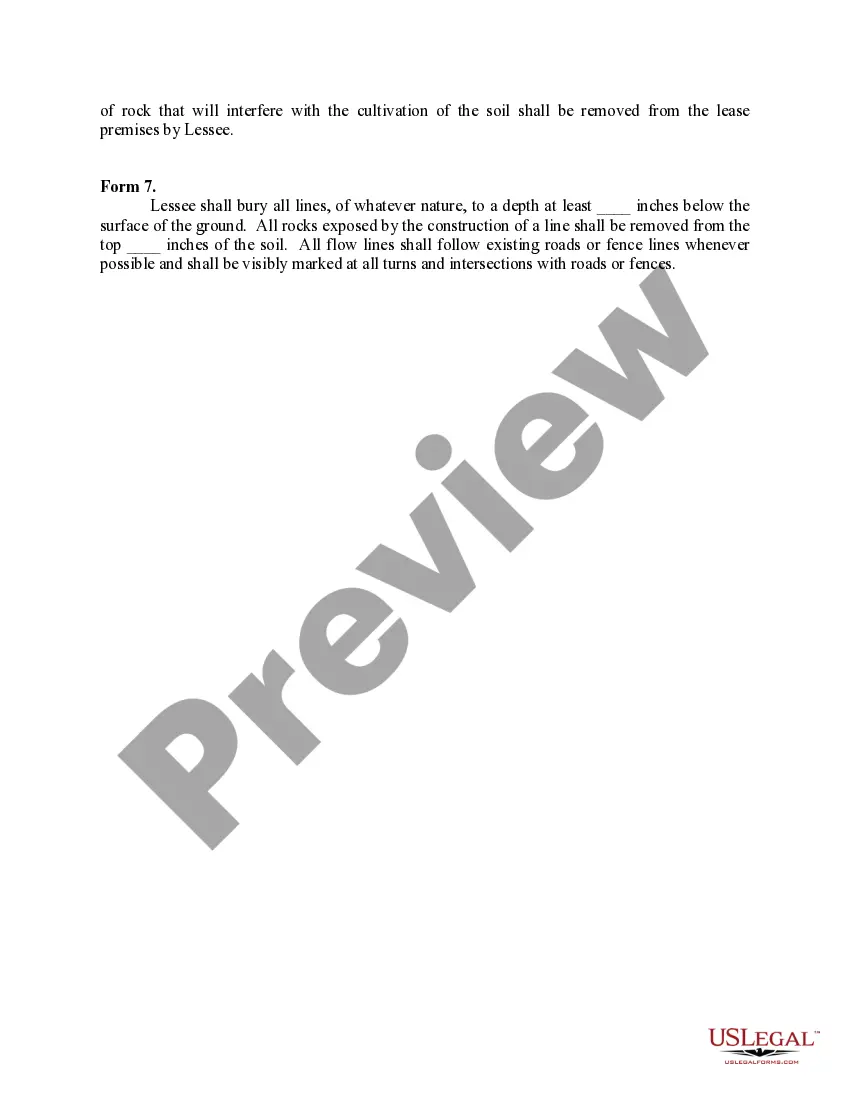
- Requirement for burying pipelines below ordinary plow depth.
- Specific depths for pipelines on cultivated versus uncultivated land.
- Procedures for handling topsoil and backfilling trenches.
- Guidelines for restoring land contours post-installation.
- Specification for managing rocks during pipeline installation.
- Provisions for maintaining agricultural usability of the land.

When this form is needed
This form should be utilized when entering into a lease agreement for oil and gas extraction that involves the installation of pipelines. If you have specific concerns about how these pipelines may affect agricultural practices or land use, this form ensures those concerns are formally addressed in the lease. It is particularly important if the land in question has been or will be used for farming.
Who this form is for
- Landowners (Lessors) participating in oil and gas lease agreements.
- Lessee companies looking to adhere to land use guidelines.
- Agricultural businesses concerned about pipeline impacts.
- Legal professionals drafting or reviewing lease agreements.
Instructions for completing this form
- Begin by identifying the parties involved in the lease agreement (lessor and lessee).
- Specify the depth requirements for burying pipelines on cultivated and uncultivated land.
- Detail any procedures for handling topsoil and restoring land contours.
- Outline measures for managing rocks and ensuring agricultural usability.
- Review the completed form for any state-specific provisions that may apply.
- Both parties should sign and date the form to finalize the agreement.
Notarization requirements for this form
Notarization is not commonly needed for this form. However, certain documents or local rules may make it necessary. Our notarization service, powered by Notarize, allows you to finalize it securely online anytime, day or night.
Get your form ready online
Our built-in tools help you complete, sign, share, and store your documents in one place.
Make edits, fill in missing information, and update formatting in US Legal Forms—just like you would in MS Word.
Download a copy, print it, send it by email, or mail it via USPS—whatever works best for your next step.
Sign and collect signatures with our SignNow integration. Send to multiple recipients, set reminders, and more. Go Premium to unlock E-Sign.
If this form requires notarization, complete it online through a secure video call—no need to meet a notary in person or wait for an appointment.
We protect your documents and personal data by following strict security and privacy standards.

Make edits, fill in missing information, and update formatting in US Legal Forms—just like you would in MS Word.

Download a copy, print it, send it by email, or mail it via USPS—whatever works best for your next step.

Sign and collect signatures with our SignNow integration. Send to multiple recipients, set reminders, and more. Go Premium to unlock E-Sign.

If this form requires notarization, complete it online through a secure video call—no need to meet a notary in person or wait for an appointment.

We protect your documents and personal data by following strict security and privacy standards.
Mistakes to watch out for
- Failing to specify the required depths for pipelines.
- Not addressing procedures for handling topsoil during excavation.
- Overlooking local regulations that may affect pipeline installation.
- Neglecting to include restoration requirements for land contours.
Advantages of online completion
- Convenience of downloading and completing the form from home.
- Editability to customize the document according to specific needs.
- Peace of mind knowing the form has been drafted by licensed attorneys.
Looking for another form?

Form popularity
FAQ
Pipelines transport a variety of products such as sewage and water.While some pipelines are built above ground, the majority of pipelines in the U.S. are buried underground. Because oil and gas pipelines are well concealed from the public, most individuals are unaware of the existence of the vast network of pipelines.
Tag: Buried Piping Application of Buried Piping The piping that is in contact with soil or runs below grade level is called buried or underground piping.Normally Pipelines run kilometers in length for transferring oil, gas, water, or sewer.
Trenching is a construction method that involves digging a narrow trench in the ground for the installation, maintenance, or inspection of pipelines, conduits, or cables.
The first is to provide an envelope of embedment to protect the pipe from mechanical damage from impact or hard objects (cobbles, boulders) in the soil. The second is to provide support against earth and live load pressures, where this is required. The envelope surrounding the pipe is referred to as the embedment.
The hydraulic hoe or backacter is the machine most widely used for trench excavation for pipelines.Bottoming of the trench can be achieved by using a straightedged bucket without teeth, and the backhoe can also place soft material or concrete into a trench on which to bed pipes or fully surround them.
Underground pipeline water distribution system is a water conveying system to different points in the farm and allied structure required for the efficient use of water.Underground pipe lines are fixed and permanent thus require high accuracy and skill in installation to avoid various hydraulic losses.
Most pipelines are typically buried at a depth of about 3 to 6 feet (0.91 to 1.83 m). To protect pipes from impact, abrasion, and corrosion, a variety of methods are used.