License from Landowner to Company Constructing Pipeline Use of Property for Pipeline Construction
Understanding this form
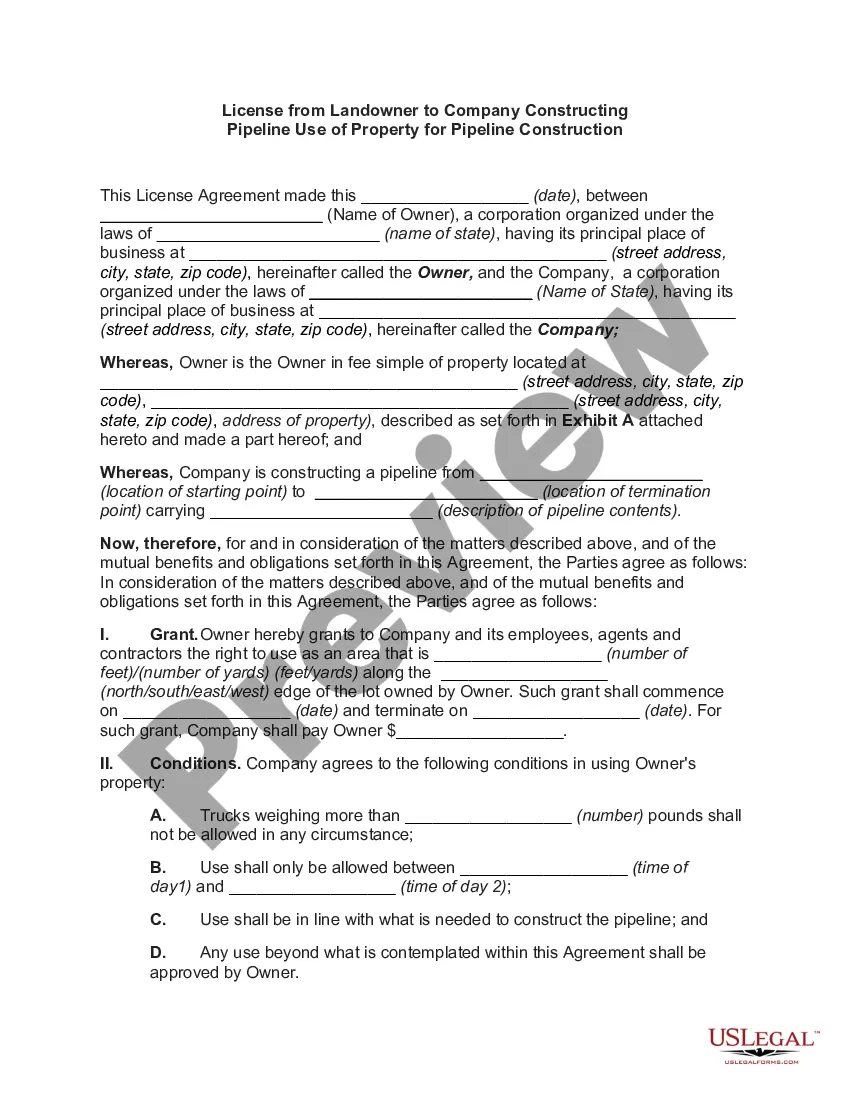
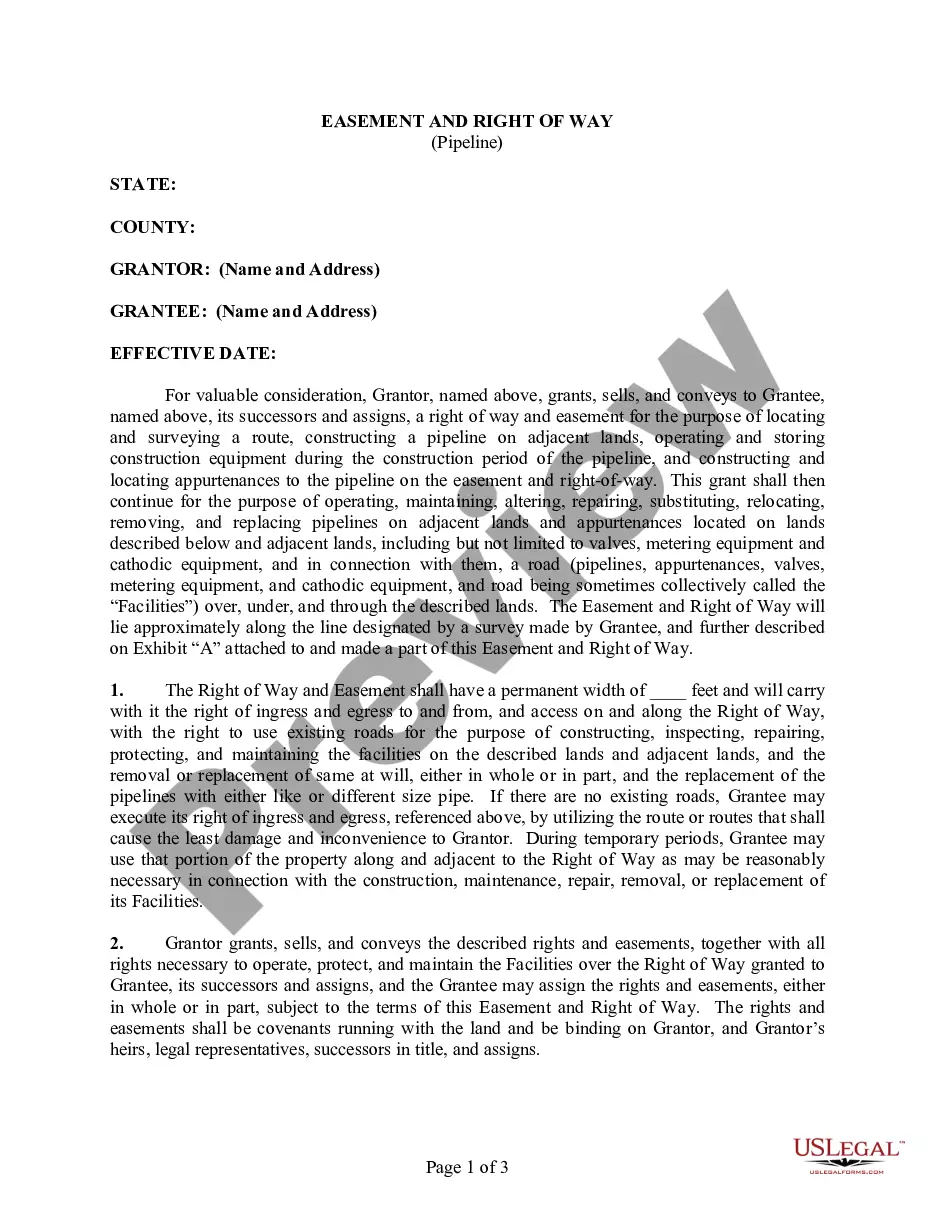
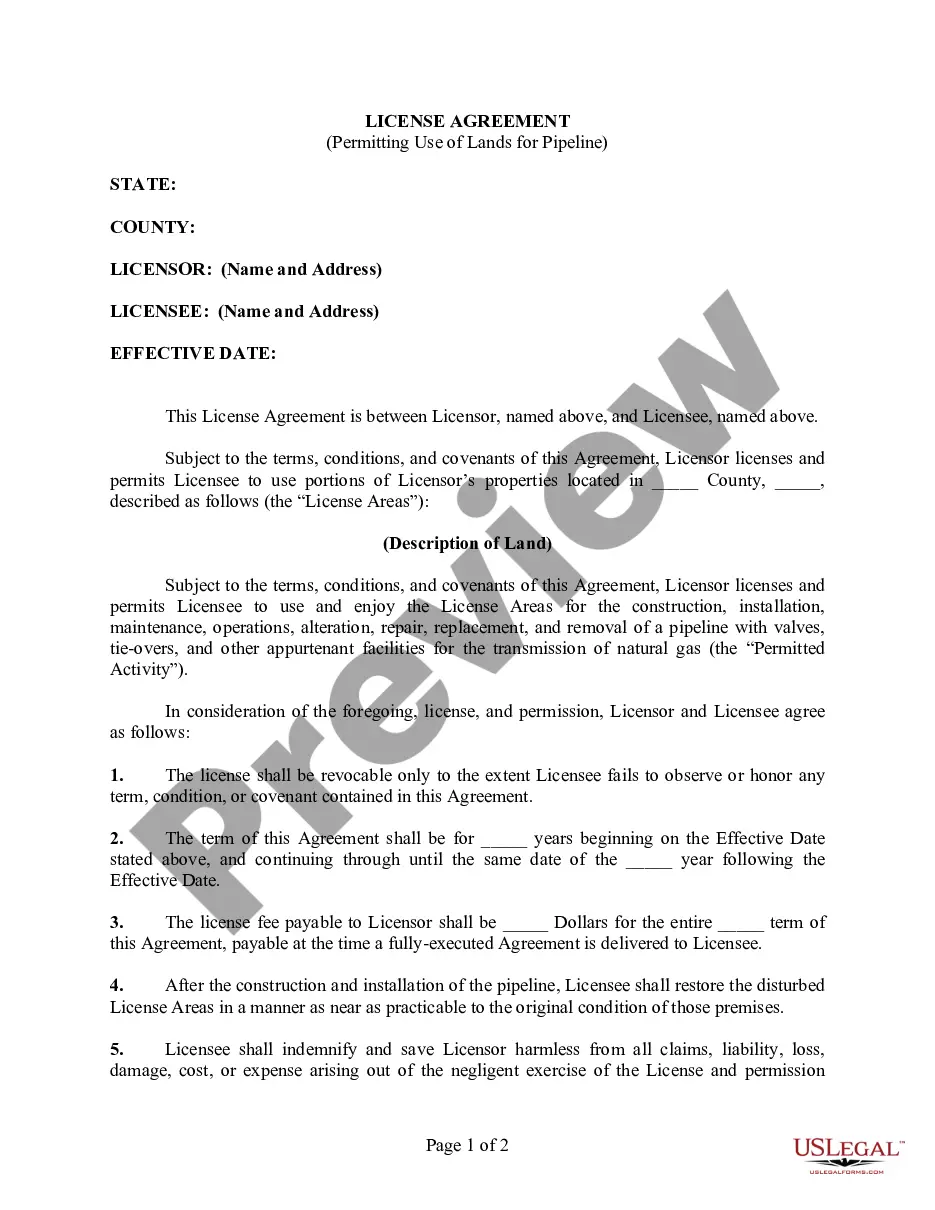
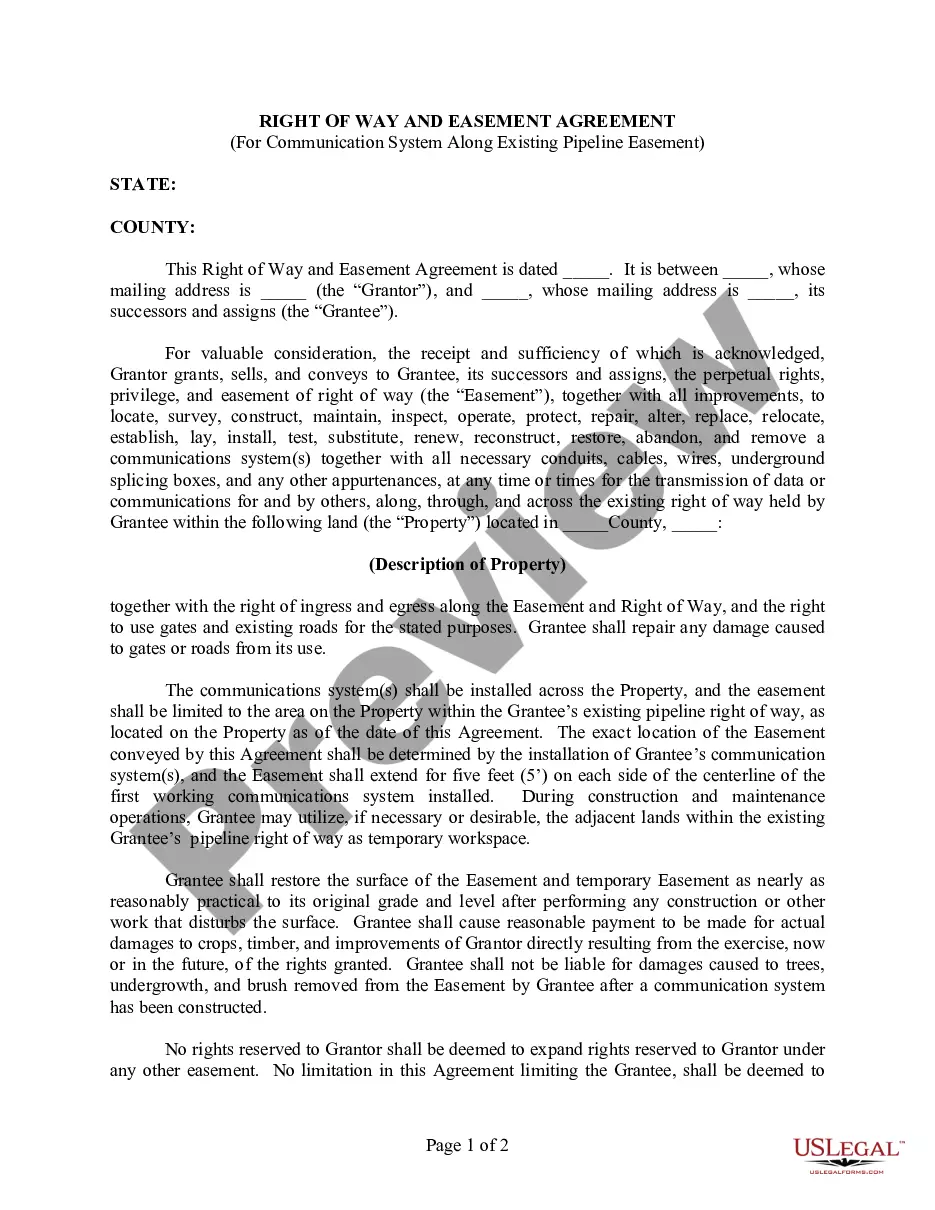
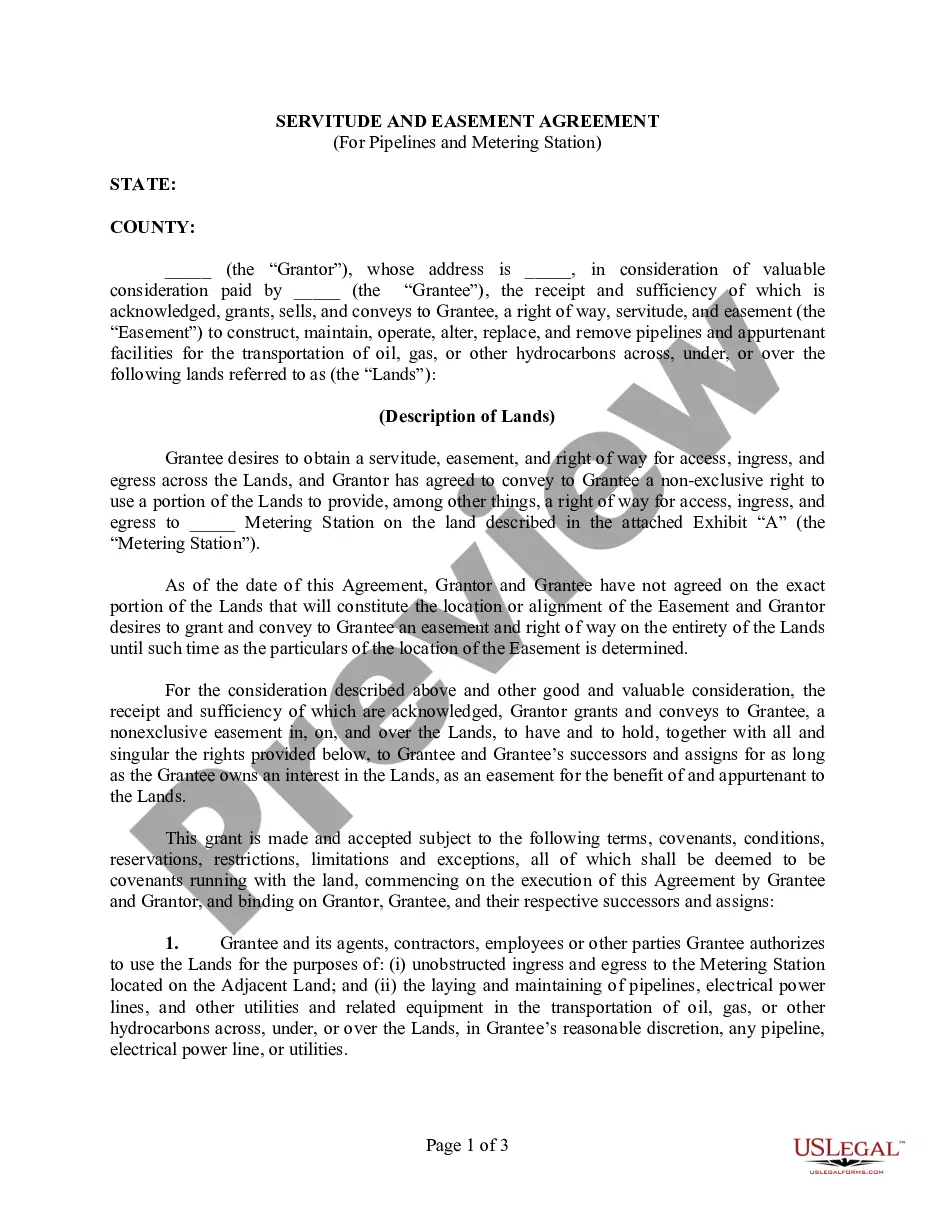
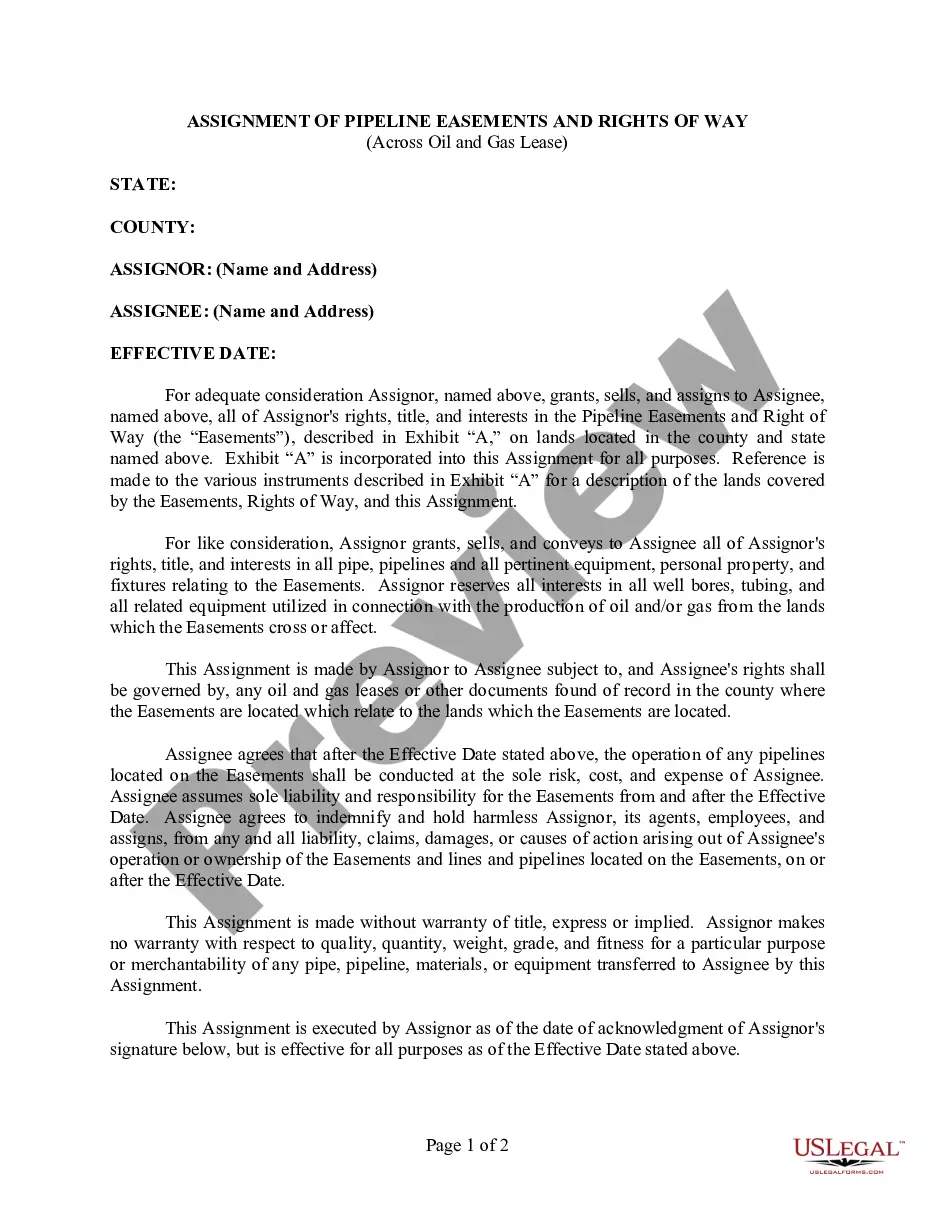
This License from Landowner to Company Constructing Pipeline Use of Property for Pipeline Construction is a legal document that grants permission for a company to use a landowner's property for pipeline construction. This form is essential for establishing the terms under which the company may access the property, distinguishing it from other agreements by its specific focus on pipeline installation rights and conditions.
What’s included in this form
- Identification of the landowner and company involved.
- Description of the property and boundaries for pipeline use.
- Details on the construction timeline, including start and end dates.
- Conditions for usage, including vehicle weight limits and allowed working hours.
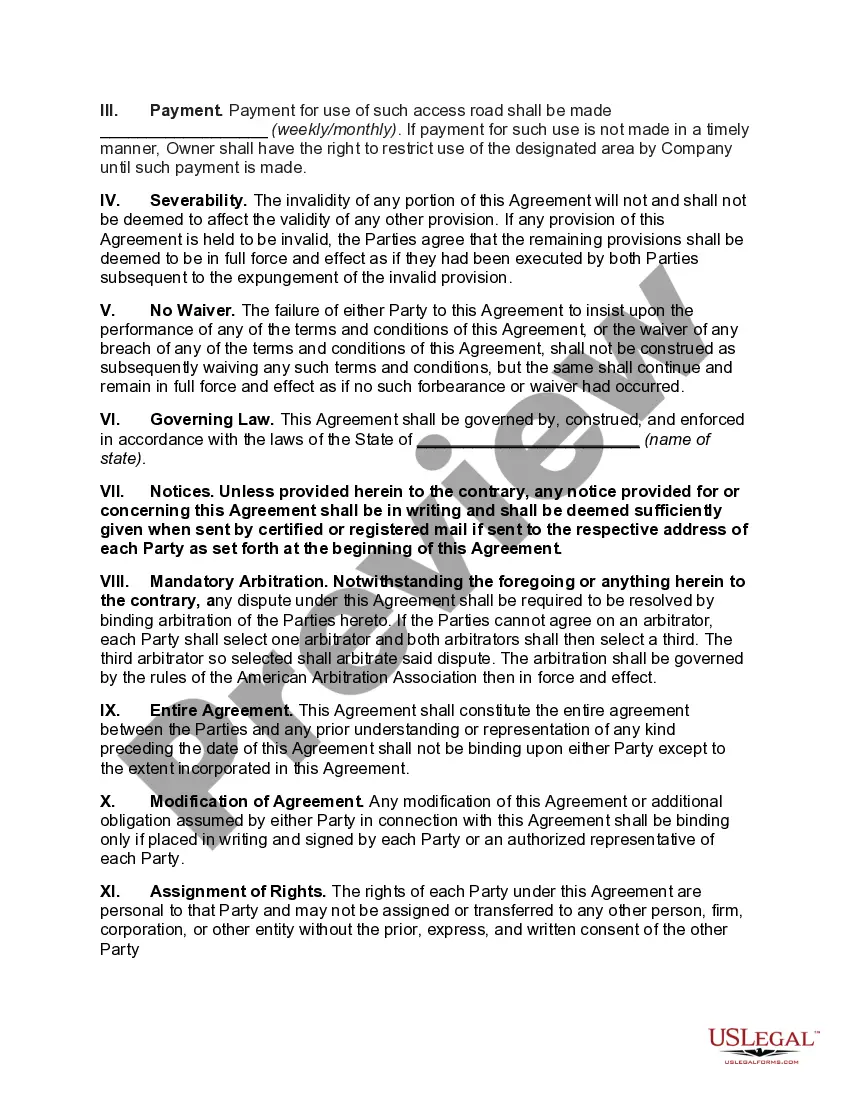
- Payment terms for property usage.
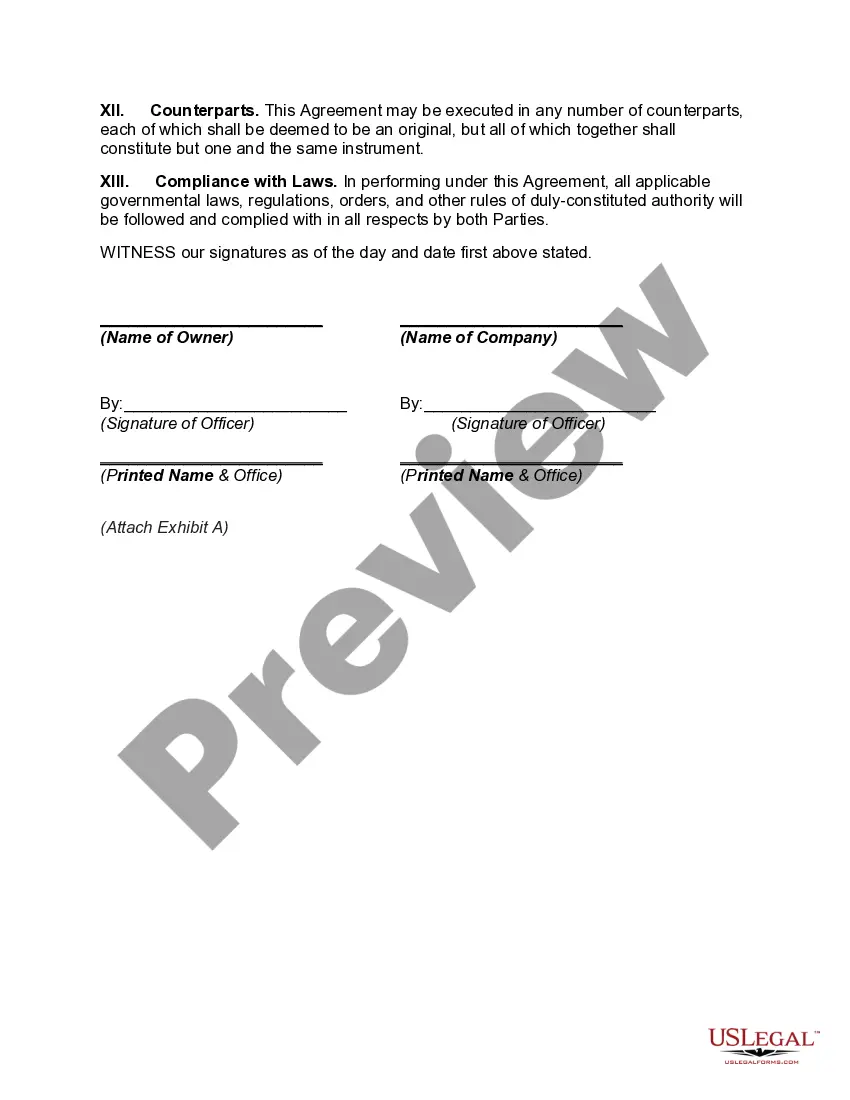
- Legal clauses regarding severability, waiver, and governing law.
Common use cases
This form is needed when a company intends to construct a pipeline on privately owned property. It is essential during negotiations to ensure that both the landowner and the company have a clear mutual understanding of usage rights, responsibilities, and compensation, thus preventing potential disputes during construction.
Who needs this form
- Landowners who wish to grant permission for pipeline construction on their property.
- Companies involved in pipeline construction that require access to private land.
- Legal representatives or advisors assisting either party in drafting or reviewing the agreement.
How to prepare this document
- Identify and fill in the names of the landowner and the company.
- Specify the precise location and boundaries of the property to be used.
- Enter the beginning and ending dates for the construction permit.
- Detail any conditions related to property usage, such as vehicle weight limits and operational hours.
- Include the payment terms agreed upon for the usage of the property.
Notarization guidance
This form does not typically require notarization unless specified by local law.
Get your form ready online
Our built-in tools help you complete, sign, share, and store your documents in one place.
Make edits, fill in missing information, and update formatting in US Legal Forms—just like you would in MS Word.
Download a copy, print it, send it by email, or mail it via USPS—whatever works best for your next step.
Sign and collect signatures with our SignNow integration. Send to multiple recipients, set reminders, and more. Go Premium to unlock E-Sign.
If this form requires notarization, complete it online through a secure video call—no need to meet a notary in person or wait for an appointment.
We protect your documents and personal data by following strict security and privacy standards.

Make edits, fill in missing information, and update formatting in US Legal Forms—just like you would in MS Word.

Download a copy, print it, send it by email, or mail it via USPS—whatever works best for your next step.

Sign and collect signatures with our SignNow integration. Send to multiple recipients, set reminders, and more. Go Premium to unlock E-Sign.

If this form requires notarization, complete it online through a secure video call—no need to meet a notary in person or wait for an appointment.

We protect your documents and personal data by following strict security and privacy standards.
Avoid these common issues
- Failing to clearly define the property boundaries.
- Not specifying the payment terms accurately.
- Overlooking the inclusion of essential conditions for usage.
- Neglecting to mention start and end dates for the granted access.
Why use this form online
- Convenience of downloading and completing the form at your own pace.
- Editability allows adjustments according to specific needs and circumstances.
- Access to attorney-drafted templates ensures legal reliability and compliance.
Looking for another form?

Form popularity
FAQ
Analysis by IRR shows that the presence of pipelines does not affect the value of a home or its insurability.
The hazard area radius is basically the area in proximity to the pipeline within which there would be virtually no chance of survival if a pipeline rupture and fire were to happen, and it varies in size from about 100 feet to about 700 feet for a 6-inch to 42-inch pipeline, respectively.
Let's do it! Pipeline Property means real property owned or leased solely for the purpose of operating or maintaining a pipeline through such real property; provided that such real property does not include any storage terminal, processing equipment or other personal property components of any related gathering system.
The pipeline company typically pays the landowner in price per foot or per acre for farm land of the property that the pipeline passes. The price is based on the length of the easement.
An operational phase that leads to achieving a specified goals is called a Pipeline. It encompasses all the intermediate steps from the conceptualization of a new plan to bringing it to fruition. If something is said to be "in the pipeline", it is under development and will be realized in the future.
Interstate pipelines are managed by the Federal Energy Regulatory Commission (FERC) and the U.S. Department of Transportation (DOT). The Federal Energy Regulatory Commission regulates pipelines, storage, natural gas transportation in interstate commerce, and liquefied natural gas facility construction.
THIRTEEN TIPS TO NEGOTIATING PIPELINE EASEMENTS: Limit the term of the easement.Be sure to limit the pipeline to one line and one line only.Insert language that restricts the easement to the company you lease to.Determine if there are to be any pipes above the ground.