Louisiana Amended Answer to First Request for Admissions
About this form
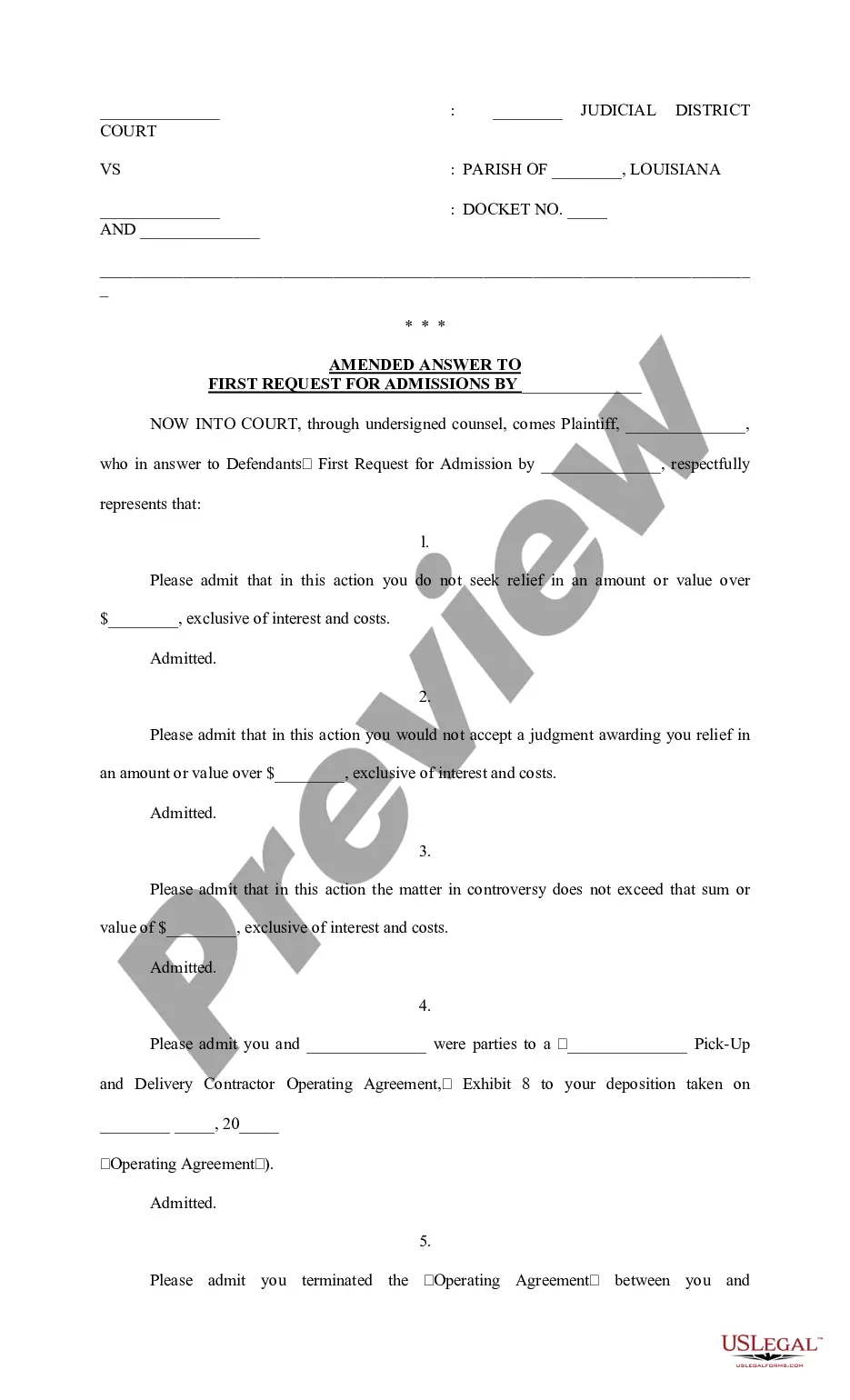
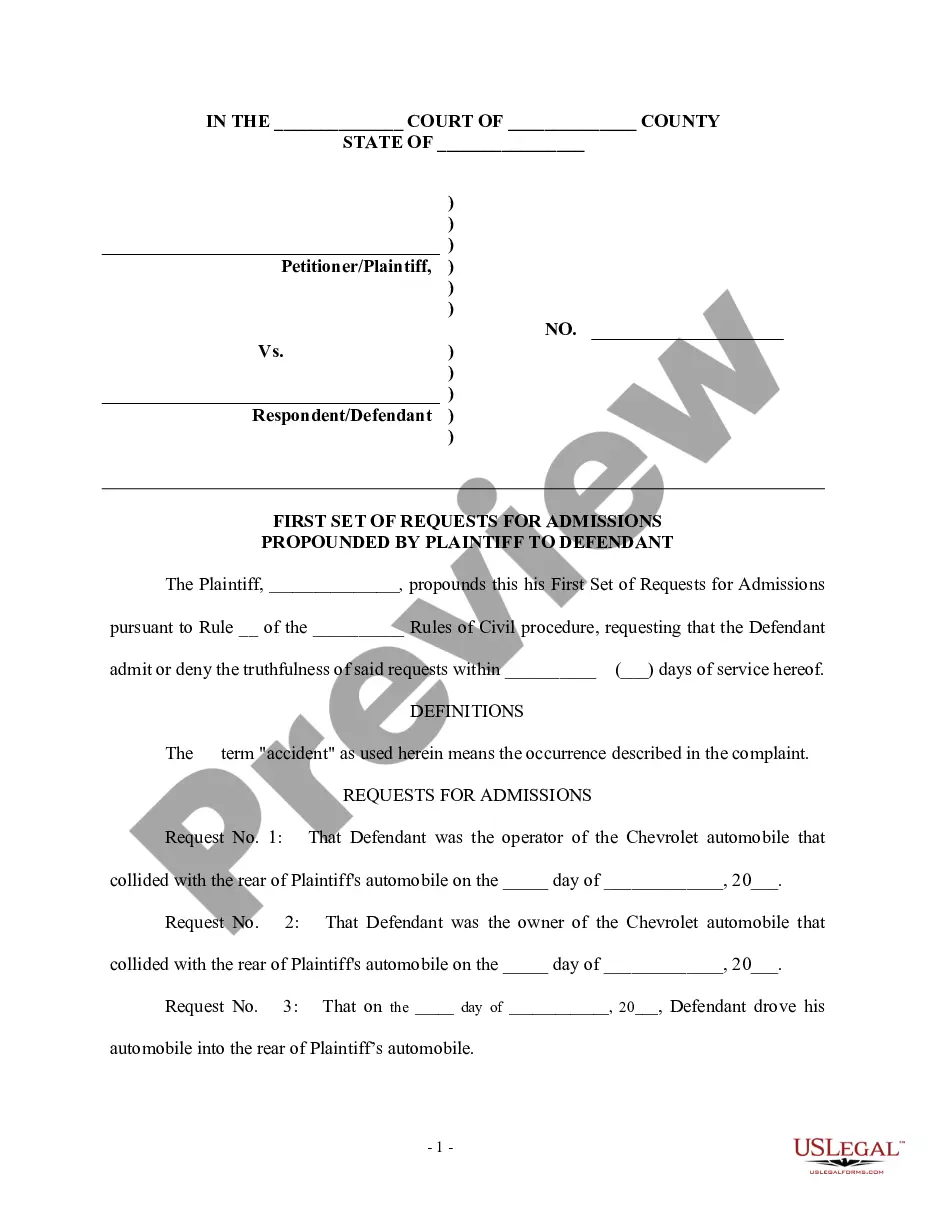
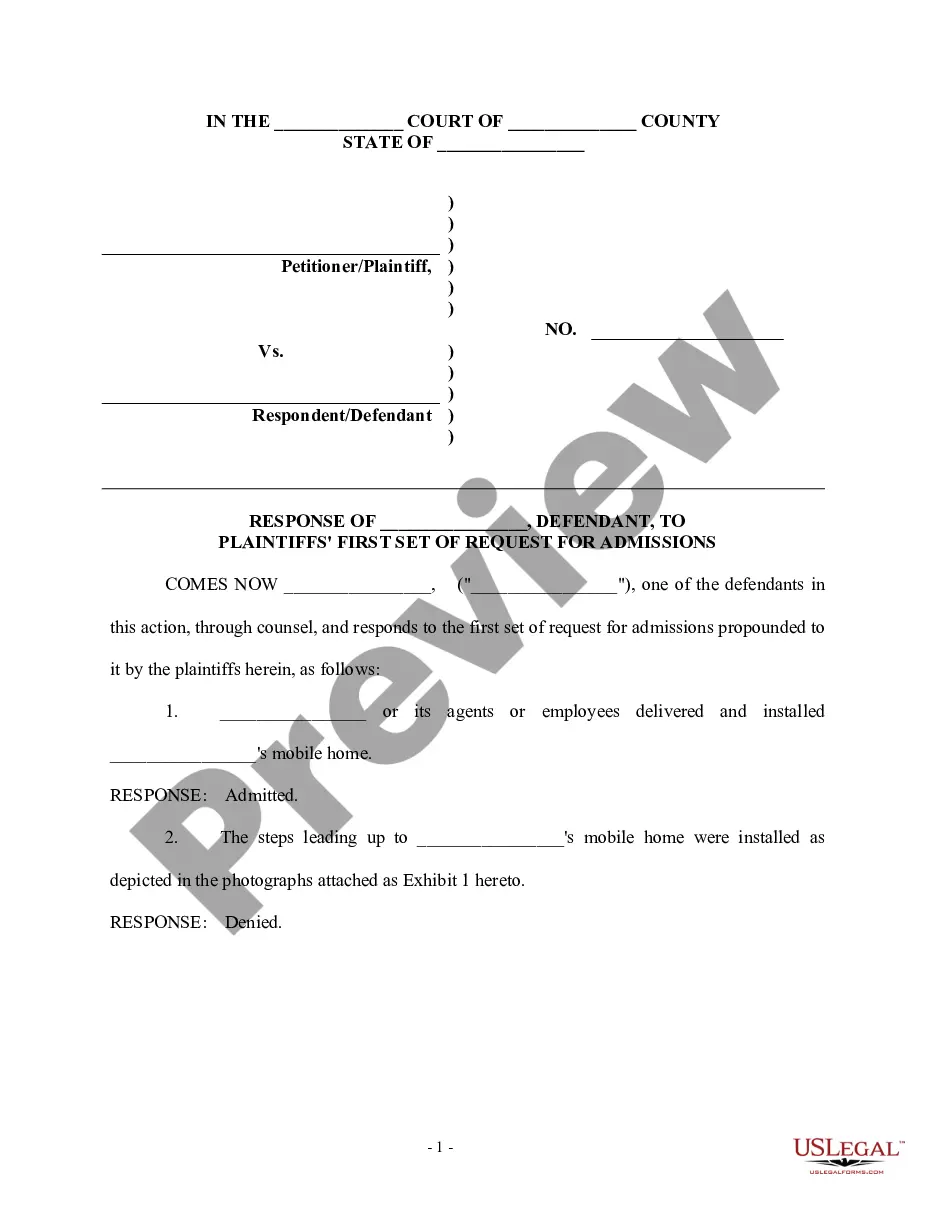
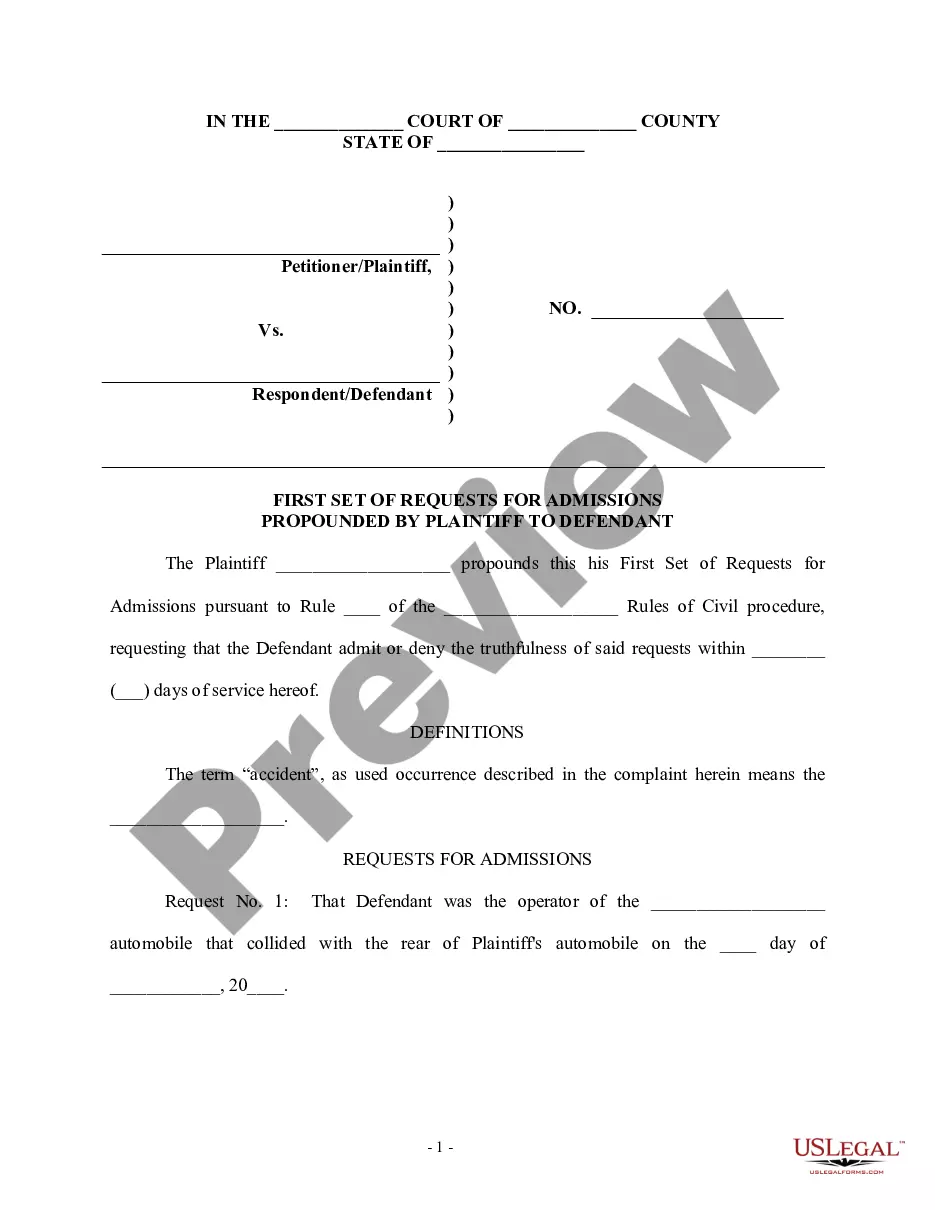
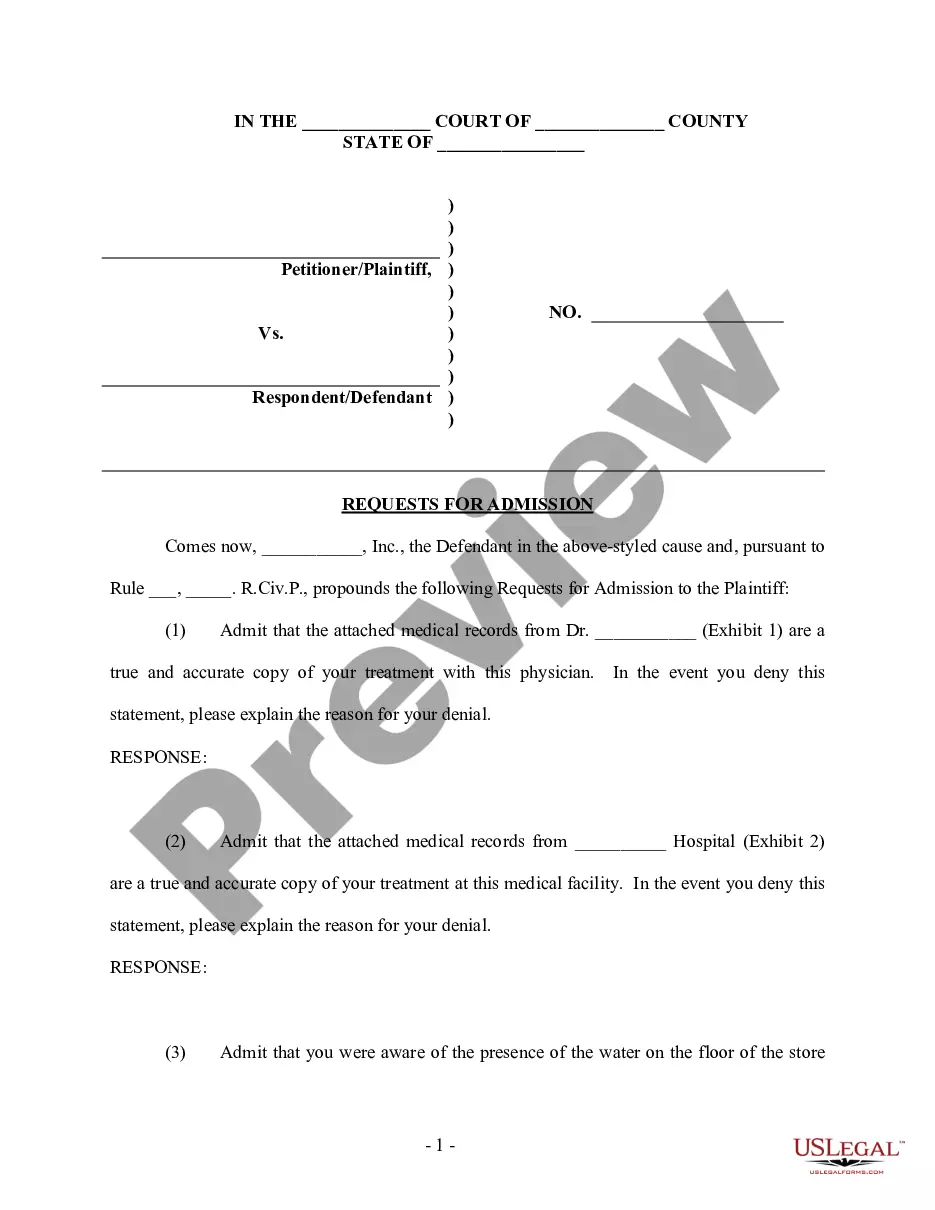
The Amended Answer to First Request for Admissions is a legal document used in personal injury cases. This form allows a plaintiff to amend their responses to specific statements about the case submitted by the defendant. It differs from other discovery tools by focusing specifically on the admission or denial of facts, helping to clarify issues before trial.
Key components of this form
- Identification of the parties involved in the case
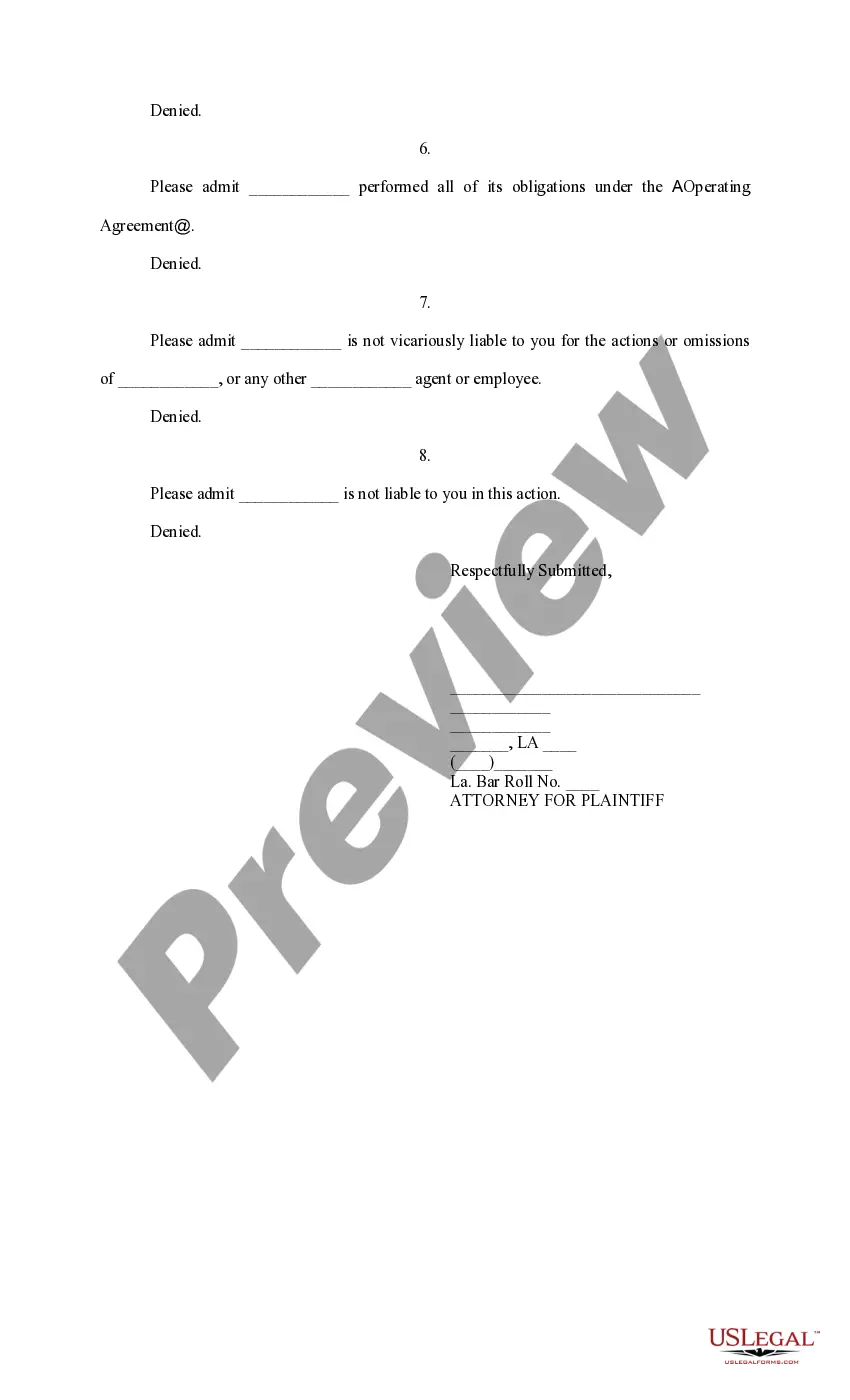
- Statement of the plaintiff's responses to the defendant's Requests for Admission
- Specific admissions or denials regarding claims and facts
- Legal representation information
- Signature line for the attorney representing the plaintiff
When to use this form
This form is used when a plaintiff needs to formally respond to a defendant's First Request for Admissions. It is appropriate in personal injury cases where the plaintiff seeks to clarify their position on specific facts that the defendant wishes to establish or deny in court. Filing an amended answer may be necessary to correct or refine previous responses, ensuring that the case accurately reflects the issues at hand.
Who should use this form
- Plaintiffs involved in personal injury litigation
- Legal representatives of plaintiffs seeking to amend prior admissions
- Anyone responding to a defendant's Requests for Admission in a legal case
How to prepare this document
- Identify the names of the parties in the heading section.
- Clearly state each response to the Requests for Admission, indicating whether you admit or deny each fact.
- Ensure all admissions or denials are accurately reflected based on the case's context.
- Provide your attorney's signature, along with their contact information and bar roll number.
- Review the completed form for accuracy before submitting it to the court.
Does this document require notarization?
Notarization is not commonly needed for this form. However, certain documents or local rules may make it necessary. Our notarization service, powered by Notarize, allows you to finalize it securely online anytime, day or night.
Get your form ready online
Our built-in tools help you complete, sign, share, and store your documents in one place.
Make edits, fill in missing information, and update formatting in US Legal Forms—just like you would in MS Word.
Download a copy, print it, send it by email, or mail it via USPS—whatever works best for your next step.
Sign and collect signatures with our SignNow integration. Send to multiple recipients, set reminders, and more. Go Premium to unlock E-Sign.
If this form requires notarization, complete it online through a secure video call—no need to meet a notary in person or wait for an appointment.
We protect your documents and personal data by following strict security and privacy standards.

Make edits, fill in missing information, and update formatting in US Legal Forms—just like you would in MS Word.

Download a copy, print it, send it by email, or mail it via USPS—whatever works best for your next step.

Sign and collect signatures with our SignNow integration. Send to multiple recipients, set reminders, and more. Go Premium to unlock E-Sign.

If this form requires notarization, complete it online through a secure video call—no need to meet a notary in person or wait for an appointment.

We protect your documents and personal data by following strict security and privacy standards.
Common mistakes
- Failing to respond to all requests, leaving some unanswered.
- Providing vague or unclear answers instead of direct admissions or denials.
- Sensitive information should not be included unless absolutely necessary for the case.
- Not reviewing state-specific requirements which may differ from other jurisdictions.
Why complete this form online
- Convenient and efficient access to legal forms from anywhere.
- Editable templates that can be customized to fit your specific case needs.
- Reliable, professionally drafted forms ensure compliance with legal standards.
Looking for another form?


Form popularity
FAQ
The Louisiana Amended Answer to First Request for Admissions is a formal document used in personal injury litigation to revise the plaintiff’s responses to a defendant’s requests for admission. It allows correcting or refining prior admissions or denials and clearly presents the parties, the plaintiff’s stated responses, legal representation information, and a signature line for the attorney before filing with the court.
Yes. In Louisiana, you can amend your responses to the defendant’s requests for admission by filing the Louisiana Amended Answer to First Request for Admissions. The amended form requires identifying the parties, stating specific admissions or denials, providing attorney information, and including a signature line. It is used to correct or clarify prior responses before trial.
To respond to requests for admission using this form, identify each admission request and provide a specific admission or denial. Include the parties’ identification, the plaintiff’s responses, and the corresponding admissions or denials. Add attorney information and sign the document to certify accuracy before filing with the court and serving the defendant.
Amending the response clarifies or corrects the plaintiff’s position on the facts the defendant seeks to admit or deny. This Louisiana form updates prior admissions, ensuring the case record reflects the current stance before trial, and includes identification of the parties, the specific admissions or denials, attorney information, and a signature line.
Time to respond to requests for admission in Louisiana depends on court rules. This form is used to amend a prior response and should be prepared and served within the applicable discovery deadlines and any court orders, ensuring the amended admissions or denials are timely and properly filed.
This form differs from a standard answer by enabling you to amend prior responses rather than just respond to the requests. It uses specific components—party identification, stated admissions or denials, attorney information, and a signature line—to refine the record in a Louisiana personal injury case before trial.