Director stock program
What this document covers
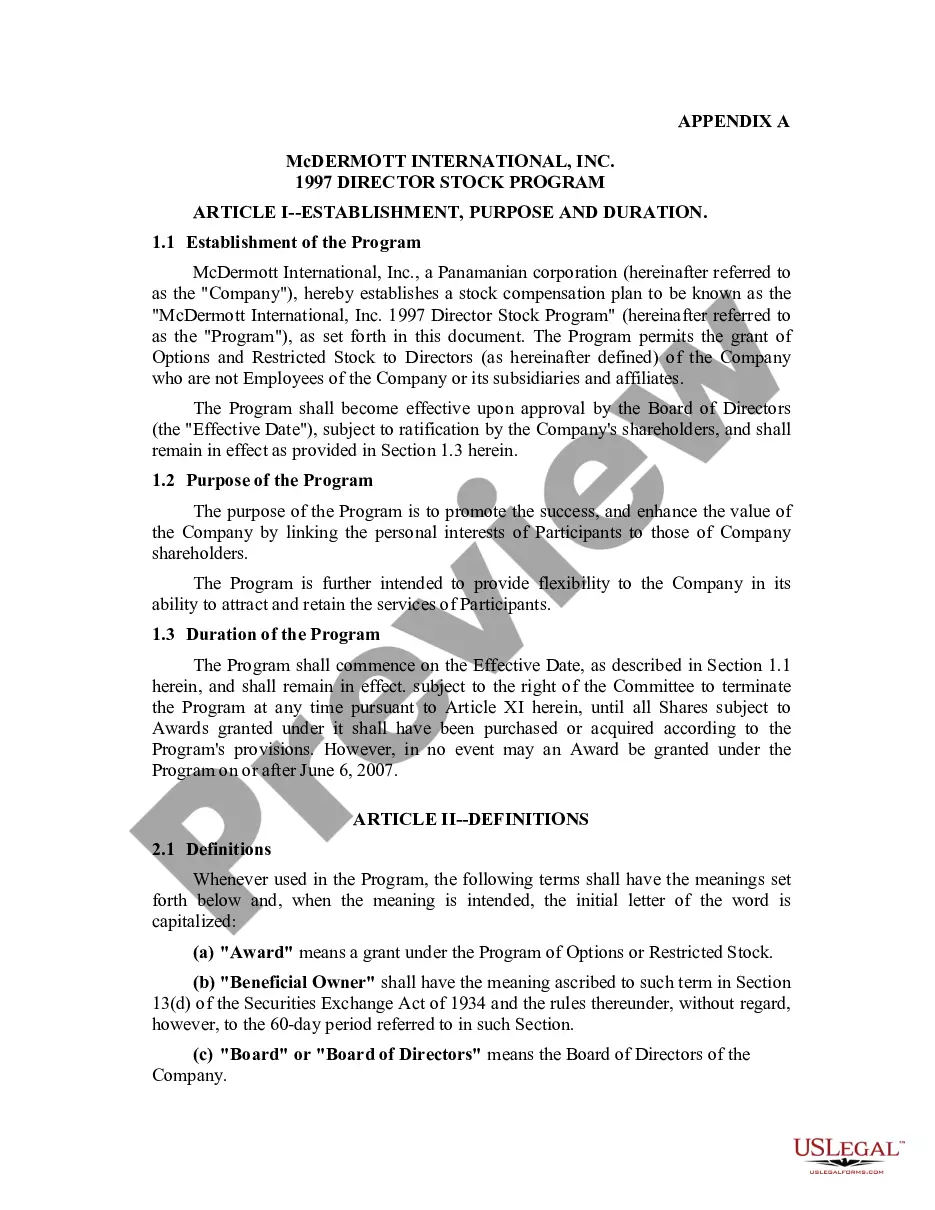
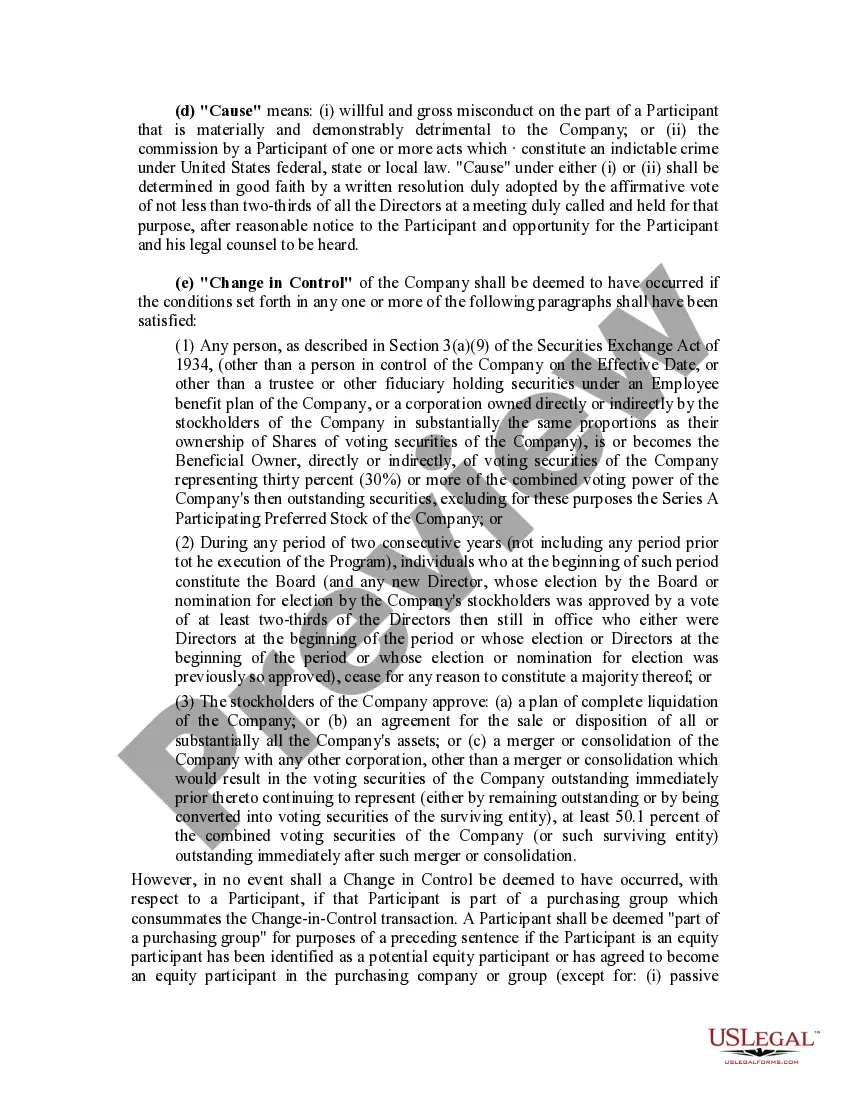
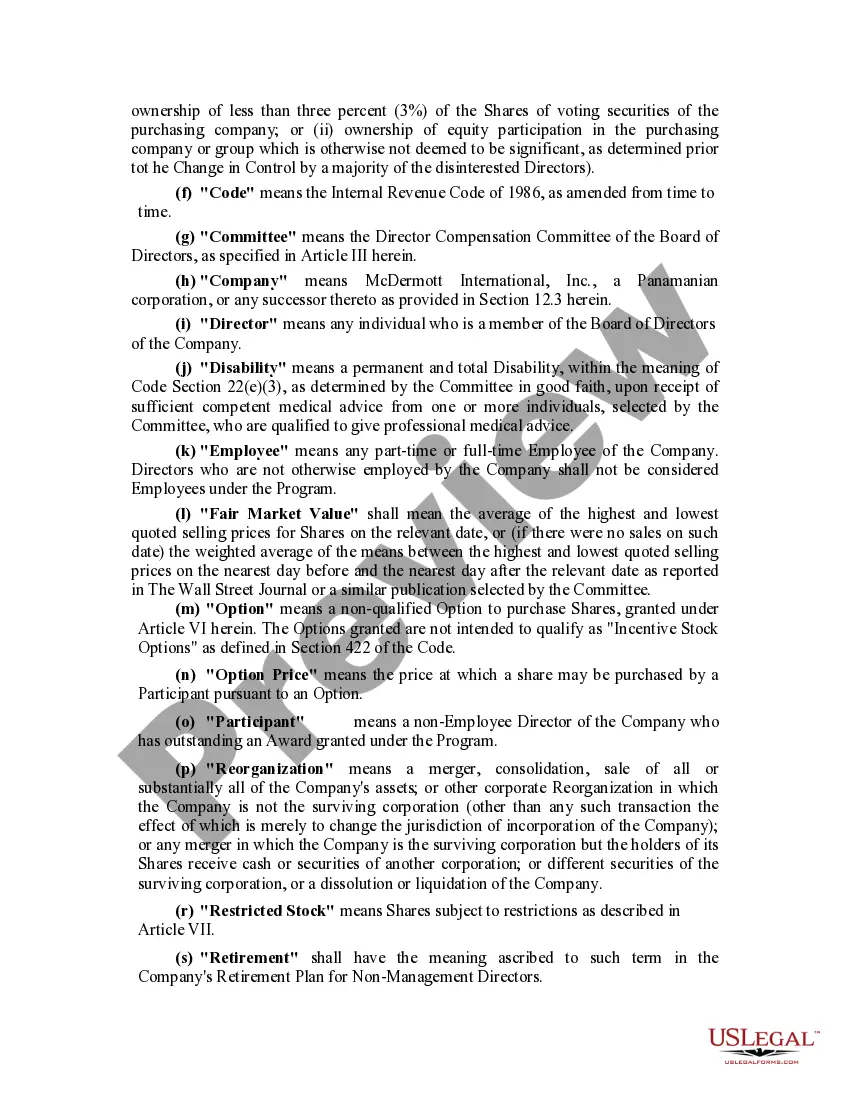
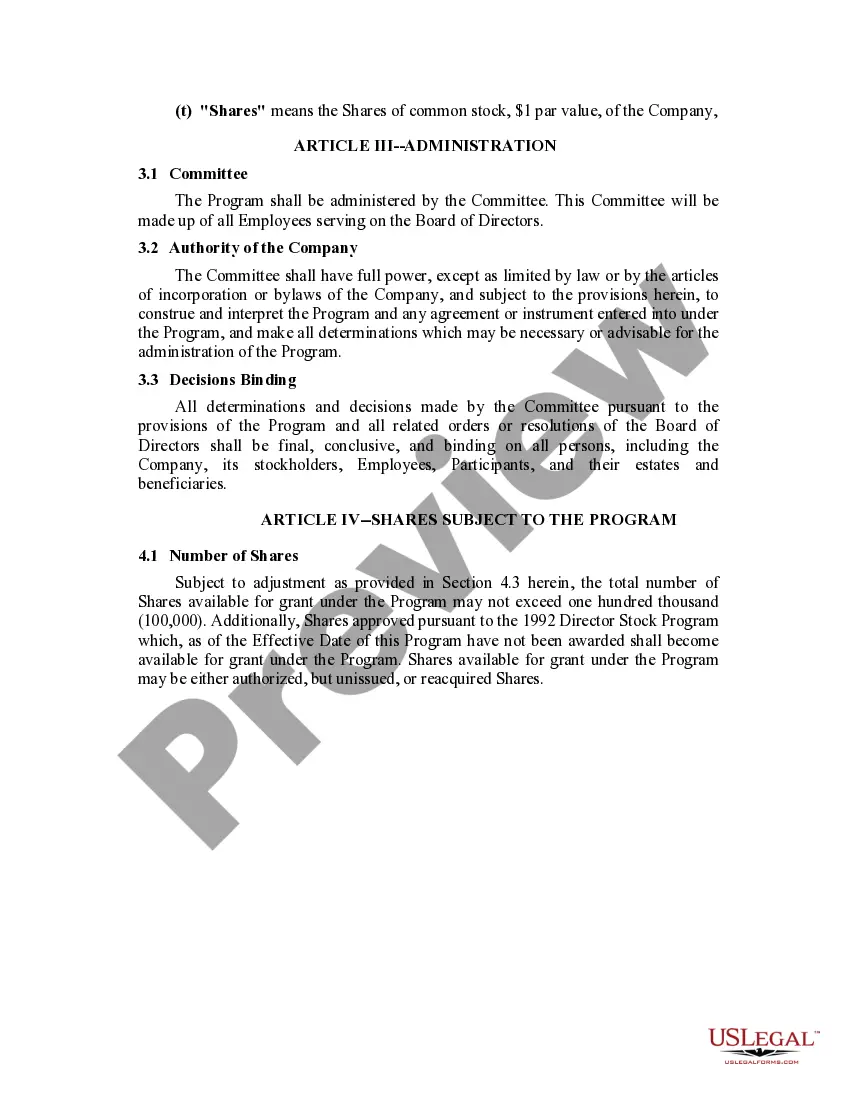
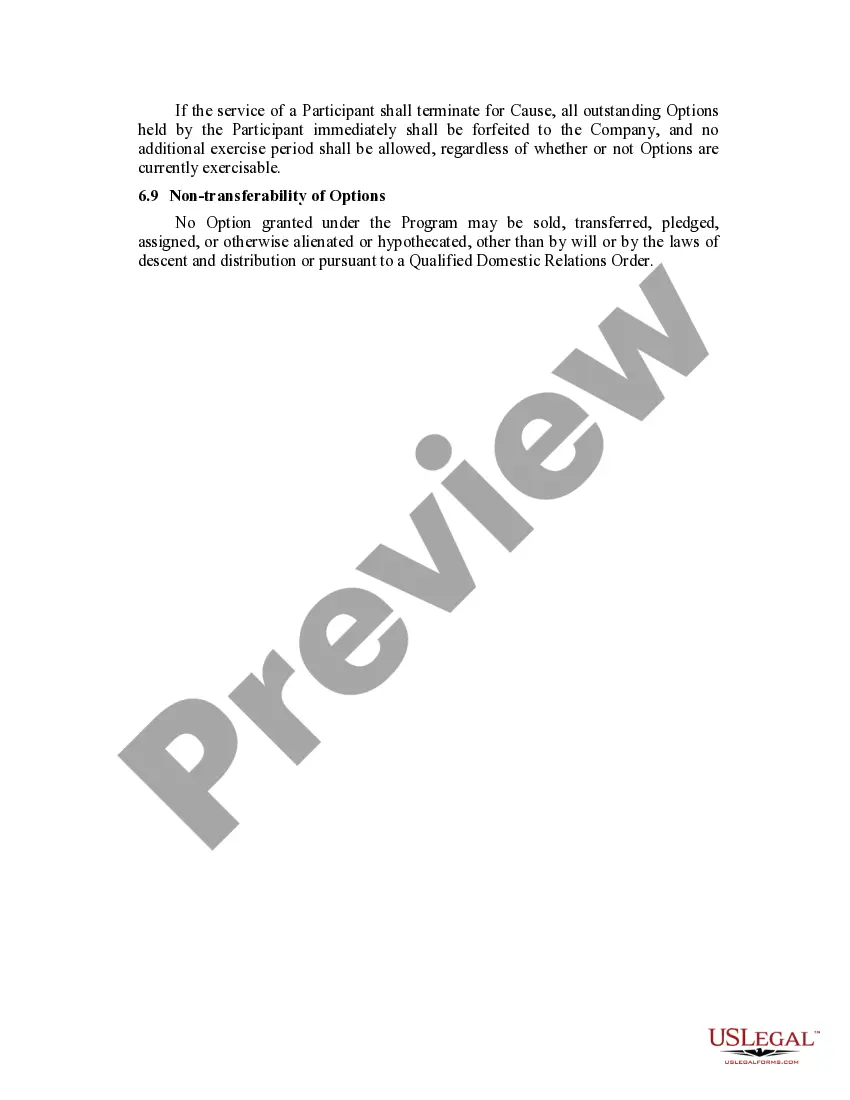
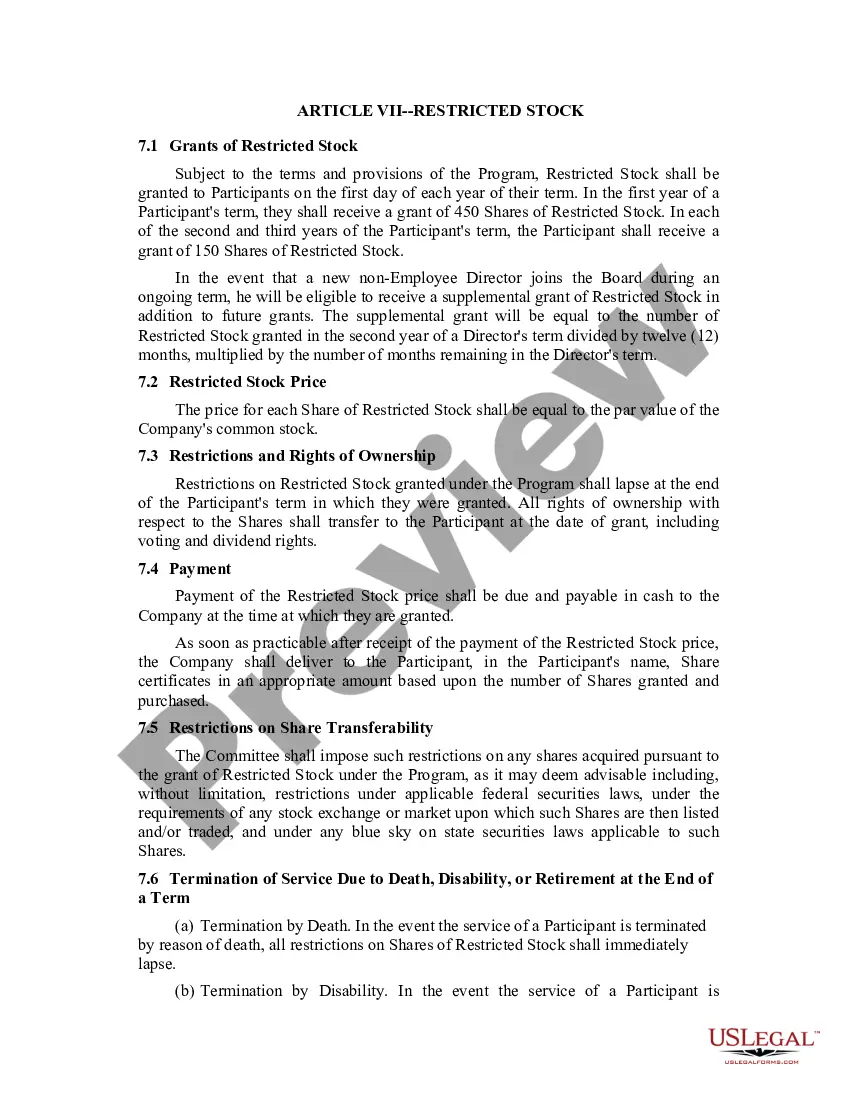
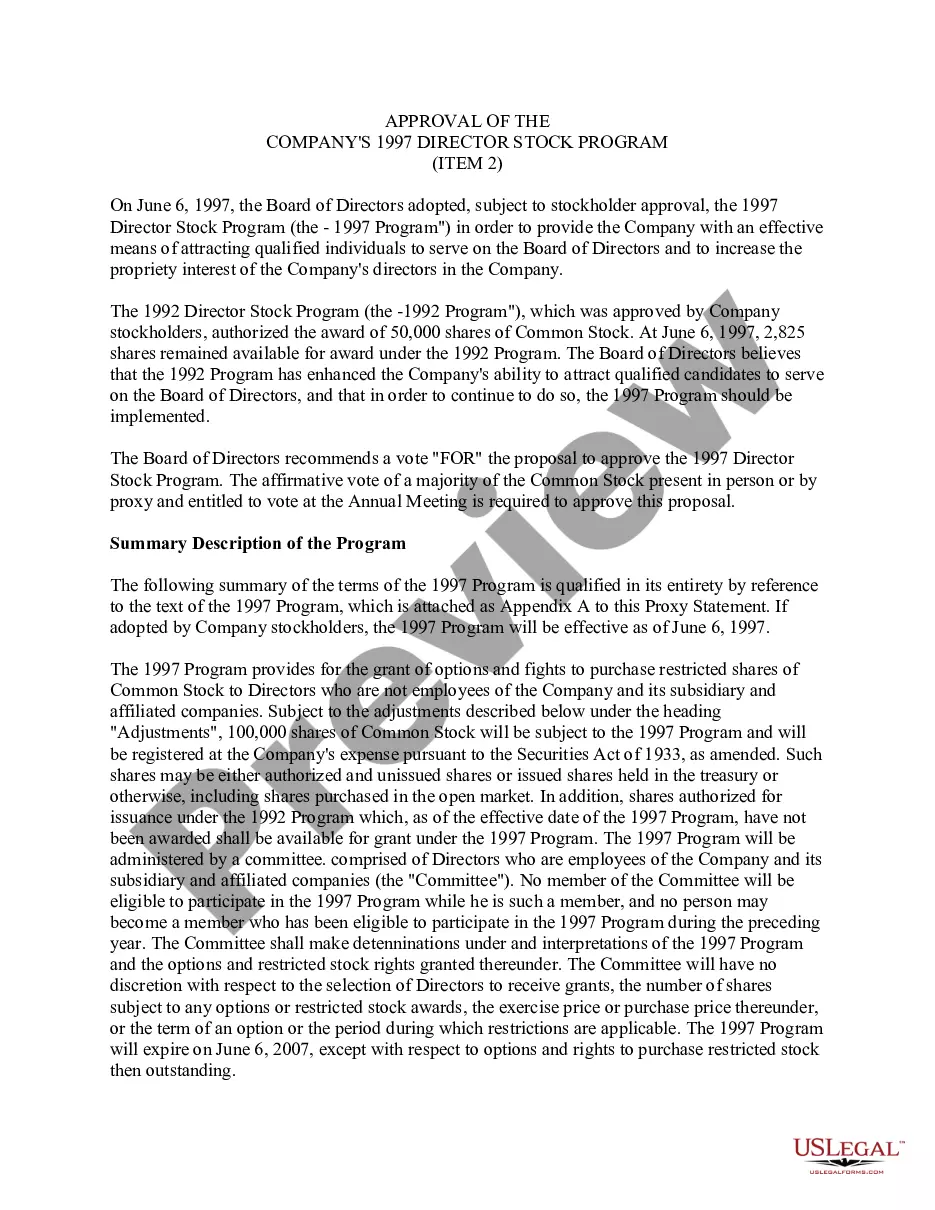
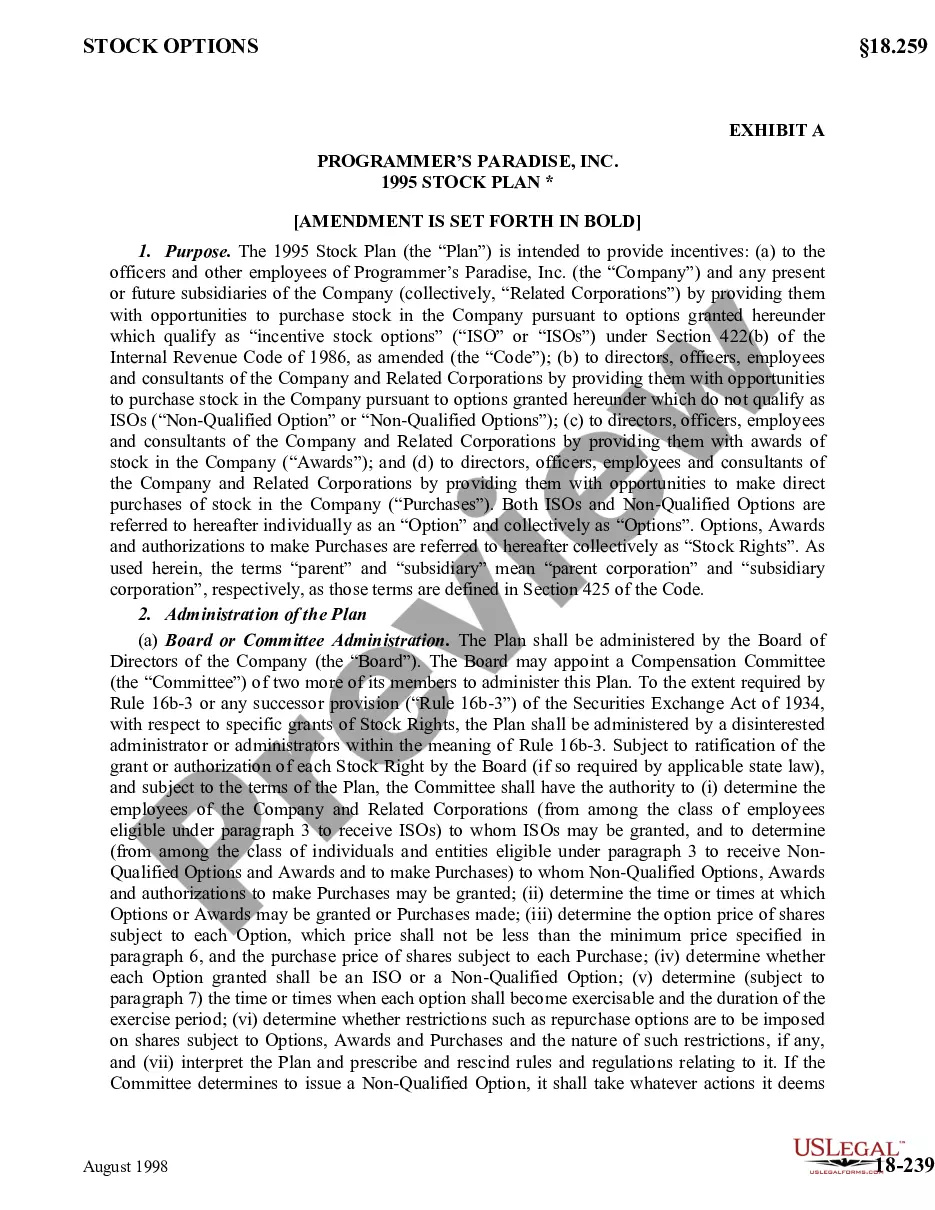
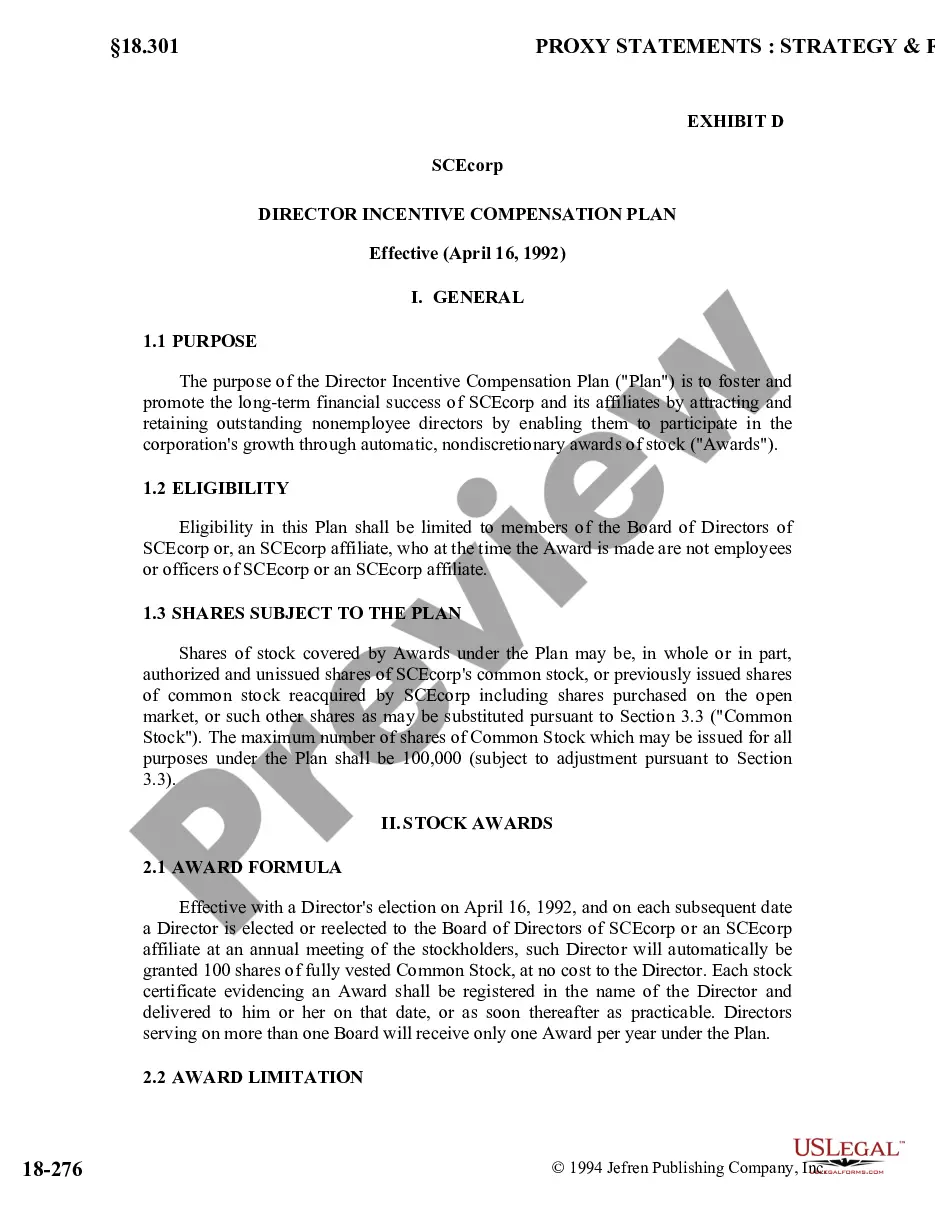
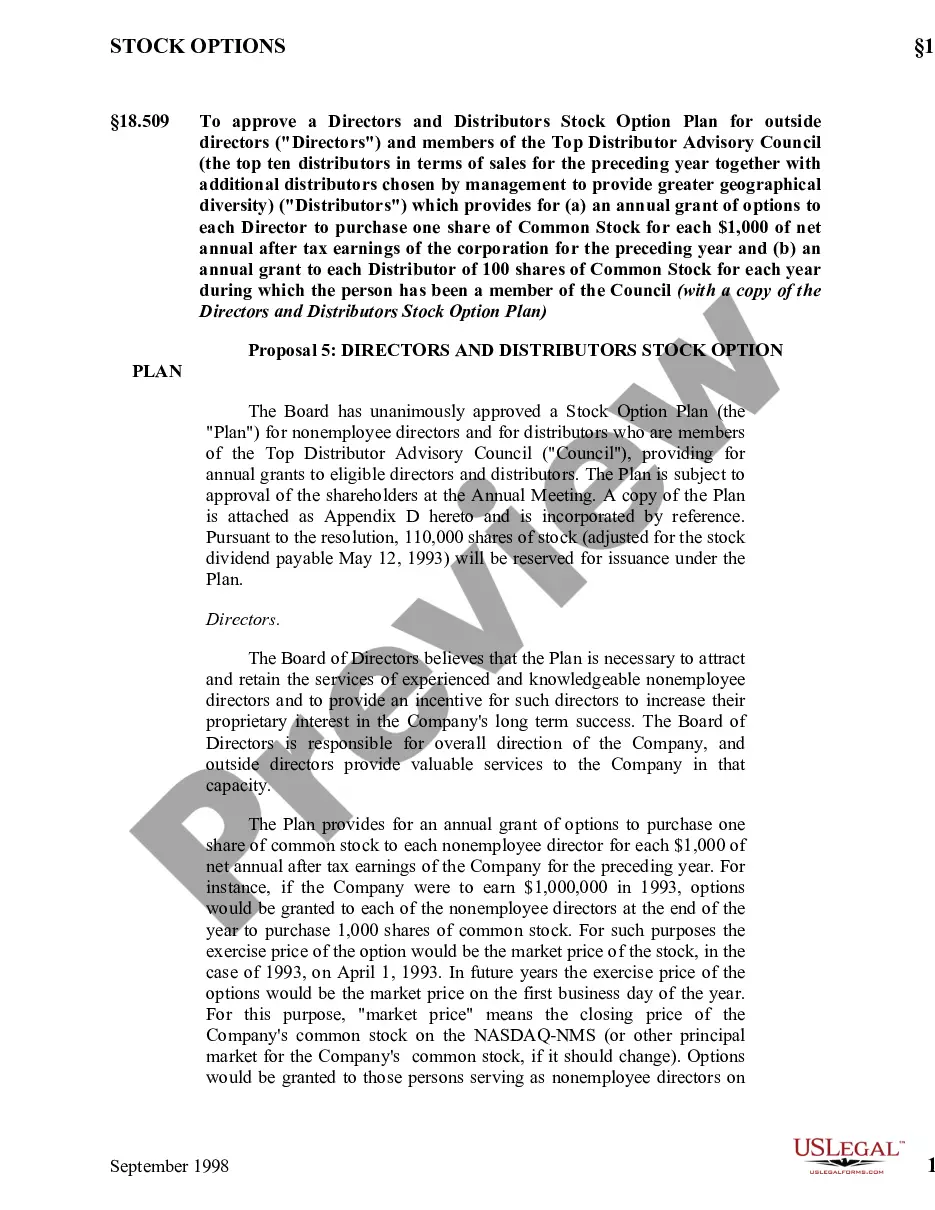
The Director Stock Program form is a legal document that outlines the terms and conditions under which non-employee directors of McDermott International, Inc. can receive stock options and restricted stock. This program aims to align the interests of directors with those of shareholders, thereby enhancing the overall value of the company. Unlike other stock compensation plans, this form specifies the grant schedule and conditions for both options and restricted stock awards granted to directors.
Form components explained
- Establishment of the program and its purpose.
- Definition of key terms such as "Options," "Restricted Stock," and "Participants."
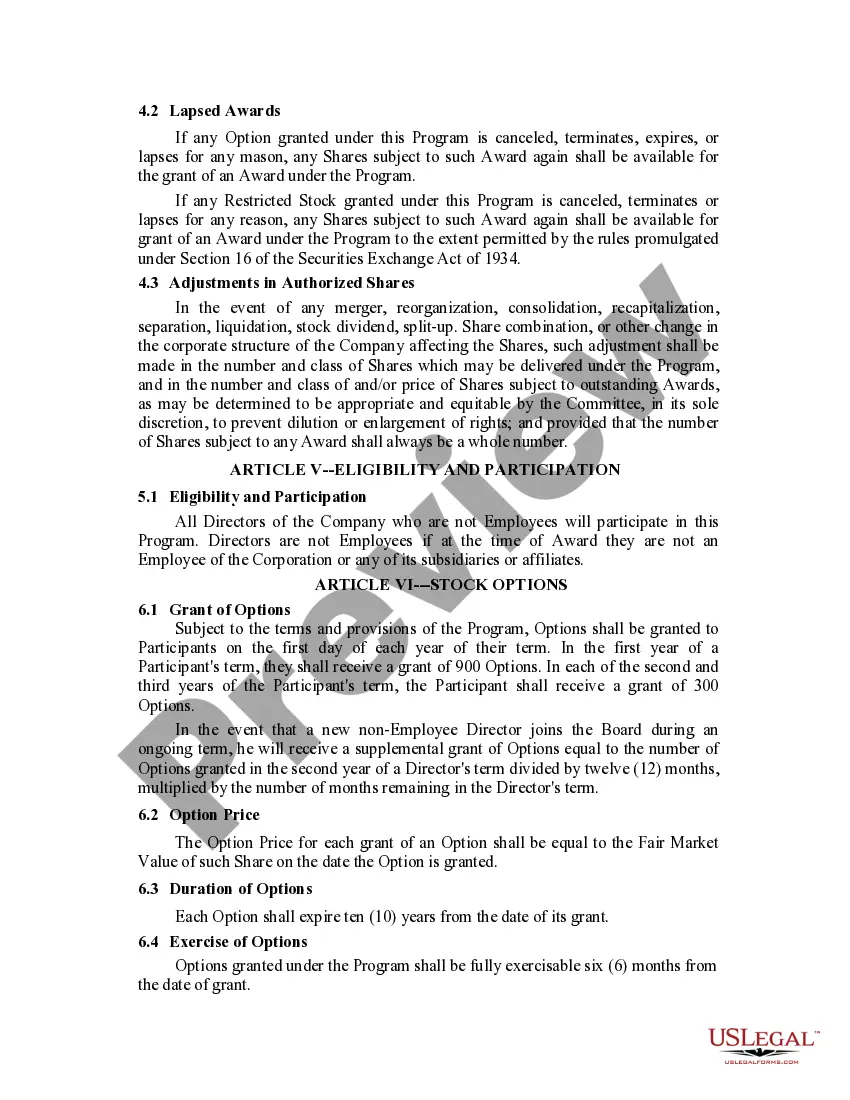
- Details on the grant schedule for options and restricted stock.
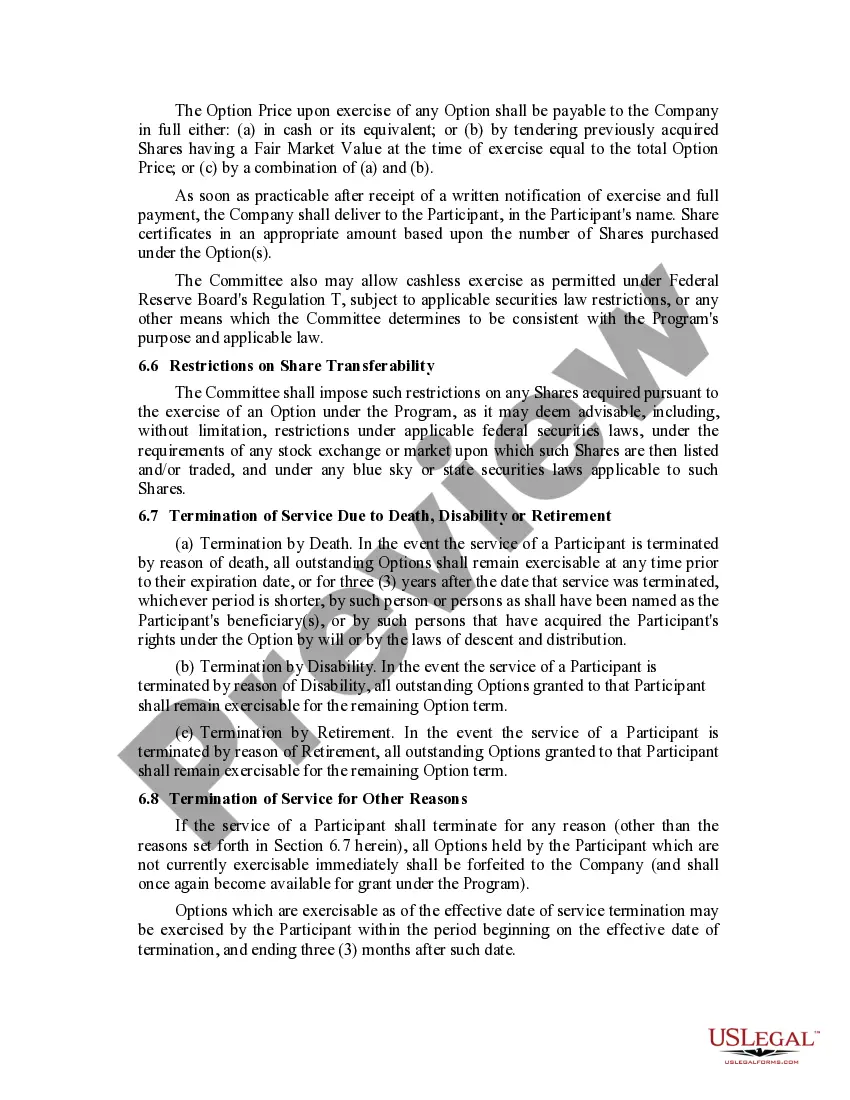
- Conditions for exercise and restrictions on stock transferability.
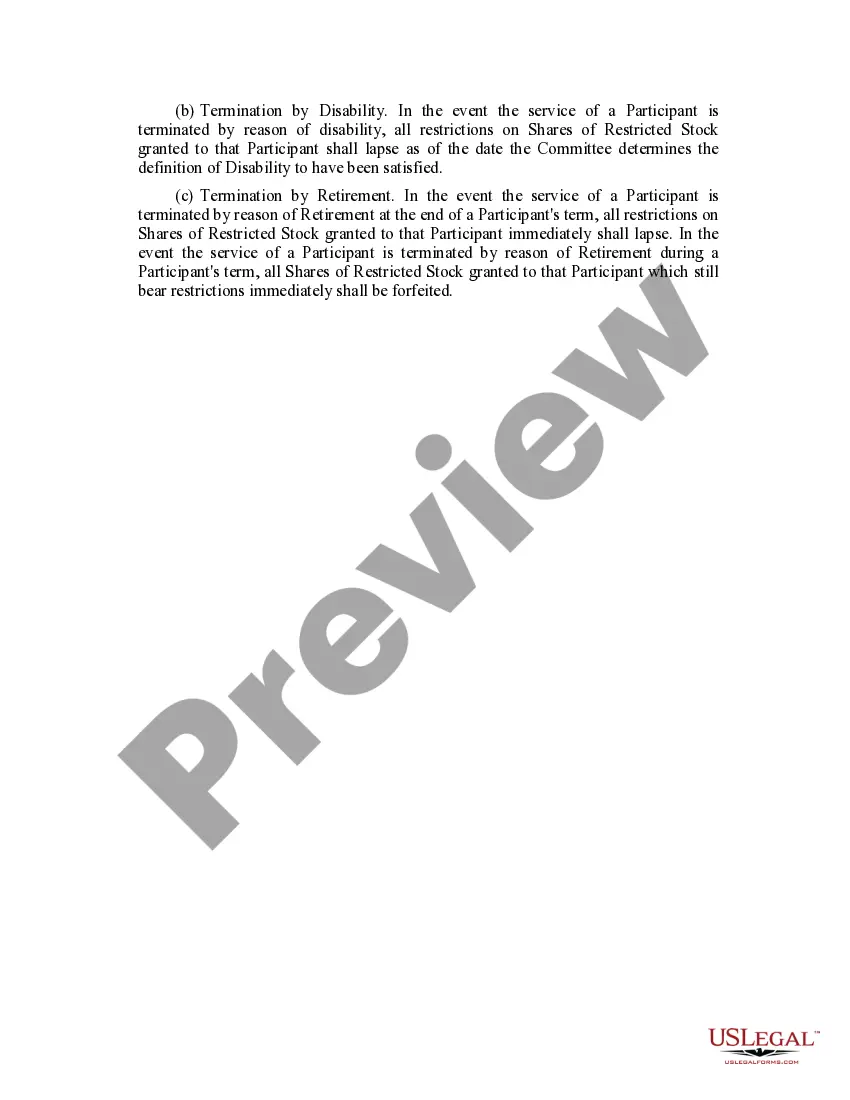
- Termination provisions related to death, disability, and retirement.
- Amendment, modification, and termination clauses for the program.



Common use cases
This form should be used by companies that want to establish a structured stock compensation program for their non-employee directors. It is applicable in scenarios where a company wishes to grant stock options and restricted stock as part of its corporate governance and incentive strategy to attract and retain qualified individuals in director roles.
Who this form is for
- Corporations that have a board of non-employee directors.
- Company management looking to implement a director stock compensation plan.
- Legal teams drafting compensation agreements for directors.
- Shareholders interested in understanding director compensation structures.
Instructions for completing this form
- Identify the company and specify the effective date of the program.
- Define the eligible participants and the conditions of their awards.
- Detail the grant schedule for stock options and restricted stock based on director term lengths.
- Include terms regarding stock transfer restrictions and conditions for vesting.
- Outline the procedures for amendments and termination of the program.
Is notarization required?
This form does not typically require notarization unless specified by local law. It is advisable to check with legal counsel regarding any additional state-specific requirements.
Get your form ready online
Our built-in tools help you complete, sign, share, and store your documents in one place.
Make edits, fill in missing information, and update formatting in US Legal Forms—just like you would in MS Word.
Download a copy, print it, send it by email, or mail it via USPS—whatever works best for your next step.
Sign and collect signatures with our SignNow integration. Send to multiple recipients, set reminders, and more. Go Premium to unlock E-Sign.
If this form requires notarization, complete it online through a secure video call—no need to meet a notary in person or wait for an appointment.
We protect your documents and personal data by following strict security and privacy standards.

Make edits, fill in missing information, and update formatting in US Legal Forms—just like you would in MS Word.

Download a copy, print it, send it by email, or mail it via USPS—whatever works best for your next step.

Sign and collect signatures with our SignNow integration. Send to multiple recipients, set reminders, and more. Go Premium to unlock E-Sign.

If this form requires notarization, complete it online through a secure video call—no need to meet a notary in person or wait for an appointment.

We protect your documents and personal data by following strict security and privacy standards.
Mistakes to watch out for
- Failing to specify the grant schedule accurately.
- Neglecting to define eligible participants correctly.
- Omitting details on vesting conditions for restricted stock.
Why use this form online
- Convenient access to the latest legal templates from licensed attorneys.
- Editable format allows for customization based on specific company needs.
- Streamlined process reduces time spent on document preparation.
- The Director Stock Program must comply with federal and state securities laws.
- Grants under this program should only be made after appropriate board approval to ensure enforceability.
- Conflicts with existing plans or director compensation agreements need to be addressed in the program's provisions.
Main things to remember
- The Director Stock Program incentivizes non-employee directors through stock options and restricted stock.
- Clear eligibility criteria and provisions for termination ensure fairness and compliance.
- Using this form can provide a structured approach to director compensation while aligning their interests with shareholders.
Looking for another form?





Form popularity
FAQ
Options can be less risky for investors because they require less financial commitment than equities, and they can also be less risky due to their relative imperviousness to the potentially catastrophic effects of gap openings. Options are the most dependable form of hedge, and this also makes them safer than stocks.
The company paid for their meals, transportation and lodging, and they received compensation in the form of cash, stocks and retainers. Corporate board directors usually got paid for attending meetings, serving on committees and serving as committee chairs.
There can be huge financial benefits that come from employee stock options. Higher-level employees can often convert their options into six-figure and seven-figure profits.In some companies, key employees can receive options over many years, and even throughout their careers.
The size of the company makes a difference to how board members are paid. Small companies are more likely to offer stock options that pay off if the company hits it big. The $10 million to $50 million tier is where cash compensation starts to become common.
Q: Can a member of the board of directors receiving a stock option as compensation for board member service receive an incentive or statutory stock option (an ISO)? A: No. A board member who is just a board member, and not otherwise an employee of the company cannot receive an ISO. Only employees can receive ISOs.
Rather, when a startup first forms, the founders grant themselves Restricted Stock Awards (RSAs) instead of common stock options. Essentially the company sells them the stock at zero cost. In the 20th century founders were taking a real risk on salary, betting their mortgage and future.
If you have been given the opportunity to purchase stock options, you may want to take advantage of them if you can afford to do so. But you should not go into debt to purchase stock options.Some stock options are given as tax-free, and you will only pay a capital gains tax when you sell them.
You Could Make a Lot of Money with Stock Options (But There's No Guarantee) Think of a start-up company that gives you 100,000 company stock options with a strike price of $1 per share. At issue, they probably won't be worth much.If that happened, the value of the stock options would go from nothing to $9,900,000.
In a private company setting, after the founders have been issued fully vested or restricted stock under their stock purchase agreements, the employees, consultants, advisors and directors who are subsequently hired commonly receive equity compensation through stock options.