Missouri Agreement for Delayed or Partial Rent Payments
About this form
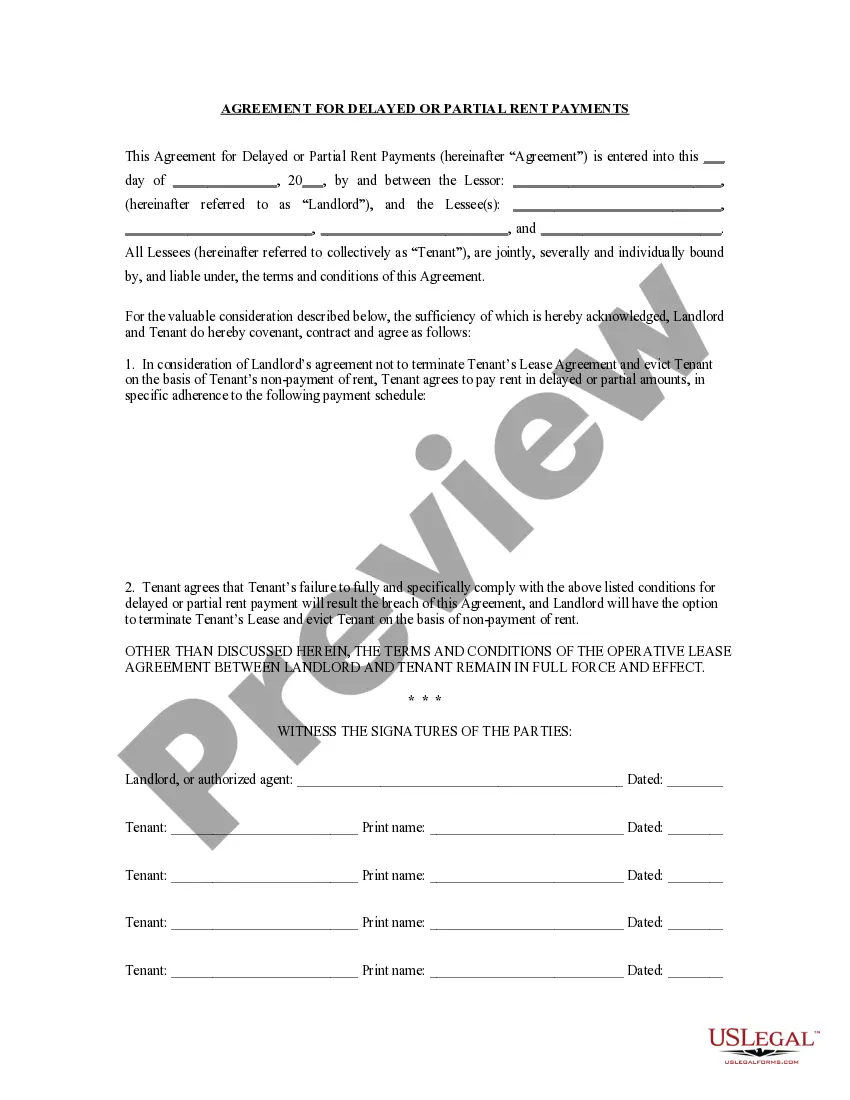
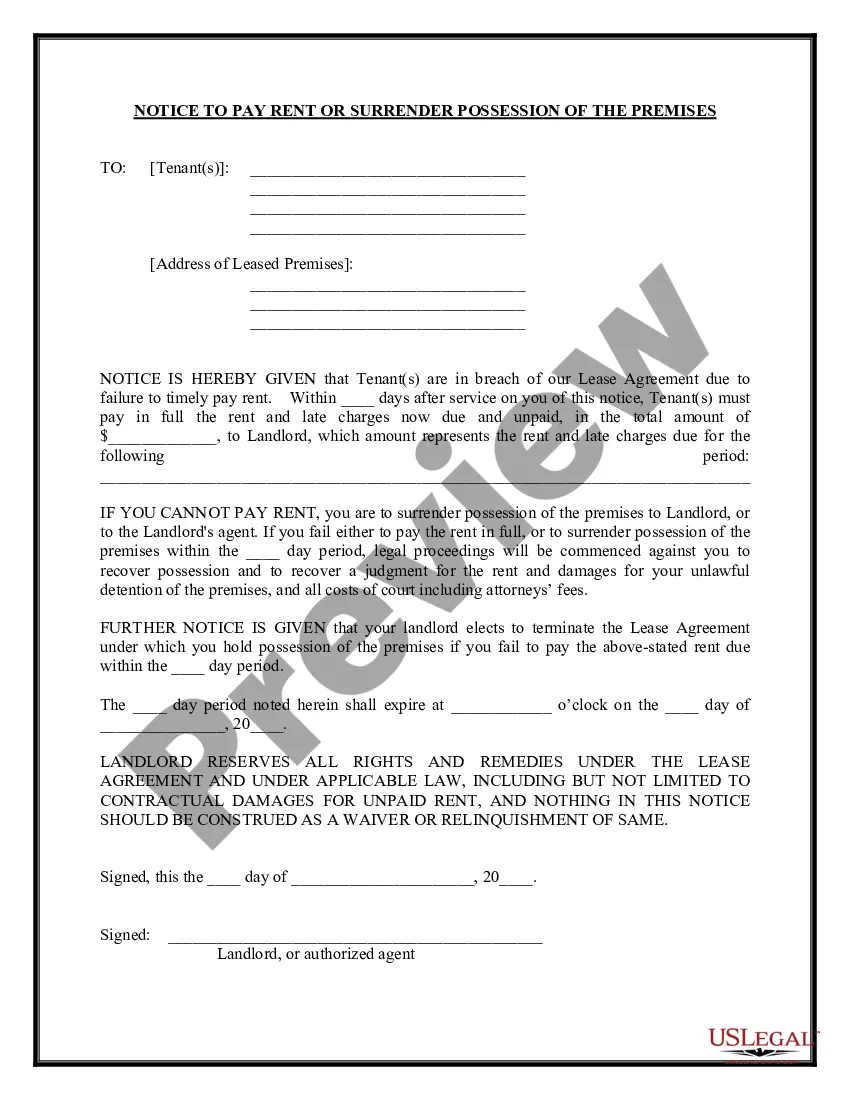
The Agreement for Delayed or Partial Rent Payments is a legal document established between a landlord and a tenant. It outlines specific deadlines and conditions for when a tenant can make delayed or partial rent payments. This agreement allows tenants to remain in their rental property without the fear of eviction due to non-payment, under the condition that they adhere to a mutually agreed payment schedule. This form is particularly useful for situations where tenants face temporary financial difficulties and need some flexibility from their landlords.
Key parts of this document
- Date of agreement
- Names and addresses of landlord and tenants
- Details of the payment schedule including amounts and deadlines
- Indication that the original lease agreement remains in effect
- Signatures of all parties involved
Common use cases
This form is essential during situations where a tenant is unable to meet their rent obligations on time due to unexpected financial situations, such as job loss, medical emergencies, or other personal issues. It serves as a formal agreement to avoid eviction while allowing tenants to make arrangements for their rent payments in a way that is manageable for them.
Intended users of this form
This agreement is suitable for:
- Landlords who want to offer flexibility to tenants facing temporary financial difficulty.
- Tenants who require a temporary modification of their rental payment obligations to avoid eviction.
- Property managers acting on behalf of landlords to manage tenant payment issues professionally.
Instructions for completing this form
- Identify the date the agreement is made.
- Fill in the names and addresses of both the landlord and the tenant(s).
- Specify the details of the delayed or partial payment schedule, including amounts and due dates.
- Include a statement that the original rental lease agreement remains valid.
- Ensure all parties sign the agreement, including dates for signature acknowledgment.
Does this document require notarization?
Notarization is not commonly needed for this form. However, certain documents or local rules may make it necessary. Our notarization service, powered by Notarize, allows you to finalize it securely online anytime, day or night.
Get your form ready online
Our built-in tools help you complete, sign, share, and store your documents in one place.
Make edits, fill in missing information, and update formatting in US Legal Forms—just like you would in MS Word.
Download a copy, print it, send it by email, or mail it via USPS—whatever works best for your next step.
Sign and collect signatures with our SignNow integration. Send to multiple recipients, set reminders, and more. Go Premium to unlock E-Sign.
If this form requires notarization, complete it online through a secure video call—no need to meet a notary in person or wait for an appointment.
We protect your documents and personal data by following strict security and privacy standards.

Make edits, fill in missing information, and update formatting in US Legal Forms—just like you would in MS Word.

Download a copy, print it, send it by email, or mail it via USPS—whatever works best for your next step.

Sign and collect signatures with our SignNow integration. Send to multiple recipients, set reminders, and more. Go Premium to unlock E-Sign.

If this form requires notarization, complete it online through a secure video call—no need to meet a notary in person or wait for an appointment.

We protect your documents and personal data by following strict security and privacy standards.
Avoid these common issues
- Neglecting to fill out the payment schedule completely.
- Forgetting to secure signatures from all tenants and the landlord.
- Not retaining a copy of the signed agreement for personal records.
- Failing to clarify the consequences of missed payments in the agreement.
Why complete this form online
- Convenient access to legal forms anytime and anywhere.
- Editable templates that can be tailored to individual needs.
- Immediate download after completion, allowing for quick action.
- Reliability of templates drafted by licensed attorneys.
Legal use & context
- This agreement helps legally establish the terms agreed upon for rent payment adjustments.
- It is enforceable in accordance with state laws governing rental leases.
- Use of the agreement can prevent disputes regarding unpaid rent during the specified time.
Main things to remember
- The agreement sets clear terms for delayed or partial rent payments.
- It helps prevent eviction while ensuring tenants fulfill their obligations.
- All parties must sign the document for it to be valid.
Looking for another form?
Form popularity
FAQ
Although renters must abide by the Homeowners' Association rules, they still have rights under the law. The property owner must also follow their home state's Landlord-Tenant Laws that include the Fair Housing Act and Fair Credit Reporting Act.
Landlord Right to Entry in Missouri Although many states have laws requiring landlords to give prior notice to their tenants, in Missouri, there are no laws requiring it.Landlords may enter a rental unit for various reasons. Some of these reasons include: To make property repairs.
A landlord cannot evict a tenant without an adequately obtained eviction notice and sufficient time. A landlord cannot retaliate against a tenant for a complaint. A landlord cannot forego completing necessary repairs or force a tenant to do their own repairs.A landlord cannot remove a tenant's personal belongings.
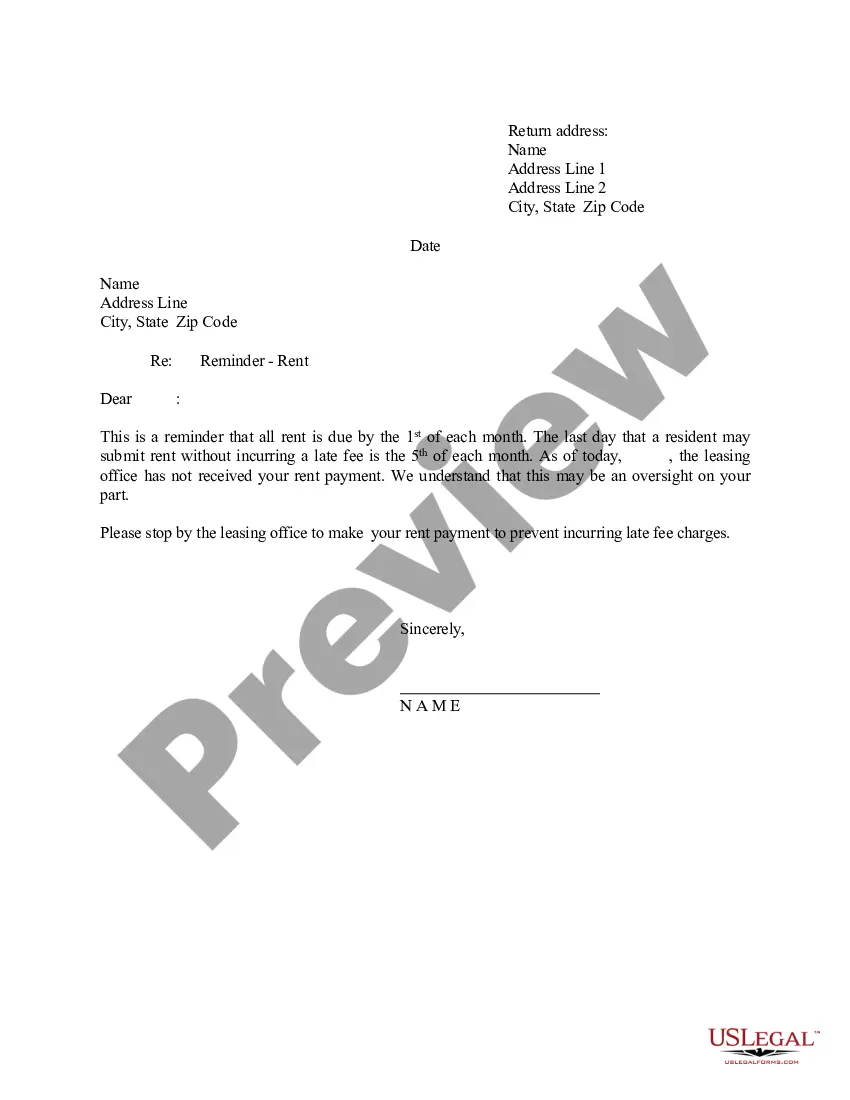
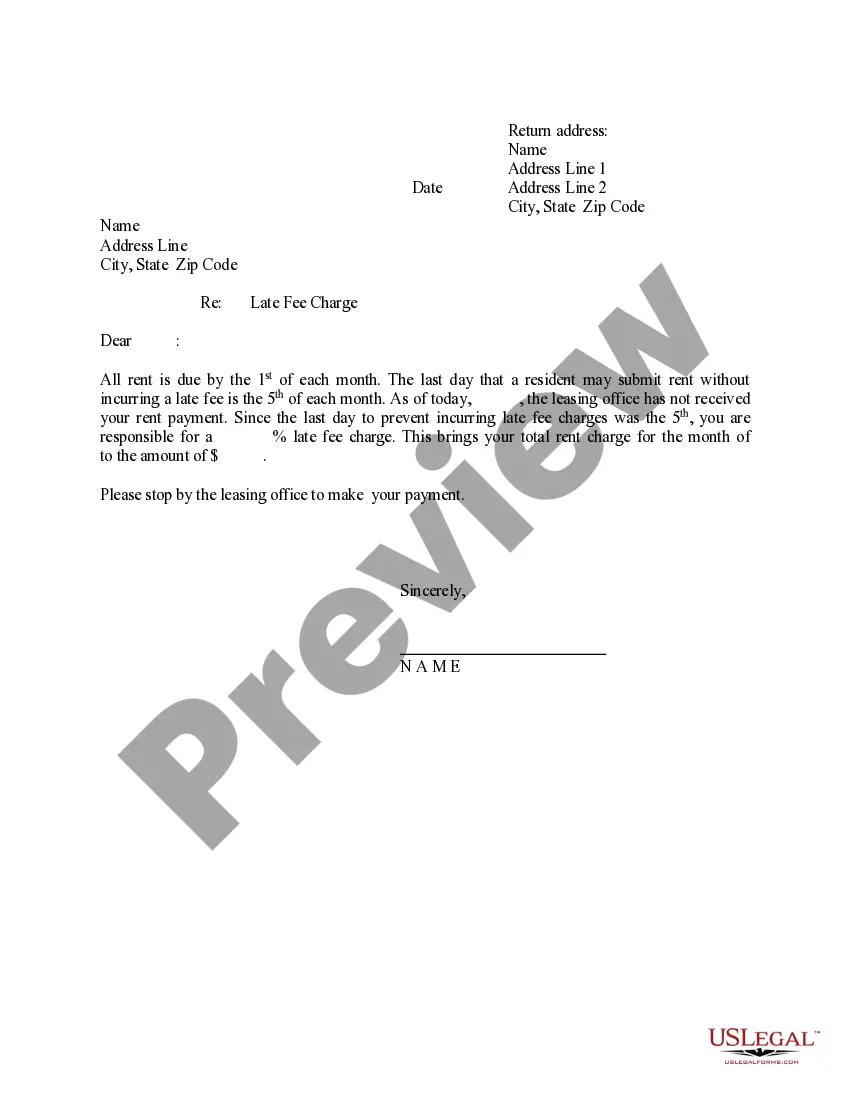
The most your landlord can charge as a late fee is 5% of your monthly rent. For example, if your monthly rent is $1,000, the landlord can charge you up to $50 as a late fee. If you receive a rent subsidy, you may not pay all of your rent yourself.
An operator may impose a reasonable late fee for each month an occupant does not pay rent when due. 4. A late fee of twenty dollars or twenty percent of the monthly rental amount, whichever is greater, for each late rental payment shall be deemed reasonable, and shall not constitute a penalty.
Renters have the right to a habitable dwelling and the right to report health and safety violations. Missouri landlords also have certain rights, such as the right to collect rent, the right to pursue eviction for lease violations, and the right to reimbursement for costs from property damage.
The landlord is not required to give the tenant any time to fix the lease violation. This means that at the end of the ten days, the landlord can proceed with the eviction if the tenant has not moved out of the rental unit, even if the tenant corrected the lease violation (see Mo. Rev. Stat.
As a tenant, you have the right to live in a safe, secure and quiet environment that is managed in accordance with the law. You also have a responsibility to take good care of the property, pay the rent on time, and adhere to the terms of your tenancy agreement.