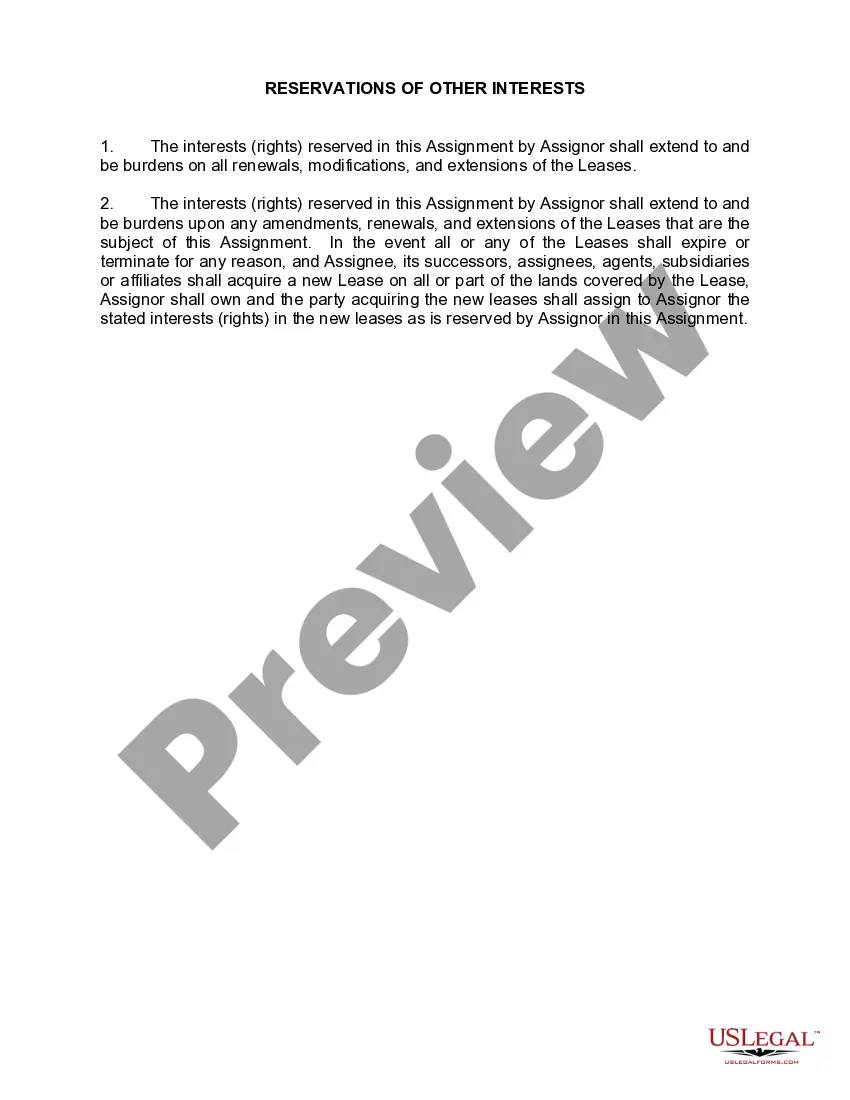
Reservations of Other Interests
Understanding this form
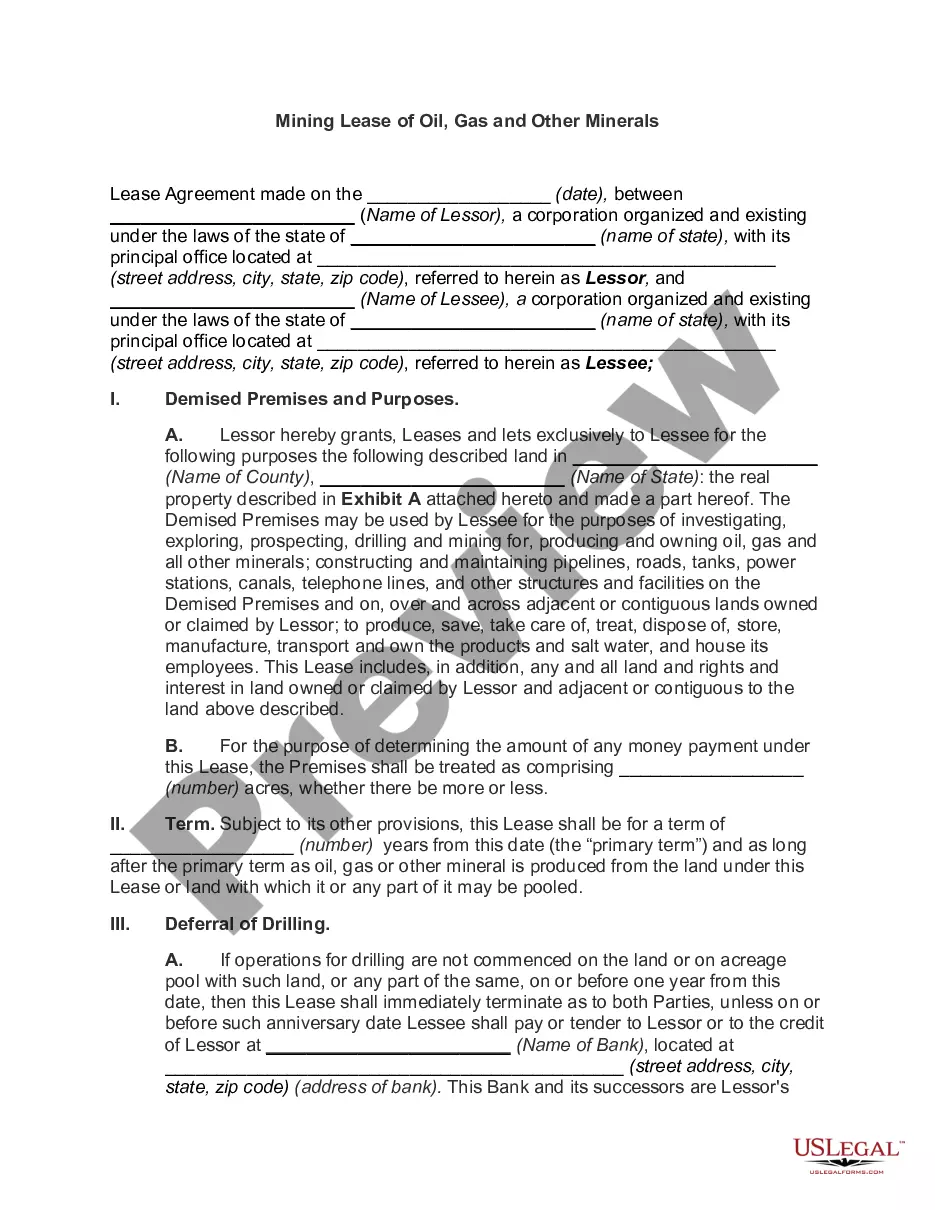
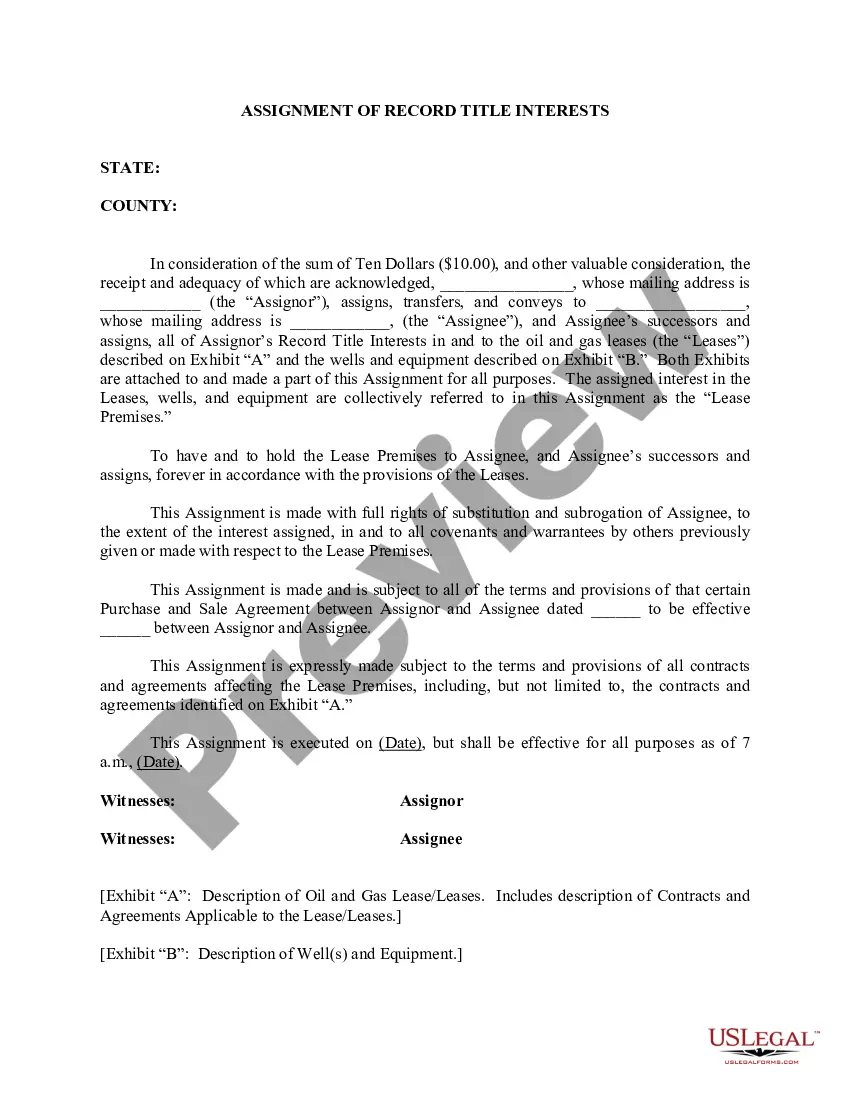
The Reservations of Other Interests form allows an assignor to retain specific rights and interests related to lease agreements. This form is essential for ensuring that these rights carry over to any future modifications of the lease, including amendments, renewals, and new leases. Unlike other assignment forms, this document specifically addresses the ongoing rights an assignor holds, protecting their interests as leases evolve over time.
Form components explained
- Identification of interests: Specifies the rights reserved by the assignor in the assignment.
- Extension clause: Details how the reserved interests affect modifications, renewals, and extensions of leases.
- Provision for new leases: Outlines what happens if the original lease expires or terminates and how interests will be assigned to new leases.
- Parties involved: Clearly defines the roles of the assignor and assignee in the lease agreement.

When this form is needed
You should use the Reservations of Other Interests form in scenarios where you are assigning lease rights but want to ensure that you retain certain interests in the agreement. This form is particularly useful when you foresee future modifications to the leases, such as renewals or amendments, and want to guarantee that your rights continue through these changes. It is also necessary when there is a possibility of acquiring a new lease after the original has expired or been terminated.
Who should use this form
- Assignors: Individuals or entities transferring their rights under a lease while wanting to maintain specific reserved interests.
- Real estate professionals: Agents or brokers involved in lease agreements who need to ensure proper assignment and retention of interests.
- Legal representatives: Attorneys drafting or reviewing lease assignment documents to protect clients' interests.
Instructions for completing this form
- Identify the parties: Provide the names and contact information of the assignor and assignee.
- Specify the property: Clearly describe the property covered under the lease agreement.
- Detail the reserved interests: List the specific rights that the assignor is reserving in the assignment.
- Include any applicable dates: Enter important dates for the lease terms, renewals, or amendments.
- Sign and date the form: Ensure all parties sign and date the document where required to make it legally binding.
Notarization guidance
This form does not typically require notarization unless specified by local law. It is advised to check the regulations in your area to determine if notarization is necessary for your specific lease assignment situation.
Get your form ready online
Our built-in tools help you complete, sign, share, and store your documents in one place.
Make edits, fill in missing information, and update formatting in US Legal Forms—just like you would in MS Word.
Download a copy, print it, send it by email, or mail it via USPS—whatever works best for your next step.
Sign and collect signatures with our SignNow integration. Send to multiple recipients, set reminders, and more. Go Premium to unlock E-Sign.
If this form requires notarization, complete it online through a secure video call—no need to meet a notary in person or wait for an appointment.
We protect your documents and personal data by following strict security and privacy standards.

Make edits, fill in missing information, and update formatting in US Legal Forms—just like you would in MS Word.

Download a copy, print it, send it by email, or mail it via USPS—whatever works best for your next step.

Sign and collect signatures with our SignNow integration. Send to multiple recipients, set reminders, and more. Go Premium to unlock E-Sign.

If this form requires notarization, complete it online through a secure video call—no need to meet a notary in person or wait for an appointment.

We protect your documents and personal data by following strict security and privacy standards.
Avoid these common issues
- Failing to clearly define the reserved interests, which may lead to disputes later.
- Not updating the form with new lease amendments or extensions.
- Omitting signatures or dates, which can invalidate the form.
- Using vague language that could create confusion about the rights retained.
Advantages of online completion
- Convenience: Download and complete the form from anywhere, saving time and effort.
- Editability: Easily modify fields as needed, ensuring accuracy.
- Reliability: Access professionally drafted legal forms that meet industry standards.
Key takeaways
- The Reservations of Other Interests form secures the assignor's rights even after lease assignment.
- It is essential in situations where leases may be modified or renewed after the assignment.
- Clear identification of interests and accurate completion is vital for the formâs legal effectiveness.
Looking for another form?
Form popularity
FAQ
Non-Natives can live in reservations as long as they work for an agency that provides housing or lives with a Native family who lives in the reservation. Non-Natives are not permitted to buy any property or rent any property as long as it is on native lands.
The Native Americans in the reservations also make several profit out of their tribal land, for example they are allowed to rent it to industry and enterprises or private tenants, and they are free to pursue farming, stock-breeding, fishing and hunting.
A federal Indian reservation is an area of land reserved for a tribe or tribes under treaty or other agreement with the United States, executive order, or federal statute or administrative action as permanent tribal homelands, and where the federal government holds title to the land in trust on behalf of the tribe.
The main goals of Indian reservations were to bring Native Americans under U.S. government control, minimize conflict between Indians and settlers and encourage Native Americans to take on the ways of the white man.
A mineral reservation is a severed subsurface parcel in separate ownership from the rest of the land. Prior owners could have sold minerals to a third party or leased it for the purpose of extracting something and collecting rent and royalties.
In addition to poverty rates, reservations are hindered by education levels significantly lower than the national average. Poor healthcare services, low employment, substandard housing, and deficient economic infrastructure are also persistent problems.
Under the reservation system, American Indians kept their citizenship in their independent tribes, but life was harder than it had been. The reservations were designed to encourage the Indians to live within clearly defined zones.Many of the tribes living on the land ended up on much smaller reservations.
They continue to exist for a variety of reasons, including but not limited to: They want to continue to exist. The government and courts have recognized their right to exist. The federal government has little interest in a small-and-short-but-violent civil war.