Revocable Living Trust for Real Estate
What is this form?
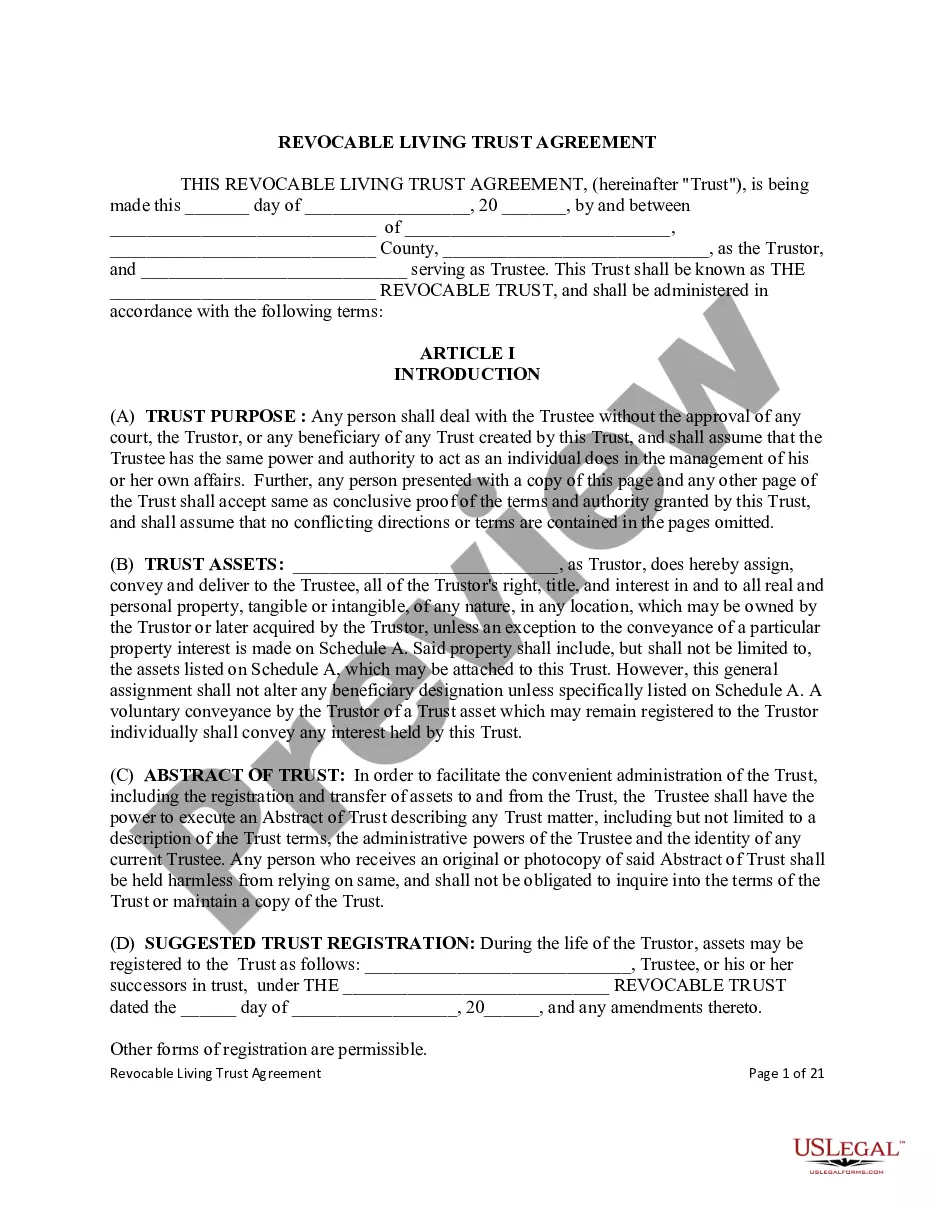
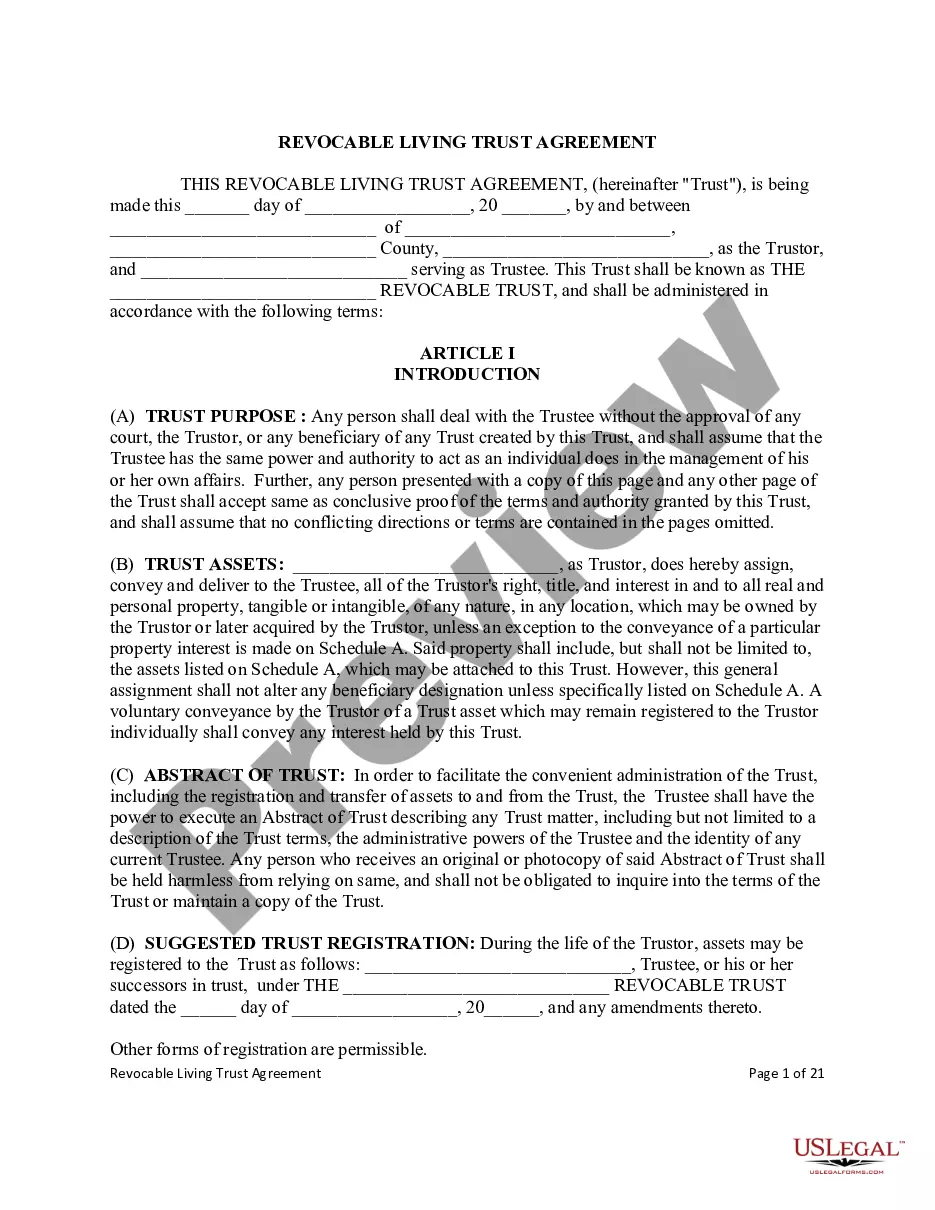
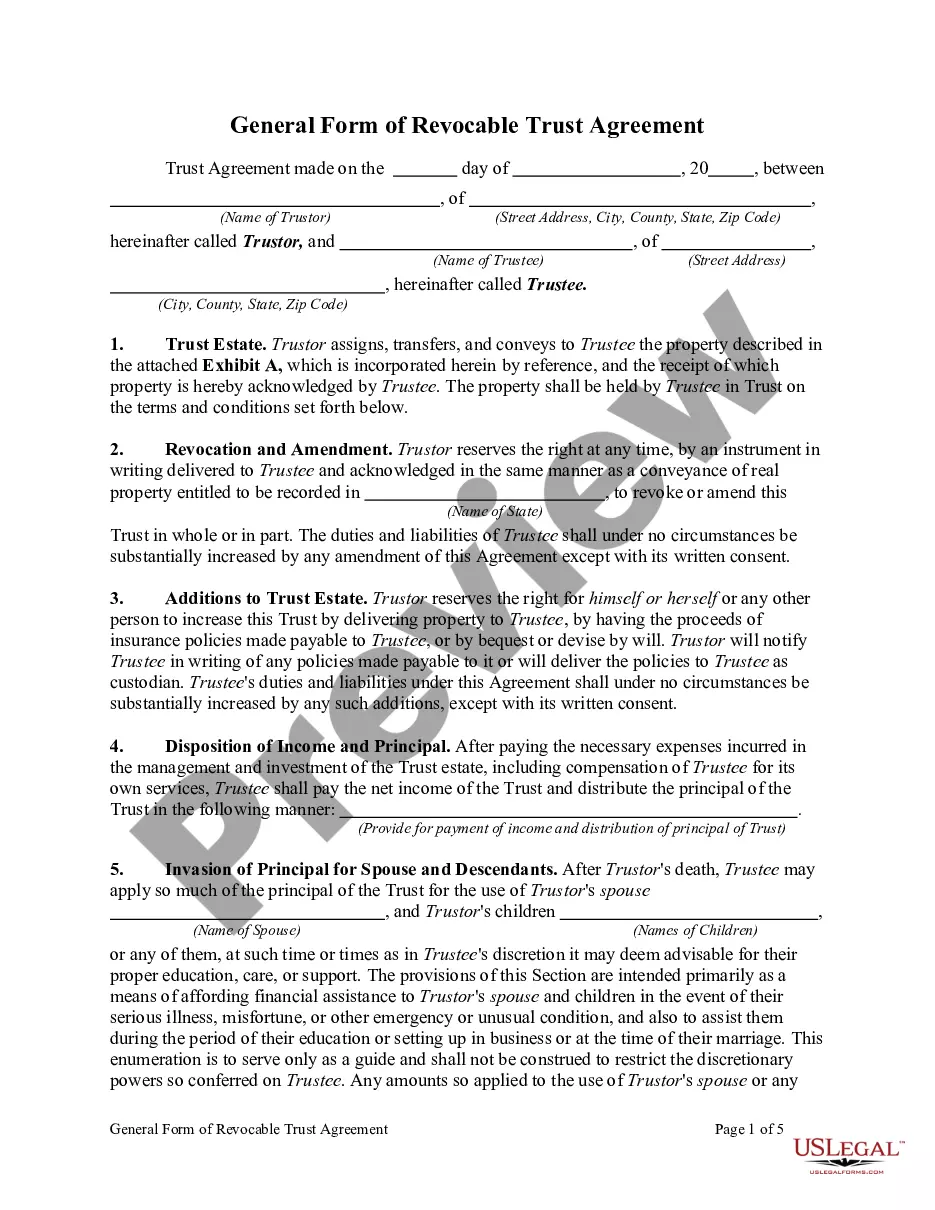
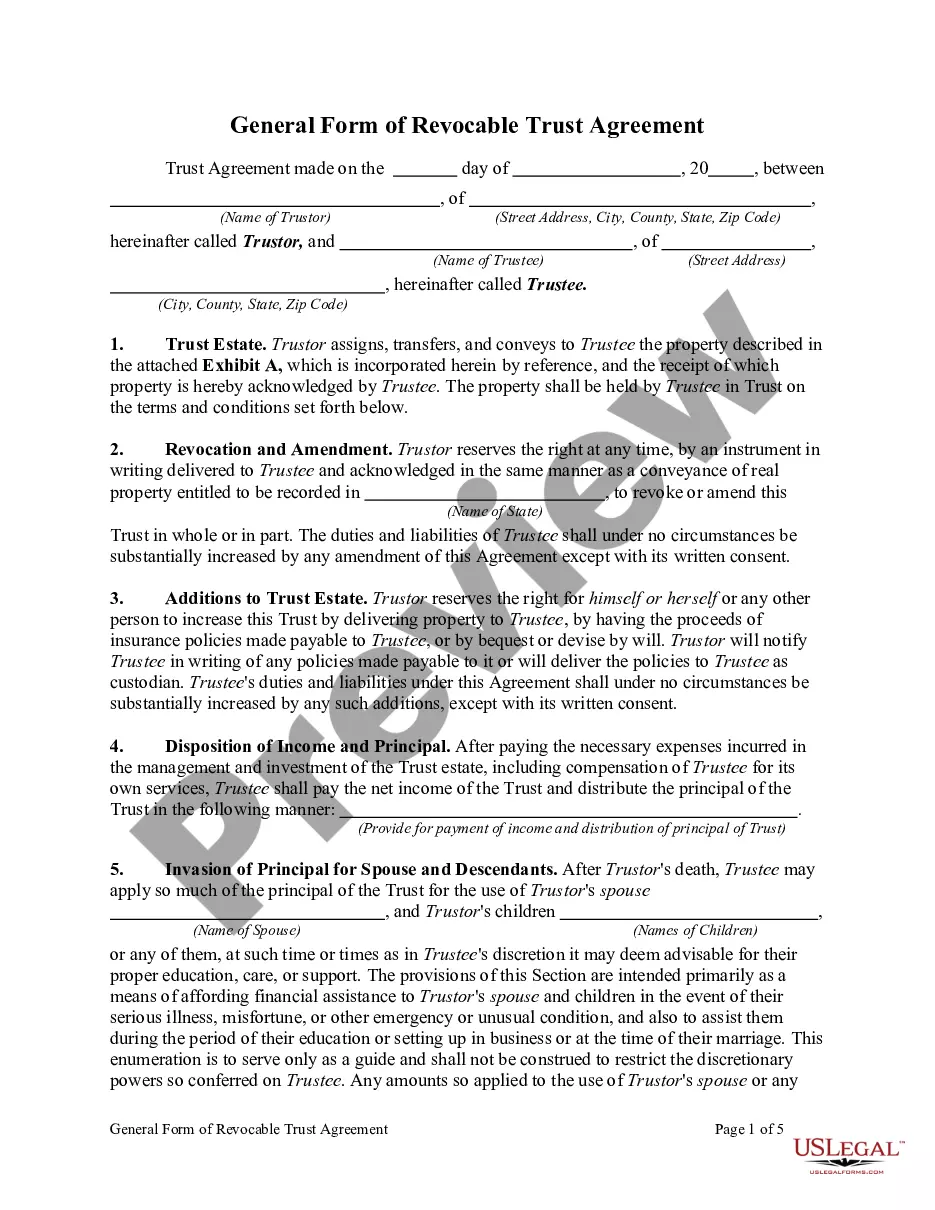
The Revocable Living Trust for Real Estate is a legal document that outlines an agreement between a Trustor and a Trustee to manage real estate assets during the Trustor's lifetime and after their death. This form is designed to simplify asset management and avoid court supervision in the event of incapacity or death, differentiating it from other estate planning tools that may require probate. It allows the Trustor to retain control over their assets while providing for their successors without judicial intervention.
Key components of this form
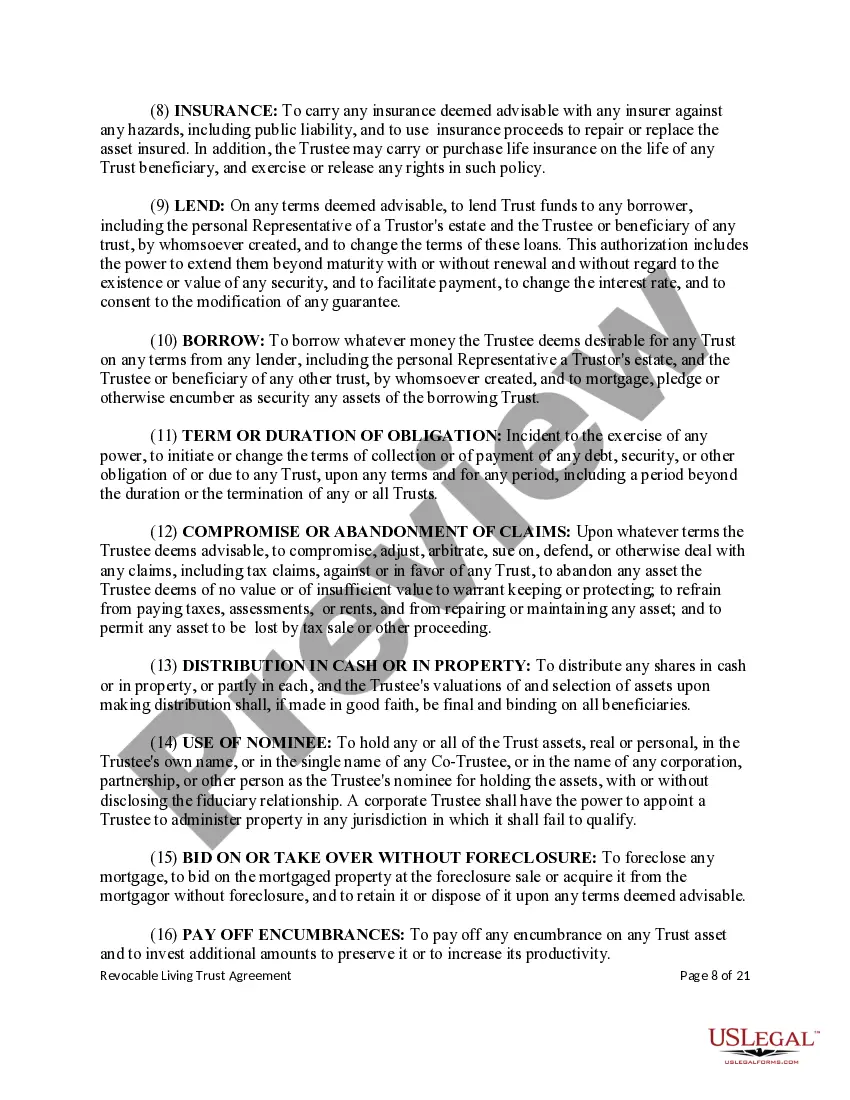
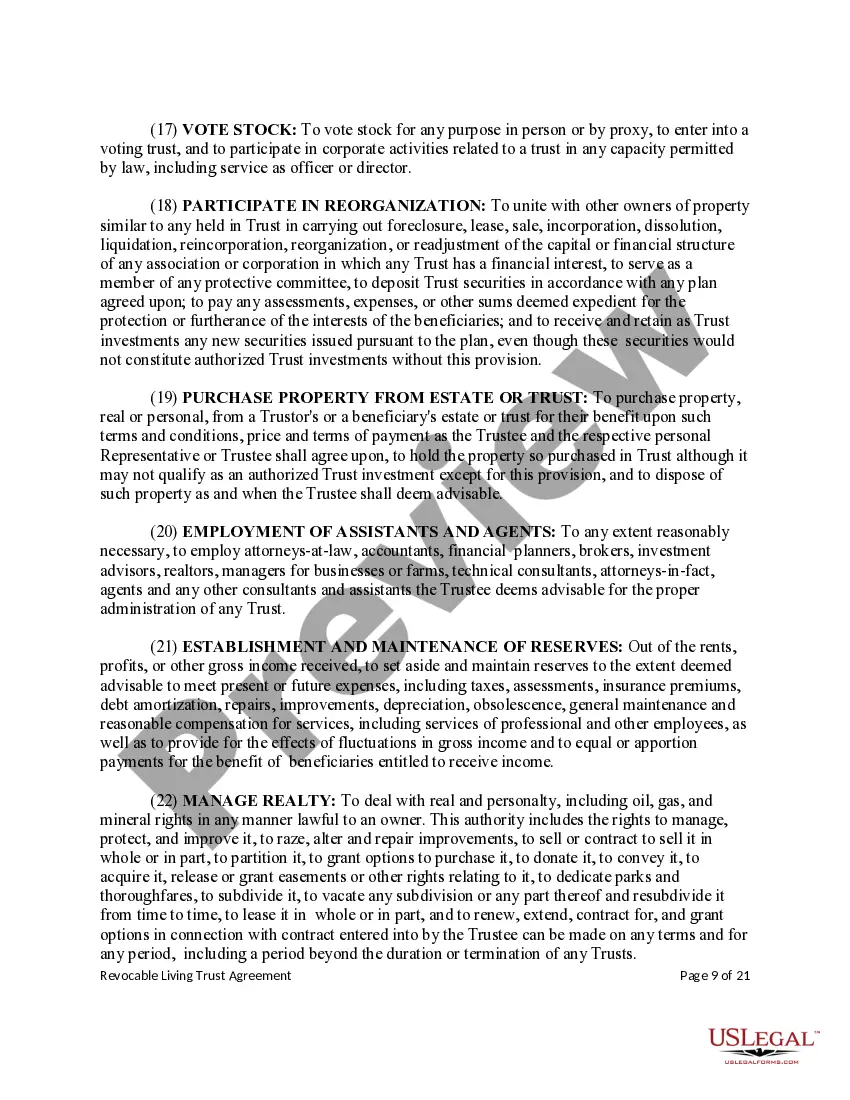
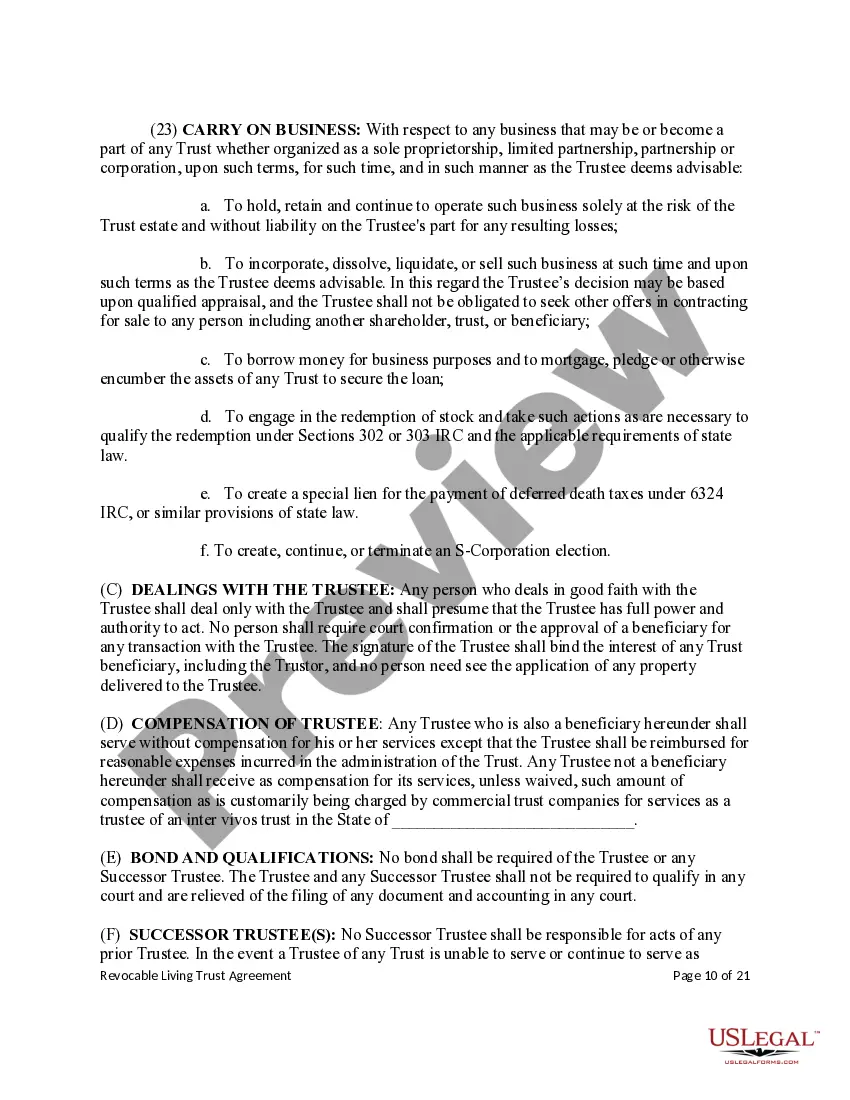
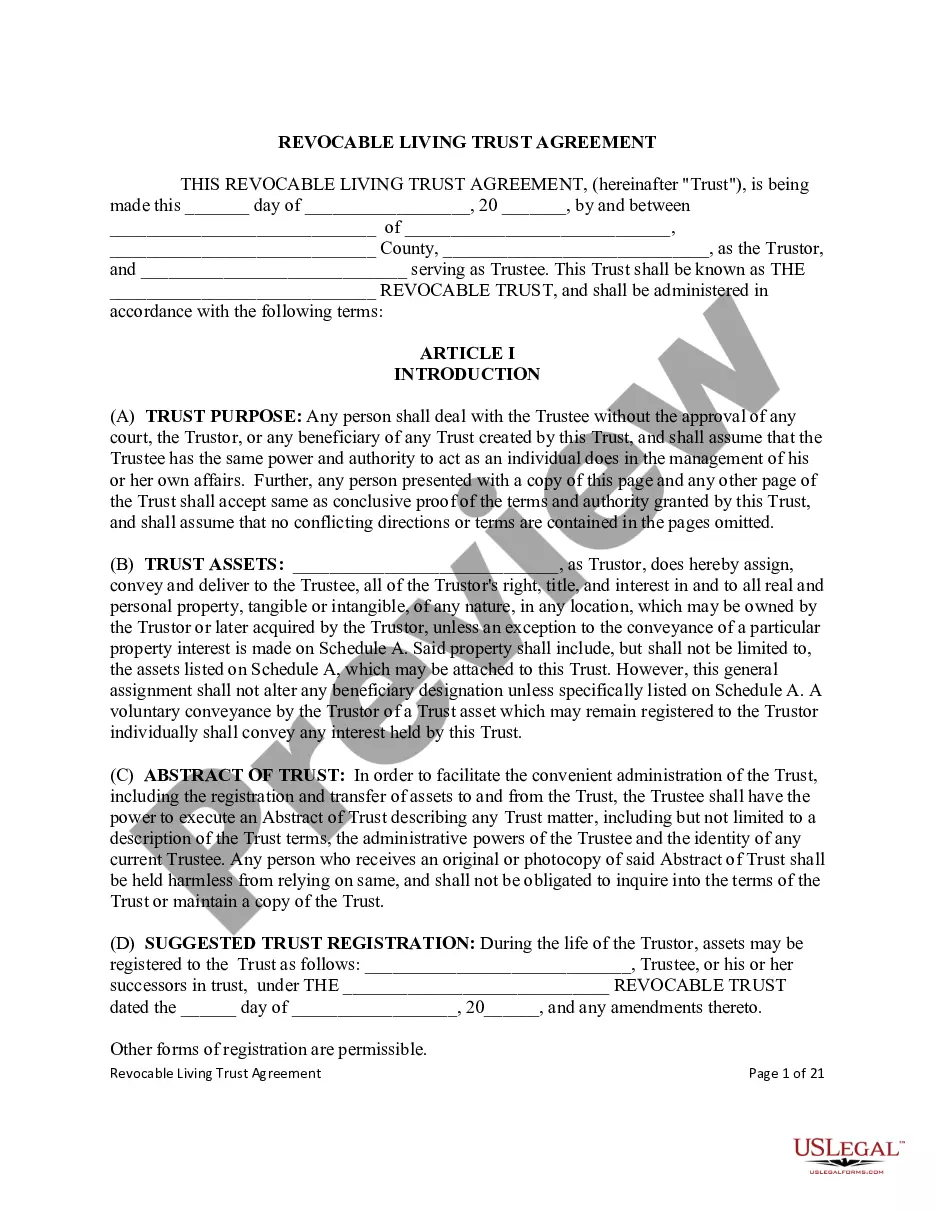
- Trust Purpose: Establishes the intent and authority of the Trustee in managing the assets.
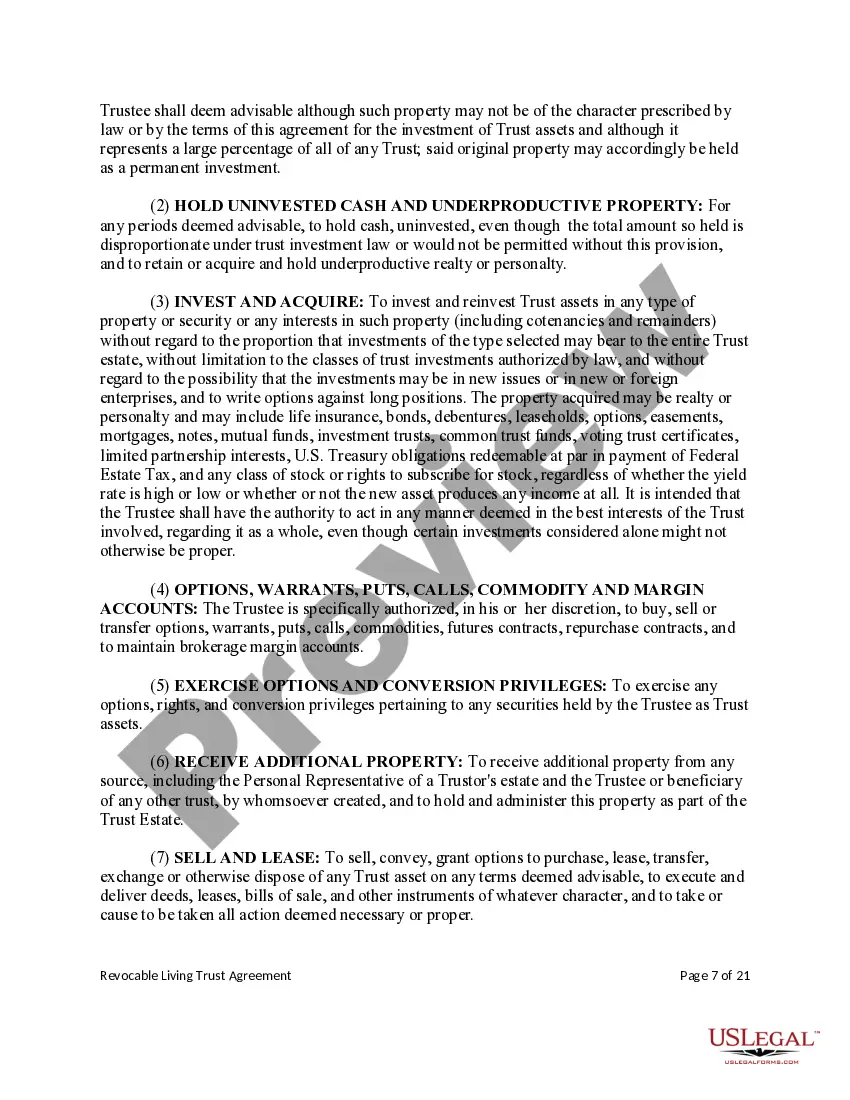
- Trust Assets: Specifies the properties included in the trust and their management.
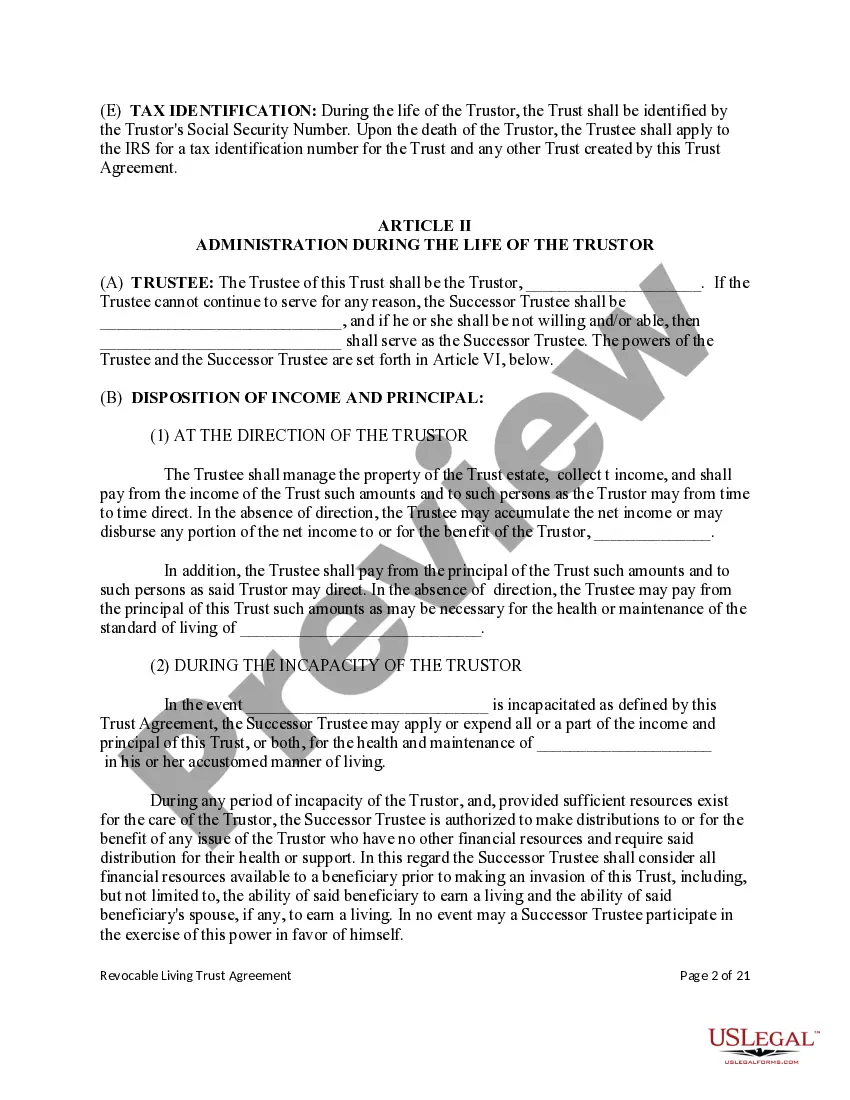
- Administration During Life: Outlines how the Trustee manages the trust while the Trustor is alive.
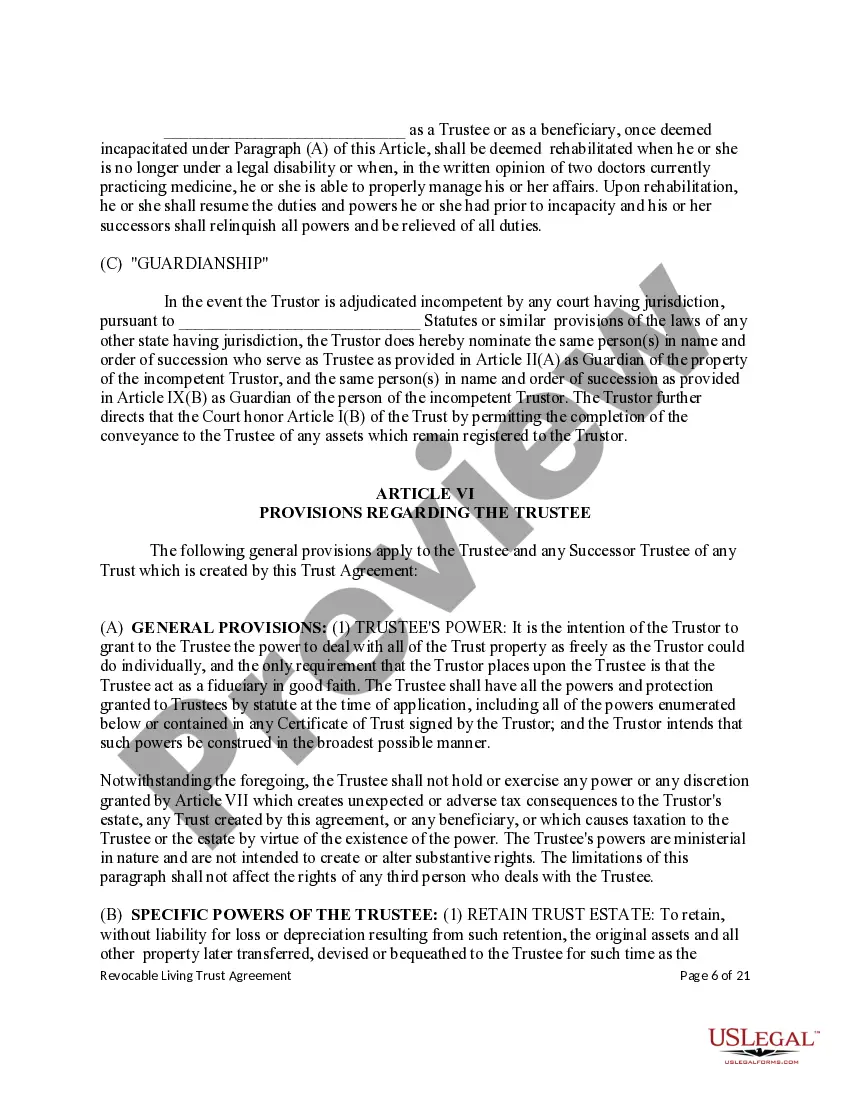
- Successor Trustee: Names the individual who will take over Trustee duties if the original Trustee is unable to serve.
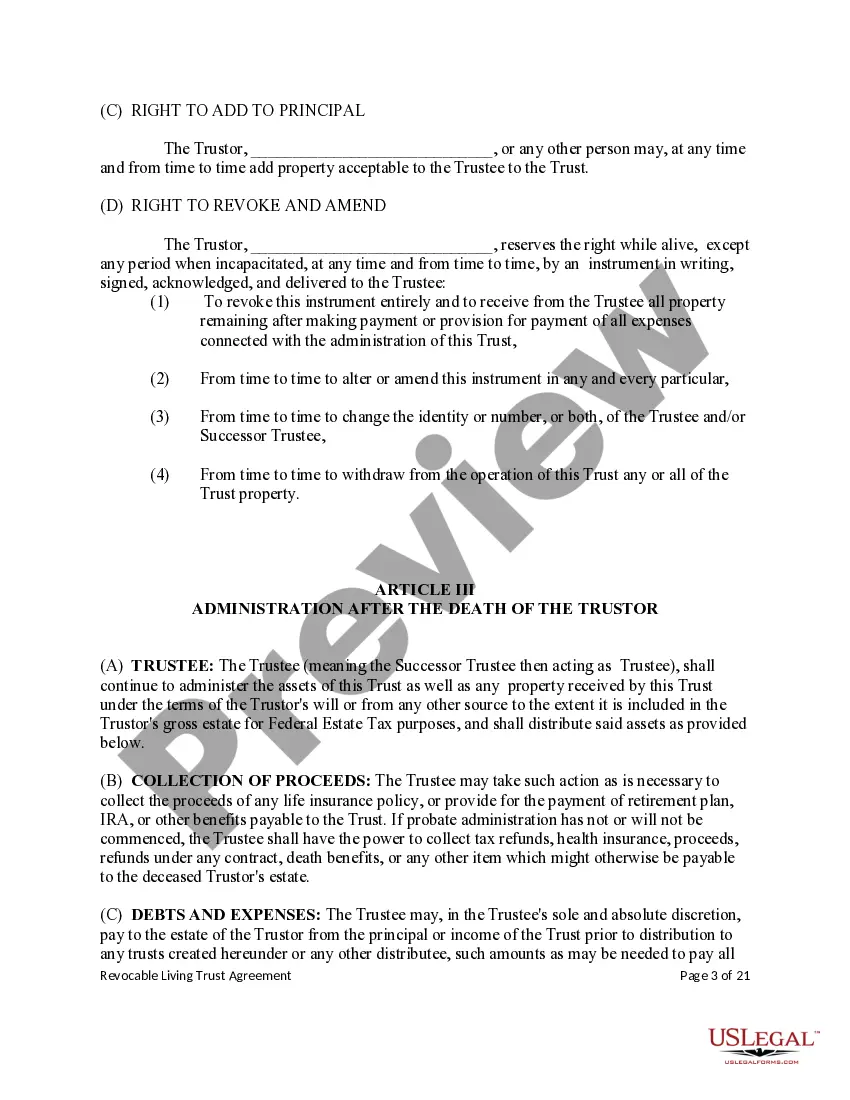
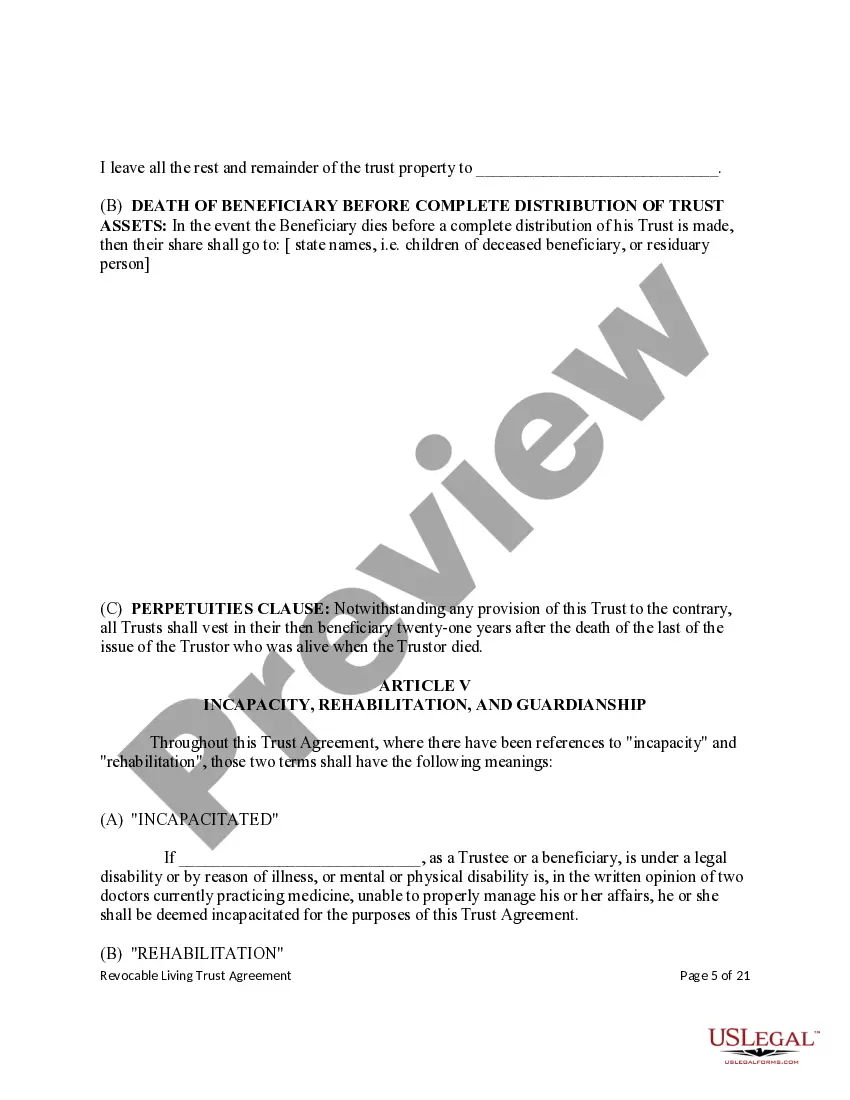
- Revocation Rights: Details the Trustor's authority to alter or revoke the trust at any time while competent.
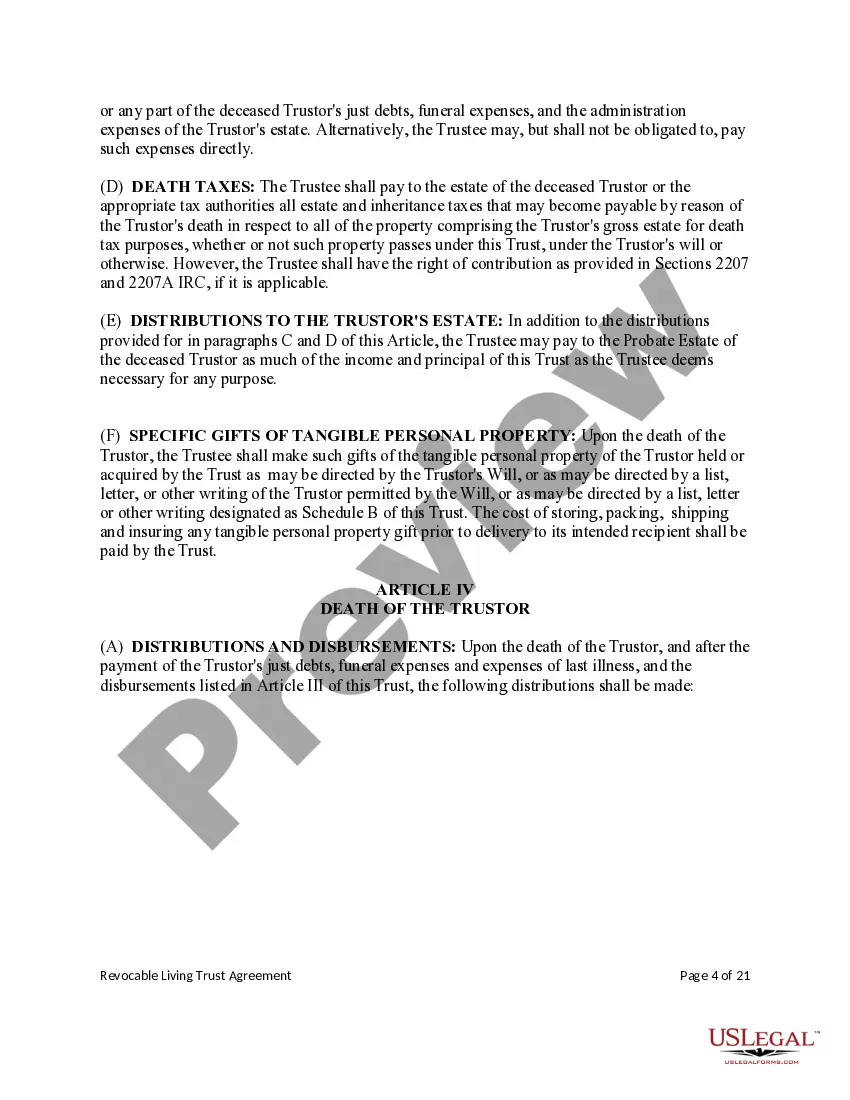
- Distribution Upon Death: Describes how assets will be distributed to beneficiaries after the Trustor's death.

Situations where this form applies
This form is appropriate for individuals who wish to manage their real estate assets efficiently while alive and ensure a smooth transition of those assets to beneficiaries after their death. It is particularly beneficial for those wanting to avoid probate court or minimize administrative burdens on their heirs. You might use this form if you are planning for asset distribution, protecting loved ones, or organizing your estate for future management.
Intended users of this form
- Individuals seeking to simplify the management of their real estate assets.
- People who want to avoid the probate process for their beneficiaries.
- Trustors who wish to retain control over their assets while providing for eventual distribution.
- Anyone planning for incapacity or wanting to make arrangements for asset management in advance.
How to prepare this document
- Identify the parties: Clearly state the names of the Trustor and the Trustee.
- Specify the property: List all real assets to be included in the trust.
- Outline trustee responsibilities: Define the powers and duties of the Trustee concerning the trust assets.
- Include revocation provisions: Describe how the Trustor can amend or revoke the trust at any time.
- Sign and date the agreement: Ensure that both the Trustor and Trustee sign the document in front of a notary, if required.
Is notarization required?
This form does not typically require notarization unless specified by local law. However, it is advisable to consult your stateâs regulations for compliance.
Get your form ready online
Our built-in tools help you complete, sign, share, and store your documents in one place.
Make edits, fill in missing information, and update formatting in US Legal Forms—just like you would in MS Word.
Download a copy, print it, send it by email, or mail it via USPS—whatever works best for your next step.
Sign and collect signatures with our SignNow integration. Send to multiple recipients, set reminders, and more. Go Premium to unlock E-Sign.
If this form requires notarization, complete it online through a secure video call—no need to meet a notary in person or wait for an appointment.
We protect your documents and personal data by following strict security and privacy standards.

Make edits, fill in missing information, and update formatting in US Legal Forms—just like you would in MS Word.

Download a copy, print it, send it by email, or mail it via USPS—whatever works best for your next step.

Sign and collect signatures with our SignNow integration. Send to multiple recipients, set reminders, and more. Go Premium to unlock E-Sign.

If this form requires notarization, complete it online through a secure video call—no need to meet a notary in person or wait for an appointment.

We protect your documents and personal data by following strict security and privacy standards.
Common mistakes to avoid
- Failing to clearly identify all trust assets, leading to potential disputes later.
- Not naming a successor Trustee, which could leave the trust unmanaged if the initial Trustee becomes incapacitated.
- Neglecting to sign and date the document properly, risking its validity.
Benefits of using this form online
- Convenience: Download and complete the form at your own pace, anytime.
- Editability: Customize the document according to your specific needs without the need for an attorney's initial drafting.
- Comprehensiveness: Access a legally sound template prepared by licensed attorneys.
Looking for another form?

Form popularity
FAQ
The Revocable Living Trust for Real Estate creates a trust arrangement to hold real property during life and distribute it after death. It’s revocable, so the grantor can change or dissolve it as needed, and it’s commonly used to simplify property management and facilitate transfer of real estate to beneficiaries, subject to applicable state law.
When you put your house into this trust, you transfer title from your name to the trust and appoint a trustee (often you) to manage it. You remain the grantor and can revoke or amend the trust anytime. Upon your death, a successor trustee funds or distributes the property to beneficiaries per the trust terms.
Common reasons include simplifying the transfer of property after death, maintaining management authority if you become incapacitated, providing privacy since assets in a trust often don’t go through probate, and allowing seamless distribution to heirs under the trust’s terms. The revocable feature keeps you in control to modify or revoke as needed.
Downsides include that it offers limited creditor protection and does not automatically shrink estate taxes; there are setup and ongoing administration costs, and the process requires funding the trust by transferring the real estate title. It may not bypass probate in every state, and it adds recordkeeping for trust terms and amendments.
Disadvantages can include the need to retitle the property, potential lender notice or consent requirements, ongoing trust administration, and costs that may not be justified solely for probate avoidance. The property still remains part of your taxable estate and the benefits depend on your overall estate plan and state law.
The key difference is flexibility. This trust can be changed or revoked during the grantor’s lifetime, and the grantor typically maintains control as trustee. An Irrevocable Living Trust for Real Estate generally cannot be easily amended or revoked, and ownership is transferred away from the grantor, often affecting asset protection and tax considerations.