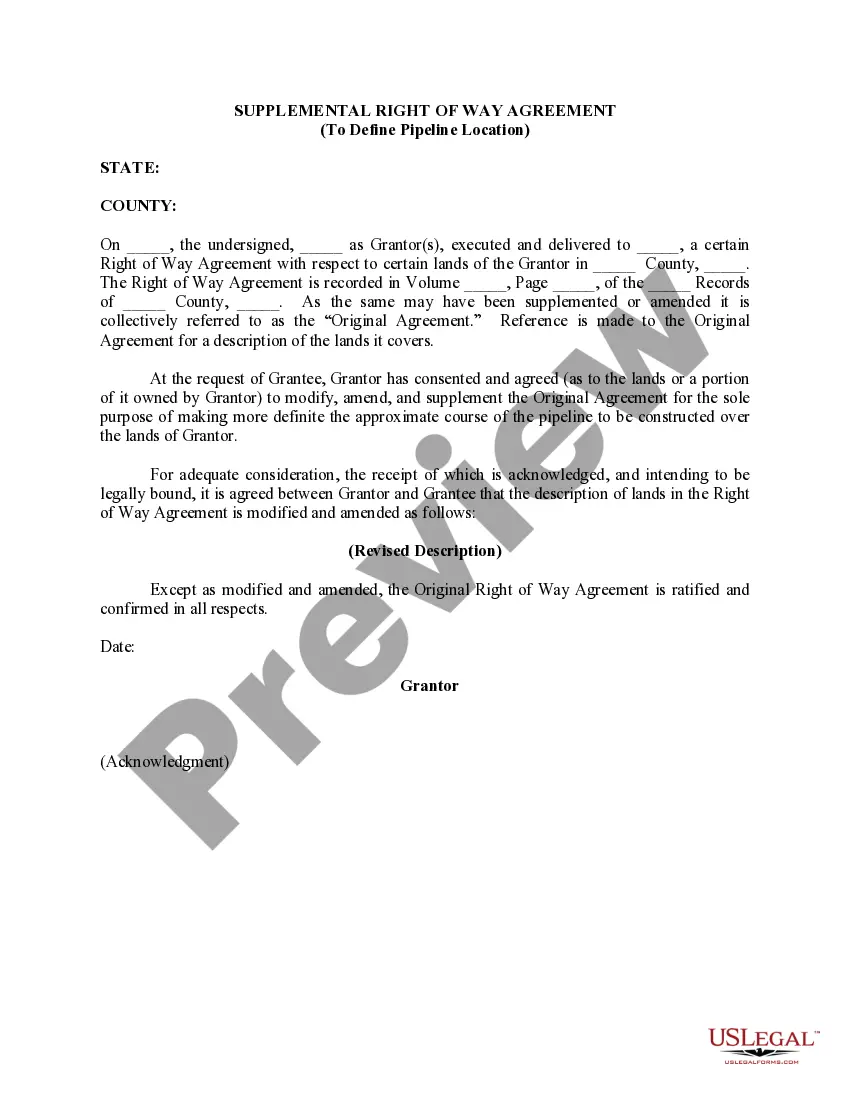
Supplemental Right of Way Agreement (To Define Pipeline Location)
Description
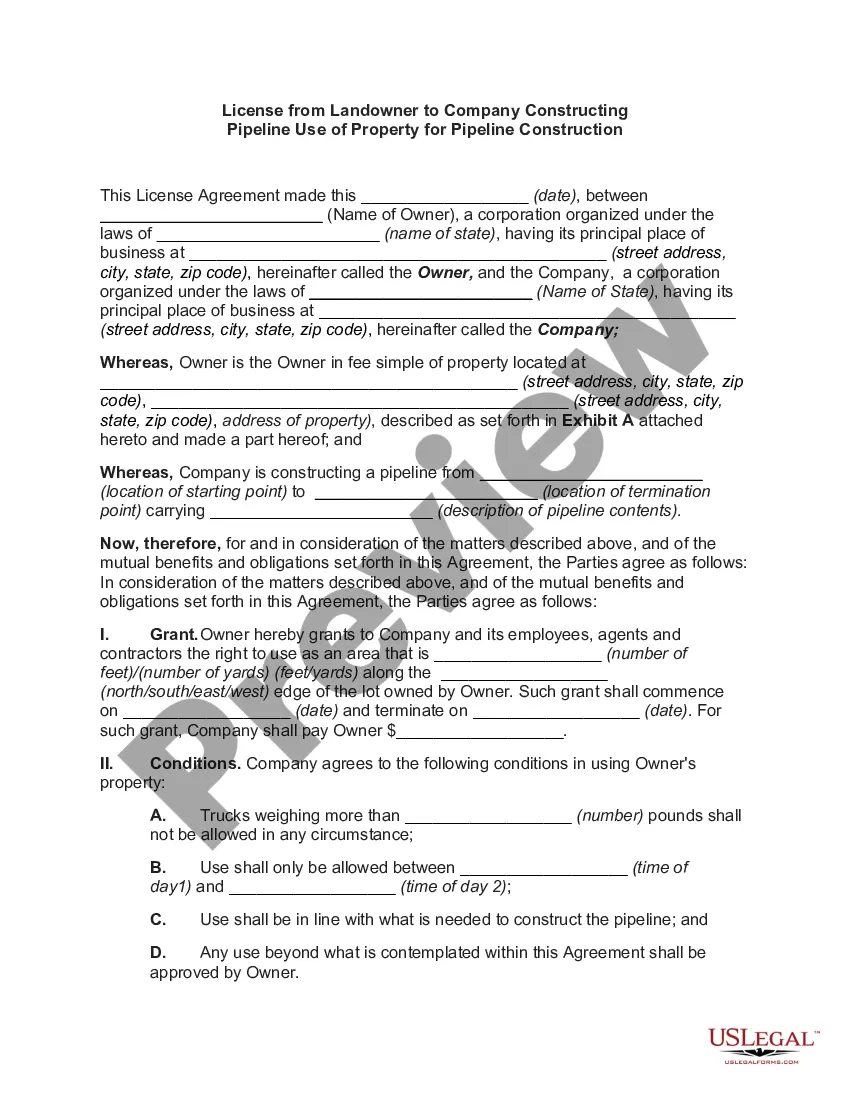
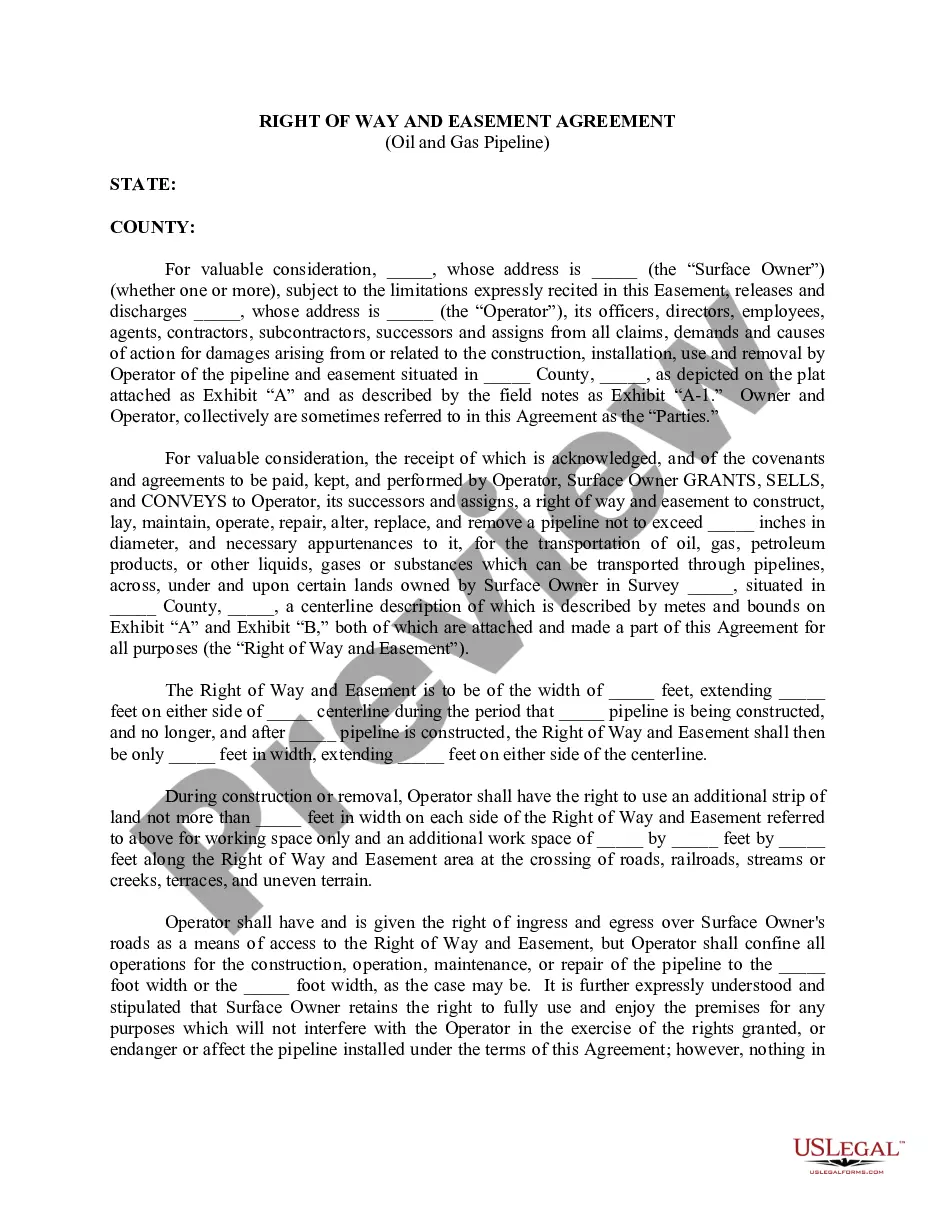
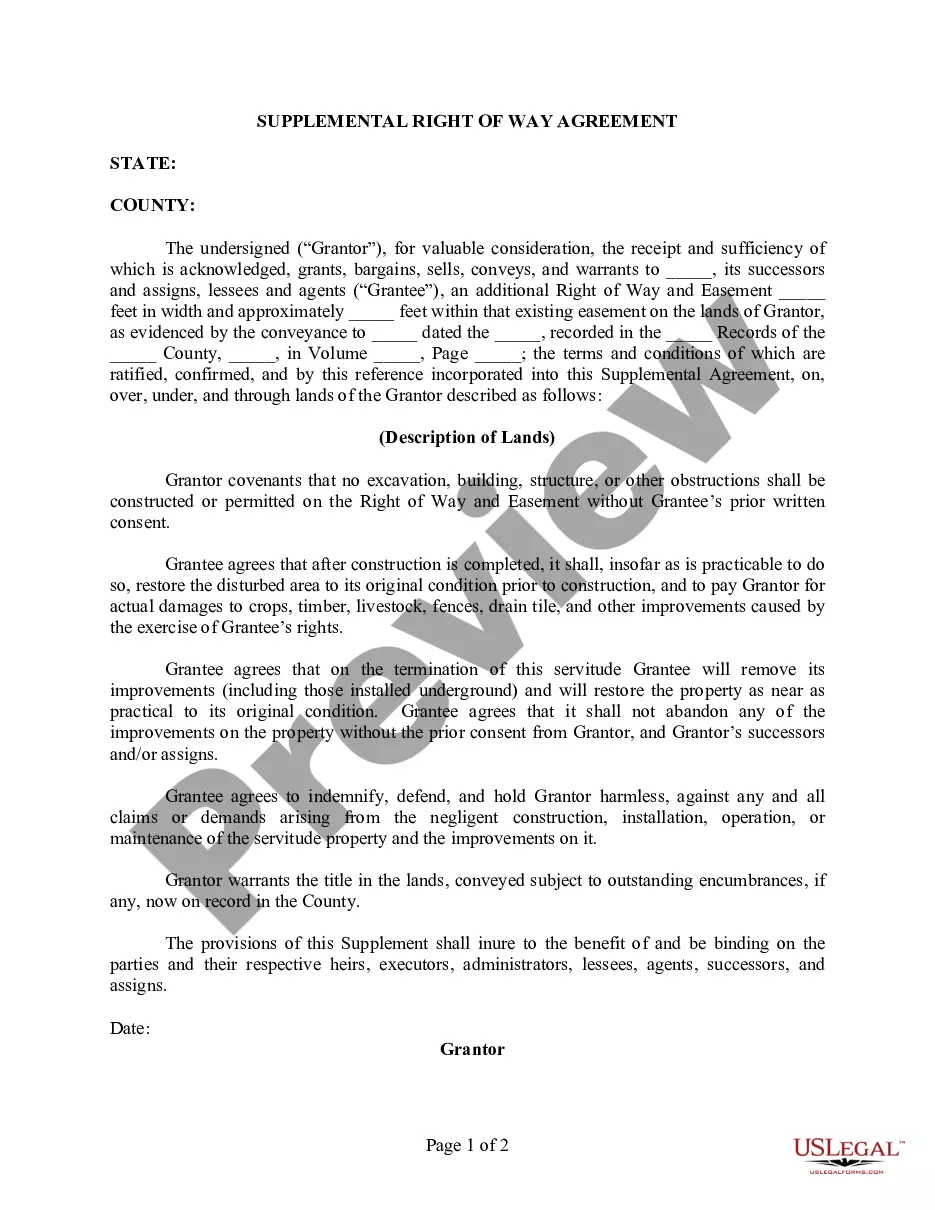
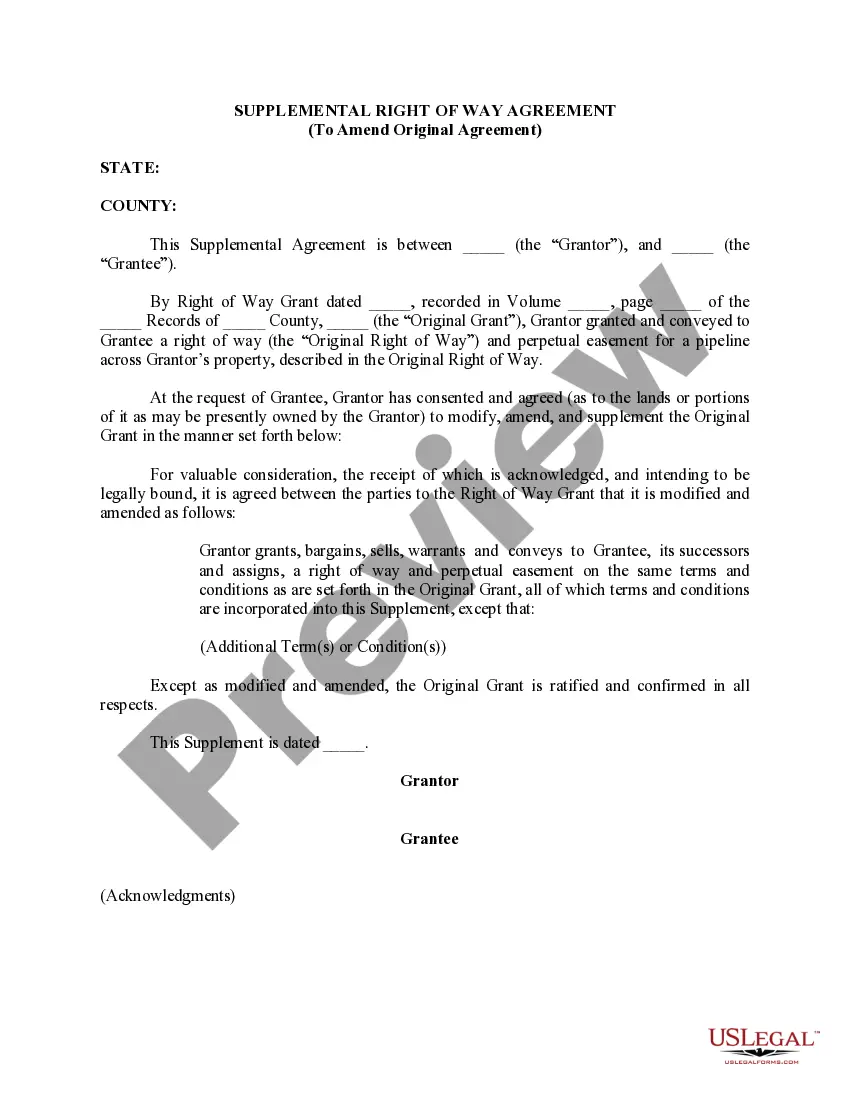


How to fill out Supplemental Right Of Way Agreement (To Define Pipeline Location)?
When it comes to drafting a legal form, it is better to leave it to the experts. Nevertheless, that doesn't mean you yourself cannot get a sample to utilize. That doesn't mean you yourself can not get a sample to use, nevertheless. Download Supplemental Right of Way Agreement (To Define Pipeline Location) straight from the US Legal Forms web site. It gives you a wide variety of professionally drafted and lawyer-approved forms and samples.
For full access to 85,000 legal and tax forms, customers simply have to sign up and select a subscription. As soon as you’re registered with an account, log in, find a certain document template, and save it to My Forms or download it to your gadget.
To make things less difficult, we’ve incorporated an 8-step how-to guide for finding and downloading Supplemental Right of Way Agreement (To Define Pipeline Location) promptly:
- Be sure the document meets all the necessary state requirements.
- If possible preview it and read the description before purchasing it.
- Press Buy Now.
- Select the appropriate subscription to meet your needs.
- Create your account.
- Pay via PayPal or by debit/visa or mastercard.
- Choose a preferred format if several options are available (e.g., PDF or Word).
- Download the document.
As soon as the Supplemental Right of Way Agreement (To Define Pipeline Location) is downloaded you can complete, print out and sign it in any editor or by hand. Get professionally drafted state-relevant documents in a matter of minutes in a preferable format with US Legal Forms!
Form popularity
FAQ
Typically, they are seeking a zone with the rod merely as the middle. For example, a rod with a 502032 easement zone requires 825 square feet. If an easement is 50 rods long, that is almost an acre. In a recent case, a pipeline company paid some owners $180 per rod and others $767 per rod for the same project.
These distances are based on fire modeling and development requirements set to meet fire safety standards. For example, the ordinance bans new buildings within 25 feet of a hazardous liquids pipeline and increases construction and building standards on most structures within 200 feet of a pipeline.
How much money should landowners get when an oil or gas pipeline crosses their land? As it stands, landowners receive a one-time payment roughly based on the length of the pipeline, with rates varying from $5 to $50 per foot or more for a Marcellus or Utica shale pipeline right-of-way agreement.
What is a Pipeline Easement? Generally, an easement is a legal interest that allows someone the right to use another's property for a certain purpose. A pipeline easement specifically gives the easement holder the right to build and maintain a pipeline on a landowner's property.
A right-of-way is a strip of land typically about 50 feet wide (depending on location) containing a pipeline or other utility. Many rights-of-way contain more than one underground pipeline or utility and can be wider depending on the number of infrastructure assets within.
API recommends setbacks of 50 feet from petroleum and hazardous liquids lines for new homes, businesses, and places of public assembly (API 2003). It also recommends 25 feet for garden sheds, septic tanks, and water wells and 10 feet for mailboxes and yard lights.
Temporary buildings should not be placed above any gas pipe or within 3.0 metres of mains operating above 75mbar (medium, intermediate and high pressure mains) during construction activities and in no circumstances should permanent structures be built over any pipe transporting gas.
Pipelines can reduce property values by 5 to 40 percent by making them less attractive to potential buyers, according to local Realtors.