Theft Concerning a Program Receiving Federal Funds - Agent of Organization or Government Defined (revised 2017)
Understanding this form
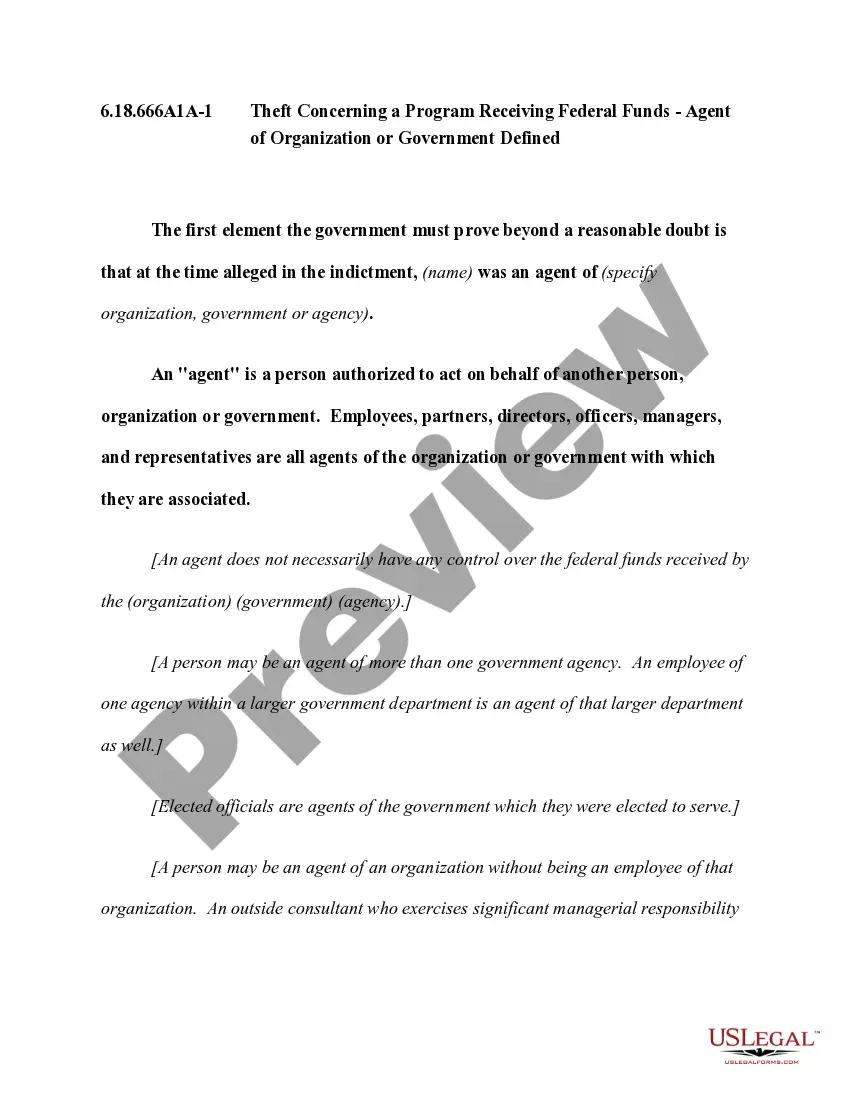
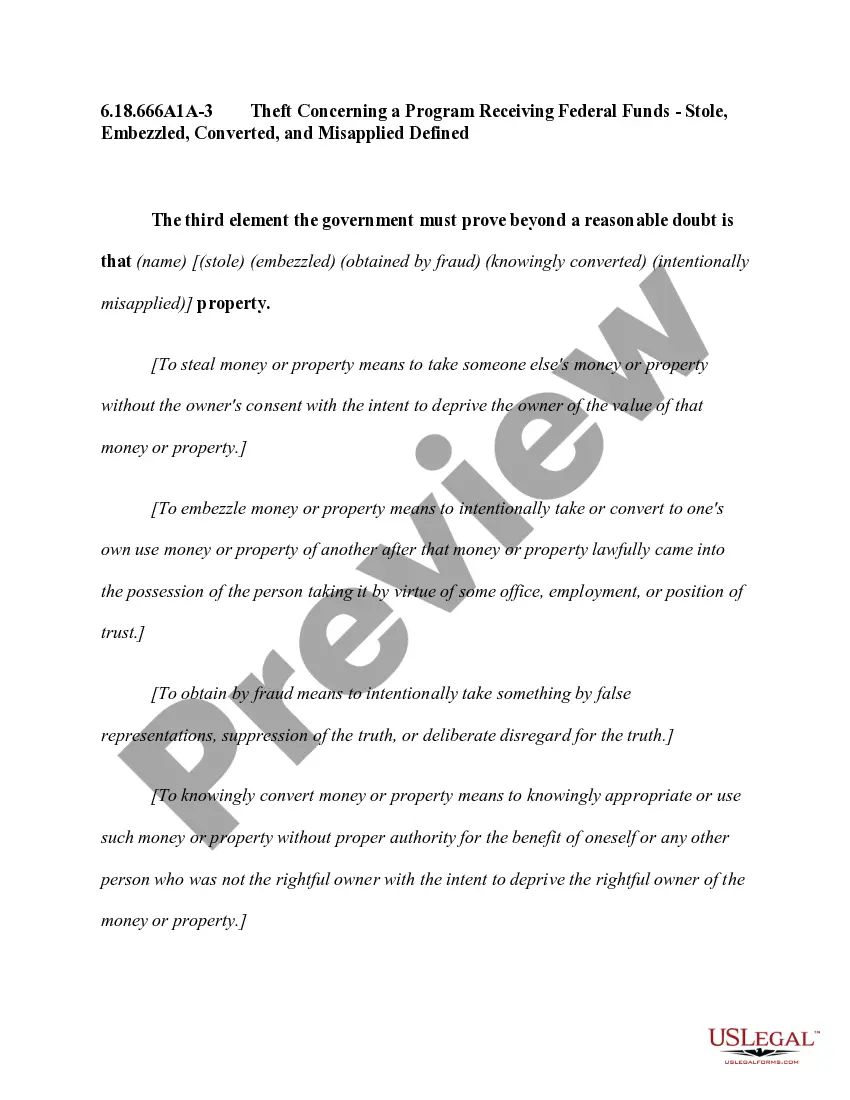
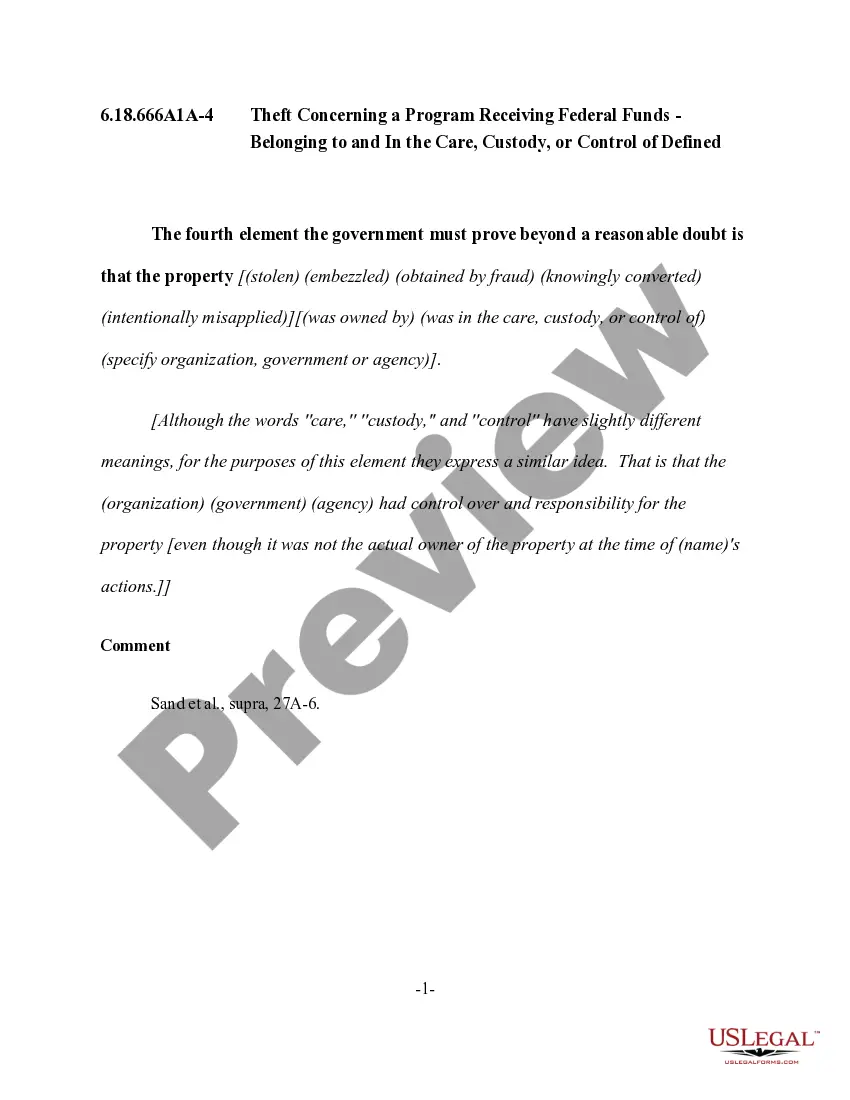
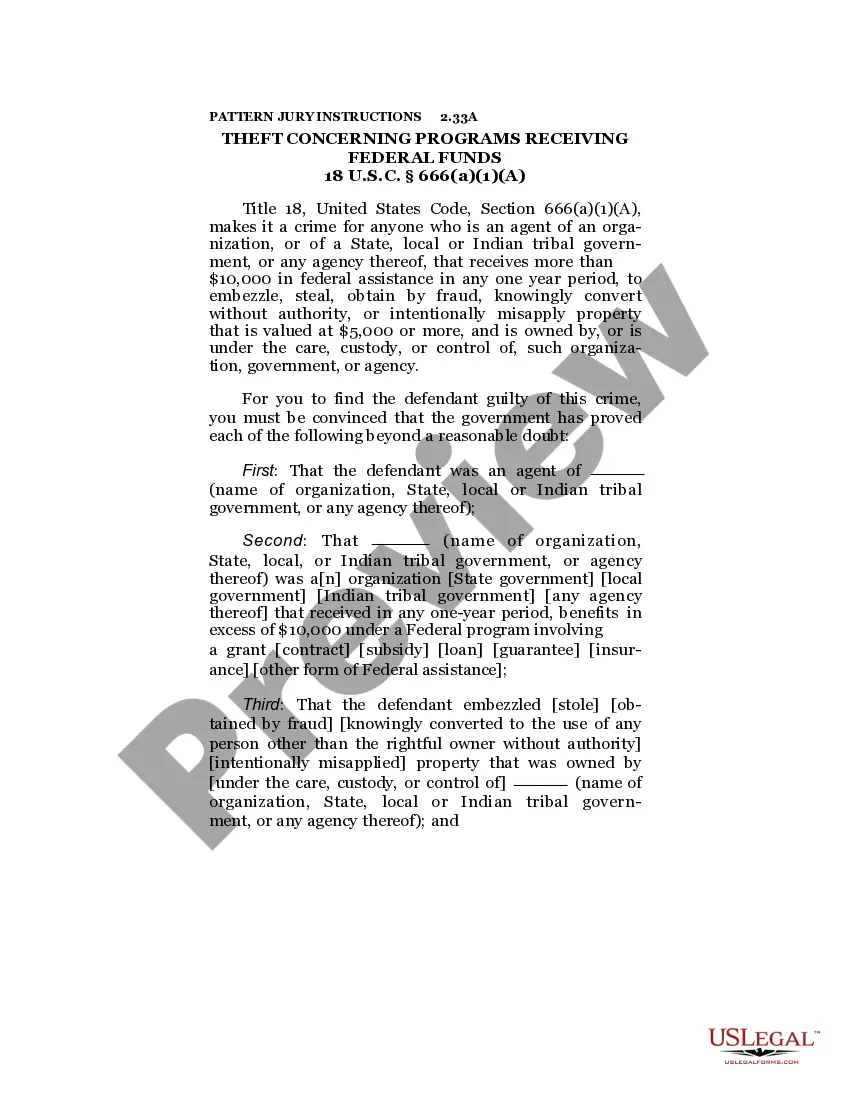
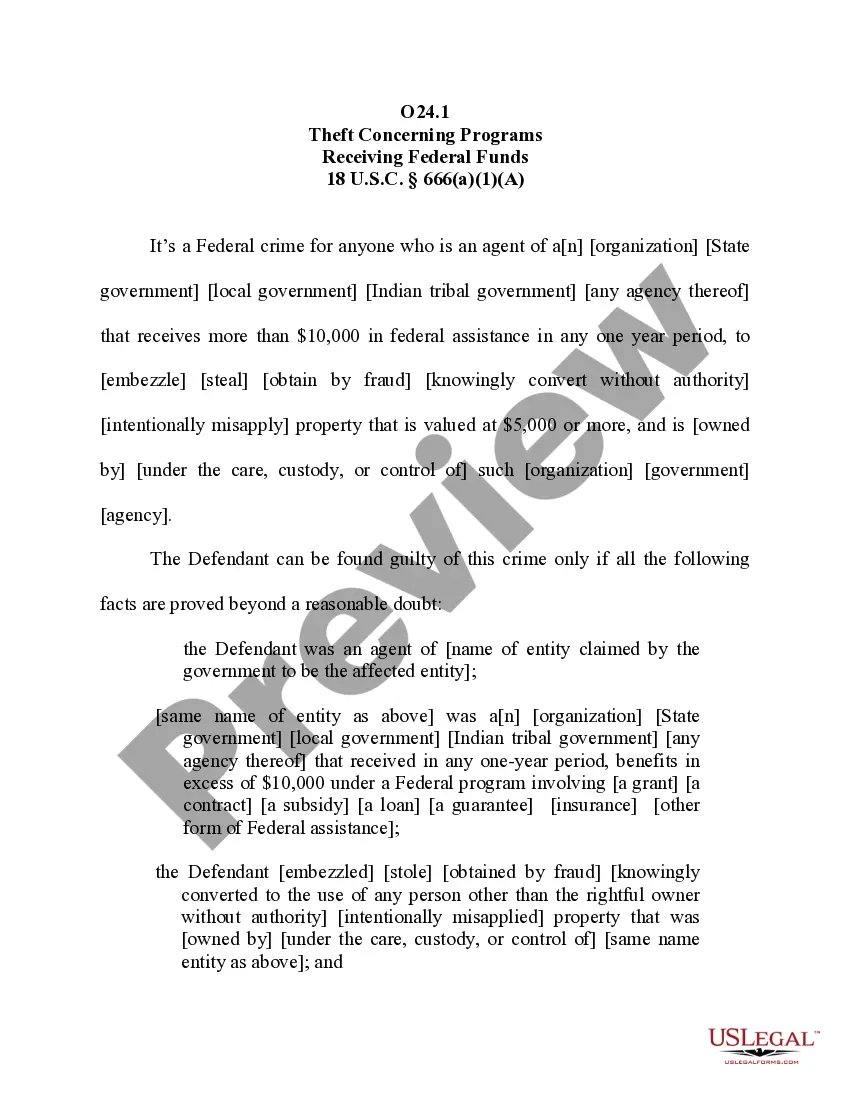
Theft Concerning a Program Receiving Federal Funds - Agent of Organization or Government Defined is a legal form used to define the role of an agent representing an organization or government that receives federal funds. This form is essential for ensuring that legal definitions are clear in cases of alleged theft involving federal funding. This differs from other legal forms as it specifically focuses on the definition and responsibilities of agents in the context of federal programs.
Main sections of this form
- Identification of the agent: Specifies the name and role of the agent within the organization or government.
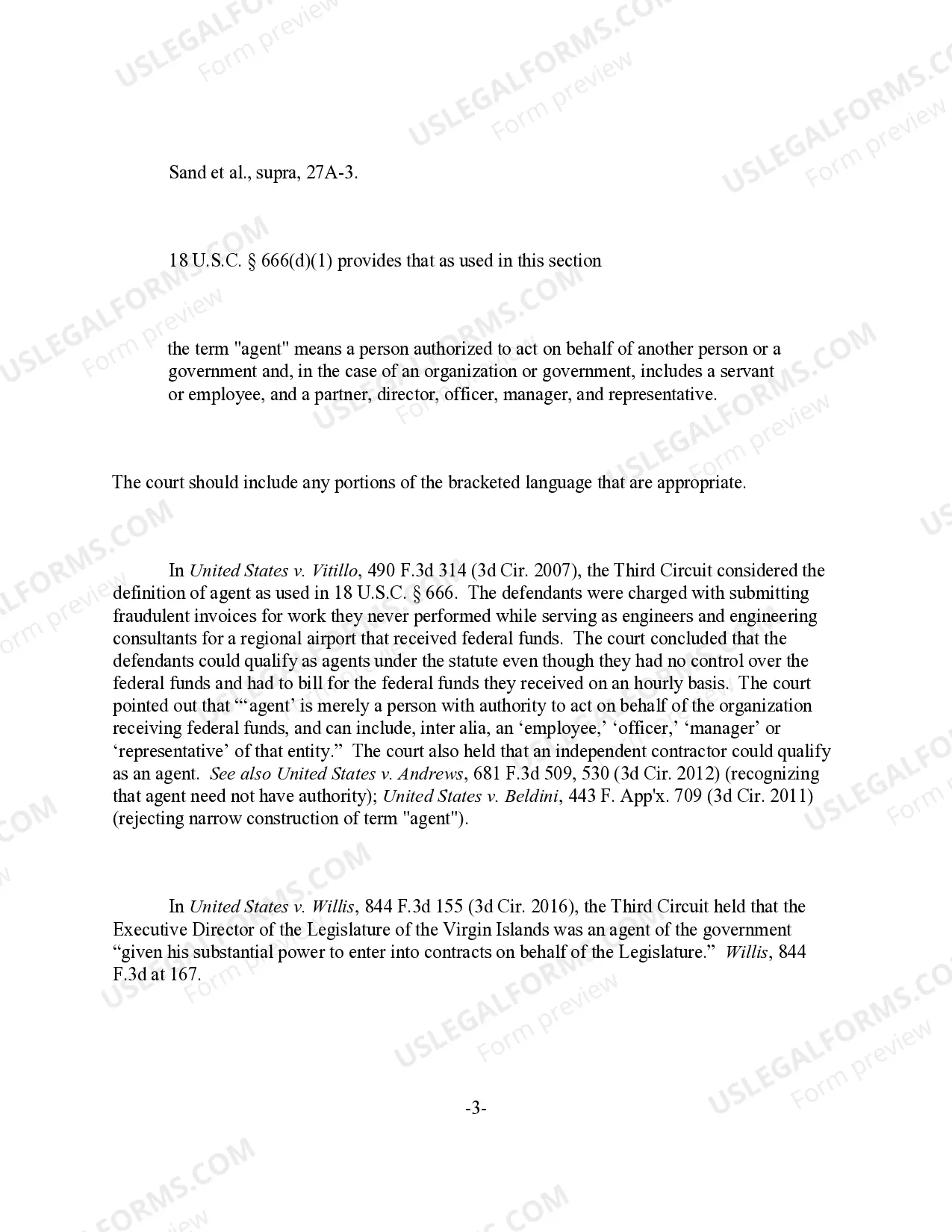
- Definition of "agent": Clarifies who qualifies as an agent, including employees, contractors, and elected officials.
- Context of federal funding: Establishes the connection between the agent and federally funded programs.
- Legal precedents: References legal cases that define agent responsibilities and the scope of authority.

Situations where this form applies
This form is necessary when there are allegations of theft involving federal funds and the role of an agent representing the organization or government needs to be clearly defined. It can be used in cases such as audits, investigations, or legal proceedings relating to misuse of federal funds where a clear delineation of authority and responsibility is needed.
Who this form is for
- Organizations that receive federal funds and need to define their agents in legal documents.
- Government agencies looking to establish the authority of their employees or representatives.
- Legal professionals involved in cases concerning theft of federal funds.
- Individuals who have been designated as agents of organizations receiving federal funding.
How to prepare this document
- Identify the agent: Provide the full name of the individual acting as an agent.
- Specify the organization or government: Clearly state the name of the organization or agency the agent represents.
- Detail the role: Describe the position or role the agent holds within the organization.
- Document the context: Include information on the federal funds and the relevant program involved.
Notarization guidance
This form usually doesn’t need to be notarized. However, local laws or specific transactions may require it. Our online notarization service, powered by Notarize, lets you complete it remotely through a secure video session, available 24/7.
Get your form ready online
Our built-in tools help you complete, sign, share, and store your documents in one place.
Make edits, fill in missing information, and update formatting in US Legal Forms—just like you would in MS Word.
Download a copy, print it, send it by email, or mail it via USPS—whatever works best for your next step.
Sign and collect signatures with our SignNow integration. Send to multiple recipients, set reminders, and more. Go Premium to unlock E-Sign.
If this form requires notarization, complete it online through a secure video call—no need to meet a notary in person or wait for an appointment.
We protect your documents and personal data by following strict security and privacy standards.

Make edits, fill in missing information, and update formatting in US Legal Forms—just like you would in MS Word.

Download a copy, print it, send it by email, or mail it via USPS—whatever works best for your next step.

Sign and collect signatures with our SignNow integration. Send to multiple recipients, set reminders, and more. Go Premium to unlock E-Sign.

If this form requires notarization, complete it online through a secure video call—no need to meet a notary in person or wait for an appointment.

We protect your documents and personal data by following strict security and privacy standards.
Common mistakes
- Failing to clearly identify the agent and their relationship to the organization.
- Not including sufficient context regarding the federal funds involved.
- Using vague descriptions of the agent's role that do not align with legal definitions.
Why use this form online
- Convenience: Download and fill out the form at your own pace without needing to visit a legal office.
- Editability: Easily modify information as needed before finalizing the document.
- Reliability: Access forms drafted by licensed attorneys, ensuring they meet legal standards.
Looking for another form?

Form popularity
FAQ
As with all theft crimes, embezzlement is a specific intent crime. This means that the defendant must have intended to deprive the owner of the item to be guilty. A person who wrongfully keeps property temporarily, but intends to return it later, is not guilty of common-law embezzlement.
United States, 160 U.S. 268, 269 (1895), the Supreme Court defined embezzlement in the following terms: Embezzlement is the fraudulent appropriation of property by a person to whom such property has been entrusted, or into whose hands it has lawfully come.
Federal Embezzlement Laws Depending on the situation, embezzlement can be tried as a state or federal crime. Under federal law, embezzlement may be prosecuted as theft of public money or property, theft by government employees, or through theft of money from a bank or financial institution.
If you're convicted of violating 18 U.S.C. 666, you face up to 10 years in prison and a fine of up to $250,000 per count of embezzlement. While the agencies most often prosecute alleged fraud violations under 18 U.S. Code 666, they can also use other statutes, such as; 18 U.S.C.
Section 641 protects "any record, voucher, money, or thing of value of the United States or any department or agency thereof, or any property made or being made under contract for the United States or any department or agency thereof."
18 U.S. Code Chapter 31 - EMBEZZLEMENT AND THEFT.
Section 666(b) requires that the organization, government or agency must have received, in any one year period, "benefits in excess of $10,000 under a Federal program involving a grant, contract, subsidy, loan, guarantee, insurance, or other form of Federal assistance." This provision does not distinguish between cash
Theft of government property under 18 U.S.C. § 641 makes it a crime to steal, embezzle, or knowing convert with intent for your own personal gain the property, or to sell, convey, or dispose of any record, voucher, money, or something of value issued by a department of the United States government.