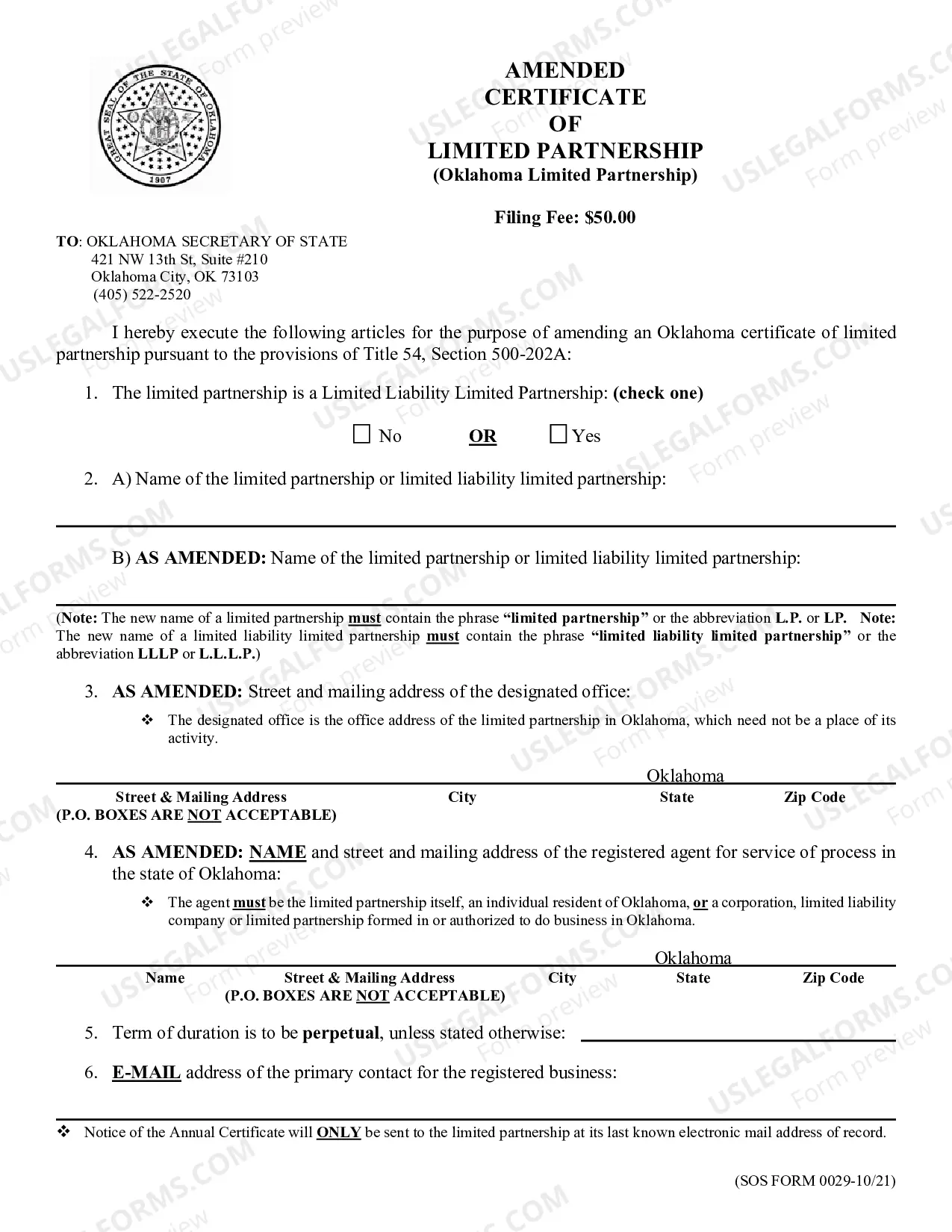
Supplemental Right of Way Agreement
What is this form?
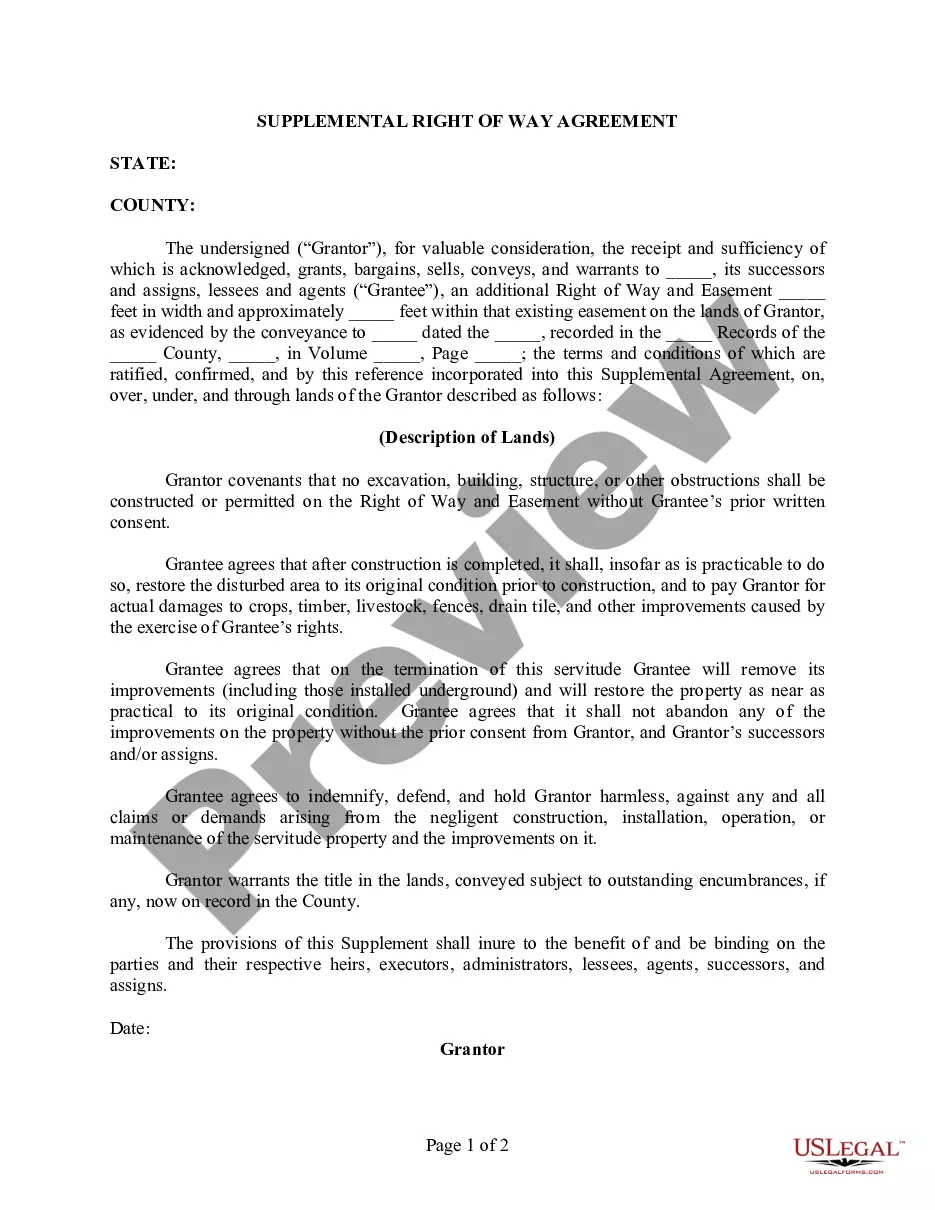
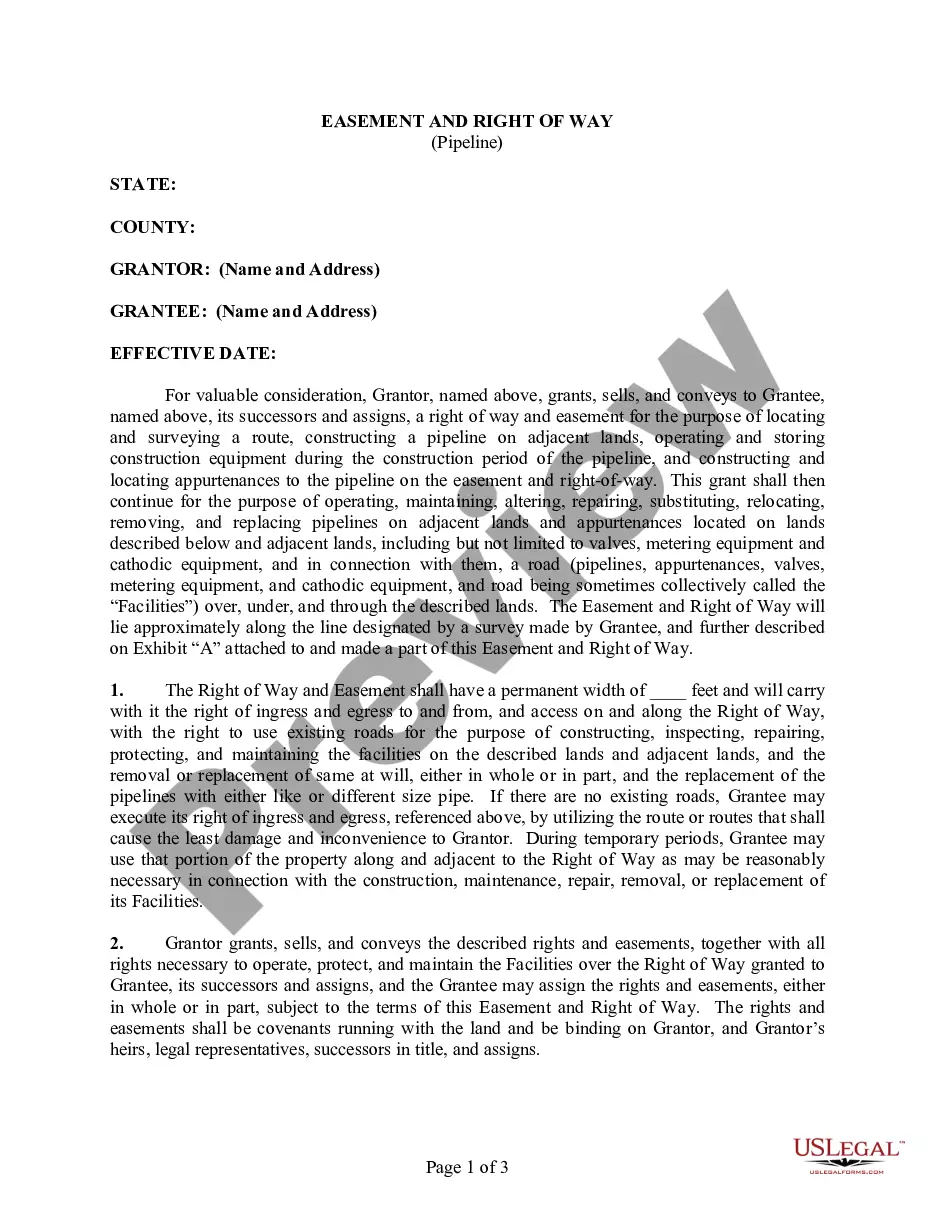
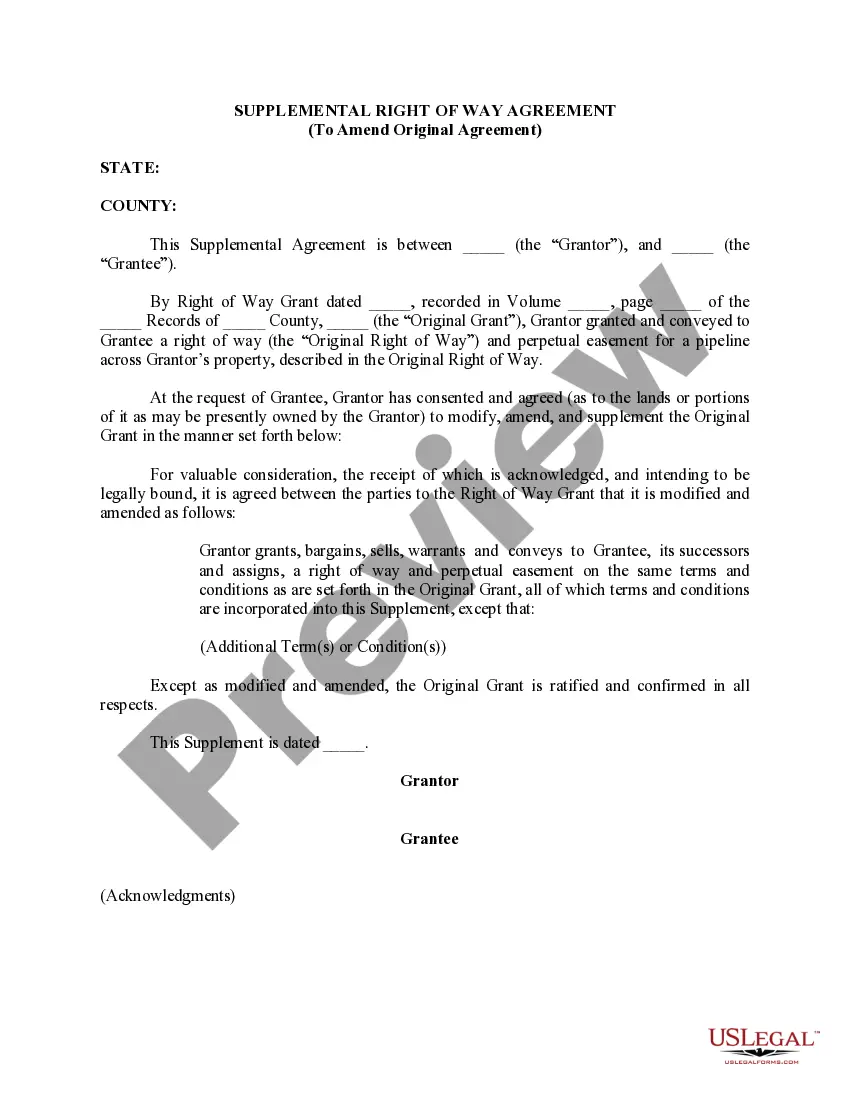
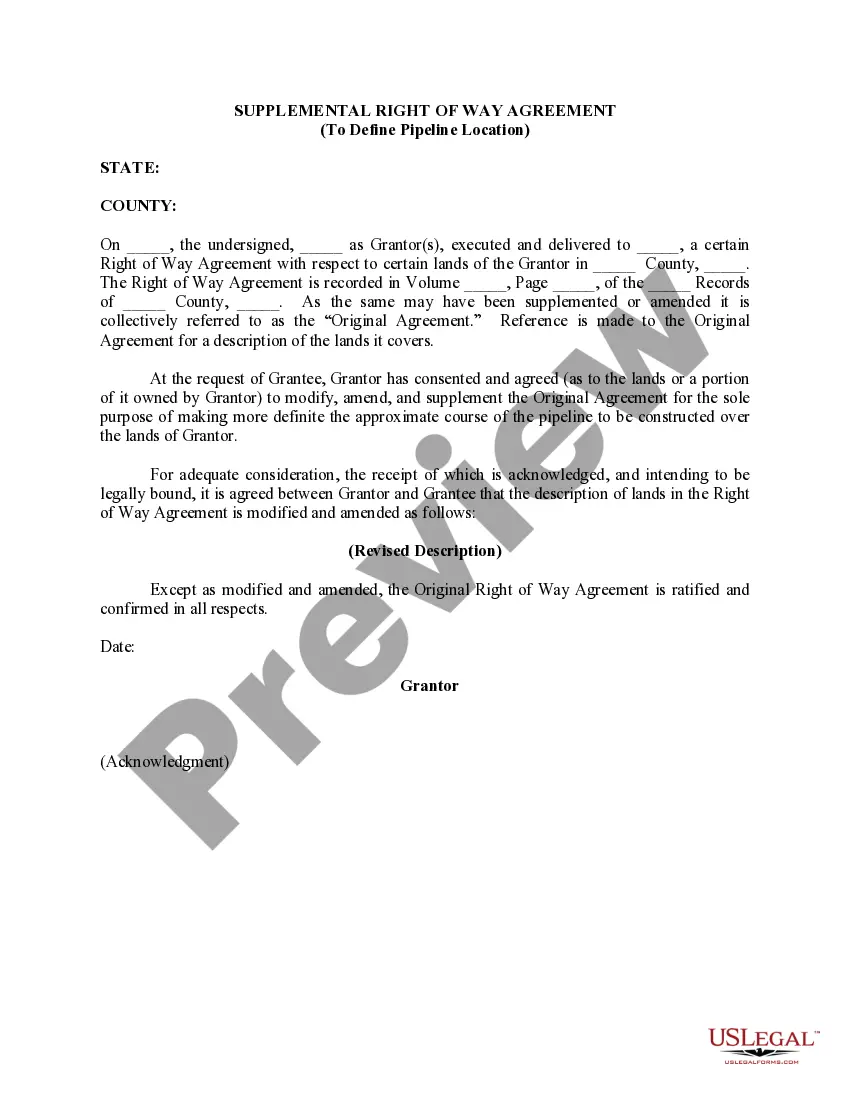
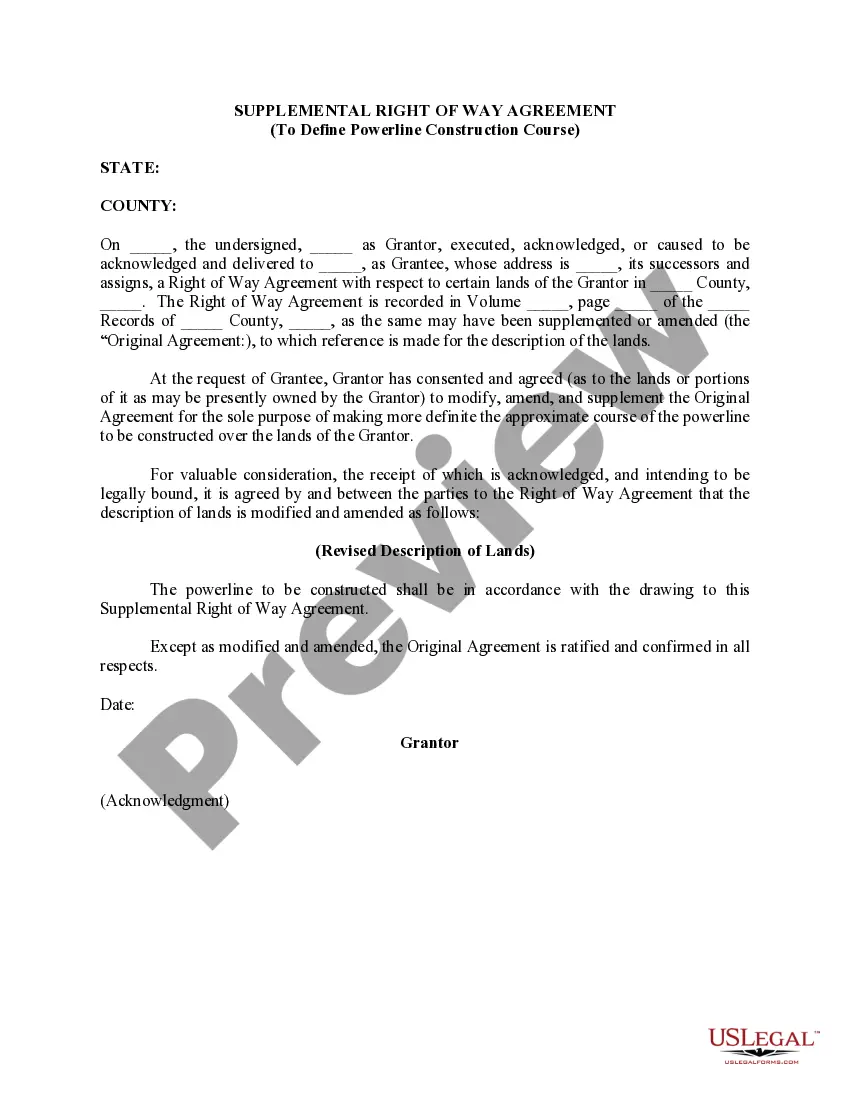
The Supplemental Right of Way Agreement is a legal document that grants additional easement rights over a property. This agreement allows the Grantee to utilize a specified area on the Grantor's land for specific purposes, such as construction or maintenance of utilities. Unlike standard easement agreements, this supplemental form explicitly outlines conditions regarding restoration of the land and limitations on construction within the easement area.
Main sections of this form
- Grantor and Grantee Information: Identification details of the parties involved in the agreement.
- Property Description: Specific description of the land affected by the easement.
- Easement Width and Area: Measurements defining the width and the extent of the additional easement being granted.
- Construction and Restoration Obligations: Terms that require the Grantee to restore the land after construction and prohibit obstructions without consent.
- Indemnity Clause: Requirements for the Grantee to indemnify the Grantor for claims arising from construction activities.
- Termination Conditions: Conditions regarding the termination of the easement and removal of improvements.
When to use this document
This form is used when a property owner (Grantor) wants to grant additional easement rights to another party (Grantee) for the purpose of utility installation, road expansion, or similar projects. It is particularly relevant when existing easements need additional space or when the terms of the initial easement require a formal supplemental agreement.
Who this form is for
- Property owners wishing to grant additional easement rights.
- Utility companies or contractors requiring access to land for maintenance or installation purposes.
- Real estate developers working on projects that involve existing properties with easements.
- Legal professionals assisting clients with property rights and easement agreements.
Completing this form step by step
- Identify the parties: Fill in the names of the Grantor and Grantee.
- Specify the property: Provide a detailed description of the land that is subject to the easement.
- Enter easement dimensions: Indicate the width and approximate area of the additional right-of-way.
- Complete the date and record information: Enter the date of the original easement and the relevant recording details.
- Sign and date the agreement: Ensure both parties sign and date the form to validate the agreement.
Notarization guidance
To make this form legally binding, it must be notarized. Our online notarization service, powered by Notarize, lets you verify and sign documents remotely through an encrypted video session.
Get your form ready online
Our built-in tools help you complete, sign, share, and store your documents in one place.
Make edits, fill in missing information, and update formatting in US Legal Forms—just like you would in MS Word.
Download a copy, print it, send it by email, or mail it via USPS—whatever works best for your next step.
Sign and collect signatures with our SignNow integration. Send to multiple recipients, set reminders, and more. Go Premium to unlock E-Sign.
If this form requires notarization, complete it online through a secure video call—no need to meet a notary in person or wait for an appointment.
We protect your documents and personal data by following strict security and privacy standards.

Make edits, fill in missing information, and update formatting in US Legal Forms—just like you would in MS Word.

Download a copy, print it, send it by email, or mail it via USPS—whatever works best for your next step.

Sign and collect signatures with our SignNow integration. Send to multiple recipients, set reminders, and more. Go Premium to unlock E-Sign.

If this form requires notarization, complete it online through a secure video call—no need to meet a notary in person or wait for an appointment.

We protect your documents and personal data by following strict security and privacy standards.
Mistakes to watch out for
- Failing to provide a complete property description.
- Not including specific measurements for the easement width and area.
- Overlooking required signatures or dates.
- Neglecting to check state laws for unique requirements related to easements.
Advantages of online completion
- Convenience of downloading and printing the form at your own pace.
- Editability allows for easy customization of terms to fit specific needs.
- Access to forms drafted by licensed attorneys ensures reliability.
Legal use & context
- This agreement serves to legally define and protect the rights of both parties regarding the use of the easement.
- It ensures that any construction or improvements by the grantee are done with the grantor's knowledge and consent.
- This document can help prevent disputes regarding land use and property rights.
Quick recap
- The Supplemental Right of Way Agreement allows for additional access and usage of land.
- Clear definitions and conditions help prevent legal disputes.
- Proper completion and potential notarization enhance the document's validity.
Looking for another form?
Form popularity
FAQ
There must be a dominant and a servient tenement; The easement must accommodate the dominant tenement, that is, be connected with its enjoyment and for its benefit; The dominant and servient owners must be different persons; The right claimed must be capable of forming the subject-matter of a grant.
A property easement is a legal situation in which the title to a specific piece land remains with the landowner, but another person or organization is given the right to use that land for a distinct purpose.
An easement is a limited right to use another person's land for a stated purpose. Examples of easements include the use of private roads and paths, or the use of a landowner's property to lay railroad tracks or electrical wires.
A property easement is a legal situation in which the title to a specific piece land remains with the landowner, but another person or organization is given the right to use that land for a distinct purpose.
Benefits the owner of adjacent land. The easement is thus appurtenant to the holder's land. The benefited land is called the dominant tenementThe land that benefits from an easement., and the burdened landthat is, the land subject to the easementis called the servient tenement.
An easement is the grant of a nonpossessory property interest that grants the easement holder permission to use another person's land.An affirmative easement gives the easement holder the right to do something on the grantor of the easement's land, such as travel on a road through the grantor's land.
When you're buying a house, you might find out that the property has an easement on it. Essentially this means that someone other than you could have access to the land. This isn't necessarily a bad thing. For example, utility companies typically hold easements in case they need to access pipes or cables.