Content License Agreement Between Author and Web Site Owner
Understanding this form
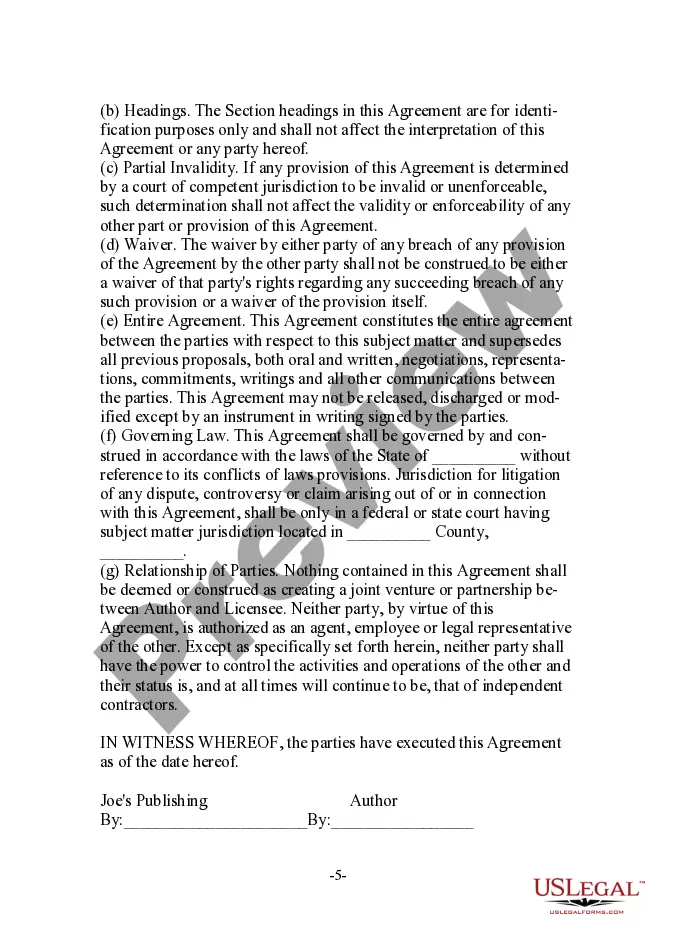
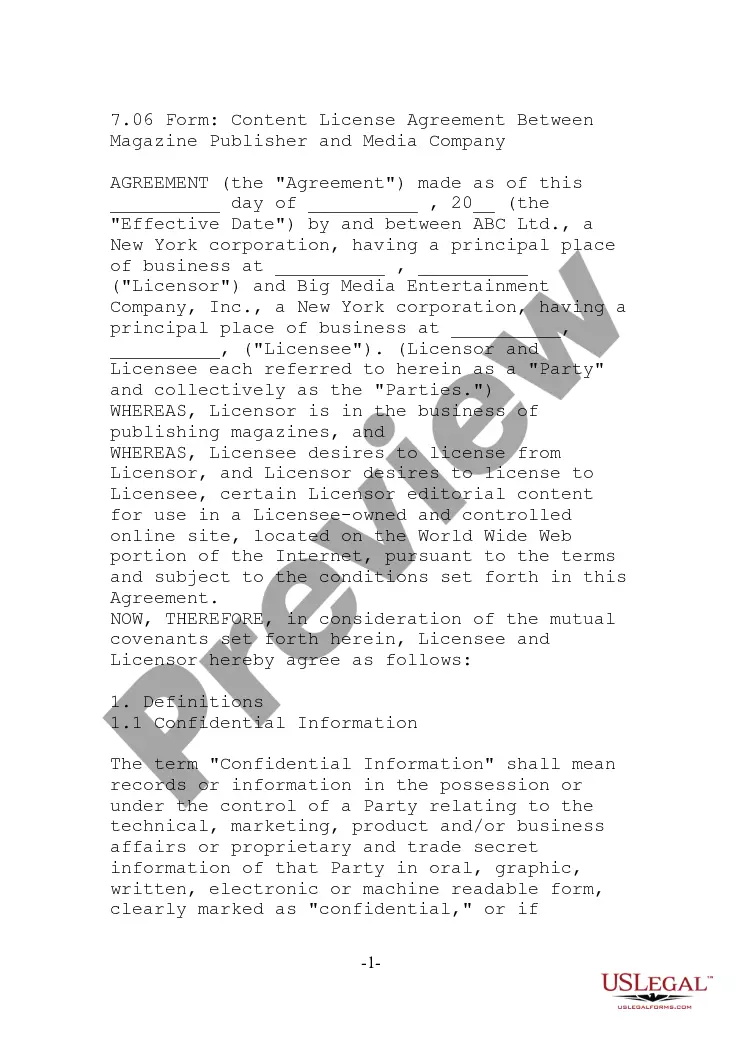
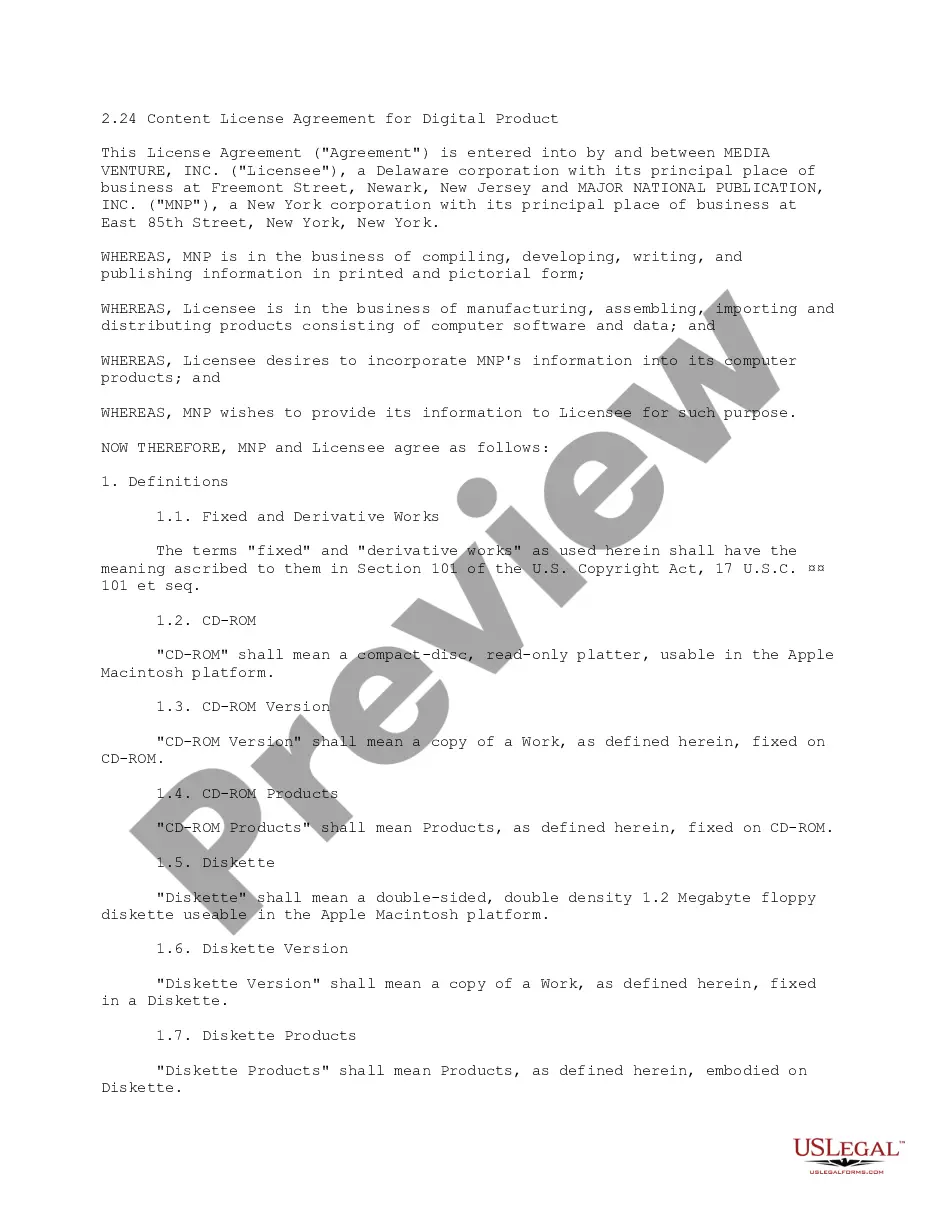
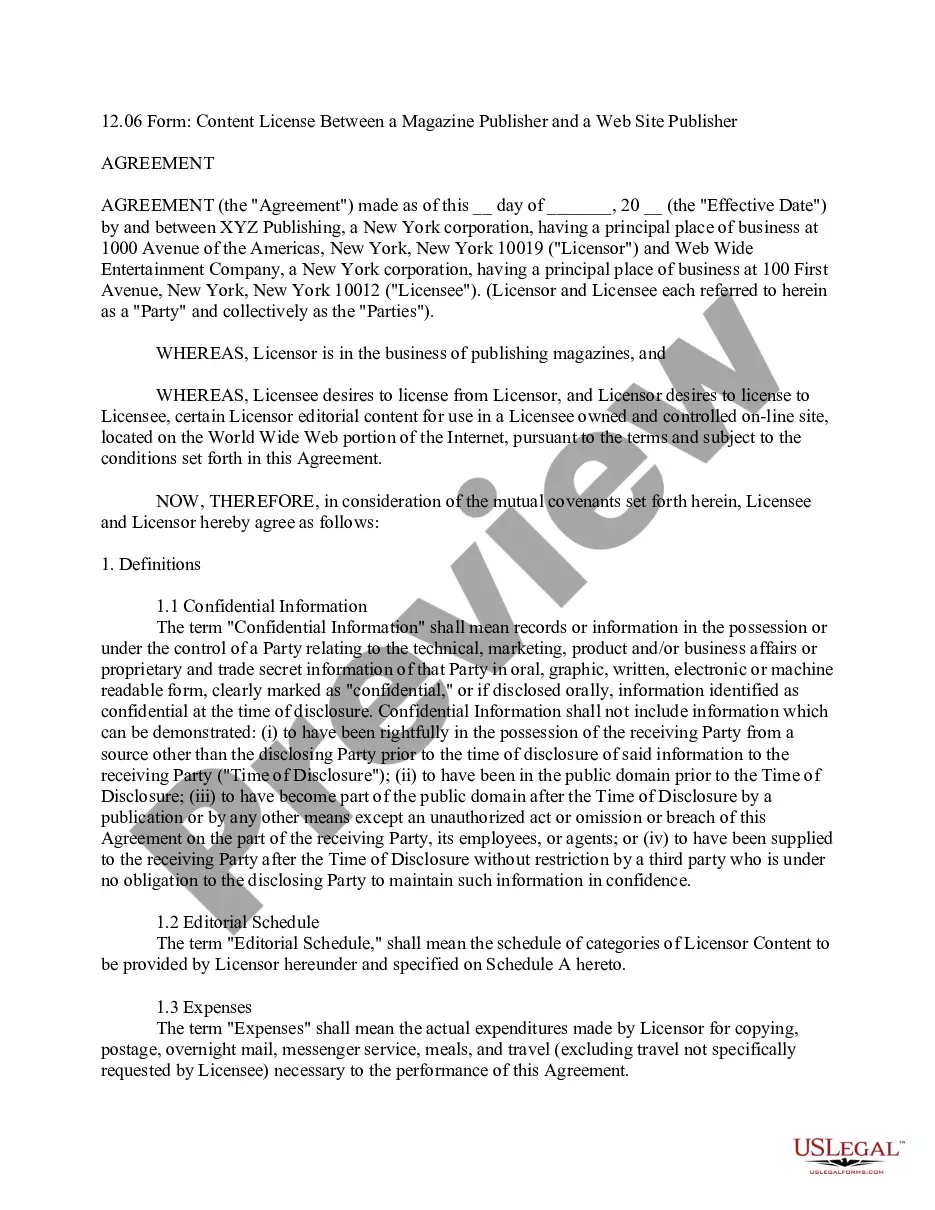
This Content License Agreement Between Author and Web Site Owner is a legal contract that establishes the terms under which an author grants a license to a website owner to use their original works. This form is essential for protecting the rights of both parties involved and ensures clarity on how the works can be used, modified, and displayed. Unlike simple licensing agreements, this contract includes specific provisions related to promotion, attribution, and revenue sharing, making it comprehensive for both individual creators and businesses.
Form components explained
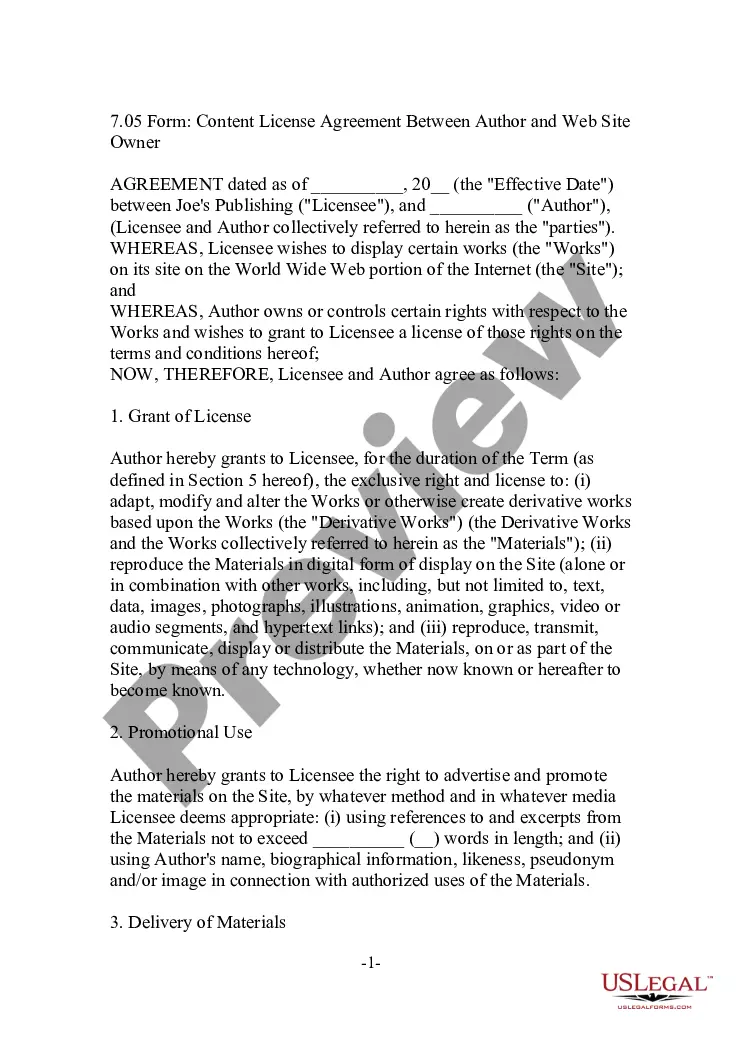
- Grant of License: Author allows the Licensee to use, reproduce, and alter their works.
- Promotional Use: Outlines how the Licensee can advertise and promote the works.
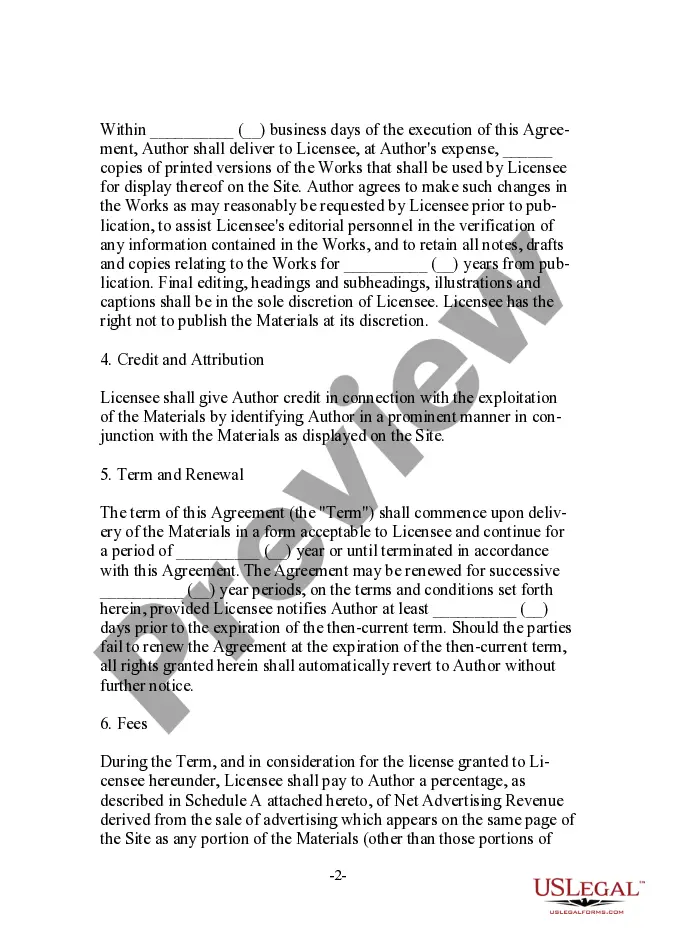
- Delivery of Materials: Specifies how and when the works must be provided to the Licensee.
- Credit and Attribution: Details the requirement for acknowledging the Author's contributions.
- Term and Renewal: Establishes the duration of the agreement and renewal options.
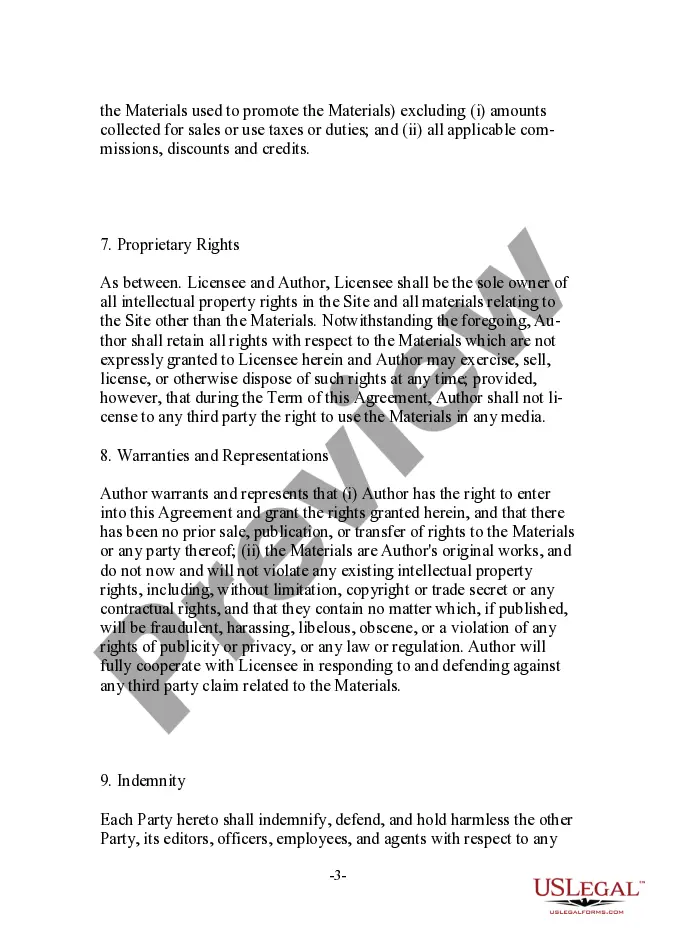
- Fees: Defines the payment structure based on advertising revenue generated.
When to use this document
This form should be used when an author wants to grant a web site owner the rights to display and promote their works on a digital platform. It is particularly useful in scenarios involving content creators licensing articles, artwork, or other media to websites, ensuring proper use and protection of intellectual property while establishing terms for revenue sharing and attribution.
Who can use this document
- Authors looking to license their original works for online use.
- Website owners who want to feature third-party content legally and ethically.
- Independent contractors in the digital media or publishing industry.
- Businesses seeking to use creative content from authors while ensuring compliance with copyright laws.
Steps to complete this form
- Identify the parties involved by entering the names and addresses of the Licensee and Author.
- Fill in the effective date and duration of the agreement.
- Specify the works being licensed and any details related to modifications or adaptations.
- Determine the financial arrangement and specify the percentage of net advertising revenue to be paid to the Author.
- Ensure that both parties sign and date the agreement to make it legally binding.
Does this form need to be notarized?
This form does not typically require notarization to be legally valid. However, some jurisdictions or document types may still require it. US Legal Forms provides secure online notarization powered by Notarize, available 24/7 for added convenience.
Get your form ready online
Our built-in tools help you complete, sign, share, and store your documents in one place.
Make edits, fill in missing information, and update formatting in US Legal Forms—just like you would in MS Word.
Download a copy, print it, send it by email, or mail it via USPS—whatever works best for your next step.
Sign and collect signatures with our SignNow integration. Send to multiple recipients, set reminders, and more. Go Premium to unlock E-Sign.
If this form requires notarization, complete it online through a secure video call—no need to meet a notary in person or wait for an appointment.
We protect your documents and personal data by following strict security and privacy standards.

Make edits, fill in missing information, and update formatting in US Legal Forms—just like you would in MS Word.

Download a copy, print it, send it by email, or mail it via USPS—whatever works best for your next step.

Sign and collect signatures with our SignNow integration. Send to multiple recipients, set reminders, and more. Go Premium to unlock E-Sign.

If this form requires notarization, complete it online through a secure video call—no need to meet a notary in person or wait for an appointment.

We protect your documents and personal data by following strict security and privacy standards.
Mistakes to watch out for
- Failing to define the scope of rights granted to the Licensee, which can lead to misunderstandings later.
- Not specifying how attribution should be displayed, which may affect the Author's reputation.
- Neglecting to outline the delivery timeline for the materials, causing delays in publication.
- Overlooking the term length and renewal process, which can lead to unexpected expirations of the agreement.
Benefits of using this form online
- Convenient access to a comprehensive contract template that addresses key legal needs.
- Editability allows authors and web site owners to customize terms in real-time, ensuring that specific needs are met.
- Reliability of having a professionally drafted agreement that complies with legal standards.
- Easy download and storage capabilities make it simple to keep records for future reference.
Legal use & context
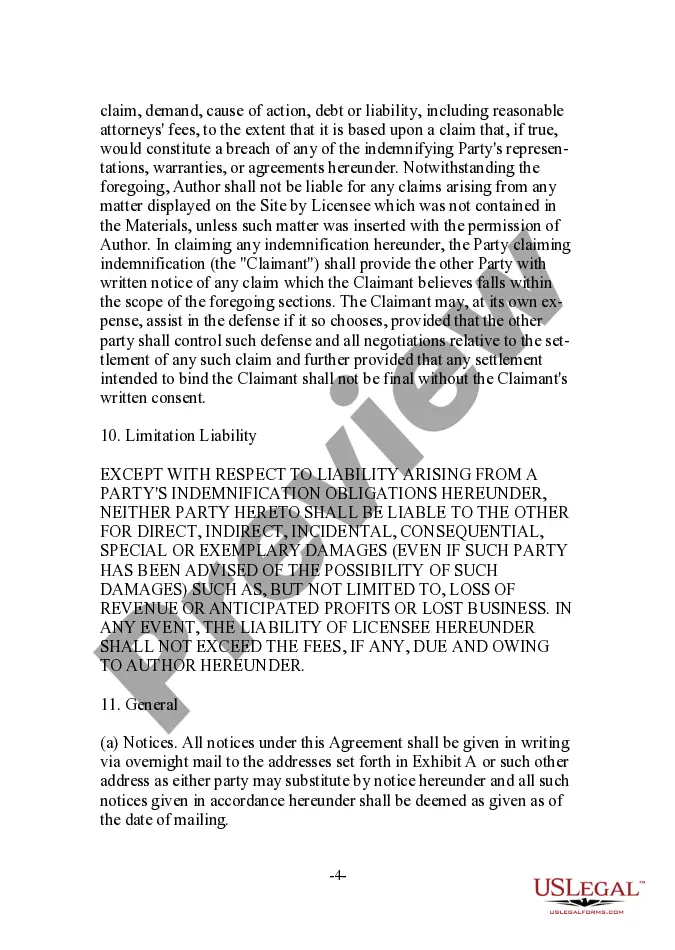
- This agreement establishes legally enforceable terms between the author and the licensee.
- A well-drafted contract can prevent disputes over copyright ownership and usage rights.
- Understanding the implications of the agreement can aid both parties in legal compliance and profitability.
Looking for another form?
Form popularity
FAQ
The copyright transfer agreement should be filled out using MS Word or hand-printed and signed by all authors (coauthors and copyright holders). These agreements are contracts of adhesion. A copyright transfer agreement enters into force if a manuscript is accepted for publication in English.
A license agreement is a business contract between two parties. The licensor (the seller of the license) owns the asset being licensed and the licensee (the buyer) pays for the right to use the license. The licensee pays royalties to the owner in exchange for the right to sell the product or use the technology.
Usually, the author of the creative work is the owner of the copyright. But in the publishing industry, the owner of the copyright may be the publishing company due to an agreement between the author and the publisher. Some of the big names in book publishing are Random House, DoubleDay, and Penguin.
The 3 P's of collegiate licensing are protection, promotion, and profit.
An example of a licensing agreement is a contract between the copyright holders of software and another company, allowing the latter to use the computer software for their daily business operations.
(1) The ownership of a copyright may be transferred in whole or in part by any means of conveyance or by operation of law, and may be bequeathed by will or pass as personal property by the applicable laws of intestate succession.
Exclusive or non-exclusive. In an exclusive license, the intellectual property holder is licensing the work only to one person, for that particular use/territory. Territory. Use. Attribution. Derivative works. Confidentiality. Time frame. Termination.
An example of a licensing agreement is a contract between the copyright holders of software and another company, allowing the latter to use the computer software for their daily business operations.
Download a template for a licensing agreement. Choose your role as the licensor or licensee. Define the license(s) in the agreement. Decide whether the license is exclusive or not. Settle the matter of fees and payment schedule. Add a renewal date and rules.