Content License Agreement Between Magazine Publisher and Media Company
About this form
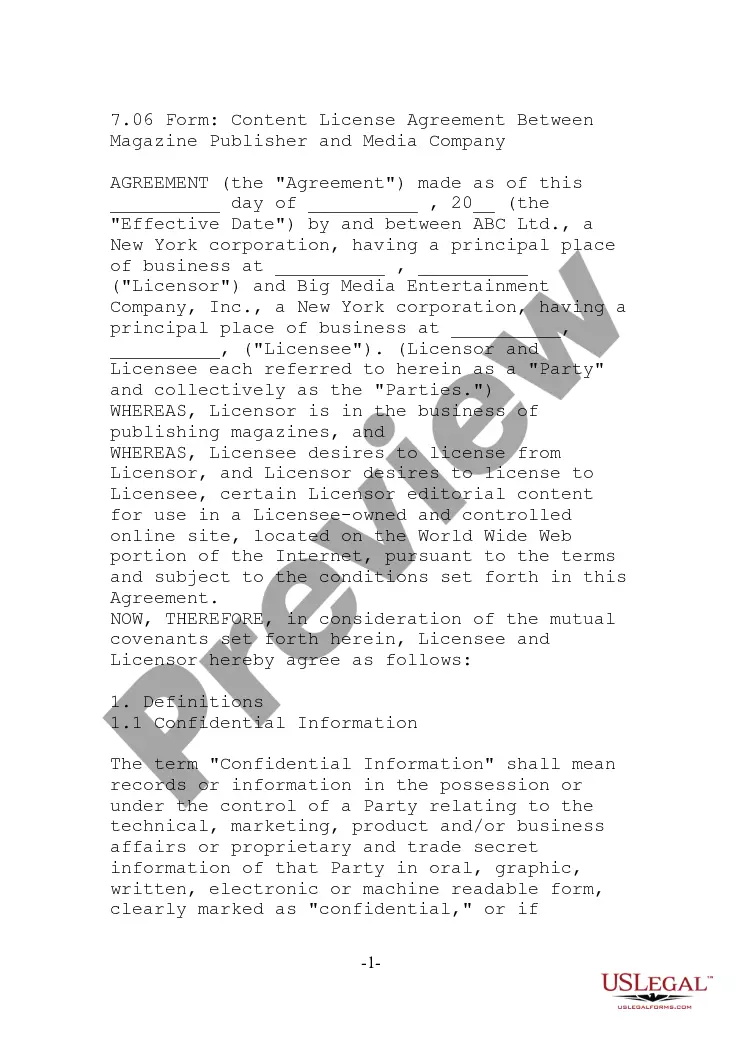
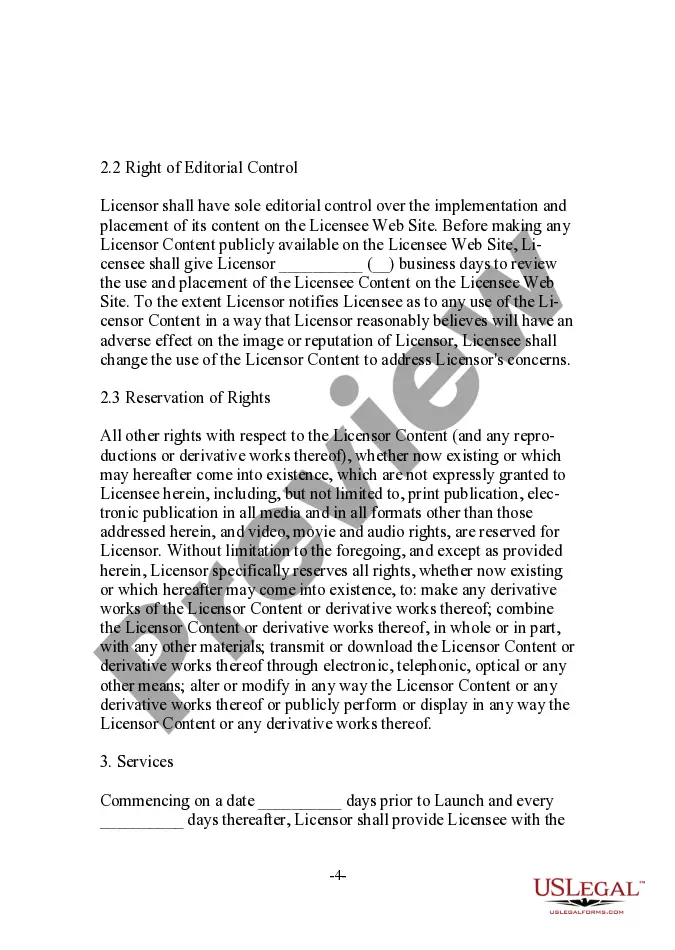
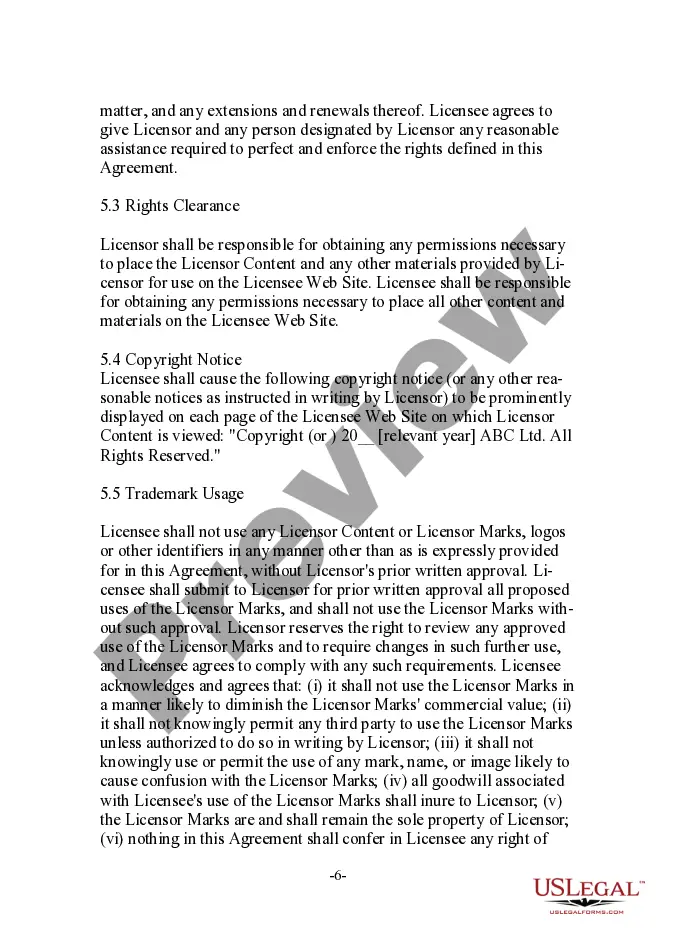
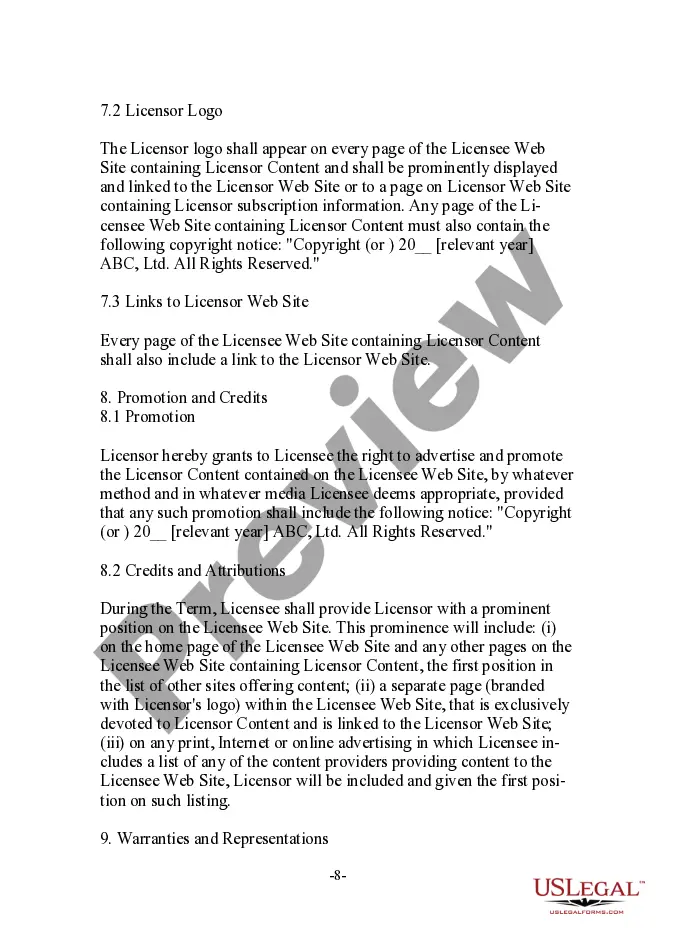
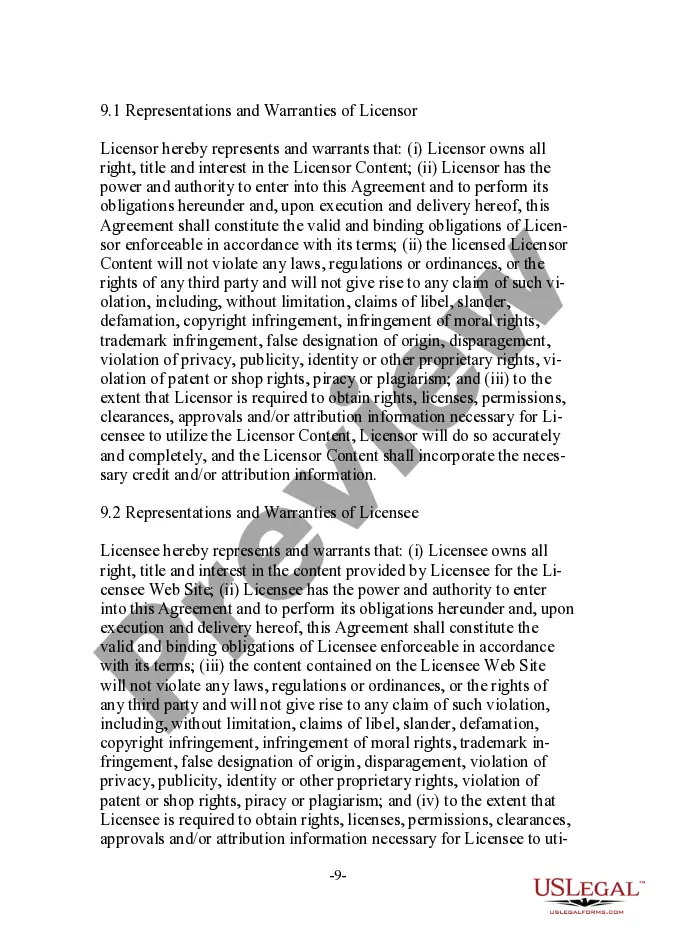
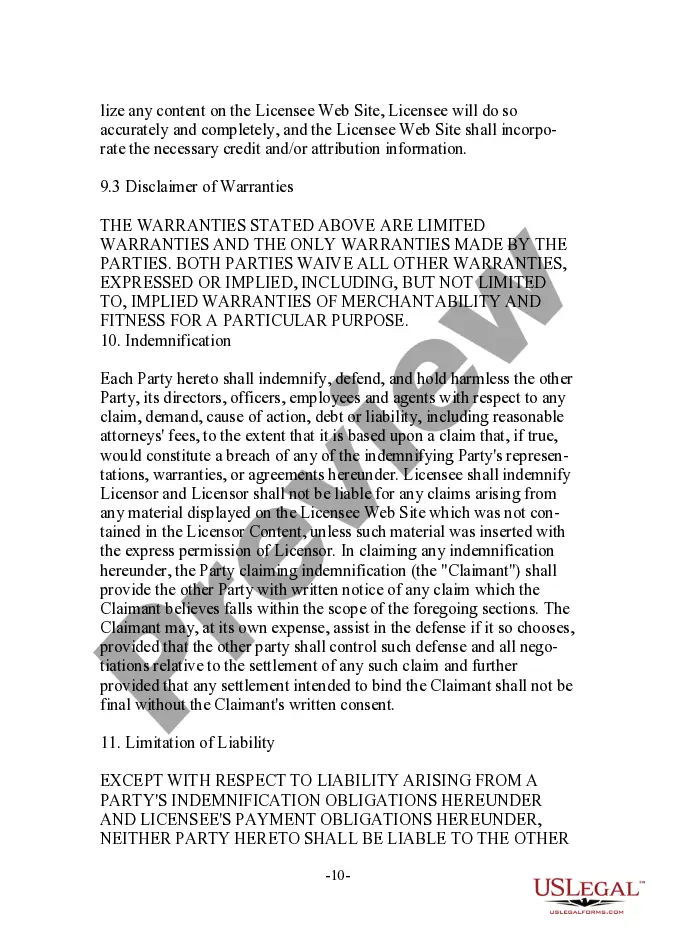
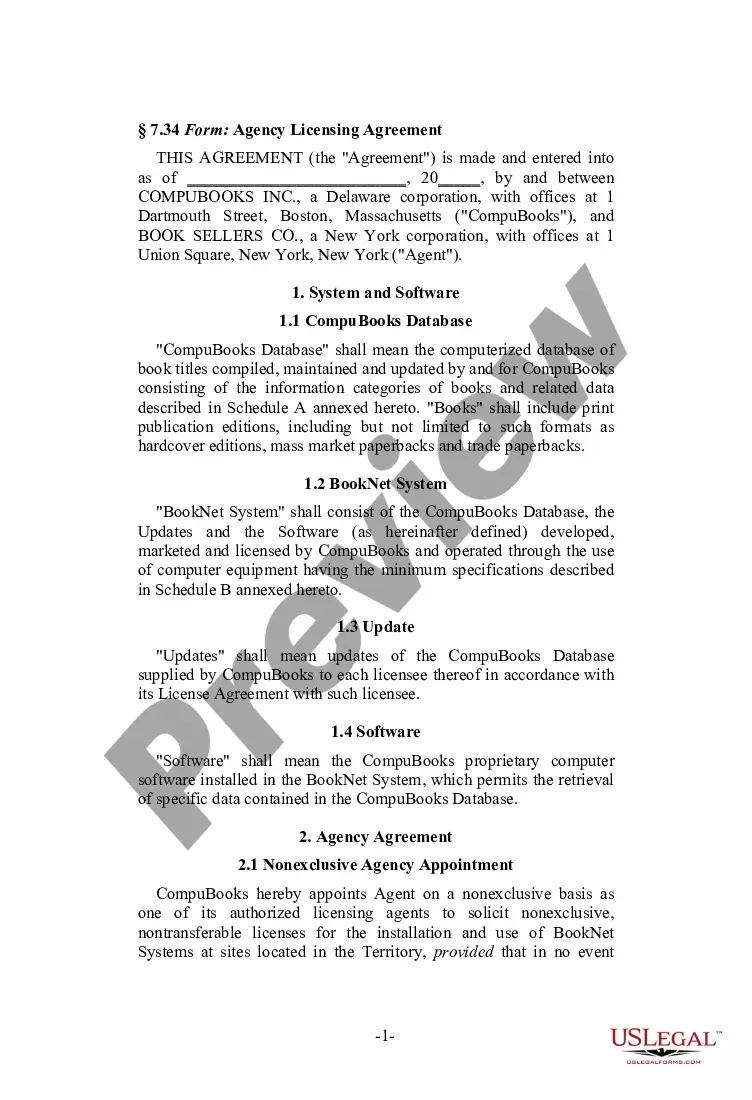
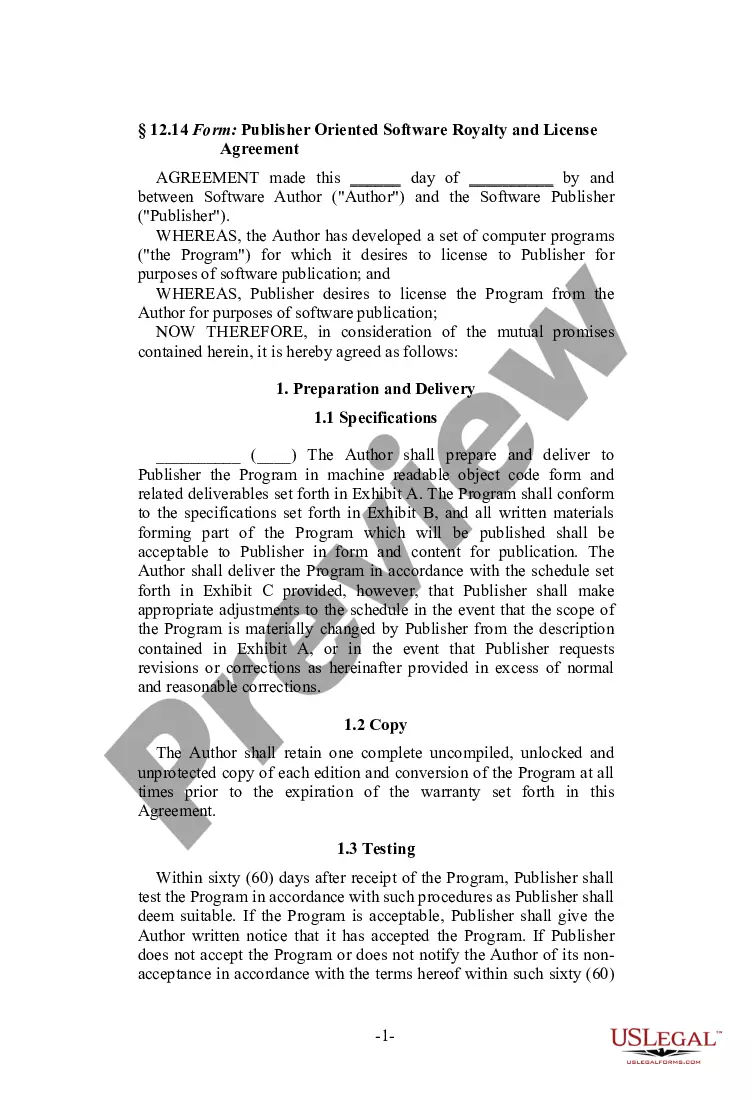
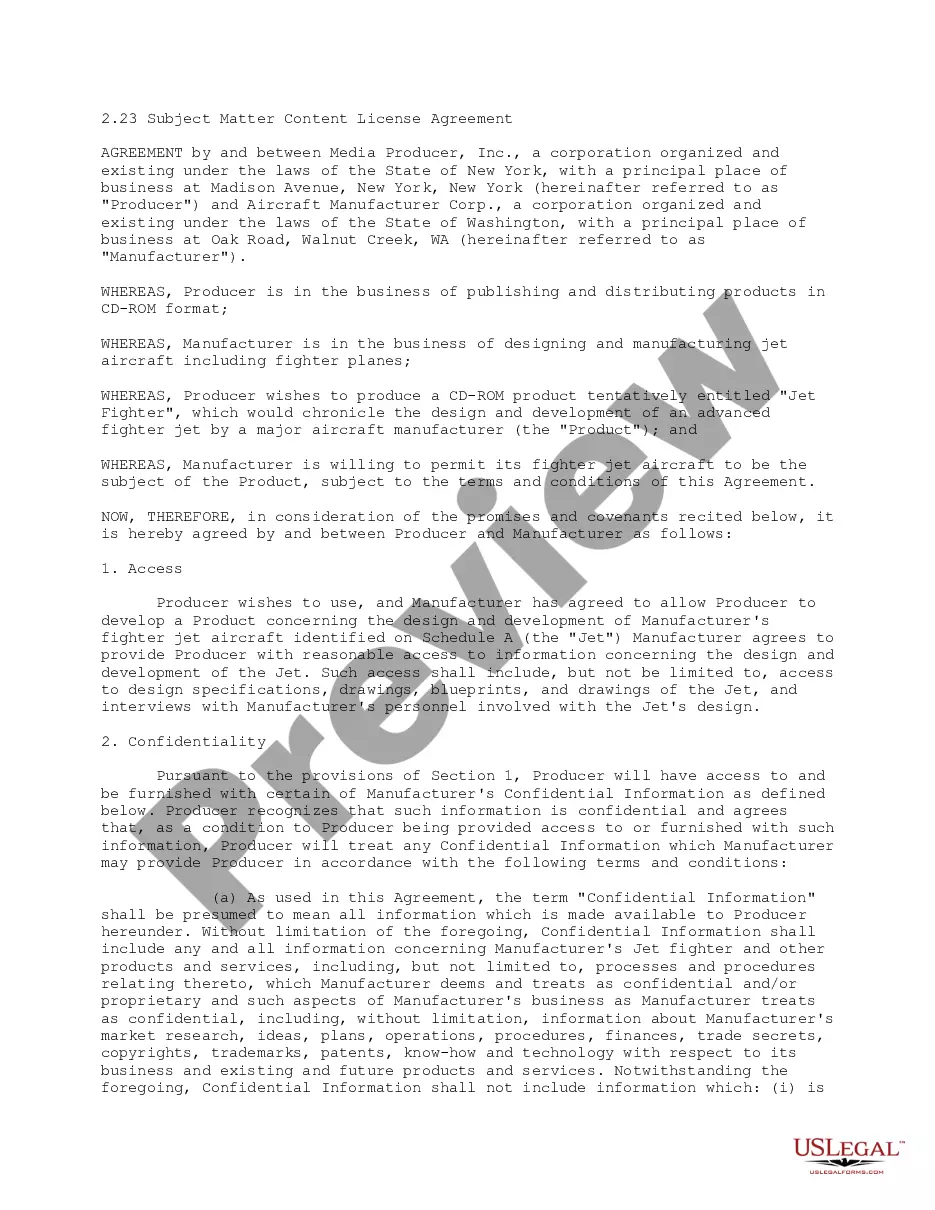
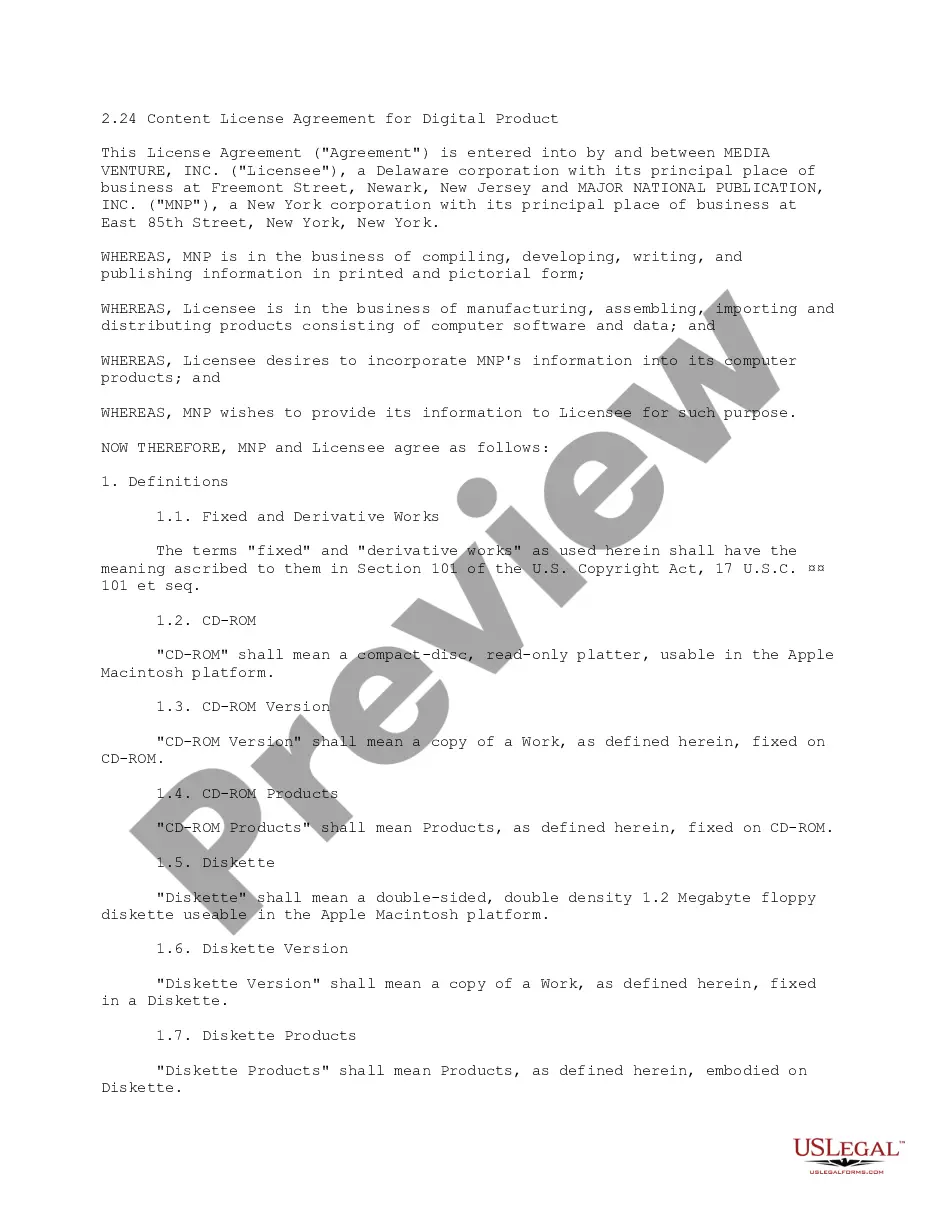
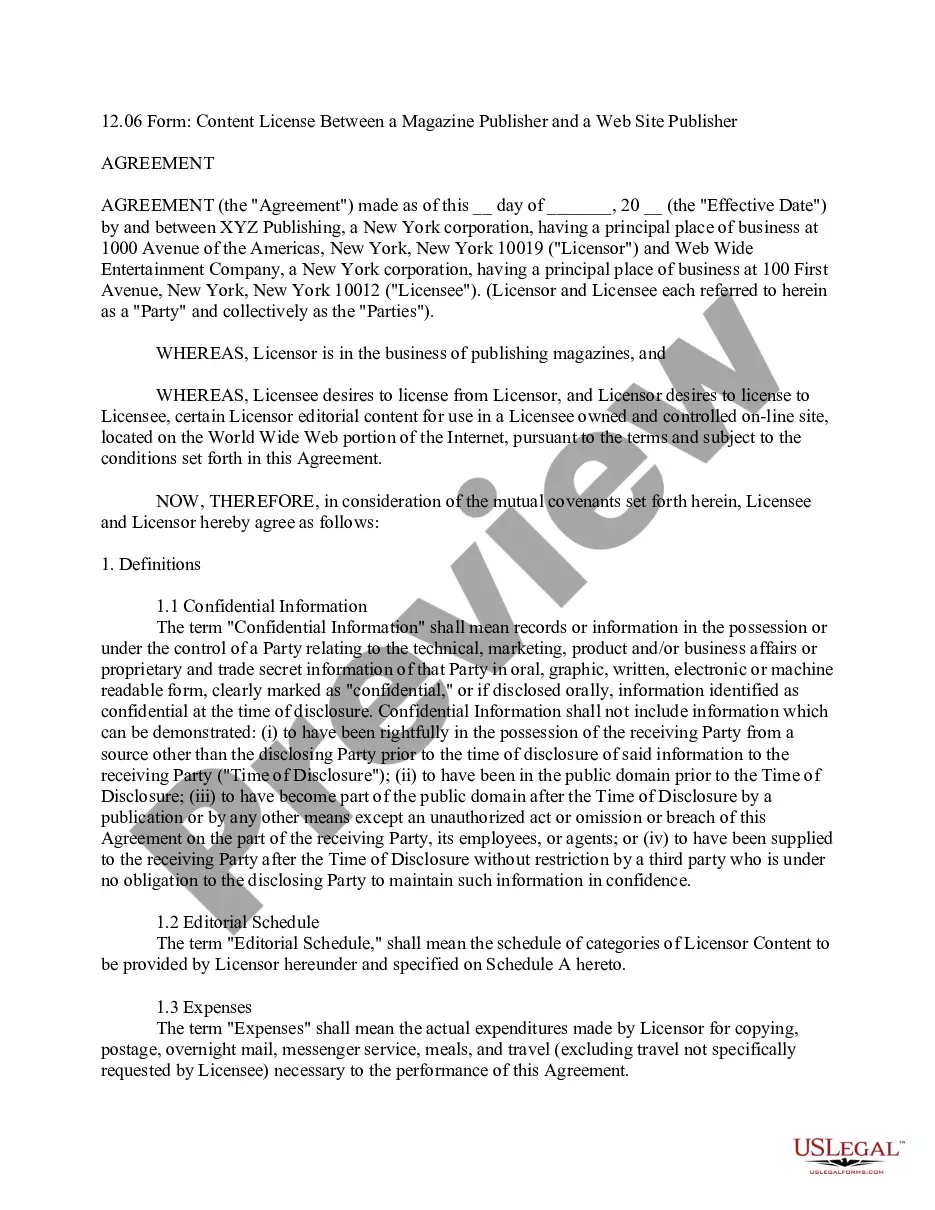
The Content License Agreement Between Magazine Publisher and Media Company is a legal document that outlines the terms under which a magazine publisher grants a media company the right to use its editorial content. This agreement is essential for ensuring that both parties understand their rights and responsibilities regarding the licensed materials. Unlike other contracts that may focus solely on distribution or advertising, this agreement specifically addresses content licensing and usage, which is crucial for media companies looking to incorporate existing editorial content into their platforms.
Key parts of this document
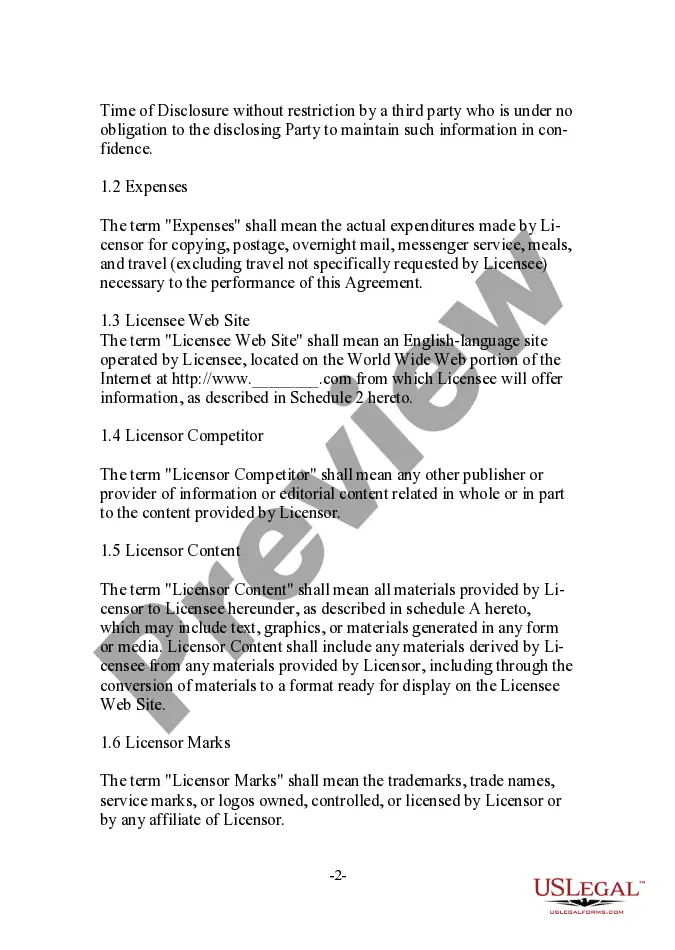
- Definitions: Clear definitions of key terms such as Licensor, Licensee, Licensor Content, and Confidential Information.
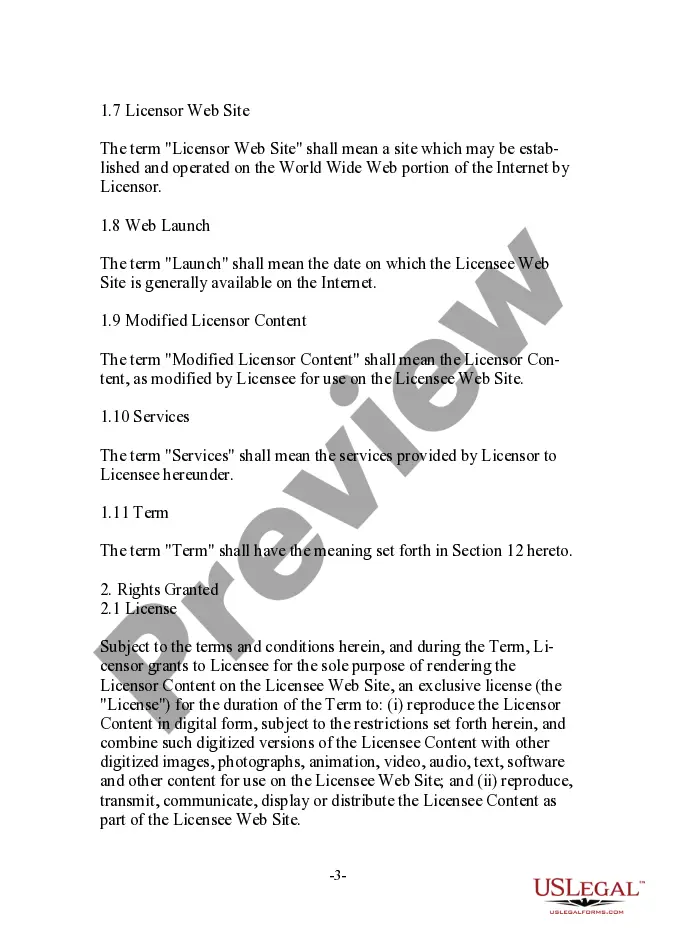
- Rights Granted: Outlines the exclusive rights the media company has in using the content.
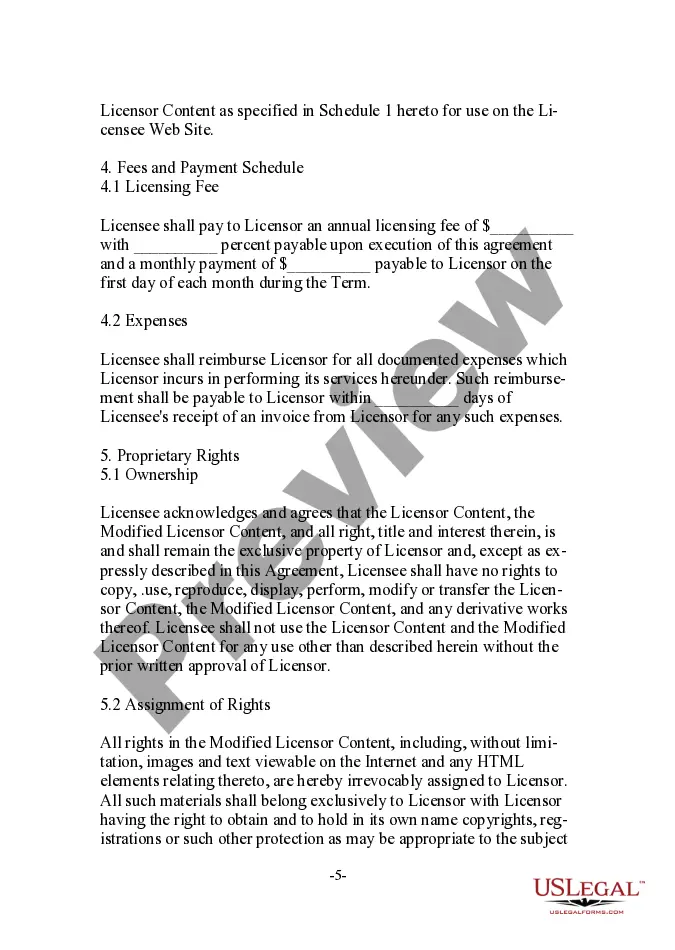
- Fees and Payment Schedule: Details the licensing fees, payment structure, and any additional expenses.
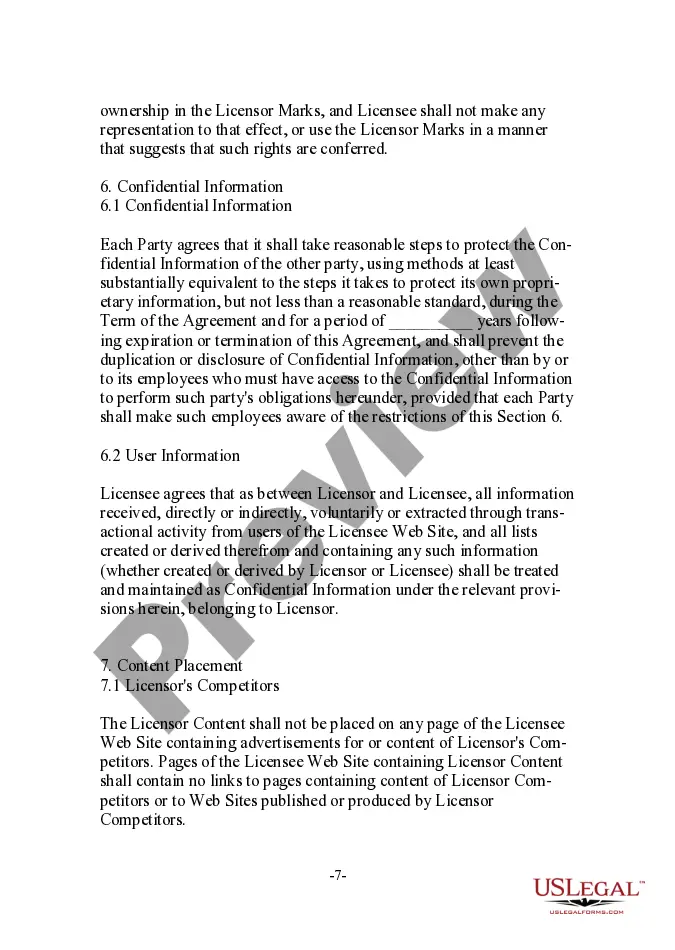
- Confidential Information: Defines what constitutes confidential information and obligations to protect it.
- Termination Clauses: Specifies how and under what conditions the agreement can be terminated.
- Indemnification: Provides details on the responsibilities of each party concerning potential legal claims.

Common use cases
This agreement is commonly used when a media company wishes to incorporate content from a magazine publisher into its digital platforms. It is essential in scenarios where the media company needs to ensure proper licensing of editorial content to avoid copyright issues. Companies should use this agreement when they want to clarify usage rights for existing materials, maintain control over content presentation, and define payment terms associated with content licensing.
Intended users of this form
- Magazine publishers looking to monetize their editorial content.
- Media companies aiming to source high-quality editorial content for their platforms.
- Businesses or individuals involved in content marketing and distribution.
- Legal professionals advising clients on content licensing matters.
Steps to complete this form
- Identify the parties involved: Fill in the names and addresses of both the Licensor (publisher) and Licensee (media company).
- Specify the Licensor Content: Clearly describe the content to be licensed in the relevant section.
- Enter the licensing fee and payment structure: Include details such as the annual fee, initial payment, and recurring charges.
- Define the duration of the agreement: Indicate the term of the license and conditions for renewal or termination.
- Review and sign: Both parties should read the agreement carefully before signing it to confirm their understanding and acceptance of the terms.
Notarization guidance
This form does not typically require notarization unless specified by local law. It is recommended to check local regulations to ensure compliance with any specific notarization requirements.
Get your form ready online
Our built-in tools help you complete, sign, share, and store your documents in one place.
Make edits, fill in missing information, and update formatting in US Legal Forms—just like you would in MS Word.
Download a copy, print it, send it by email, or mail it via USPS—whatever works best for your next step.
Sign and collect signatures with our SignNow integration. Send to multiple recipients, set reminders, and more. Go Premium to unlock E-Sign.
If this form requires notarization, complete it online through a secure video call—no need to meet a notary in person or wait for an appointment.
We protect your documents and personal data by following strict security and privacy standards.

Make edits, fill in missing information, and update formatting in US Legal Forms—just like you would in MS Word.

Download a copy, print it, send it by email, or mail it via USPS—whatever works best for your next step.

Sign and collect signatures with our SignNow integration. Send to multiple recipients, set reminders, and more. Go Premium to unlock E-Sign.

If this form requires notarization, complete it online through a secure video call—no need to meet a notary in person or wait for an appointment.

We protect your documents and personal data by following strict security and privacy standards.
Typical mistakes to avoid
- Failing to accurately define the Licensor Content leading to disputes over usage rights.
- Neglecting to specify payment amounts or schedules, which can lead to misunderstandings.
- Overlooking terms regarding confidentiality which can expose sensitive information.
- Not including a clear process for dispute resolution or termination of the agreement.
Why complete this form online
- Convenience of accessing a customizable form that meets your specific needs.
- Editability allows for quick adjustments to terms or details as necessary.
- Reliability by providing a template crafted by licensed attorneys, ensuring legal standards are met.
Legal use & context
- The agreement legally binds both parties, protecting their rights and obligations related to content use.
- Ensures that both the Licensor and Licensee are aware of limitations on content usage, reducing the risk of copyright infringement.
- It serves as a reference point for resolving any debates about permissions and content modification.
Key takeaways
- The Content License Agreement is crucial for legal clarity in using editorial materials.
- Properly completing this form helps prevent future disputes between content providers and users.
- This agreement is useful for both publishers and media companies, ensuring mutual benefit and legal compliance.
Looking for another form?
Form popularity
FAQ
2 Answers. From this APA library guide it says; If more than one publisher is given, use the first one or the one that represents the home office, if given. Cazes, S., & Verick, S.
Usually, the author of the creative work is the owner of the copyright. But in the publishing industry, the owner of the copyright may be the publishing company due to an agreement between the author and the publisher.Sometimes, even though a book is published by a major publisher, the author still owns the copyright.
From a publishing perspective, content licensing is the distribution of media assets/intellectual property to any third party, generally for a fixed term, and for a negotiated fee. The license also specifies how the assets can be used by the buyer.200b
Author, Title (First Place of publication: First Publisher; Second Place of publication: Second Publisher, Year of publication), Page number.
An example of a licensing agreement is a contract between the copyright holders of software and another company, allowing the latter to use the computer software for their daily business operations.
A book can also be published by more than one publisher at the same time, generally for different countries.
When multiple publishers are listed, include all of them. Place a semicolon between each one. Example: London: Benn; New York: Barnes, 1967.
Author assigns copyright to the publisher Assignment of copyright is generally permanent unless the agreement indicates otherwise. If the author assigns copyright to the publisher; the publisher can also, at their discretion, enter into agreements with other parties to use the work.
It's perfectly acceptable to send a query simultaneously to multiple publishers. If more than one press responds with interest, the author should study the presses and rank them. The full book proposal should be sent only to one press. If it passes on the project, then the proposal may be sent to another.