Montana Order Setting Hearing on Defendant's Motion for Temporary Restraining Order, Request for Preliminary Injunction and Other Relief
Description
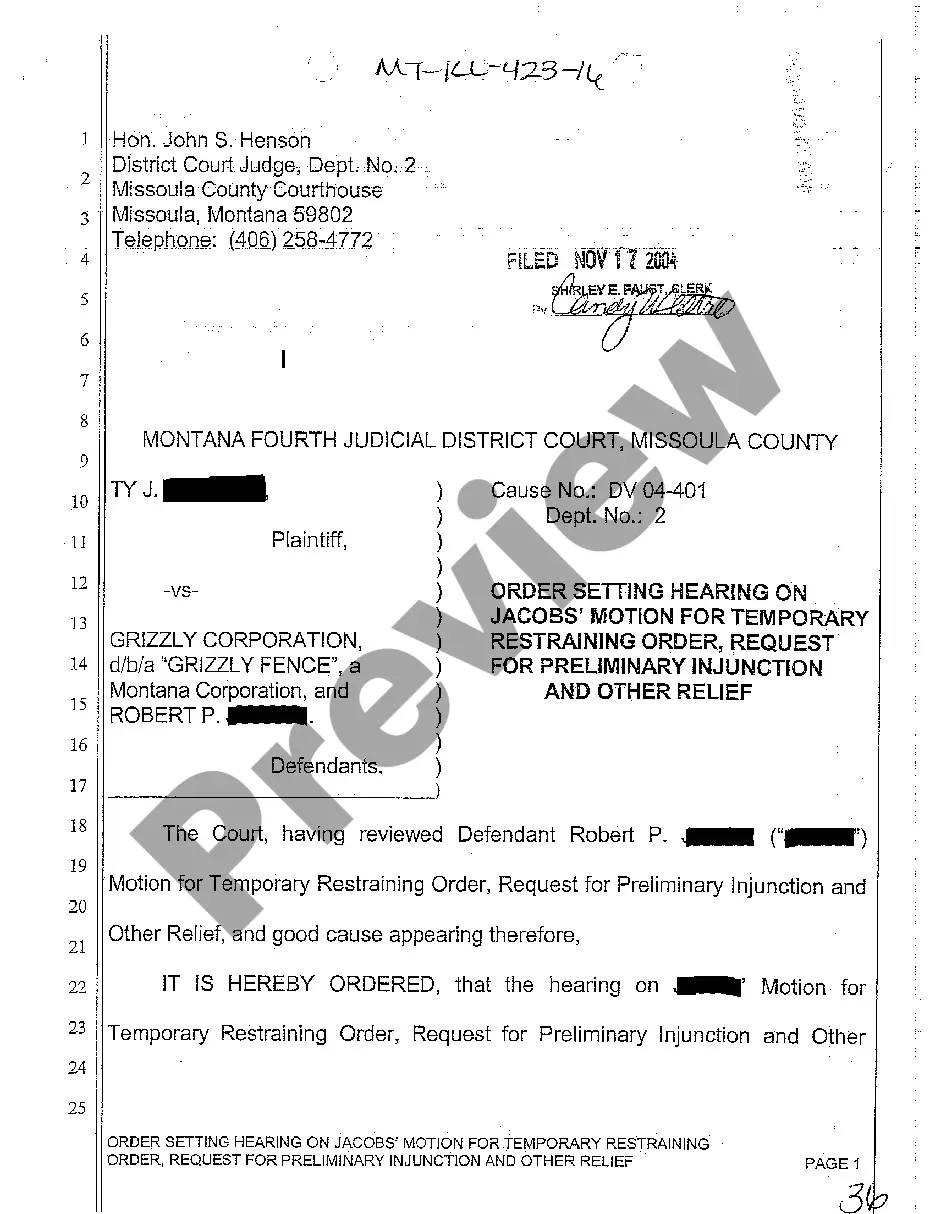
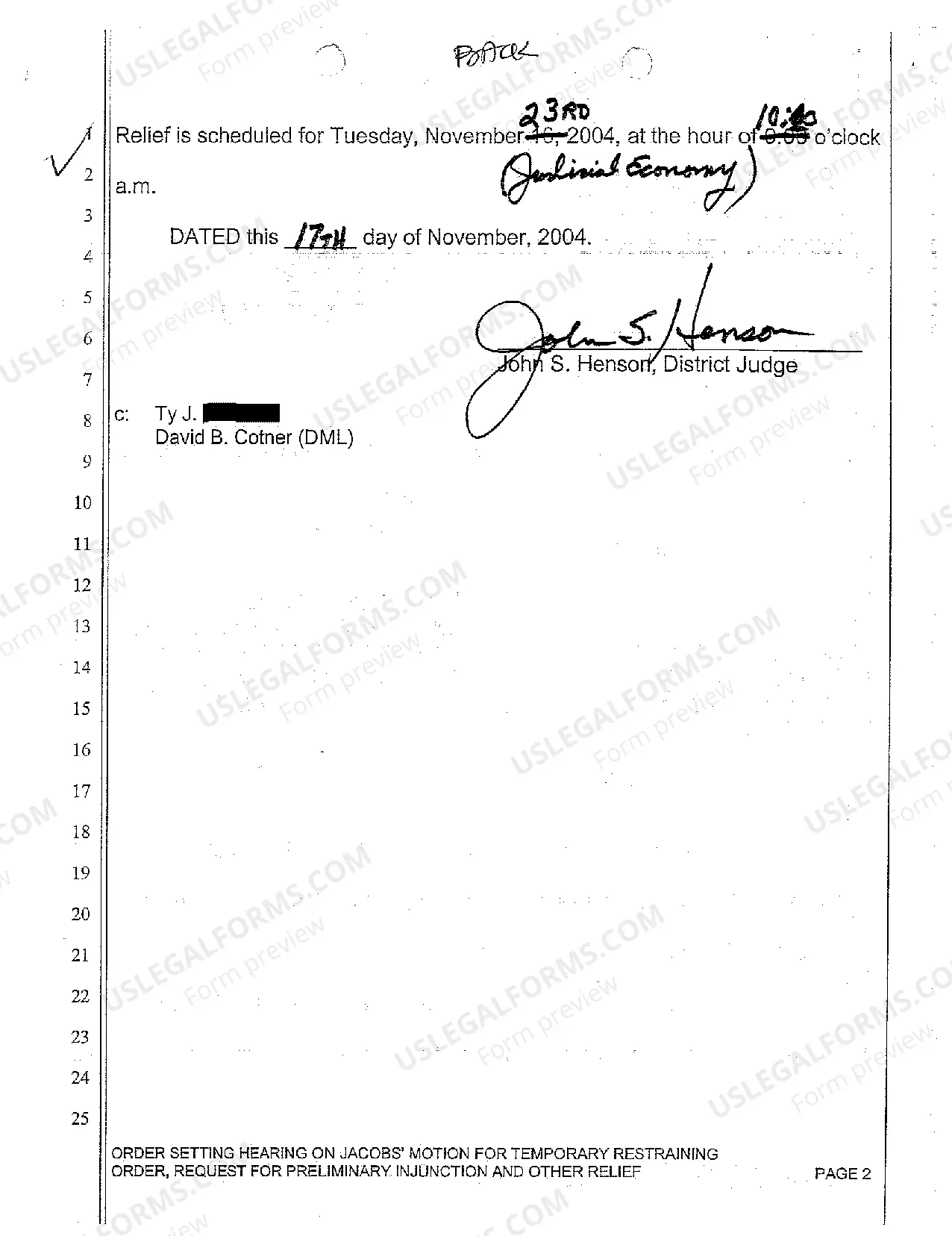
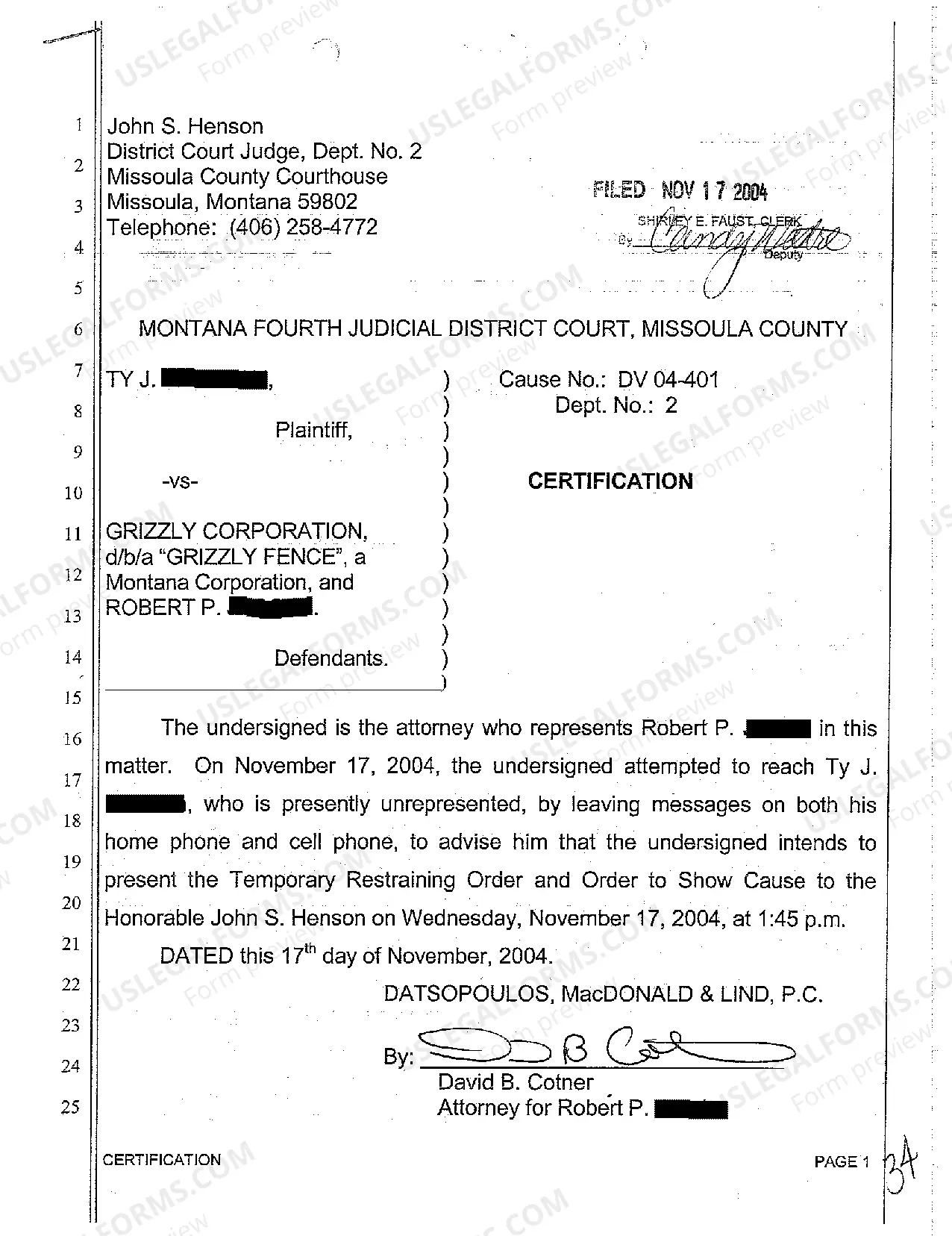
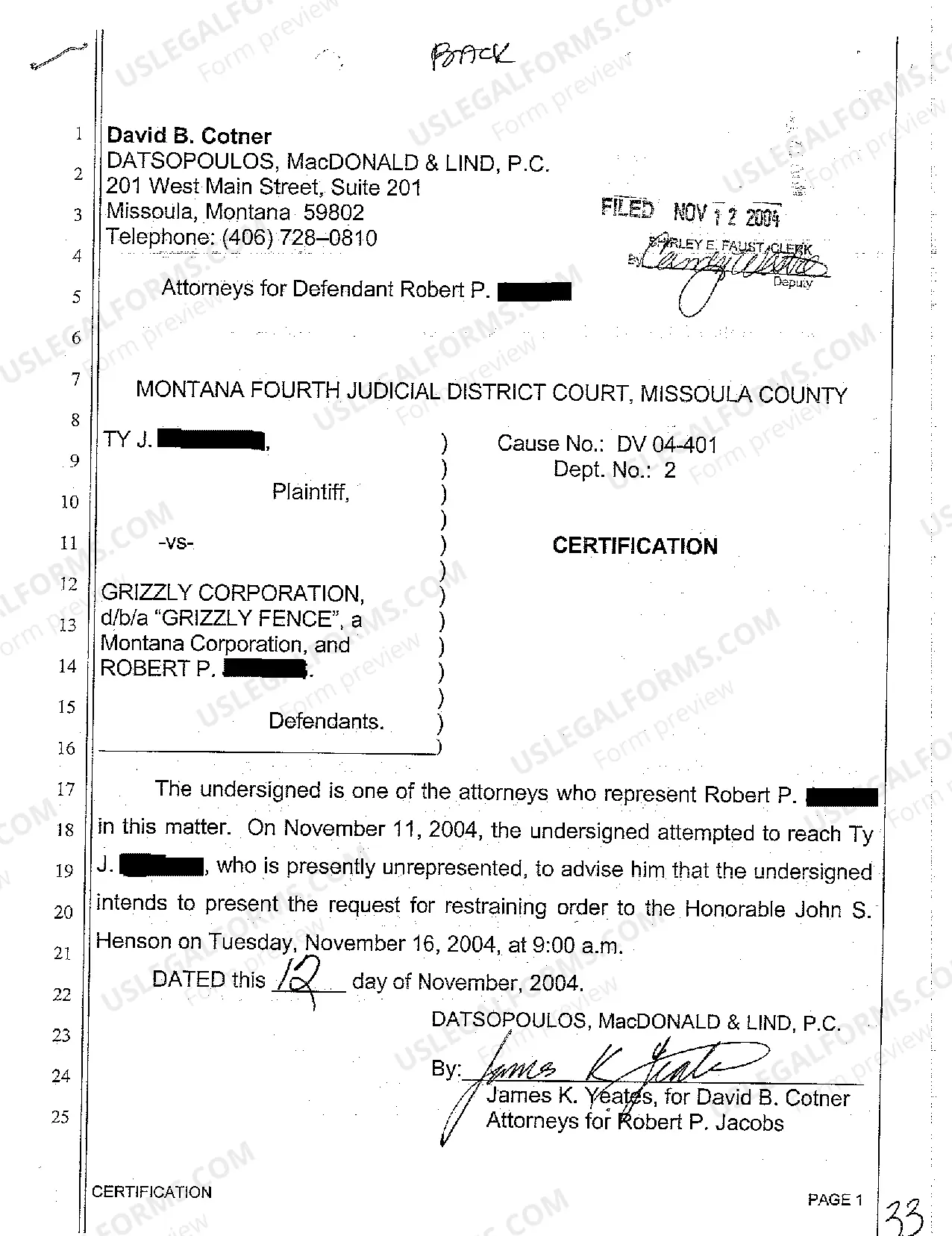
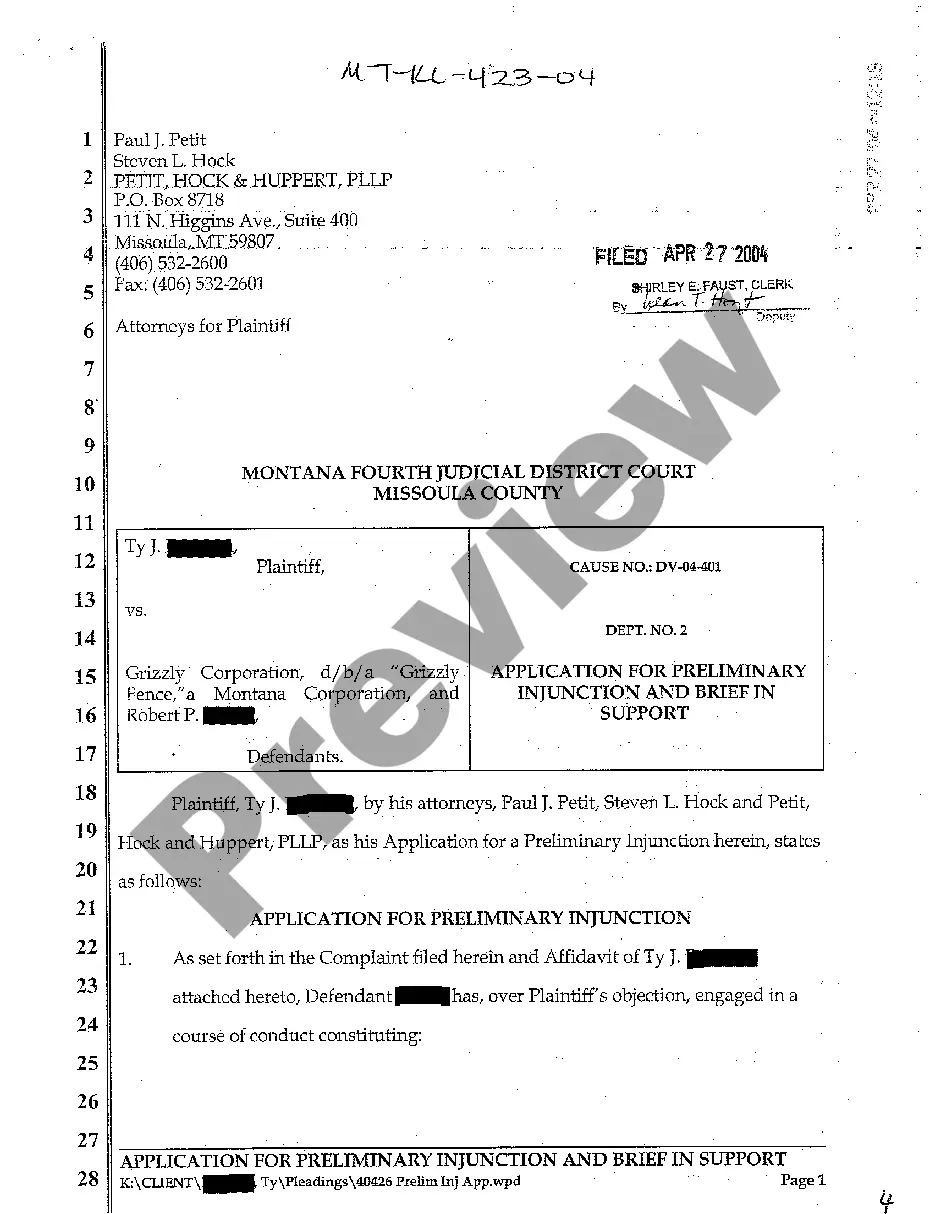
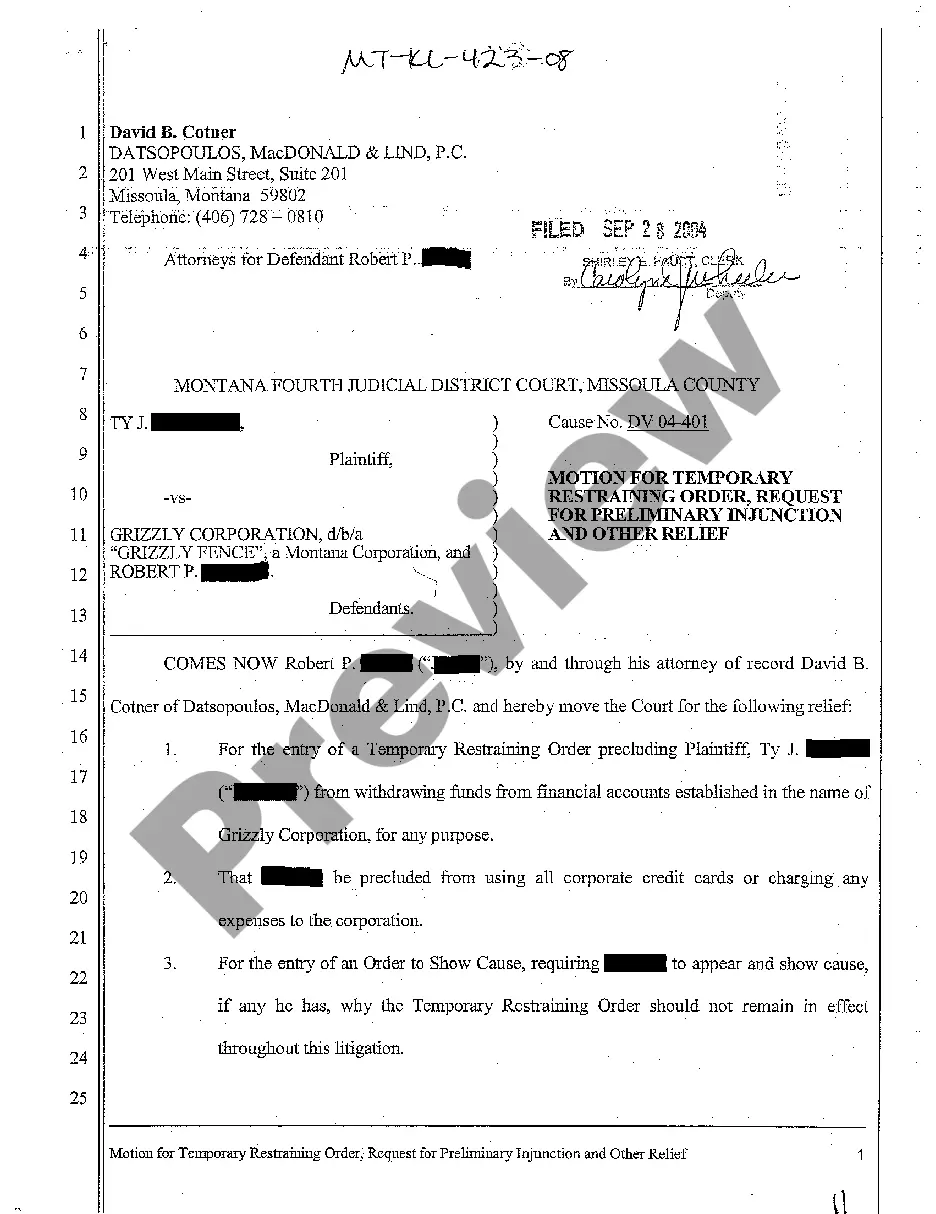
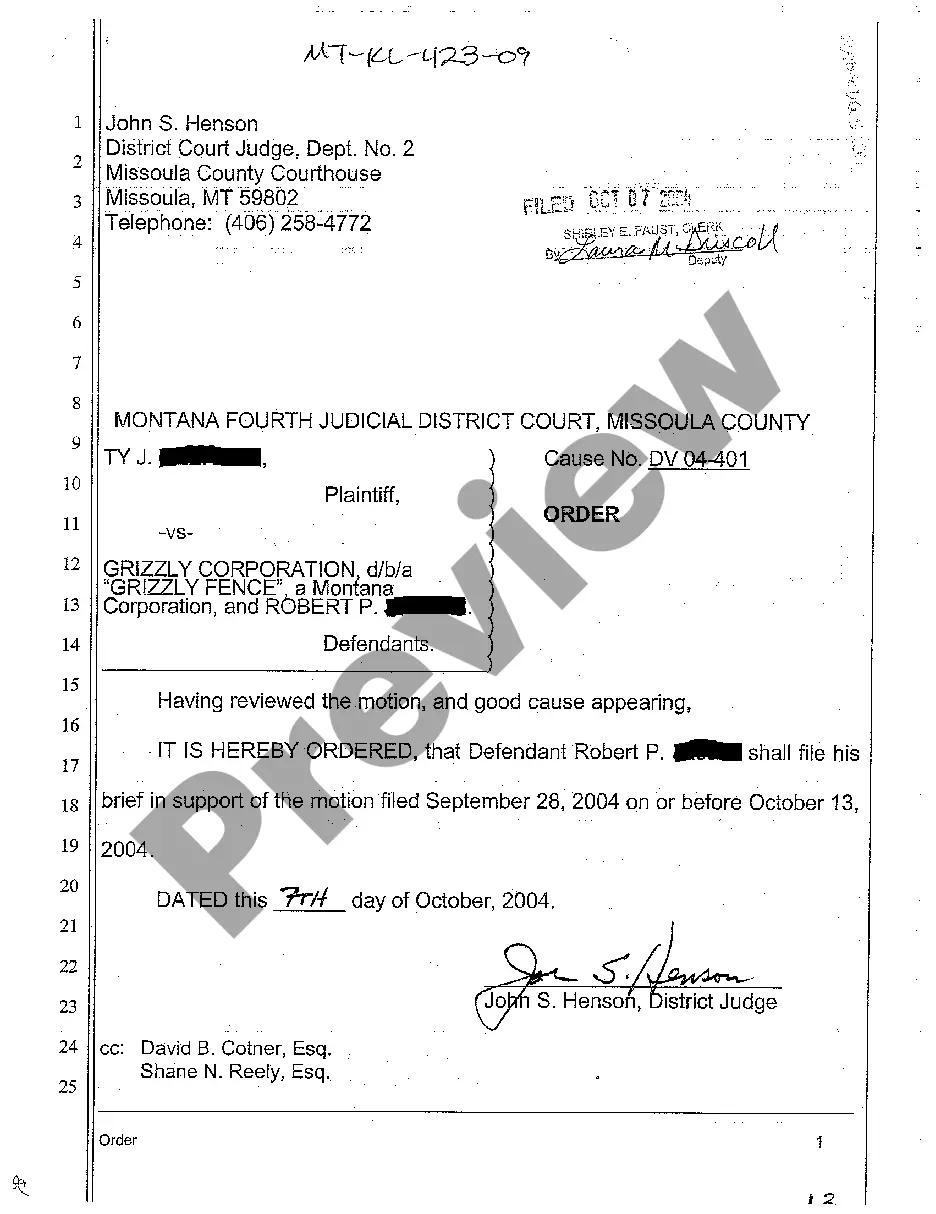
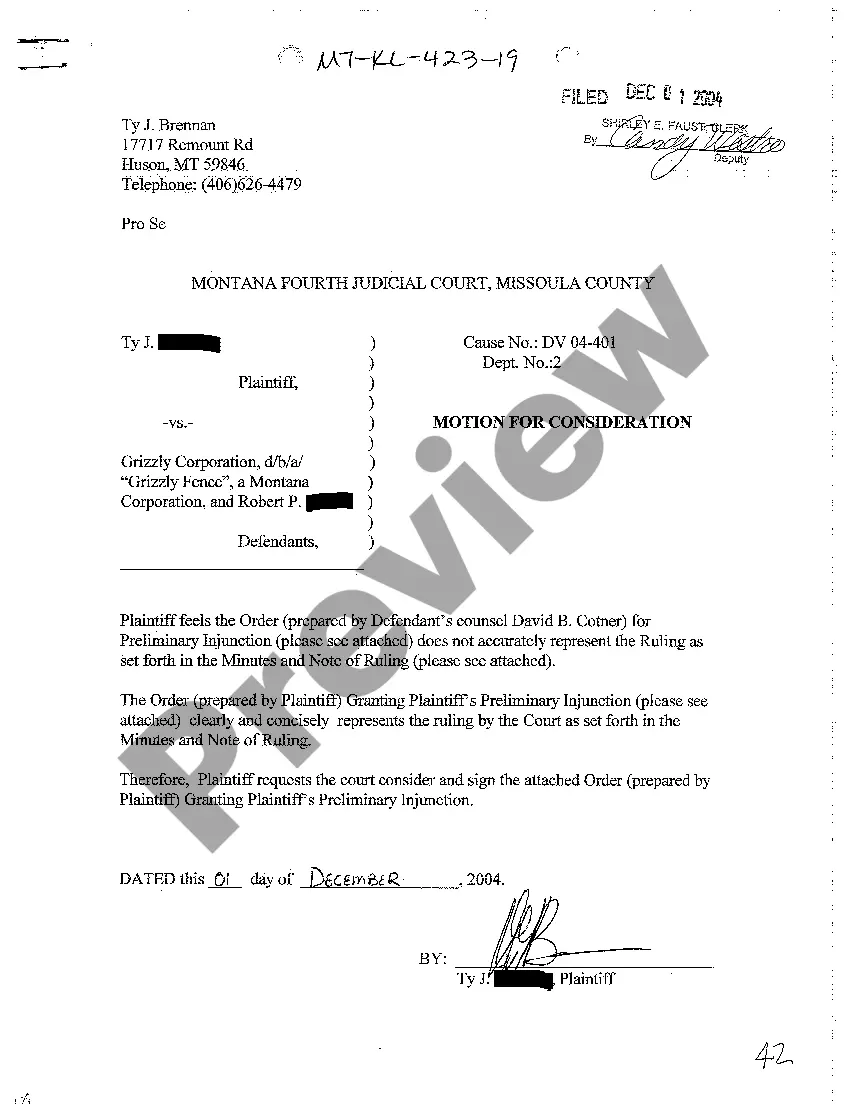
How to fill out Montana Order Setting Hearing On Defendant's Motion For Temporary Restraining Order, Request For Preliminary Injunction And Other Relief?
Acquire a printable Montana Order Setting Hearing on Defendant's Motion for Temporary Restraining Order, Request for Preliminary Injunction and Other Relief in just a few clicks from the most comprehensive collection of legal e-documents.
Locate, download, and print professionally prepared and certified samples on the US Legal Forms website. US Legal Forms has been the leading provider of affordable legal and tax templates for US citizens and residents online since 1997.
After downloading your Montana Order Setting Hearing on Defendant's Motion for Temporary Restraining Order, Request for Preliminary Injunction and Other Relief, you can fill it out using any online editor or print it and complete it manually. Utilize US Legal Forms to access 85,000 professionally drafted, state-specific documents.
- Clients who already have a subscription need to sign in to their US Legal Forms account, download the Montana Order Setting Hearing on Defendant's Motion for Temporary Restraining Order, Request for Preliminary Injunction and Other Relief and find it saved in the My documents section.
- Clients without a subscription must follow the steps below.
- Ensure your template complies with your state’s requirements.
- If possible, review the form’s description for additional information.
- If accessible, preview the form to see more content.
- When you are assured the form suits your needs, click on Buy Now.
- Establish a personal account.
- Select a plan.
- Complete payment via PayPal or credit card.
- Download the template in Word or PDF format.
Form popularity
FAQ
Consider Hiring an Attorney. Prepare Your Evidence in an Organized Fashion. Preserve Your Constitutional Right Against Self-Incrimination if a Criminal Case is Pending. Be Mindful of Proof of Service. Do Not Underestimate the Burden of Proof.
Temporary Restraining Orders: A temporary restraining order (TRO) is an order by the court immediately prohibiting a threatened action.Preliminary Injunctions: A preliminary injunction is an order prohibiting an action, to preserve the status quo while the underlying court case is decided.
You cannot drop the charges, but as long as the judge believes that you are not being forced or coerced into dropping the No Contact order, he/she should drop it. Just go to the court that put the order in effect and ask the Clerk's office to pull the case and tell them what it is that you are seeking.
If a person is subject to a restraining order and violates it, he or she can face serious penalties.Even if the parties no longer desire the restraining order to be in effect, the restraining order is still valid and enforceable while in effect. In order to remove it, the restraining order must be lifted by the court.
File and Answer to the TRO. Tell your side of the story at the mandatory hearing, where the court will review the temporary restraining order and decide whether or not to grant it.
The first step in fighting a restraining order is to contact an attorney right away so that they can begin working on your case. You will have a chance at your hearing to present evidence in your defense, and an attorney will know precisely what you will need to best fight the injunction.
A temporary restraining order (TRO) is a legal document issued by a judge before trial that forces or prevents an action for a specified time frame. During court cases that involve trademark infringement or the use of a trade secret, a TRO can halt patent, copyright, or trademark infringement in the short term.
Restraining orders and injunctions are both types of court order that tell someone not to do something.The main difference is that a restraining order is issued at the end of a criminal case, but you can ask the court for an injunction even if someone has not been charged with a criminal offence.