Employee Training Evaluation Questionnaire
What this document covers
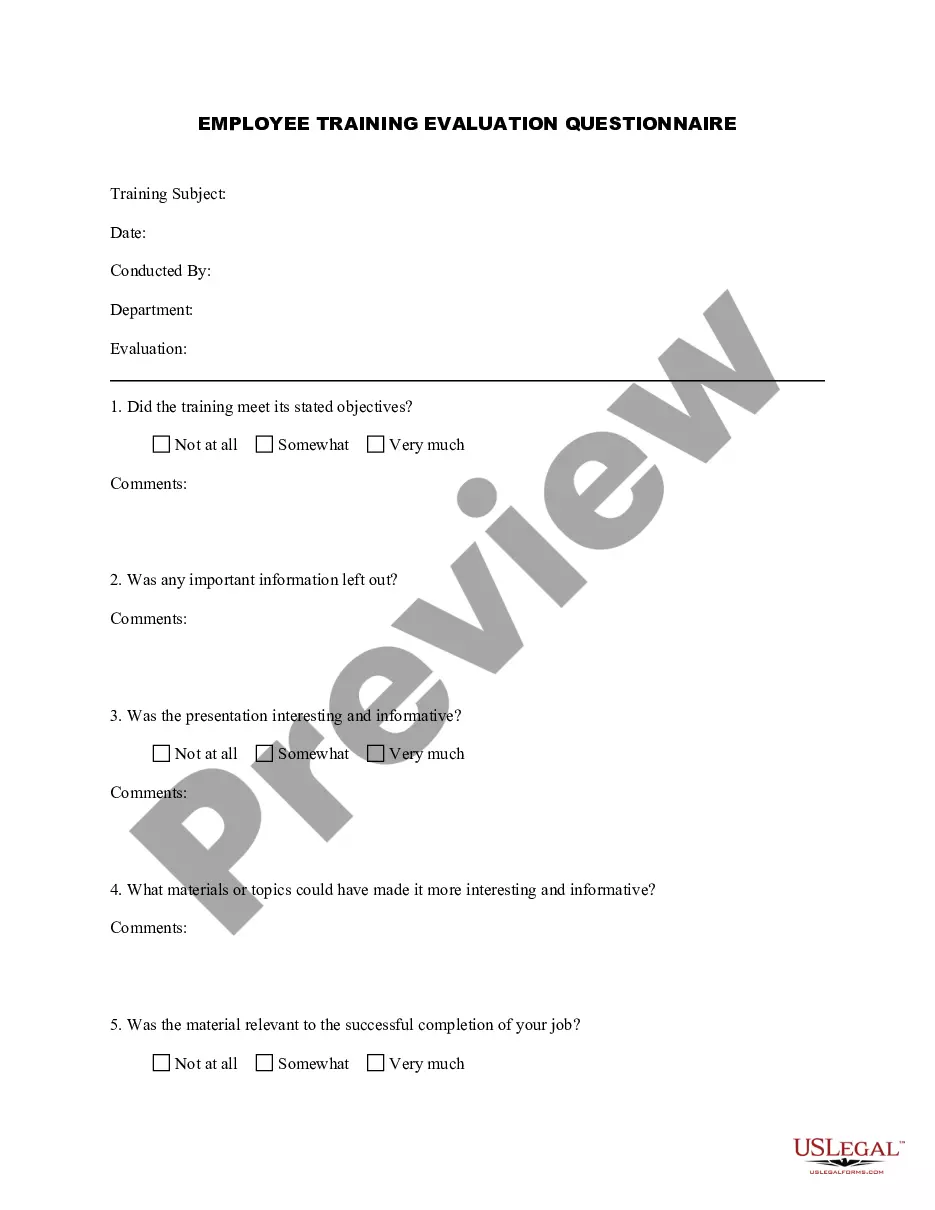
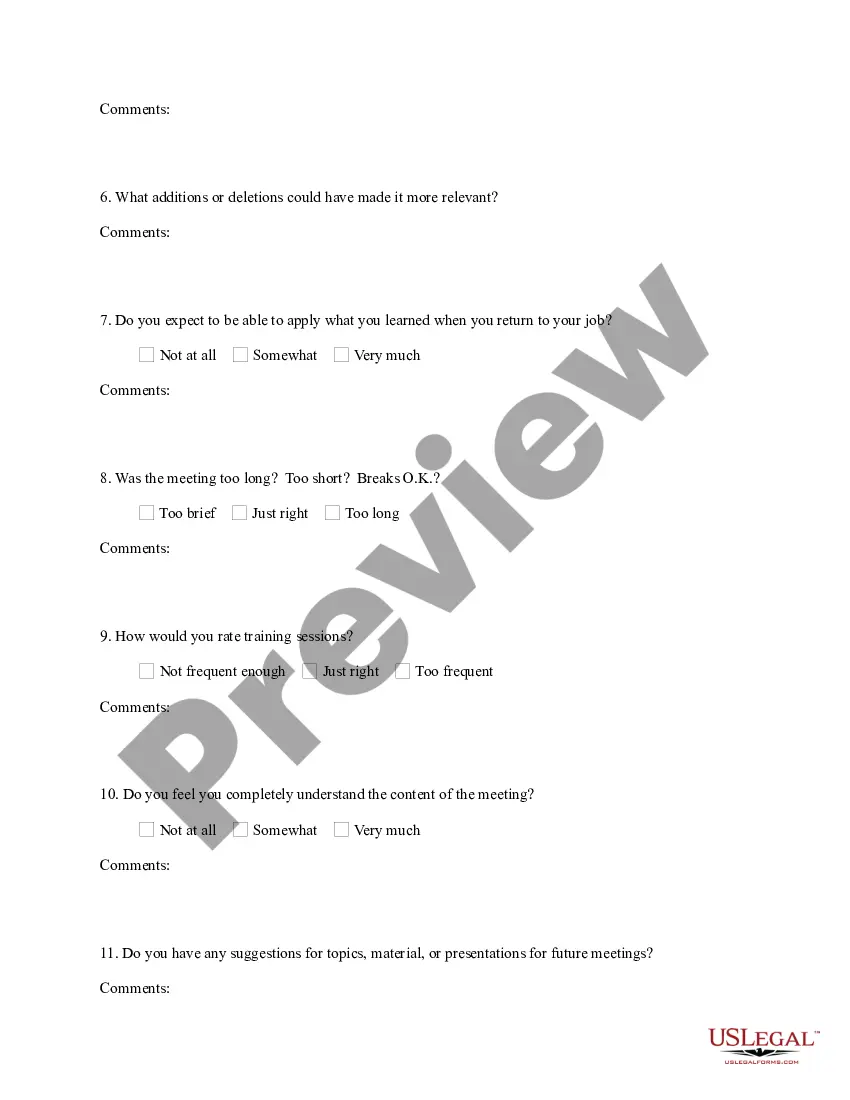
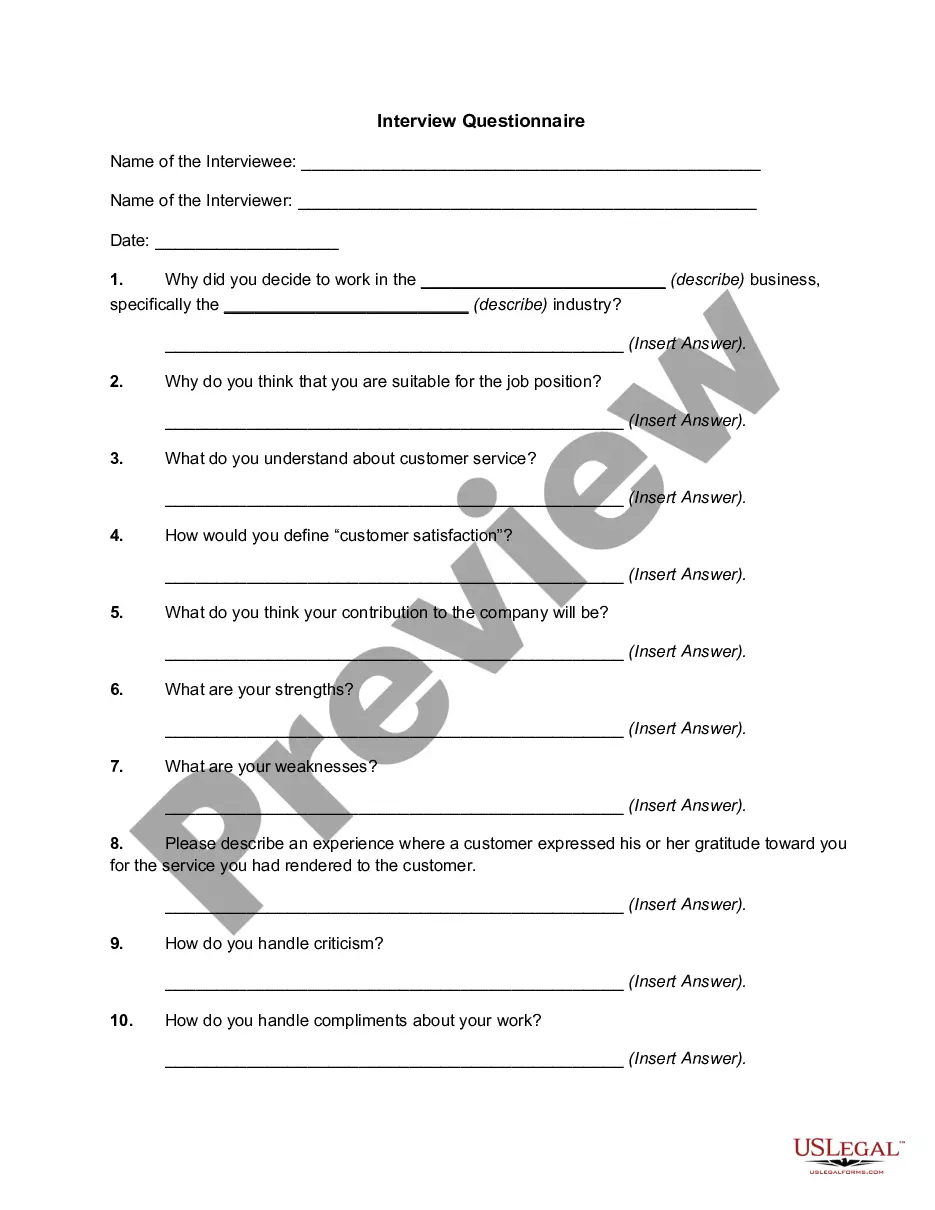
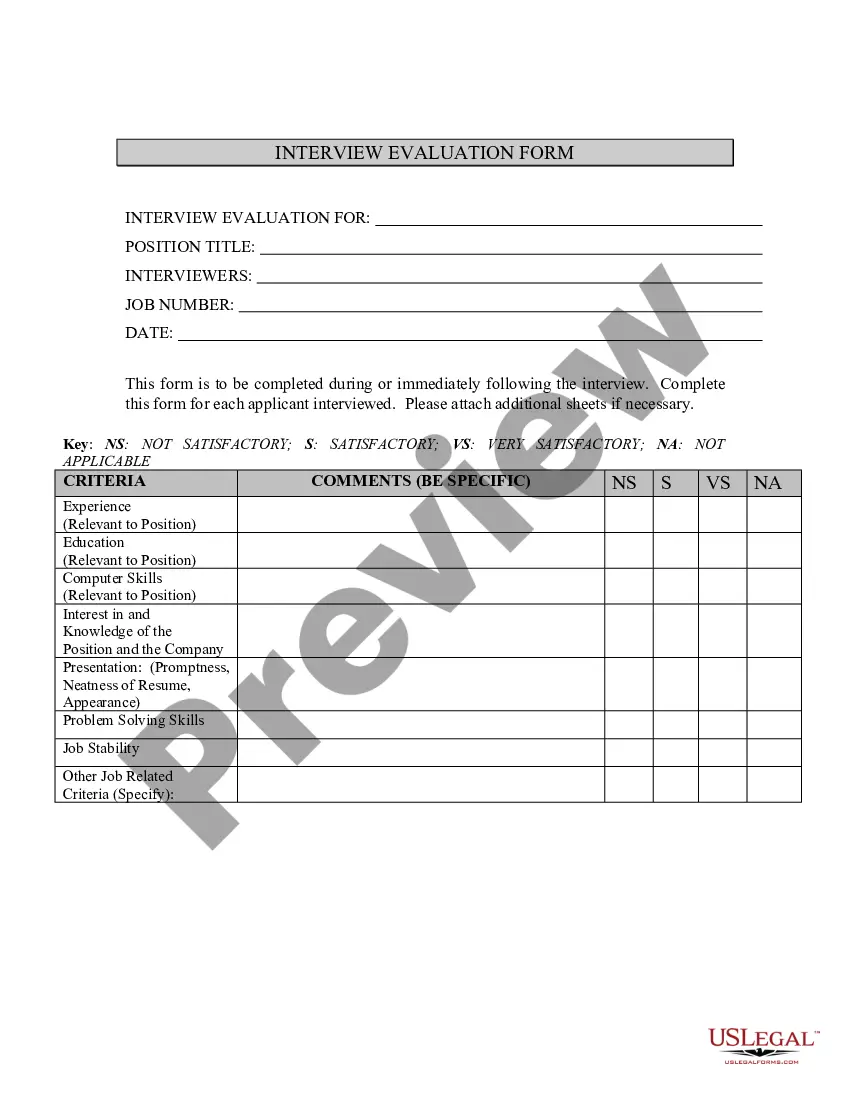
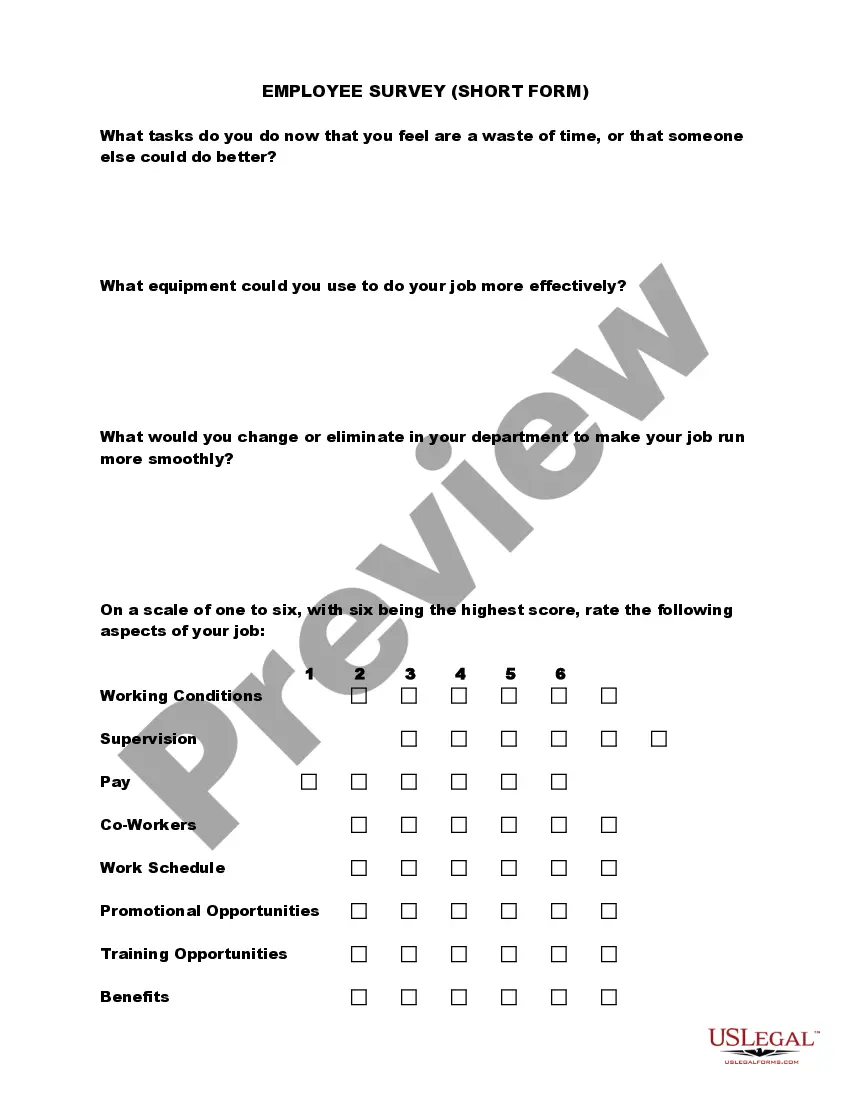
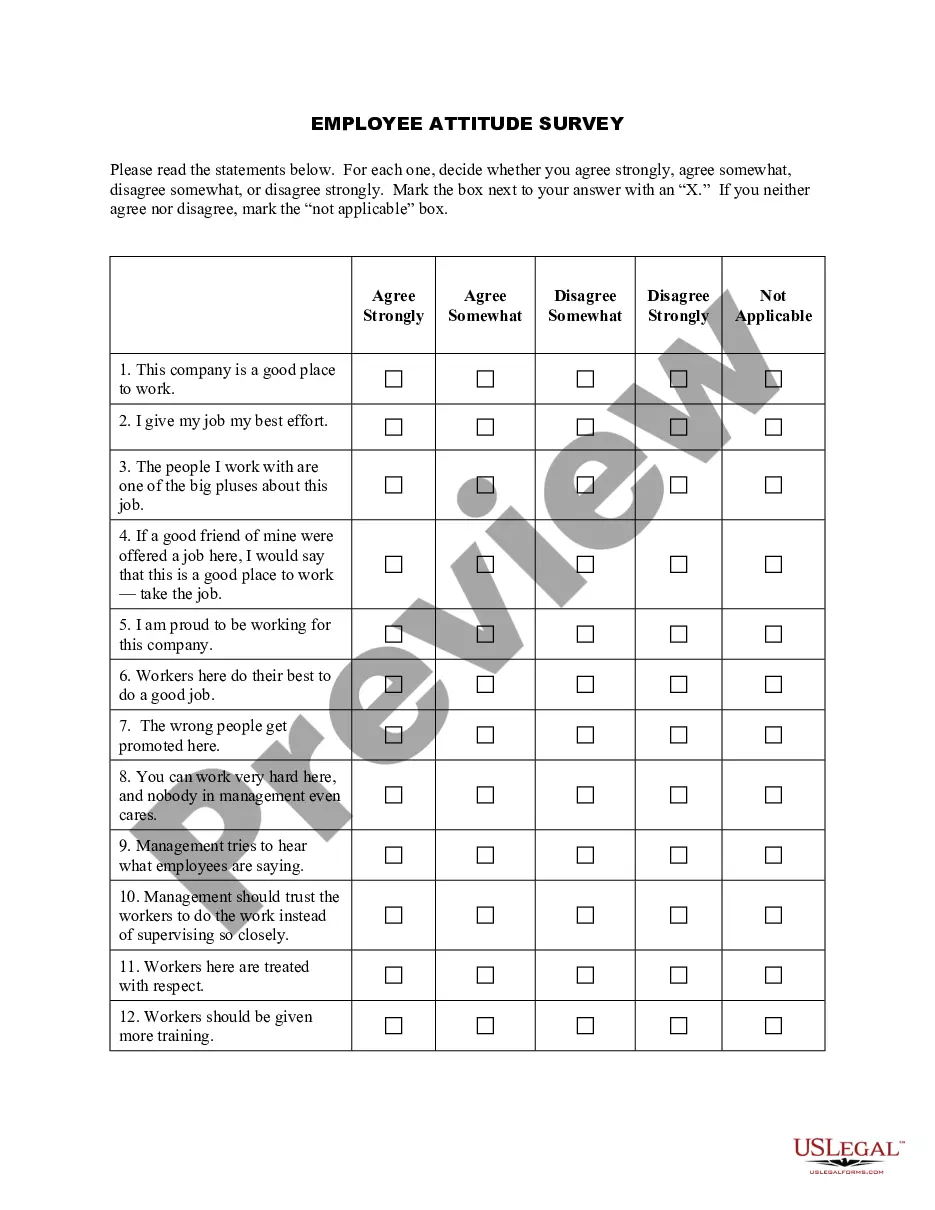
The Employee Training Evaluation Questionnaire is a critical tool for assessing the effectiveness of training provided to new employees. This form allows businesses to gather feedback on whether the training met its goals and prepared employees for their roles. Unlike generic questionnaires, this specific form is tailored to focus on the particular training sessions conducted, ensuring that feedback is relevant and actionable.
Key components of this form
- Training Subject: Specify the topic of the training received.
- Date: Record the date when the training took place.
- Conducted By: Name the trainer or department that facilitated the training.
- Department: Indicate the department related to the training.
- Evaluation of Training Goals: Assess whether the training met stated objectives.
- Comments and Suggestions: Provide space for additional feedback regarding the training experience.
Situations where this form applies
This form should be used after the completion of any training session intended for new employees. It is particularly useful for evaluating the effectiveness of onboarding programs, workshops, or specific skills training, allowing organizations to make necessary adjustments or improvements to future training sessions based on employee feedback.
Who can use this document
- Human resources professionals looking to evaluate training efficiencies.
- Trainers or facilitators seeking feedback on their teaching methods.
- Department heads responsible for onboarding new staff members.
- Employees who have recently undergone training and can provide valuable insights.
How to complete this form
- Identify the training subject and enter the relevant information in the designated field.
- Fill in the date of the training session.
- Provide the name of the individual or department that conducted the training.
- Complete the evaluation section by selecting the appropriate responses regarding the training's effectiveness.
- Use the comments sections to elaborate on your feedback and offer suggestions for improvement.
Is notarization required?
This form does not typically require notarization to be legally valid. However, some jurisdictions or document types may still require it. US Legal Forms provides secure online notarization powered by Notarize, available 24/7 for added convenience.
Get your form ready online
Our built-in tools help you complete, sign, share, and store your documents in one place.
Make edits, fill in missing information, and update formatting in US Legal Forms—just like you would in MS Word.
Download a copy, print it, send it by email, or mail it via USPS—whatever works best for your next step.
Sign and collect signatures with our SignNow integration. Send to multiple recipients, set reminders, and more. Go Premium to unlock E-Sign.
If this form requires notarization, complete it online through a secure video call—no need to meet a notary in person or wait for an appointment.
We protect your documents and personal data by following strict security and privacy standards.

Make edits, fill in missing information, and update formatting in US Legal Forms—just like you would in MS Word.

Download a copy, print it, send it by email, or mail it via USPS—whatever works best for your next step.

Sign and collect signatures with our SignNow integration. Send to multiple recipients, set reminders, and more. Go Premium to unlock E-Sign.

If this form requires notarization, complete it online through a secure video call—no need to meet a notary in person or wait for an appointment.

We protect your documents and personal data by following strict security and privacy standards.
Typical mistakes to avoid
- Not filling out the evaluation sections completely, which may limit actionable insights.
- Providing vague comments that do not specify the issues or suggestions clearly.
- Forgetting to include the date of the training, making it difficult to track feedback over time.
Benefits of completing this form online
- Convenience of quick access and completion from any device.
- Editable fields allow for real-time feedback adjustments.
- Reliable storage and retrieval of responses for future reference.
Legal use & context
- This form can be used as part of the employee onboarding process.
- It captures crucial feedback that can help improve future training initiatives.
- Responses may be used for compliance with workplace training regulations.
Looking for another form?




Form popularity
FAQ
Post-training quizzes, one-to-one discussions, employee surveys, participant case studies, and official certification exams are some ways to measure training effectiveness. The more data you collect on measurable outcomes, the easier it will be to quantify your company's return on investment.
Introduction. Just like all other business documents, a perfect form starts with an insightful introduction. Create a Questionnaire. The second and probably the most crucial fragment of a training evaluation form are the queries. Create a Rating System. Overall Suggestion Box.
What were the stakeholder's expectations of the training? What were the goals of the training? What are the goals of the evaluation?
Change in performance ratings over time. Customer/client satisfaction ratings. Employee engagement. Employee turnover rates. Percentage of promotions. Productivity rates over time. Employee retention rates.
Understand the training by yourself first: Focus on the questions you add in the feedback form: Give all possible choices to the trainees: Provide clear instructions for how to respond:
Level 1: Reaction, Satisfaction, and Intention. Level 2: Knowledge Retention. Level 3: Application and Implementation. Level 4: Business Impact. Level 5: Return on Investment. Evaluation is Critical to Training Success.
Self-assessment questionnaires. Informal feedback from peers and managers. Focus groups. On-the-job observation. Actual job performance key performance indicators (KPIs)
Management by objectives. This is probably the most common way to measure employee performance. Use rating scales. Ask staff to rate their own job satisfaction. Track digital trails. Team performance. Peer appraisals. External evaluators. Quantity and quality.
Reaction: Basically, did they like the training? Learning: Did they learn something new? Behavior: Based on that new knowledge, did they actually go home and change their behaviors? Results: What happened as a result of that behavior change?