Web Content Partnership Agreement
About this form
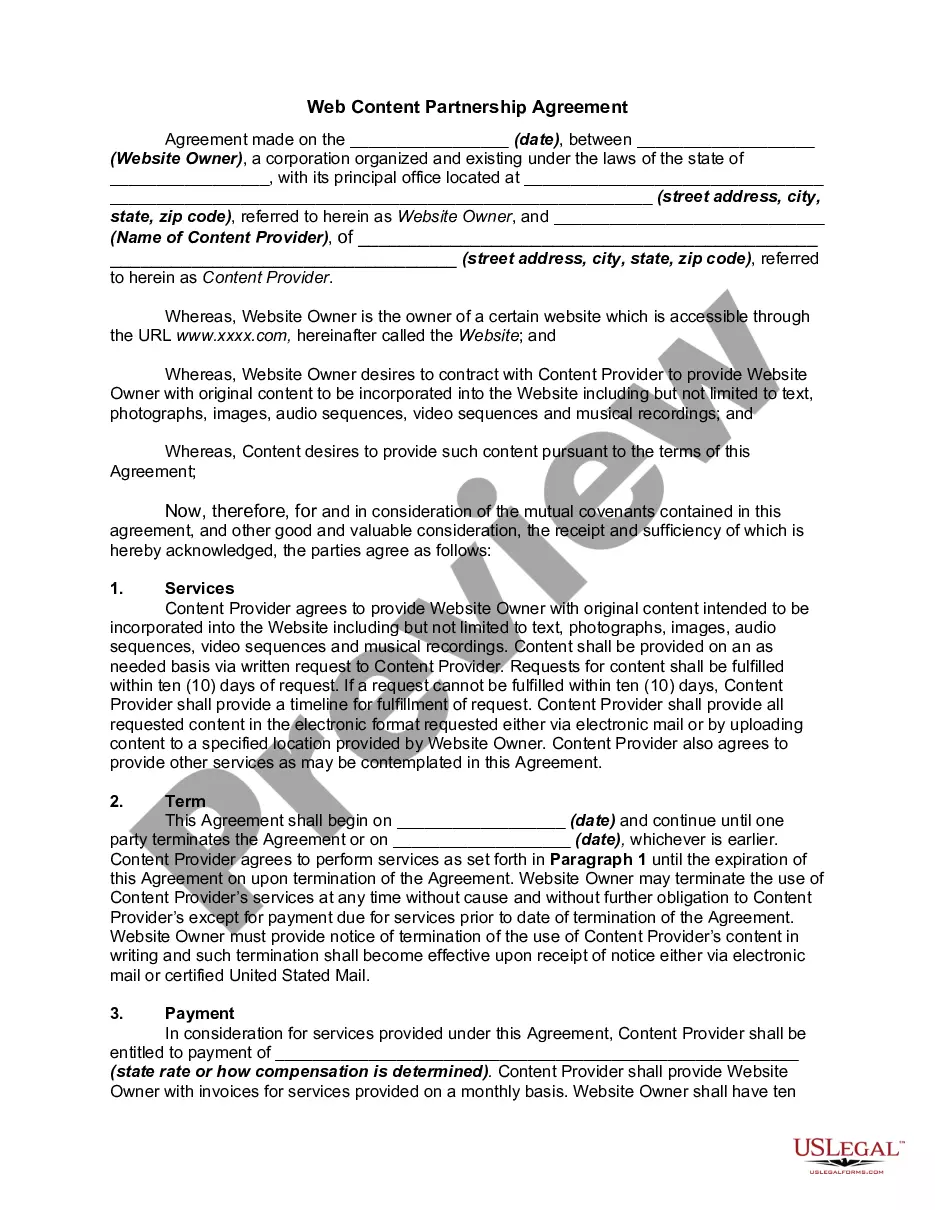
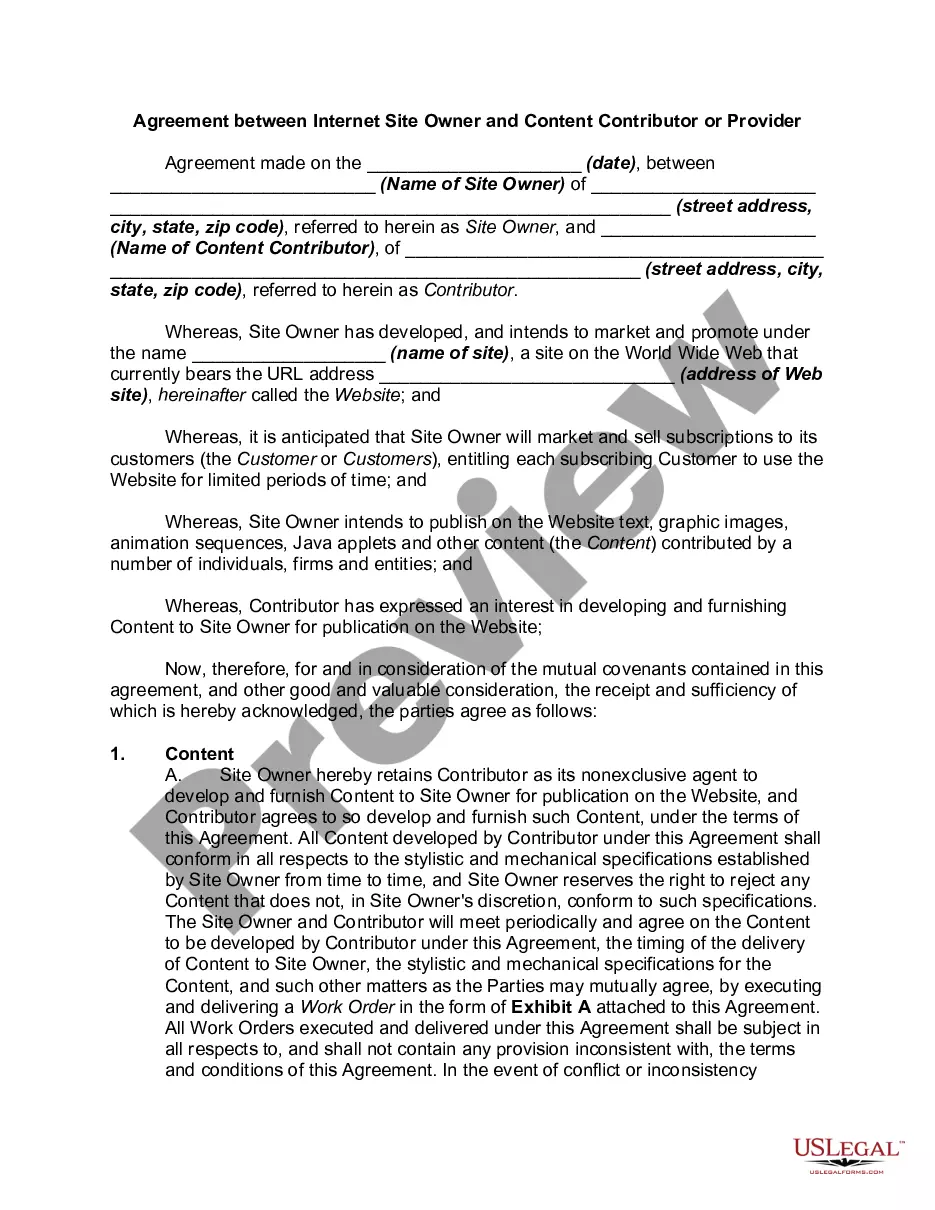
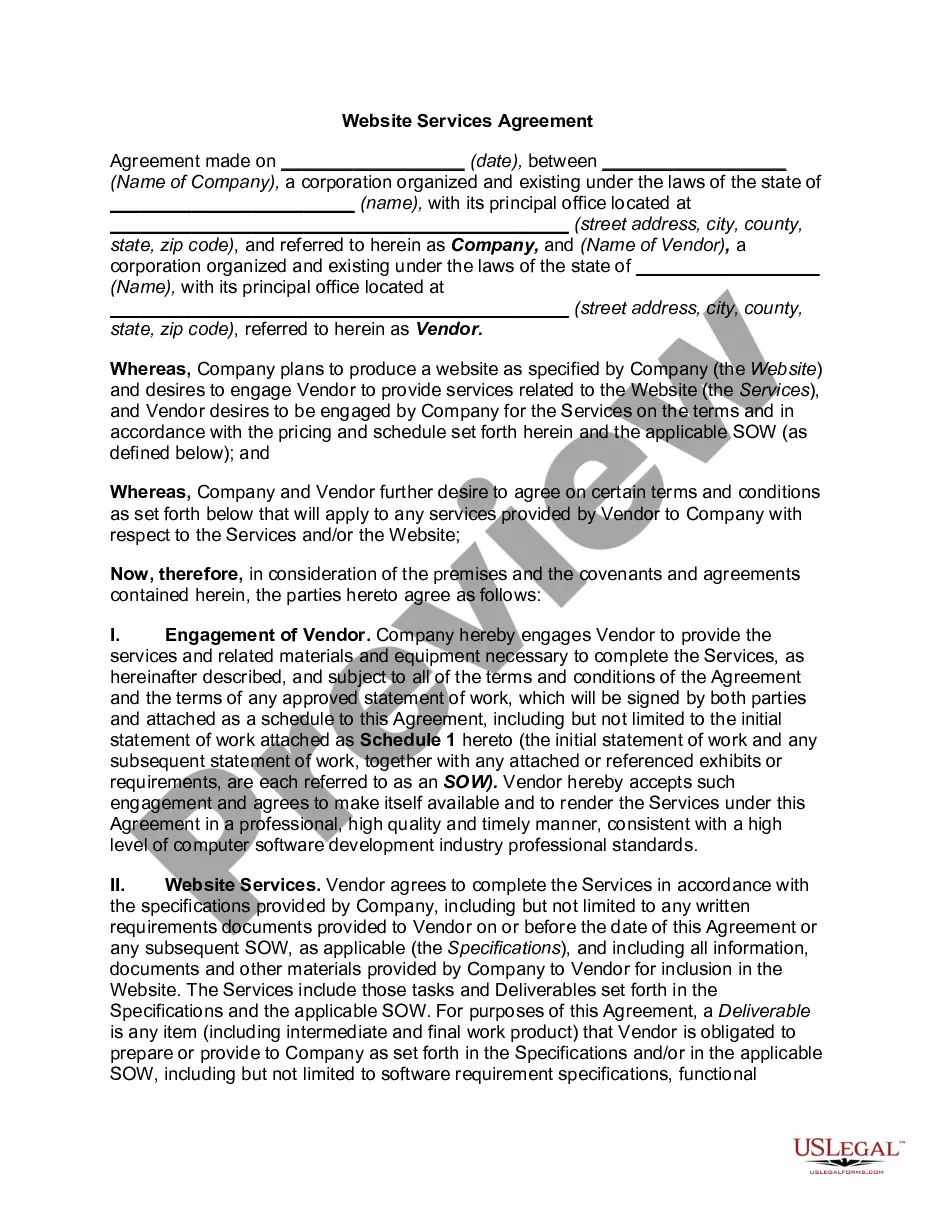
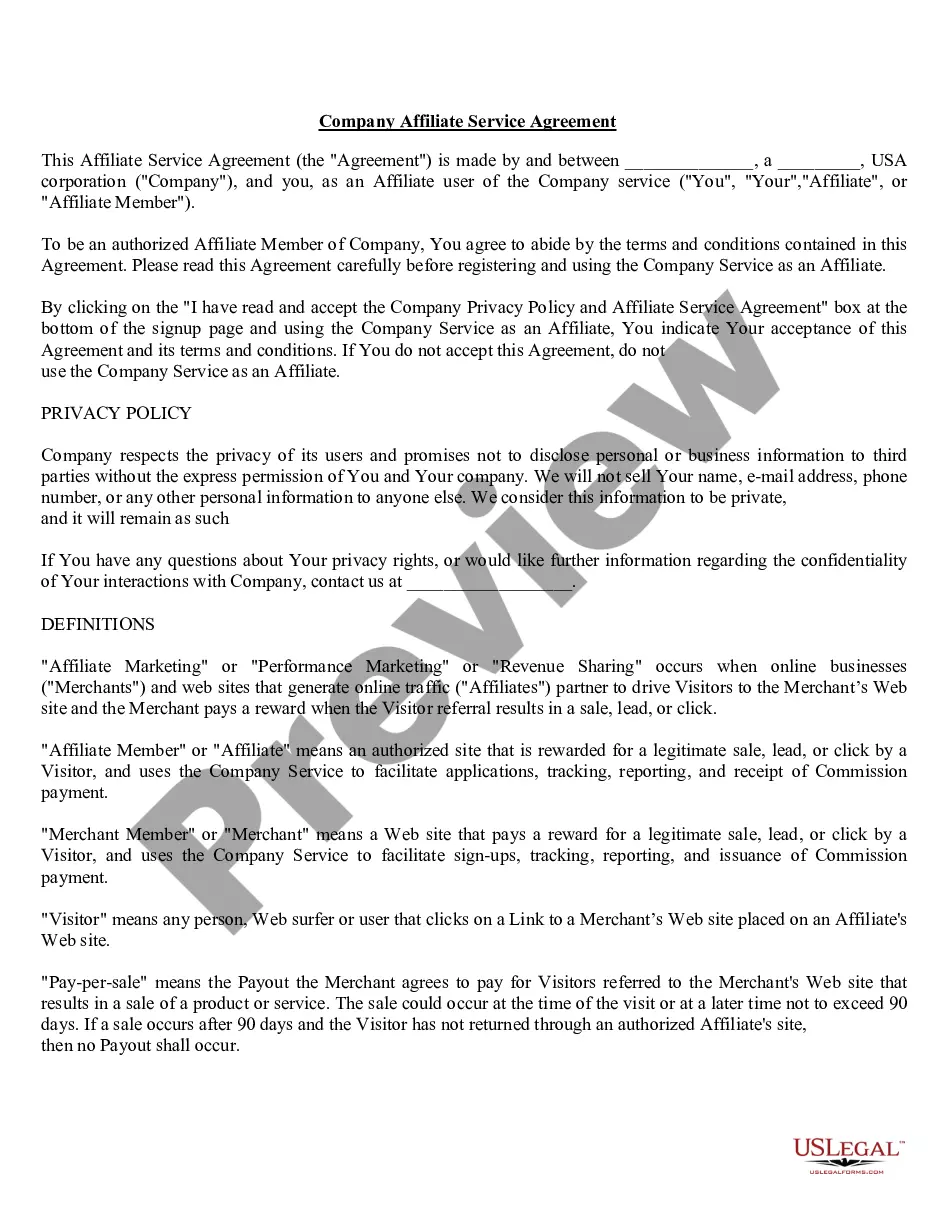
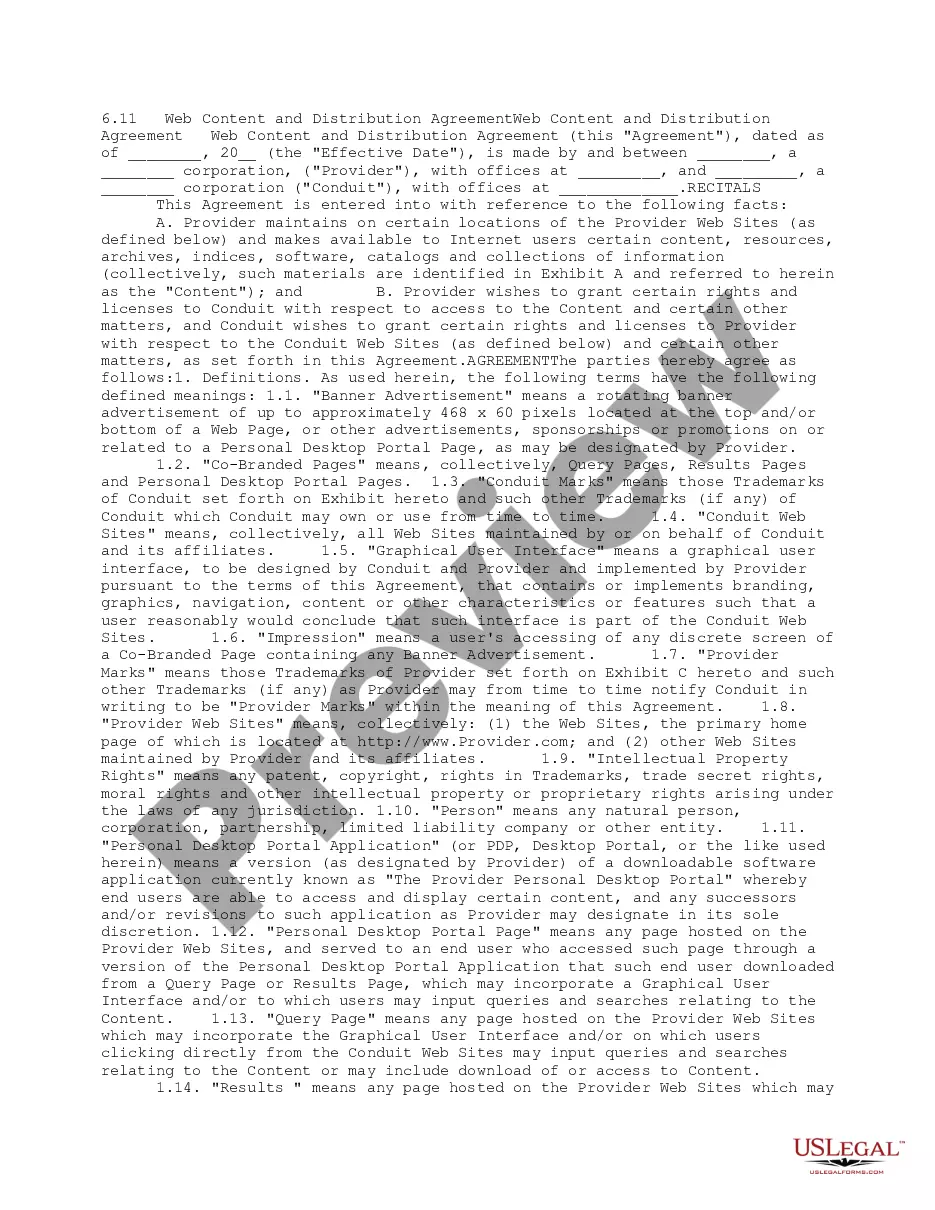
The Web Content Partnership Agreement is a legal document used when a website owner engages a content provider to supply original content for their site. This includes various types of media, such as text, images, and audio. It is important to note that this agreement differs from a traditional partnership agreement, as it establishes a client-contractor relationship rather than a co-ownership of a business.
What’s included in this form
- Agreement details, including the date and parties involved.
- Services provided by the content provider, including timelines for fulfillment.
- Payment terms outlining compensation and invoicing procedures.
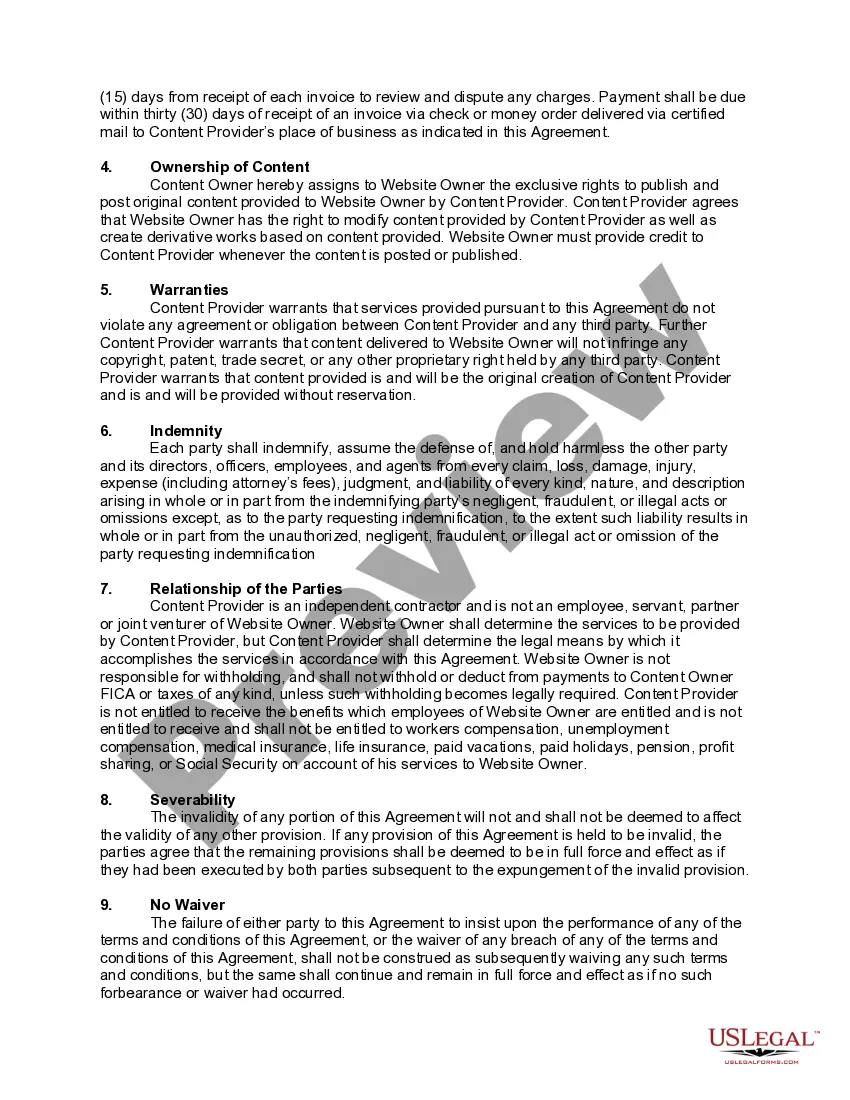
- Ownership rights of the content created under the agreement.
- Warranties and indemnity clauses protecting both parties.
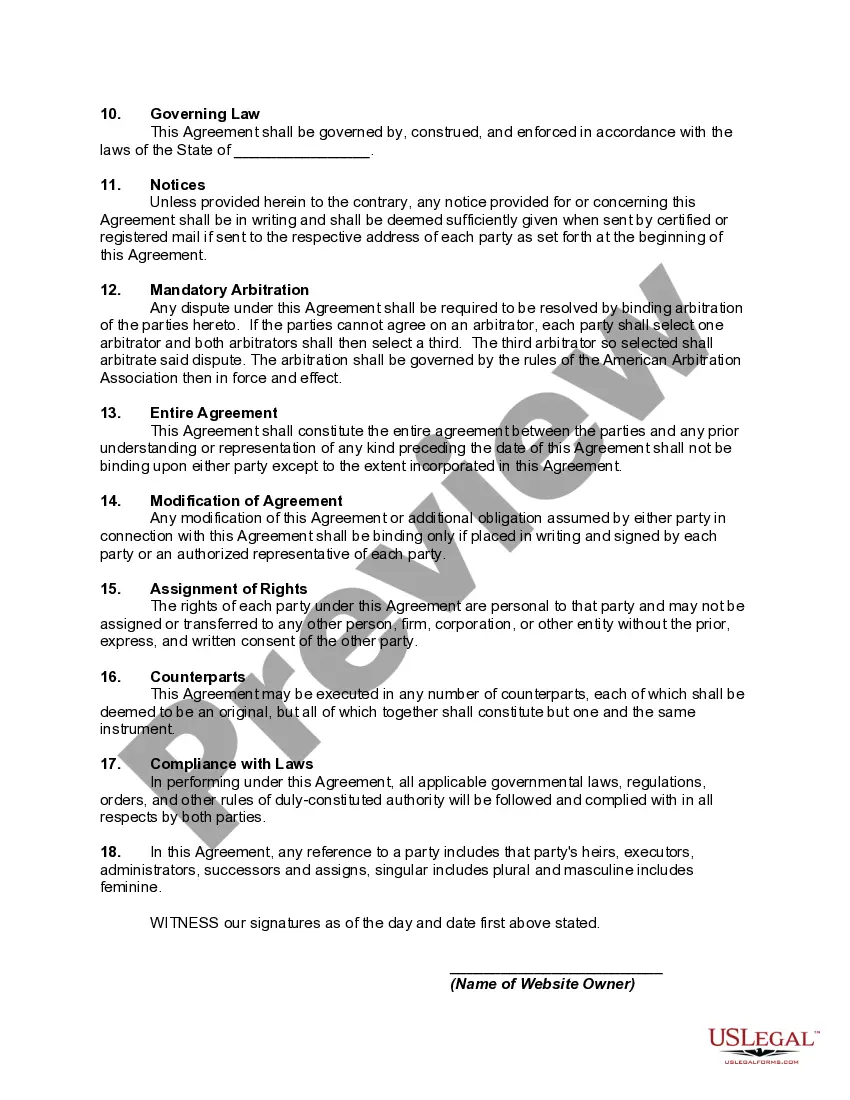
- Terms regarding the relationship between the parties, emphasizing the independent contractor nature.
Common use cases
This form is useful in scenarios where a website owner requires original content for their platform. It is applicable for businesses looking to enhance their online presence through unique articles, images, videos, or other digital content. Additionally, it can be utilized in collaborative projects where specific content contributions are needed from independent creators.
Who should use this form
This agreement is recommended for:
- Website owners looking to hire freelancers or contractors for content creation.
- Content providers or freelancers who create digital media and need a formal agreement.
- Small business owners wanting to establish clear content production expectations.
How to complete this form
- Identify the parties by entering the names and addresses of the website owner and the content provider.
- Specify the date when the agreement is made and the effective date of the contract.
- Outline the specific services to be provided, detailing the type of content required.
- Enter payment terms, including the compensation rate and invoicing schedule.
- Include any additional provisions relevant to the scope and limits of the agreement.
- Ensure both parties sign the agreement to finalize the contract.
Notarization requirements for this form
This form does not typically require notarization unless specified by local law. However, it is advisable to keep signed copies for both parties to ensure a clear record of the agreement.
Get your form ready online
Our built-in tools help you complete, sign, share, and store your documents in one place.
Make edits, fill in missing information, and update formatting in US Legal Forms—just like you would in MS Word.
Download a copy, print it, send it by email, or mail it via USPS—whatever works best for your next step.
Sign and collect signatures with our SignNow integration. Send to multiple recipients, set reminders, and more. Go Premium to unlock E-Sign.
If this form requires notarization, complete it online through a secure video call—no need to meet a notary in person or wait for an appointment.
We protect your documents and personal data by following strict security and privacy standards.

Make edits, fill in missing information, and update formatting in US Legal Forms—just like you would in MS Word.

Download a copy, print it, send it by email, or mail it via USPS—whatever works best for your next step.

Sign and collect signatures with our SignNow integration. Send to multiple recipients, set reminders, and more. Go Premium to unlock E-Sign.

If this form requires notarization, complete it online through a secure video call—no need to meet a notary in person or wait for an appointment.

We protect your documents and personal data by following strict security and privacy standards.
Common mistakes
- Failing to clearly define the scope of services can lead to confusion and disputes.
- Not specifying payment terms may result in delayed or missed payments.
- Neglecting to include ownership rights can lead to issues over content usage.
Benefits of using this form online
- Convenience of accessing the document anytime, from anywhere.
- Editability allows for easy updates or modifications to fit specific needs.
- Reliability of legal templates prepared by licensed attorneys ensures compliance.
Legal use & context
- The agreement serves as a formal record of the terms agreed upon by both parties.
- Ensures that content ownership and rights are clearly stated to prevent disputes.
- Provides legal recourse in case of breach of contract or failure to deliver services.
Quick recap
- A Web Content Partnership Agreement is essential for defining the relationship between a website owner and a content provider.
- Clearly outline services, payment, and ownership rights to avoid misunderstandings.
- This agreement is useful for both independent content creators and website owners seeking original media.
Looking for another form?

Form popularity
FAQ
Create a preliminary plan for an alliance. This plan should detail how the alliance will benefit both companies. Approach the key decision maker. Build a relationship with your contact first. Present your idea. Listen and adapt your proposal as necessary.
Forming a PartnershipPartnerships exist between two or more people who want to go into business together. In most states, creating a legally binding partnership requires nothing more than a verbal agreement and a handshake.
Share the same values. Choose a partner with complementary skills. Have a track record together. Clearly define each partner's role and responsibilities. Select the right business structure. Put it in writing. Be honest with each other.
Name of the partnership. Contributions to the partnership. Allocation of profits, losses, and draws. Partners' authority. Partnership decision-making. Management duties. Admitting new partners. Withdrawal or death of a partner.
Name of your partnership. Contributions to the partnership and percentage of ownership. Division of profits, losses and draws. Partners' authority. Withdrawal or death of a partner.
Although there's no requirement for a written partnership agreement, often it's a very good idea to have such a document to prevent internal squabbling (about profits, direction of the company, etc.) and give the partnership solid direction. Limited liability partnerships do have a writing requirement.
Name of the partnership. Contributions to the partnership. Allocation of profits, losses, and draws. Partners' authority. Partnership decision-making. Management duties. Admitting new partners. Withdrawal or death of a partner.
Share the same values. Choose a partner with complementary skills. Have a track record together. Clearly define each partner's role and responsibilities. Select the right business structure. Put it in writing. Be honest with each other.
Your Partnership's Name. Partnership Contributions. Allocations profits and losses. Partners' Authority and Decision Making Powers. Management. Departure (withdrawal) or Death. New Partners. Dispute Resolution.