Florida Quitclaim Deed Curing Encroachment
Understanding this form
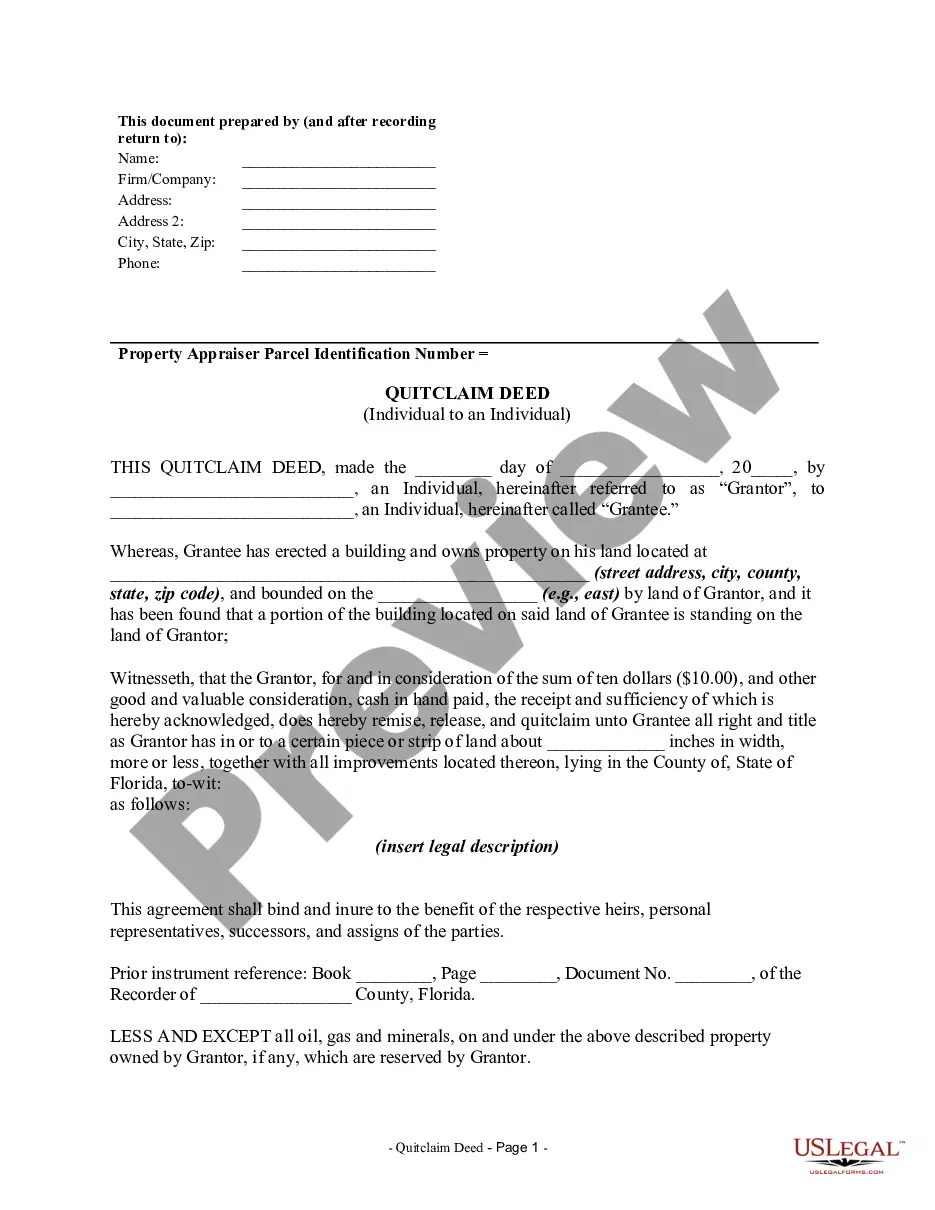
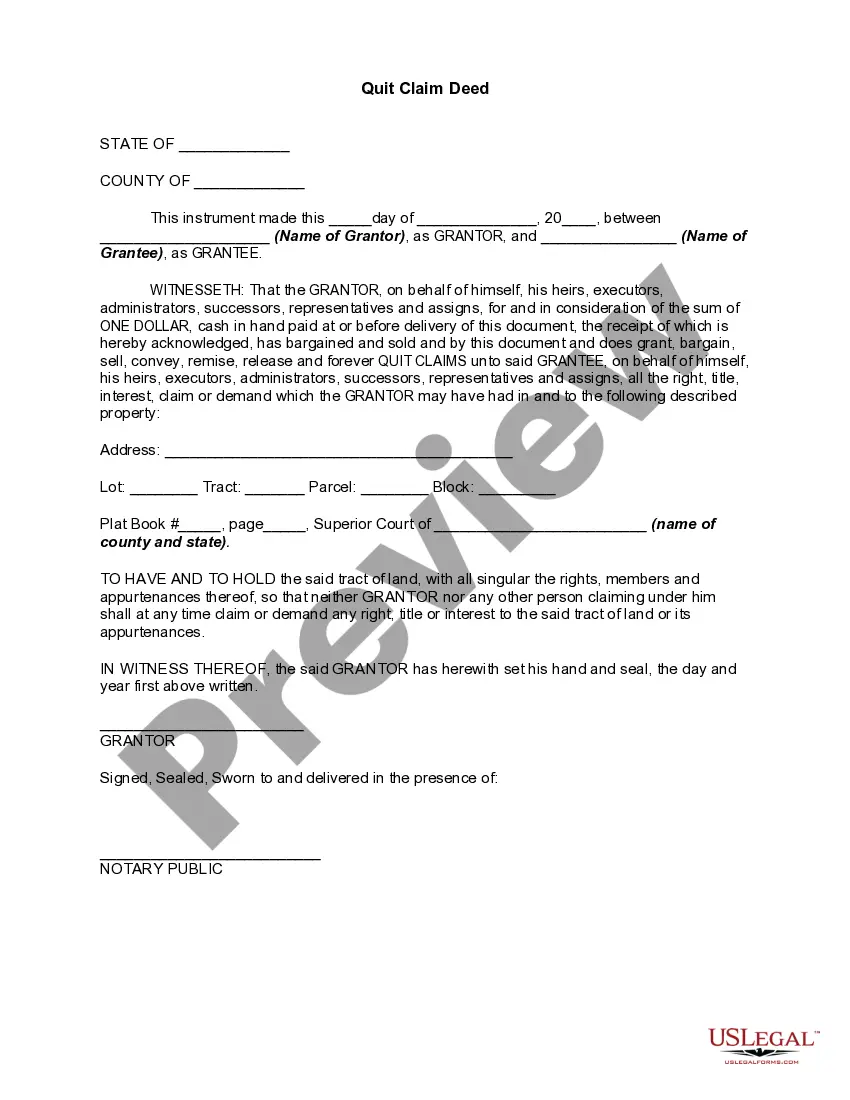
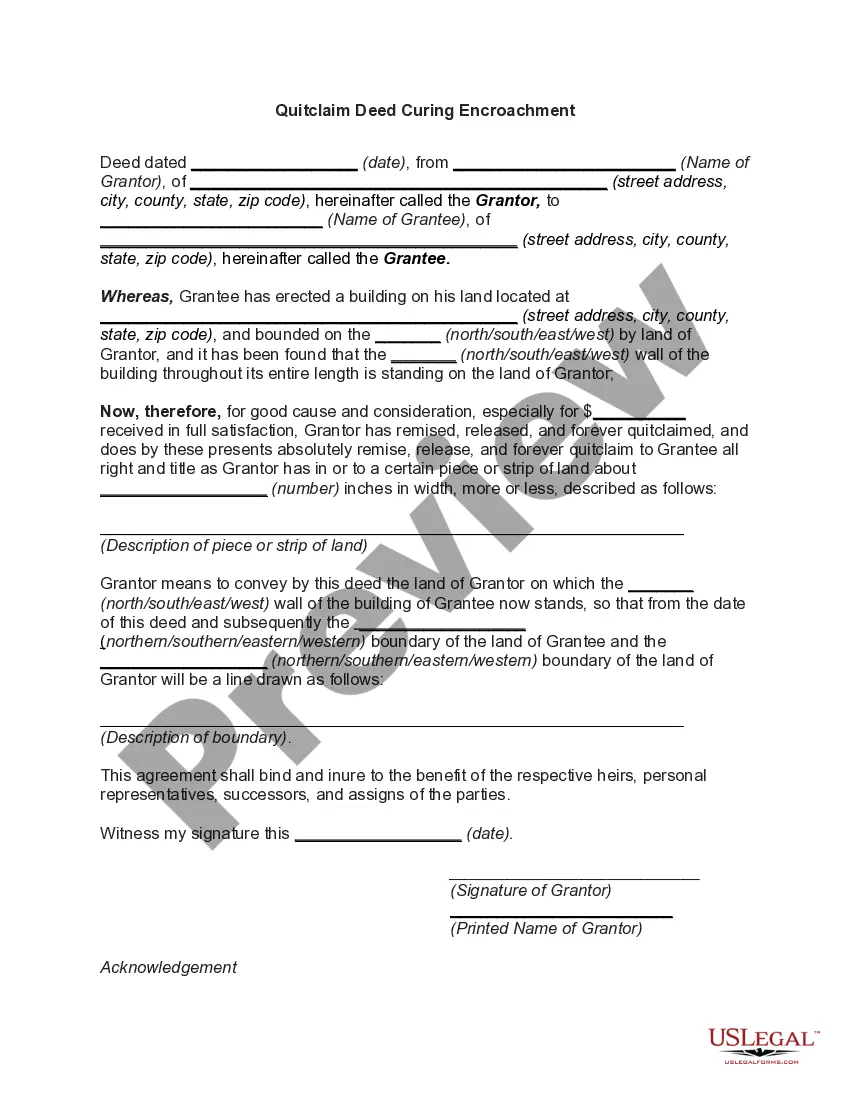
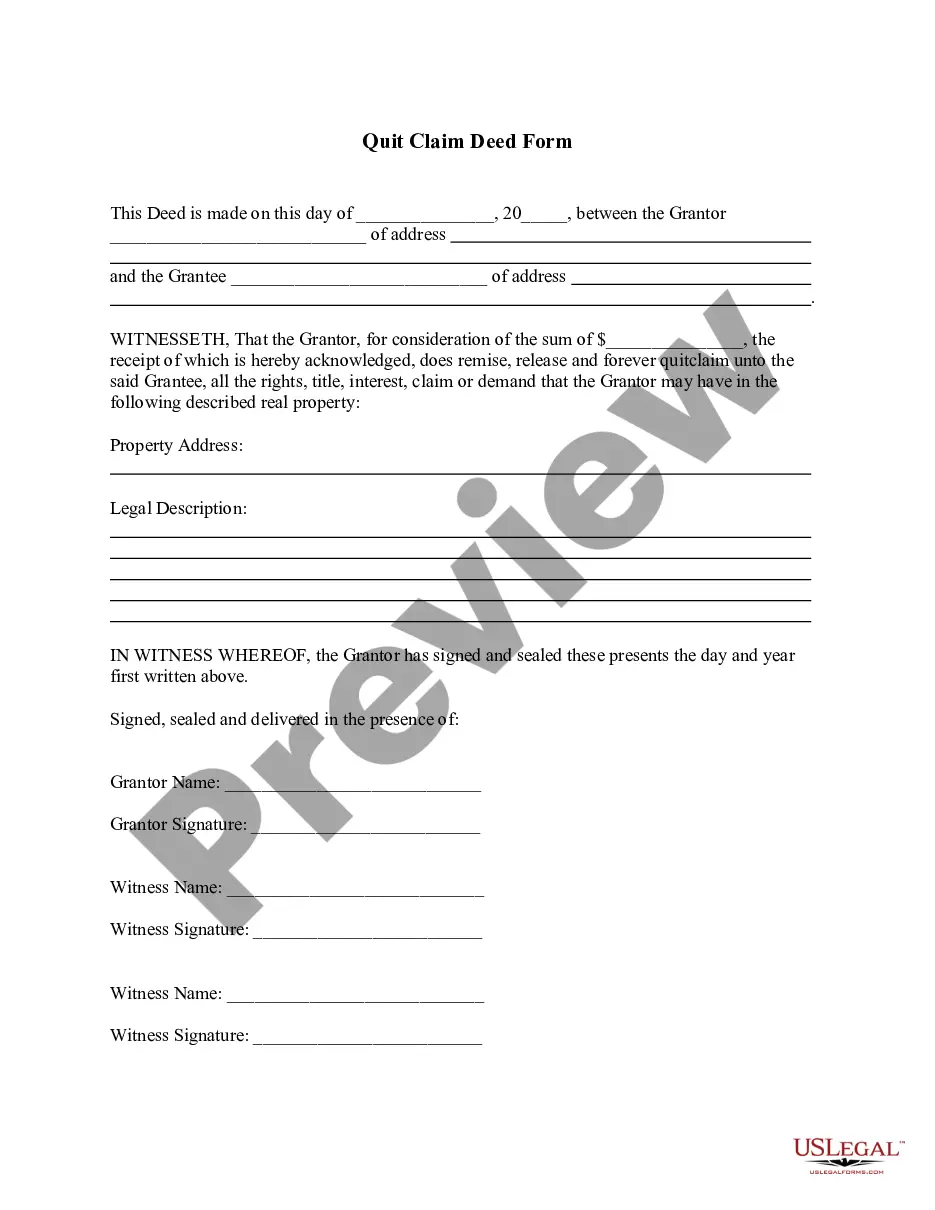
The Quitclaim Deed Curing Encroachment is a legal document used to transfer property ownership between neighbors when there is a dispute over property lines. This form is distinct from other types of deeds because it relinquishes any claim the Grantor has on the disputed land without guaranteeing the title. It is particularly beneficial when one property owner needs to formalize an agreement after discovering an encroachment on their land, such as a building that overlaps onto their property.
Form components explained
- Identification of the parties involved: Grantor (seller) and Grantee (buyer).
- Legal description of the property including the area of encroachment.
- Consideration amount, typically a nominal fee.
- Provisions regarding the reservation of minerals, if any.
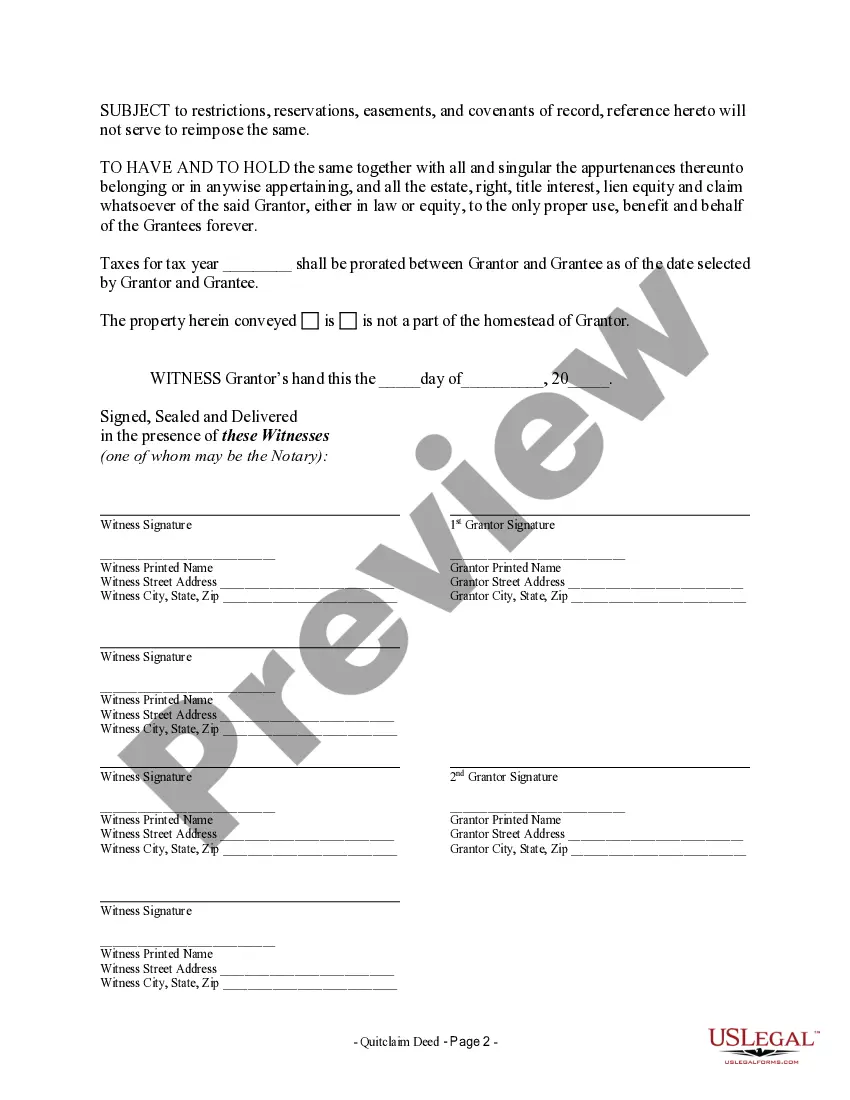
- Signatures of the Grantor and witnesses for validation.
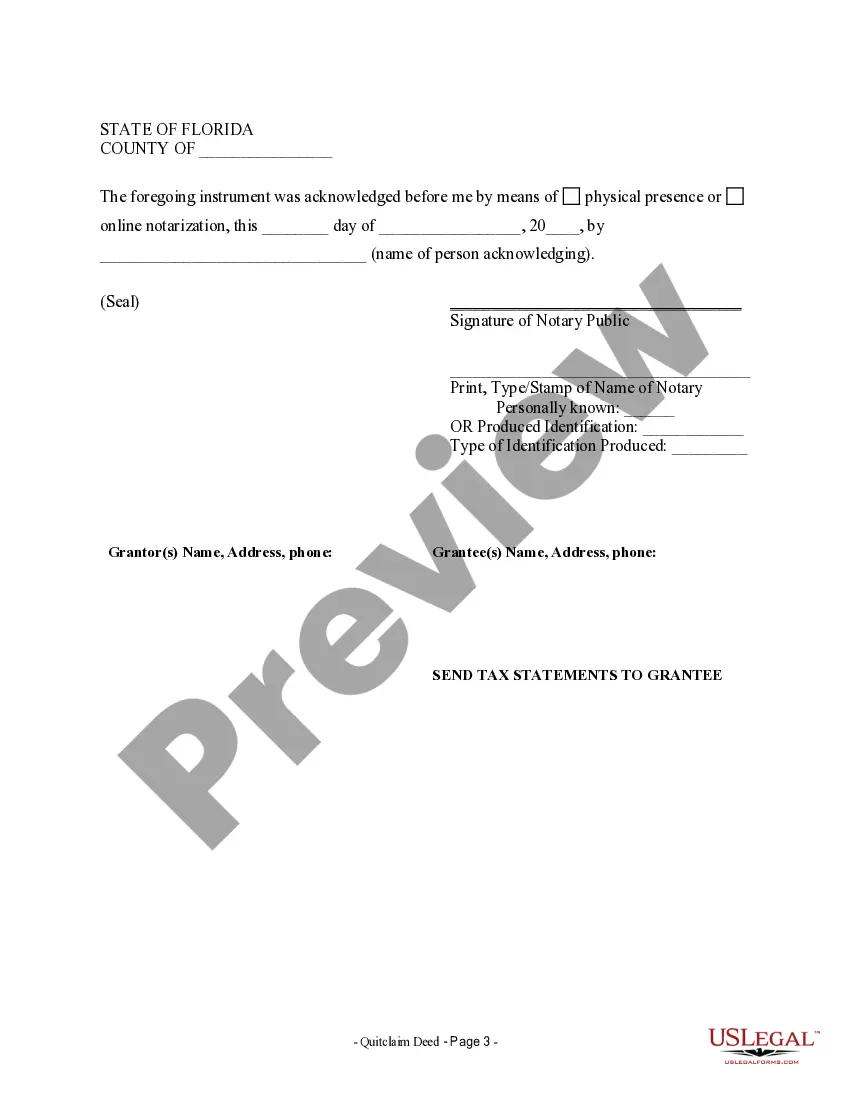
- Notary acknowledgment to affirm the signing partiesâ identities.

When to use this form
This form is applicable when one neighbor has built a structure, such as a fence or a building, that encroaches onto another neighbor's property. It's useful for homeowners who want to resolve disputes amicably and clearly define property boundaries. It can be used during property transactions where encroachments exist or when neighbors jointly agree to convey land titles to rectify boundary issues.
Who needs this form
This form is intended for:
- Homeowners who are resolving disputes with neighbors over property encroachments.
- Individuals who require a legal document to transfer property rights without warranties.
- Real estate attorneys representing clients in property disputes.
- Anyone needing to clarify property boundaries in writing.
Steps to complete this form
- Identify the Grantor and Grantee by entering their full legal names.
- Provide a legal description of the property being conveyed, including the area of encroachment.
- Fill in the date of the transaction and the consideration amount (typically ten dollars).
- Sign the deed in front of witnesses, who must also sign.
- Have the deed notarized to validate the signatures and confirm identities.
Is notarization required?
Yes, this form must be notarized to be legally valid. This step helps ensure that all parties are properly identified and that the signing process adheres to legal requirements. US Legal Forms provides integrated online notarization services, available 24/7 through secure video calls, ensuring that you can notarize your document easily and safely without having to travel.
Get your form ready online
Our built-in tools help you complete, sign, share, and store your documents in one place.
Make edits, fill in missing information, and update formatting in US Legal Forms—just like you would in MS Word.
Download a copy, print it, send it by email, or mail it via USPS—whatever works best for your next step.
Sign and collect signatures with our SignNow integration. Send to multiple recipients, set reminders, and more. Go Premium to unlock E-Sign.
If this form requires notarization, complete it online through a secure video call—no need to meet a notary in person or wait for an appointment.
We protect your documents and personal data by following strict security and privacy standards.

Make edits, fill in missing information, and update formatting in US Legal Forms—just like you would in MS Word.

Download a copy, print it, send it by email, or mail it via USPS—whatever works best for your next step.

Sign and collect signatures with our SignNow integration. Send to multiple recipients, set reminders, and more. Go Premium to unlock E-Sign.

If this form requires notarization, complete it online through a secure video call—no need to meet a notary in person or wait for an appointment.

We protect your documents and personal data by following strict security and privacy standards.
Typical mistakes to avoid
- Failing to provide a complete legal description of the property.
- Not having the required witnesses sign the document.
- Omitting notarization, if required by local law.
- Using vague language that may leave room for interpretation.
Why use this form online
- Easy to access and download, allowing for immediate use.
- Editability so users can tailor the document to fit their specific needs.
- Templates drafted by licensed attorneys ensure reliability and legal validity.
- 24/7 availability of forms, making it convenient to prepare legal documents at any time.
Looking for another form?
Form popularity
FAQ
A quitclaim deed can be deemed invalid for multiple reasons. These may include missing signatures, incorrect property description, or failure to comply with Florida's legal standards. It is important to ensure all details are accurate and by the law. If you're uncertain, uslegalforms offers excellent resources to assist you in navigating Florida quitclaim deed curing encroachment.
Several factors can render a deed invalid. For instance, lack of proper notarization or failure to meet state requirements can invalidate a quitclaim deed. Additionally, if a deed is based on fraud or misrepresentation, it may not stand in court. Understanding these aspects is crucial for effective Florida quitclaim deed curing encroachment.
Reversing a quitclaim deed in Florida is not straightforward. Once recorded, a quitclaim deed transfers property interests irrevocably. However, if errors occurred, you can challenge the deed's validity. Consulting with a legal expert can clarify your options, especially in the context of Florida quitclaim deed curing encroachment.
Several factors can contribute to the invalidity of a quitclaim deed. Common causes include lack of legal capacity, forged signatures, or flaws in the property description. A deed may also be invalid if it does not meet the required legal formalities, such as notarization. To avoid issues with your Florida Quitclaim Deed Curing Encroachment, it is important to ensure that every detail is correctly handled.
While it is not mandatory to have a lawyer for a quitclaim deed in Florida, hiring one can offer significant benefits. An attorney can ensure all legal requirements are met, reducing the risk of issues arising later. Additionally, their guidance can be invaluable in navigating the intricacies of a Florida Quitclaim Deed Curing Encroachment. Using services from trusted platforms like US Legal can provide added assurance.
Yes, a quit claim deed can be challenged in Florida under various circumstances. Legal grounds may include disputes over ownership, improper execution, or introduction of new evidence. Taking the correct judicial steps is crucial, and having a knowledgeable attorney can greatly assist in this process. For challenges related to a Florida Quitclaim Deed Curing Encroachment, it helps to use resources from US Legal.
Challenging a quitclaim deed involves filing a legal action in court. You must provide evidence such as fraud, lack of capacity, or improper execution to support your challenge. It is wise to gather all relevant documentation and possibly consult a legal professional specializing in property law. Tools available on US Legal can assist you in navigating the complexities of a Florida Quitclaim Deed Curing Encroachment.
A quit claim deed in Florida must follow specific guidelines to be valid. It should include an accurate legal description of the property, names of the grantor and grantee, and it must be signed and notarized. Furthermore, it is advisable to record the deed with the county clerk for better legal standing. Understanding these rules helps in managing a Florida Quitclaim Deed Curing Encroachment effectively.
In Florida, a quit claim deed can be voided if it does not meet specific legal requirements. Factors such as improper execution, lack of a legal description, or failure to provide lawful consideration can render the deed void. Additionally, errors or omissions in the signing process can contribute to invalidation. Thus, it is crucial to consult experts familiar with Florida Quitclaim Deed Curing Encroachment to ensure your deed is valid.
Yes, a quit claim deed can be voided under certain conditions. For instance, if it was signed under duress, fraud, or if the grantor lacked the legal capacity to sign, then the deed may be invalidated. Additionally, if the property description is flawed or if the deed was not properly executed, you might have grounds to challenge its validity. Hence, understanding the implications of a Florida Quitclaim Deed Curing Encroachment is essential.