Transmission of Wagering Information
Understanding this form
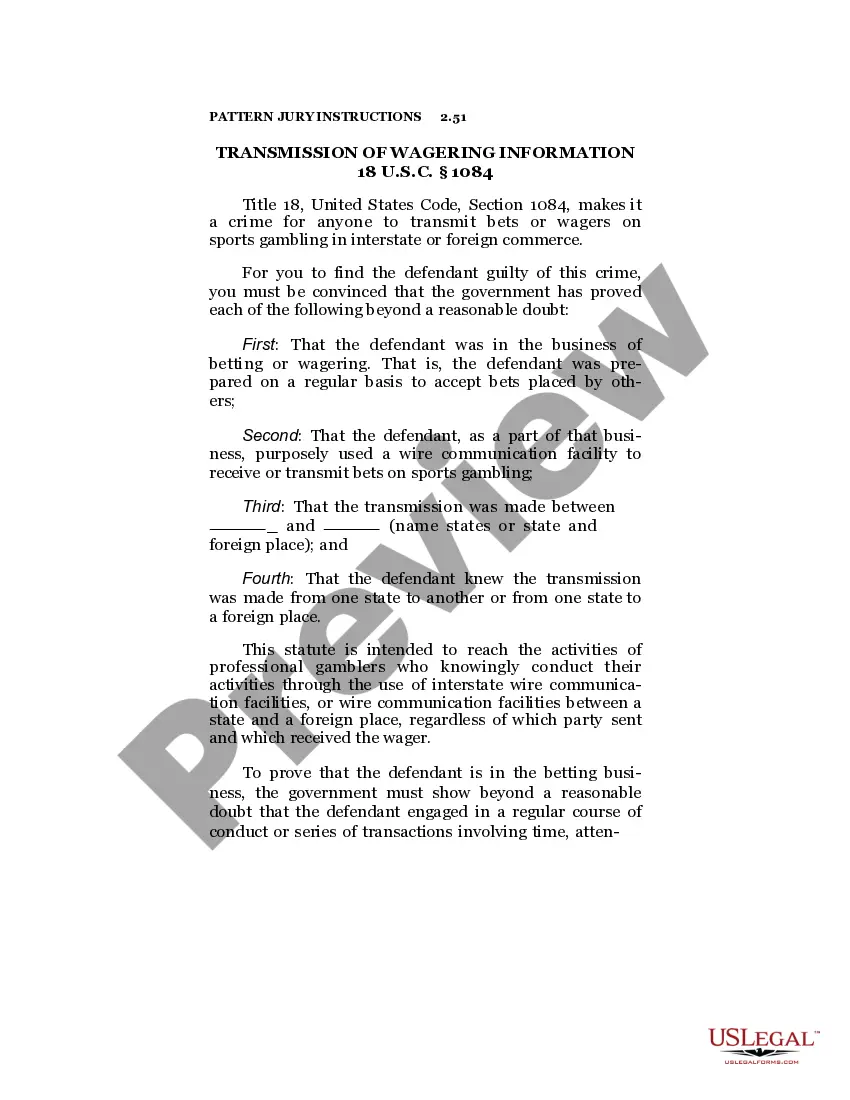
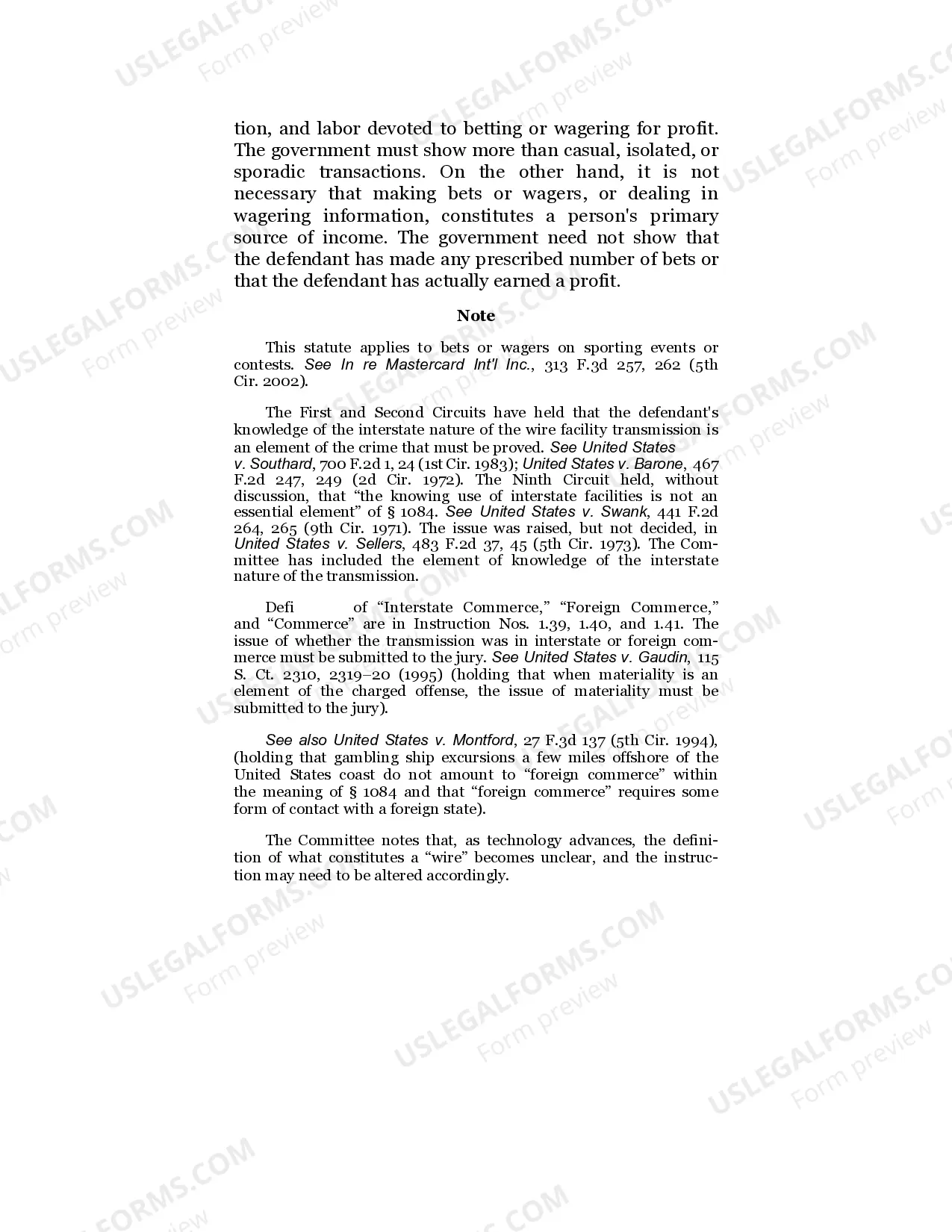
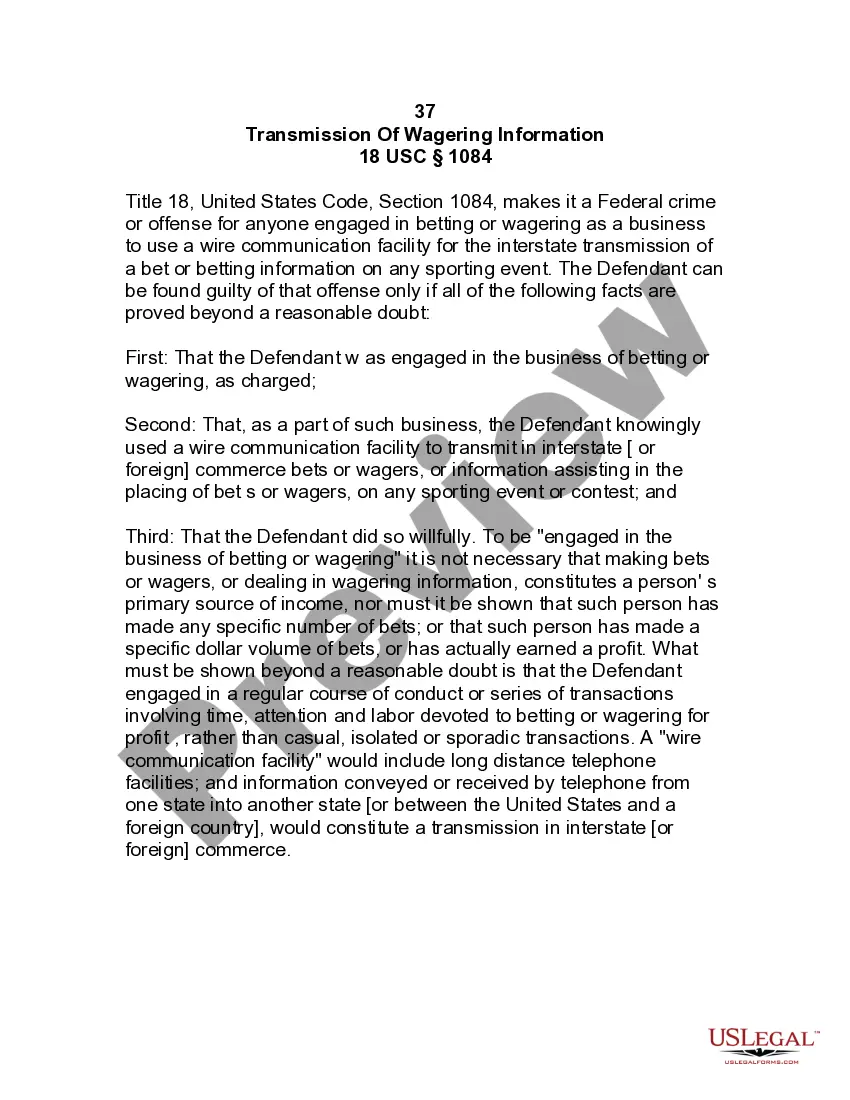
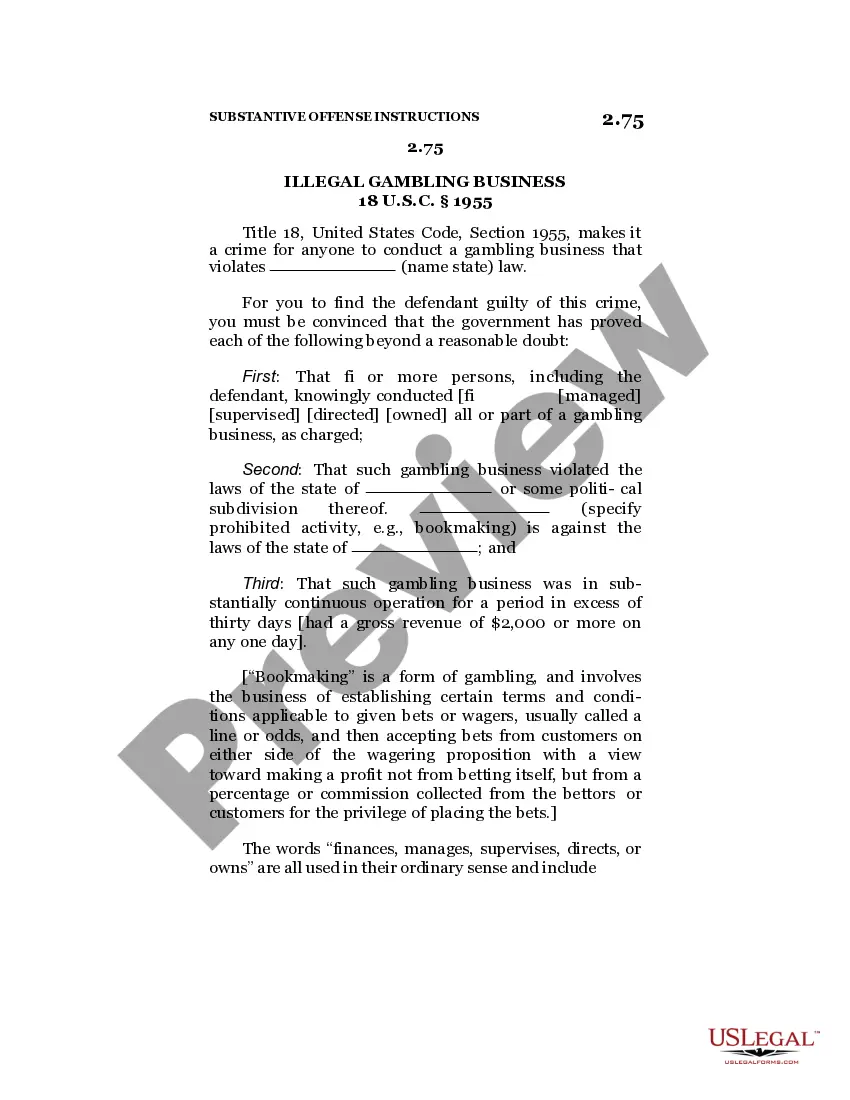
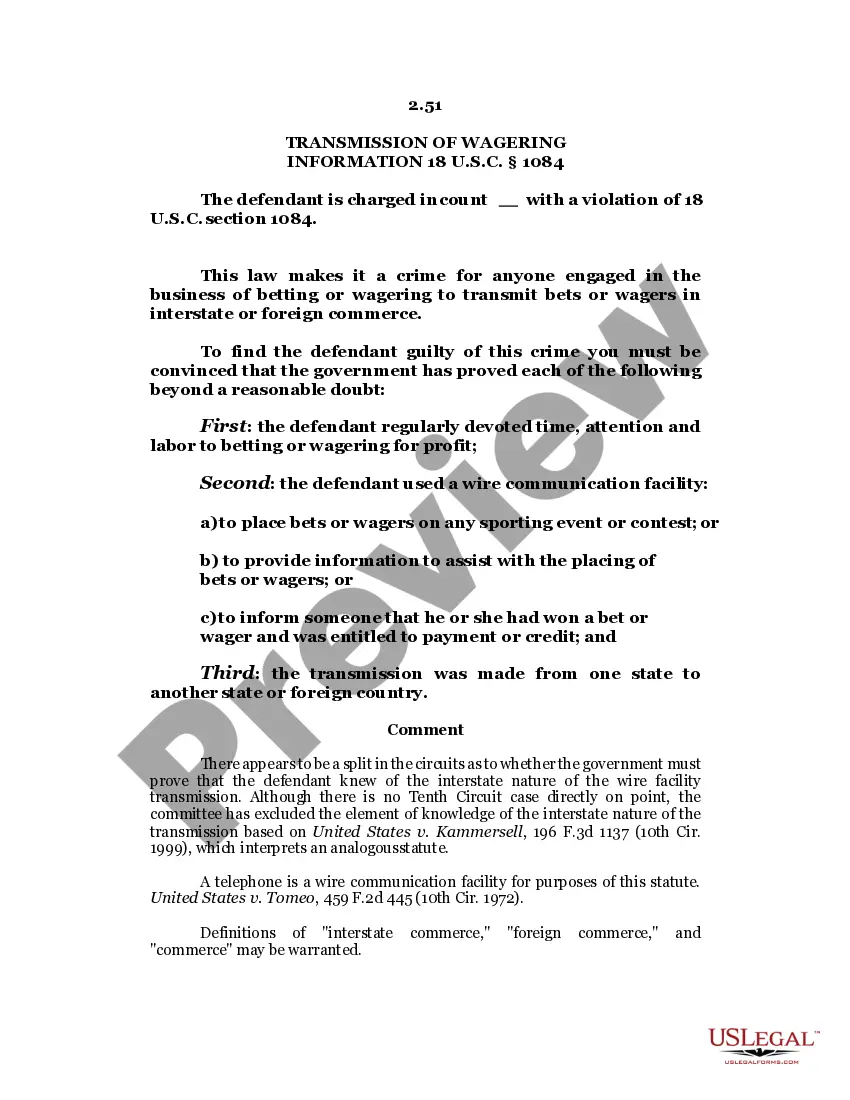
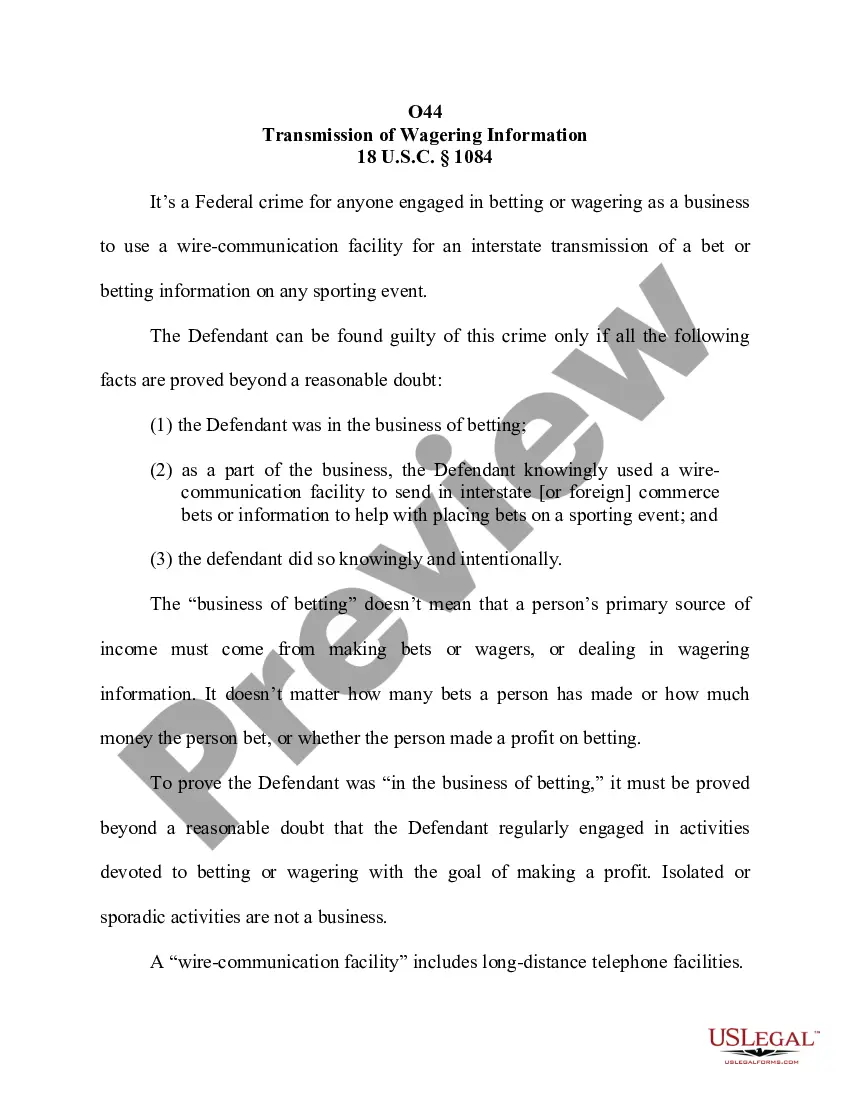
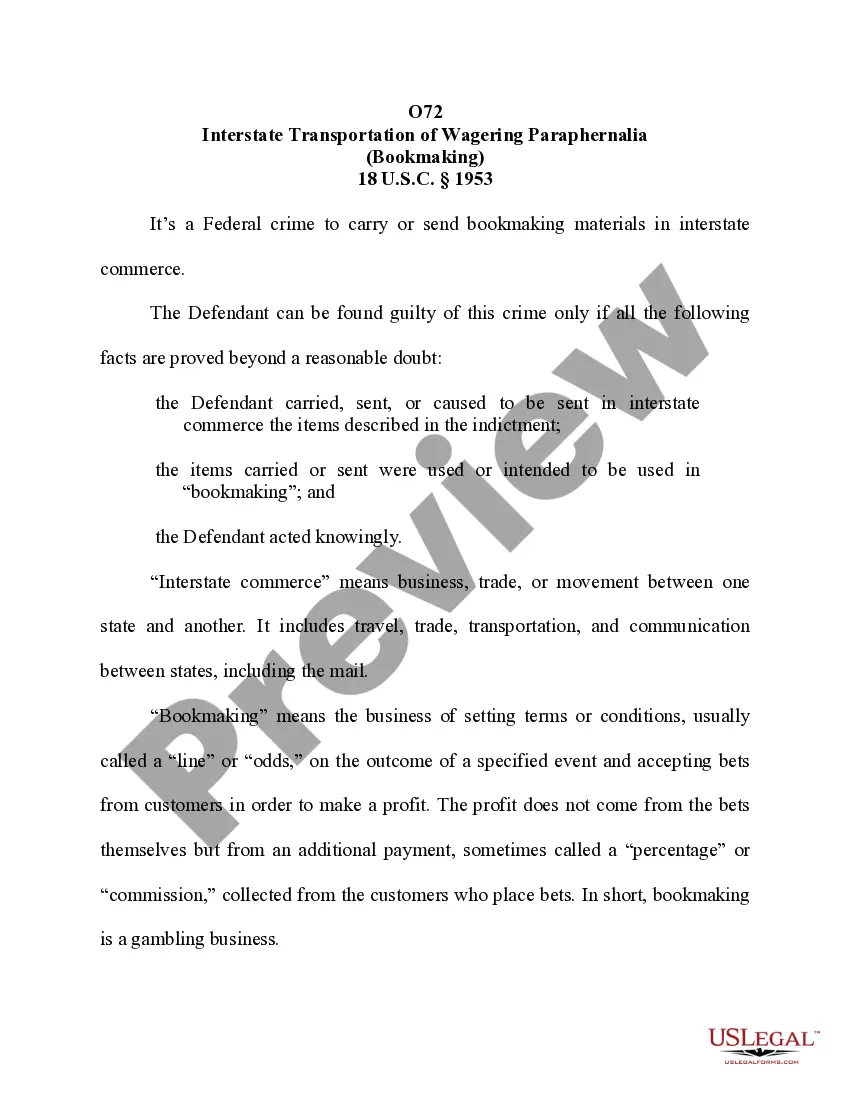
The Transmission of Wagering Information form is a legal document that addresses the transmission of bets or wagers related to sports gambling under Title 18, United States Code, Section 1084. This form is crucial for anyone involved in the betting business, as it outlines the legal implications of transmitting wagering information across state lines or to foreign places. By understanding this form, you can ensure compliance with federal laws governing interstate betting activities.
Main sections of this form
- Identification of the defendant as engaged in betting or wagering.
- Evidence of using wire communication facilities to transmit bets.
- Details regarding the interstate or foreign nature of the transmission.
- Defendant's knowledge of the transmission occurring across state or national borders.

When this form is needed
This form should be used when an individual or entity is accused of illegally transmitting wagering information in violation of federal law. It is especially relevant in cases involving professional gamblers who routinely conduct their business across state lines. You may also need it if you're preparing a legal defense or need to clarify the legality of certain gambling activities.
Who this form is for
- Individuals or businesses involved in sports betting.
- Legal professionals representing clients in gambling-related cases.
- Individuals receiving accusations of illegal betting activities.
- Counsel seeking to understand the legal framework surrounding interstate gambling.
Completing this form step by step
- Identify all parties involved in the betting or wagering activities.
- Specify the facts surrounding the transmission of wagering information.
- Enter the locations between which the transmission occurred, including states and foreign places if applicable.
- Detail the defendant's knowledge of the interstate or foreign nature of the transmission.
Does this document require notarization?
This form usually doesn’t need to be notarized. However, local laws or specific transactions may require it. Our online notarization service, powered by Notarize, lets you complete it remotely through a secure video session, available 24/7.
Get your form ready online
Our built-in tools help you complete, sign, share, and store your documents in one place.
Make edits, fill in missing information, and update formatting in US Legal Forms—just like you would in MS Word.
Download a copy, print it, send it by email, or mail it via USPS—whatever works best for your next step.
Sign and collect signatures with our SignNow integration. Send to multiple recipients, set reminders, and more. Go Premium to unlock E-Sign.
If this form requires notarization, complete it online through a secure video call—no need to meet a notary in person or wait for an appointment.
We protect your documents and personal data by following strict security and privacy standards.

Make edits, fill in missing information, and update formatting in US Legal Forms—just like you would in MS Word.

Download a copy, print it, send it by email, or mail it via USPS—whatever works best for your next step.

Sign and collect signatures with our SignNow integration. Send to multiple recipients, set reminders, and more. Go Premium to unlock E-Sign.

If this form requires notarization, complete it online through a secure video call—no need to meet a notary in person or wait for an appointment.

We protect your documents and personal data by following strict security and privacy standards.
Common mistakes to avoid
- Failing to clearly define the parties involved.
- Omitting critical details about the nature of the transmission.
- Not providing sufficient evidence of the defendant's knowledge regarding interstate actions.
- Assuming that casual or sporadic betting behaviors are exempt from this statute.
Advantages of online completion
- Convenient access to a legally vetted form without needing an in-person visit.
- Editable content allows you to tailor the document to your specific situation.
- Reliable updates ensuring compliance with current legal standards and requirements.
Legal use & context
- This form is essential for navigating federal laws on wagering transmissions.
- Understanding this form will help you comply with legal regulations regarding sports gambling.
- Filling out this form correctly is crucial for establishing a strong legal position if challenged in court.
Looking for another form?
Form popularity
FAQ
The 1961 Wire Act prohibited the transmission of information assisting in the placing of a bet or wager.
The Wire Act (18 U.S.C. § 1084) prohibits anyone ?engaged in the business of betting or wagering? from knowingly transmitting several types of wagering-related communications across state lines.
The Interstate Wire Act of 1961 is a federal criminal statute signed into law by President John F. Kennedy that makes it illegal to pass gambling information and instructions across state lines through the use of electronic wires.
In 1961, Congress, prompted by then-U.S. Attorney General Robert F. Kennedy, passed the Wire Act as part of an omnibus crime bill intended to fight rampant organized crime in the United States.
The idea behind PASPA was to stamp out sports betting before more states passed laws making it legal and began creating or licensing sportsbooks. Historically, leagues have argued that sports betting bribery scandals called into question the integrity of sporting events.