Michigan Discovery Interrogatories from Plaintiff to Defendant with Production Requests
Understanding this form
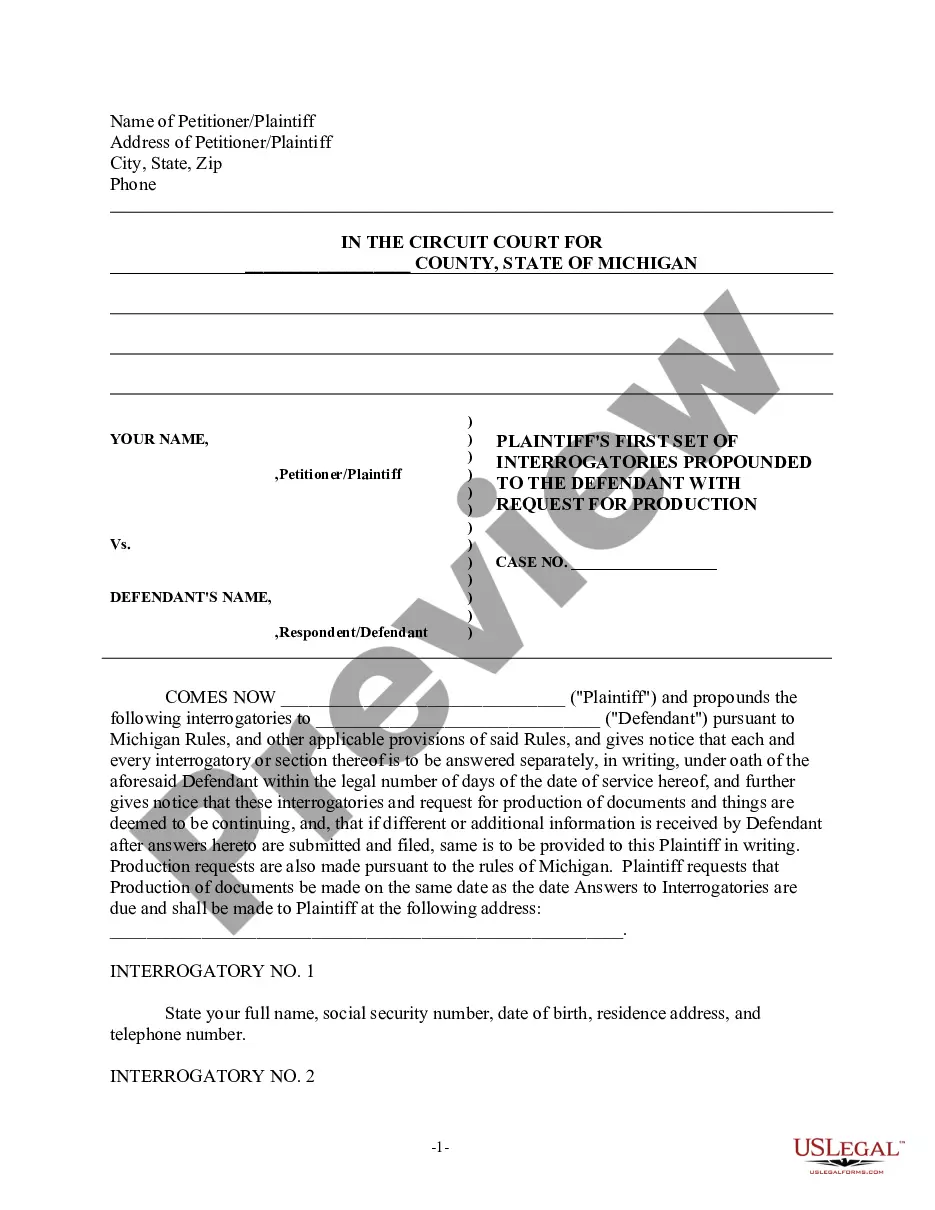
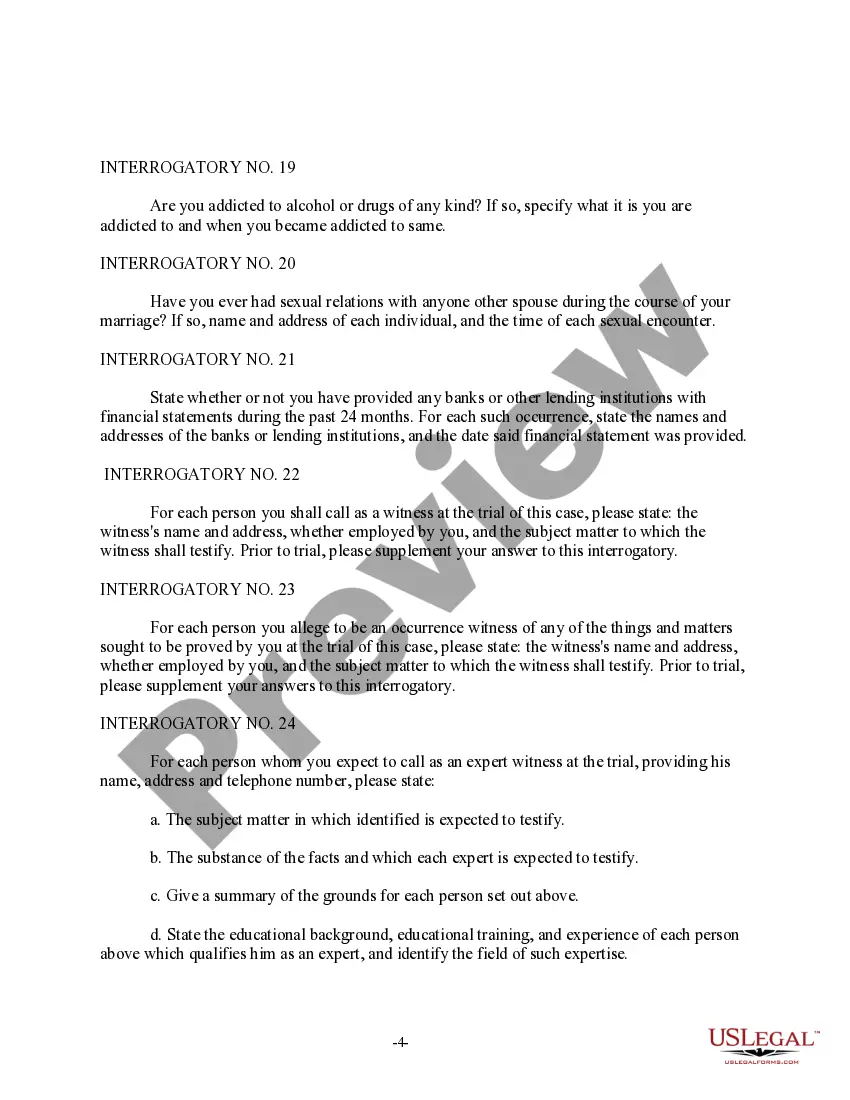
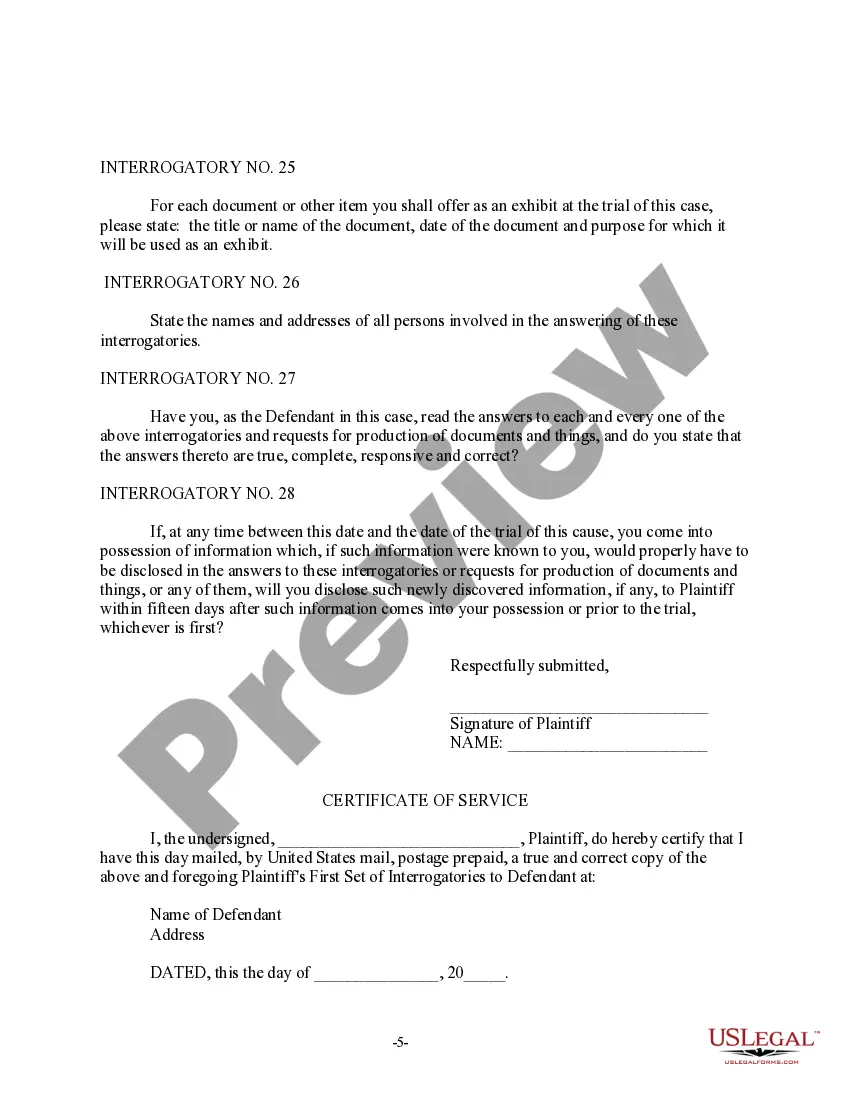
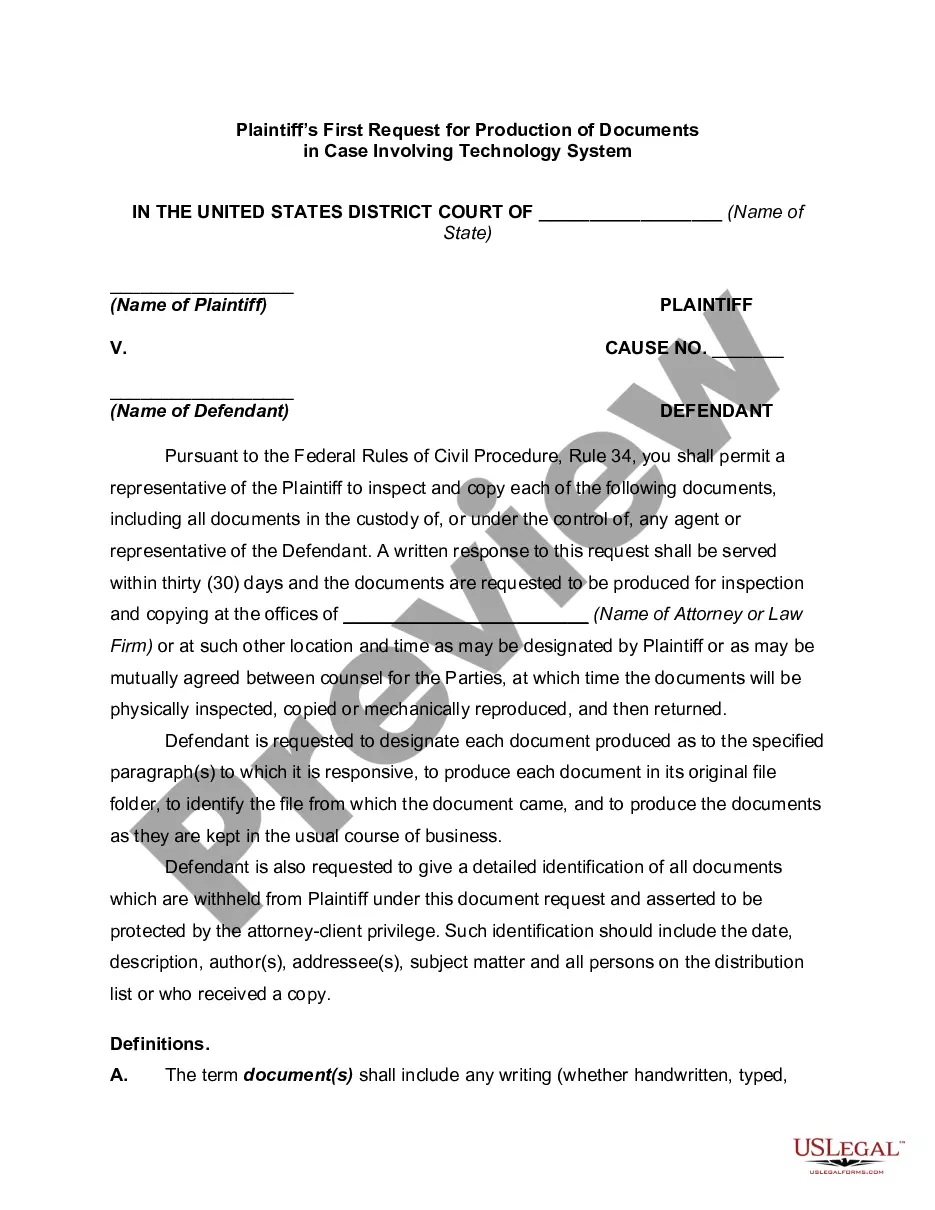
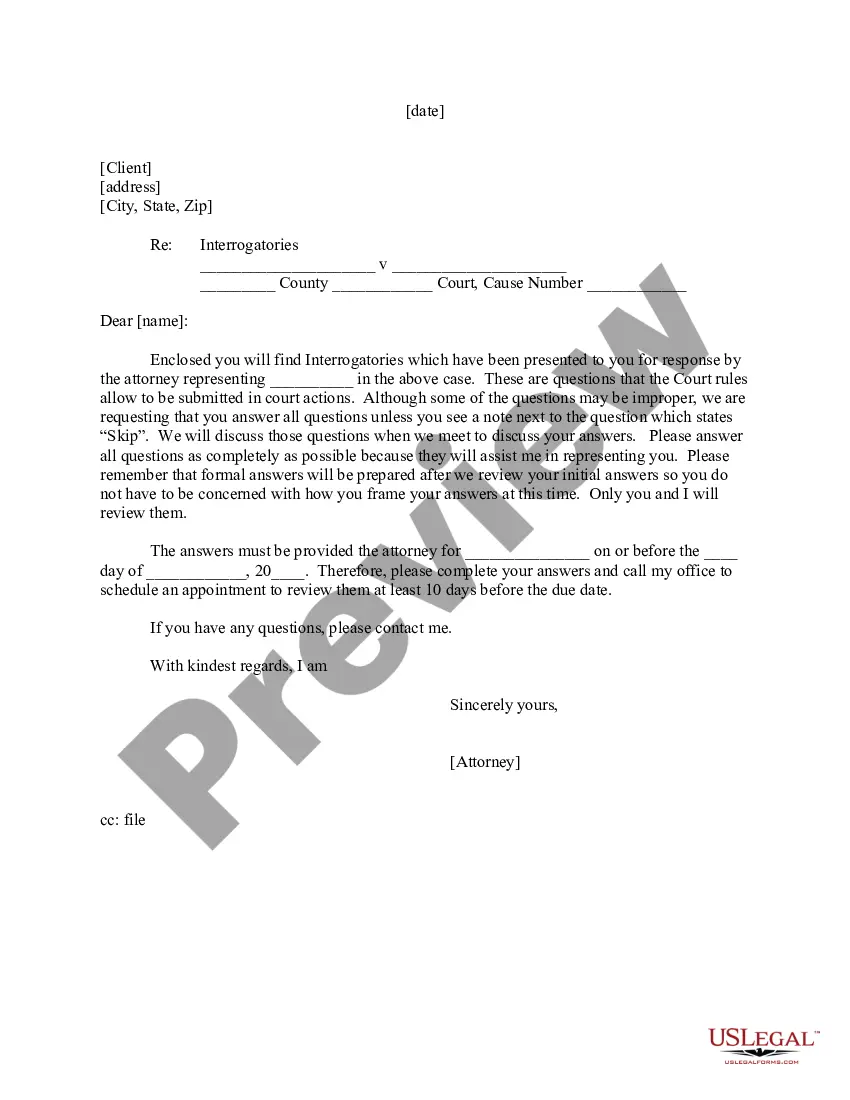
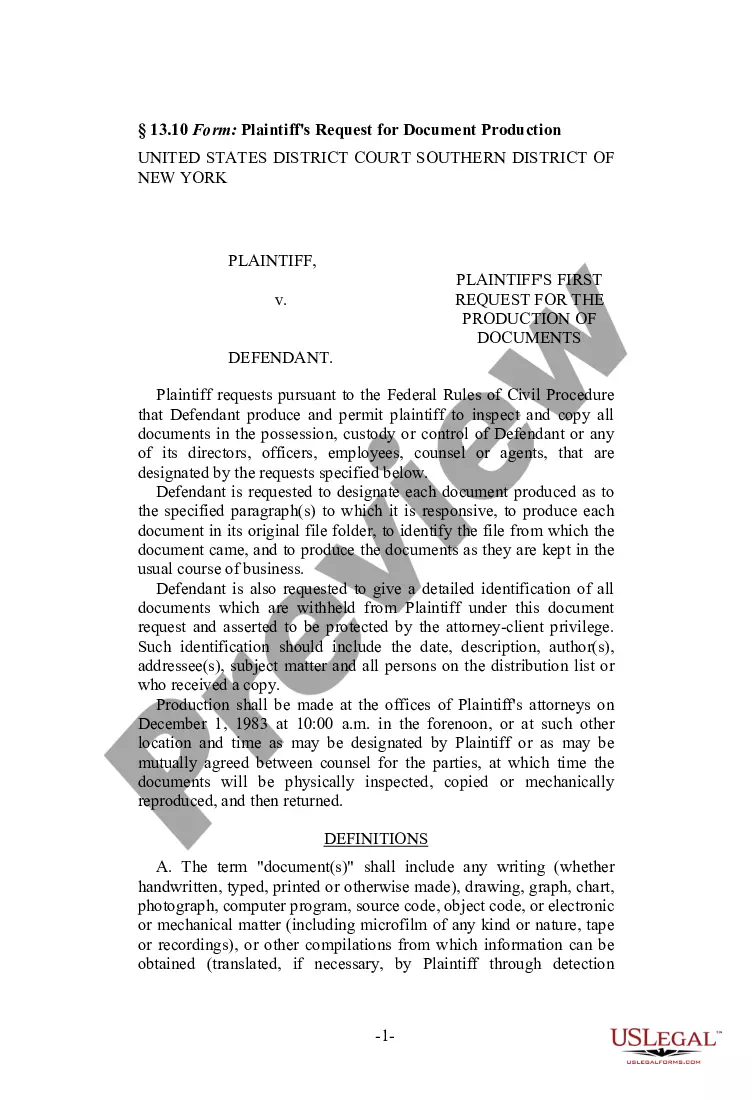
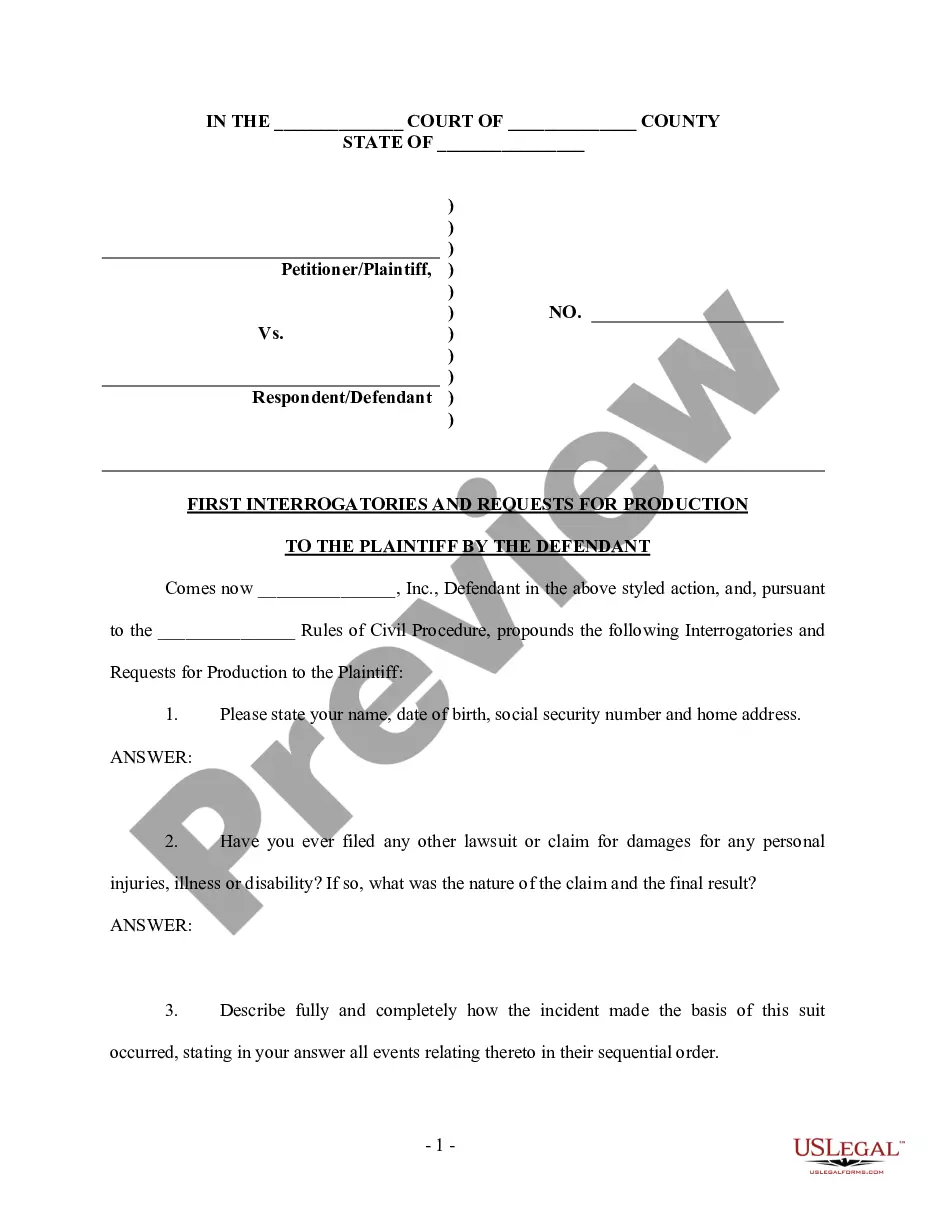
The Discovery Interrogatories from Plaintiff to Defendant with Production Requests is a legal document used during the discovery phase of a divorce action. This form allows the Plaintiff to ask the Defendant a series of questions and request specific documents that may be relevant to the case. It serves to gather information and evidence to support the Plaintiff's position in court. This form is different from other types of interrogatories as it is specifically tailored for divorce proceedings and includes production requests for documents.
What’s included in this form
- Full name and contact information of the Defendant.
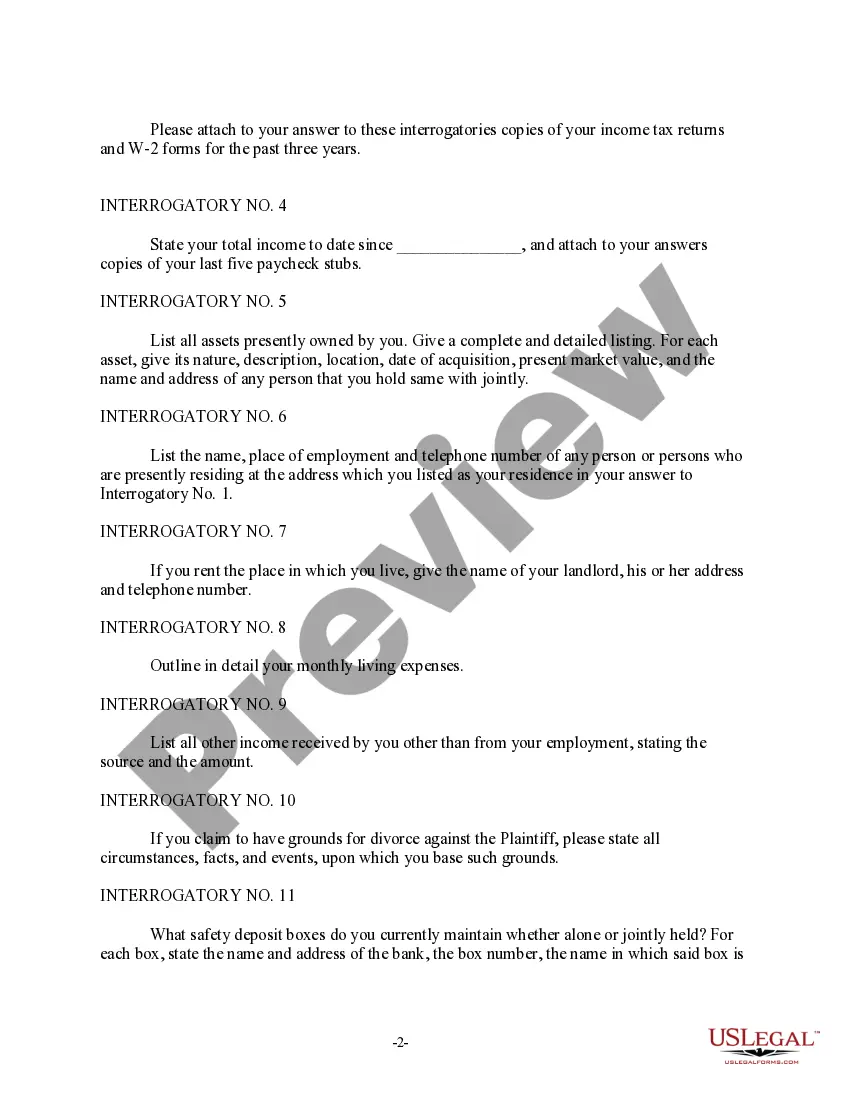
- Request for copies of financial documents, such as tax returns and pay stubs.
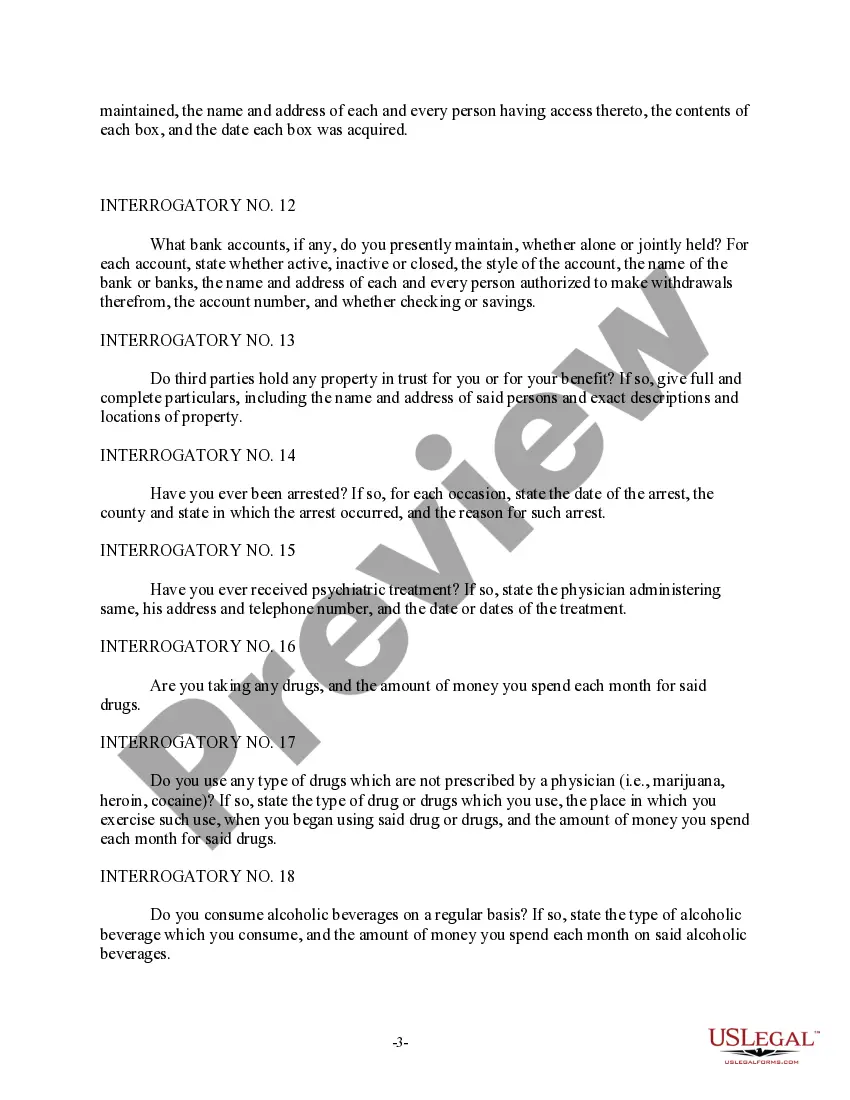
- Details about the Defendant's assets, income, and living expenses.
- Information about any criminal history or psychiatric treatment.
- Questions concerning the Defendant's conduct during the marriage, including any grounds for divorce.
- Verification that the answers provided are truthful and complete.


Situations where this form applies
This form should be used when a Plaintiff initiates a divorce action and needs to collect important information from the Defendant. It is particularly useful for cases where financial disclosures and personal conduct issues may affect the outcome of the divorce, including asset division and spousal support. Using this form helps ensure that both parties provide transparency regarding their financial situations and other relevant matters.
Who needs this form
- Individuals who are filing for divorce as a Plaintiff.
- Lawyers representing clients in divorce proceedings.
- Anyone seeking to obtain specific information or documents from a Defendant during divorce litigation.
Steps to complete this form
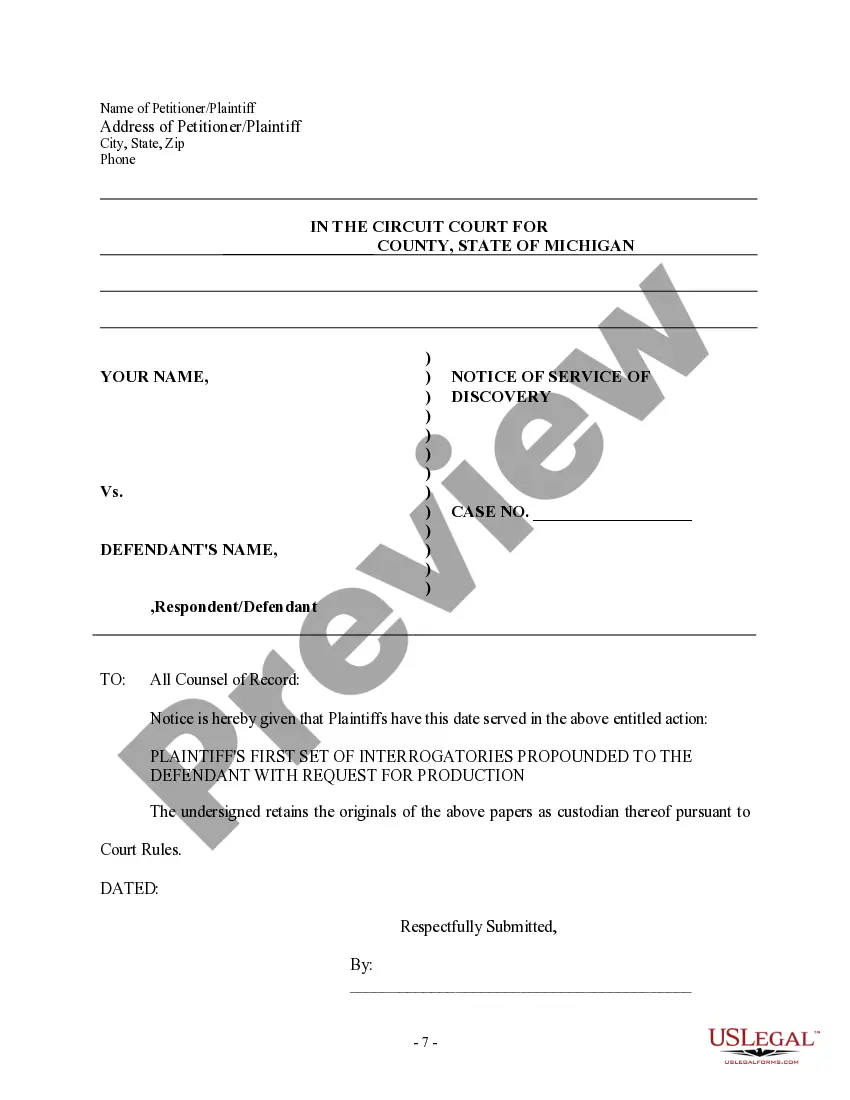
- Identify both parties by entering the names and addresses of the Plaintiff and Defendant.
- Fill in the case number assigned by the court.
- Answer all interrogatories completely and accurately, ensuring to include any relevant documents requested.
- Sign the form, certifying the accuracy of the information provided.
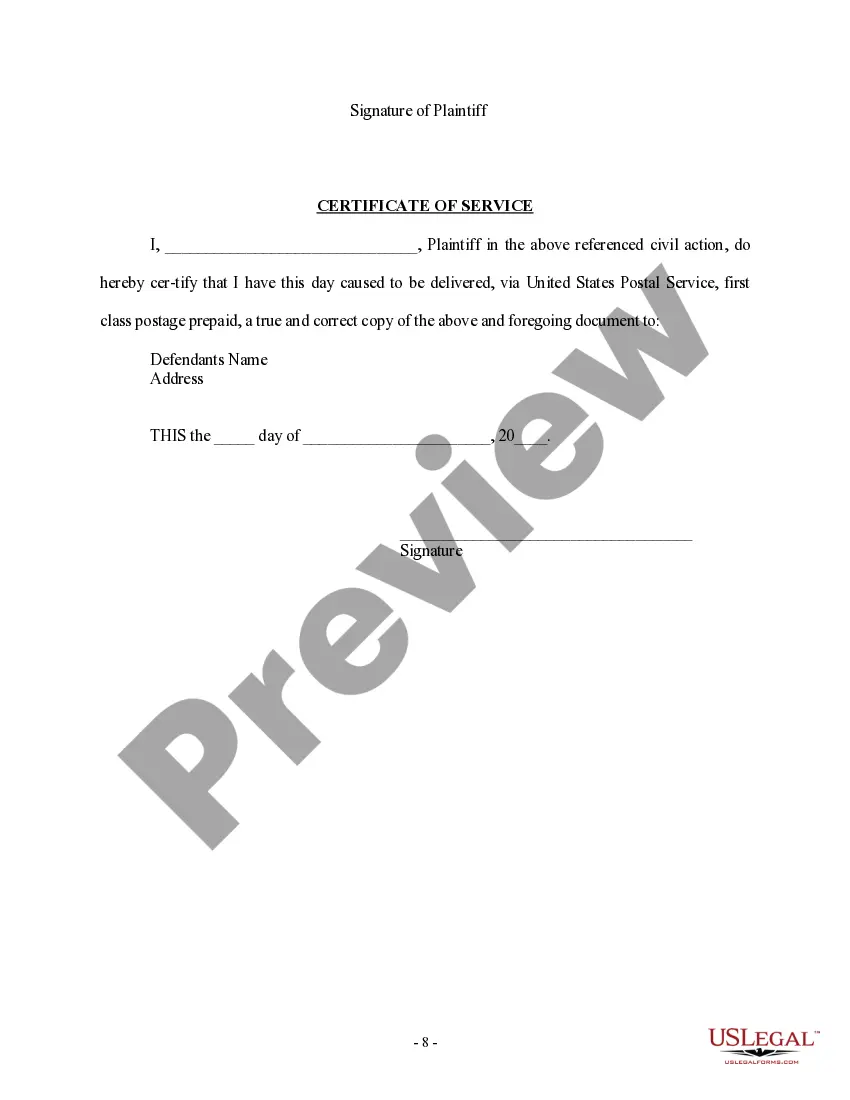
- Serve a copy of the completed form to the Defendant and file the original with the court.
Notarization guidance
Notarization is not commonly needed for this form. However, certain documents or local rules may make it necessary. Our notarization service, powered by Notarize, allows you to finalize it securely online anytime, day or night.
Get your form ready online
Our built-in tools help you complete, sign, share, and store your documents in one place.
Make edits, fill in missing information, and update formatting in US Legal Forms—just like you would in MS Word.
Download a copy, print it, send it by email, or mail it via USPS—whatever works best for your next step.
Sign and collect signatures with our SignNow integration. Send to multiple recipients, set reminders, and more. Go Premium to unlock E-Sign.
If this form requires notarization, complete it online through a secure video call—no need to meet a notary in person or wait for an appointment.
We protect your documents and personal data by following strict security and privacy standards.

Make edits, fill in missing information, and update formatting in US Legal Forms—just like you would in MS Word.

Download a copy, print it, send it by email, or mail it via USPS—whatever works best for your next step.

Sign and collect signatures with our SignNow integration. Send to multiple recipients, set reminders, and more. Go Premium to unlock E-Sign.

If this form requires notarization, complete it online through a secure video call—no need to meet a notary in person or wait for an appointment.

We protect your documents and personal data by following strict security and privacy standards.
Mistakes to watch out for
- Failing to answer all interrogatories completely.
- Not providing required supporting documents.
- Ignoring deadlines for responses.
- Omitting signature or certificate of service.
- Providing false information, which can lead to legal consequences.
Benefits of completing this form online
- Convenient access to legal forms from home.
- Editable templates that allow for customization to fit specific cases.
- Reliable forms drafted by licensed attorneys, ensuring legal compliance.
- Quick downloads for immediate use in legal proceedings.
Legal use & context
- This form is legally recognized in divorce proceedings within the State of Michigan.
- It must be filed and served in accordance with the Michigan Rules of Court to be enforceable.
- Failure to comply with discovery requests may result in sanctions or adverse rulings in court.
Summary of main points
- The form is essential for collecting information during a divorce case.
- It includes both interrogatories and requests for production of documents.
- Timely and complete responses are critical for legal compliance.
- Understanding Michigan specific rules is crucial for proper usage of the form.
Looking for another form?
Form popularity
FAQ
Rule 45 refers specifically to the rules governing subpoenas within Michigan's court system. This rule outlines the procedures for requiring individuals to appear in court or produce documents. Understanding Rule 45 is vital when formulating Michigan Discovery Interrogatories from Plaintiff to Defendant with Production Requests, as it can assist in acquiring necessary evidence.
Rule 45 in Michigan refers to the provision governing subpoenas for obtaining testimony and documents from non-parties. This rule allows parties to compel witnesses to produce evidence necessary for the case at hand. When considering Michigan Discovery Interrogatories from Plaintiff to Defendant with Production Requests, knowing how Rule 45 functions can enhance your overall strategy.
There are basically six types of discovery in family court: 1) interrogatories; 2) requests for production of documents and inspection 3) requests for admissions; 4) depositions; 5) subpoenas duces tecum; 6) physical and mental examinations.
Interrogatories ask questions; the responding party provides written answers. A request for production of documents requests the production of documents (or other tangible things); the responding party provides documents.
So, can you refuse to answer interrogatories? The answer is, no, you may not.That answer must either permit inspection of the requested information or object to the production of the information for a specific reason.
The purpose of interrogatories is to learn a great deal of general information about a party in a lawsuit. For example, the defendant in a personal injury lawsuit about a car accident might send you interrogatories asking you to disclose things like: Where you live. Where you work.
That disclosure is accomplished through a methodical process called "discovery." Discovery takes three basic forms: written discovery, document production and depositions. See 's Stages of a Personal Injury Case section for related articles and resources.
Interrogatories, which are written questions about things that are relevant or important to the case. (NRCP 33; JCRCP 33) Requests for production of documents or things, which are written requests that demand the other side provide particular documents or items.
You must answer each interrogatory separately and fully in writing under oath, unless you object to it. You must explain why you object. You must sign your answers and objections.
Interrogatories Interrogatories are written questions that are sent by one party to another.Requests for production are the means by which you can ask the other party to make copies of documents, photographs, records, etc. and to request the inspection of property.