Shareholder and Corporation agreement to issue additional stock to a third party to raise capital
Understanding this form
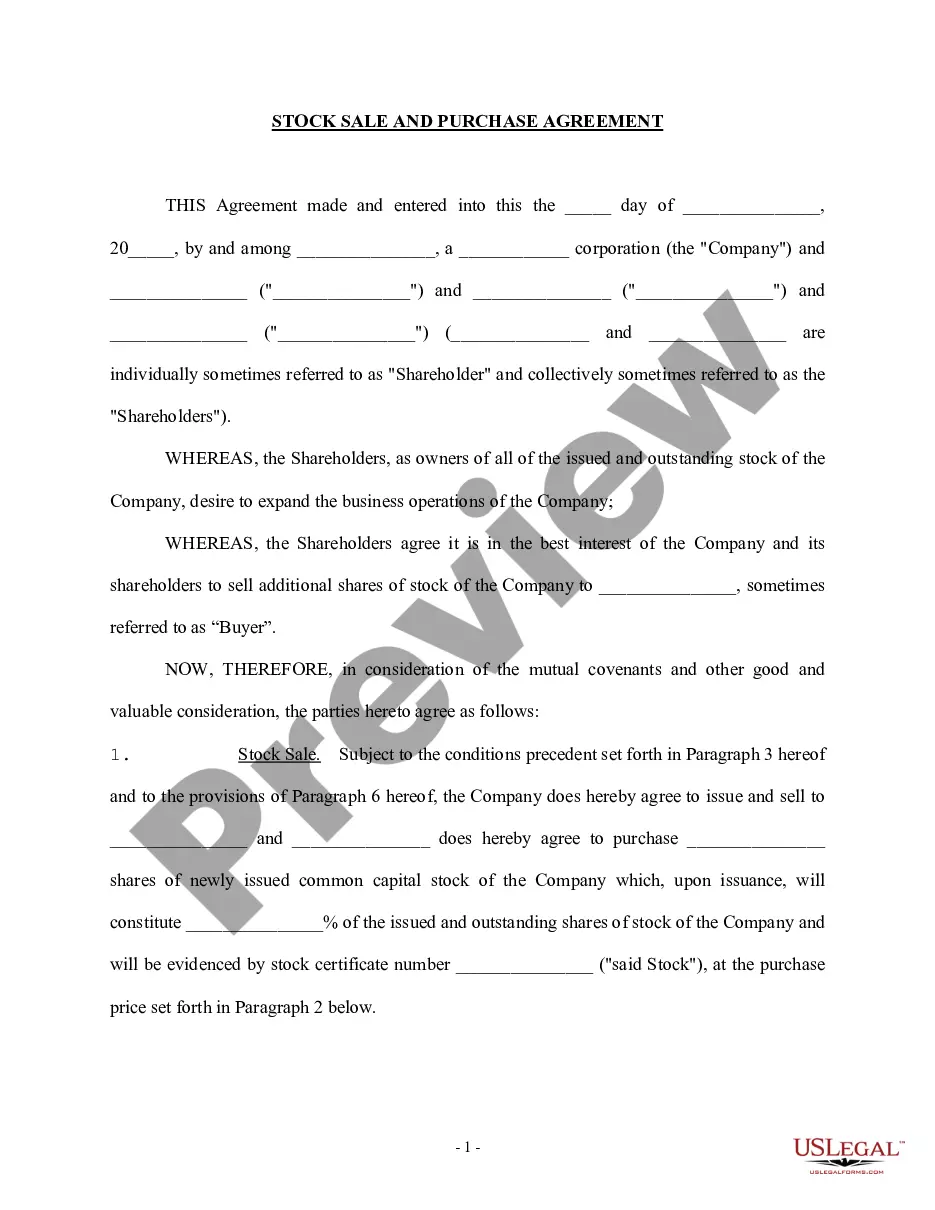
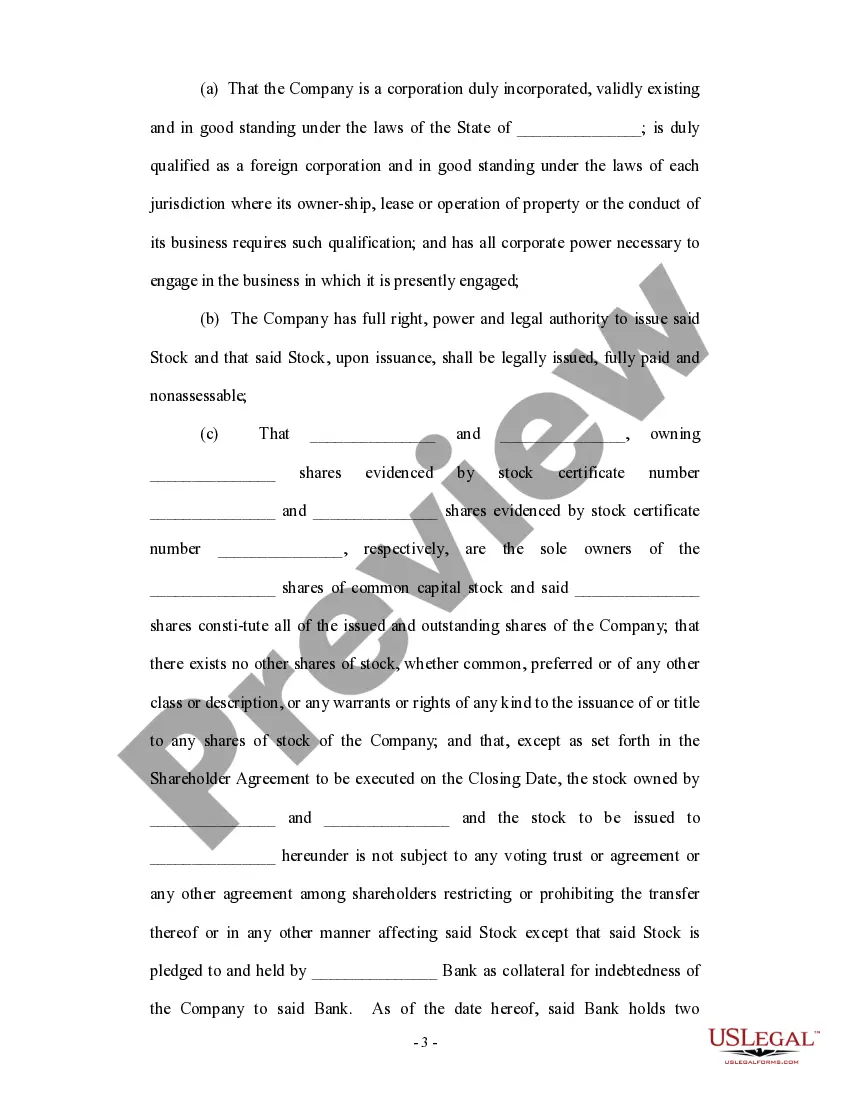
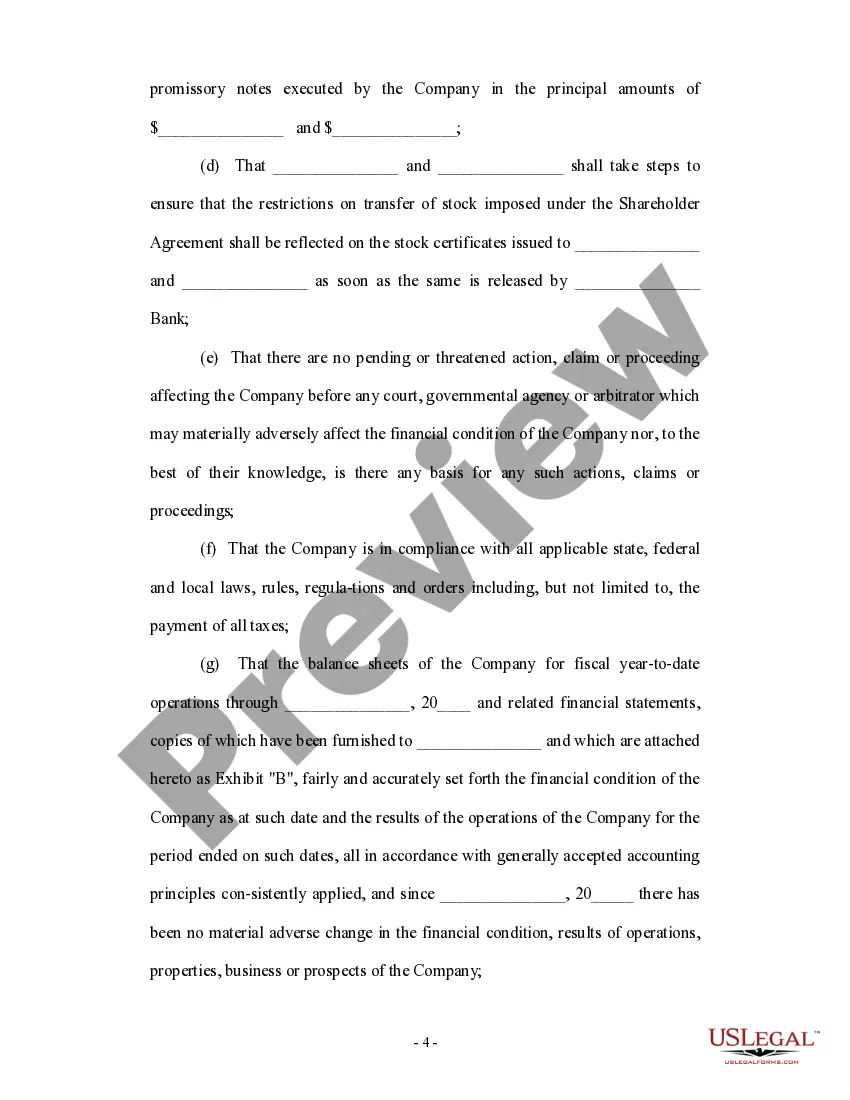
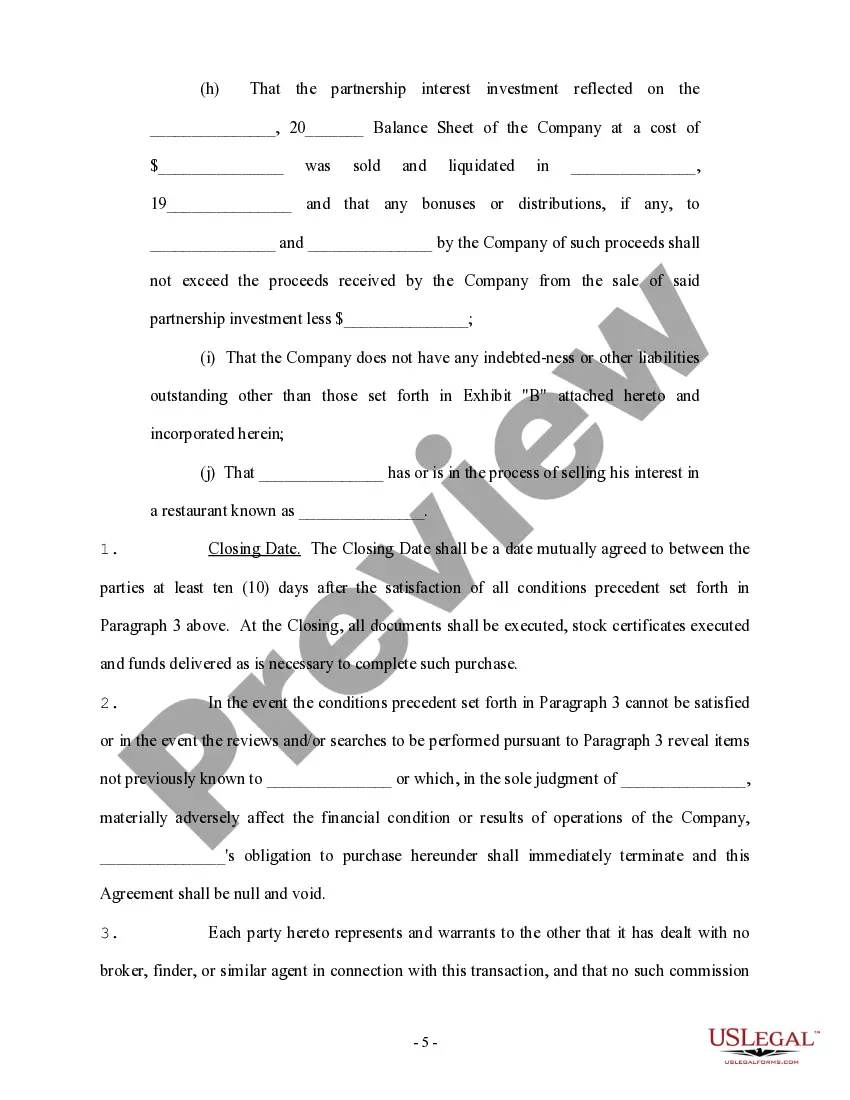
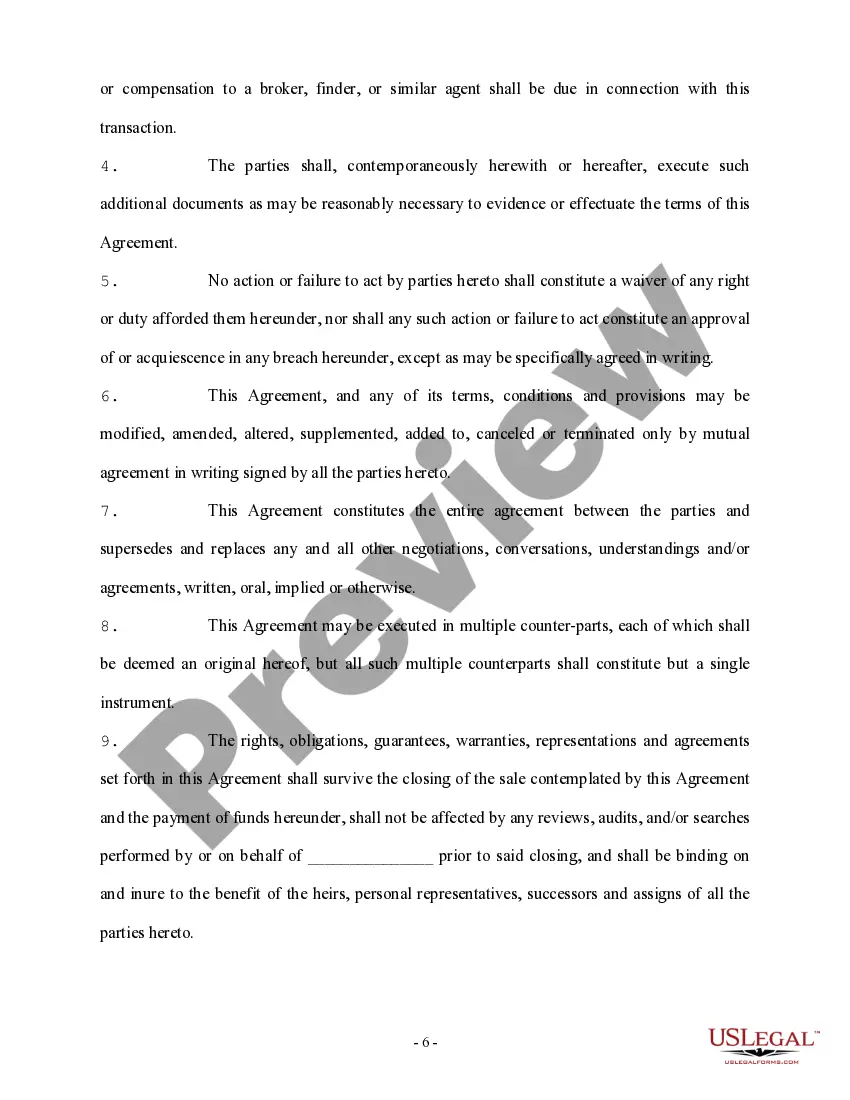
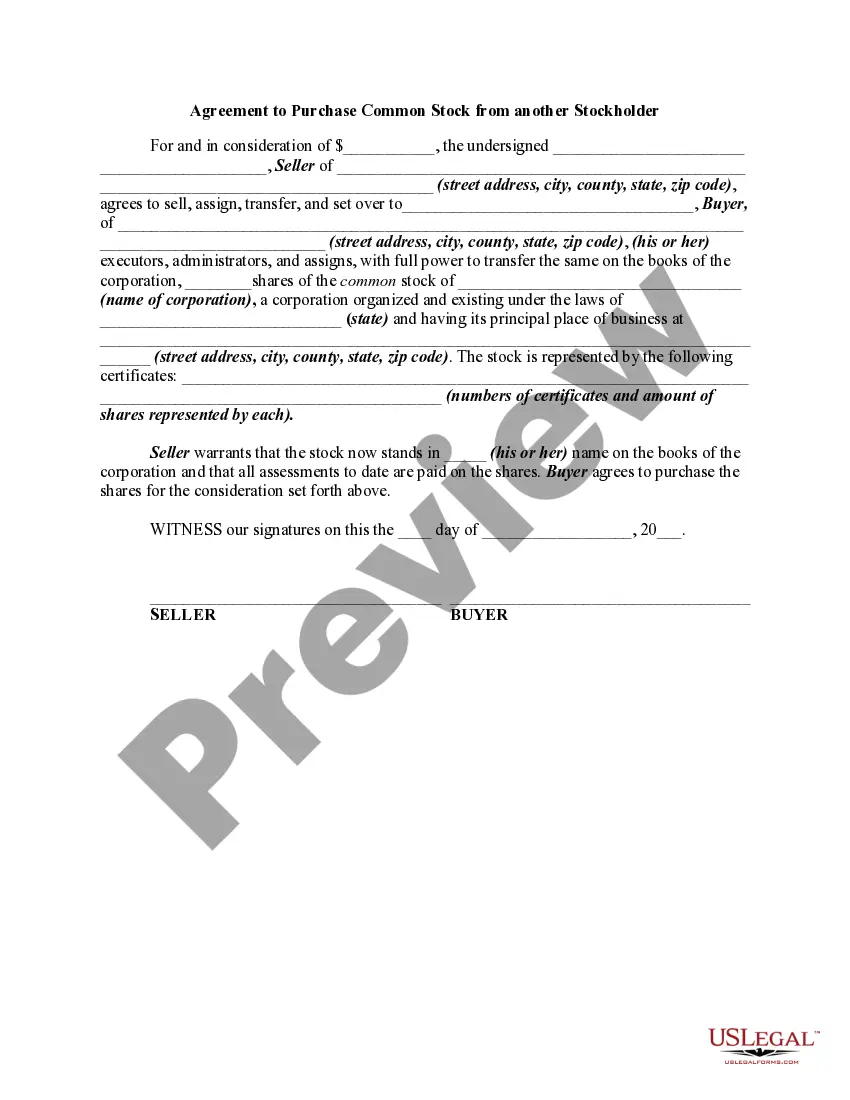
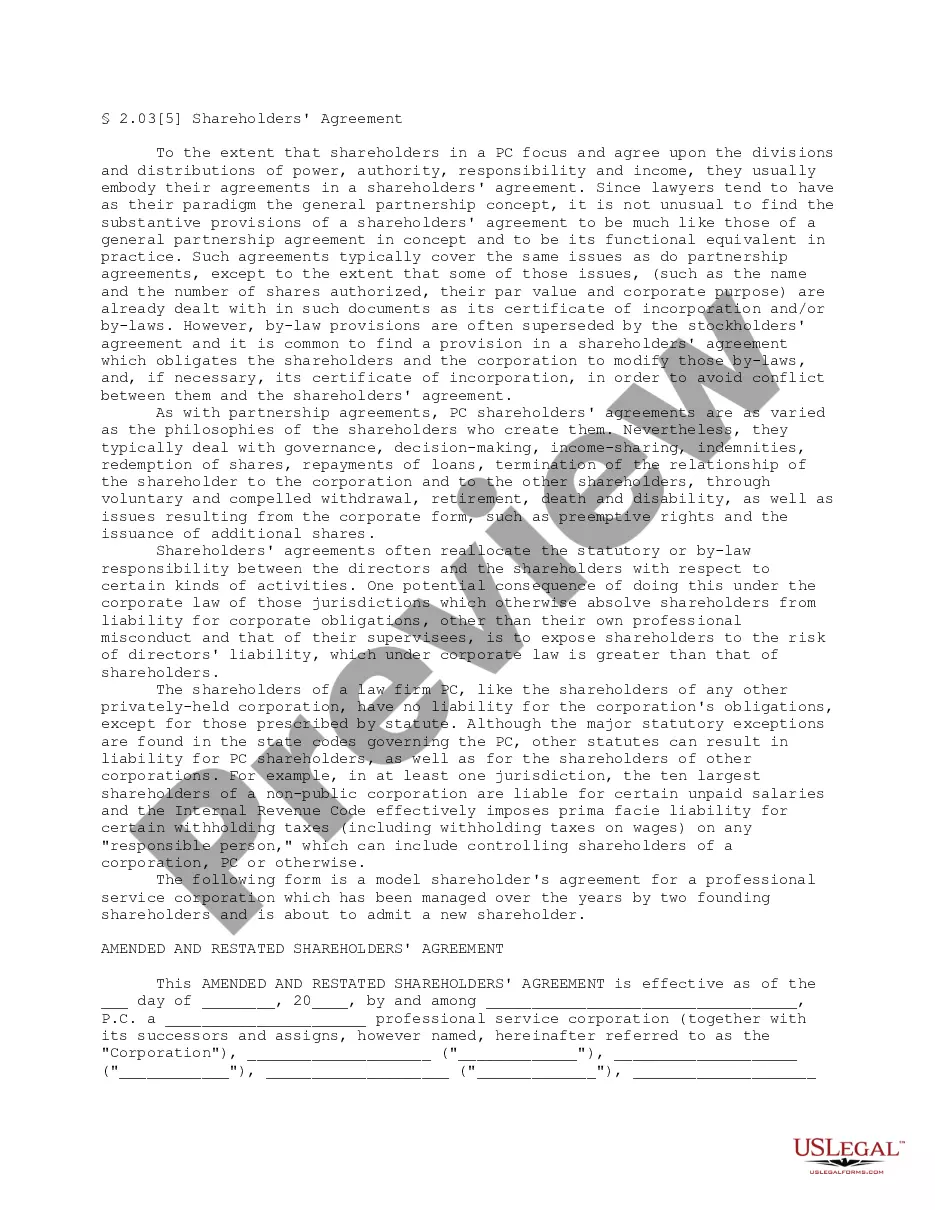
This form is a Shareholder and Corporation agreement to issue additional stock to a third party to raise capital. It facilitates the sale of new shares of corporate stock, enabling businesses to raise funds through the issuance of shares. This agreement is essential for corporations looking to expand operations or improve their financial standing by bringing in new investors, differentiating it from other agreements that focus solely on transfers of existing shares or other financial instruments.
What’s included in this form
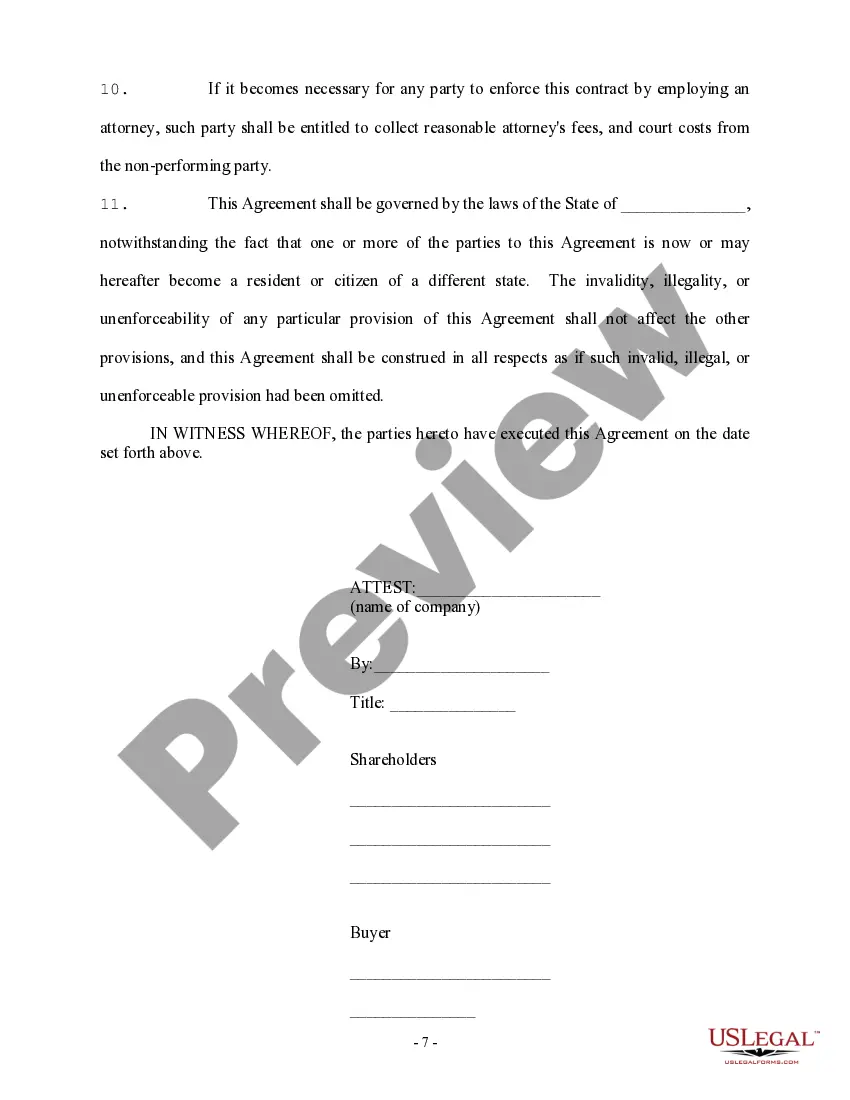
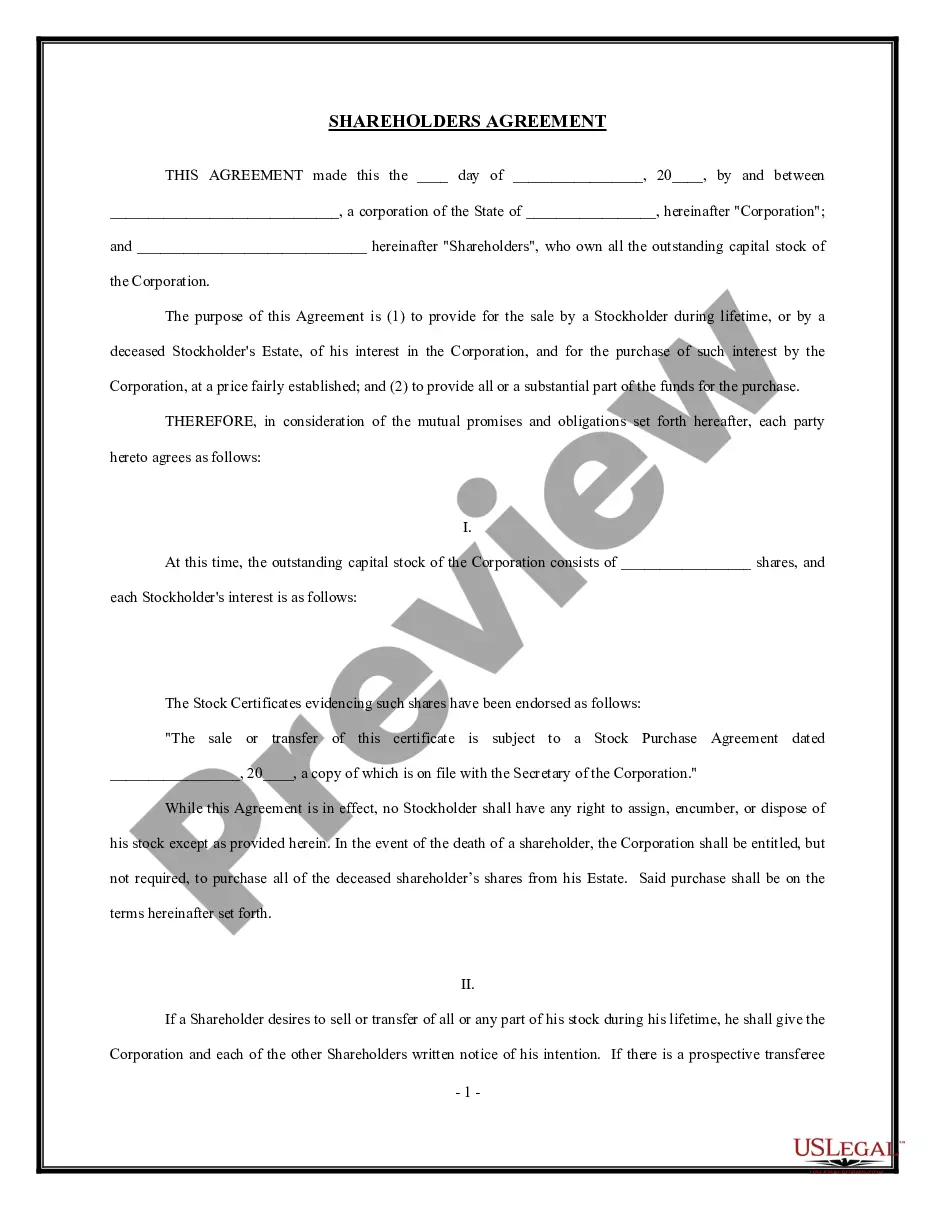
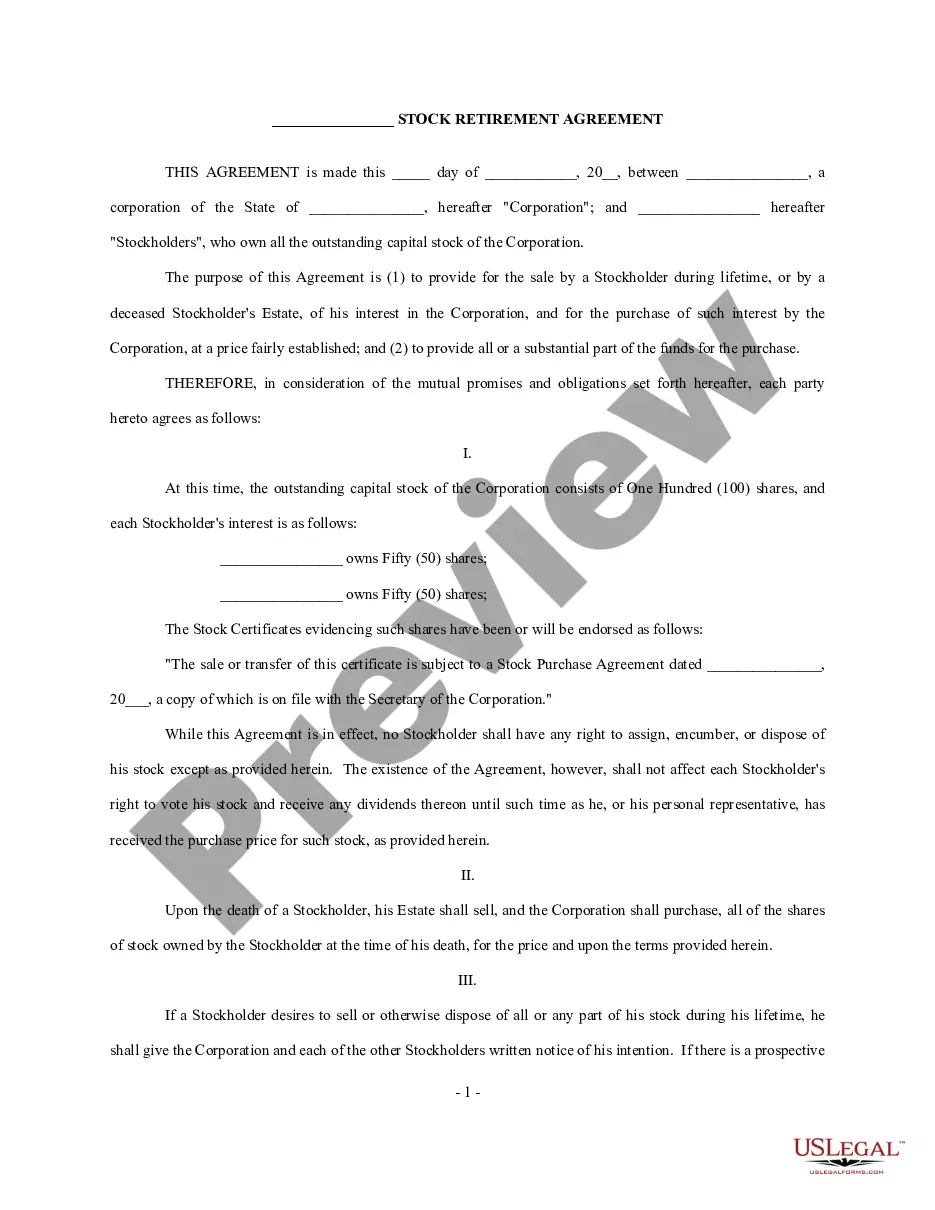
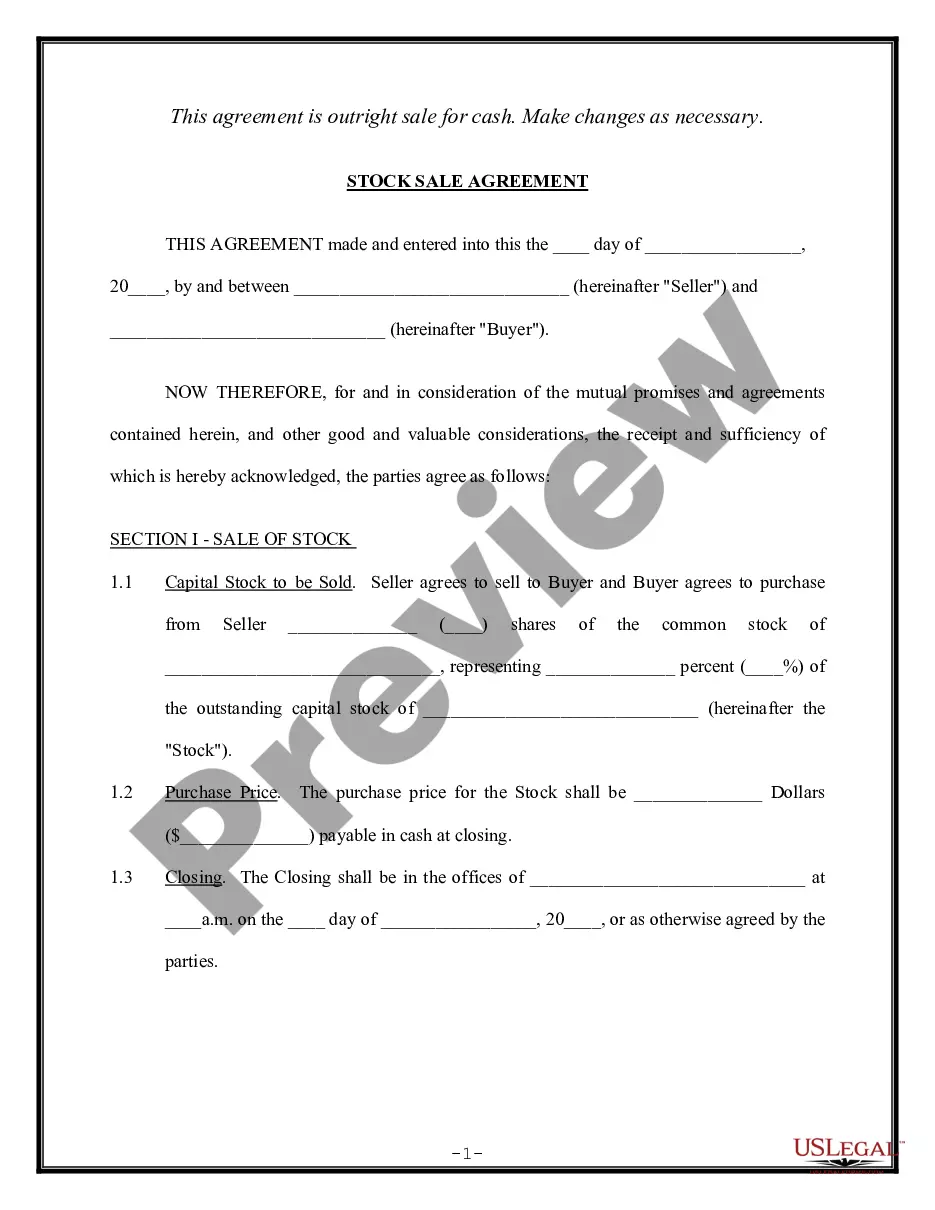
- Parties involved: Identification of the shareholders and the corporation making the agreement.
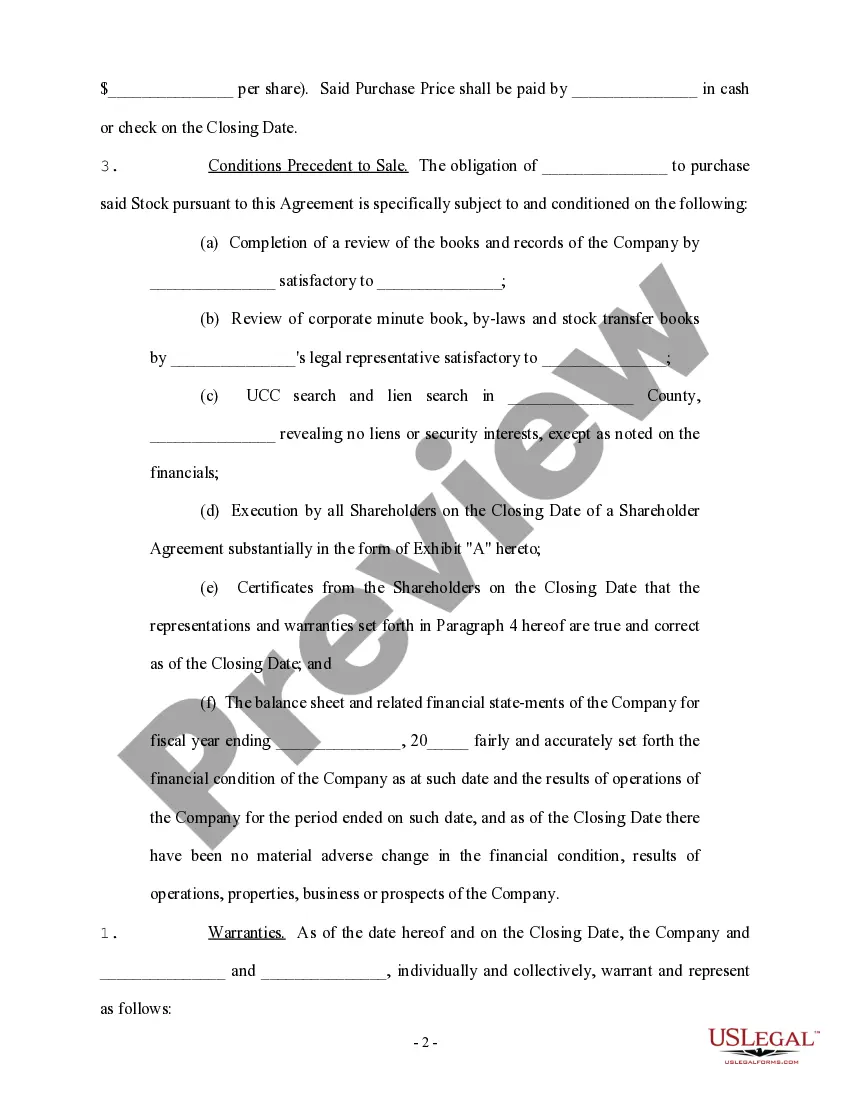
- Stock sale details: Description of the number of shares being sold and their purchase price.
- Conditions precedent: Specific conditions that must be fulfilled before the sale can be completed.
- Warranties: Assurances provided by the company and shareholders regarding the issuance of stock.
- Closing date: Date when the stock will be sold and the transaction completed.
- Governing law: Jurisdiction under which the agreement is enforced.

Situations where this form applies
This form should be used when the existing shareholders of a corporation agree to sell additional shares to a third party for the purpose of raising capital. It is appropriate in scenarios such as seeking investment to expand business operations, funding new projects, or improving overall financial health. Use this agreement to ensure a structured and legally binding transaction.
Who should use this form
- Corporations seeking to issue new shares to raise capital.
- Shareholders wanting to sell additional stock to new investors.
- Potential investors looking to purchase shares in the corporation.
- Legal representatives assisting in corporate financial structuring.
Steps to complete this form
- Identify the parties: Fill in the names of the corporation and the shareholders involved.
- Specify the stock details: Enter the number of shares being sold and the purchase price.
- Outline conditions: Detail any conditions that must be satisfied prior to the sale.
- Insert warranties: Provide relevant warranties regarding the corporation's standing and stock issuance.
- Determine closing date: Agree upon and state the date for the completion of the transaction.
- Sign the document: Ensure all parties sign the agreement to execute the stock sale.
Does this form need to be notarized?
This form usually doesn’t need to be notarized. However, local laws or specific transactions may require it. Our online notarization service, powered by Notarize, lets you complete it remotely through a secure video session, available 24/7.
Get your form ready online
Our built-in tools help you complete, sign, share, and store your documents in one place.
Make edits, fill in missing information, and update formatting in US Legal Forms—just like you would in MS Word.
Download a copy, print it, send it by email, or mail it via USPS—whatever works best for your next step.
Sign and collect signatures with our SignNow integration. Send to multiple recipients, set reminders, and more. Go Premium to unlock E-Sign.
If this form requires notarization, complete it online through a secure video call—no need to meet a notary in person or wait for an appointment.
We protect your documents and personal data by following strict security and privacy standards.

Make edits, fill in missing information, and update formatting in US Legal Forms—just like you would in MS Word.

Download a copy, print it, send it by email, or mail it via USPS—whatever works best for your next step.

Sign and collect signatures with our SignNow integration. Send to multiple recipients, set reminders, and more. Go Premium to unlock E-Sign.

If this form requires notarization, complete it online through a secure video call—no need to meet a notary in person or wait for an appointment.

We protect your documents and personal data by following strict security and privacy standards.
Common mistakes to avoid
- Failing to include all necessary signatures from shareholders.
- Omitting specific details about the stock sale, such as the number of shares.
- Not reviewing financial statements before the signing date.
- Neglecting to ensure compliance with state-specific rules regarding stock issuance.
Why complete this form online
- Convenience: Access and complete the form from anywhere, at any time.
- Editability: Easily modify the form to fit specific needs and circumstances.
- Reliability: Utilize a standard, attorney-drafted agreement that adheres to legal requirements.
Summary of main points
- The form facilitates the issuance of additional stock by a corporation to third-party buyers.
- It ensures that all shareholders agree to the terms, protecting their interests.
- Completing this form correctly involves understanding conditions precedent and warranties.
- Local laws may affect the implementation of this agreement; always check state-specific regulations.
Glossary of terms
- Shareholder: An individual or entity that owns shares in a corporation.
- Corporation: A legal entity that is separate and distinct from its owners, providing limited liability protection.
- Conditions precedent: Specific requirements that must be fulfilled before a contract is enforceable.
- Warranties: Promises made by one party to another about the accuracy of certain facts or conditions.
- Closing Date: The date on which a transaction is finalized and ownership is transferred.
Looking for another form?
Form popularity
FAQ
Shareholders of a company are of two types common and preferred shareholder.
Shareholders pay tax on their income in two ways: They pay tax on dividends they receive based on their stock ownership. Dividends can be taxed as ordinary income or as capital gains, depending on the type of dividend. Ordinary dividends are paid out of earnings and profits and are taxed as ordinary income.
Shareholders play both direct and indirect roles in a company's operations. They elect directors who appoint and supervise senior officers, including the chief executive officer and the chief financial officer. They play an indirect role through the stock market.
The definition of a shareholder is a person who owns shares in a company. Someone who owns stock in Apple is an example of a shareholder. One who owns shares of stock. Shareholders are the real owners of a publicly traded business, but management runs it.