Michigan Discovery Interrogatories from Defendant to Plaintiff with Production Requests

What this document covers
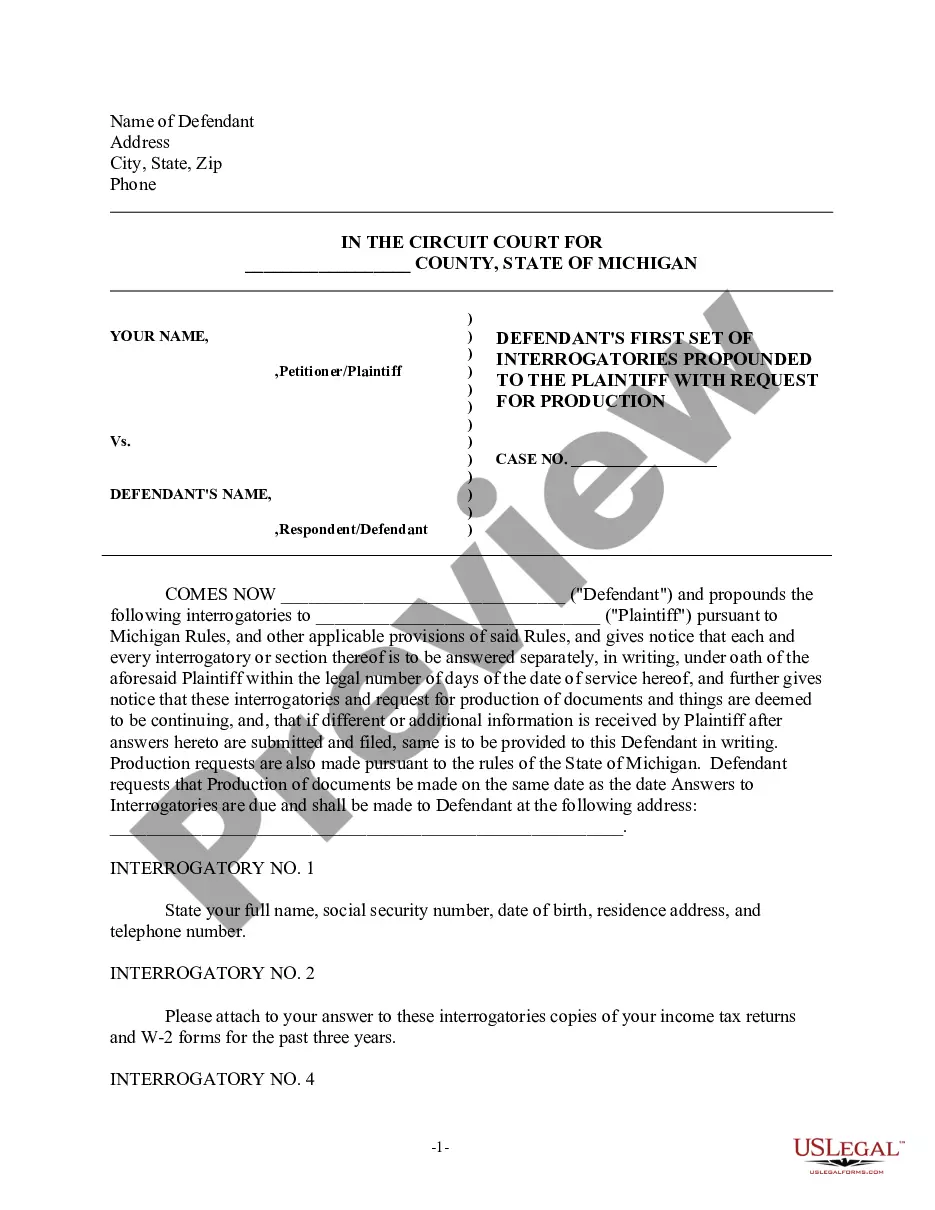
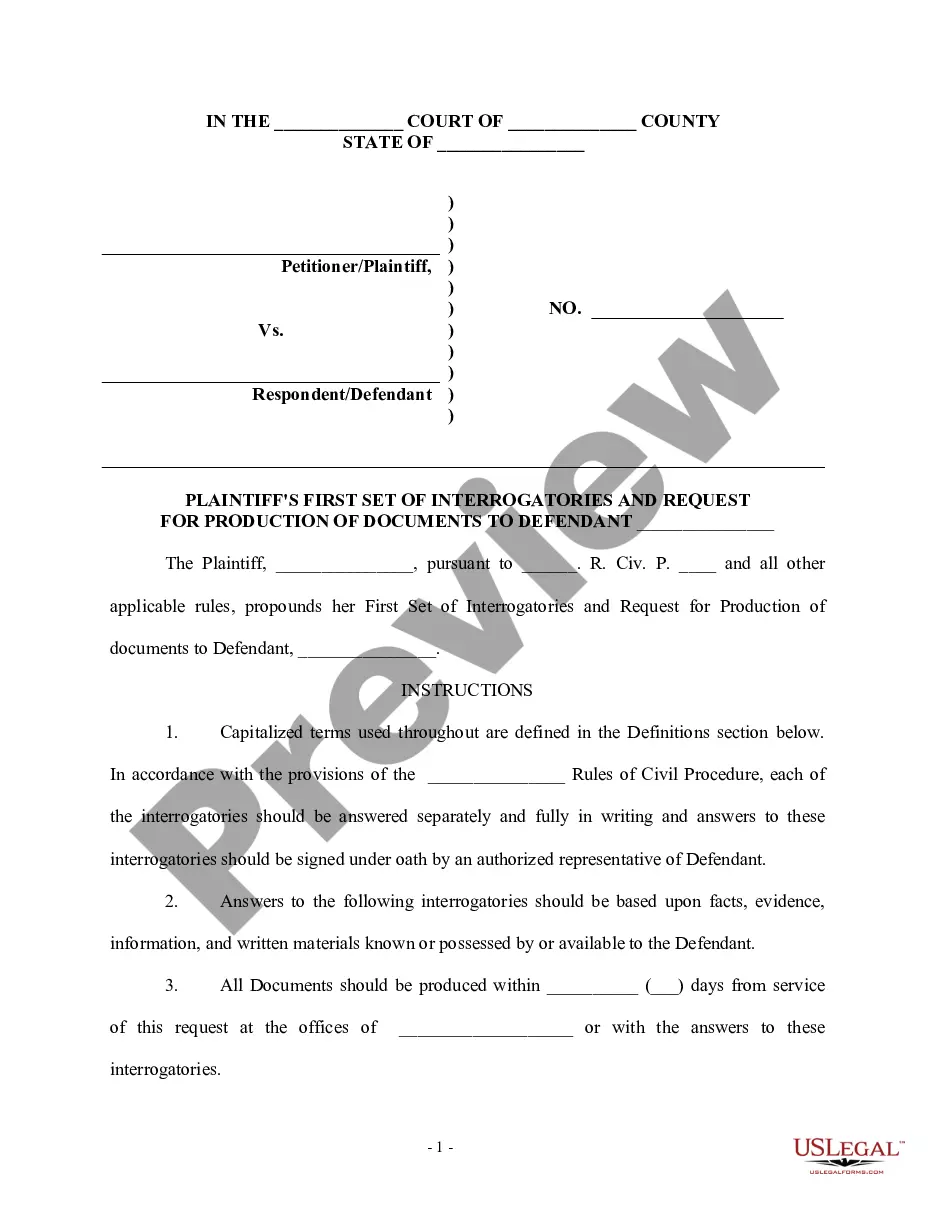
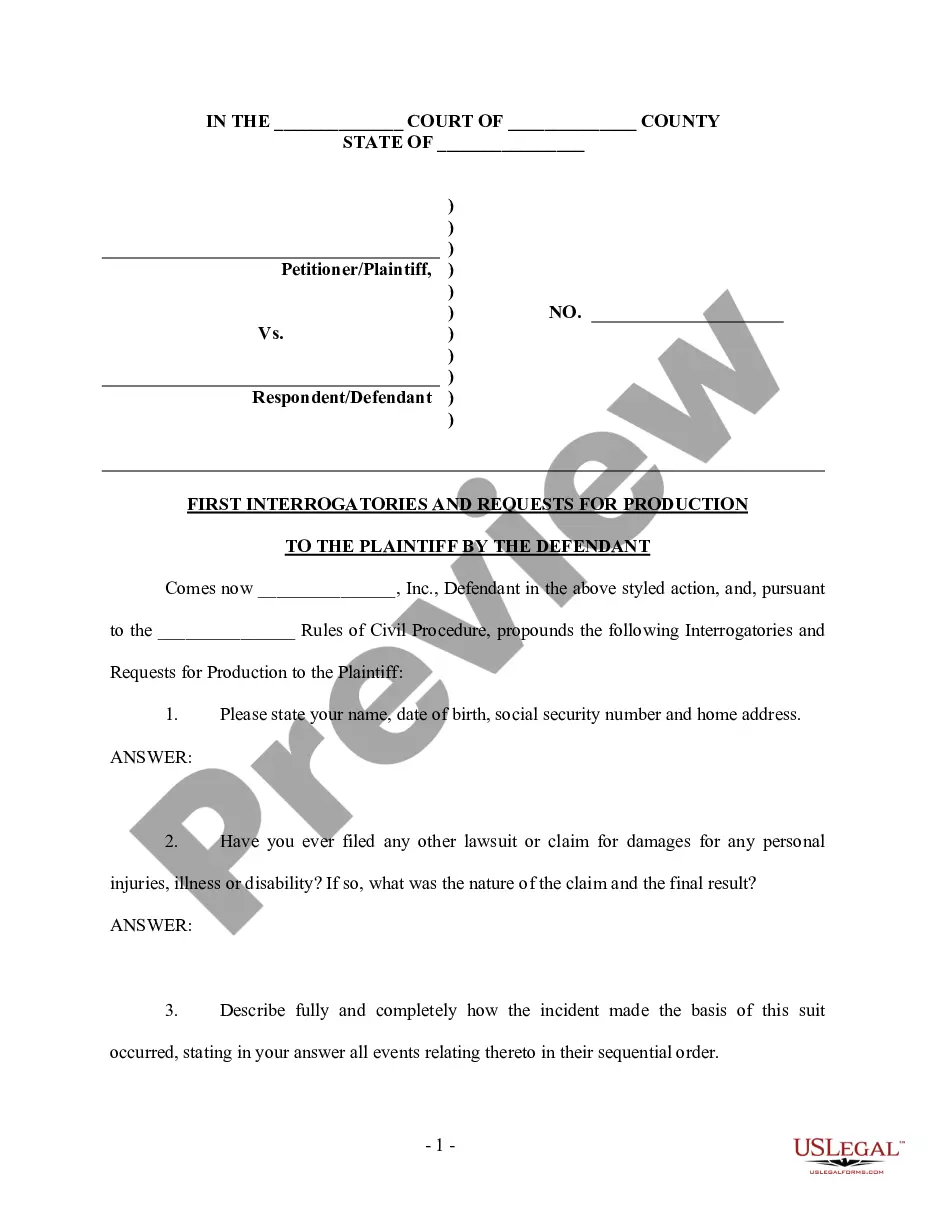
The Discovery Interrogatories from Defendant to Plaintiff with Production Requests is a legal document used in divorce proceedings. This form allows the defendant to request specific information and documents from the plaintiff to prepare for trial. It differs from similar forms in that it combines interrogatoriesâwritten questions that require written answersâwith requests for production of documents, creating a comprehensive inquiry approach in divorce cases.
Main sections of this form
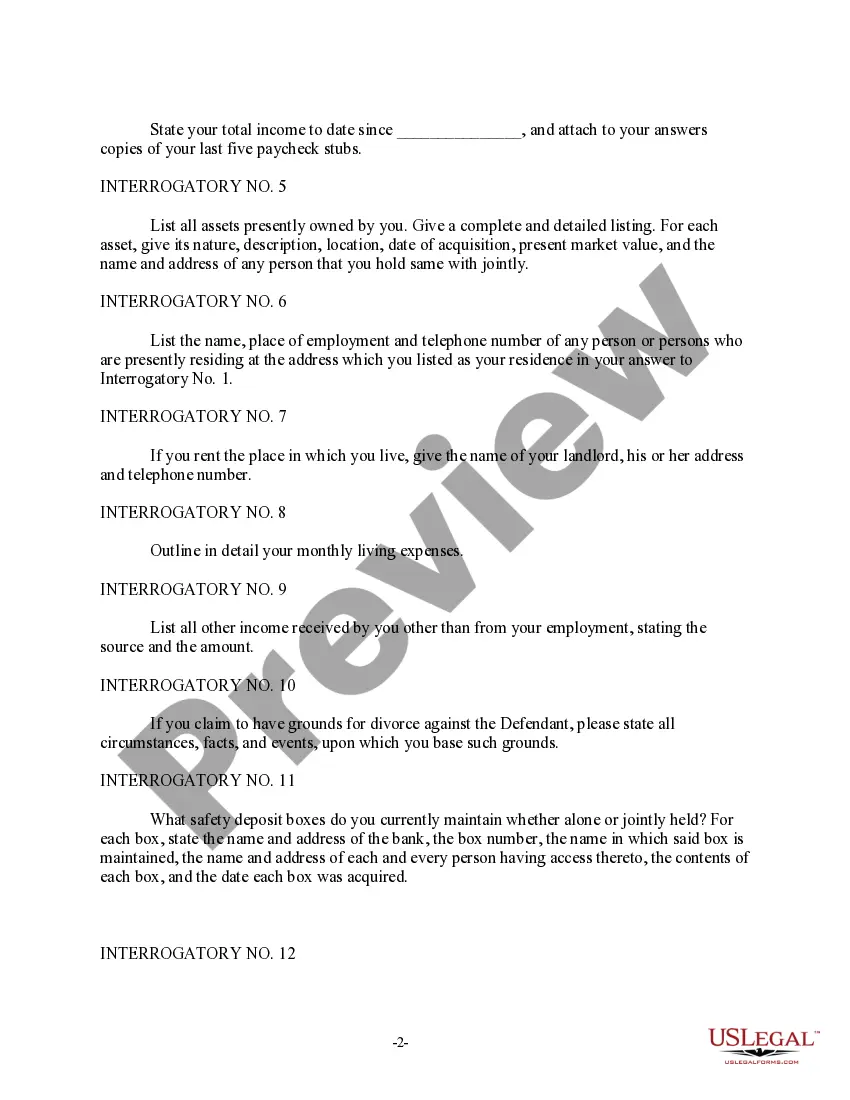
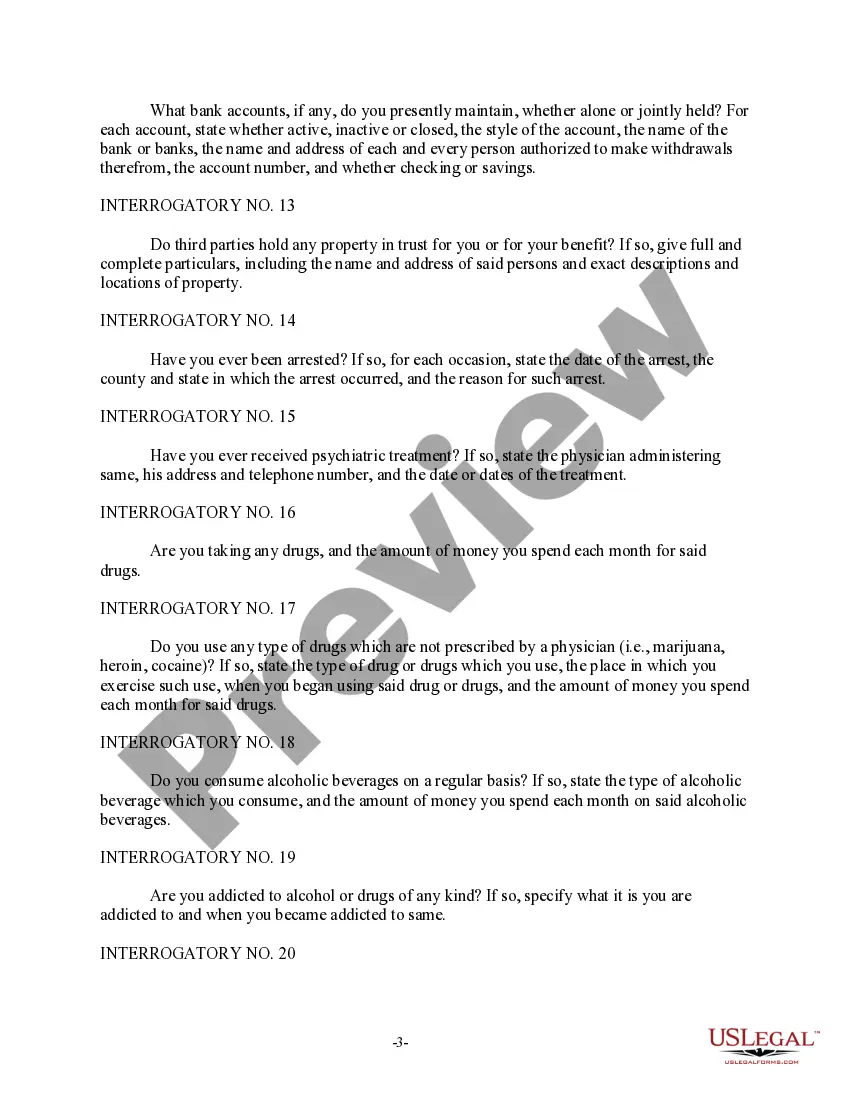
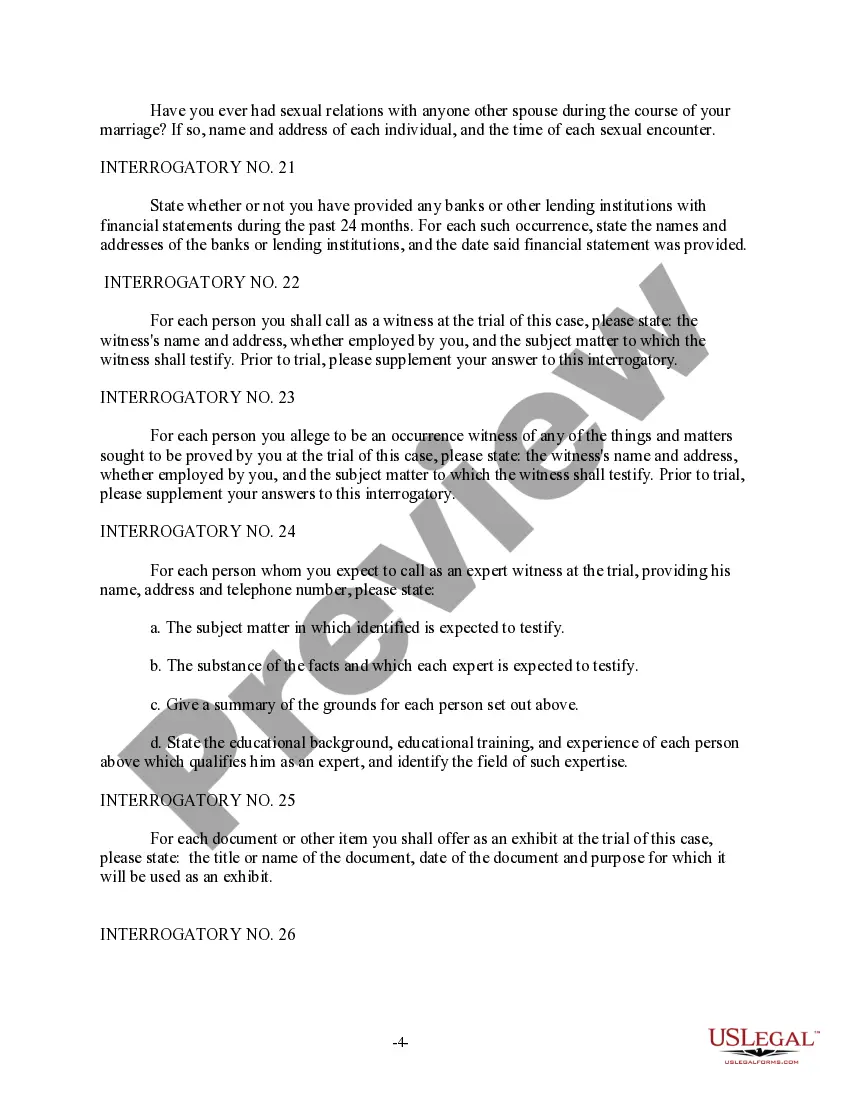
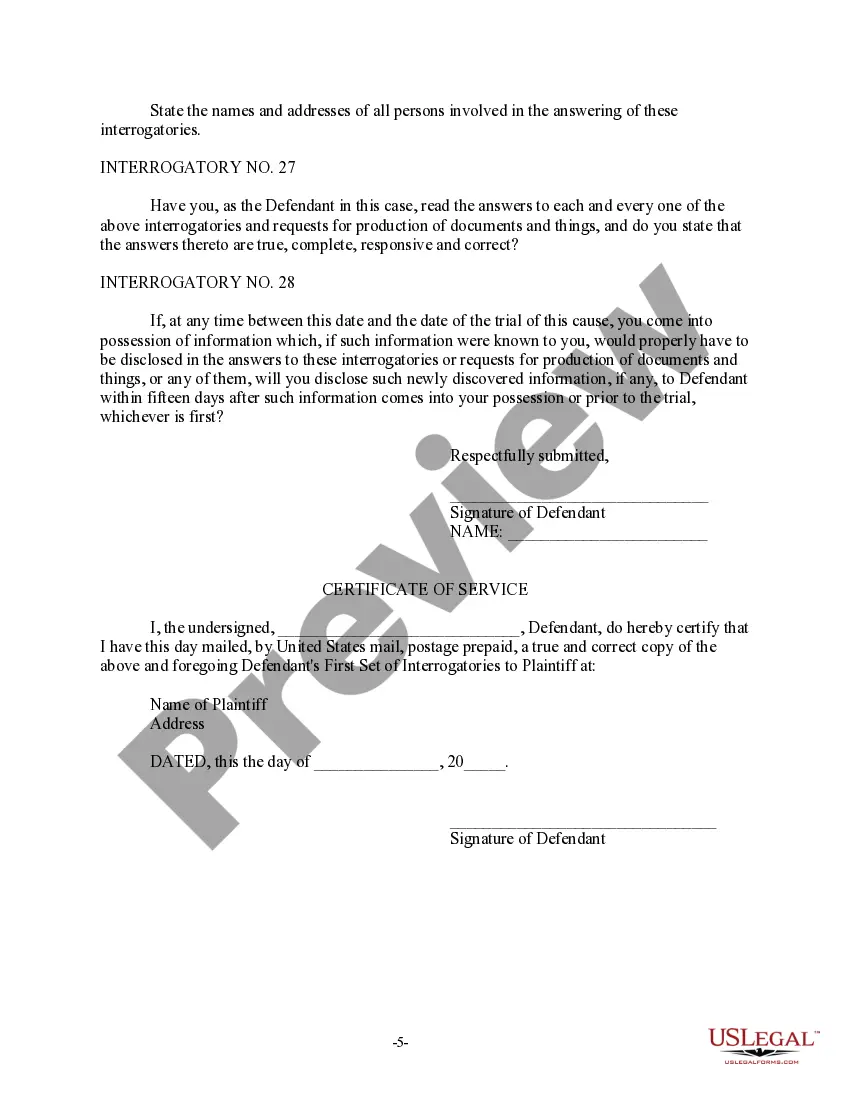
- Interrogatories that ask for personal information, financial details, and other relevant facts.
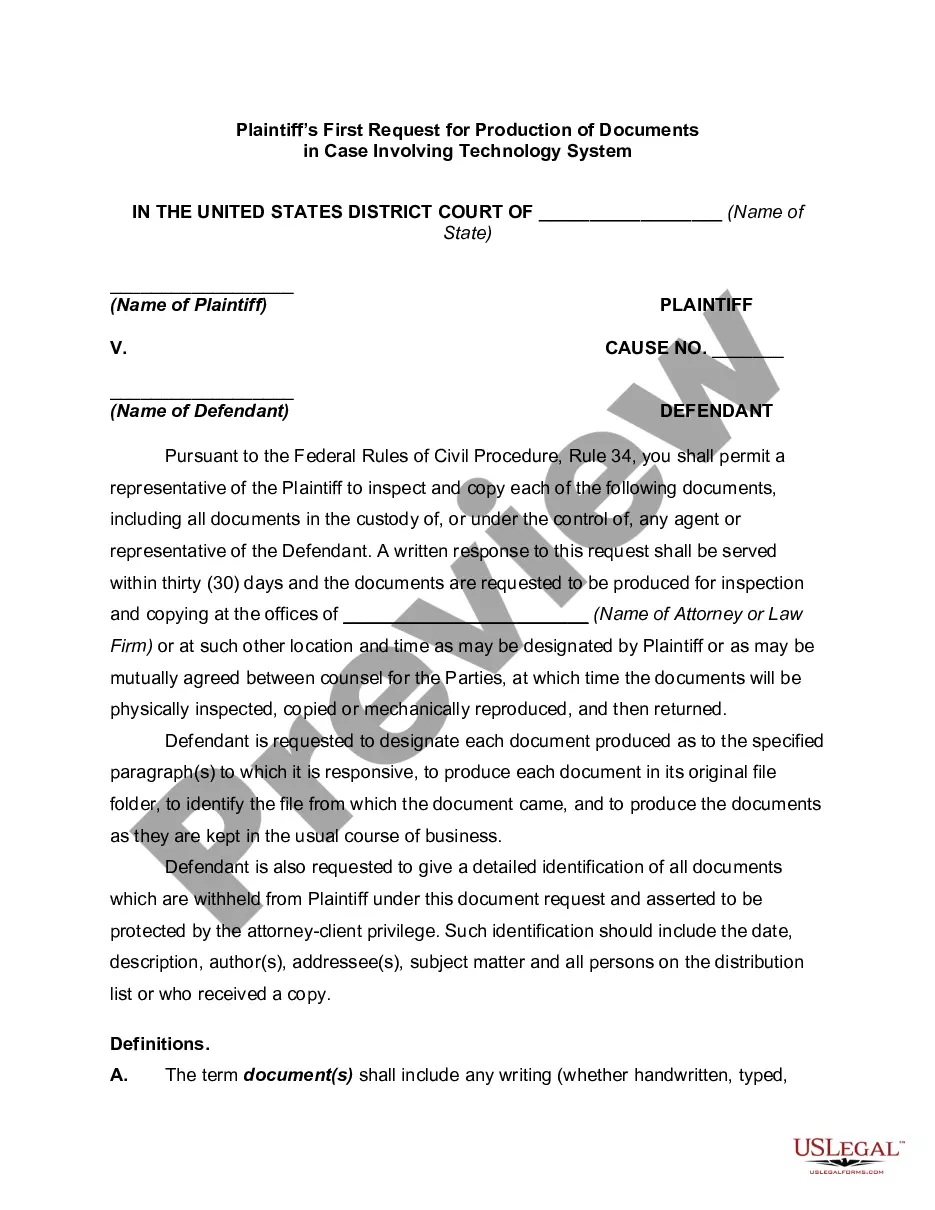
- Requests for production of documents such as tax returns and financial statements.
- Provisions for the plaintiff to disclose ongoing information during the case.
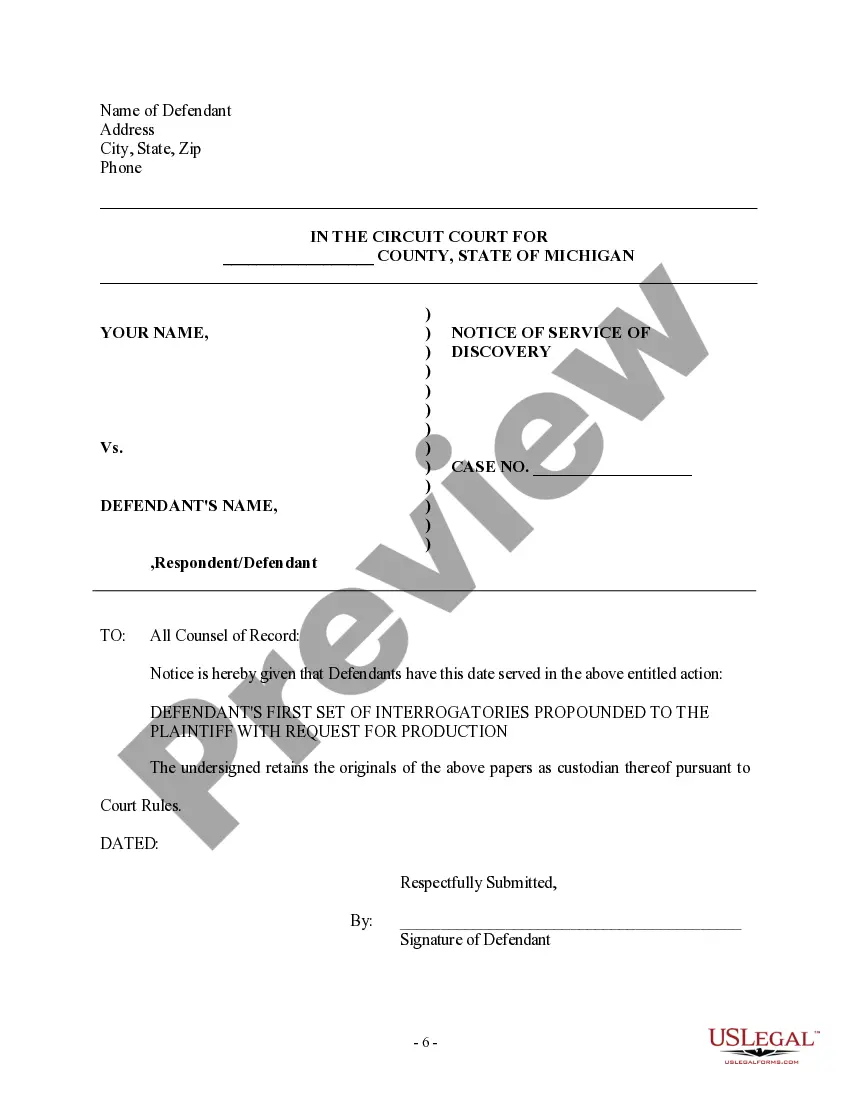
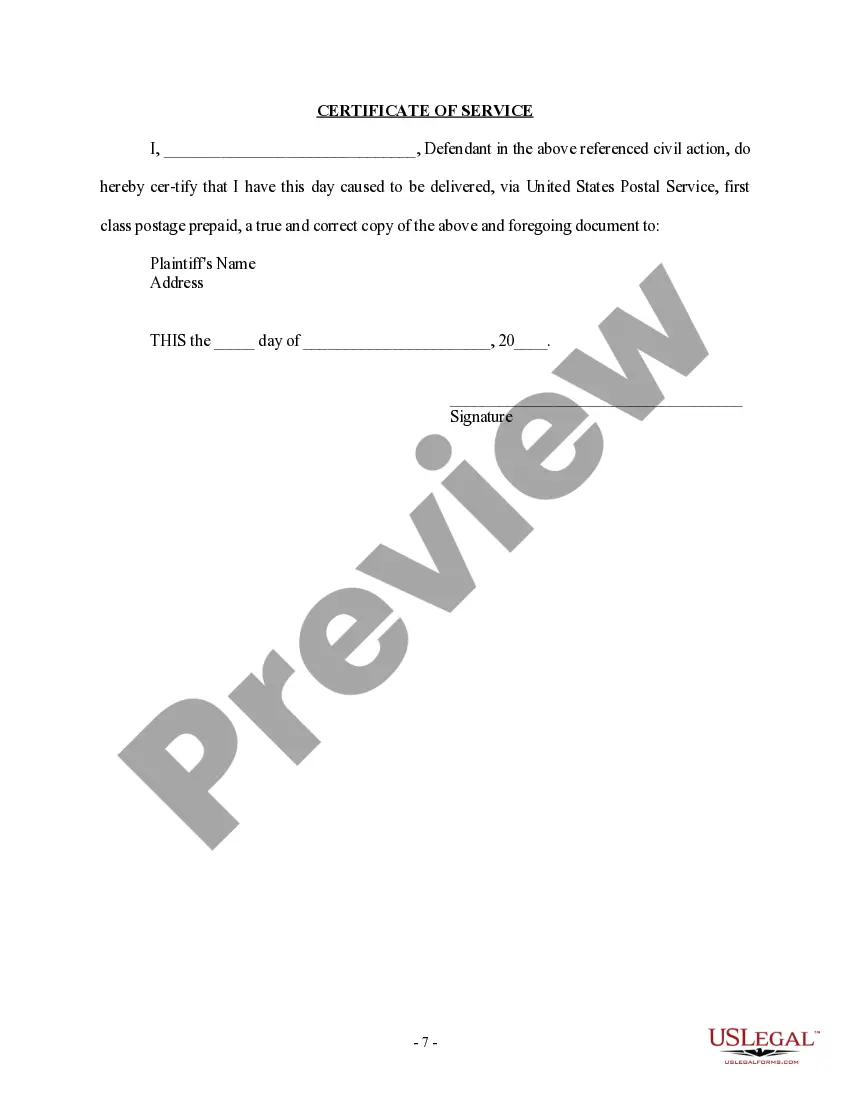
- Certification of service, confirming that all parties received the form.
- Mailed notification to the court and counsel about the documents served.
When to use this document
This form is used when the defendant needs to gather information from the plaintiff in a divorce action. It is particularly useful when the defendant believes that the plaintiff holds critical information about financial assets, income, and circumstances surrounding the divorce, which can be important for equitable distribution of assets and other legal considerations.
Who can use this document
- Defendants in a divorce case seeking information from the plaintiff.
- Attorneys representing clients in divorce proceedings.
- Individuals without legal representation who wish to gather necessary documentation for their divorce case.
Steps to complete this form
- Enter your name and address as the defendant at the top of the form.
- Fill in the case information, including names of parties and case number.
- Provide detailed interrogatories tailored to your case, ensuring all relevant questions are included.
- Attach any necessary documents to support your requests for information.
- Mail the completed form to the plaintiff and file with the court, using the included notice of filing.
Notarization requirements for this form
This form does not typically require notarization unless specified by local law. It is important to follow the courtâs rules regarding submissions and responses to ensure proper legal standing.
Get your form ready online
Our built-in tools help you complete, sign, share, and store your documents in one place.
Make edits, fill in missing information, and update formatting in US Legal Forms—just like you would in MS Word.
Download a copy, print it, send it by email, or mail it via USPS—whatever works best for your next step.
Sign and collect signatures with our SignNow integration. Send to multiple recipients, set reminders, and more. Go Premium to unlock E-Sign.
If this form requires notarization, complete it online through a secure video call—no need to meet a notary in person or wait for an appointment.
We protect your documents and personal data by following strict security and privacy standards.

Make edits, fill in missing information, and update formatting in US Legal Forms—just like you would in MS Word.

Download a copy, print it, send it by email, or mail it via USPS—whatever works best for your next step.

Sign and collect signatures with our SignNow integration. Send to multiple recipients, set reminders, and more. Go Premium to unlock E-Sign.

If this form requires notarization, complete it online through a secure video call—no need to meet a notary in person or wait for an appointment.

We protect your documents and personal data by following strict security and privacy standards.
Mistakes to watch out for
- Failing to customize interrogatories to fit the specifics of the case.
- Not serving the form correctly on the plaintiff, which can lead to legal complications.
- Overlooking the deadline for responses from the plaintiff.
- Neglecting to keep a copy of the form for your records.
Why use this form online
- You can easily customize the form to fit your specific needs.
- The online platform provides immediate access to the latest legal forms.
- You can download and save the form to revisit or modify later.
- Online access eliminates the need to visit a lawyer's office for basic forms.
What to keep in mind
- This form is essential for defendants seeking information in divorce proceedings.
- Customize the interrogatories to ensure they are relevant to your case.
- Timely service of the form is critical to advance your divorce case effectively.
- Familiarize yourself with the requirements specific to Michigan law to ensure compliance.
Looking for another form?

Form popularity
FAQ
Rule 2.119 in Michigan governs the procedure for discovery and defines the process for interrogatories, including Michigan Discovery Interrogatories from Defendant to Plaintiff with Production Requests. This rule outlines how parties may request information from one another and sets forth the requirements for serving interrogatories. Understanding this rule is crucial for effective case preparation and compliance with Michigan's legal standards. Utilizing US Legal Forms can help you access the necessary forms and instructions to adhere to this rule.
Rule 45 in Michigan pertains to subpoenas and the production of documents in court cases. It outlines how parties can demand testimony and evidence from third parties during the discovery phase. By understanding Rule 45, you can effectively leverage Michigan Discovery Interrogatories from Defendant to Plaintiff with Production Requests to compel necessary information and strengthen your case.
Your name and address. The Court's name. The title of the case. Case number. Fill your name in as the Requesting Party. On the following pages, choose which questions you wish to ask by checking boxes next to the questions you wish to ask.
You must answer each interrogatory separately and fully in writing under oath, unless you object to it. You must explain why you object. You must sign your answers and objections.
If a request asks for a document, make a copy of the document; in your response, describe the document and say that a copy is attached; and attach a copy of the document to the responses you send back to the other side.
You must answer each interrogatory separately and fully in writing under oath, unless you object to it. You must explain why you object. You must sign your answers and objections.
Personal/Corporate information of opposing party. Identifying information of witnesses. Contact information & background of expert witnesses. Insurance information.
Thank you for your inquiry regarding our product or service. Thank you for your interest in our product or service. We would like to thank you for your letter inquiring about our product. We truly appreciate your letter asking for information about our service.
Your answers to the interrogatories should usually be short, clear, and direct and should answer only the question that is being asked. This is not the time to set out your entire case or defense to the other side. Take the time to make sure your answers are correct and truthful.
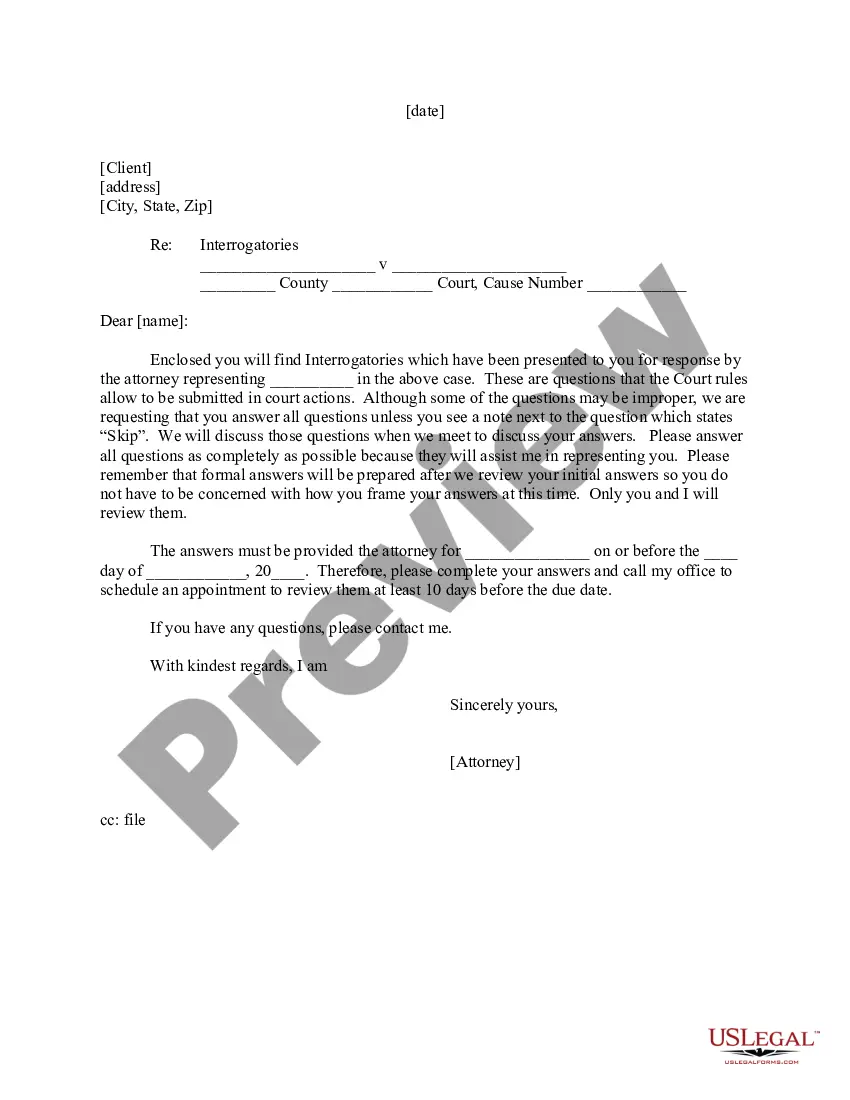
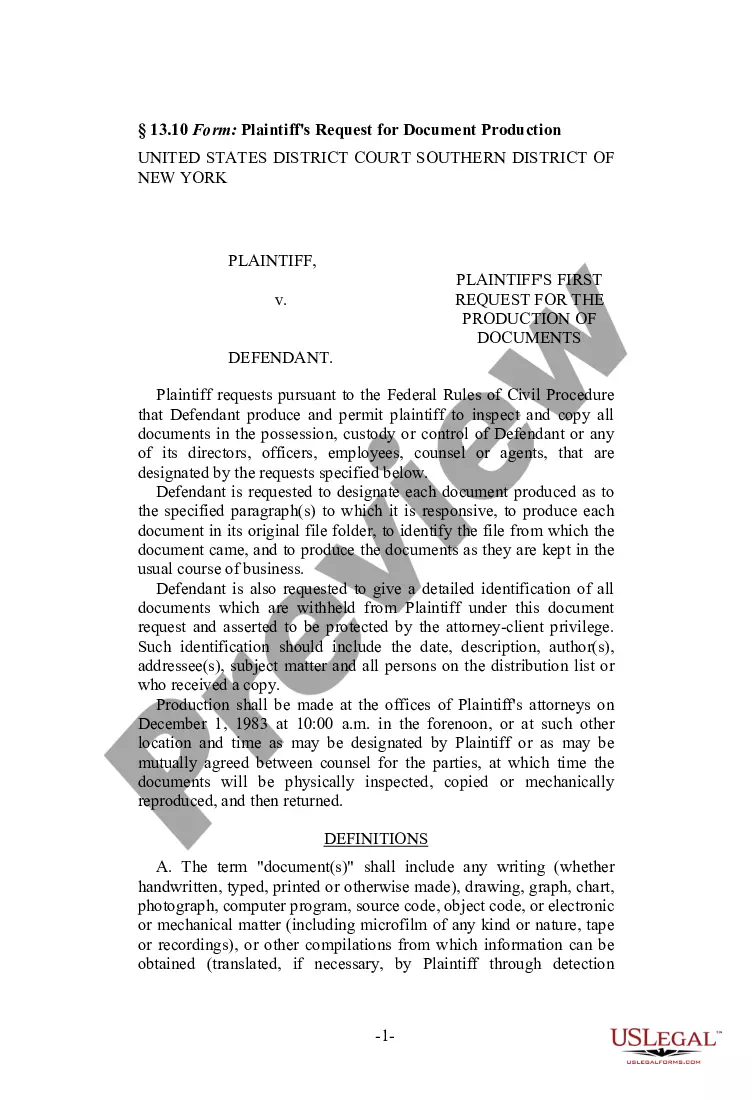
Interrogatories Interrogatories are written questions that are sent by one party to another.Requests for production are the means by which you can ask the other party to make copies of documents, photographs, records, etc. and to request the inspection of property.