Controlled Substances Offenses - Knowingly or Intentionally Defined
Overview of this form
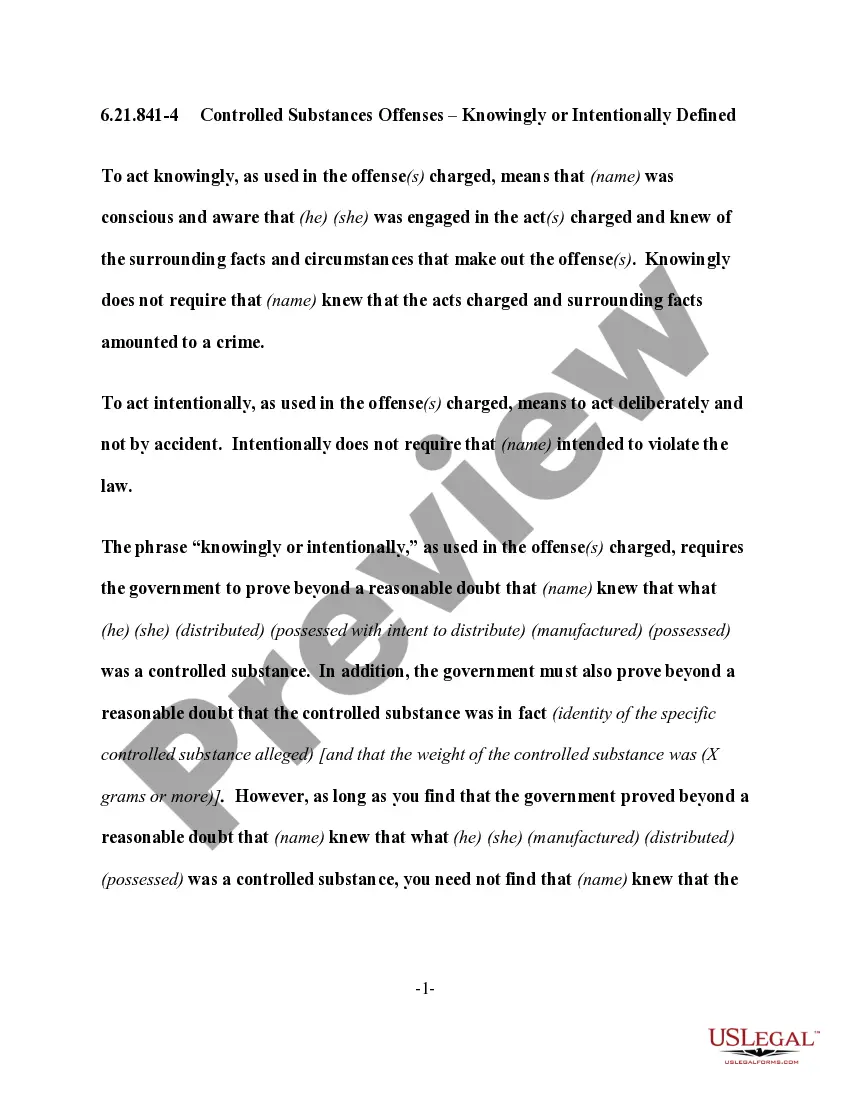
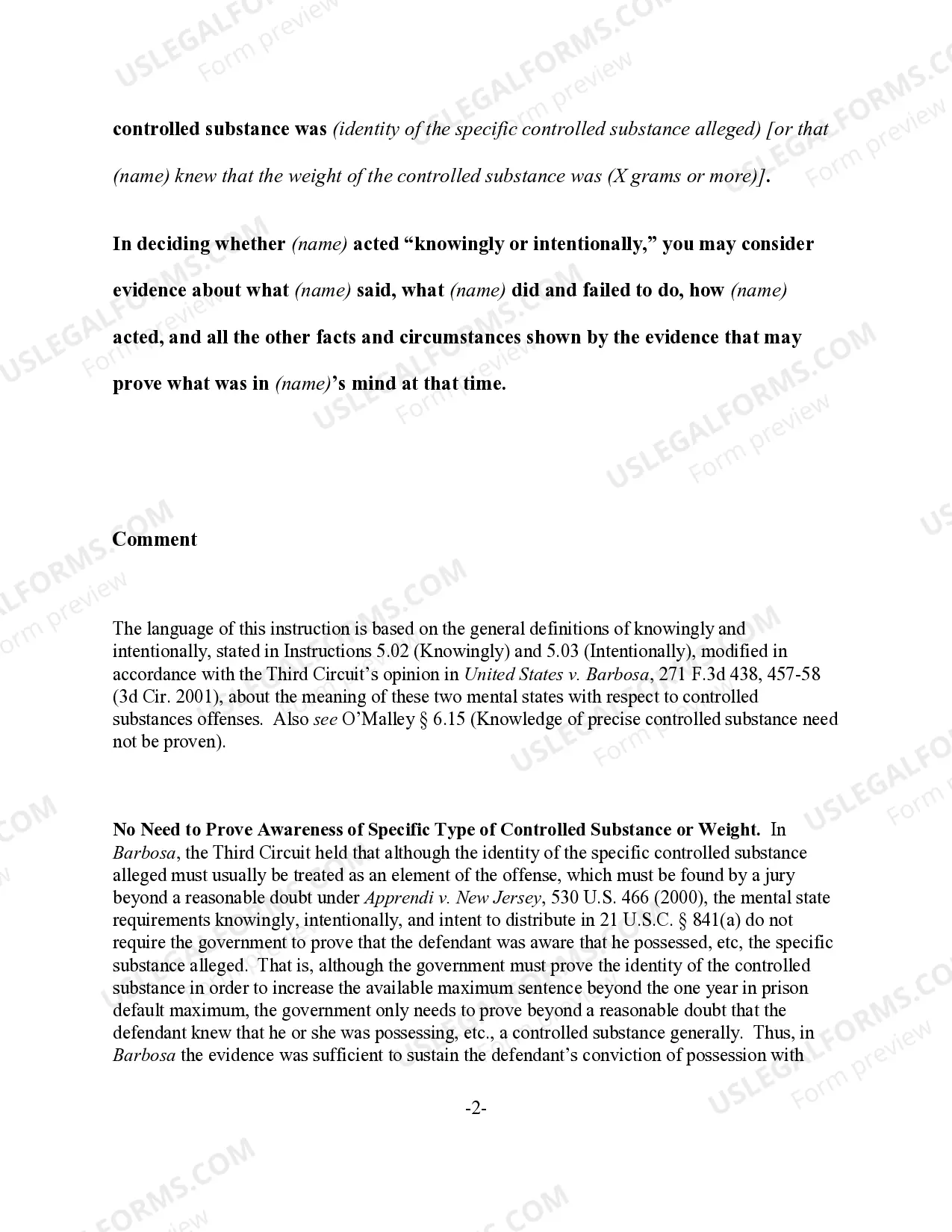
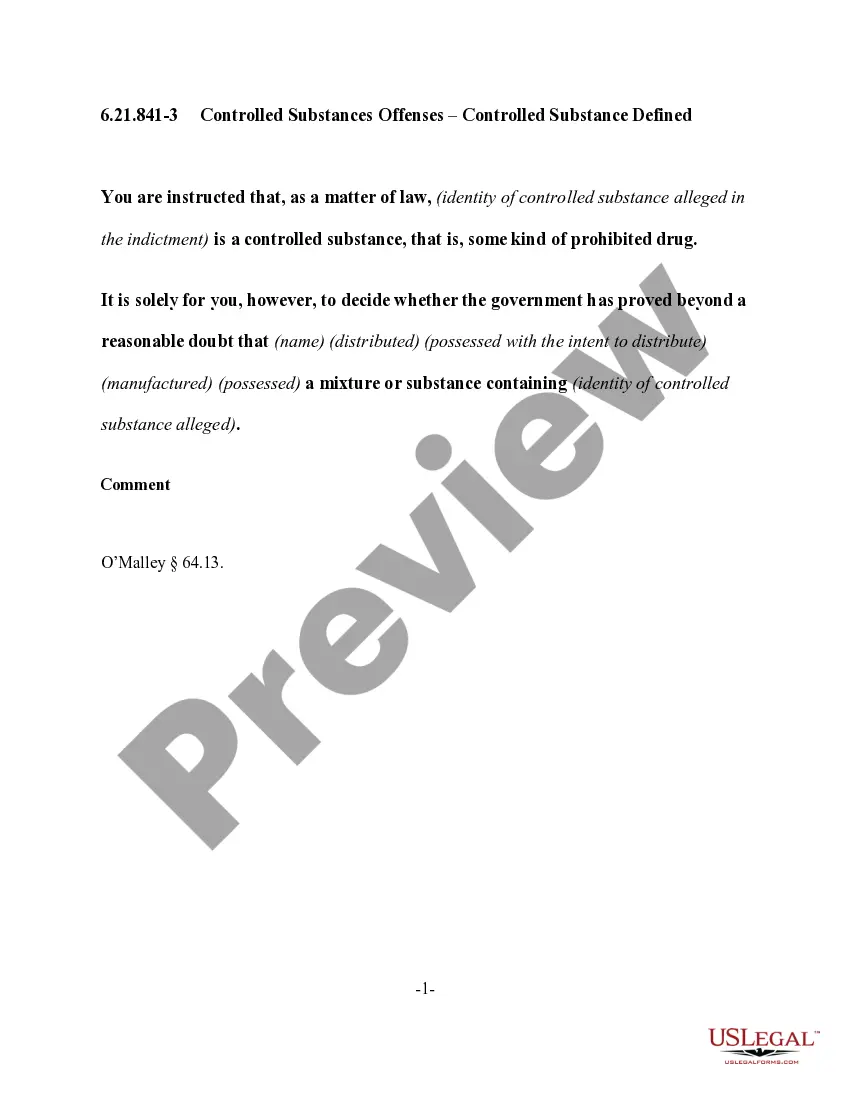
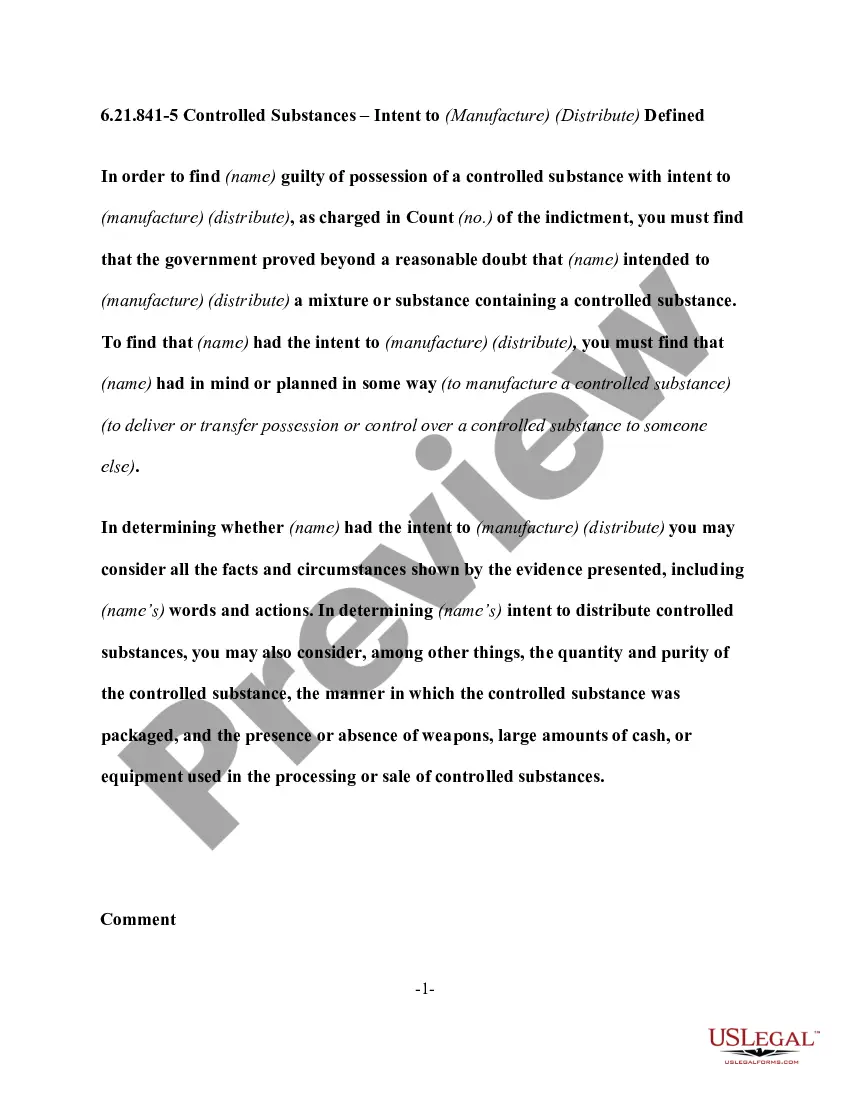
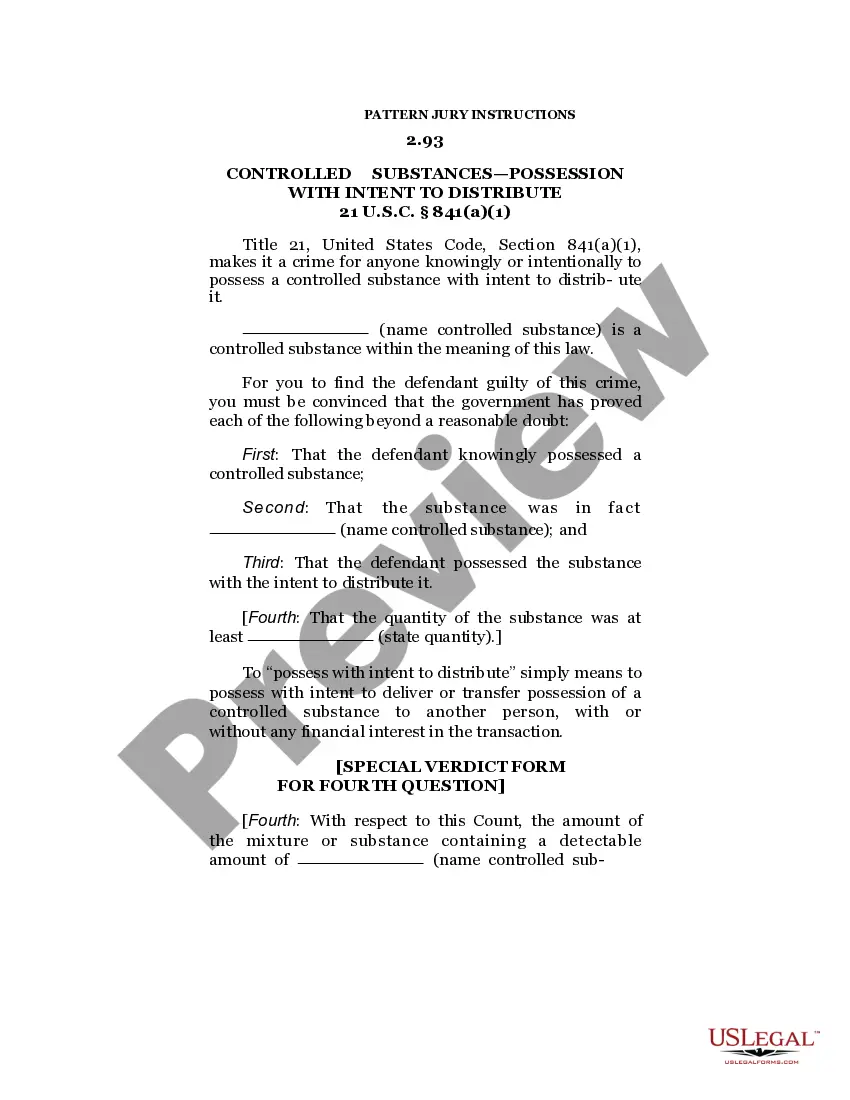
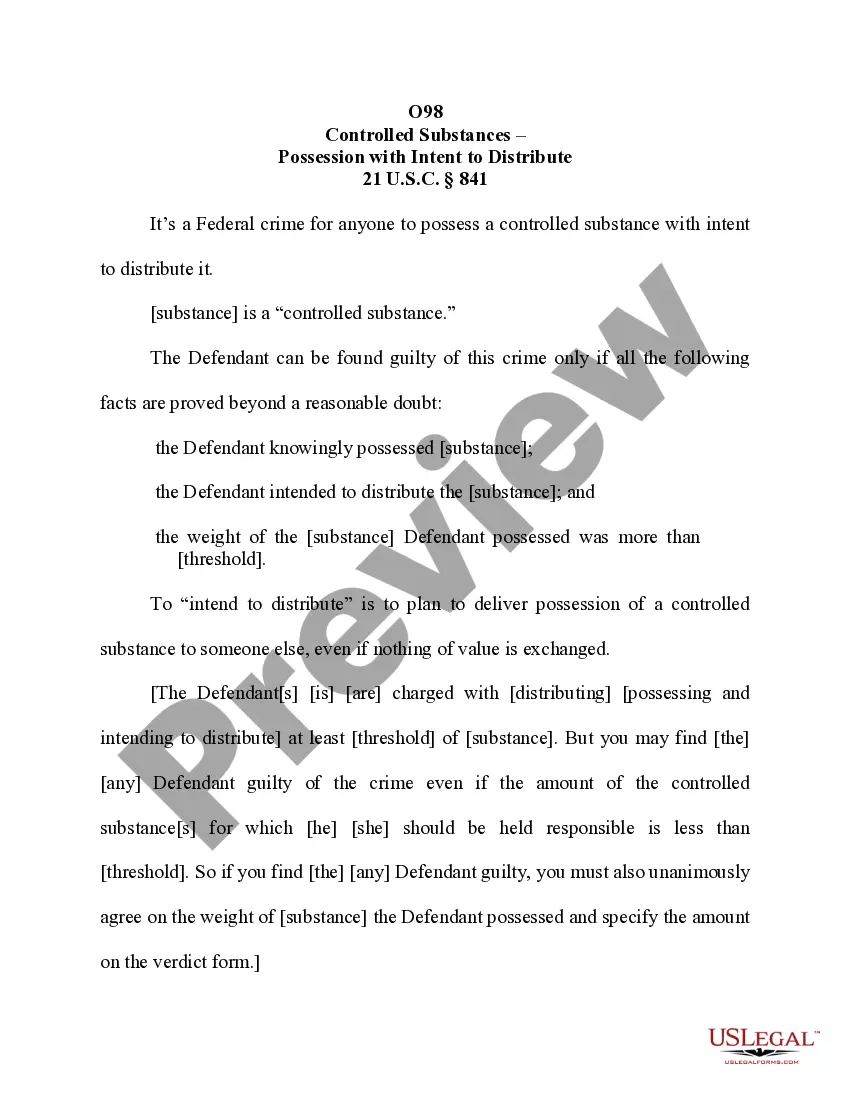
The Controlled Substances Offenses - Knowingly or Intentionally Defined form outlines the legal definitions of knowingly and intentionally in the context of controlled substances offenses. It clarifies what the prosecution must prove to establish that an individual acted with the necessary mental state when engaging in drug-related unlawful acts. This form serves as an essential guideline for understanding legal principles surrounding drug offenses, differentiating itself from other legal forms related to drug charges by focusing specifically on mental states of the defendant.
Form components explained
- Definition of "knowingly" as awareness of the act and circumstances.
- Definition of "intentionally" as acting deliberately rather than by accident.
- Requirements for government proof of the defendant's knowledge of the nature of the controlled substance involved.
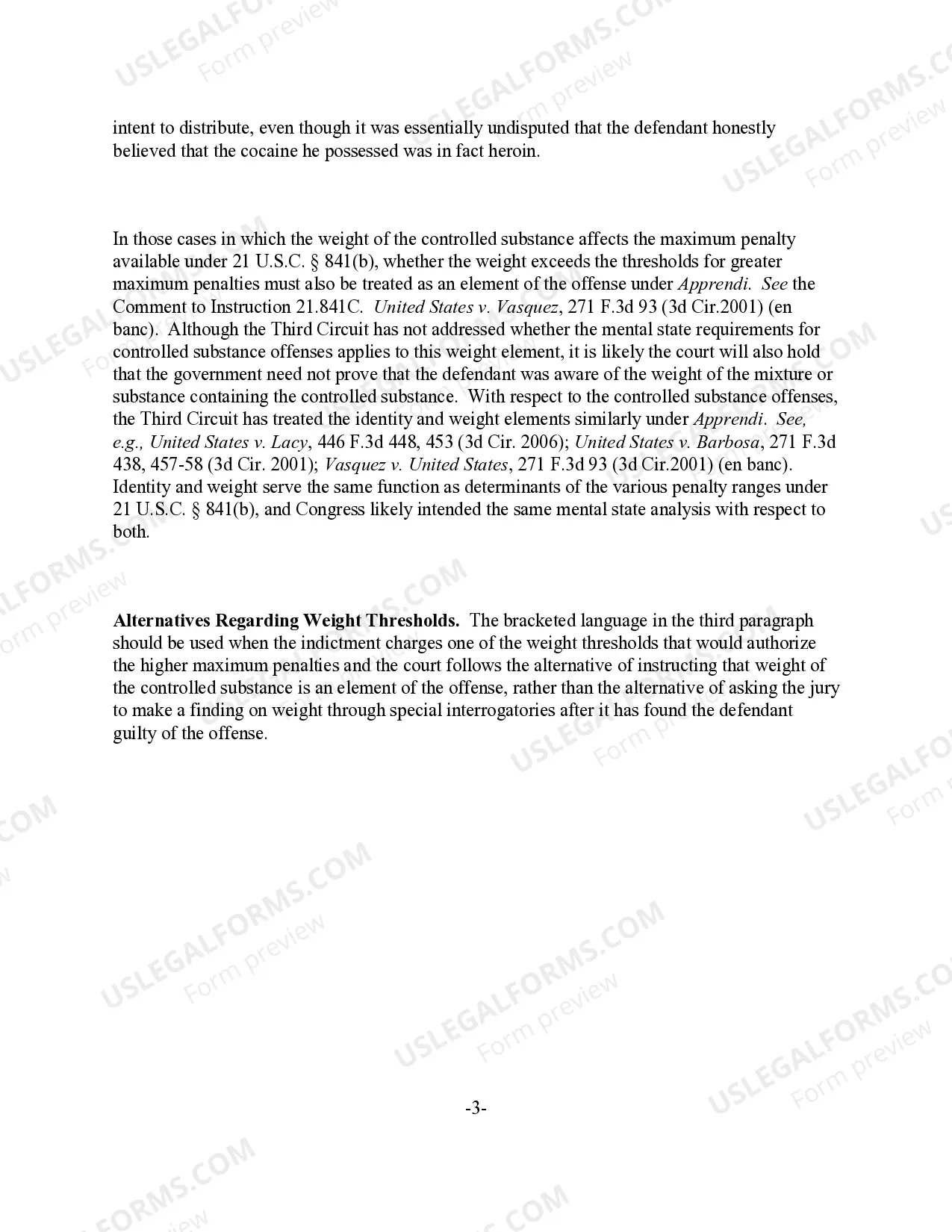
- Exemption from needing to prove awareness of the specific type of controlled substance.
- Judicial context and precedent influencing the application of these definitions.
When this form is needed
This form is essential when preparing for a legal case involving controlled substances. It is particularly relevant when the prosecution must establish the mental state of the defendant related to drug offenses, such as possession, manufacturing, or distribution of illegal substances. Attorneys may use this form to inform juries about the legal standards involved in evaluating whether the defendant acted knowingly or intentionally.
Intended users of this form
- Defense attorneys representing clients charged with controlled substances offenses.
- Prosecutors aiming to clarify the standards required for establishing liability.
- Judges involved in trials concerning drug-related allegations.
- Legal scholars studying the implications of mental states in criminal law.
Steps to complete this form
- Identify the defendant's actions related to controlled substances.
- Determine whether the government can prove the defendant's knowledge of the controlled substance.
- Evaluate the circumstances that clarify the defendant's intent or knowledge.
- Ensure that all elements are clearly laid out for jury consideration.
- Consult relevant case law to support interpretations of "knowingly" and "intentionally."
Is notarization required?
This form usually doesn’t need to be notarized. However, local laws or specific transactions may require it. Our online notarization service, powered by Notarize, lets you complete it remotely through a secure video session, available 24/7.
Get your form ready online
Our built-in tools help you complete, sign, share, and store your documents in one place.
Make edits, fill in missing information, and update formatting in US Legal Forms—just like you would in MS Word.
Download a copy, print it, send it by email, or mail it via USPS—whatever works best for your next step.
Sign and collect signatures with our SignNow integration. Send to multiple recipients, set reminders, and more. Go Premium to unlock E-Sign.
If this form requires notarization, complete it online through a secure video call—no need to meet a notary in person or wait for an appointment.
We protect your documents and personal data by following strict security and privacy standards.

Make edits, fill in missing information, and update formatting in US Legal Forms—just like you would in MS Word.

Download a copy, print it, send it by email, or mail it via USPS—whatever works best for your next step.

Sign and collect signatures with our SignNow integration. Send to multiple recipients, set reminders, and more. Go Premium to unlock E-Sign.

If this form requires notarization, complete it online through a secure video call—no need to meet a notary in person or wait for an appointment.

We protect your documents and personal data by following strict security and privacy standards.
Common mistakes
- Failing to distinguish between knowing and intentional actions.
- Assuming knowledge of a specific type of substance is required for conviction.
- Not providing sufficient evidence of the defendantâs mental state during the act.
Benefits of completing this form online
- Accessible legal definitions tailored for quick understanding.
- Ability to download and modify forms according to case specifics.
- Trusted templates drafted by licensed attorneys.
Legal use & context
- This form is intended for legal scenarios involving drug offenses under federal and state law.
- It provides clarity on the mental states required for proving the offenses charged.
- Use of this form ensures adherence to judicial precedents that affect trials related to drug offenses.
Key takeaways
- The Controlled Substances Offenses form elucidates crucial legal definitions regarding awareness in drug-related charges.
- Understanding these definitions can significantly impact the defense strategy in controlled substance cases.
- Accurate representation of a defendant's mental state can influence the jury's perception and ultimate verdict.
Looking for another form?

Form popularity
FAQ
It shall be unlawful for any person knowingly or intentionally to possess a controlled substance unless such substance was obtained directly, or pursuant to a valid prescription or order, from a practitioner, while acting in the course of his professional practice, or except as otherwise authorized by this subchapter
When considering only their chemical makeup, there are six main classifications of drugs: alcohol, opioids, benzodiazepines, cannabinoids, barbiturates, and hallucinogens. Out of all the thousands of drugs that are out there, both prescription and illegal, each one can be categorized under one of these six headings.
It shall be unlawful for any person to knowingly or intentionally use the Internet, or cause the Internet to be used, to advertise the sale of, or to offer to sell, distribute, or dispense, a controlled substance where such sale, distribution, or dispensing is not authorized by this subchapter or by the Controlled
Some common classifications include: Depressants. Hallucinogens. Inhalants. Narcotics. Steroids. Stimulants.
Category 4 Category 2 contains substances that are extensively used in the chemicals industry and which are also essential for drug processing. Category 4 relates specifically to medicinal products and veterinary medicinal products containing ephedrine, pseudoephedrine or their salts.
Examples of Schedule III narcotics include: products containing not more than 90 milligrams of codeine per dosage unit (Tylenol with Codeine®), and buprenorphine (Suboxone®).
The control applies to the way the substance is made, used, handled, stored, and distributed. Controlled substances include opioids, stimulants, depressants, hallucinogens, and anabolic steroids.
Schedule III drugs, substances, or chemicals are defined as drugs with a moderate to low potential for physical and psychological dependence. Schedule III drugs abuse potential is less than Schedule I and Schedule II drugs but more than Schedule IV.