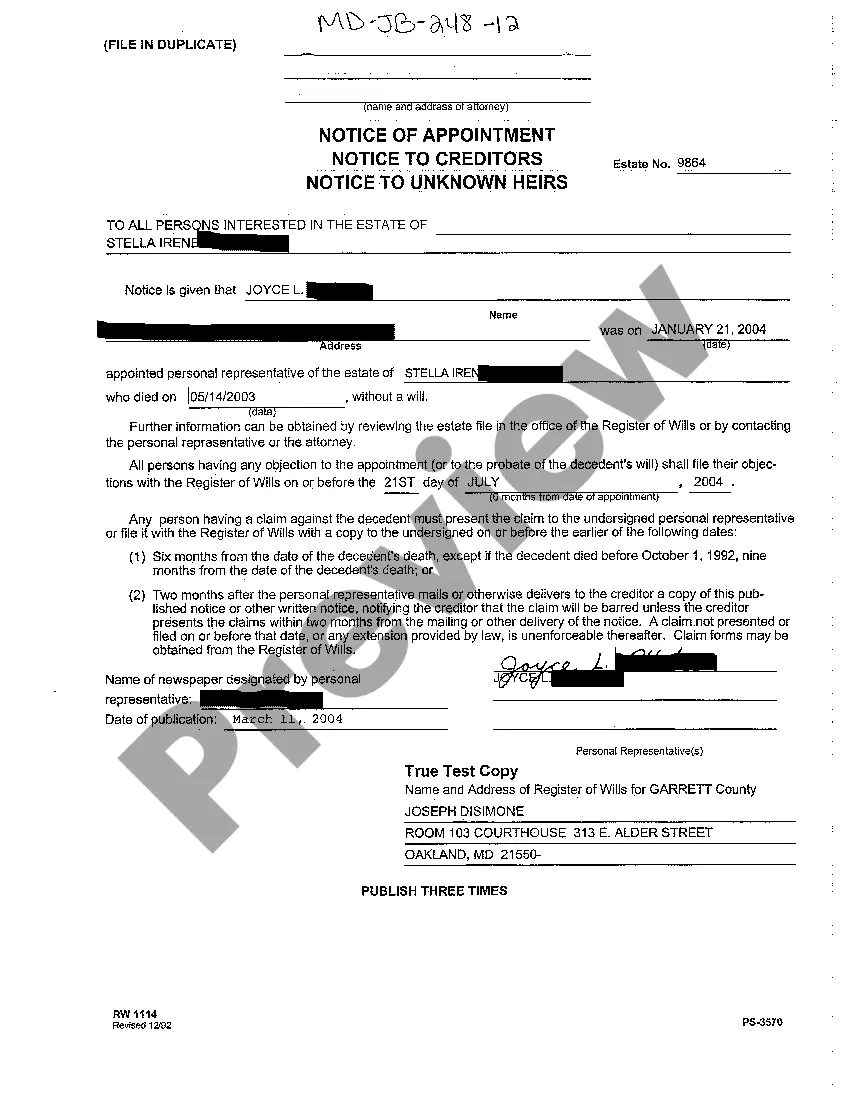
Mail, Wire, or Bank Fraud - Unanimity Required
What is this form?
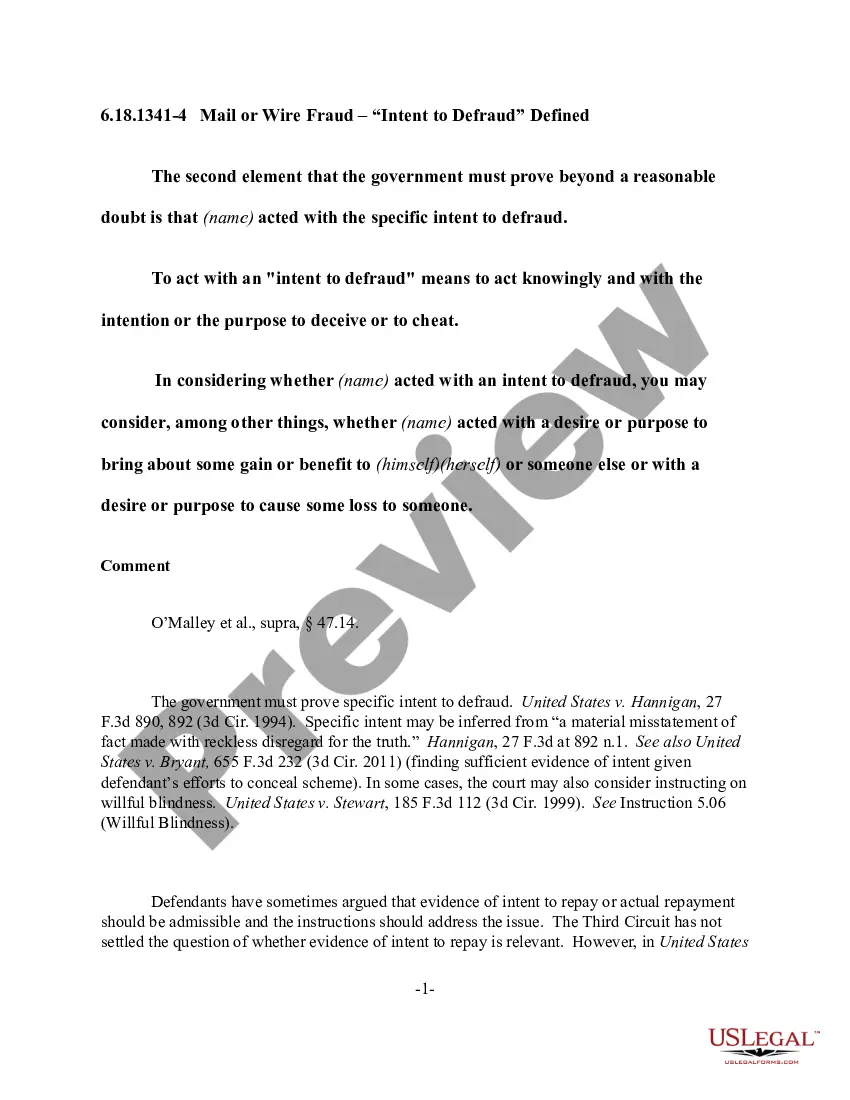
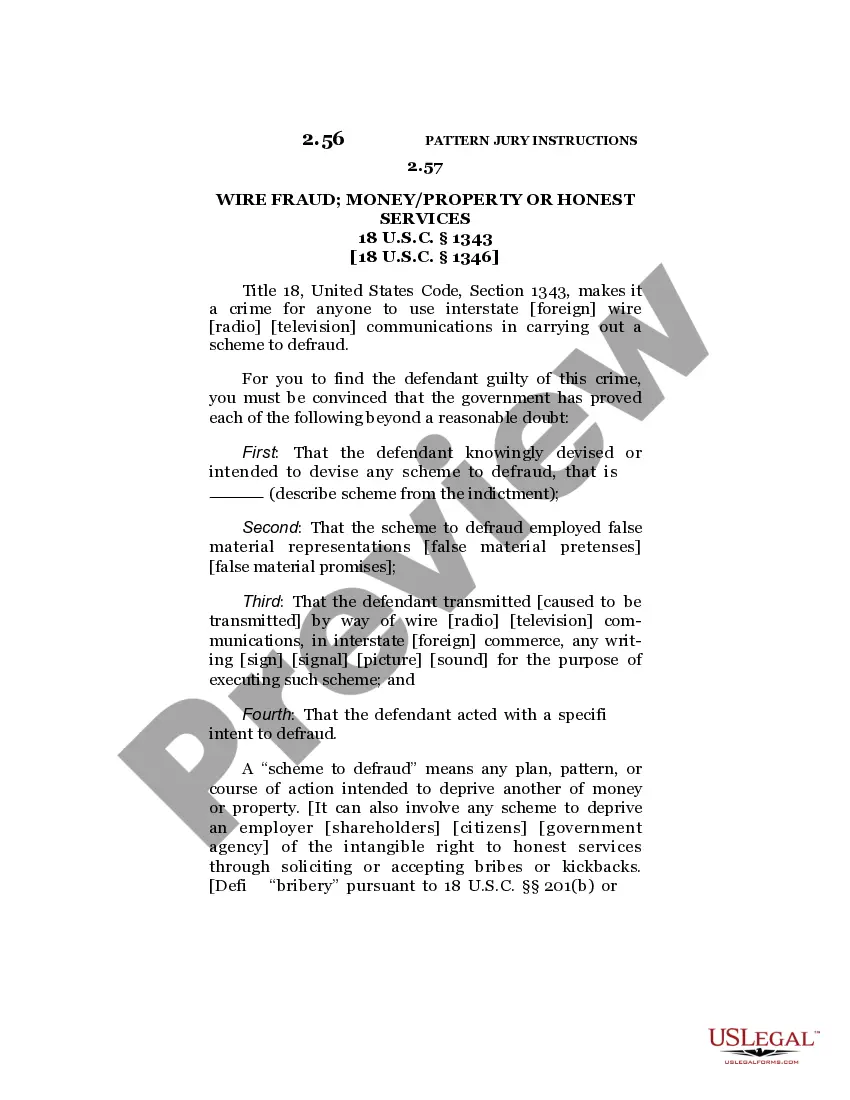
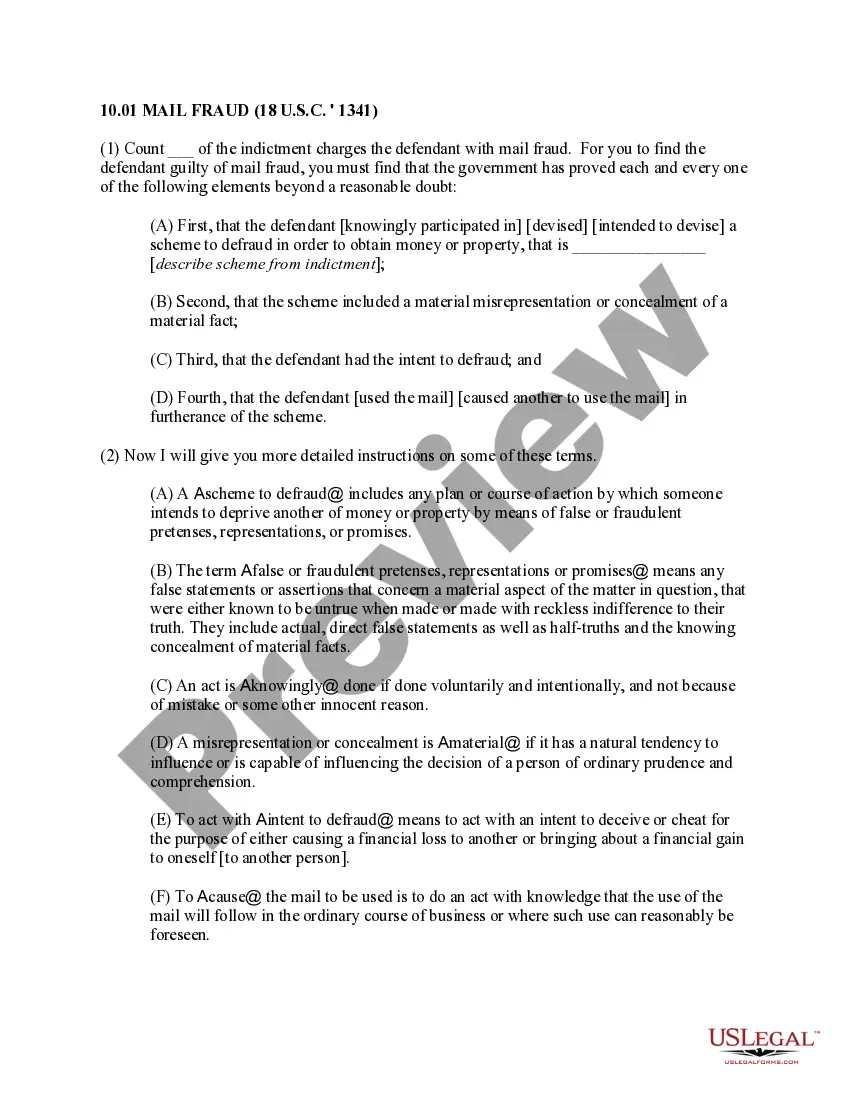
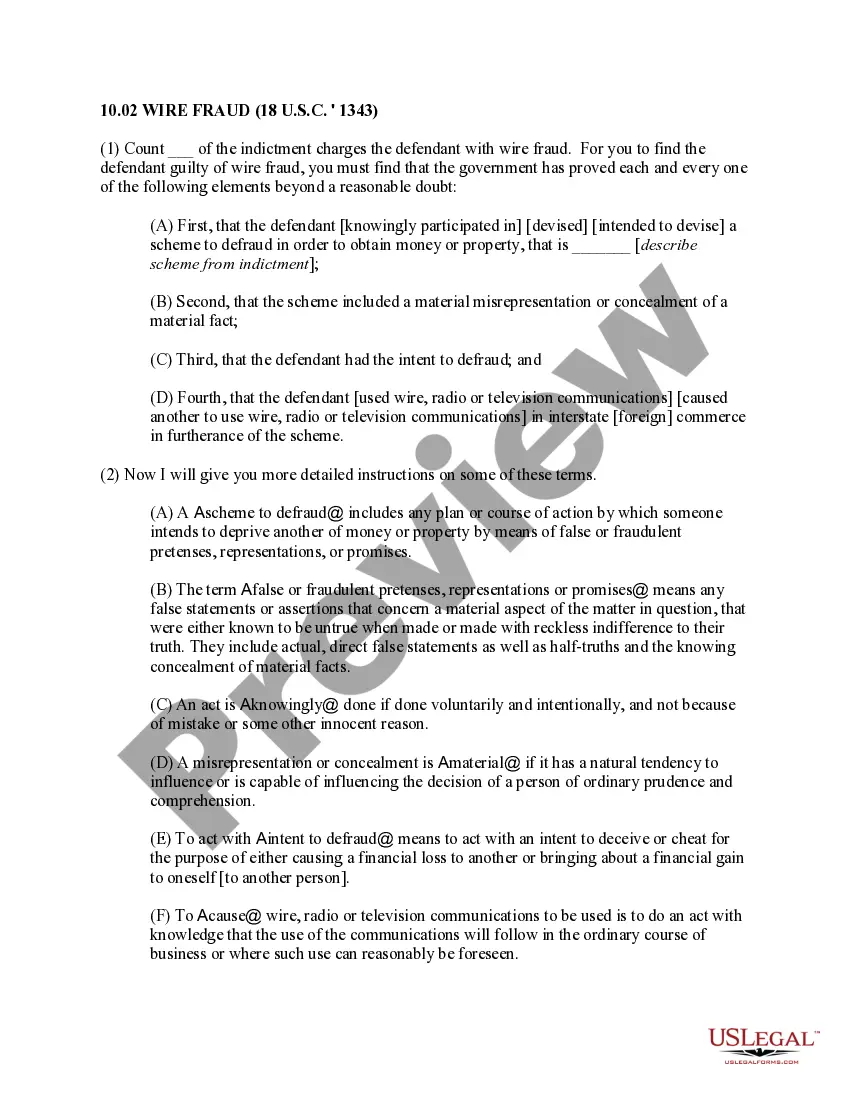
The Mail, Wire, or Bank Fraud - Unanimity Required form is a legal document used in criminal proceedings to outline the requirements for a unanimous jury decision in fraud cases. This form specifically addresses situations where multiple schemes or plans are alleged, focusing on the need for the jury to agree on at least one scheme to convict the defendant. Unlike similar forms, this template emphasizes the principle of unanimity in verdicts and guides jurors on their obligation to reach a consensus regarding the fraud scheme presented in court.
What’s included in this form
- Identification of the defendant and the specific count of fraud being charged.
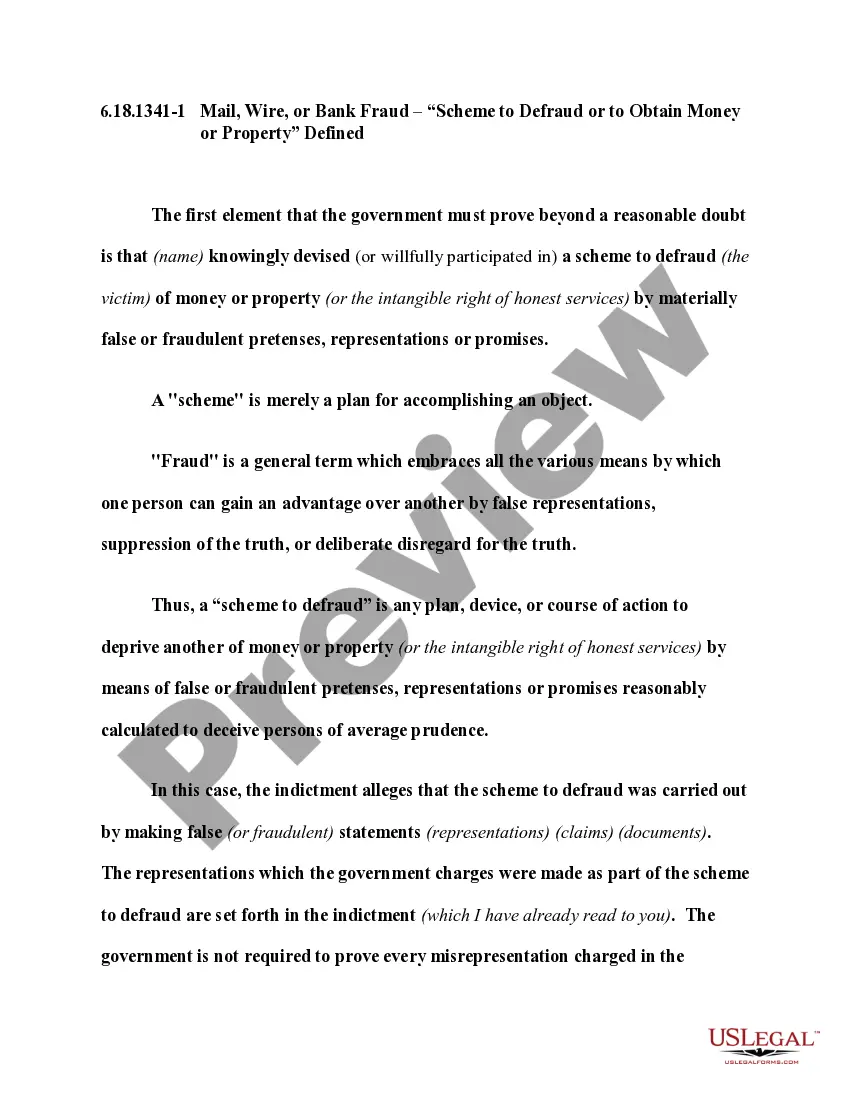
- A description of the various schemes or plans alleged by the government.
- Clarification that the jury does not need to agree on all schemes, but must on at least one.
- Instructions for the jury regarding the necessity of a unanimous verdict.
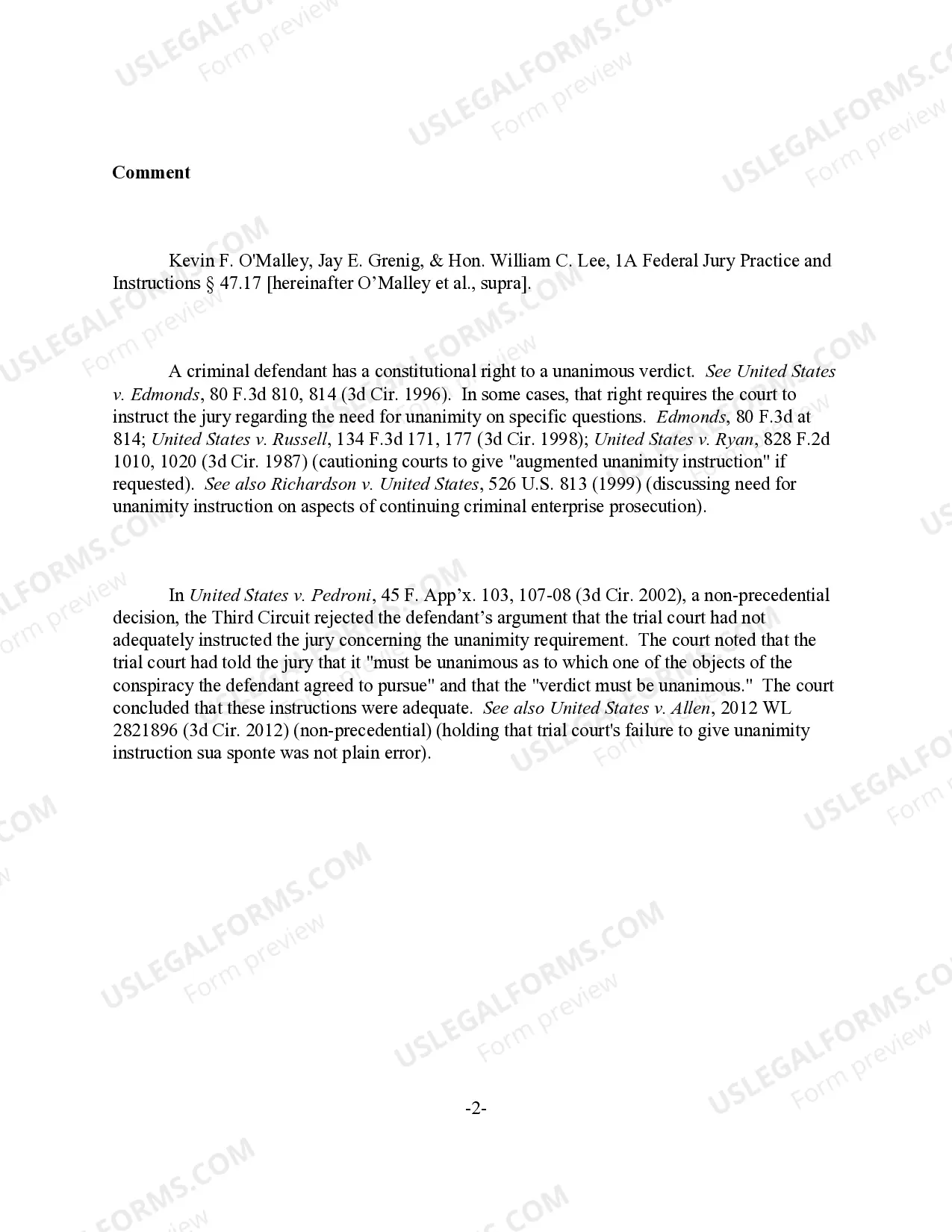
- Legal citations that support the right to a unanimous decision in fraud cases.
When this form is needed
This form is utilized during criminal trials involving allegations of mail, wire, or bank fraud. It is particularly relevant when the prosecution presents multiple schemes of fraud, ensuring that jurors understand their obligation to agree on a single scheme for a valid verdict. Use this form when preparing jury instructions in such cases to ensure clarity on the unanimity requirement.
Intended users of this form
- Judges facilitating jury instructions in fraud cases.
- Prosecutors preparing charges involving mail, wire, or bank fraud.
- Defense attorneys representing clients accused of fraud.
- Legal scholars studying jury instructions and criminal law.
Completing this form step by step
- Identify the defendant and enter their name along with the count number of the indictment.
- Detail the various schemes or plans to defraud as alleged by the government.
- Clearly state that the jury must agree on at least one specific scheme to reach a conviction.
- Include the necessary legal references to uphold the right to a unanimous verdict.
- Provide instructions regarding the requirement for jurors to deliberate and reach a consensus.
Does this document require notarization?
This form usually doesn’t need to be notarized. However, local laws or specific transactions may require it. Our online notarization service, powered by Notarize, lets you complete it remotely through a secure video session, available 24/7.
Get your form ready online
Our built-in tools help you complete, sign, share, and store your documents in one place.
Make edits, fill in missing information, and update formatting in US Legal Forms—just like you would in MS Word.
Download a copy, print it, send it by email, or mail it via USPS—whatever works best for your next step.
Sign and collect signatures with our SignNow integration. Send to multiple recipients, set reminders, and more. Go Premium to unlock E-Sign.
If this form requires notarization, complete it online through a secure video call—no need to meet a notary in person or wait for an appointment.
We protect your documents and personal data by following strict security and privacy standards.

Make edits, fill in missing information, and update formatting in US Legal Forms—just like you would in MS Word.

Download a copy, print it, send it by email, or mail it via USPS—whatever works best for your next step.

Sign and collect signatures with our SignNow integration. Send to multiple recipients, set reminders, and more. Go Premium to unlock E-Sign.

If this form requires notarization, complete it online through a secure video call—no need to meet a notary in person or wait for an appointment.

We protect your documents and personal data by following strict security and privacy standards.
Mistakes to watch out for
- Failing to clearly define the schemes alleged, leading to confusion among jurors.
- Neglecting to highlight the unanimity requirement, which could affect verdict integrity.
- Omitting crucial legal citations that support the jury's obligations.
Benefits of using this form online
- Easy access and download of the legal form, ensuring users have the latest version.
- Editable templates that allow for customization based on specific case needs.
- Reliability of attorney-drafted content, ensuring legal accuracy and relevance.
Key takeaways
- The Mail, Wire, or Bank Fraud - Unanimity Required form is essential for criminal fraud cases involving jury instructions.
- Unanimity among jurors on at least one fraud scheme is critical for a valid verdict.
- This form is relevant in multiple jurisdictions, but users should verify local requirements.
Looking for another form?
Form popularity
FAQ
Types of Mail Fraud Fraud Against Older Americans. Every year, mail fraud schemes are directed at consumers of all ages.Fraud Against Veterans. 78% of retired military men and women have been targeted by scams.Sweepstakes and Lottery Fraud.Employment Fraud.Telemarketing Fraud.Financial Fraud.Other Types of Mail Fraud.
Intent is a critical part of mail and wire fraud. Because mail and wire fraud are specific intent crimes, the government must prove that the defendant intended to: Defraud or deceive through use of a fraudulent scheme; Participate in the scheme knowing it was fraudulent; and.
"There are two elements in mail fraud: (1) having devised or intending to devise a scheme to defraud (or to perform specified fraudulent acts), and (2) use of the mail for the purpose of executing, or attempting to execute, the scheme (or specified fraudulent acts)." Schmuck v.
Wire fraud does not carry a mandatory minimum sentence. However, wire fraud charges can also be one of multiple charges for other felony crimes that do include mandatory minimums, such as racketeering, money laundering, mortgage fraud, and aggravated identity theft.
In a mail fraud prosecution, the government need not prove that the scheme actually injured victims, or was even carried out completely. It's not even necessary that the victim of the scheme had knowledge of its existence. The scheme and intent to defraud are enough.
Penalties You Could Face If Convicted of Mail or Wire Fraud Prison sentence of up to 20 years. Fines up to $250,000. Probation.
Ostensibly, fraud consists of two elements: the act and the intent. The act of committing or attempting to commit fraud is often the substance of a case. But, just as a fraud examination depends on predication to trigger an investigation, a fraud charge relies on demonstrable intent to result in a conviction.