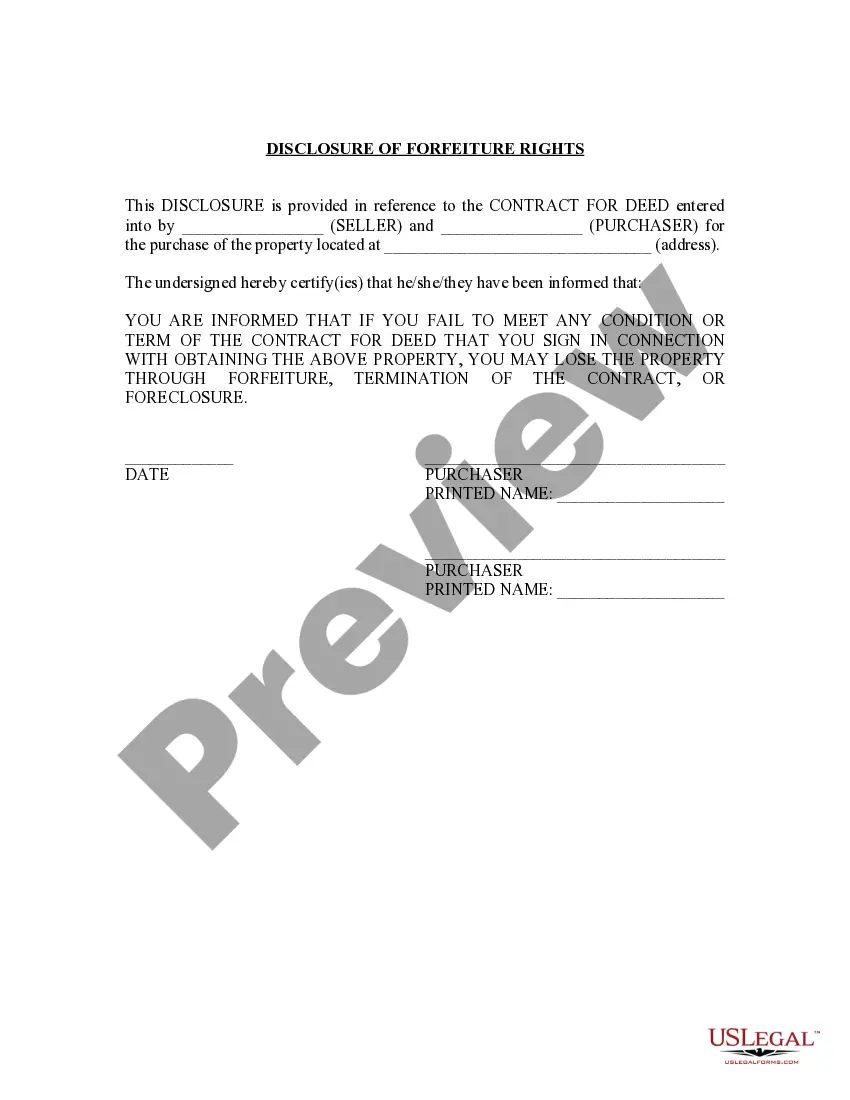
Managed Backup and Recovery Service Agreement
About this form
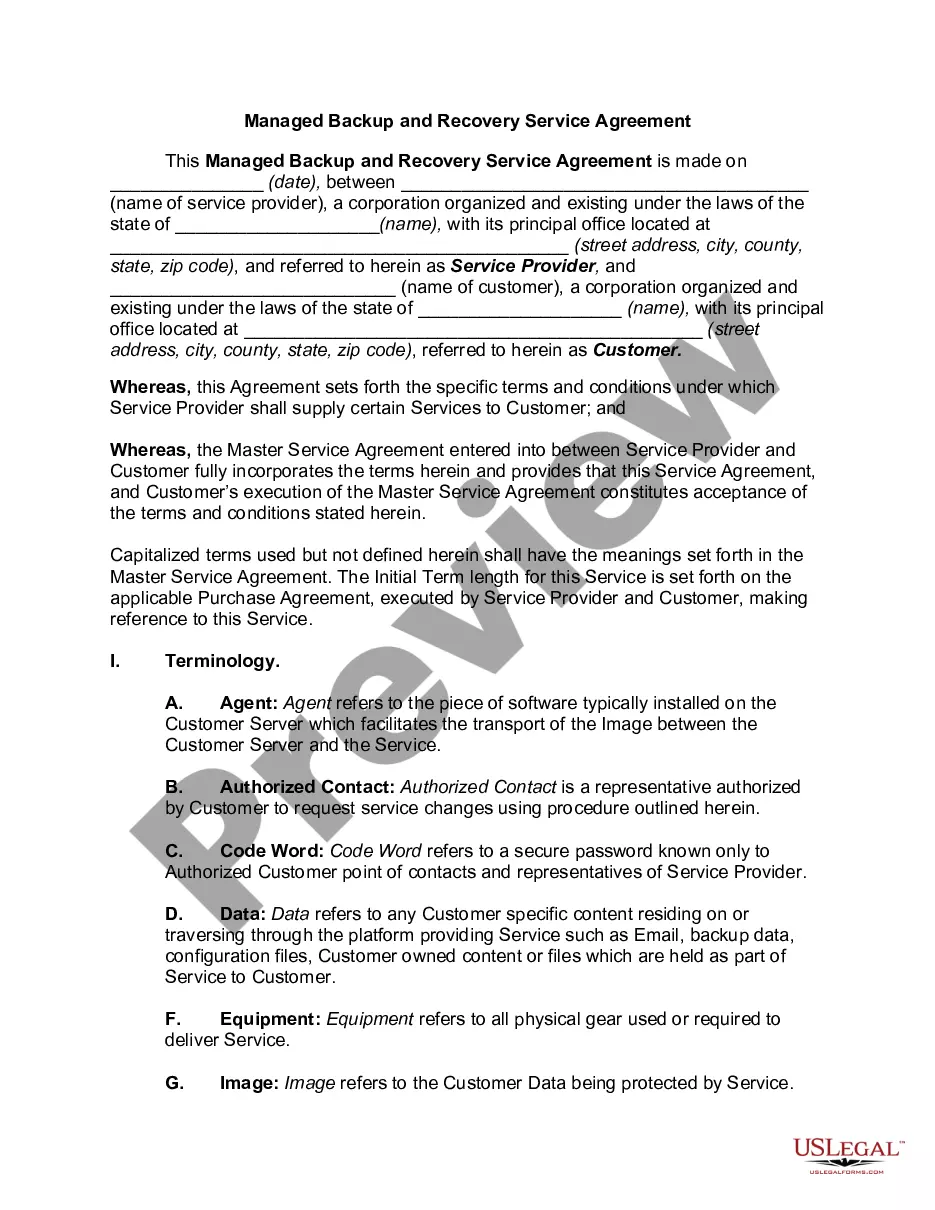
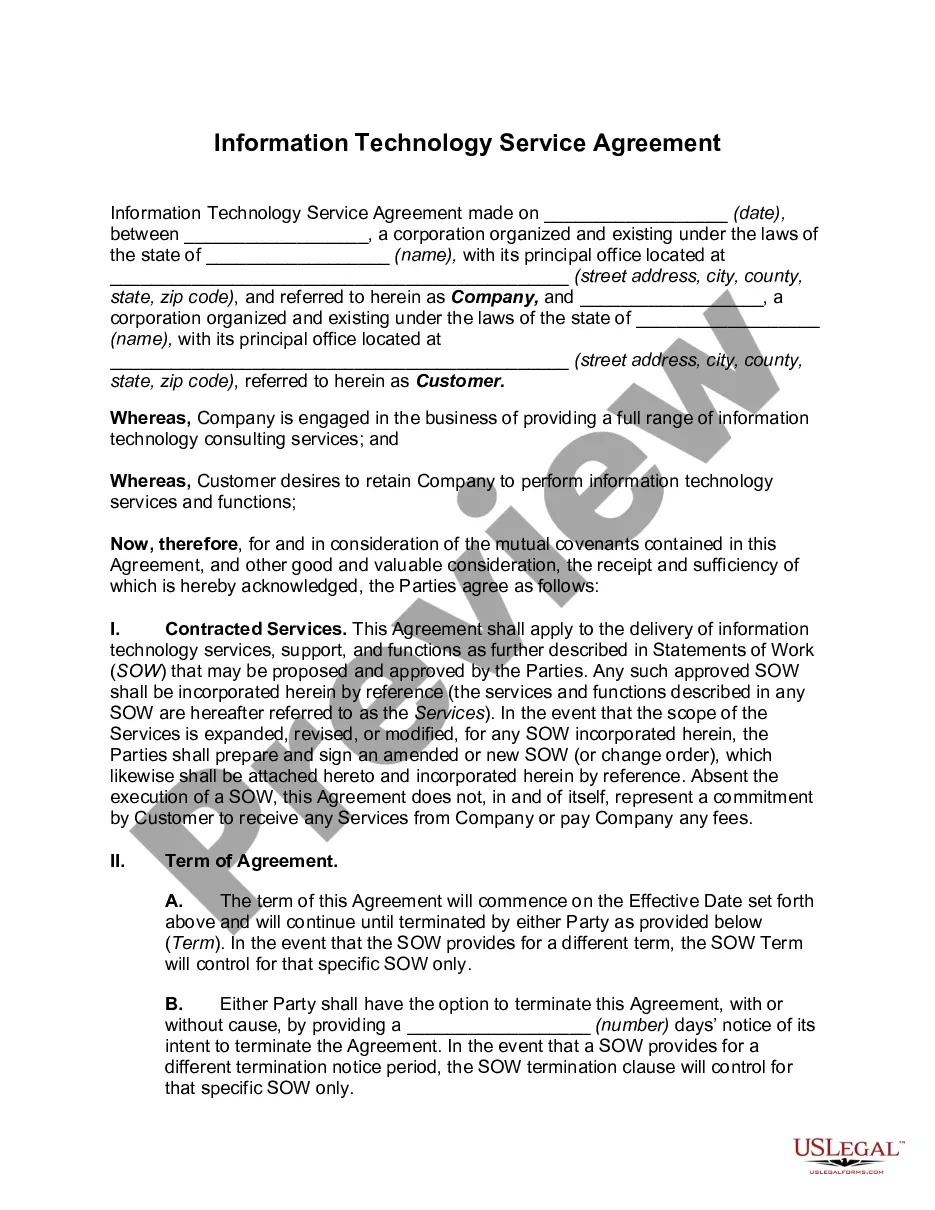
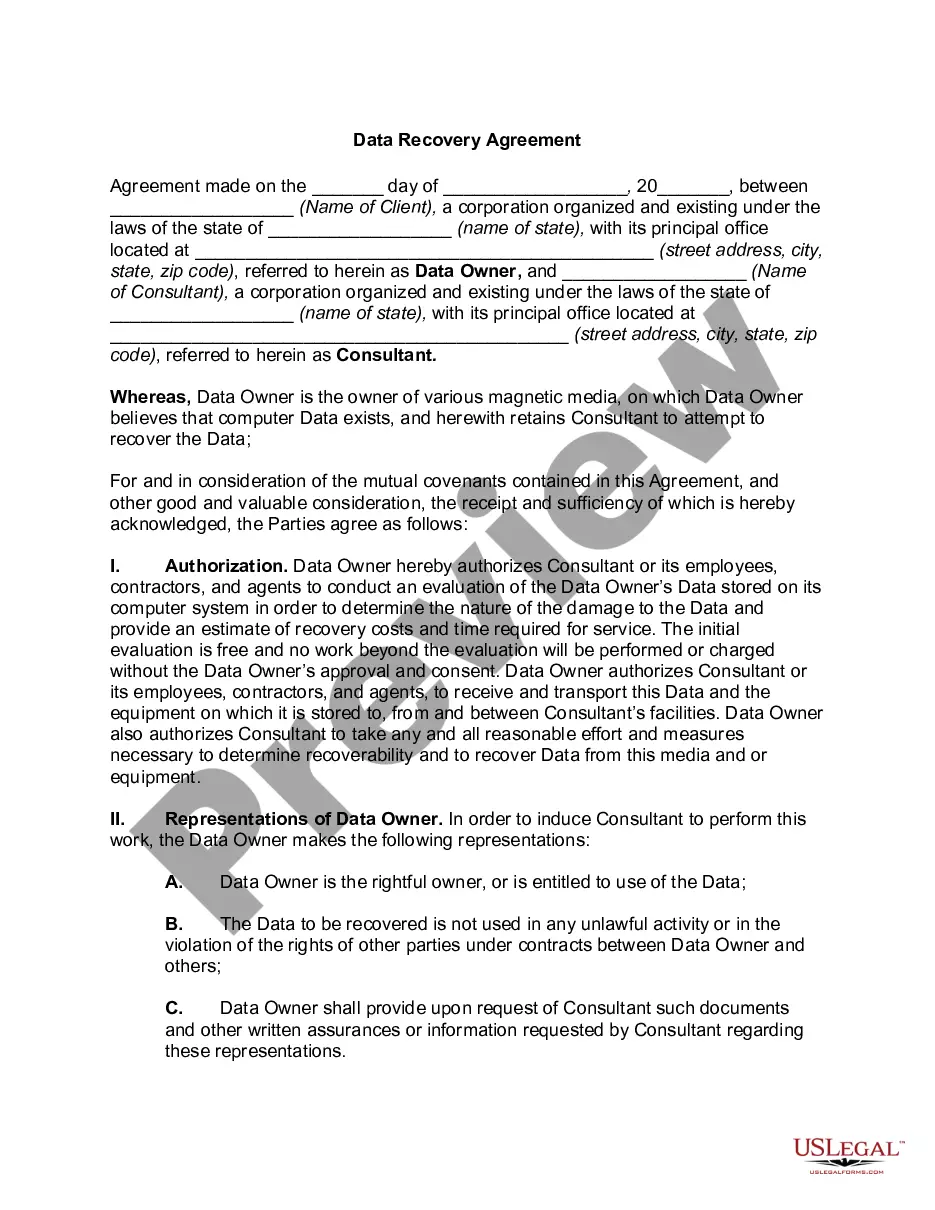
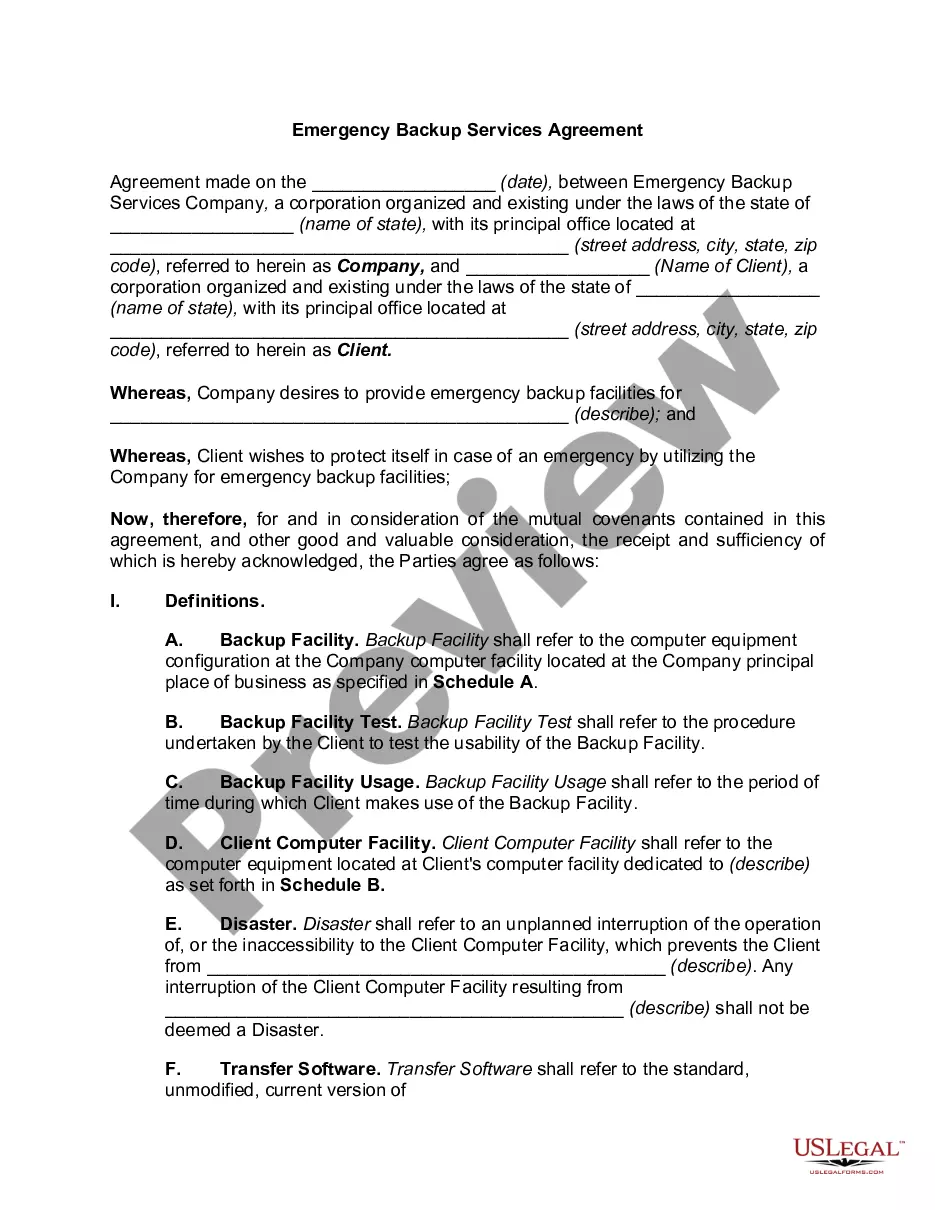
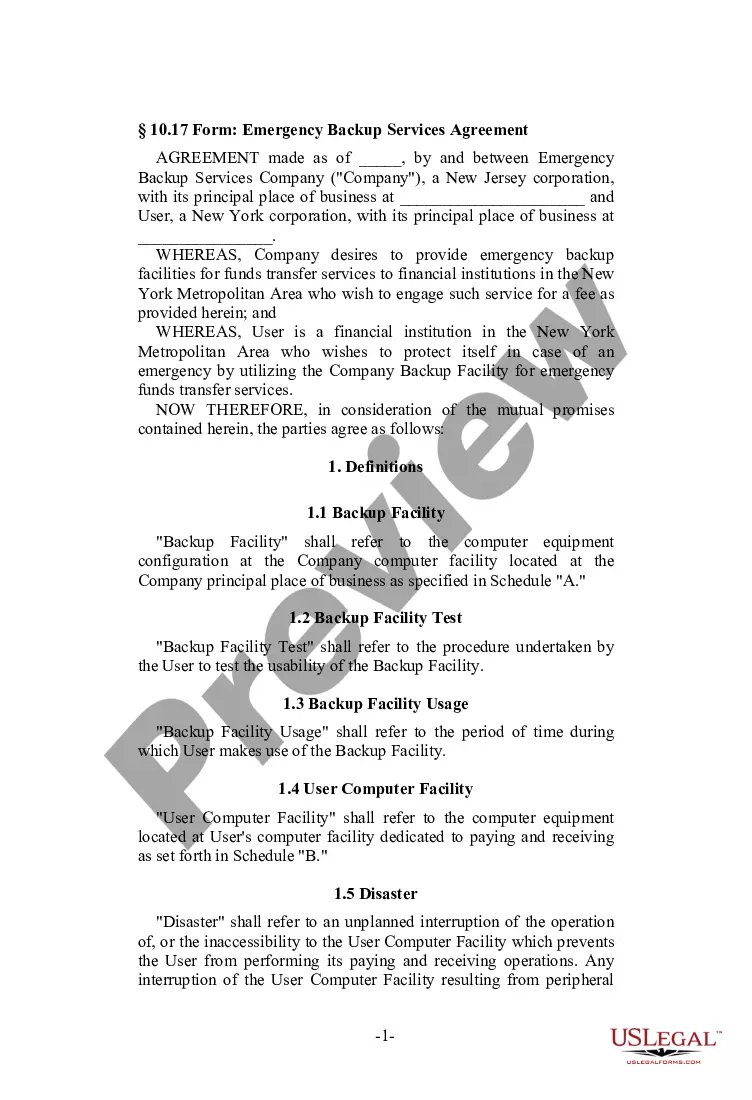
The Managed Backup and Recovery Service Agreement is a legally binding document outlining the terms and conditions between a service provider and a customer in the computer, internet, and software industries. This agreement is designed to establish clear expectations for managing backup and recovery services, differentiating itself from other service agreements by focusing on data protection and recovery specifics.
Key components of this form
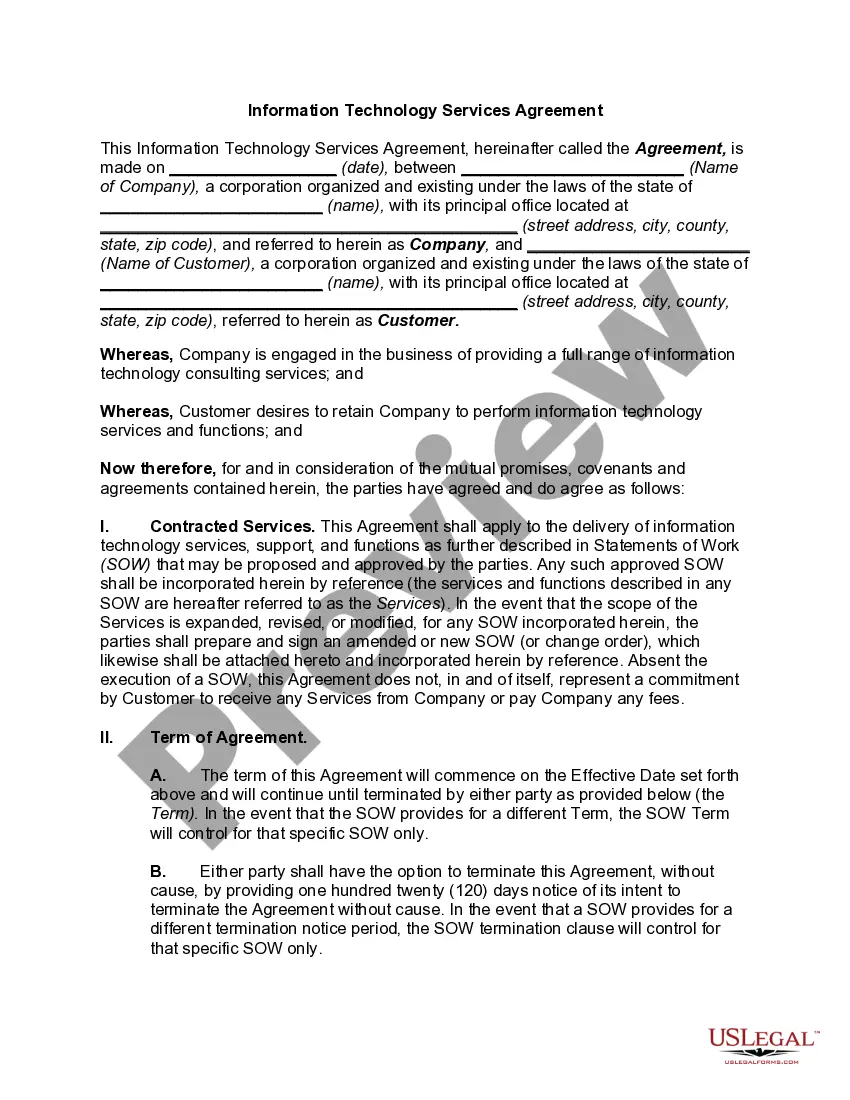
- Parties involved: identifies the Service Provider and Customer with their respective addresses.
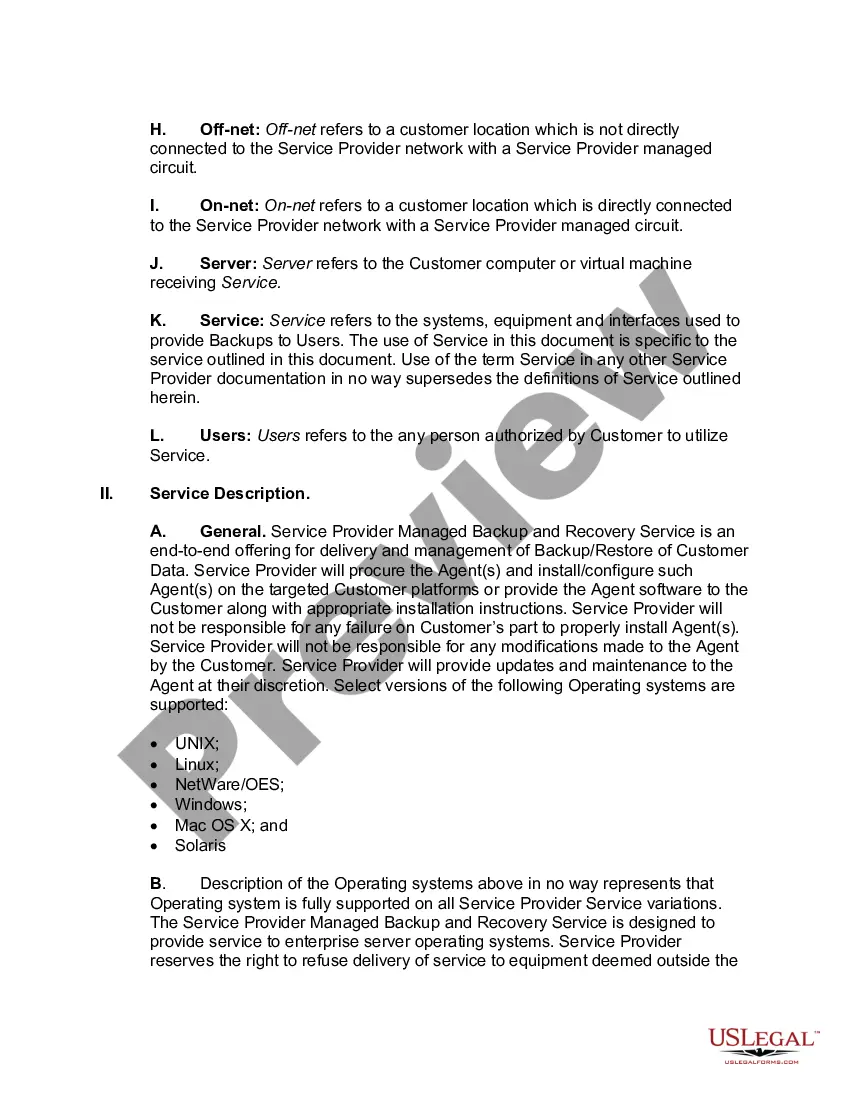
- Terminology section: defines key terms used throughout the agreement, such as Agent, Data, and Service.
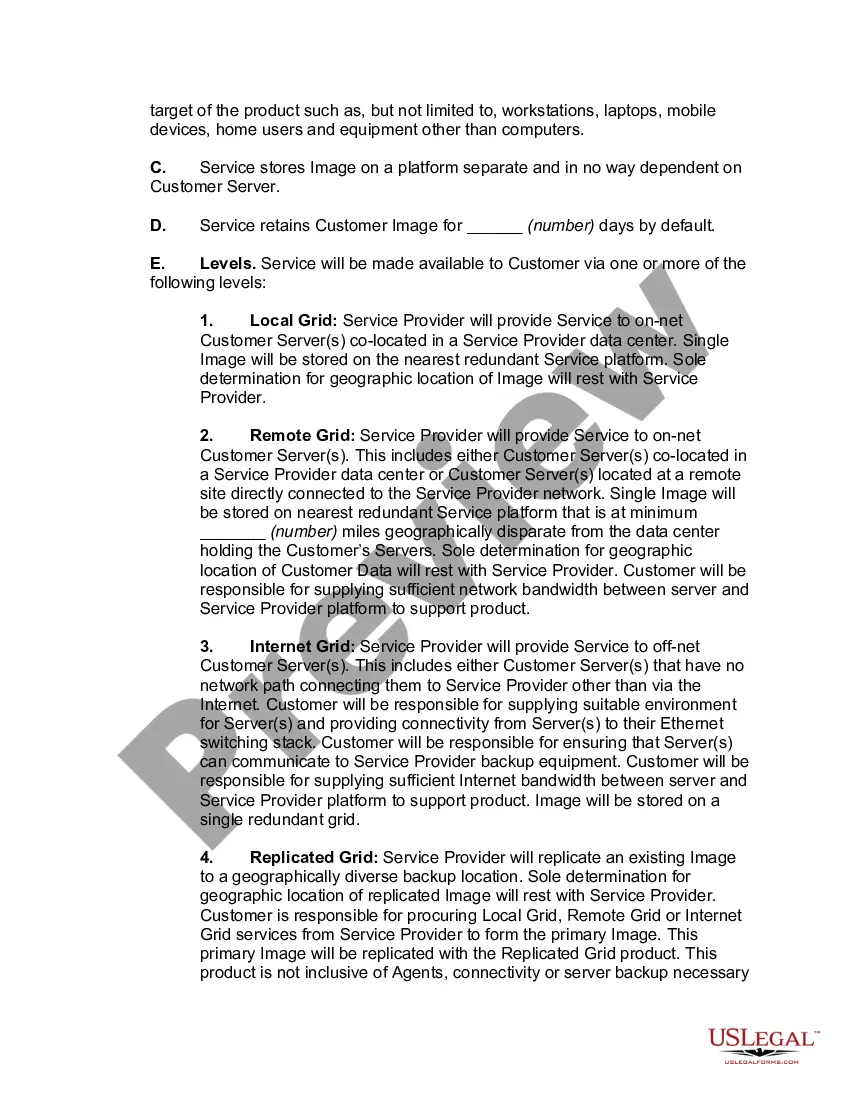
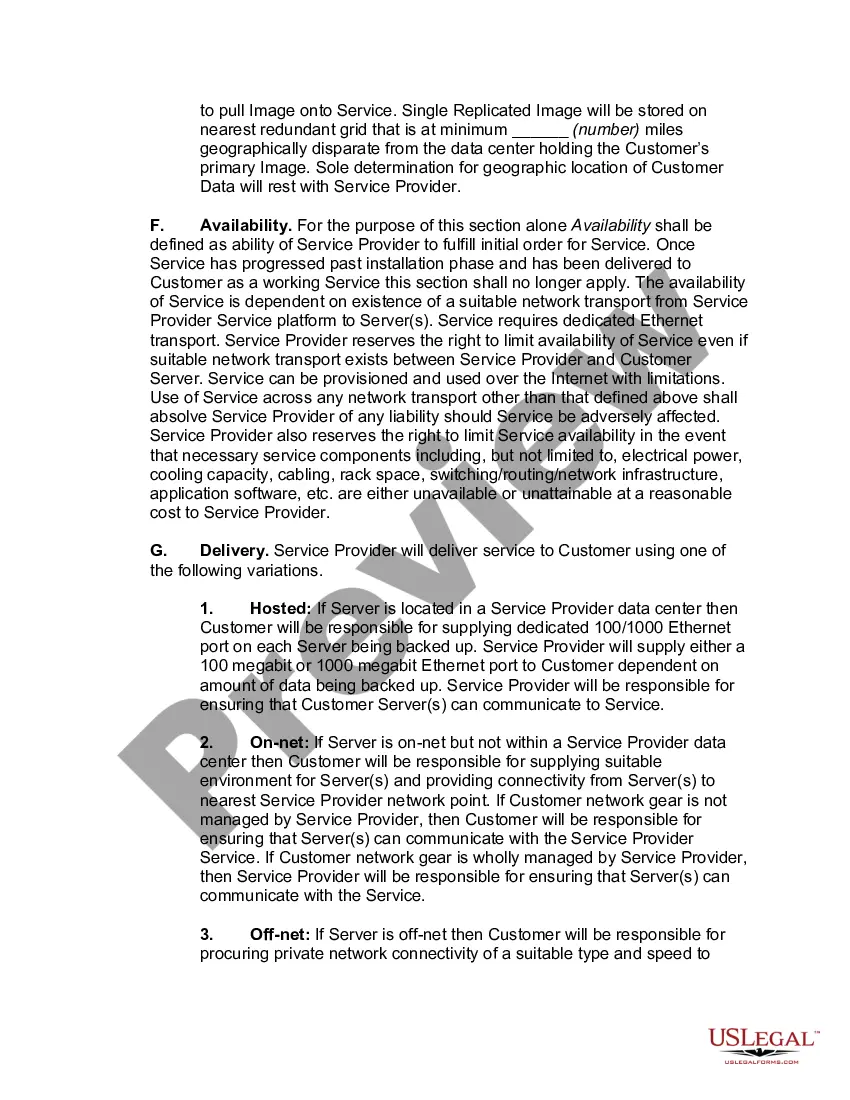
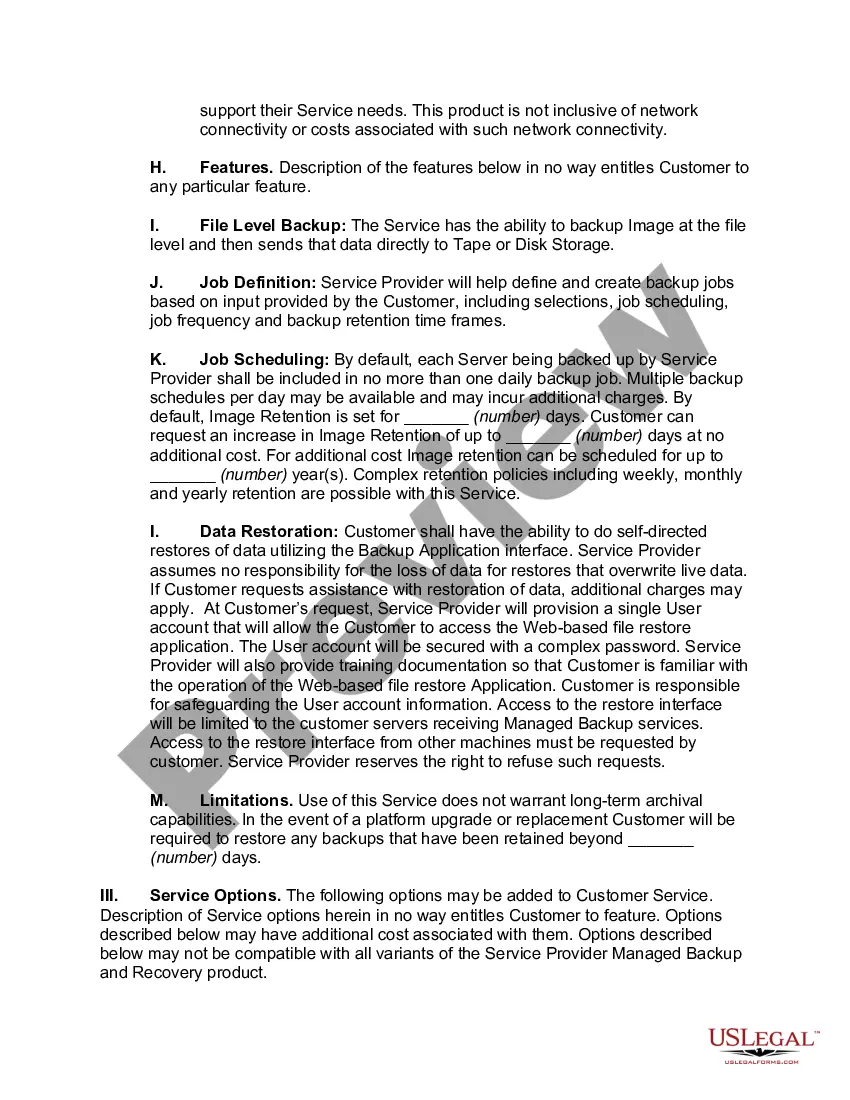
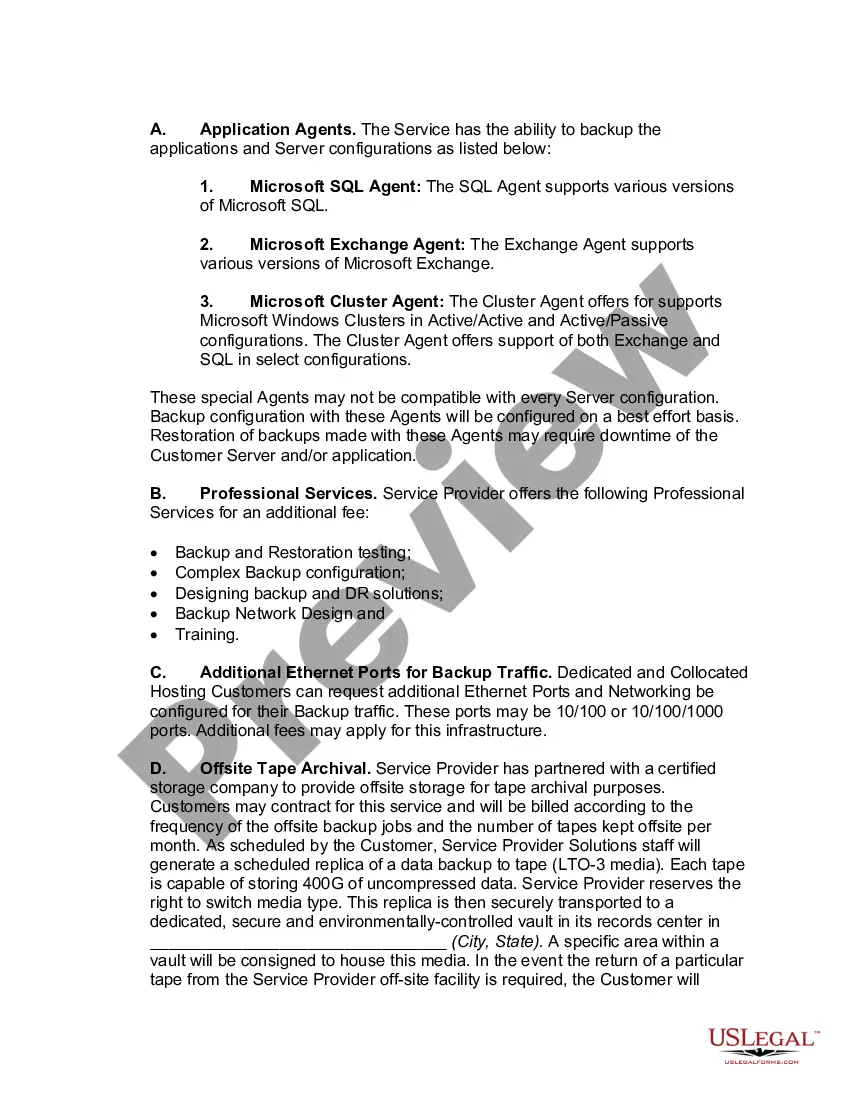
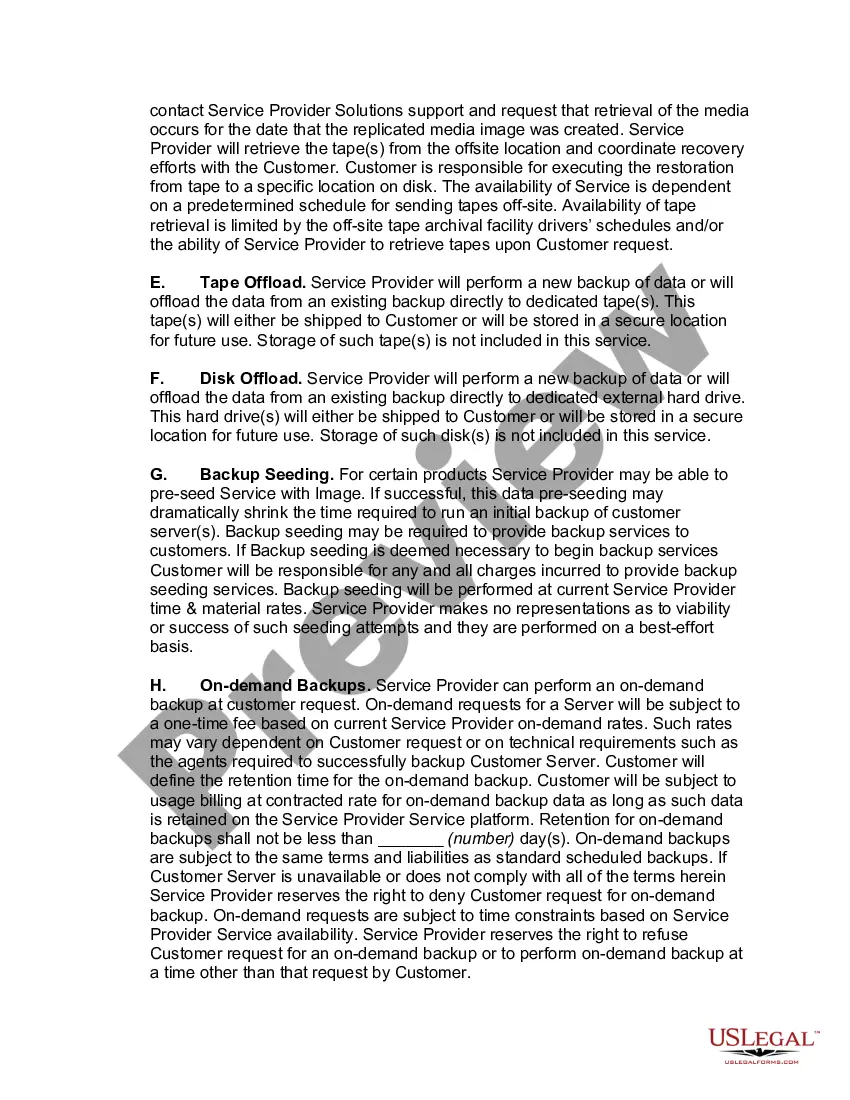
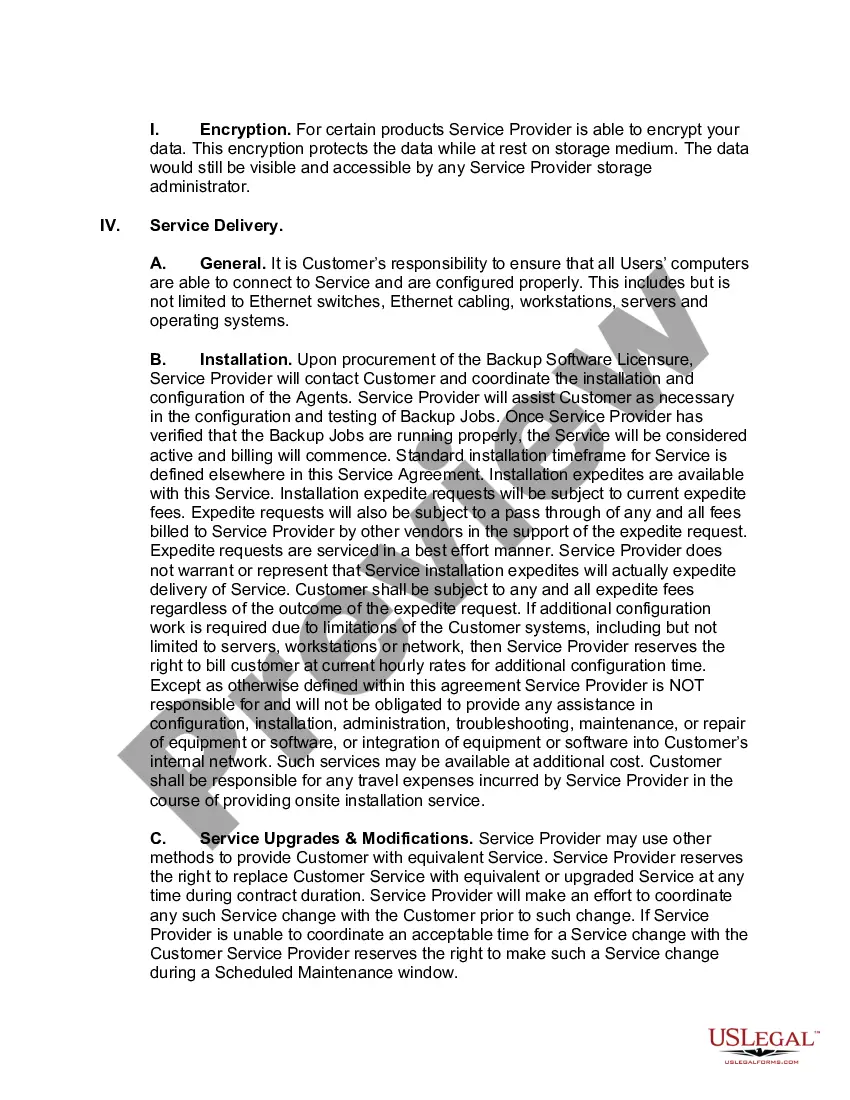
- Service description: details the specific services provided including backup, storage, and restoration options.
- Service terms: outlines the conditions under which services will be provided, including availability and limitations.
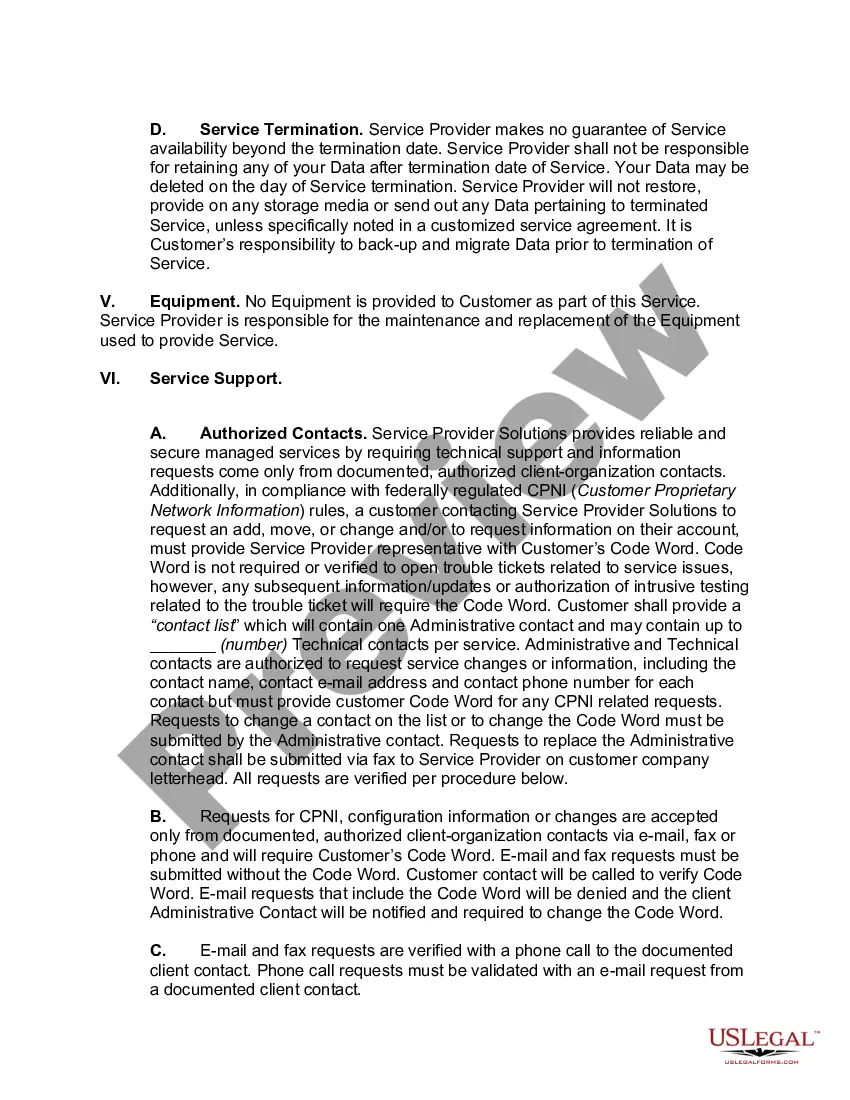
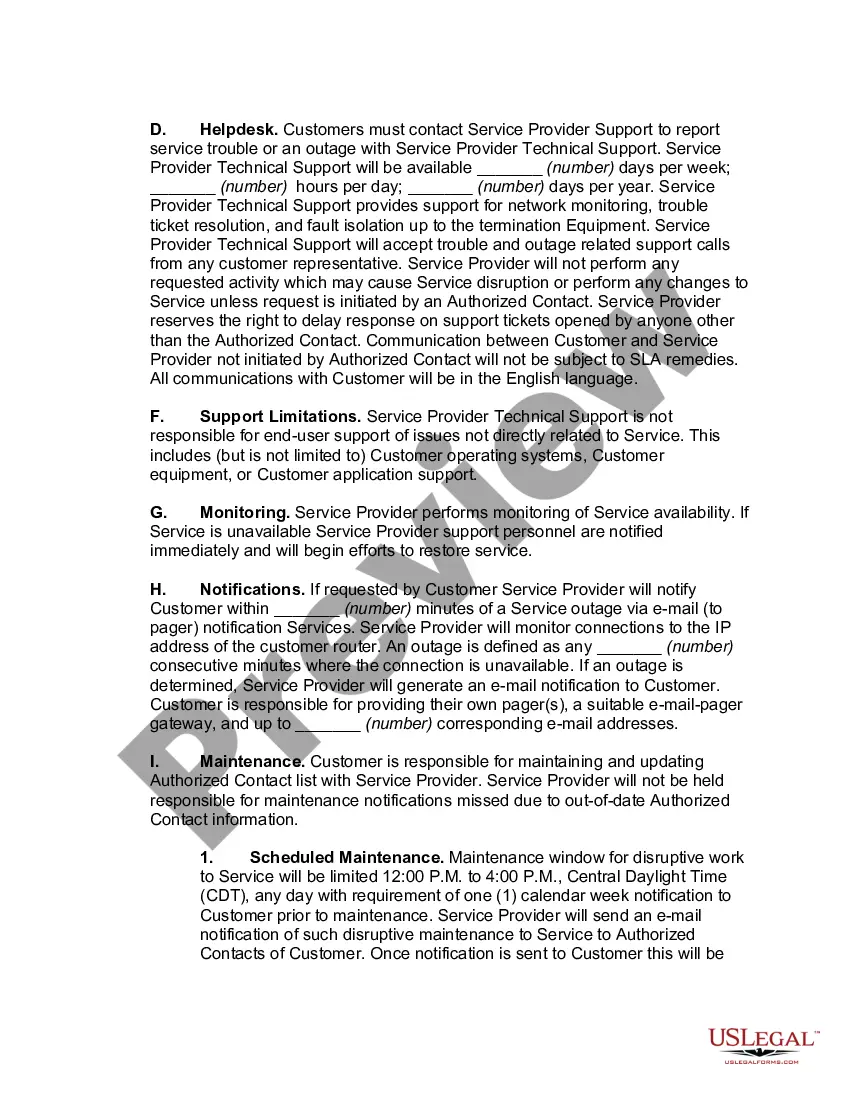
- Service support and responsibility: explains the roles and responsibilities of both the service provider and the customer.
- Billing terms: includes details on payment obligations and minimum monthly commitments.

When to use this form
This agreement should be used when a business wishes to engage a managed service provider for backup and recovery needs. It is particularly relevant for companies with critical data that must be protected, ensuring recovery options are clearly defined and agreed upon. Use this form to formalize service expectations and to protect against data loss.
Who can use this document
The following parties should use this agreement:
- Businesses seeking reliable data backup and recovery solutions.
- IT service providers offering managed services to handle clients' data protection needs.
- Organizations required to comply with data protection regulations.
- Entities with significant data storage needs that demand a structured service agreement.
Steps to complete this form
- Identify and enter the names and addresses of both the Service Provider and the Customer at the top of the document.
- Fill in necessary dates and terms related to services, including start dates and the duration of the agreement.
- Define the specific services to be provided, using the predefined sections to clarify the expectations accurately.
- Specify the billing terms, including any minimum monthly commitments and additional charges for overages.
- Both parties must sign and date the agreement to make it legally binding.
Does this form need to be notarized?
This form does not typically require notarization unless specified by local law. However, it is recommended to consult with legal counsel to ensure compliance with state-specific requirements.
Get your form ready online
Our built-in tools help you complete, sign, share, and store your documents in one place.
Make edits, fill in missing information, and update formatting in US Legal Forms—just like you would in MS Word.
Download a copy, print it, send it by email, or mail it via USPS—whatever works best for your next step.
Sign and collect signatures with our SignNow integration. Send to multiple recipients, set reminders, and more. Go Premium to unlock E-Sign.
If this form requires notarization, complete it online through a secure video call—no need to meet a notary in person or wait for an appointment.
We protect your documents and personal data by following strict security and privacy standards.

Make edits, fill in missing information, and update formatting in US Legal Forms—just like you would in MS Word.

Download a copy, print it, send it by email, or mail it via USPS—whatever works best for your next step.

Sign and collect signatures with our SignNow integration. Send to multiple recipients, set reminders, and more. Go Premium to unlock E-Sign.

If this form requires notarization, complete it online through a secure video call—no need to meet a notary in person or wait for an appointment.

We protect your documents and personal data by following strict security and privacy standards.
Common mistakes
- Failing to clarify the specific services included in the agreement.
- Not including adequate definitions for technical terms in the terminology section.
- Skipping the review of billing terms, potentially leading to unexpected fees.
- Omitting signatures or initials where required, rendering the contract unenforceable.
Benefits of using this form online
- Convenience of downloading and editing the form to suit specific needs.
- Reliable content drafted by licensed attorneys, ensuring legal validity.
- Quick access to templates without the need for engagement with lawyers, saving time and costs.
- Flexibility to customize terms according to the specific requirements of the service agreement.
Looking for another form?
Form popularity
FAQ
Backup and recovery refers to the process of backing up data in case of a loss and setting up systems that allow that data recovery due to data loss. Backing up data requires copying and archiving computer data, so that it is accessible in case of data deletion or corruption.
There's an important distinction between backup and disaster recovery. Backup is the process of making an extra copy (or multiple copies) of data.Disaster recovery, on the other hand, refers to the plan and processes for quickly reestablishing access to applications, data, and IT resources after an outage.
Backup and recovery describes the process of creating and storing copies of data that can be used to protect organizations against data loss.Recovery from a backup typically involves restoring the data to the original location, or to an alternate location where it can be used in place of the lost or damaged data.
A backup policy should identify critical data and systems to be protected, clarify frequency of both full and incremental backups, delineate backup administrator responsibilities, and provide details for retention, offsite rotation, restoration procedures, storage of backups, and more.
A managed backup uses a third party managed service provider (MSP) to create and store backups of your data.Sometimes companies are obligated to store their backups for several years, which can eat into available hard drive space. By using an MSP to store your backups, you free up space on your network.
Backup and restore refers to technologies and practices for making periodic copies of data and applications to a separate, secondary device and then using those copies to recover the data and applicationsand the business operations on which they dependin the event that the original data and applications are lost or
1 About Backup Management. An essential part of a backup and recovery strategy is managing backups after you create them. Backup management includes deleting obsolete backups and performing periodic checks to ensure that backups are available and usable.
Backup is the process of creating a copy of the data on your system that you use for recovery in case your original data is lost or corrupted. You can also use backup to recover copies of older files if you have deleted them from your system.
Backup refers to storing a copy of original data separately. Recovery refers to restoring the lost data in case of failure.