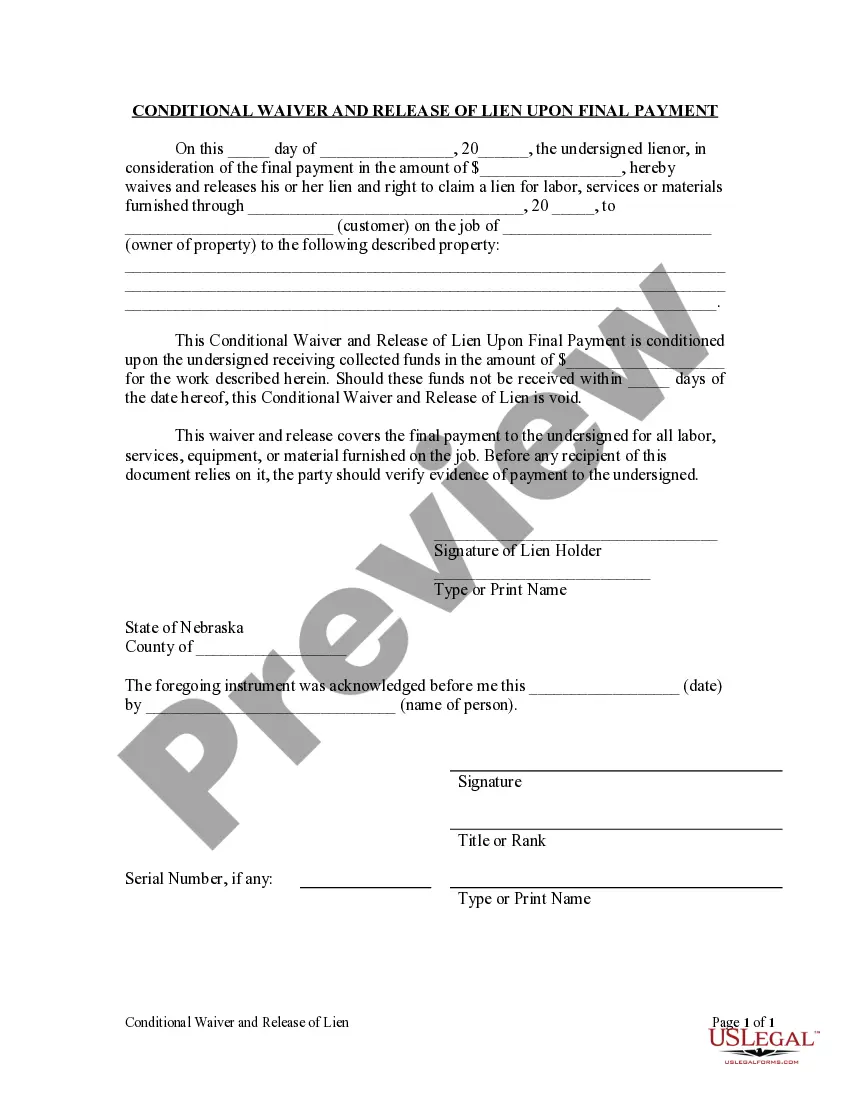
Nebraska Conditional Waiver and Release of Lien Upon Final Payment
What is this form?
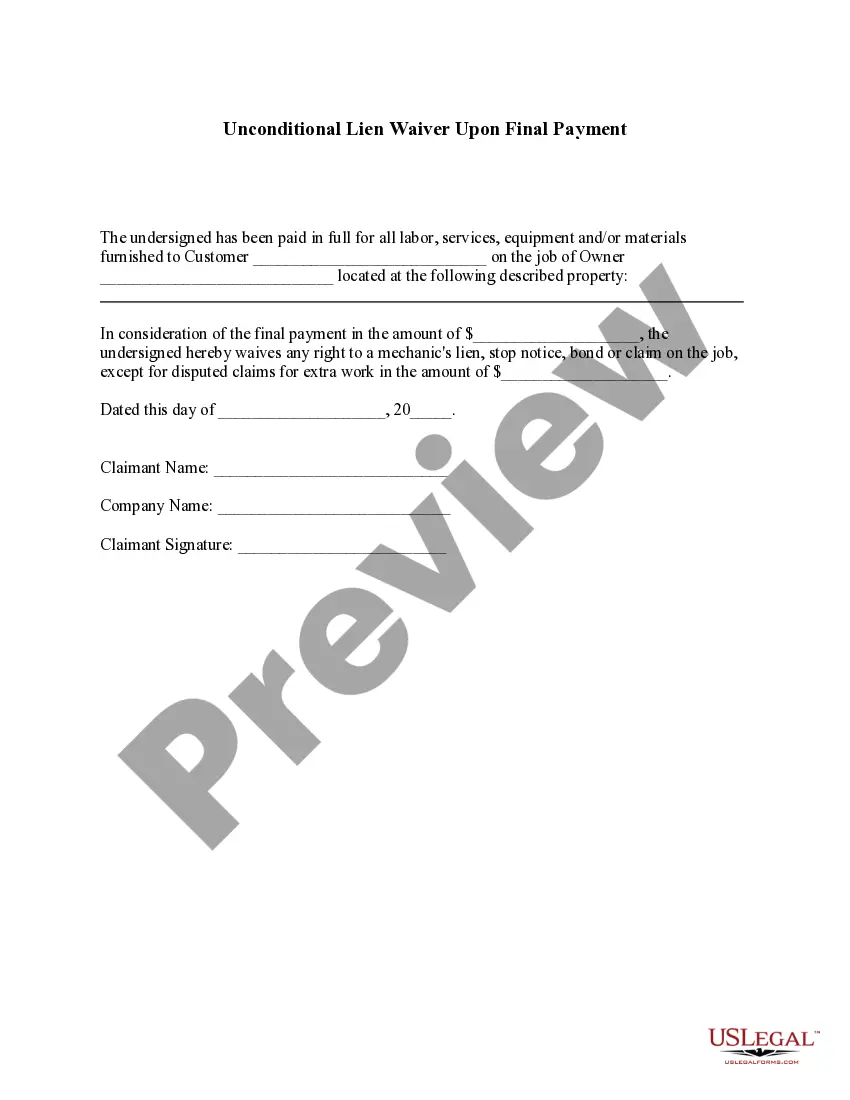
The Conditional Waiver and Release of Lien Upon Final Payment form is a legal document used by a lienor to waive and release their lien rights in exchange for final payment. This form ensures that after receiving payment, the lienor relinquishes the right to claim a lien on the property for labor, services, or materials provided. It is specifically conditional upon the lienor receiving the agreed funds and becomes void if payment is not received within the stipulated time frame. This form is essential for both contractors and property owners to clear any liens before the final payment is processed.
Main sections of this form
- Date of waiver signing
- Final payment amount
- Services or materials provided through a specified date
- Customer and property owner information
- Clear identification of the property
- Condition for waiver validity based on receipt of funds
- Signature and printed name of the lien holder
- Notary acknowledgment section
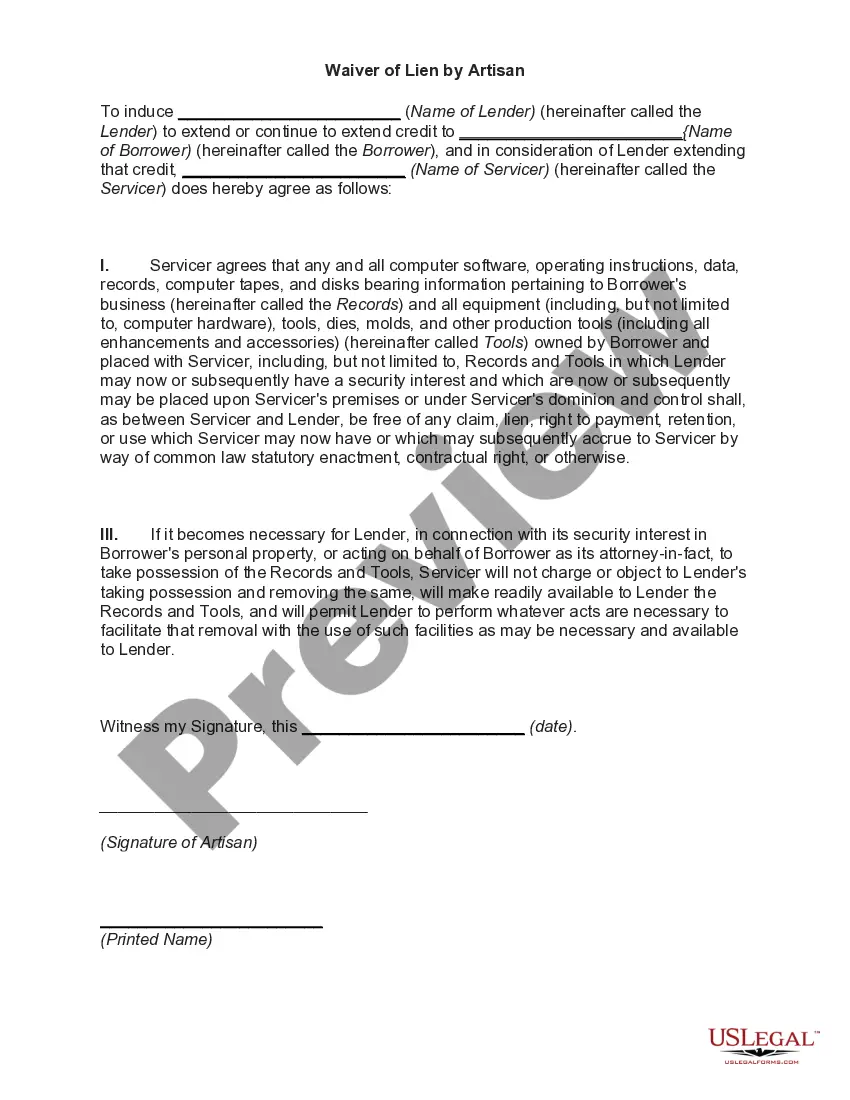
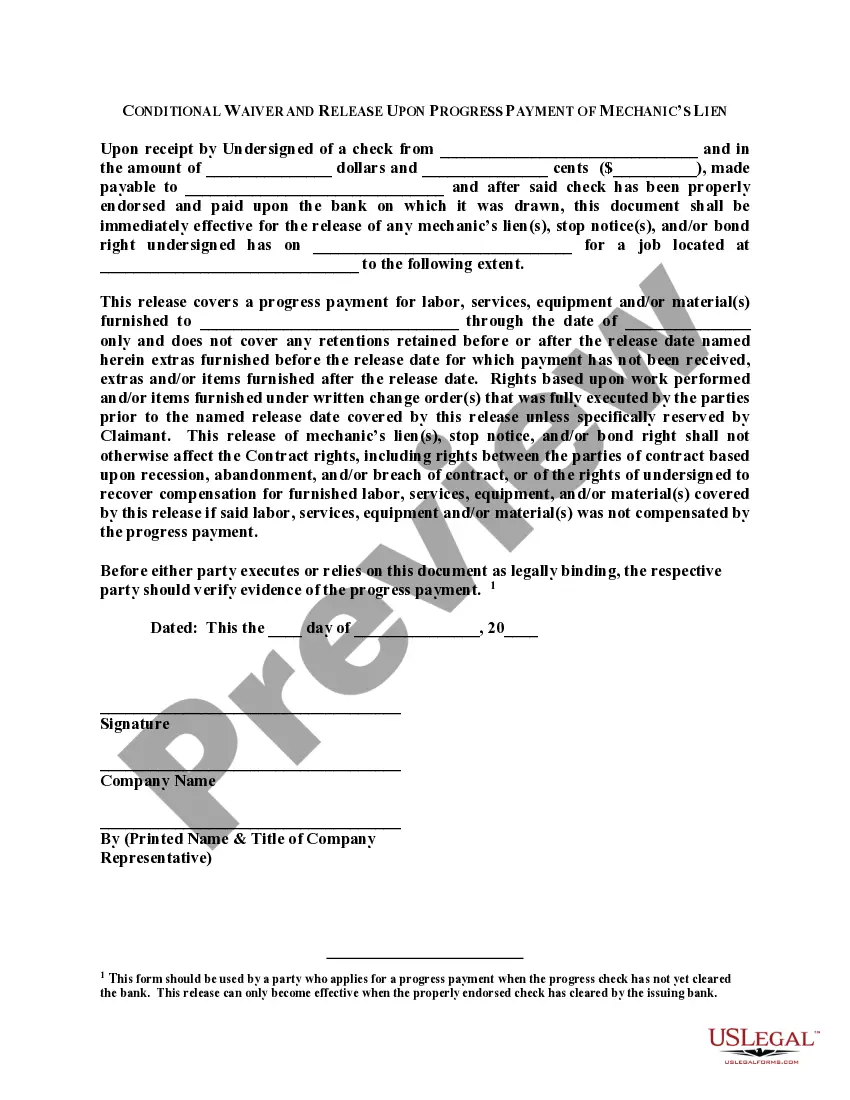
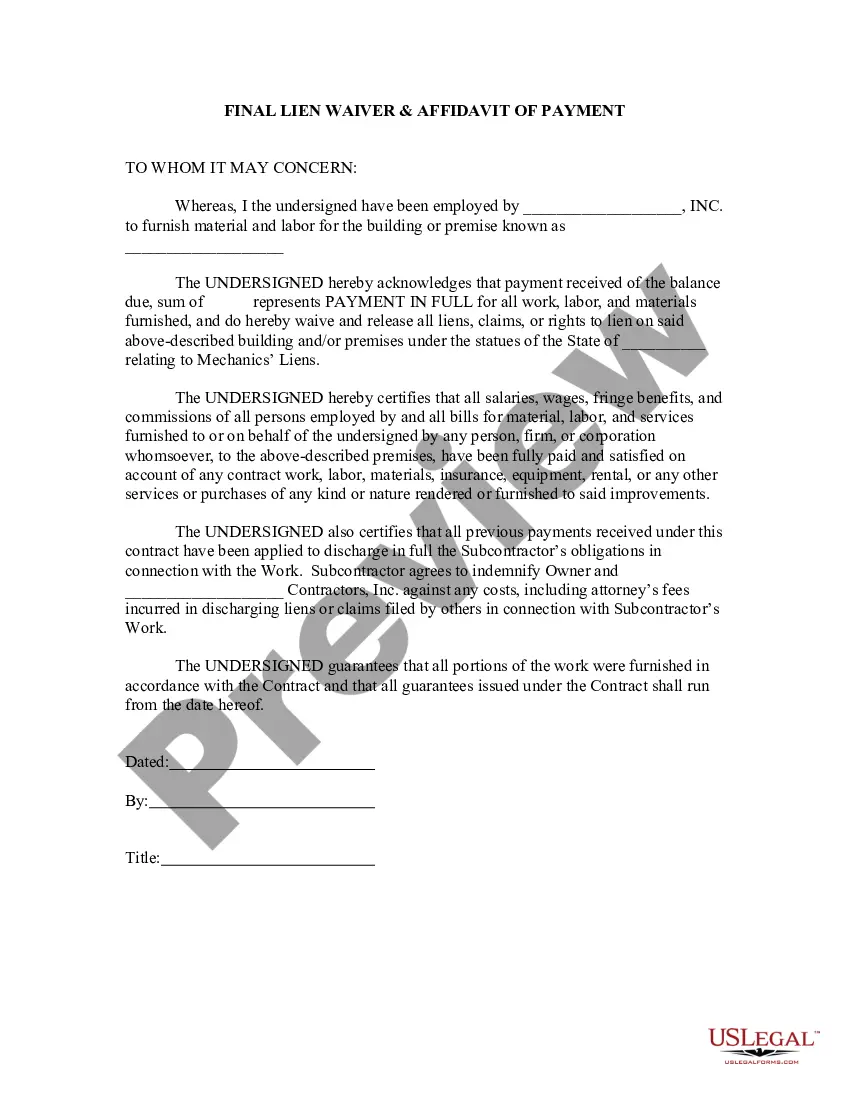
When to use this form
This form should be used when a contractor, subcontractor, or supplier has completed their work or delivered materials for a specific project and expects final payment. It is particularly crucial when a property owner requests a lien waiver before making the final payment to ensure the lienor has no future claims against the property. Using this form helps to protect all parties involved in a construction project from potential disputes related to unpaid work or materials.
Who this form is for
- Contractors providing services or materials on a construction project
- Subcontractors who have worked on a job but need to secure payment
- Suppliers delivering materials for construction or renovation
- Property owners needing to clear liens before property transfer or final payment
Instructions for completing this form
- Identify the date you are filling out the form.
- Enter the final payment amount expected.
- Specify the labor, services, or materials provided up to a certain date.
- Fill in the names of the customer and property owner, along with the property description.
- Indicate the timeframe for receiving funds to validate the waiver.
- Sign and print your name as the lien holder and have the document notarized.
Does this document require notarization?
This form needs to be notarized to ensure legal validity. US Legal Forms provides secure online notarization powered by Notarize, allowing you to complete the process through a verified video call, available anytime.
Get your form ready online
Our built-in tools help you complete, sign, share, and store your documents in one place.
Make edits, fill in missing information, and update formatting in US Legal Forms—just like you would in MS Word.
Download a copy, print it, send it by email, or mail it via USPS—whatever works best for your next step.
Sign and collect signatures with our SignNow integration. Send to multiple recipients, set reminders, and more. Go Premium to unlock E-Sign.
If this form requires notarization, complete it online through a secure video call—no need to meet a notary in person or wait for an appointment.
We protect your documents and personal data by following strict security and privacy standards.

Make edits, fill in missing information, and update formatting in US Legal Forms—just like you would in MS Word.

Download a copy, print it, send it by email, or mail it via USPS—whatever works best for your next step.

Sign and collect signatures with our SignNow integration. Send to multiple recipients, set reminders, and more. Go Premium to unlock E-Sign.

If this form requires notarization, complete it online through a secure video call—no need to meet a notary in person or wait for an appointment.

We protect your documents and personal data by following strict security and privacy standards.
Typical mistakes to avoid
- Not specifying the exact date when the waiver is signed.
- Failing to include the final payment amount accurately.
- Leaving out necessary details about the services or materials provided.
- Not verifying evidence of payment before relying on the waiver.
- Failing to notarize the document when required.
Why complete this form online
- Quick and easy access to the form without the need for in-person visits.
- Editable fields allow for tailored completion before downloading.
- Reliable forms drafted by licensed attorneys reduce the risk of errors.
- Secure storage for your completed documents.
Looking for another form?
Form popularity
FAQ
An unconditional mechanic's lien waiver states the contractor has in fact been paid in full for the stated work. Write the name of the maker of the check in the space provided on the mechanic's lien release form. Fill in the amount of the payment. Write the name of contractor the payment is being made to.
An unconditional partial waiver should be used when you have received a progress payment on the project. You may be expecting future payments on the project, but are looking to sign a waiver for a specific progress or partial payment that you are receiving.
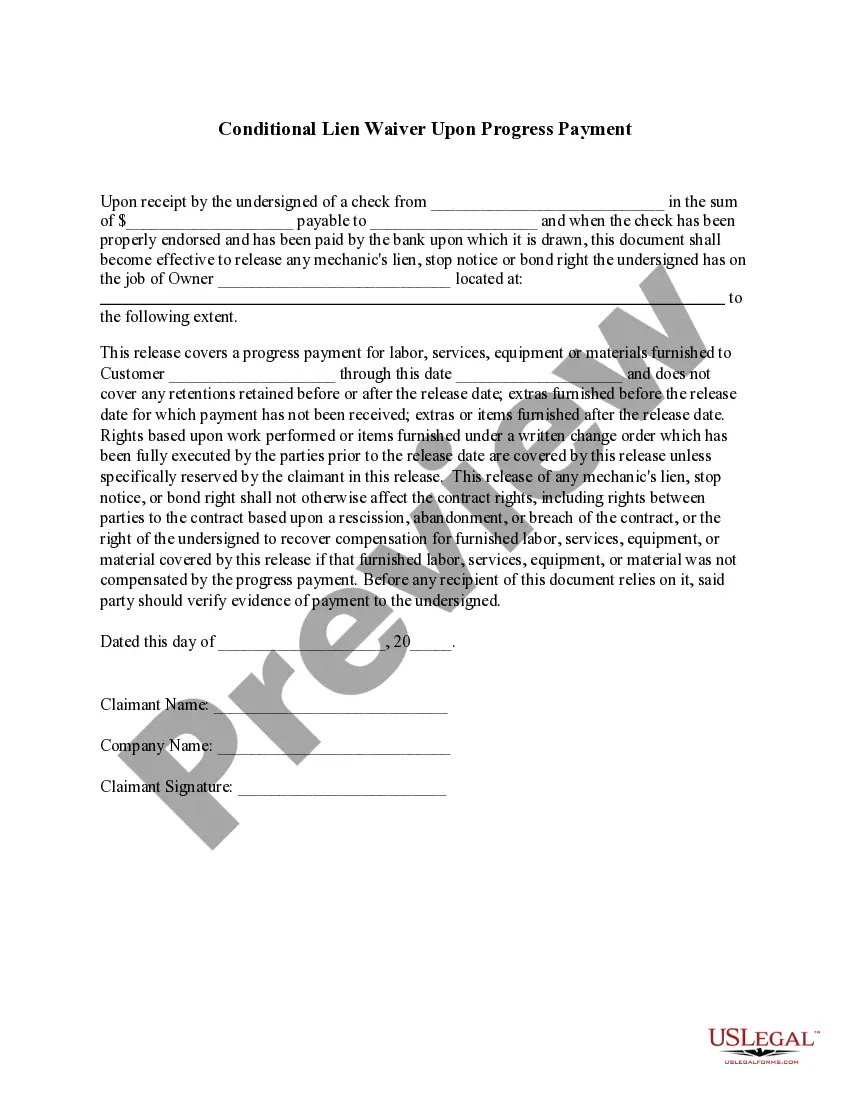
A "Conditional Waiver and Release Upon Progress Payment" discharges all claimant rights through a specific date, provided the payments have actually been received and processed. An "Unconditional Waiver and Release Upon Final Payment" extinguishes all claimant rights upon receipt of the payment.
The main purpose of a lien waiver is to provide protection to the paying party. In exchange for such payment, the lien waiver waives the payee's right to file a lien for the exact value of the payment they have received.
Name of Claimant. This is the name the party to be paid, and the party who will be signing the lien waiver document. Name of Customer. Job Location. Owner. Exceptions. Claimant's Signature. Claimant's Title. Date of Signature.
An unconditional release means that there are no restrictions on the release of the lien. This type of lien release is often used in final project documents to confirm that the project is complete, payment has occurred, and you release all future rights to file liens on the project.
A waiver is a legally binding provision where either party in a contract agrees to voluntarily forfeit a claim without the other party being liable.Examples of waivers include the waiving of parental rights, waiving liability, tangible goods waivers, and waiver for grounds of inadmissibility.
It basically states that you've paid the subcontractor what is owed, they accept the payment in full, and they waive the right to put a lien on your property. Simply present this form to the subcontractor with your payment and ask them to sign it. Make sure you get their signature!
Satisfy the terms of the loan by paying the balance of the loan back to the lender, including any interest incurred. If you don't receive the lien release, submit a request to your lender for proof that the loan has been satisfied.
An "Unconditional Waiver and Release Upon Final Payment" extinguishes all claimant rights upon receipt of the payment. A "Conditional Waiver and Release Upon Final Payment" extinguishes all claimant rights upon receipt of the final payment with certain provisions.