Lottery Pool Agreement
About this form
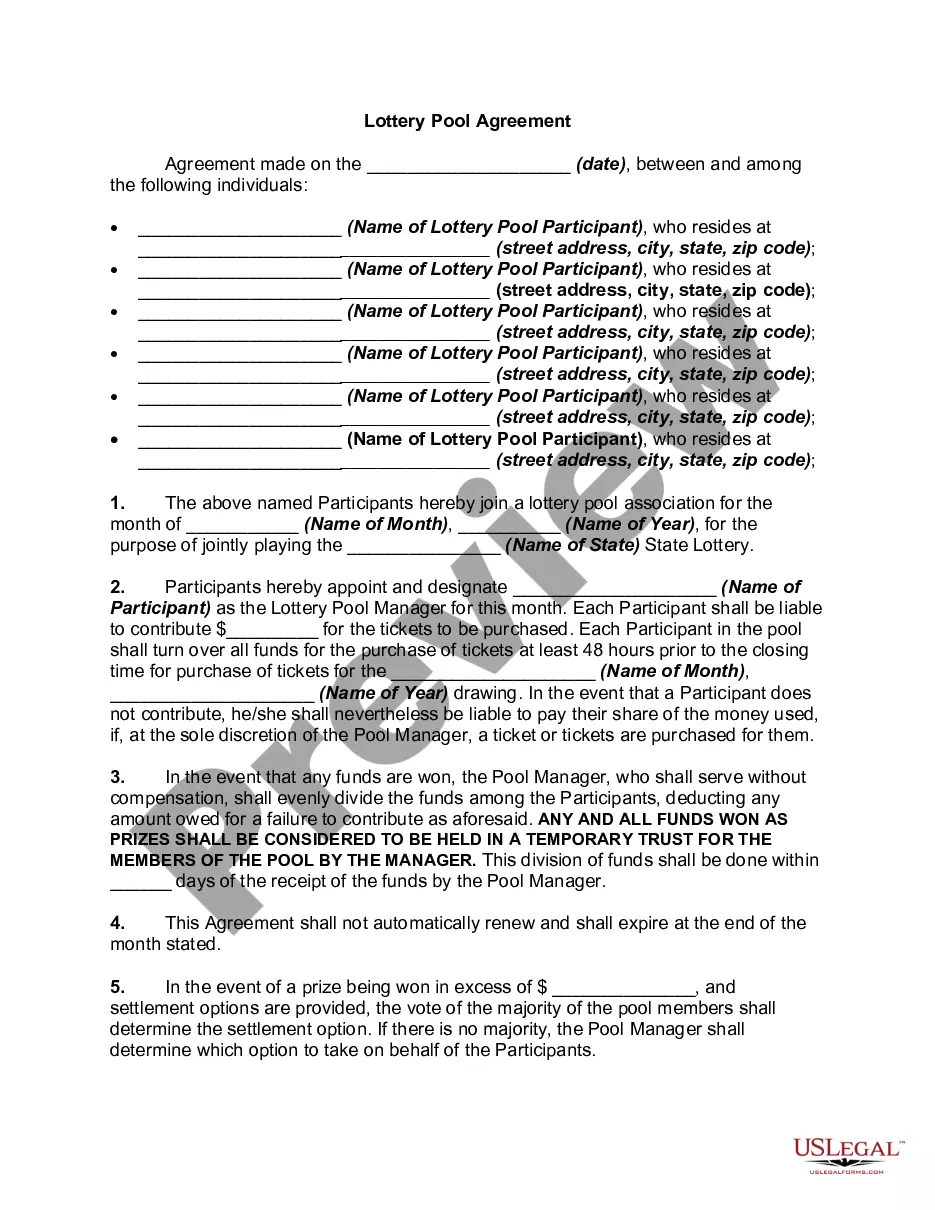
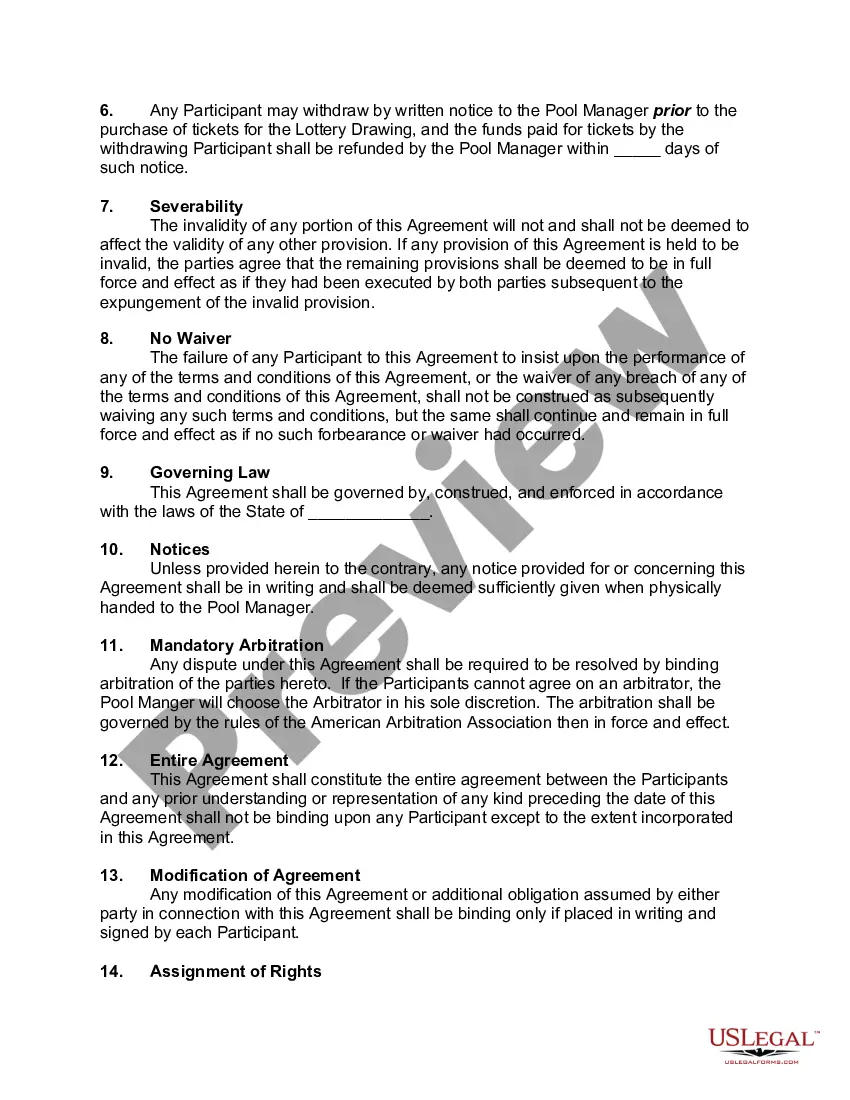
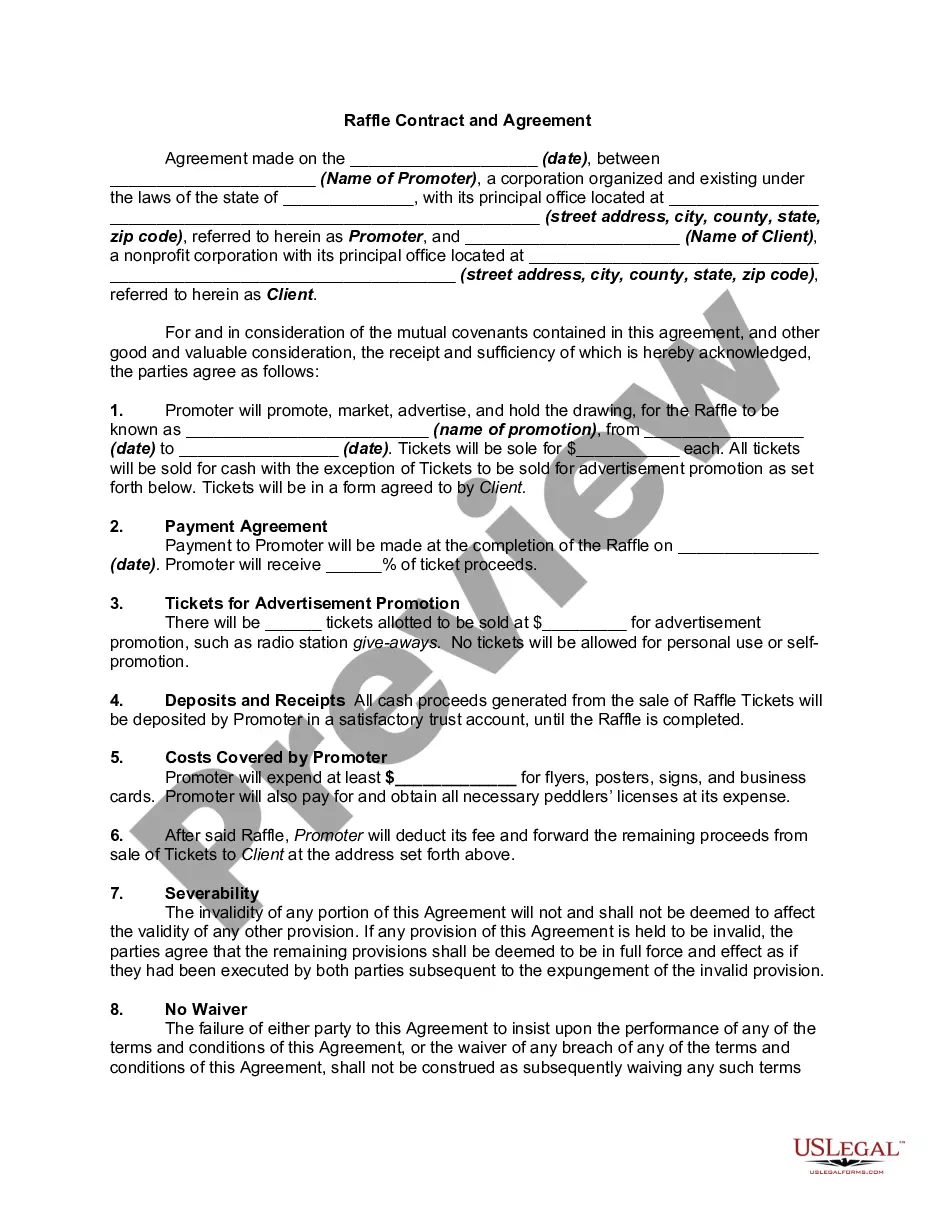
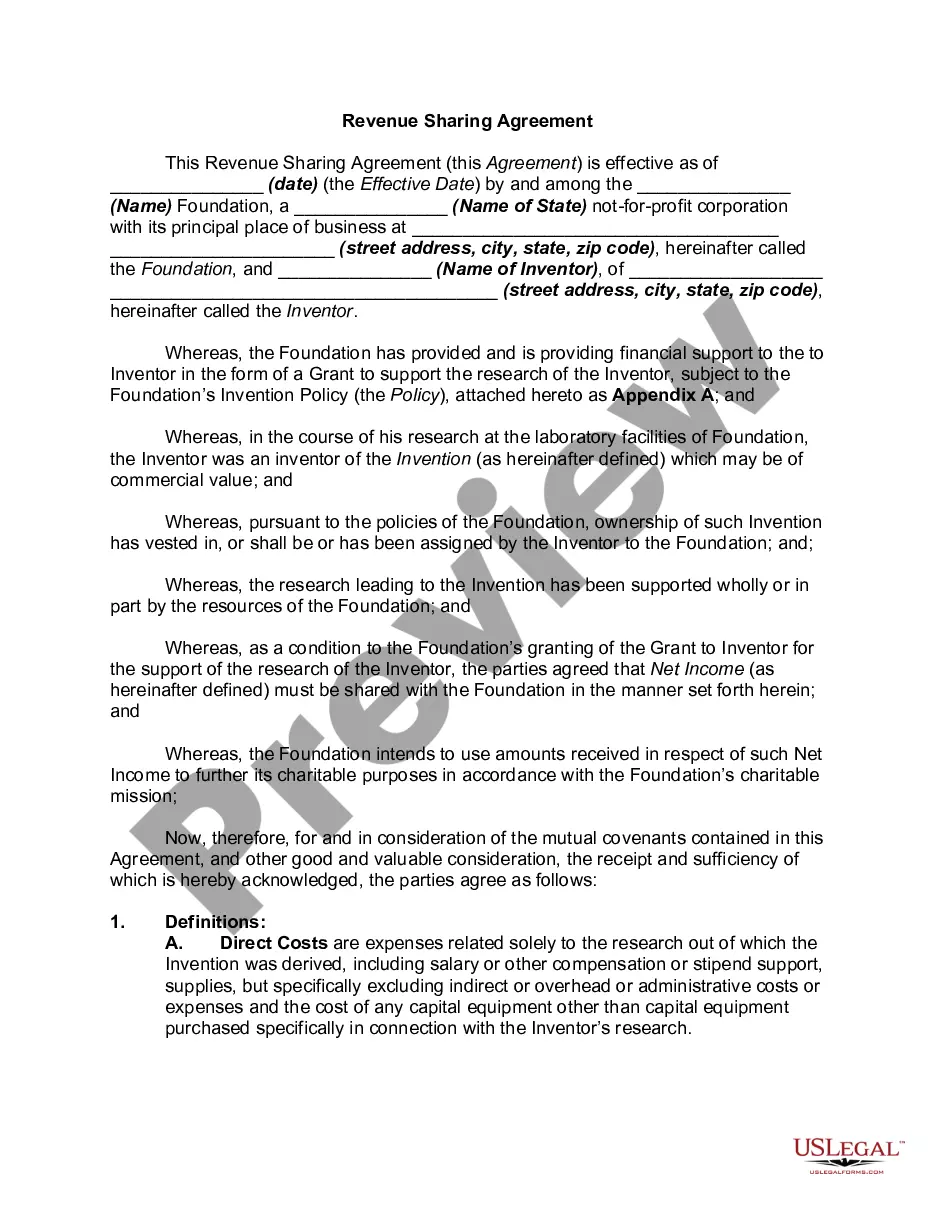
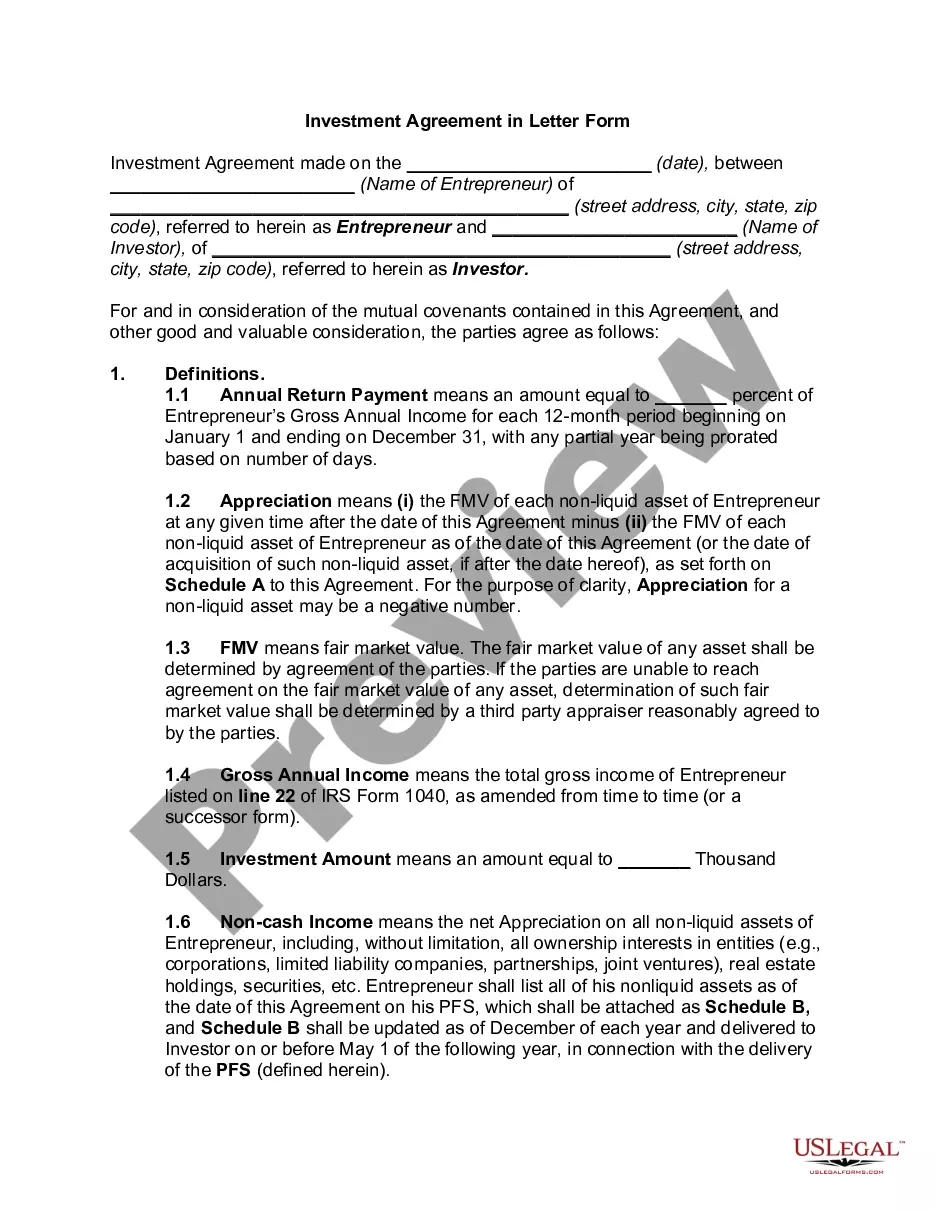
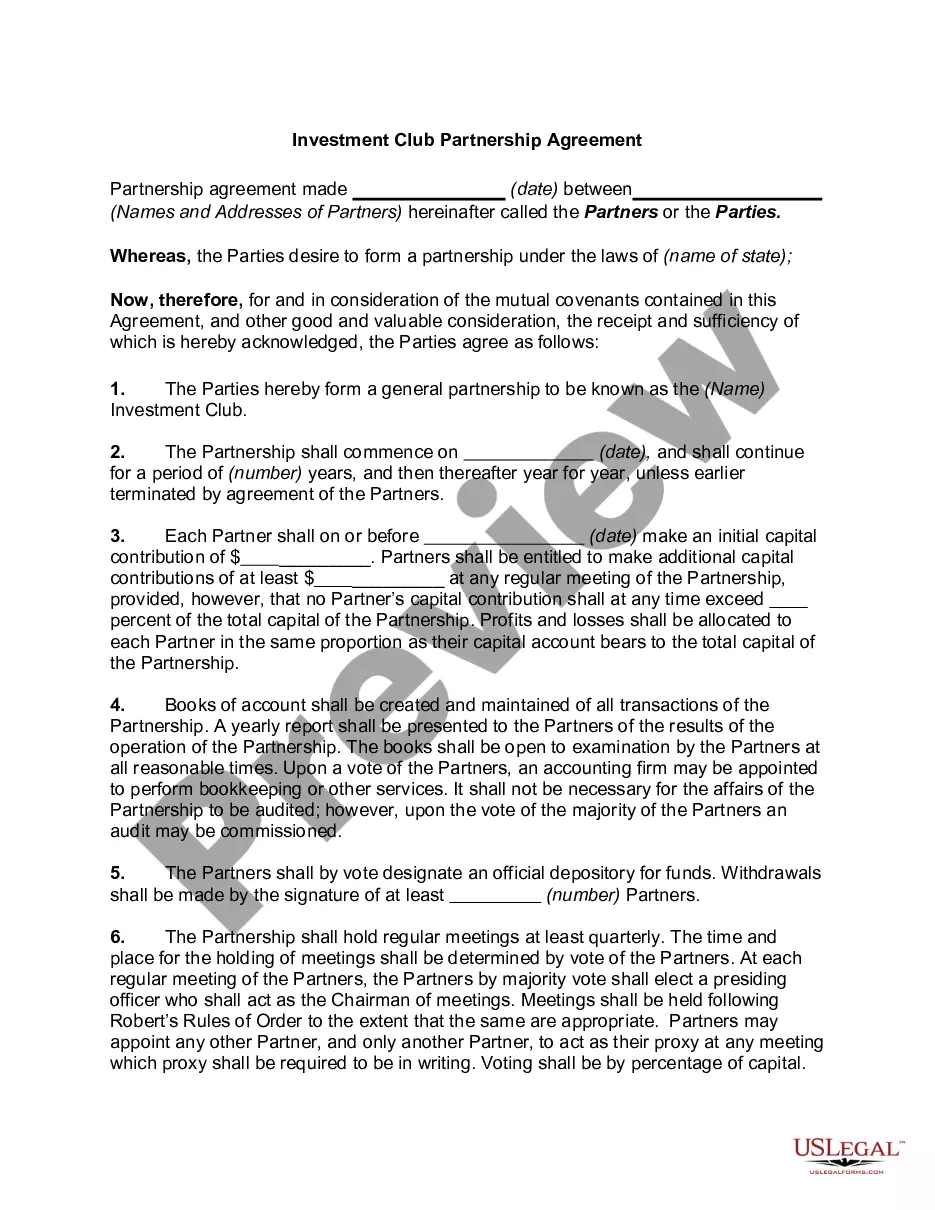
The Lottery Pool Agreement is a legally binding contract that outlines the terms and conditions under which a group of participants join together to play the lottery. It defines each participant's obligations, the role of a designated manager, and the distribution of any winnings. This agreement is essential in preventing disputes and ensuring that everyone understands their responsibilities within the pool.
What’s included in this form
- Date of agreement and participant details
- Designation of a lottery pool manager
- Terms for purchasing lottery tickets and contributions from participants
- Distribution of winnings and conditions for withdrawing
- Governing law and arbitration provisions
Common use cases
This form should be used when a group of individuals intends to pool their resources to purchase lottery tickets for a specific drawing. It can be particularly useful in social settings, such as among coworkers or friends, to formalize the agreement and ensure transparency regarding contributions and winnings distribution.
Who this form is for
This form is intended for:
- Groups of friends or coworkers wishing to play the lottery together
- Individuals looking to formalize their contributions to a lottery pool
- Anyone wanting to establish clear rules and expectations for lottery participation and winnings distribution
Instructions for completing this form
- Identify and list the members participating in the lottery pool, including their addresses.
- Enter the date of the agreement and the specific month and year for which the pool is formed.
- Designate a pool manager responsible for purchasing tickets and handling funds.
- Specify the contributions each participant is required to make for ticket purchases.
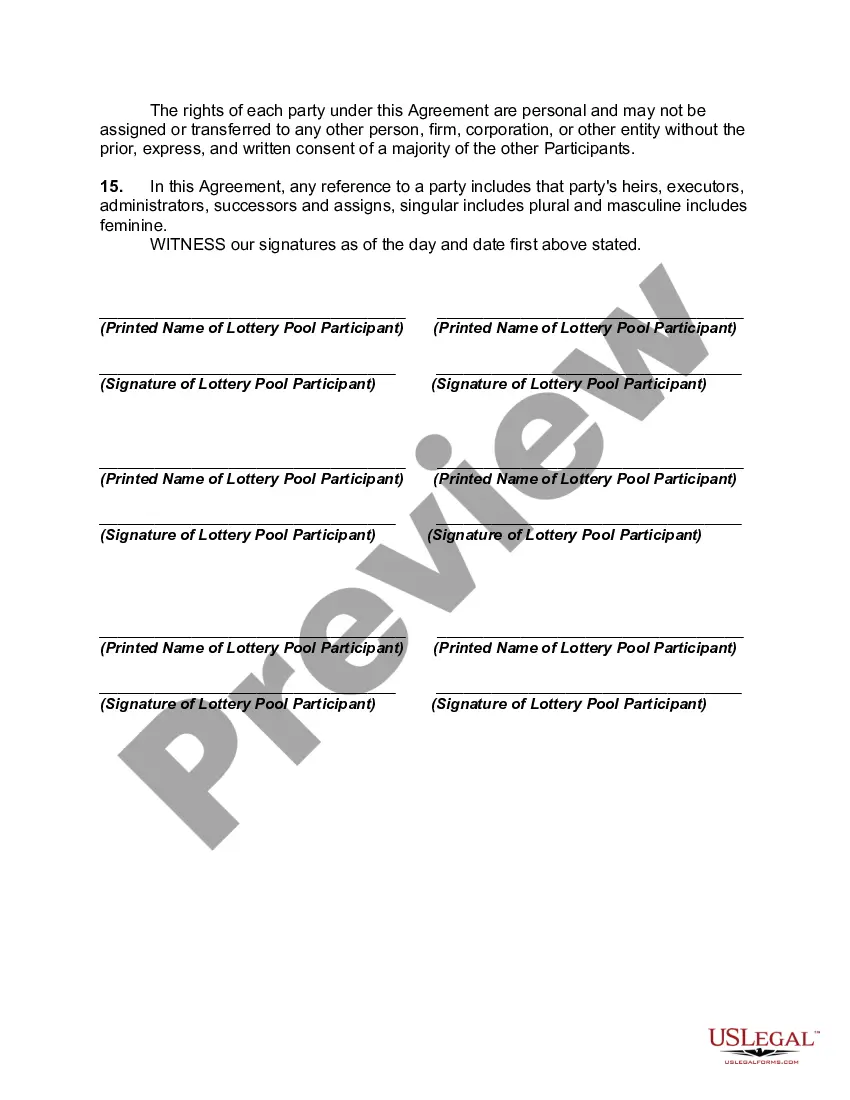
- Ensure all participants sign the agreement to validate it.
Notarization requirements for this form
This form does not typically require notarization unless specified by local law. It is advisable to consult state regulations to confirm the notarization requirements for lottery agreements.
Get your form ready online
Our built-in tools help you complete, sign, share, and store your documents in one place.
Make edits, fill in missing information, and update formatting in US Legal Forms—just like you would in MS Word.
Download a copy, print it, send it by email, or mail it via USPS—whatever works best for your next step.
Sign and collect signatures with our SignNow integration. Send to multiple recipients, set reminders, and more. Go Premium to unlock E-Sign.
If this form requires notarization, complete it online through a secure video call—no need to meet a notary in person or wait for an appointment.
We protect your documents and personal data by following strict security and privacy standards.

Make edits, fill in missing information, and update formatting in US Legal Forms—just like you would in MS Word.

Download a copy, print it, send it by email, or mail it via USPS—whatever works best for your next step.

Sign and collect signatures with our SignNow integration. Send to multiple recipients, set reminders, and more. Go Premium to unlock E-Sign.

If this form requires notarization, complete it online through a secure video call—no need to meet a notary in person or wait for an appointment.

We protect your documents and personal data by following strict security and privacy standards.
Avoid these common issues
- Failing to specify the amount each participant must contribute.
- Not designating a lottery pool manager.
- Skipping signatures from all participants.
- Neglecting to clearly outline the distribution of winnings.
Advantages of online completion
- Convenient access to a legally vetted template tailored for lottery pools.
- The ability to edit and customize the form easily to suit specific needs.
- Ensured reliability through professionally drafted content by licensed attorneys.
Legal use & context
- This agreement provides legal clarity and protection for all participants in a lottery pool.
- It outlines the obligations of each party, reducing the risk of disputes about contributions or winnings.
- While it aims to be enforceable, local laws should always be considered to ensure compliance.
Looking for another form?



Form popularity
FAQ
Consider options for trust control, beneficiaries, and other provisions. Draft and execute your trust agreement. Claim your lottery winnings as trustee of your new trust.
How is the lottery lump sum calculated? The lump sum for a lottery is equal to the total funds allocated to funding the jackpot. This is calculated as a percentage of the total revenue generated from ticket sales.
Each person can give away, during life or at death, a certain amount of property before the tax kicks in.So by claiming the lottery winnings as a family partnership, a winner can claim that they are not making a taxable gift, because it was a family investment. This could save millions in gift taxes.
Protect your ticket The standard advice from experts is to sign the back of the winning ticket so that if you are separated from it, your signature can help ensure you still get the prize. You want the ticket signed, because whoever signs it is the winner, Kurland said.
There are ways to reduce the amount of winnings that gets taxed, although not many. The charitably inclined can lower their taxable income by making a cash donation of up to 60% of their adjusted gross income and carry forward, up to five years, any excess amount.
Create a contract. Designate a leader. Welcome everyone to participate. Collect money electronically. Confirm participants before purchasing tickets. Make a copy of every ticket. Secure the original ticket.
To increase your probability of winning, you need to buy more tickets. Form a lottery syndicate where you gather money from lottery players. Don't choose consecutive numbers. Don't choose a number that falls in the same number group or ending with a similar digit.
The person will get to choose between taking the jackpot as an annuity spread out over three decades or as a lump sum of $254.6 million. For federal taxes, lottery officials automatically withhold 24 percent of the money.
For the Lottery to make payments to a trust, the prize winner must be the grantor of the revocable trust and the trust must be linked to the winner's social security number. The trust must be governed by the laws of the State of California.Keep in mind, a trust cannot claim a Lottery prize.