General Form of Assignment to Benefit Creditors
What this document covers
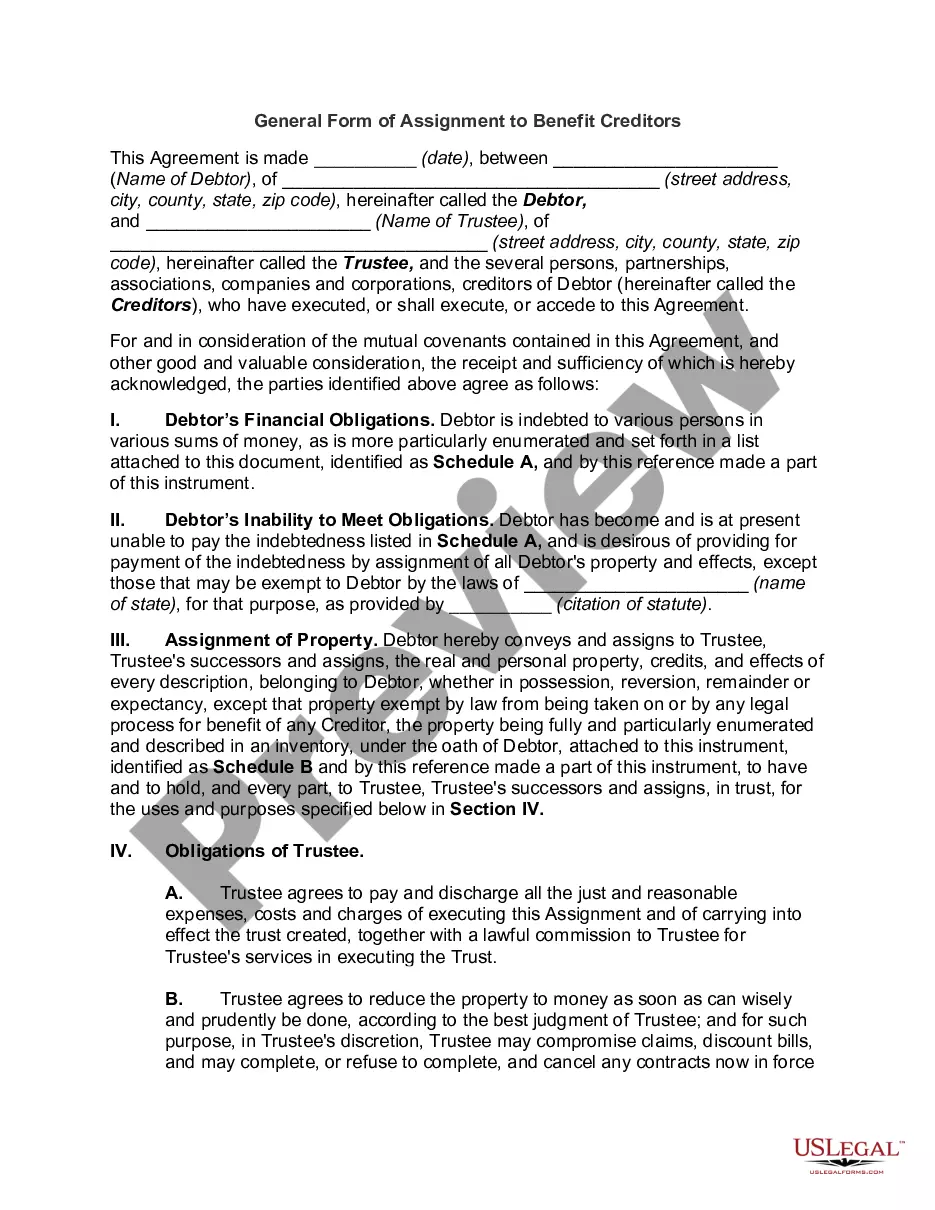
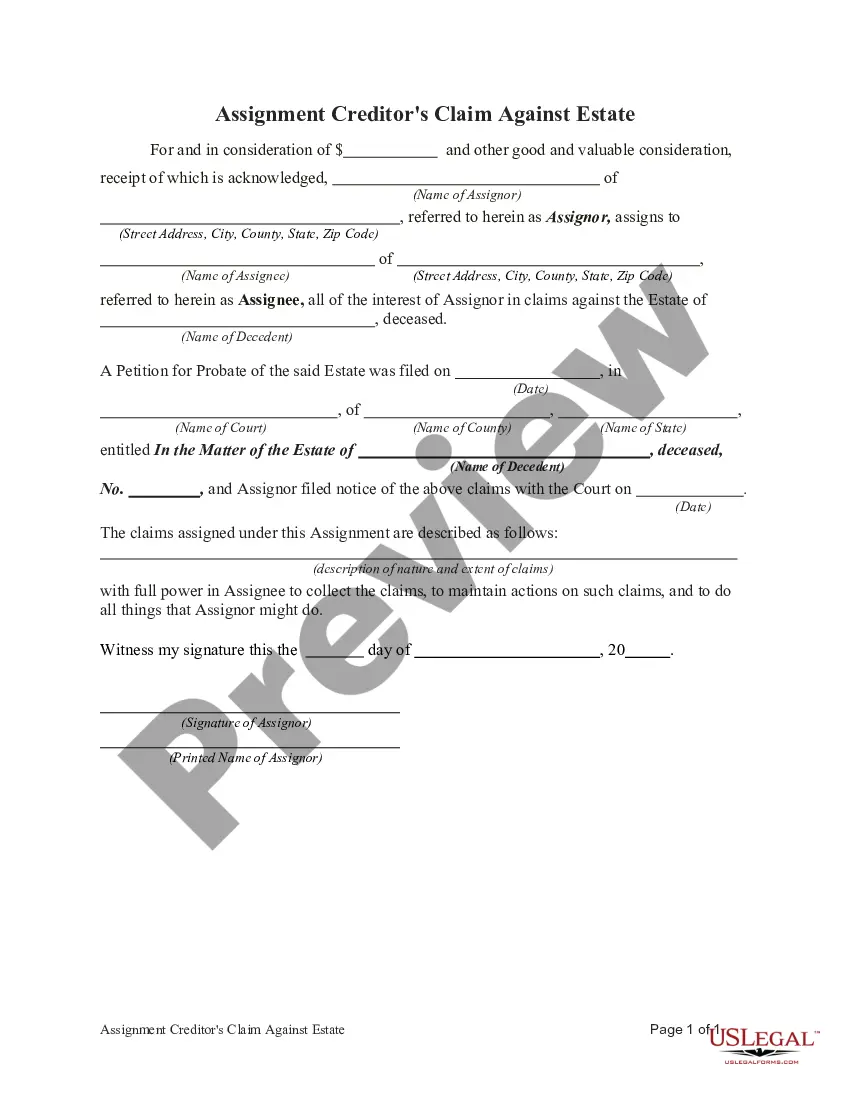
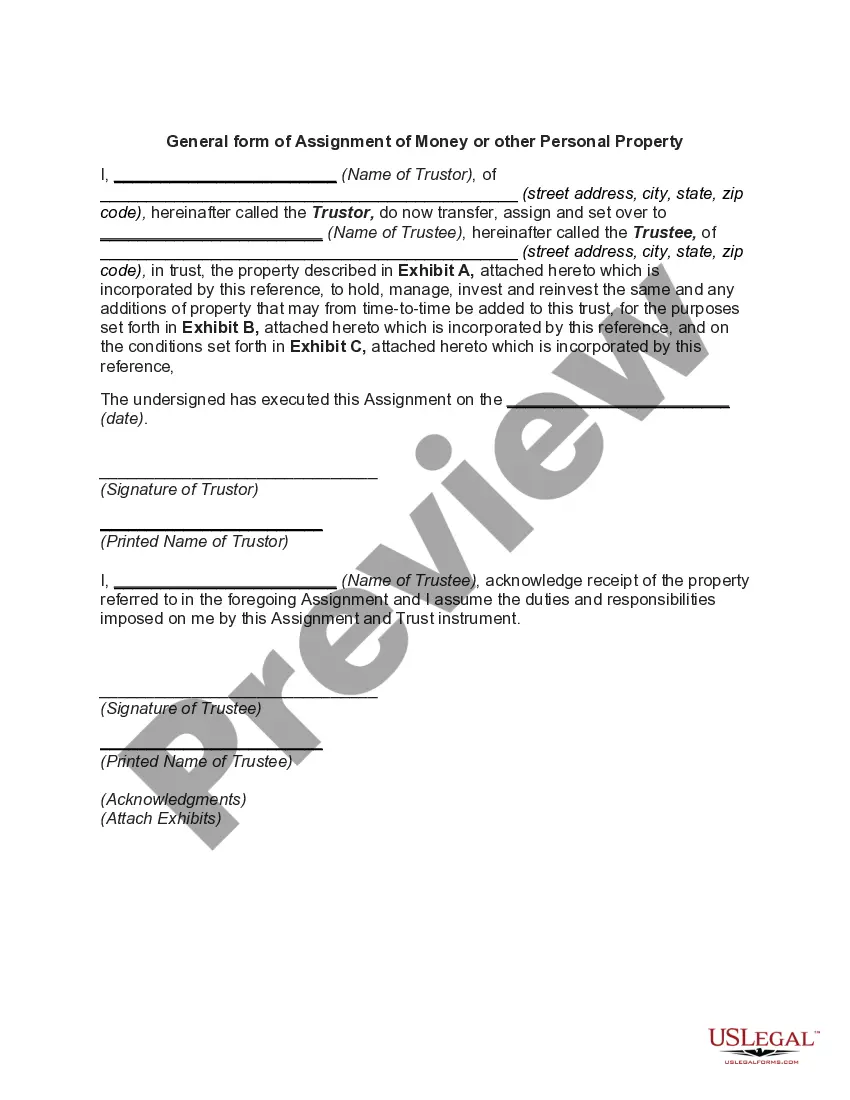
The General Form of Assignment to Benefit Creditors is a legal document that enables a debtor to assign their property and assets to a trustee for the benefit of creditors. This form allows the debtor to manage their debts more effectively and provides a framework for distributing the debtor's assets among creditors. Unlike bankruptcy, this assignment is a voluntary arrangement that can provide a structured way to settle outstanding obligations without the need for court intervention.
Main sections of this form
- Identification of the debtor and trustee, including their names and addresses.
- Details of the debtor's financial obligations, listed in an attached Schedule A.
- Assignment of all non-exempt property of the debtor to the trustee, detailed in Schedule B.
- Trustee's responsibilities, including managing the sale of property and distributing funds to creditors.
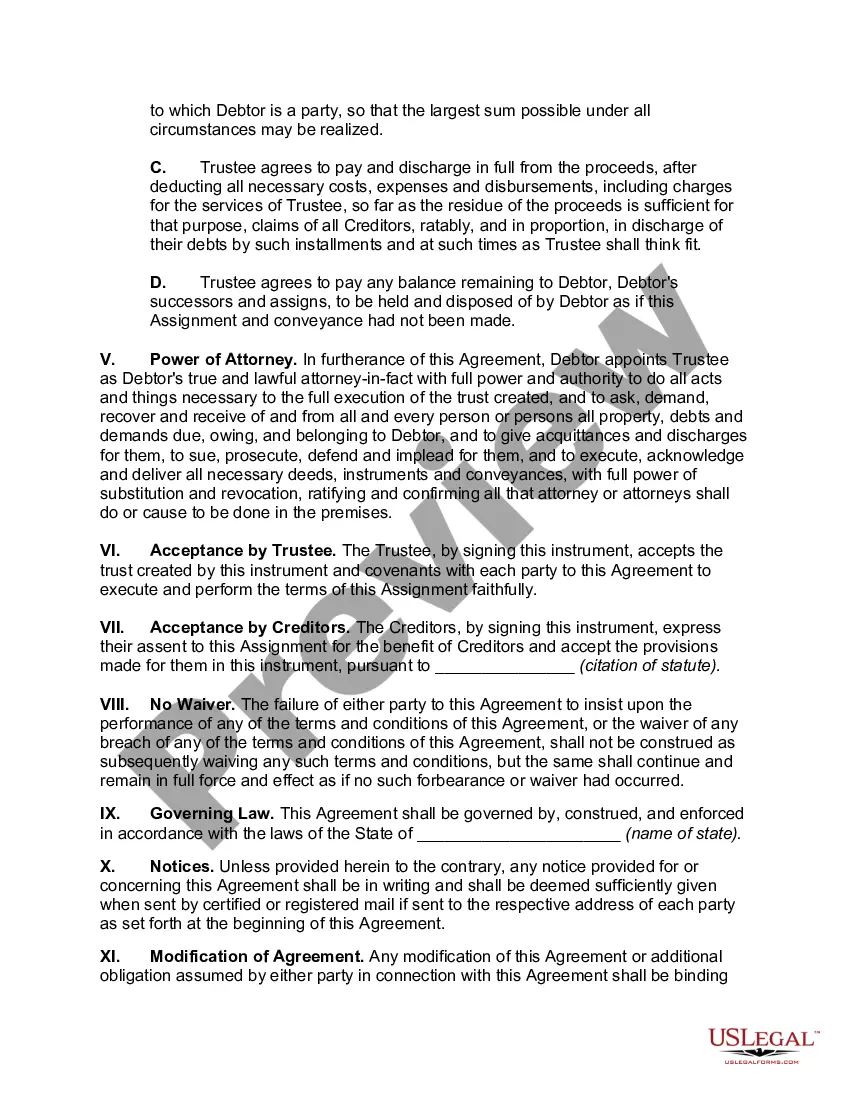
- Power of attorney granted to the trustee for executing the agreement and handling debtorâs affairs.
- Provisions regarding the acceptance of the assignment by creditors and the governing law of the agreement.


Common use cases
This form should be used when a debtor is unable to meet their financial obligations and seeks to fulfill their debts in an organized manner. It is particularly useful in situations where the debtor has multiple creditors and wants to avoid bankruptcy while providing a fair distribution of assets among those creditors. It may also be employed when the debtor's financial situation changes significantly, prompting the need for a structured settlement plan.
Intended users of this form
The General Form of Assignment to Benefit Creditors can be utilized by:
- Individuals or businesses facing significant debt who wish to manage their obligations outside of bankruptcy.
- Debtors seeking a structured method to pay their creditors with the help of a trustee.
- Trustees appointed to oversee the distribution of a debtor's assets for the benefit of creditors.
- Creditors who wish to formally acknowledge their acceptance of the proposed assignment.
How to complete this form
- Identify the parties involved by filling in the names and addresses of the debtor and trustee at the outset of the document.
- Complete Schedule A by listing all financial obligations owed by the debtor to creditors.
- Include Schedule B to detail all non-exempt property that the debtor is assigning to the trustee.
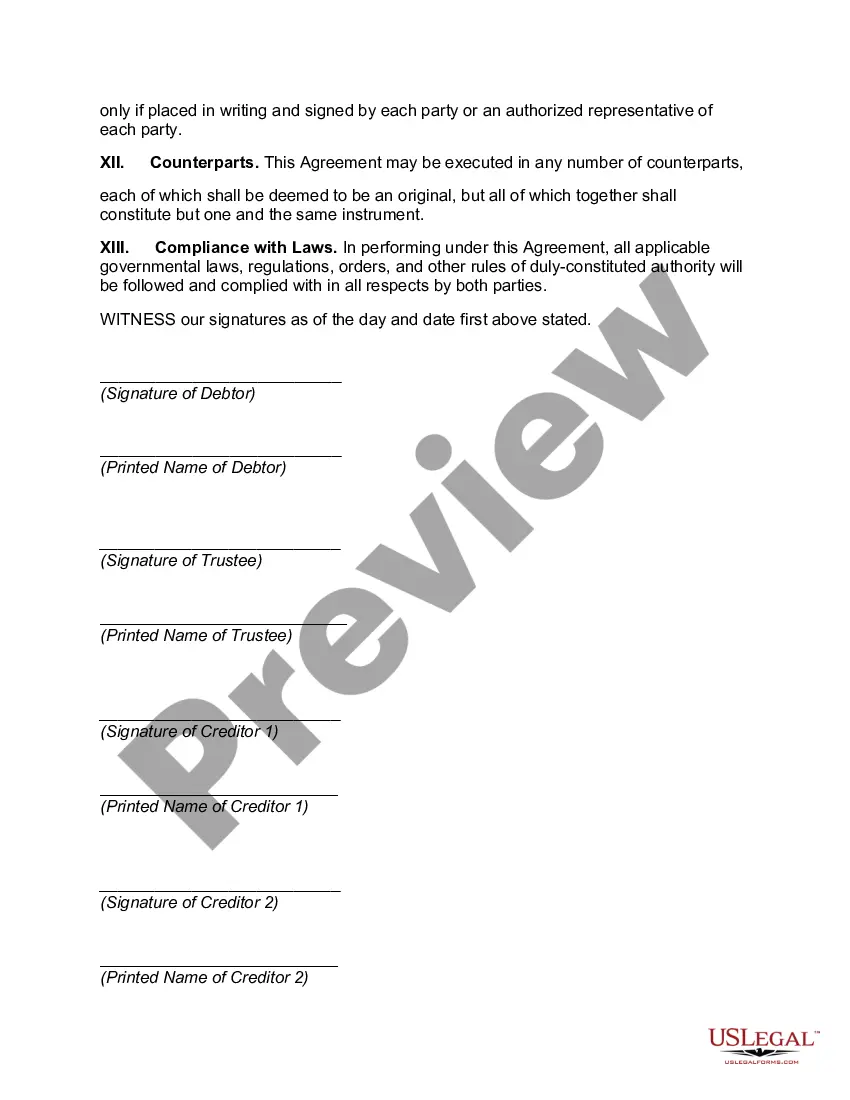
- Have the debtor, trustee, and creditors sign the document to indicate their acceptance and commitment to the agreement.
- Ensure that the governing law and jurisdiction are specified in the appropriate section of the form.
- Retain copies of the signed form and schedules for all parties for record-keeping purposes.
Notarization requirements for this form
This form does not typically require notarization unless specified by local law. However, it is advisable to consult with a legal professional to confirm whether notarization is necessary in your jurisdiction.
Get your form ready online
Our built-in tools help you complete, sign, share, and store your documents in one place.
Make edits, fill in missing information, and update formatting in US Legal Forms—just like you would in MS Word.
Download a copy, print it, send it by email, or mail it via USPS—whatever works best for your next step.
Sign and collect signatures with our SignNow integration. Send to multiple recipients, set reminders, and more. Go Premium to unlock E-Sign.
If this form requires notarization, complete it online through a secure video call—no need to meet a notary in person or wait for an appointment.
We protect your documents and personal data by following strict security and privacy standards.

Make edits, fill in missing information, and update formatting in US Legal Forms—just like you would in MS Word.

Download a copy, print it, send it by email, or mail it via USPS—whatever works best for your next step.

Sign and collect signatures with our SignNow integration. Send to multiple recipients, set reminders, and more. Go Premium to unlock E-Sign.

If this form requires notarization, complete it online through a secure video call—no need to meet a notary in person or wait for an appointment.

We protect your documents and personal data by following strict security and privacy standards.
Common mistakes to avoid
- Failing to list all creditors and financial obligations accurately in Schedule A.
- Not specifying the exempt property, which can lead to legal disputes.
- Omitting signatures from all necessary parties, making the document unenforceable.
- Neglecting to comply with local laws, which may vary by jurisdiction.
- Using outdated versions of the form or incorrect forms for their state.
Benefits of using this form online
- Convenience of accessing the form anytime from any location.
- Editability ensures that users can customize the form to their specific needs.
- Reliability from a source that provides forms drafted by licensed attorneys.
- Easy download and printing options for immediate use.
Legal use & context
- The assignment to benefit creditors is a voluntary arrangement and is generally governed by state law.
- This form can help debtors avoid bankruptcy, but it must be executed correctly to be enforceable.
- Any misuse or failure to adhere to the agreed terms may result in disputes among creditors and the debtor.
Summary of main points
- The General Form of Assignment to Benefit Creditors is a vital tool for debt management.
- It enables debtors to assign their assets to a trustee, facilitating fair payment to creditors.
- Accurate and complete information is crucial for the assignment's legality and effectiveness.
- Consulting with a legal expert is recommended to ensure compliance with local laws.
Looking for another form?

Form popularity
FAQ
Preferred Creditors vs. Unsecured creditors are generally placed into two categories: priority unsecured creditors and general unsecured creditors.
Basically, the ABC company will liquidate your assets and pay off your creditors (for a percentage of what it is able to sell your assets for), while you and your co-owners move forward with your lives. This option generally works well if your business is a corporation or LLC with a lot of debts and assets.
An assignment for the benefit of creditors (ABC) is a business liquidation device available to an insolvent debtor as an alternative to formal bankruptcy proceedings. In many instances, an ABC can be the most advantageous and graceful exit strategy.
An assignment for the benefit of creditors (ABC) is a contract by which an economically troubled entity ("Assignor") transfers legal and equitable title, as well as custody and control, of its assets and property to an independent third party ("Assignee") in trust, who is required to apply the proceeds of sale of the
For creditors, an ABC process generally involves the submission to the assignee of a proof of claim by a stated deadline or bar date, similar to bankruptcy.Unlike bankruptcy, there generally is no cap imposed on a landlord's claim for breach of a real property lease in an ABC. Sale Of Assets.
A secured creditor is generally a bank or other asset-based lender that holds a fixed or floating charge over a business asset or assets.Unsecured creditors can include suppliers, customers, HMRC and contractors. They rank after secured and preferential creditors in an insolvency situation.