Assignment Creditor's Claim Against Estate
What this document covers
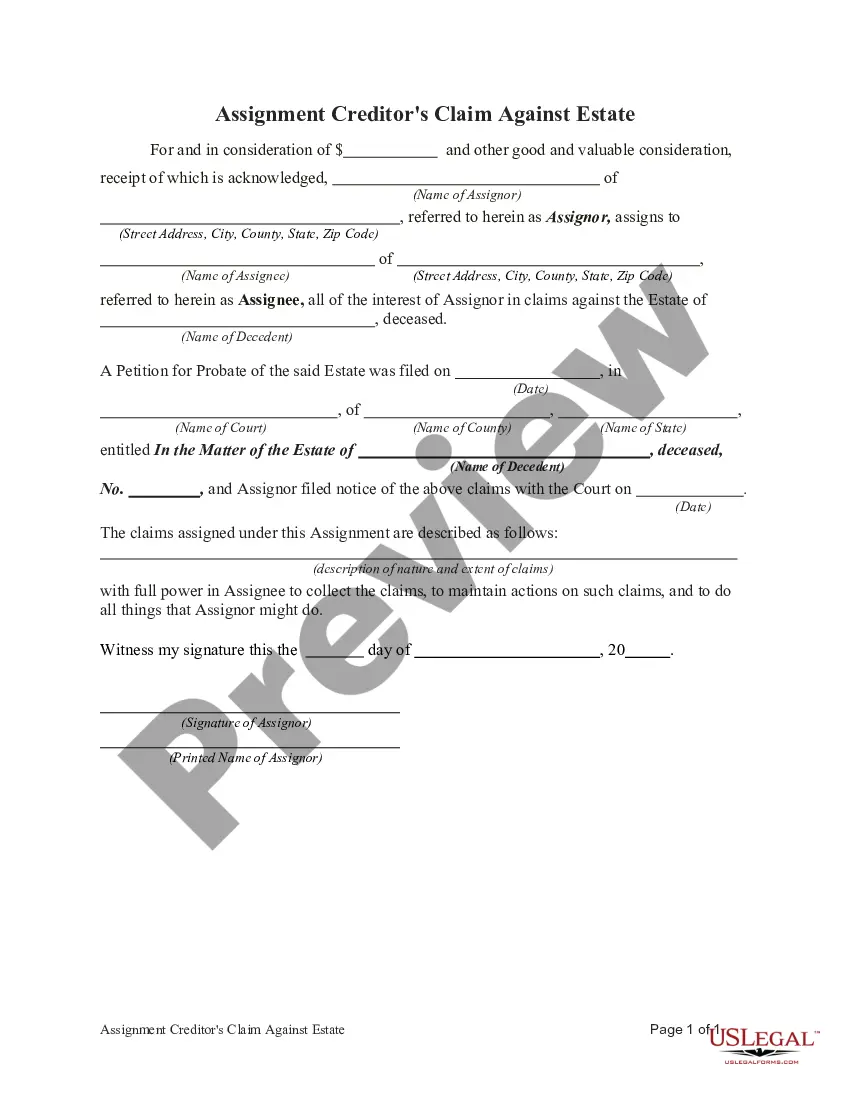
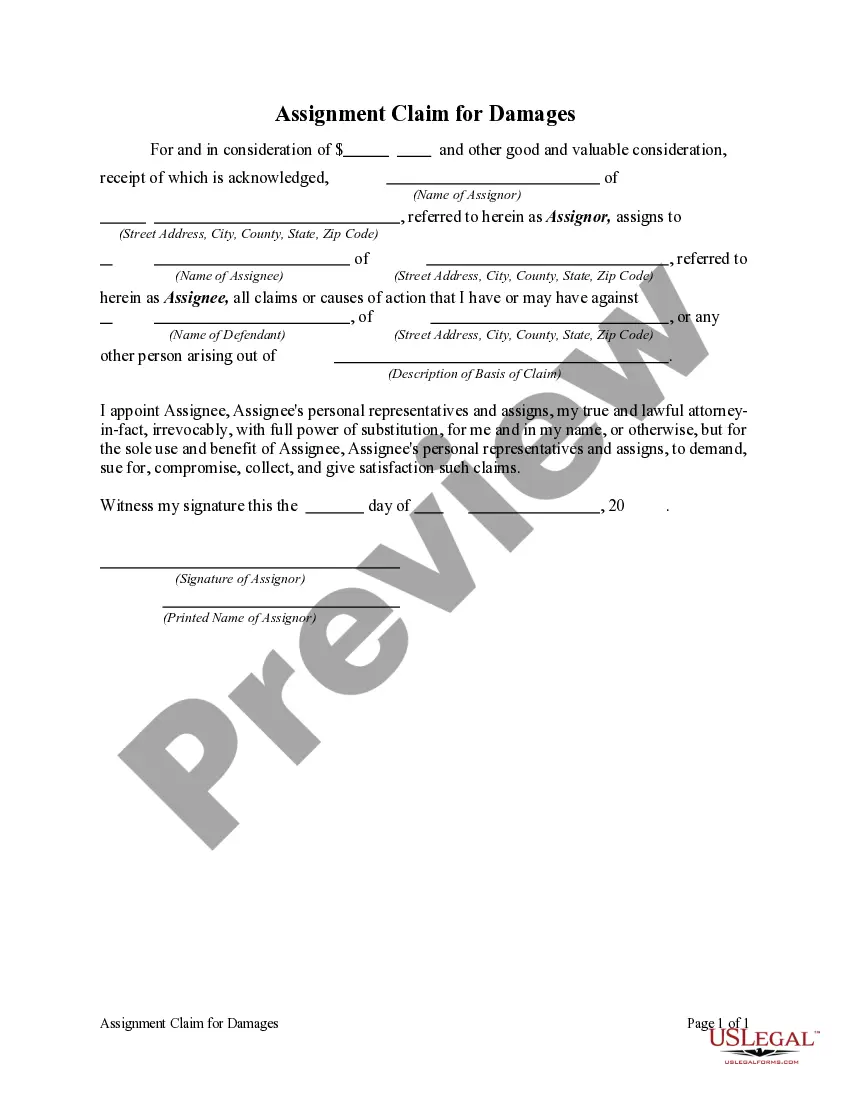
The Assignment Creditor's Claim Against Estate form is a legal document that allows a creditor to assign their rights to a claim against an estate to another party. This form differs from other estate claims by specifically addressing the assignment of creditor claims, making it essential for ensuring that debts owed to creditors are handled appropriately during estate administration.
What’s included in this form
- Identification of the creditor and the debtor (deceased person whose estate is being claimed against).
- Details of the claim being assigned, including specific amounts and related documentation.
- Signatures of all relevant parties to validate the assignment.
- Date of the assignment to establish when the transfer of rights occurred.
When to use this document
This form is typically used when a creditor wishes to transfer their claim against a decedent's estate to another individual or entity. It may arise in situations where the original creditor is unable or unwilling to pursue the claim or prefers to have someone else manage it. Examples include financial institutions transferring debt rights or individuals passing on claims for personal or financial reasons.
Intended users of this form
This form is intended for:
- Creditors who have a valid claim against a deceased person's estate.
- Individuals or entities receiving the rights to a creditor's claim through assignment.
- Legal representatives of the estate involved in the administration of estates.
Instructions for completing this form
To complete this form, follow these steps:
- Identify the creditor by providing their full legal name and contact information.
- Enter details about the decedent, including their name and date of death.
- Clearly describe the claim being assigned, including any relevant financial information.
- Have all parties sign the document to confirm the assignment of the claim.
- Record the date of the assignment to establish a timeline for legal purposes.
Does this form need to be notarized?
This form does not typically require notarization unless specified by local law. However, it is advisable to confirm the requirements in your jurisdiction to ensure compliance.
Get your form ready online
Our built-in tools help you complete, sign, share, and store your documents in one place.
Make edits, fill in missing information, and update formatting in US Legal Forms—just like you would in MS Word.
Download a copy, print it, send it by email, or mail it via USPS—whatever works best for your next step.
Sign and collect signatures with our SignNow integration. Send to multiple recipients, set reminders, and more. Go Premium to unlock E-Sign.
If this form requires notarization, complete it online through a secure video call—no need to meet a notary in person or wait for an appointment.
We protect your documents and personal data by following strict security and privacy standards.

Make edits, fill in missing information, and update formatting in US Legal Forms—just like you would in MS Word.

Download a copy, print it, send it by email, or mail it via USPS—whatever works best for your next step.

Sign and collect signatures with our SignNow integration. Send to multiple recipients, set reminders, and more. Go Premium to unlock E-Sign.

If this form requires notarization, complete it online through a secure video call—no need to meet a notary in person or wait for an appointment.

We protect your documents and personal data by following strict security and privacy standards.
Common mistakes to avoid
- Failing to include all necessary signatures from the parties involved.
- Not providing complete information about the claim being assigned.
- Omitting the date of assignment, which can affect the validity of the transfer.
- Using vague language that does not clearly specify the details of the claim.
Benefits of using this form online
- Convenient online access to a legally compliant form, ensuring ease of use.
- Editable templates for personalized information, allowing flexibility in completion.
- Reliability provided by forms drafted by licensed attorneys, ensuring accuracy.
Legal use & context
- The Assignment Creditor's Claim Against Estate is enforceable in the context of probate law.
- It provides a clear record of debts owed by the estate, aiding in the resolution of claims.
- Use this form to avoid disputes regarding outstanding debts during estate settlement.
Summary of main points
- This form is essential for creditors seeking to assert their claims against an estate.
- Completing the form accurately can prevent common legal disputes in probate.
- Understanding your state's requirements ensures compliance and a smooth process.
Looking for another form?
Form popularity
FAQ
A claim for reasonable financial provision must be made within six months after probate or letters of administration have been issued, although the court can extend this period in certain circumstances (eg if the applicant has not made an earlier claim because of negotiations with the executors or administrators).
Find the Correct Probate Court. The probate court handles issues involving a deceased person's estate, along with potential disputes regarding outstanding debts, issues with heirs, etc. Confirm the Debt. Complete the Claim Form. File the Claim Form.
Godoy. After someone dies, anyone who thinks they are owed money or property by the deceased can file a claim against the estate. Estate claims range from many different types of debts, such as mortgages, credit card debt, loans, unpaid wages, or breach of contract.
Is there a time limit for a claim against a deceased estate? Yes, there is. You have only 6 months from the date of the grant of probate to make a claim. In some very limited circumstances, an extension of this time frame may be granted.
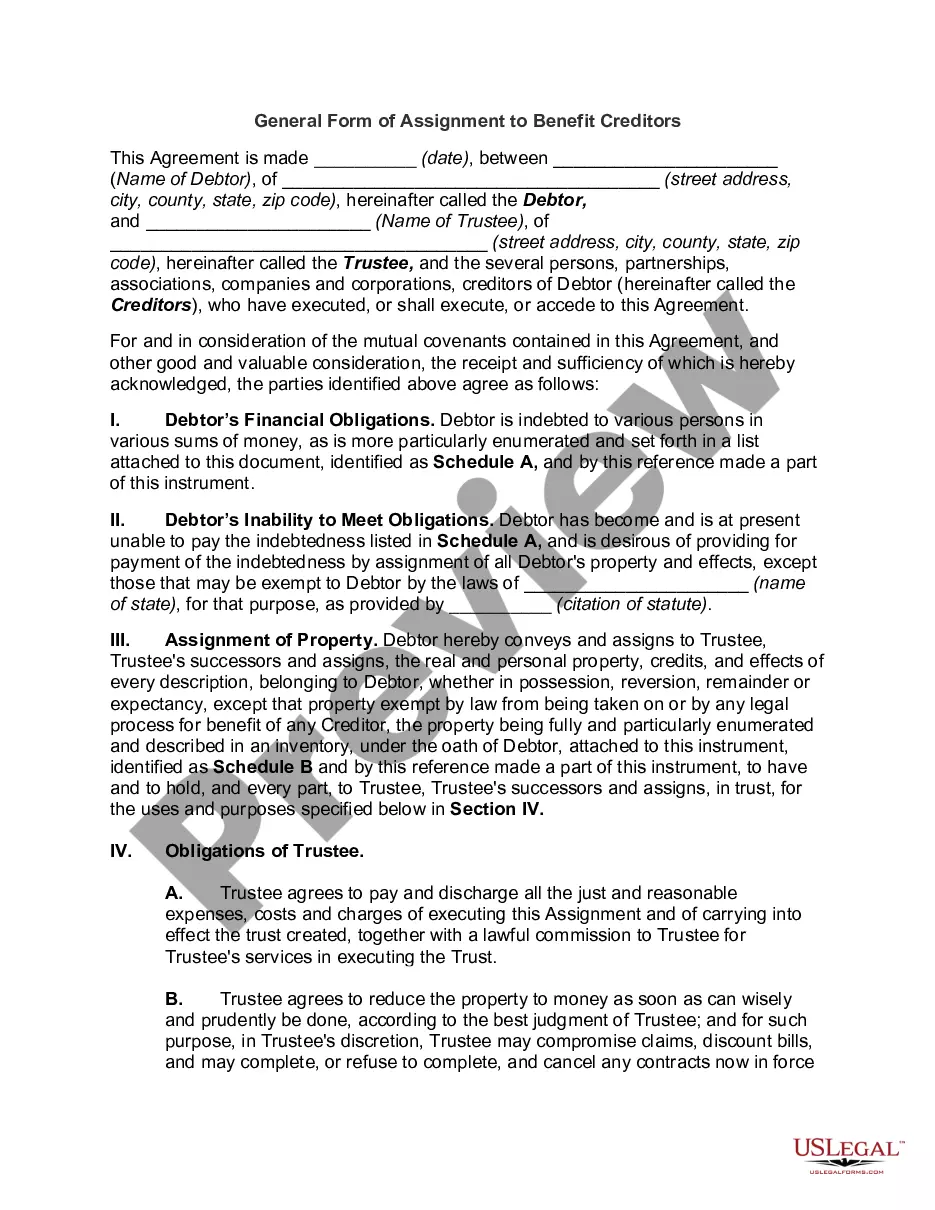
An assignment for the benefit of creditors (ABC) is a business liquidation device available to an insolvent debtor as an alternative to formal bankruptcy proceedings. In many instances, an ABC can be the most advantageous and graceful exit strategy.
An assignment for the benefit of creditors (ABC) is a contract by which an economically troubled entity ("Assignor") transfers legal and equitable title, as well as custody and control, of its assets and property to an independent third party ("Assignee") in trust, who is required to apply the proceeds of sale of the
For creditors, an ABC process generally involves the submission to the assignee of a proof of claim by a stated deadline or bar date, similar to bankruptcy.
The intent of this chapter is to provide a uniform procedure for the administration of insolvent estates, and to ensure full reporting to creditors and equal distribution of assets according to priorities as established under this chapter. History.