Limited Liability Partnership Agreement
Understanding this form
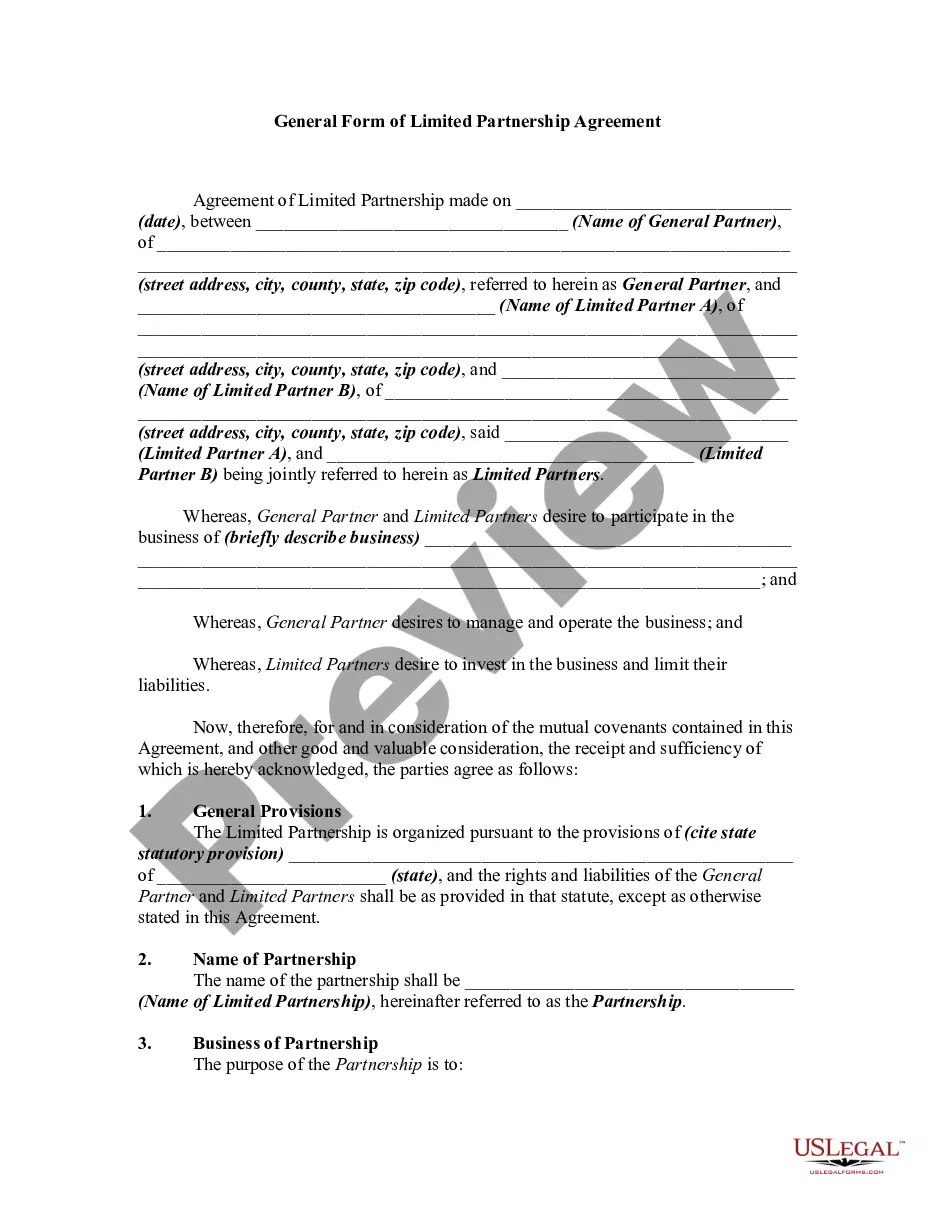
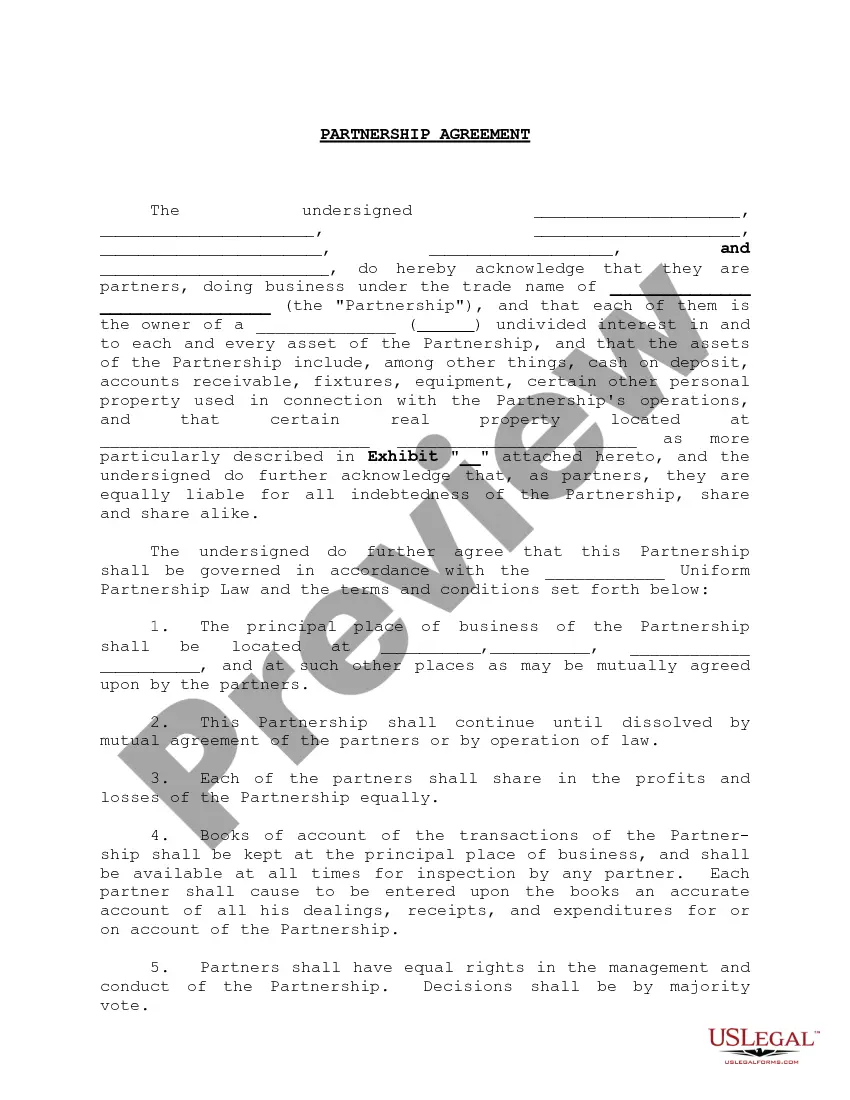
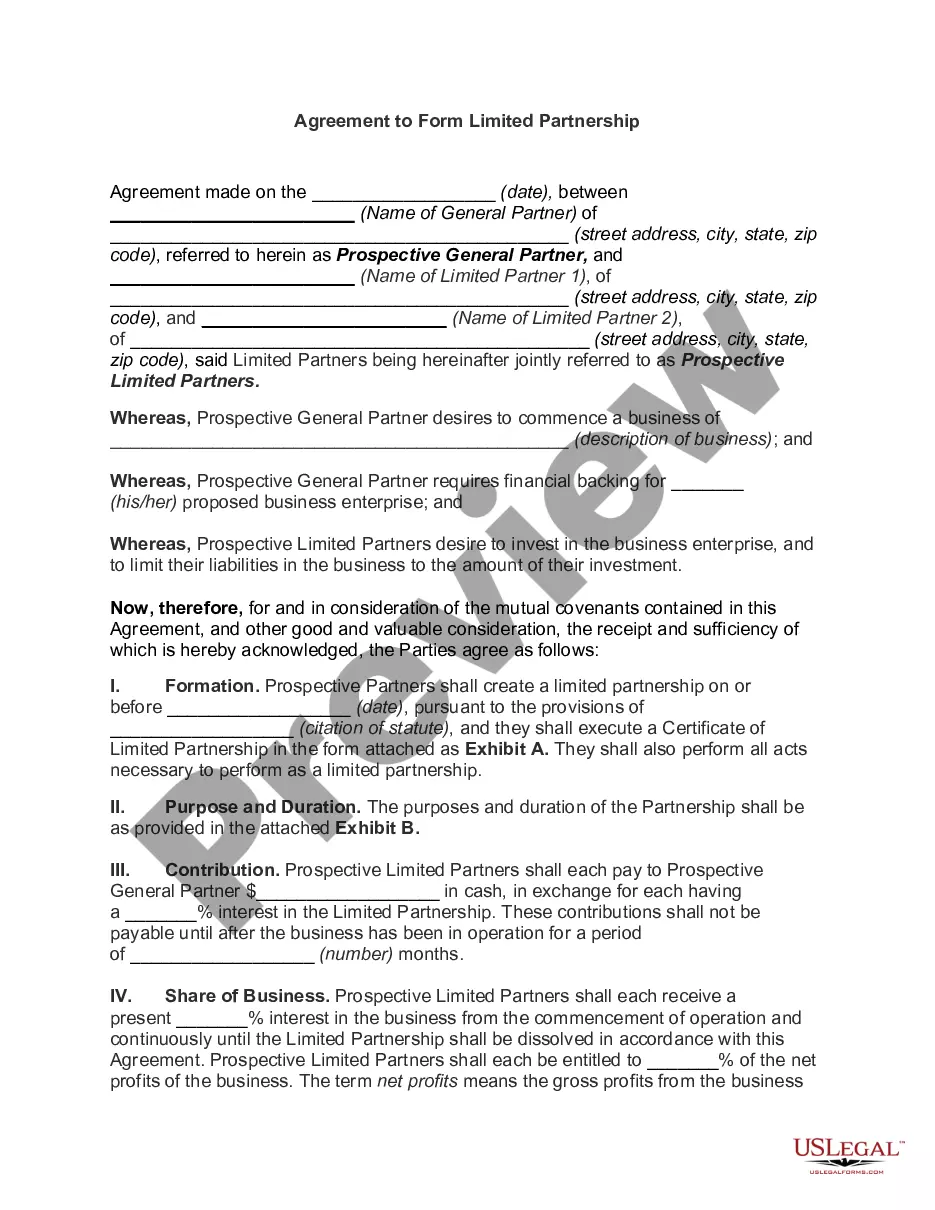
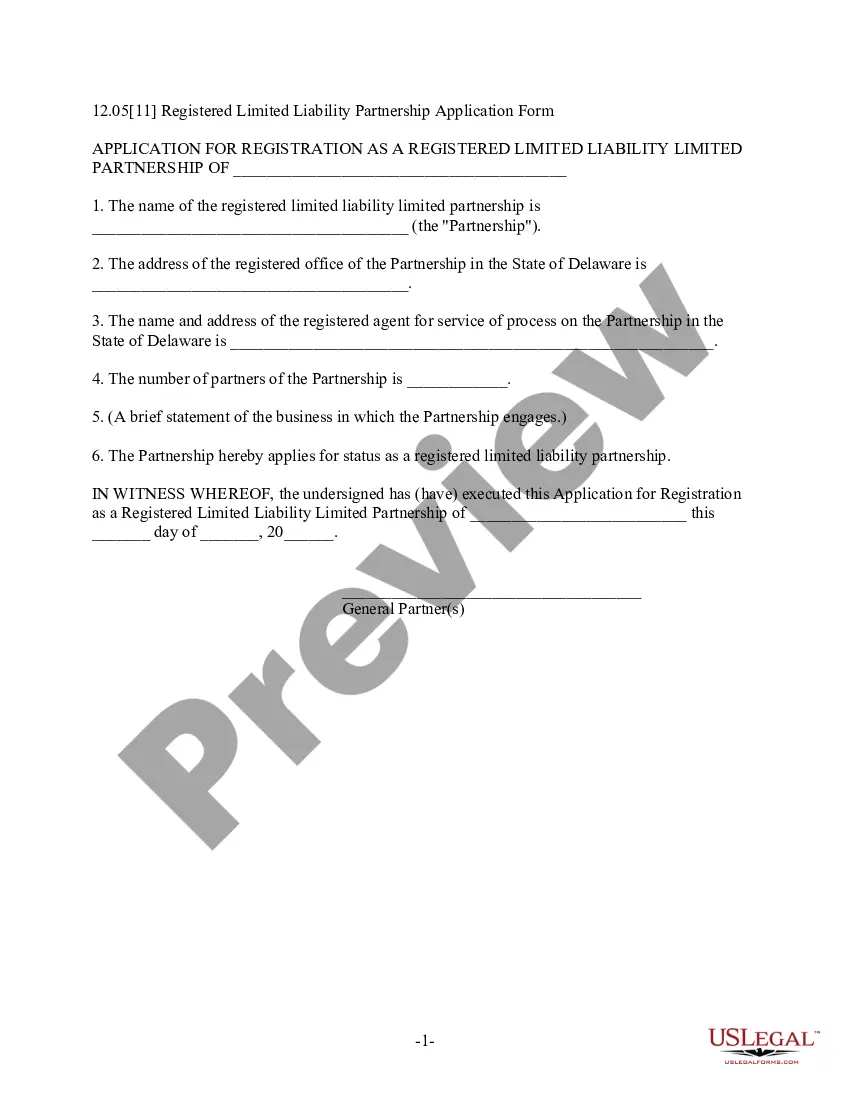
A Limited Liability Partnership Agreement (LLP) is a legal document outlining the rights and responsibilities of partners in a partnership with limited liability. Unlike general partnerships, where all partners share unlimited liability, an LLP protects each partner from personal liability for the misconduct or negligence of other partners. This agreement establishes how the partnership operates, how profits and losses are shared, and the procedures for decision-making and dissolution.
What’s included in this form
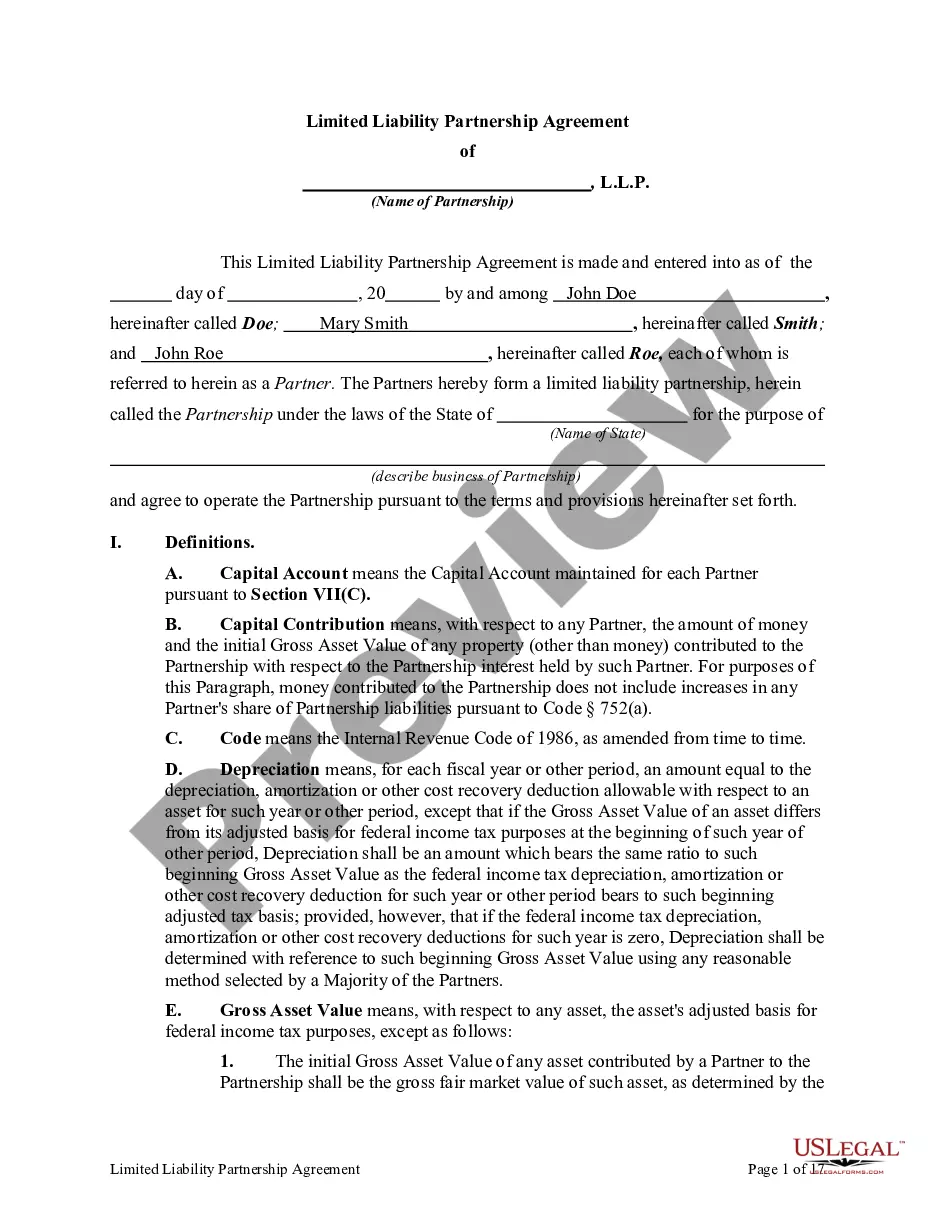
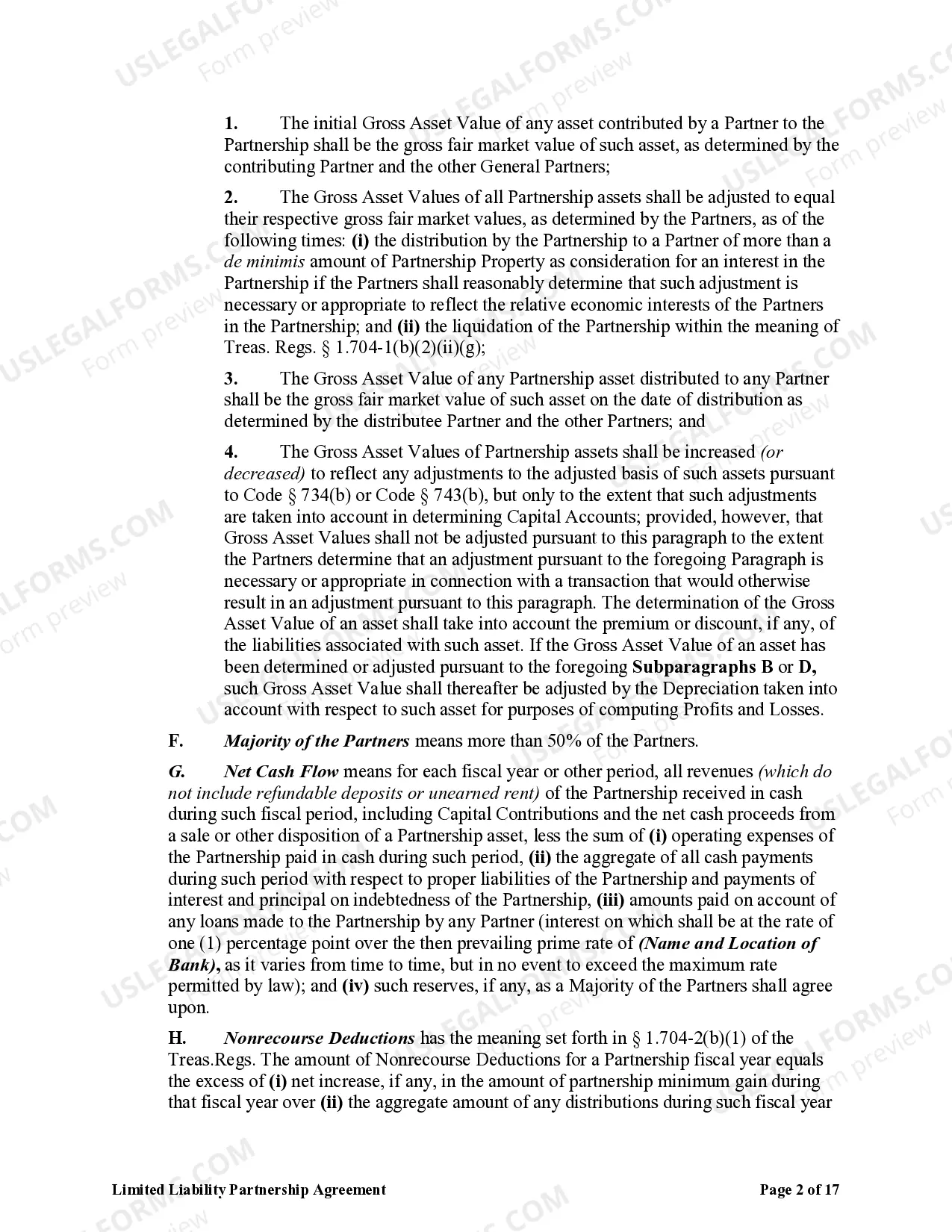
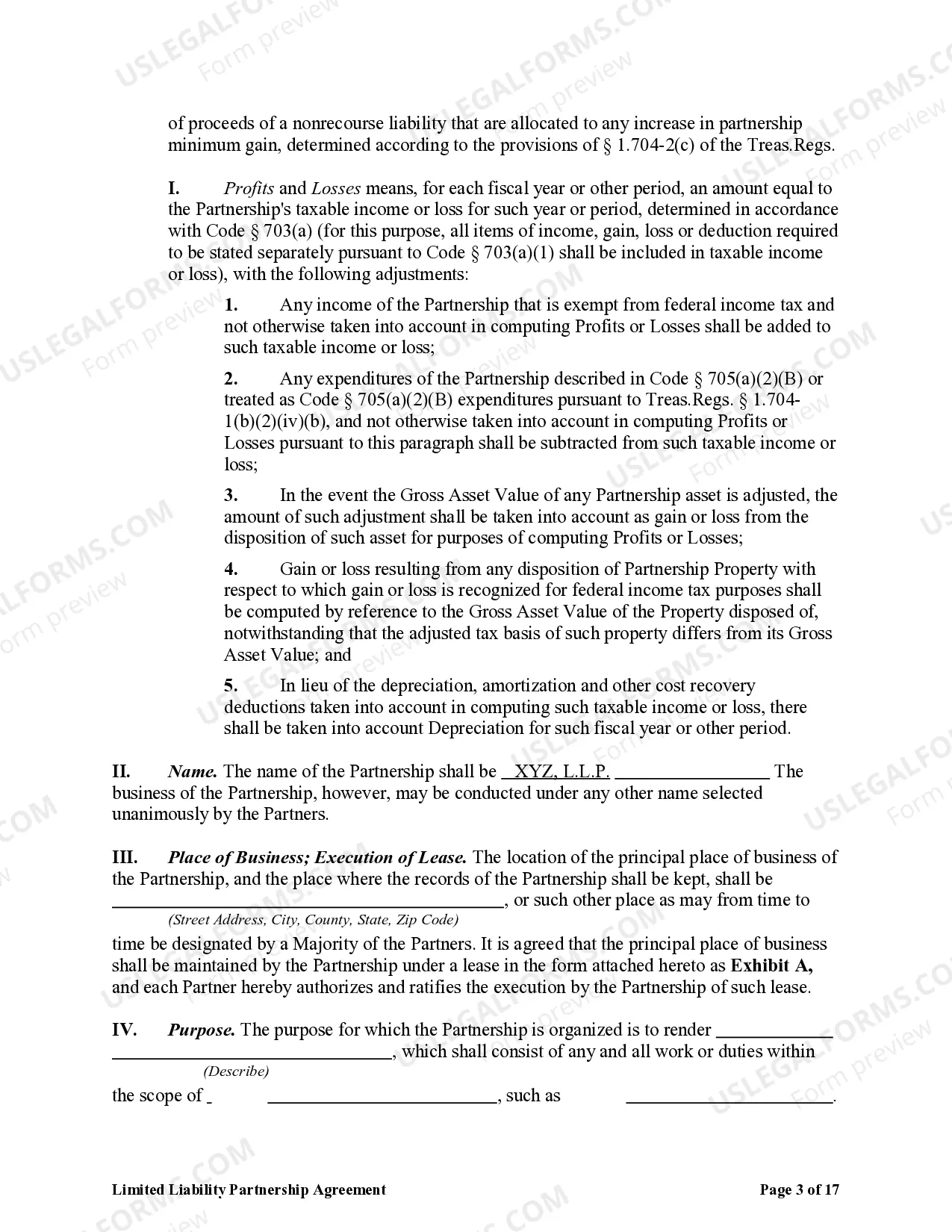
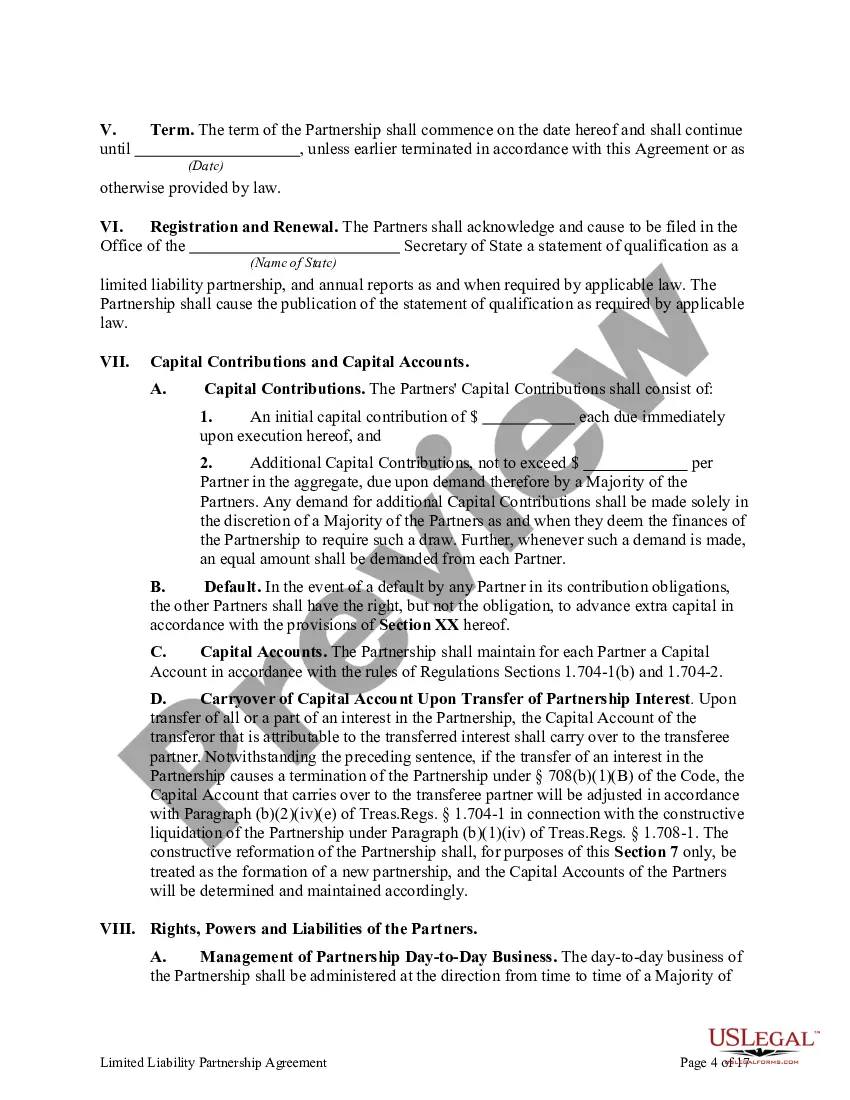
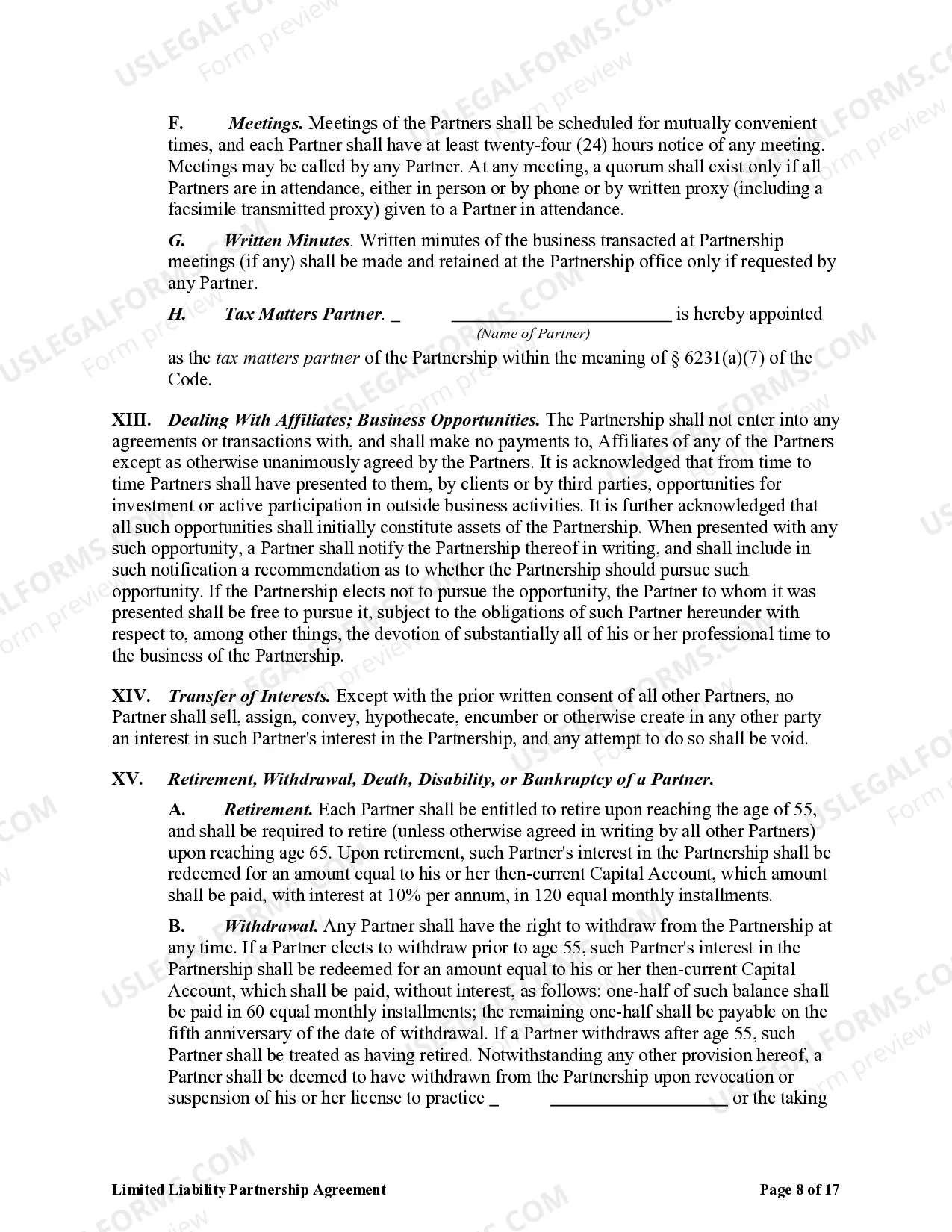
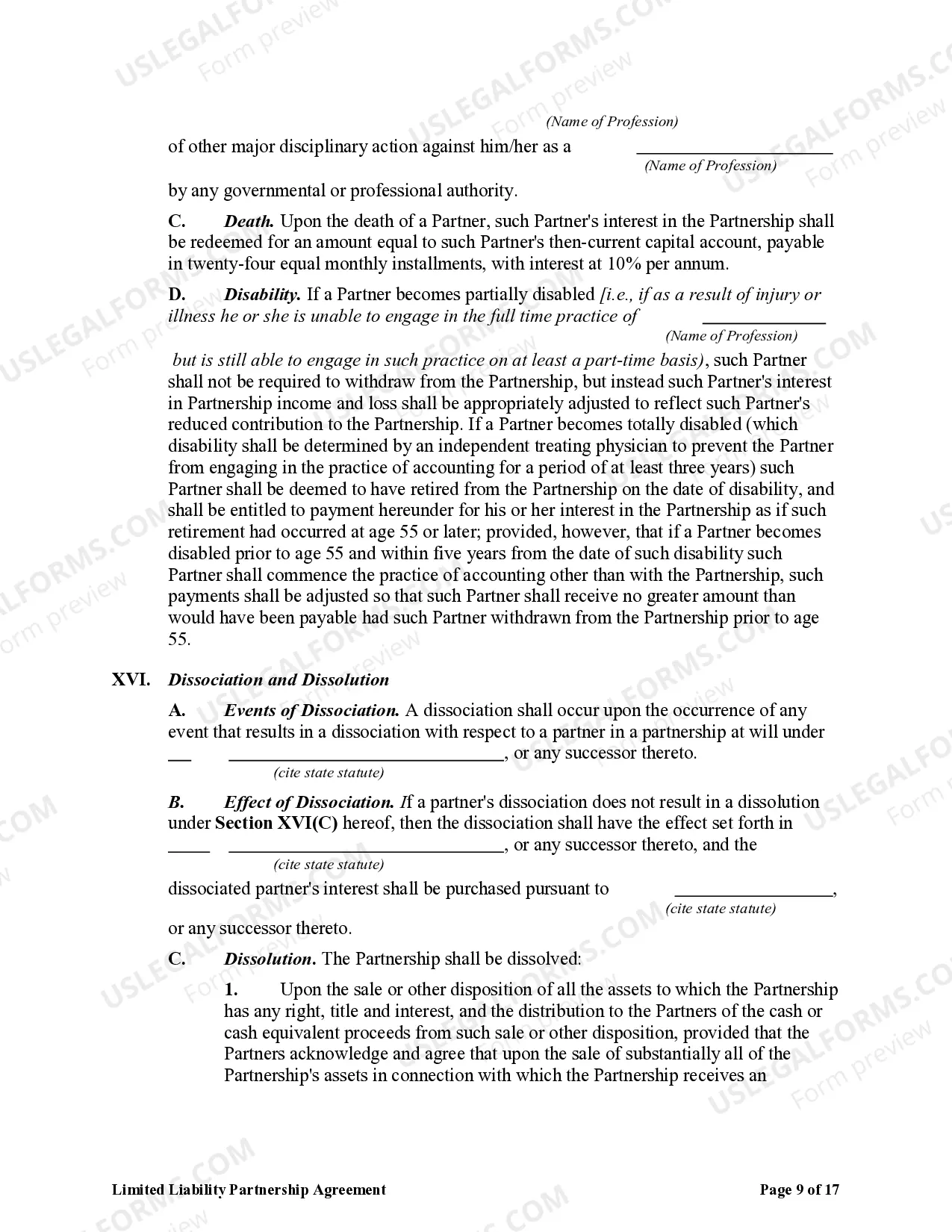
- Definitions of key terms, including "Capital Contribution" and "Net Cash Flow."
- Procedures for managing capital accounts and contributions among partners.
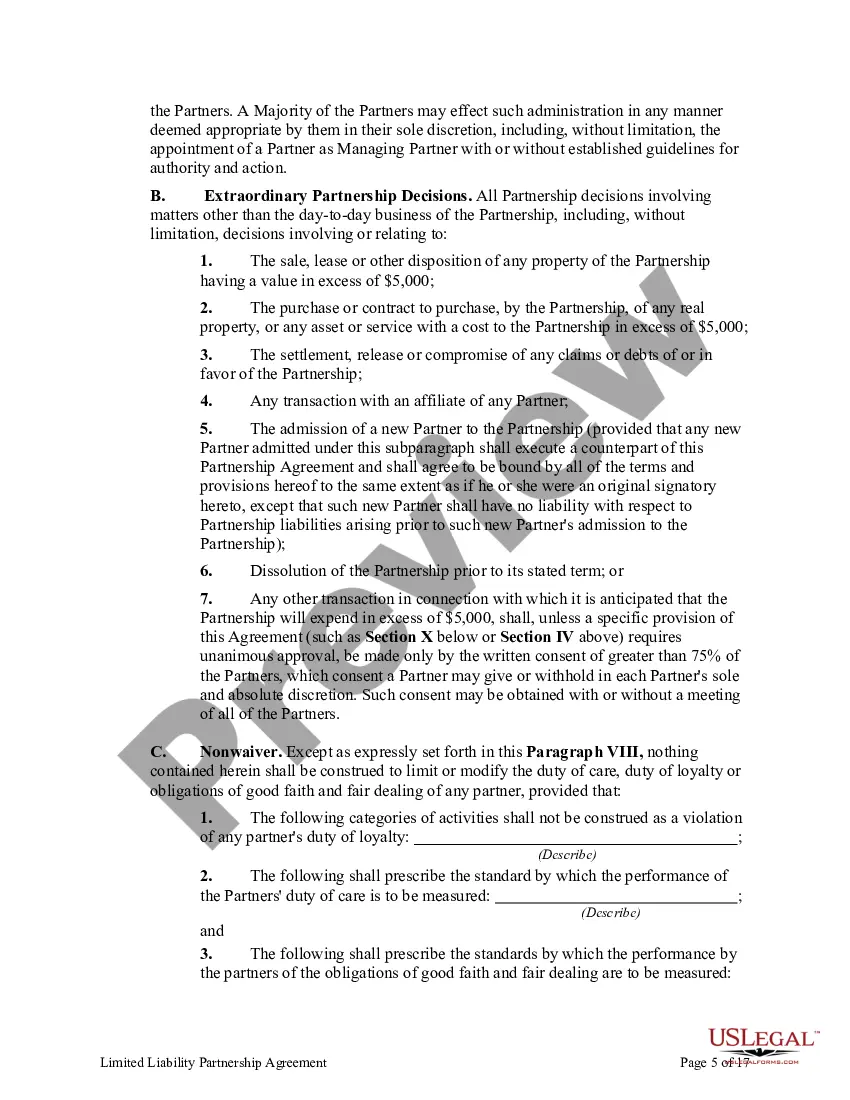
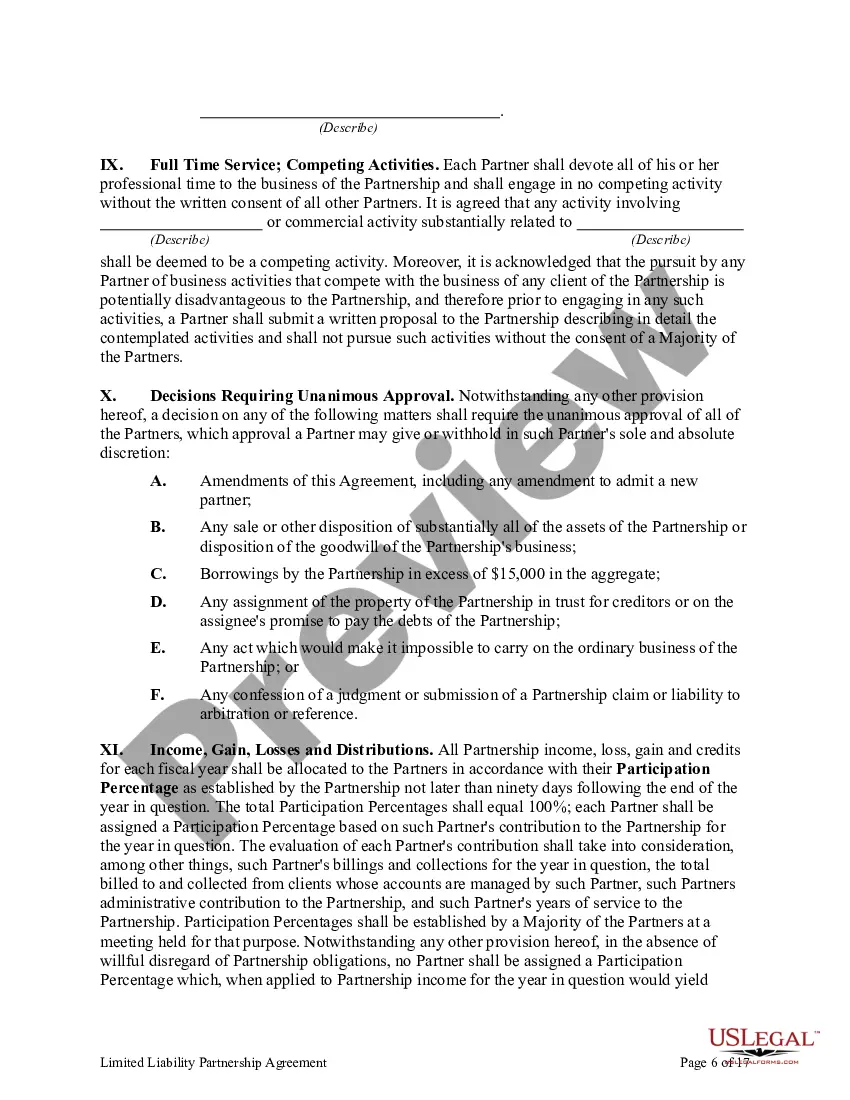
- Details regarding the management of the partnership and decision-making processes.
- Provisions for the admission of new partners and handling of partner dissociation.
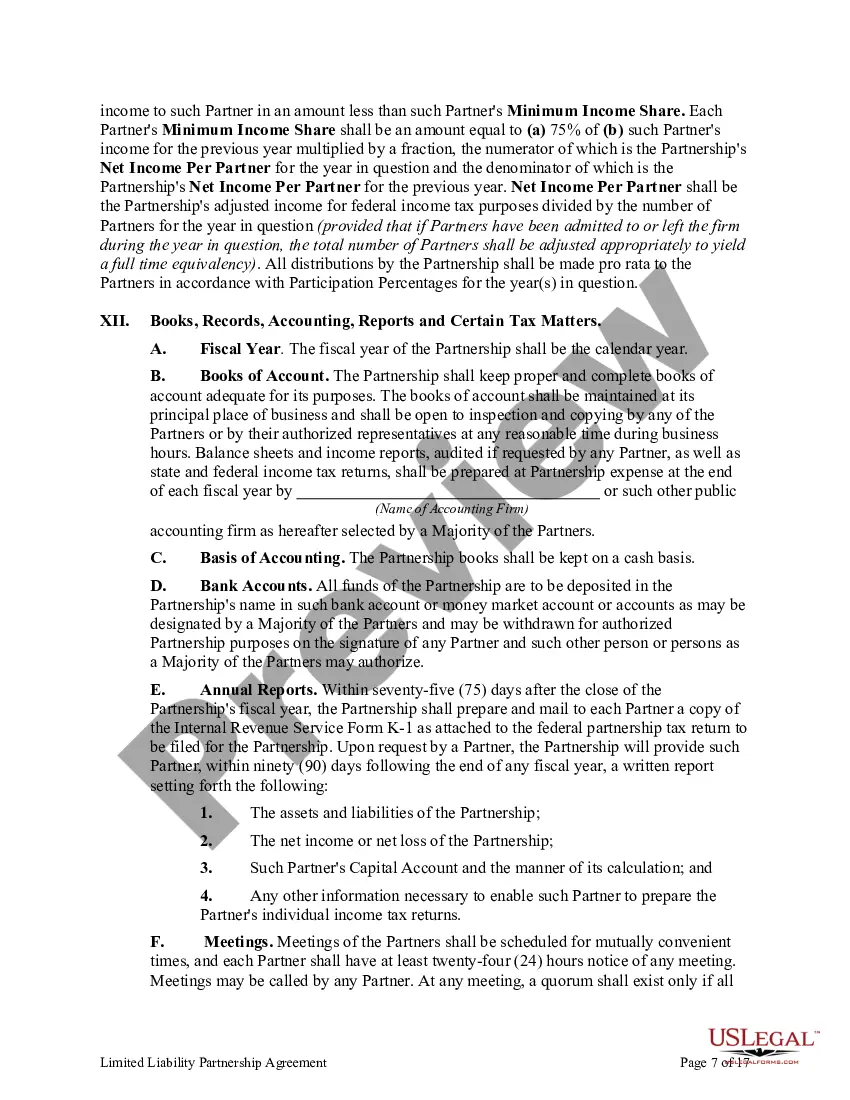
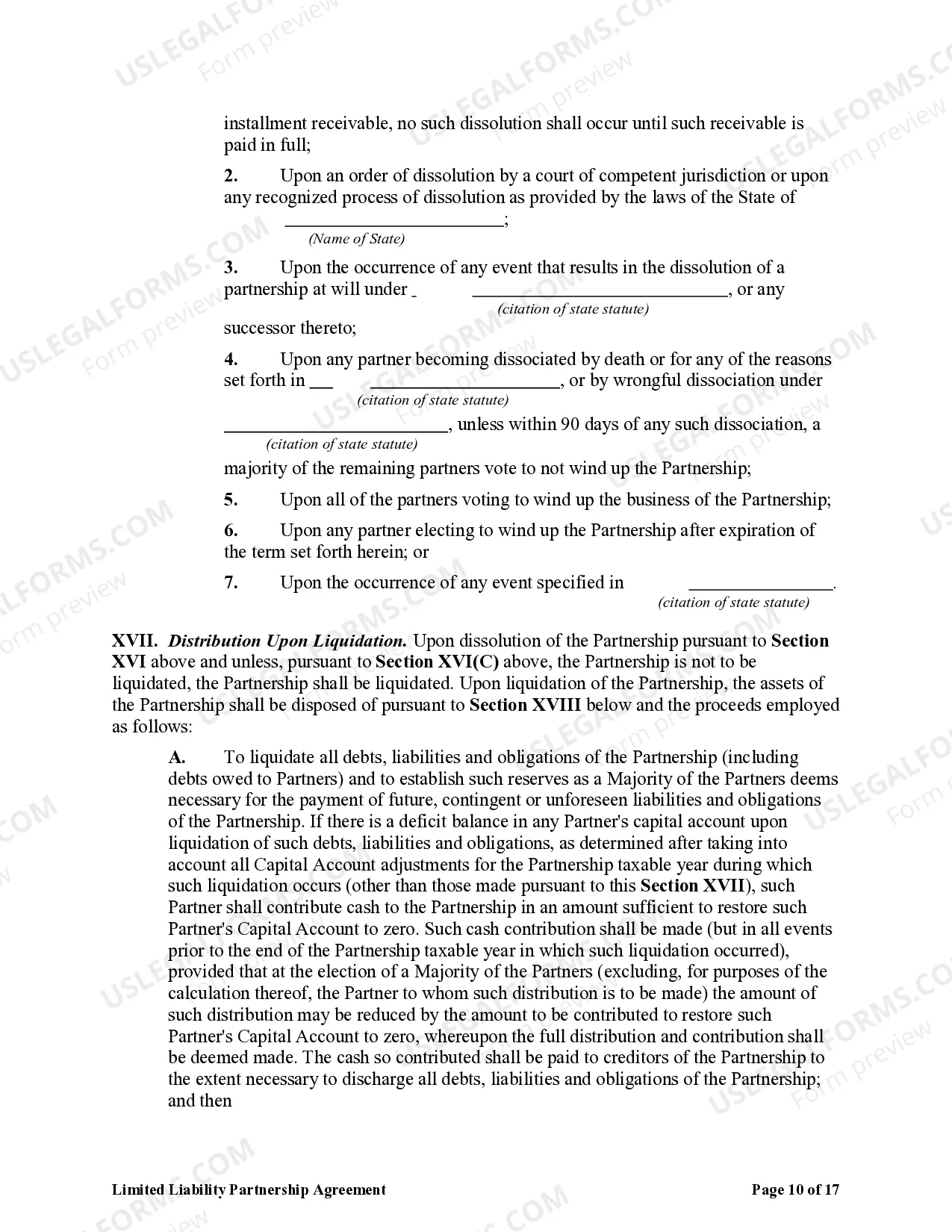
- Allocation of profits, losses, and distributions to partners.
- Guidelines for dissolution and liquidation of the partnership.

Common use cases
This form is needed when partners want to establish a limited liability partnership. It is particularly useful for professional services firms, such as law or accounting firms, where partners seek to limit personal liability while maintaining a collaborative business structure. The LLP agreement helps clarify how the partnership will function, avoid conflicts, and ensure all partners have a clear understanding of their rights and responsibilities.
Who needs this form
- Individuals or groups forming a new limited liability partnership.
- Existing partners who want to formalize the structure and terms of their current LLP.
- Professionals such as lawyers, accountants, and consultants looking to protect themselves from personal liability.
- Businesses seeking to clarify the roles and contributions of each partner in the LLP.
How to complete this form
- Identify the partners involved and enter their names and addresses at the beginning of the agreement.
- Specify the partnership's name and principal business address.
- Outline each partner's capital contribution and how profits and losses will be distributed.
- Establish decision-making processes including what constitutes a majority for different types of decisions.
- Detail the procedures for adding new partners or managing the dissolution of the partnership.
Notarization requirements for this form
This form does not typically require notarization unless specified by local law. However, certain transactions or alterations within the agreement may require notarization as dictated by state regulations. It is advisable to check with local legal requirements to ensure compliance.
Get your form ready online
Our built-in tools help you complete, sign, share, and store your documents in one place.
Make edits, fill in missing information, and update formatting in US Legal Forms—just like you would in MS Word.
Download a copy, print it, send it by email, or mail it via USPS—whatever works best for your next step.
Sign and collect signatures with our SignNow integration. Send to multiple recipients, set reminders, and more. Go Premium to unlock E-Sign.
If this form requires notarization, complete it online through a secure video call—no need to meet a notary in person or wait for an appointment.
We protect your documents and personal data by following strict security and privacy standards.

Make edits, fill in missing information, and update formatting in US Legal Forms—just like you would in MS Word.

Download a copy, print it, send it by email, or mail it via USPS—whatever works best for your next step.

Sign and collect signatures with our SignNow integration. Send to multiple recipients, set reminders, and more. Go Premium to unlock E-Sign.

If this form requires notarization, complete it online through a secure video call—no need to meet a notary in person or wait for an appointment.

We protect your documents and personal data by following strict security and privacy standards.
Common mistakes to avoid
- Failing to specify the capital contributions and profit-sharing arrangements clearly.
- Neglecting to outline decision-making processes or management responsibilities.
- Not considering state-specific limitations or requirements for LLPs.
- Omitting provisions for the admission of new partners and dissolution procedures.
Benefits of using this form online
- Convenience of accessing and filling out the agreement from home.
- Editability allows for customization to fit the specific needs of your partnership.
- Reliability as the forms are drafted by licensed attorneys to ensure legal validity.
- Instant download provides immediate access to the necessary documentation.
- An LLP Agreement provides a legal framework that protects individual partners from liabilities arising from the actions of others.
- Some states may have specific requirements for the wording and structure of the agreement.
- The agreement must comply with state laws where the partnership is formed to be enforceable.
Summary of main points
- A Limited Liability Partnership Agreement is essential for defining the structure and operations of a partnership.
- This form protects partners from liabilities due to the actions of their co-partners.
- Customization of the agreement ensures it meets the specific needs of the partnership.
- Clear definitions and procedures are vital to prevent disputes and streamline operations.
Looking for another form?


Form popularity
FAQ
There must be a relation of partnership between the parties concerned through a proper instrument i.e. LLP Agreement. The individual shares of partners must be well specified in the agreement. It shall contain all the details related to partnership, their share, and contribution, etc.
Although each partnership agreement differs based on business objectives, certain terms should be detailed in the document, including percentage of ownership, division of profit and loss, length of the partnership, decision making and resolving disputes, partner authority, and withdrawal or death of a partner.
Verify qualification status. Pick a name. Draft a Limited Liability Partnership Agreement. Designate a registered agent. File a Certificate of Limited Liability Partnership. Register for an Employer Identification Number. Obtain a state ID number.
Name of the partnership. Contributions to the partnership. Allocation of profits, losses, and draws. Partners' authority. Partnership decision-making. Management duties. Admitting new partners. Withdrawal or death of a partner.
LLP agreement must be filed in form 3 online on MCA Portal. Form 3 for the LLP agreement has to be filed within 30 days of the date of incorporation. The LLP Agreement has to be printed on Stamp Paper.
Similar to the LLC, the LLP is a hybrid of both the corporation and partnership, to give the greatest advantages for taxation and liability protection. The LLP is not a separate entity for income tax purposes and profits and losses are passed through to the partners.
LLP Agreement is a written contract between the partners of the LLP or between the LLP and its designated partners. It establishes the rights and a duty of the designated partners toward each other as well toward the LLP.
It's not a legal requirement to enter into a limited liability partnership agreement and an LLP can be set up without one. However, it's a very common and generally sound recommendation that a new LLP puts a partnership agreement in place.
With an LP, the general partners still have personal liability. However, limited partners are not liable for business debts, including any losses the business may suffer. The limited partners only risk what they invested in the business. An LLP offers limited liability for all of the partners.