North Carolina Quitclaim Deed from LLC to LLC
Understanding this form
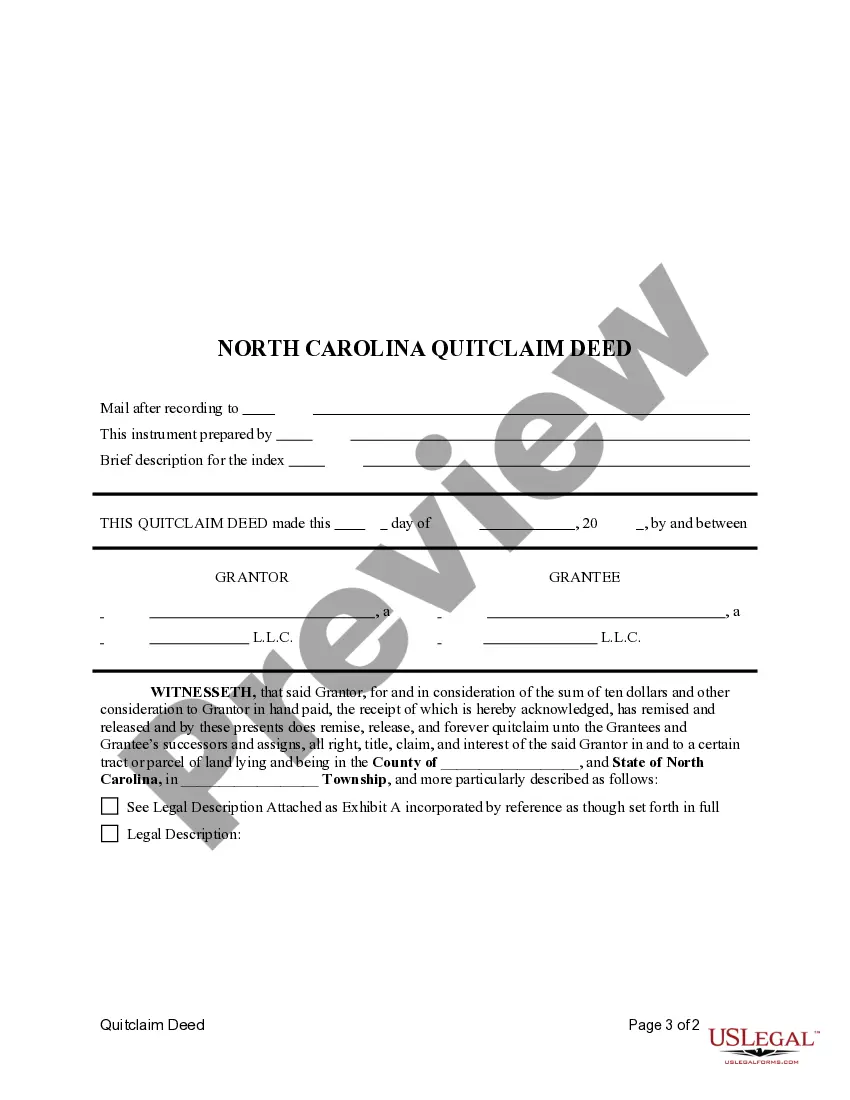
A Quitclaim Deed from LLC to LLC is a legal document wherein one limited liability company (Grantor) transfers its interest in a property to another limited liability company (Grantee). This type of deed conveys any interest the Grantor may have in the property without guaranteeing that the title is free from claims or encumbrances. Unlike a warranty deed, it does not provide assurances about the title's validity, making it a simpler and quicker option for transferring property rights between LLCs.
Form components explained
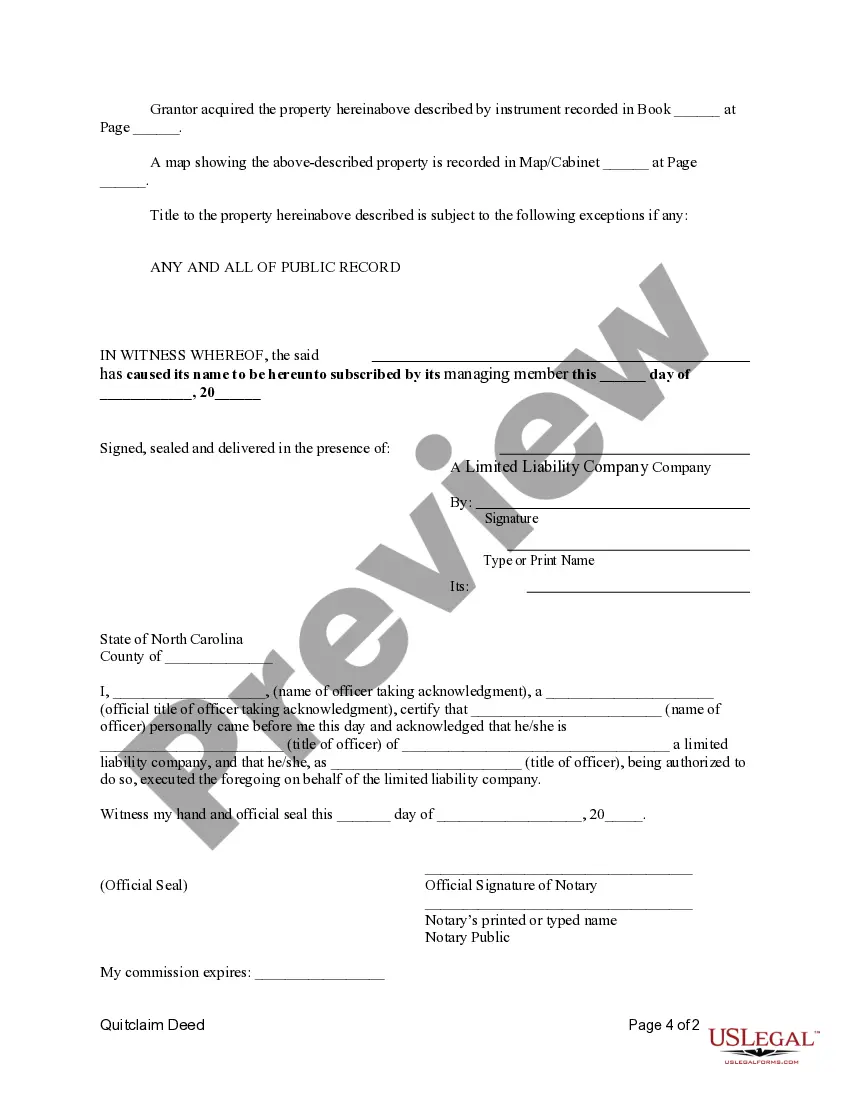
- Identifying information for the Grantor and Grantee, including their legal names and business addresses.
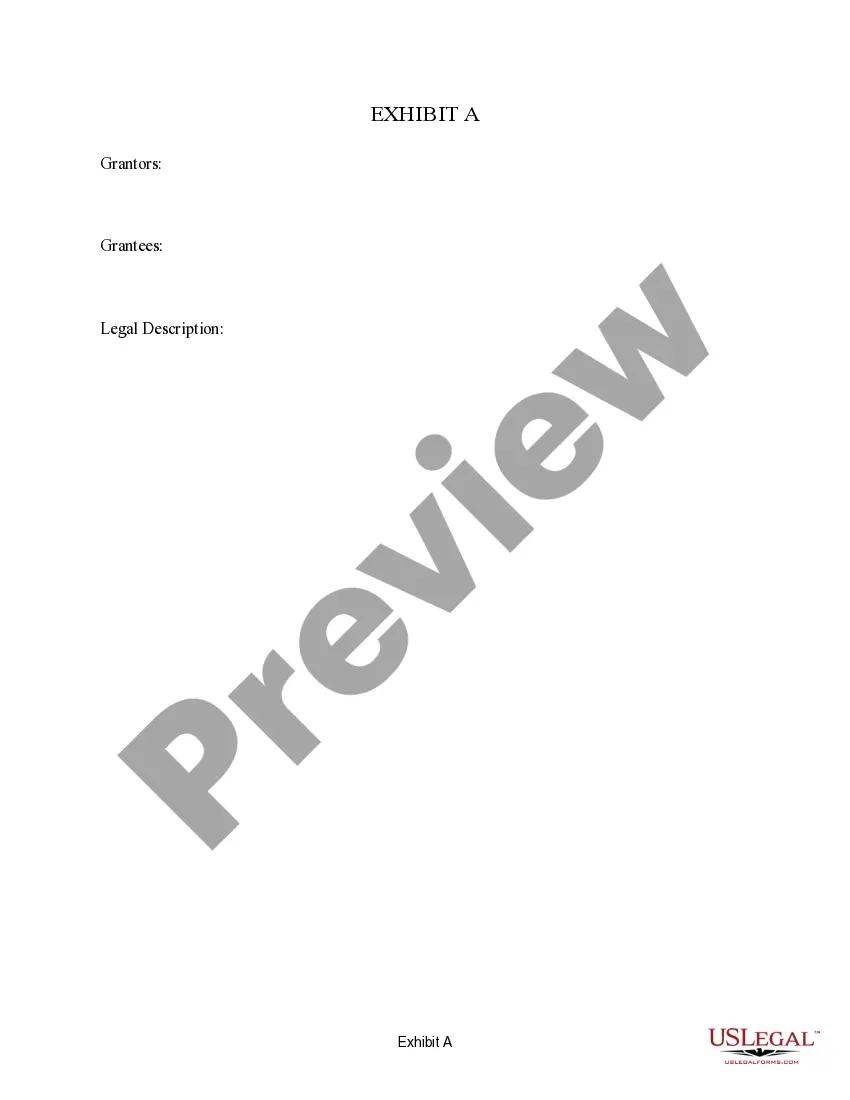
- Legal description of the property being transferred, including boundaries, location, and any relevant identifiers.
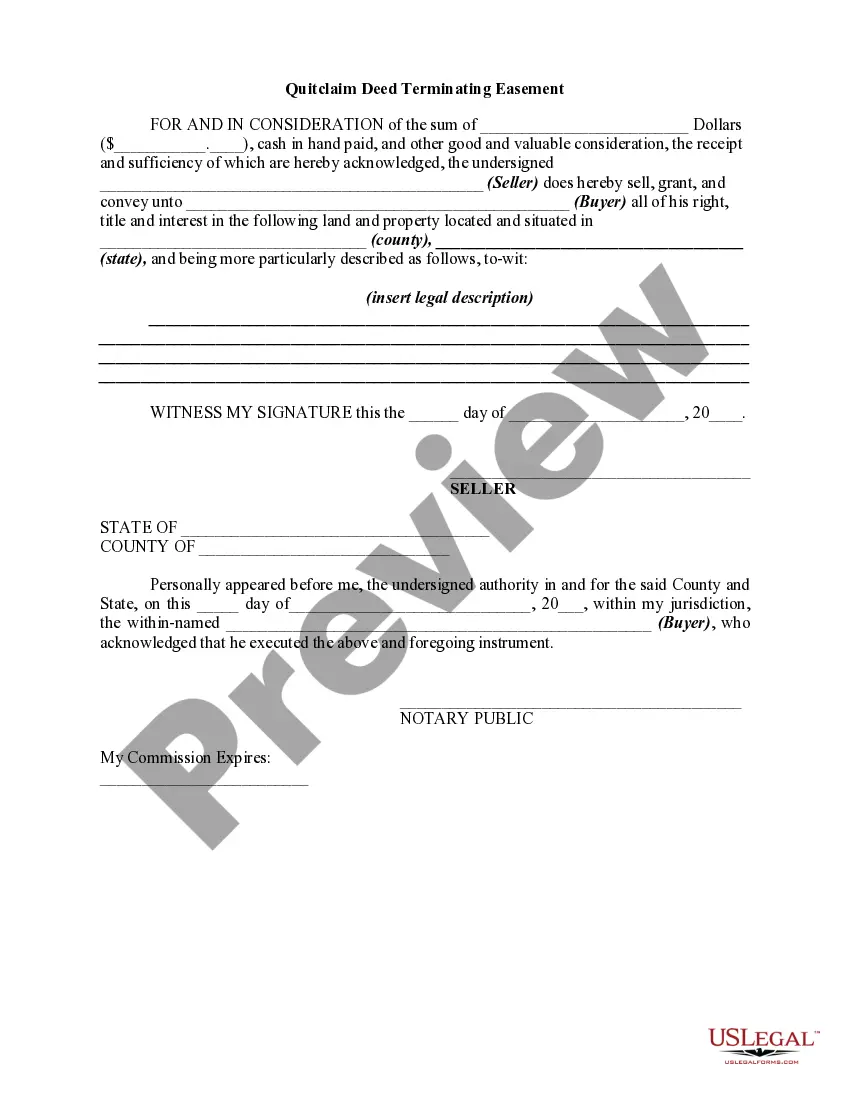
- Statement regarding the transfer of property, typically stating that the Grantor quitclaims all interest in the property.
- Signature block for authorized representatives of the LLCs to sign, indicating consent to the terms of the deed.
- A space for notarization to provide an additional layer of authenticity to the deed.



When to use this document
This form is useful when one LLC wishes to transfer property ownership to another LLC. Common scenarios include business transactions where properties are being sold, transferred for estate planning purposes, or when moving properties into a new LLC. It is also appropriate in situations where the parties have a mutual understanding about the property but do not require title guarantees.
Who can use this document
- Limited liability companies looking to transfer real property ownership to another LLC.
- Business owners involved in property transactions that may not need a warranty deed.
- Real estate professionals assisting clients in property transfers between LLCs.
- Individuals involved in estate planning who prefer to use LLCs for property management.
Instructions for completing this form
- Identify the parties involved by entering the full legal names and addresses of both the Grantor and Grantee.
- Provide a detailed legal description of the property, ensuring it includes all necessary identifying information.
- Clearly state the intention to transfer the property by including a quitclaim statement.
- Ensure that the form is signed by the authorized representatives of both LLCs, followed by their printed names and titles.
- Complete the notarization section, if required, to validate the document.
Does this document require notarization?
This document requires notarization to meet legal standards. US Legal Forms provides secure online notarization powered by Notarize, allowing you to complete the process through a verified video call, available 24/7.
Get your form ready online
Our built-in tools help you complete, sign, share, and store your documents in one place.
Make edits, fill in missing information, and update formatting in US Legal Forms—just like you would in MS Word.
Download a copy, print it, send it by email, or mail it via USPS—whatever works best for your next step.
Sign and collect signatures with our SignNow integration. Send to multiple recipients, set reminders, and more. Go Premium to unlock E-Sign.
If this form requires notarization, complete it online through a secure video call—no need to meet a notary in person or wait for an appointment.
We protect your documents and personal data by following strict security and privacy standards.

Make edits, fill in missing information, and update formatting in US Legal Forms—just like you would in MS Word.

Download a copy, print it, send it by email, or mail it via USPS—whatever works best for your next step.

Sign and collect signatures with our SignNow integration. Send to multiple recipients, set reminders, and more. Go Premium to unlock E-Sign.

If this form requires notarization, complete it online through a secure video call—no need to meet a notary in person or wait for an appointment.

We protect your documents and personal data by following strict security and privacy standards.
Common mistakes to avoid
- Failing to provide a complete and accurate legal description of the property.
- Not obtaining the required signatures from authorized representatives of the LLCs.
- Omitting the notarization if it is needed for the deed to be valid.
- Using outdated or incorrect forms that do not reflect current statutory requirements.
Benefits of using this form online
- Convenience of downloading the deed at any time and completing it at your own pace.
- Editability allows you to customize the form for your specific transaction needs.
- Access to templates drafted by licensed attorneys, ensuring compliance with legal standards.
- Increased reliability compared to handwritten documents, helping to prevent common errors.
Looking for another form?
Form popularity
FAQ
However, there are substantial downsides associated with transferring your primary home into an LLC.If you are using your personal residence for estate planning purposes, a qualified personal residence trust (QPRT) may be more effective than transferring your property to a limited liability company.
But you might be wondering if an owner can transfer a deed to another person without a real estate lawyer. The answer is yes. Parties to a transaction are always free to prepare their own deeds.A quitclaim deed, for example, is far simpler than a warranty deed.
Quitclaim deeds are most often used to transfer property between family members. Examples include when an owner gets married and wants to add a spouse's name to the title or deed, or when the owners get divorced and one spouse's name is removed from the title or deed.
Step 1: Form an LLC or Corporation. You can't transfer your real estate property, or any other personal property, into your LLC or corporation until you've actually formed a new legal entity. Step 2: Complete a Quitclaim Deed. Step 3: Record Your Quitclaim Deed.
A quitclaim deed is a legal instrument that is used to transfer interest in real property.The owner/grantor terminates (quits) any right and claim to the property, thereby allowing the right or claim to transfer to the recipient/grantee.
Filing the Quitclaim Deed In Wake County, North Carolina, as of 2019, the fee is $64 for the first 35 pages of the quitclaim deed and $4 for each additional page. Since most quitclaim deeds are much less than 35 pages, the fee in Wake County typically will be $64.
The drawback, quite simply, is that quitclaim deeds offer the grantee/recipient no protection or guarantees whatsoever about the property or their ownership of it. Maybe the grantor did not own the property at all, or maybe they only had partial ownership.
Laws § 47B-8. Recording This form must be submitted, after completion and signature, to the Register of Deeds in the county where the real estate is located. Signing (A§ 47-38) All quit claim deeds are required to be signed with the Grantor(s) being witnessed by a Notary Public.
How to Quitclaim Deed to LLC. A quitclaim deed to LLC is actually a very simple process. You will need a deed form and a copy of the existing deed to make sure you identify titles properly and get the legal description of the property.