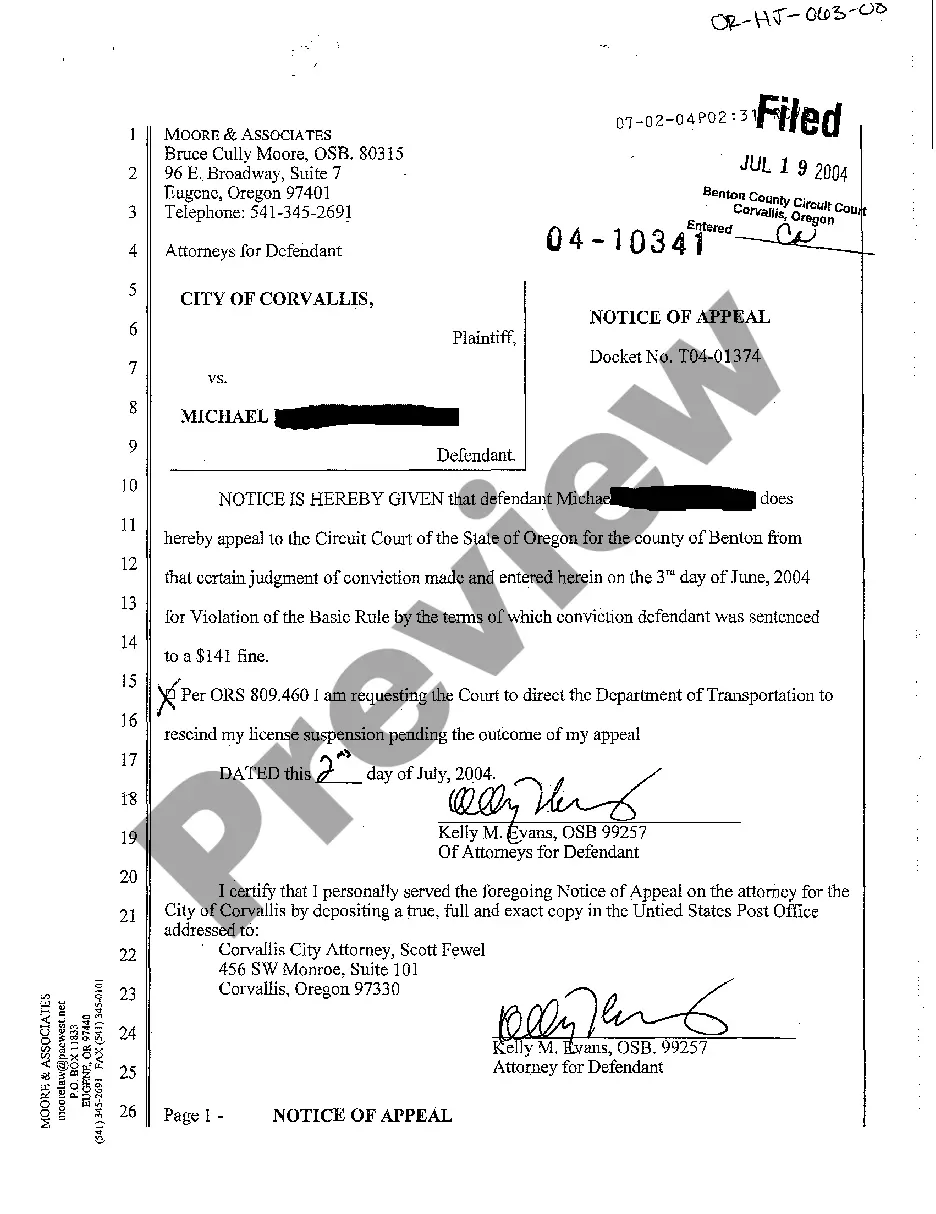
Surface Lease For Salt Water Disposal Well For Operator to Dispose of Its Water, Produced on Or off the Lands Subject to the Lease
About this form
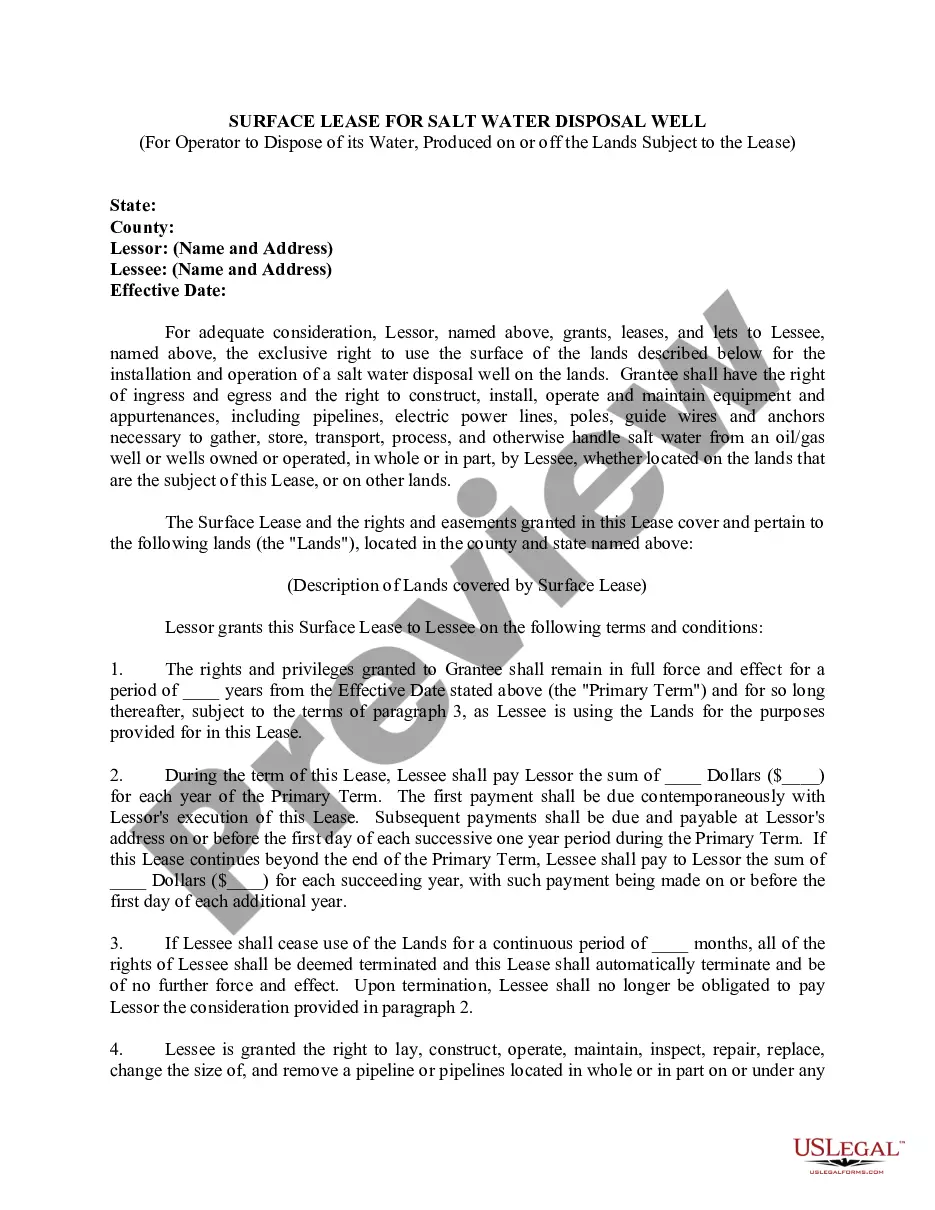
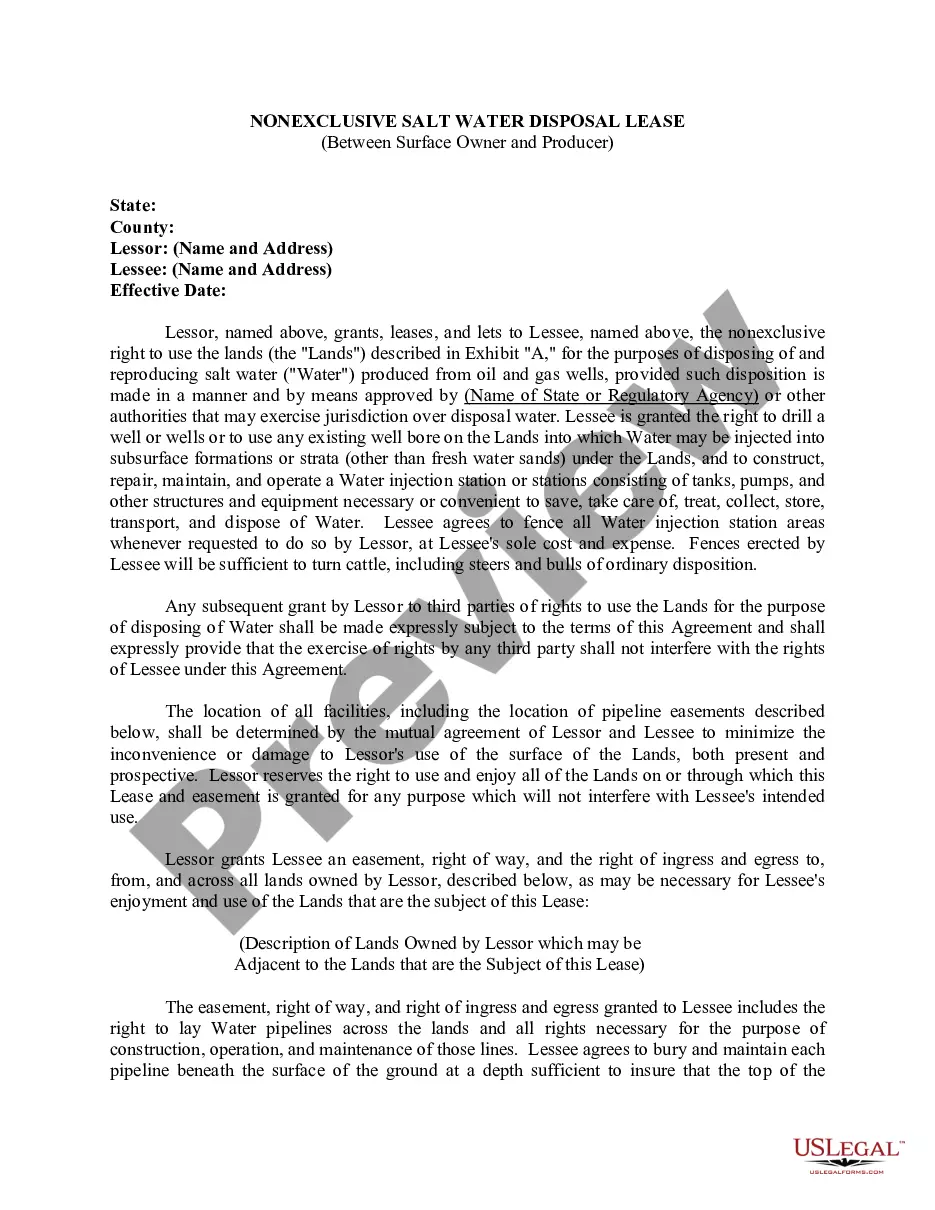
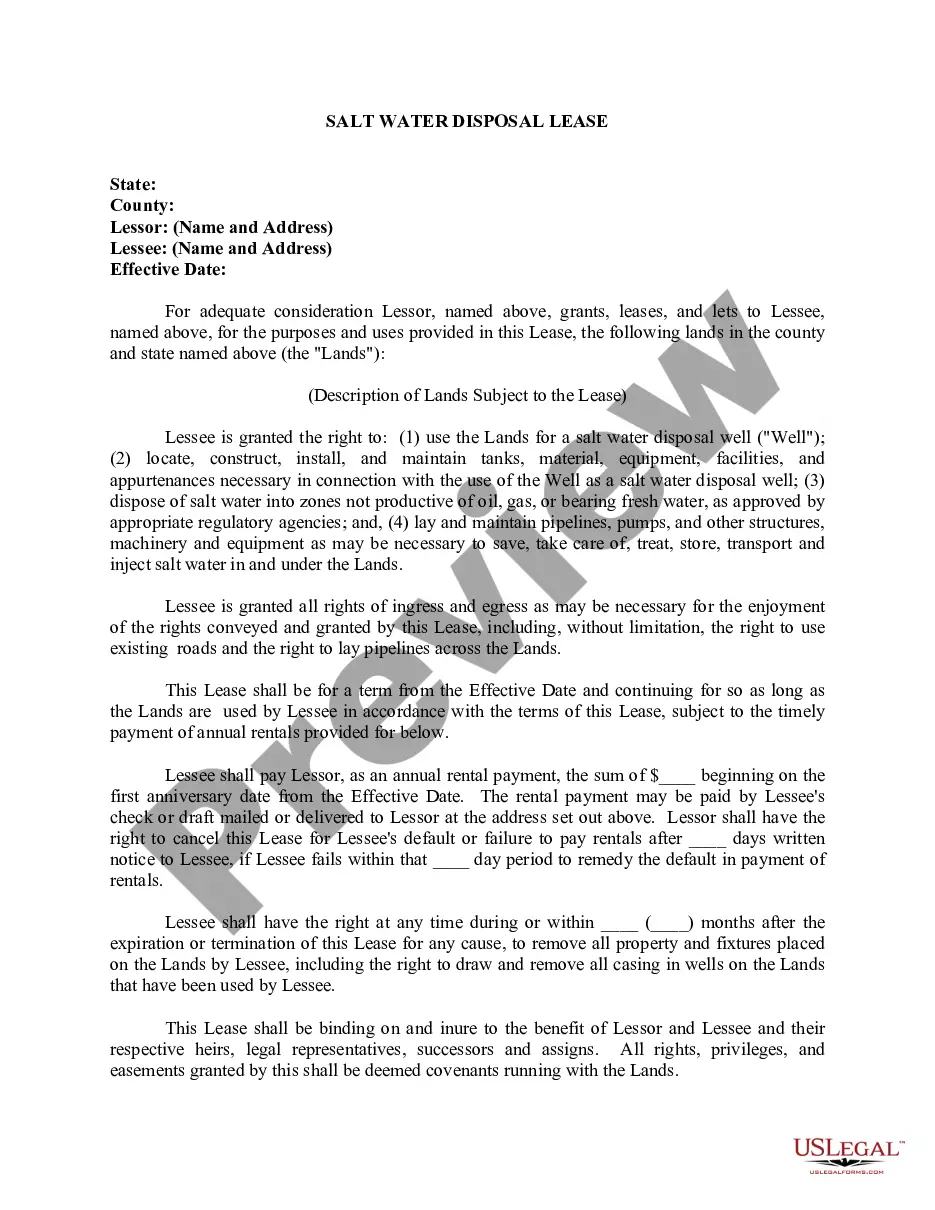
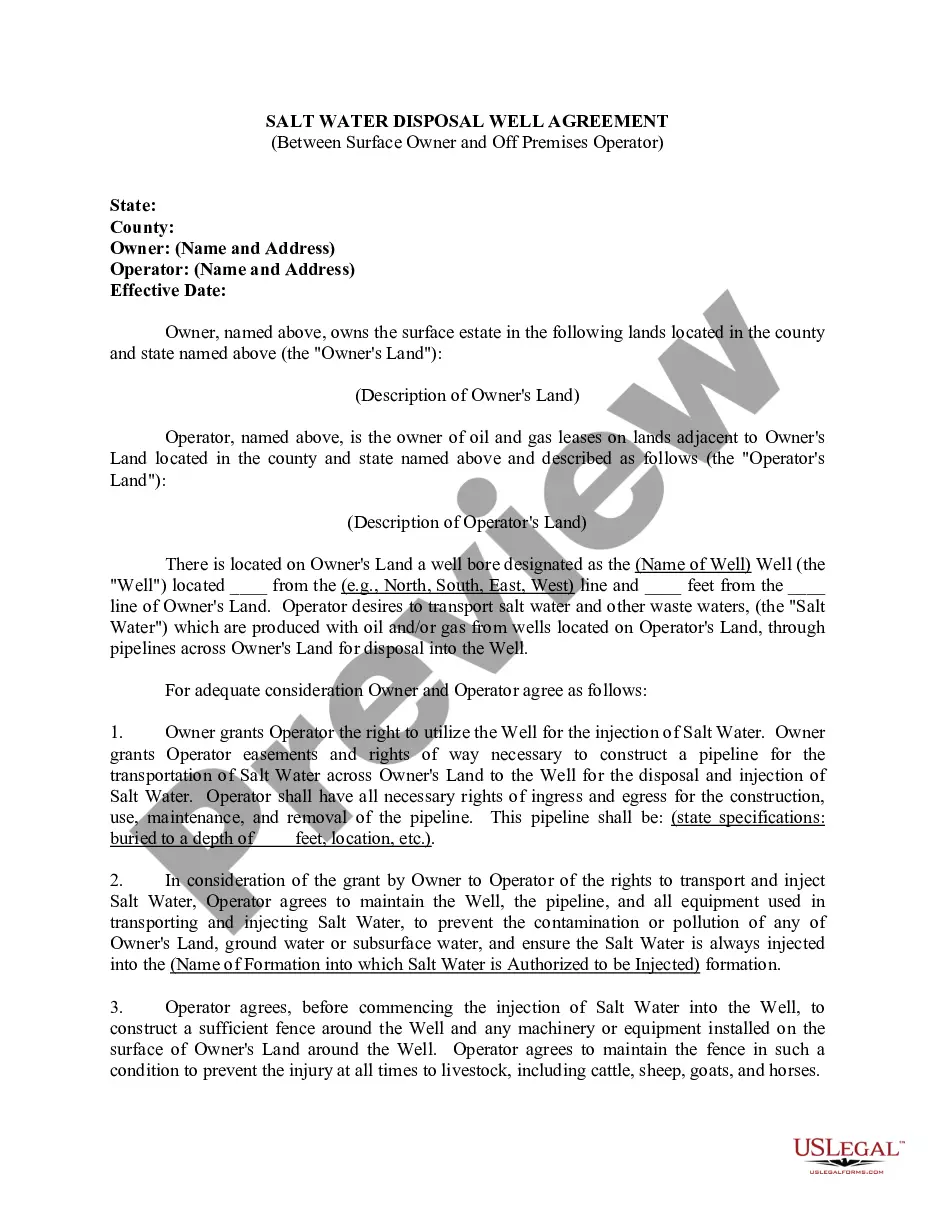
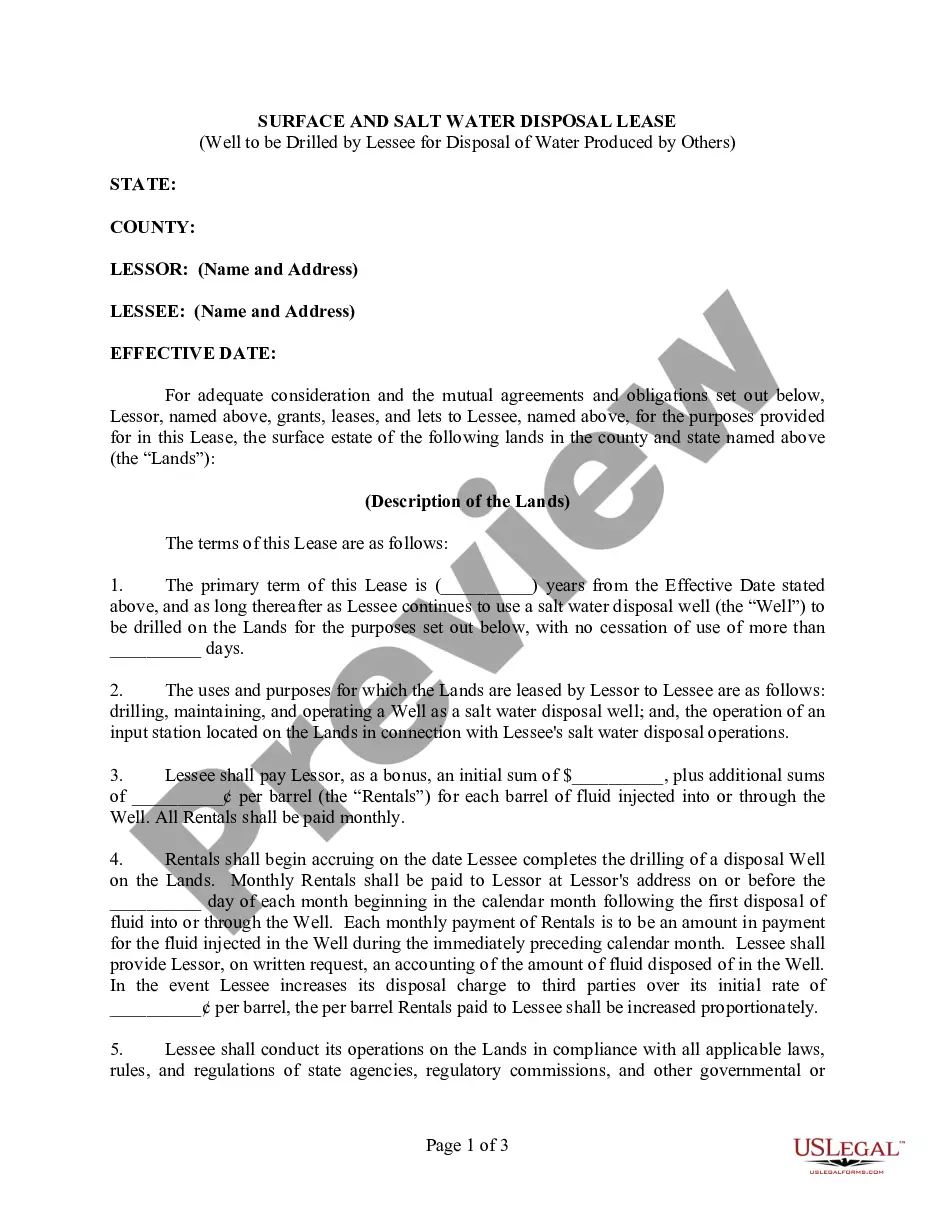
The Surface Lease for Salt Water Disposal Well is a legal document that allows a lessor to grant the exclusive right to use specific lands for the installation and operation of a salt water disposal well. This form outlines the terms under which the lessee can manage salt water produced from oil and gas wells, both on and off the leased lands. It is essential for ensuring that both parties understand their rights and obligations, differing from similar forms by focusing specifically on salt water disposal logistics and easements related to pipelines and other necessary infrastructure.
Key components of this form
- Parties involved (Lessor and Lessee) with contact details.
- Description of the lands where the salt water disposal well will be located.
- Terms of the lease, including duration and payment amounts.
- Rights granted to the lessee for ingress, egress, and installation of necessary equipment.
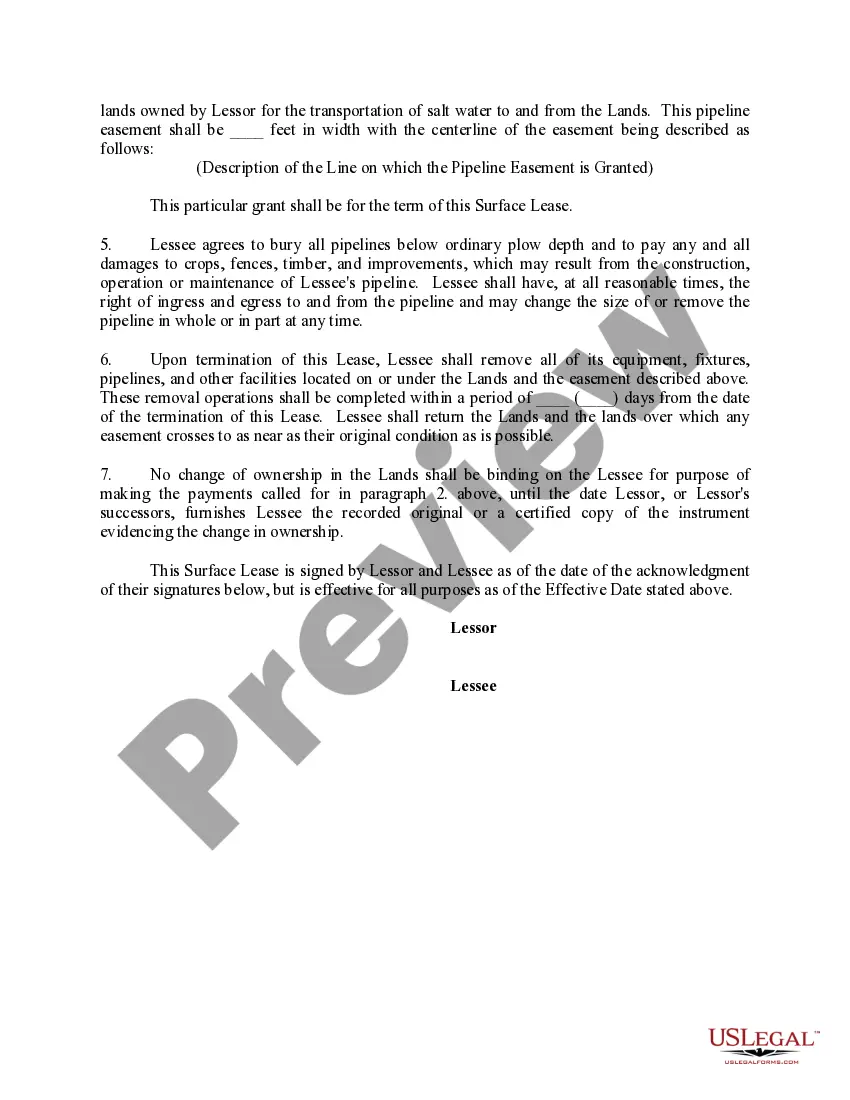
- Conditions under which the lease may terminate, such as cessation of use.
- Obligations for removing equipment upon lease termination and restoring the land.
When to use this document
This form is typically used when an oil or gas operator desires to legally dispose of salt water on specific lands, particularly when there is a need for establishing pipelines and other necessary facilities for water management. It is also relevant for landlords or property owners who wish to formalize the terms under which their land will be used for this purpose, ensuring compliance with local regulations and protecting their interests.
Intended users of this form
- Oil and gas operators needing to manage salt water disposal.
- Property owners (Lessors) leasing land for salt water disposal wells.
- Legal professionals assisting clients in drafting or reviewing lease agreements.
- Environmental compliance officers involved in managing waste disposal practices.
How to prepare this document
- Identify and enter the names and addresses of the Lessor and Lessee.
- Specify the effective date of the lease agreement.
- Describe the land that is being leased for the disposal well.
- Fill in the terms regarding duration and payment details for the lease.
- Include clauses related to equipment rights and termination conditions.
- Sign and date the lease agreement, ensuring all parties acknowledge it appropriately.
Does this document require notarization?
This form needs to be notarized to ensure legal validity. US Legal Forms provides secure online notarization powered by Notarize, allowing you to complete the process through a verified video call, available anytime.
Get your form ready online
Our built-in tools help you complete, sign, share, and store your documents in one place.
Make edits, fill in missing information, and update formatting in US Legal Forms—just like you would in MS Word.
Download a copy, print it, send it by email, or mail it via USPS—whatever works best for your next step.
Sign and collect signatures with our SignNow integration. Send to multiple recipients, set reminders, and more. Go Premium to unlock E-Sign.
If this form requires notarization, complete it online through a secure video call—no need to meet a notary in person or wait for an appointment.
We protect your documents and personal data by following strict security and privacy standards.

Make edits, fill in missing information, and update formatting in US Legal Forms—just like you would in MS Word.

Download a copy, print it, send it by email, or mail it via USPS—whatever works best for your next step.

Sign and collect signatures with our SignNow integration. Send to multiple recipients, set reminders, and more. Go Premium to unlock E-Sign.

If this form requires notarization, complete it online through a secure video call—no need to meet a notary in person or wait for an appointment.

We protect your documents and personal data by following strict security and privacy standards.
Typical mistakes to avoid
- Failing to clearly define the specific lands covered by the lease.
- Omitting payment amounts or terms, which can lead to misunderstandings.
- Not specifying conditions for termination or the obligations upon termination.
- Neglecting to have all parties sign and date the document properly.
Why complete this form online
- Immediate access to a legally vetted form created by licensed attorneys.
- Easy customization to fit specific needs and circumstances.
- Time-saving downloads that eliminate the need for in-person appointments.
- Secure storage and management of completed documents in one convenient location.
Looking for another form?

Form popularity
FAQ
A salt water disposal (SWD) well is a disposal site for water produced as a result of the oil and gas extraction process. Produced water, also referred to as salt water, contains particulate which can cause problems for the pump bringing water into the well.
Texas courts have long held that the mineral estate is the dominant estate, and that the mineral owner, or the owner's lessee, has an implied easement to use the surface in a manner that is reasonably necessary to develop the minerals.
Surface rights are subservient to mineral rights, which means the owner of a mineral servitude will be able to access and use the surface to extract the minerals from underneath.
While some particularly arid regions allow for disposal via evaporation from large holding pits, most salt water is disposed of at specialty disposal sites where the salt water is injected by way of a disposal well (salt water disposal, or SWD wells) into natural underground formations.
How Saltwater Disposal Works. Saltwater is typically ejected from the wells into natural underground formations sealed within an impenetrable rock to prevent the saltwater from escaping into surrounding soil and groundwater.
1. n. Well Completions A well, often a depleted oil or gas well, into which waste fluids can be injected for safe disposal. Disposal wells typically are subject to regulatory requirements to avoid the contamination of freshwater aquifers.
Surface rights are, as the name implies, the rights to the surface area of a piece of land. This includes any structures on the property, as well as the rights to farm the land or exploit aboveground resources such as trees, plants, or water according to local laws and ordinances.
The specific provisions of the laws vary from state to state, but drillers are generally allowed to extract minerals from a large area or "pool"--in most states a minimum of 640 acres--if leases have been negotiated for a certain percentage of that land. The company can then harvest gas from the entire area.
While drilling costs can vary markedly based on the site geology, the target zone, and well depth, the total facility cost can easily reach $3 million to $4 million even if the facility offers no produced water transportation via pipeline.