Surface and Salt Water Disposal Lease Well to Be Drilled by Lessee For Disposal of Water Produced by Others
About this form
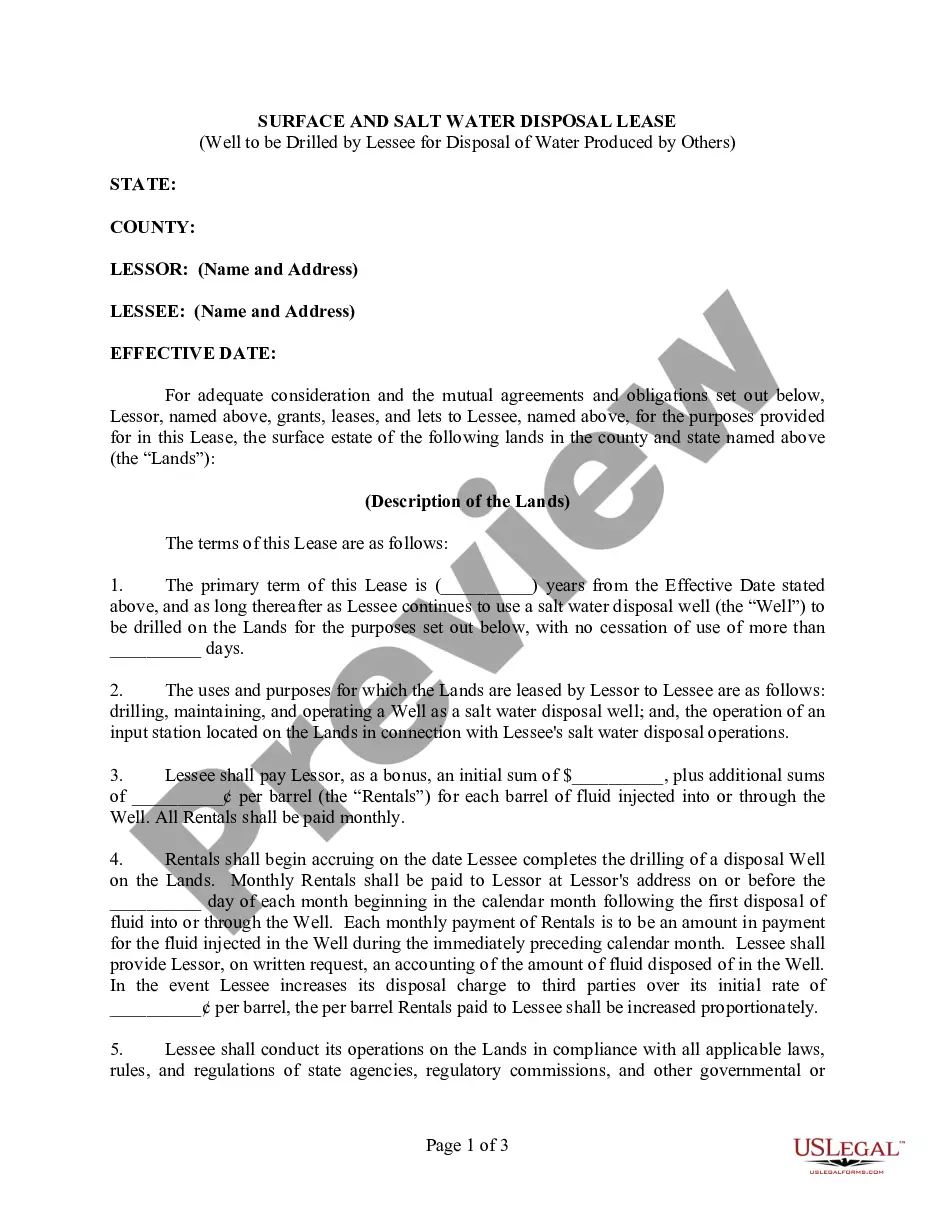
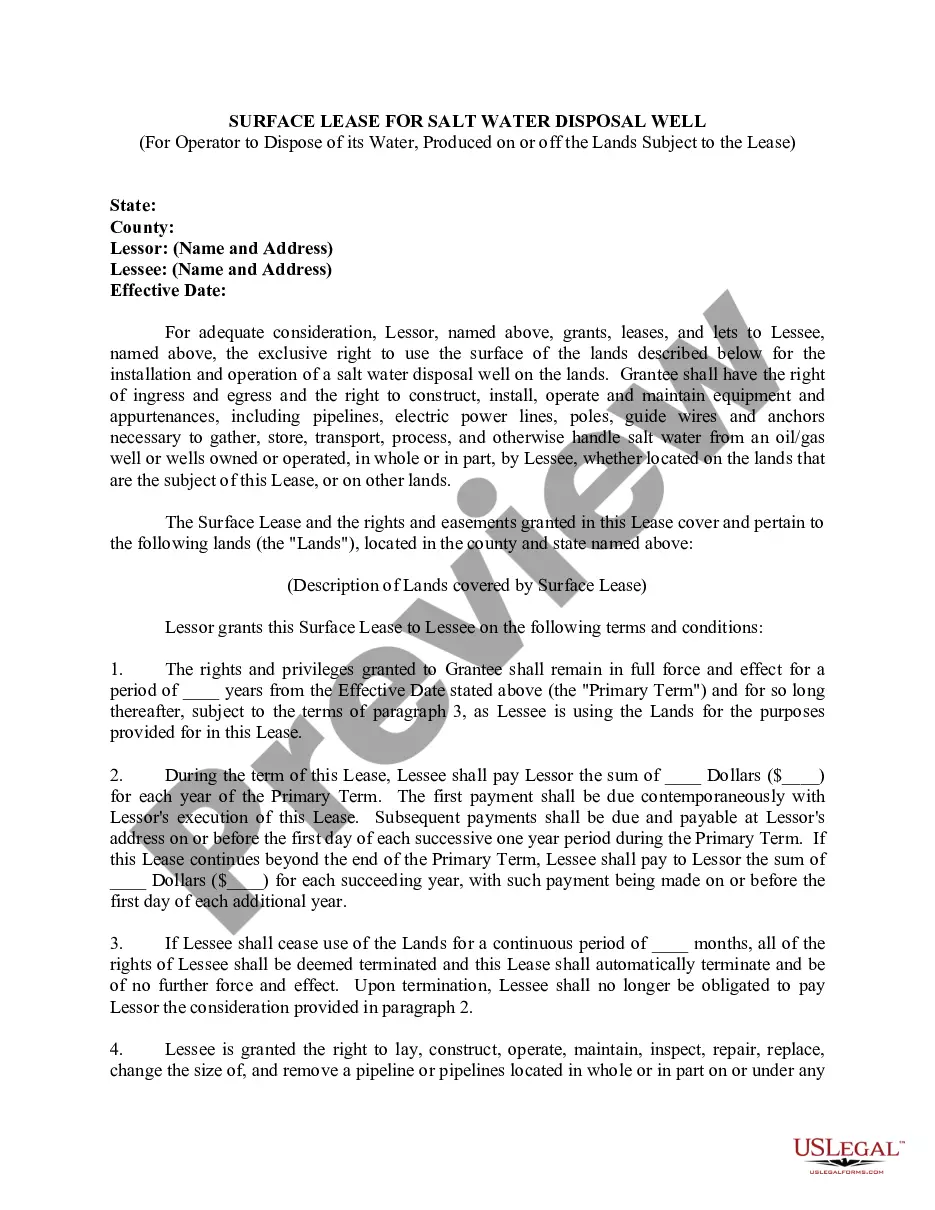
The Surface and Salt Water Disposal Lease Well to Be Drilled by Lessee For Disposal of Water Produced by Others is a legal agreement allowing the lessee to drill a well on the landowner's property. This form specifically pertains to the disposal of water produced from other lands, distinguishing it from standard lease agreements that may not include water disposal provisions. The form outlines the mutual obligations and rights of both the lessor and lessee regarding the use of the land for disposal purposes.
Key components of this form
- Identification of the lessor and lessee, including their contact addresses.
- Effective date and primary term of the lease agreement with specified duration.
- Details on compensation, including initial bonus and per barrel rental fees for fluids disposed of in the well.
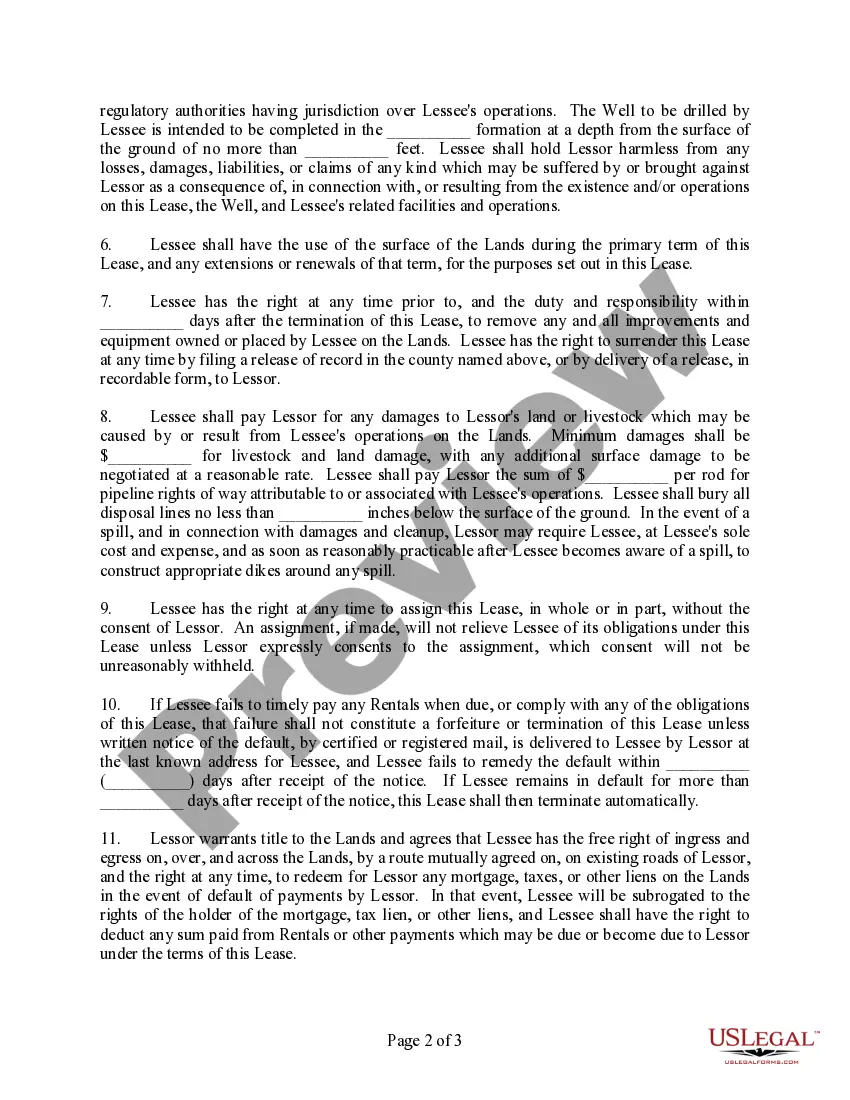
- Specifications regarding compliance with laws and the depth and formation of the well to be drilled.
- Provisions for maintenance, operation, and removal of equipment after the lease termination.
- Indemnification clauses and responsibilities in the event of damages or spills.
Situations where this form applies
Intended users of this form
This form is suitable for:
- Property owners (lessors) who own land that can accommodate water disposal wells.
- Lessee companies or individuals seeking to legally establish rights to drill and operate disposal wells on leased lands.
- Legal representatives handling property and mineral rights for clients involved in water disposal operations.
How to prepare this document
- Enter the names and addresses of the lessor and lessee at the beginning of the form.
- Specify the effective date and the duration of the lease in years.
- Detail the compensation terms, including the initial sum and the per barrel rental fee.
- Provide information regarding the location and specific characteristics of the well to be drilled.
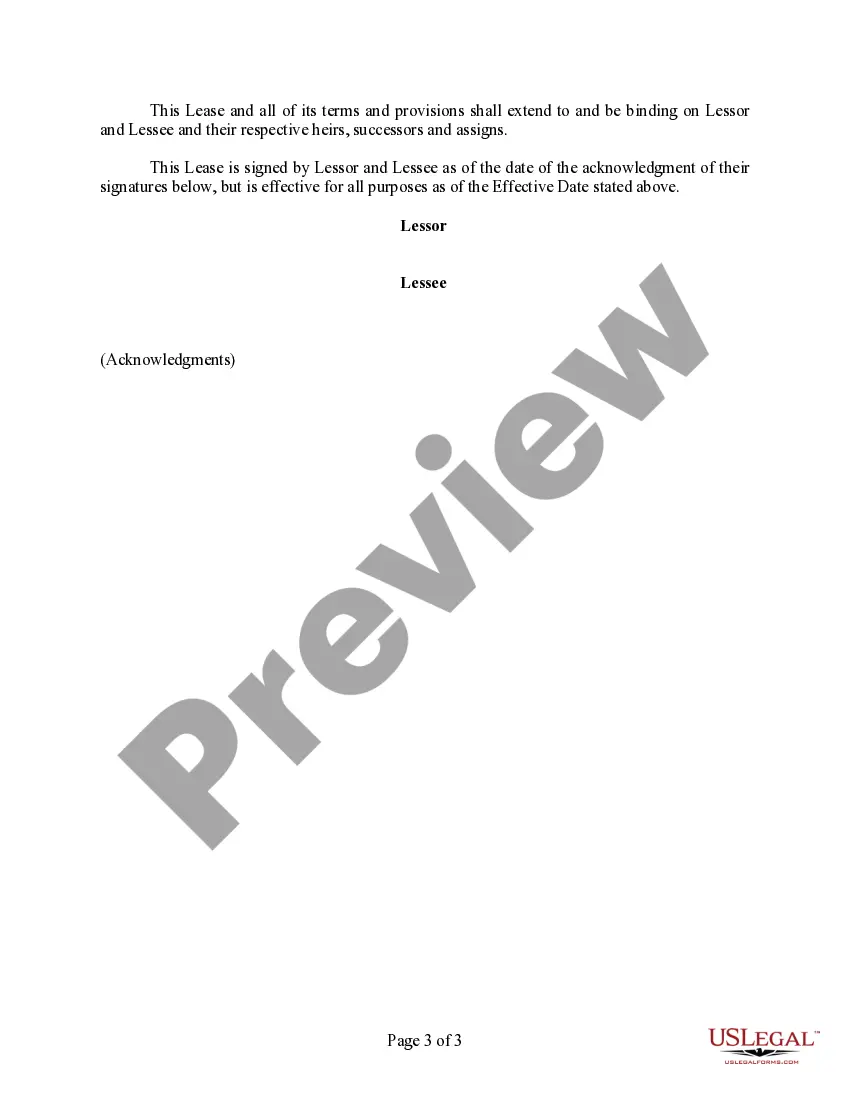
- Gather signatures of both parties to validate the agreement.
Notarization guidance
Notarization is required for this form to take effect. Our online notarization service, powered by Notarize, lets you verify and sign documents remotely through an encrypted video session, available 24/7.
Get your form ready online
Our built-in tools help you complete, sign, share, and store your documents in one place.
Make edits, fill in missing information, and update formatting in US Legal Forms—just like you would in MS Word.
Download a copy, print it, send it by email, or mail it via USPS—whatever works best for your next step.
Sign and collect signatures with our SignNow integration. Send to multiple recipients, set reminders, and more. Go Premium to unlock E-Sign.
If this form requires notarization, complete it online through a secure video call—no need to meet a notary in person or wait for an appointment.
We protect your documents and personal data by following strict security and privacy standards.

Make edits, fill in missing information, and update formatting in US Legal Forms—just like you would in MS Word.

Download a copy, print it, send it by email, or mail it via USPS—whatever works best for your next step.

Sign and collect signatures with our SignNow integration. Send to multiple recipients, set reminders, and more. Go Premium to unlock E-Sign.

If this form requires notarization, complete it online through a secure video call—no need to meet a notary in person or wait for an appointment.

We protect your documents and personal data by following strict security and privacy standards.
Avoid these common issues
- Failing to specify the compensation details clearly, leading to disputes.
- Leaving terms such as the primary term duration or well depth blank.
- Not ensuring all parties sign the document before proceeding with drilling activities.
- Overlooking local regulations that may impact the legality of the lease.
Why complete this form online
- Immediate access to a professionally drafted legal document tailored for surface and salt water disposal leases.
- Convenient editing options to customize the form according to specific needs.
- Reliable templates ensure compliance with legal standards and requirements.
Legal use & context
- This lease is legally binding once signed by both parties.
- Failure to comply with the lease terms may result in termination or legal disputes.
- It is essential to understand the implications of water disposal laws specific to the region.
Summary of main points
- The Surface and Salt Water Disposal Lease enables controlled water disposal on leased land.
- Clear terms and conditions help protect the interests of both lessors and lessees.
- Understanding state regulations is crucial to the lease's enforceability.
Looking for another form?
Form popularity
FAQ
While drilling costs can vary markedly based on the site geology, the target zone, and well depth, the total facility cost can easily reach $3 million to $4 million even if the facility offers no produced water transportation via pipeline.
1. n. Well Completions A well, often a depleted oil or gas well, into which waste fluids can be injected for safe disposal. Disposal wells typically are subject to regulatory requirements to avoid the contamination of freshwater aquifers.
How Saltwater Disposal Works. Saltwater is typically ejected from the wells into natural underground formations sealed within an impenetrable rock to prevent the saltwater from escaping into surrounding soil and groundwater.
In Texas, and most other states, the ownership of the mineral estate can be separated (severed) from the surface estate. Put another way, one person may own the rights to use the surface of a piece of property while another person has the right to use the minerals underneath the property.
Disposal wells inject saltwater into underground formations, often over a mile in depth, into sub-surface zones that already contain naturally occurring saltwater. In contrast, wells that supply fresh water can vary in depth throughout the state, but generally range from no deeper than a few hundred to a thousand feet.
A salt water disposal (SWD) well is a disposal site for water produced as a result of the oil and gas extraction process. Produced water, also referred to as salt water, contains particulate which can cause problems for the pump bringing water into the well.
While some particularly arid regions allow for disposal via evaporation from large holding pits, most salt water is disposed of at specialty disposal sites where the salt water is injected by way of a disposal well (salt water disposal, or SWD wells) into natural underground formations.