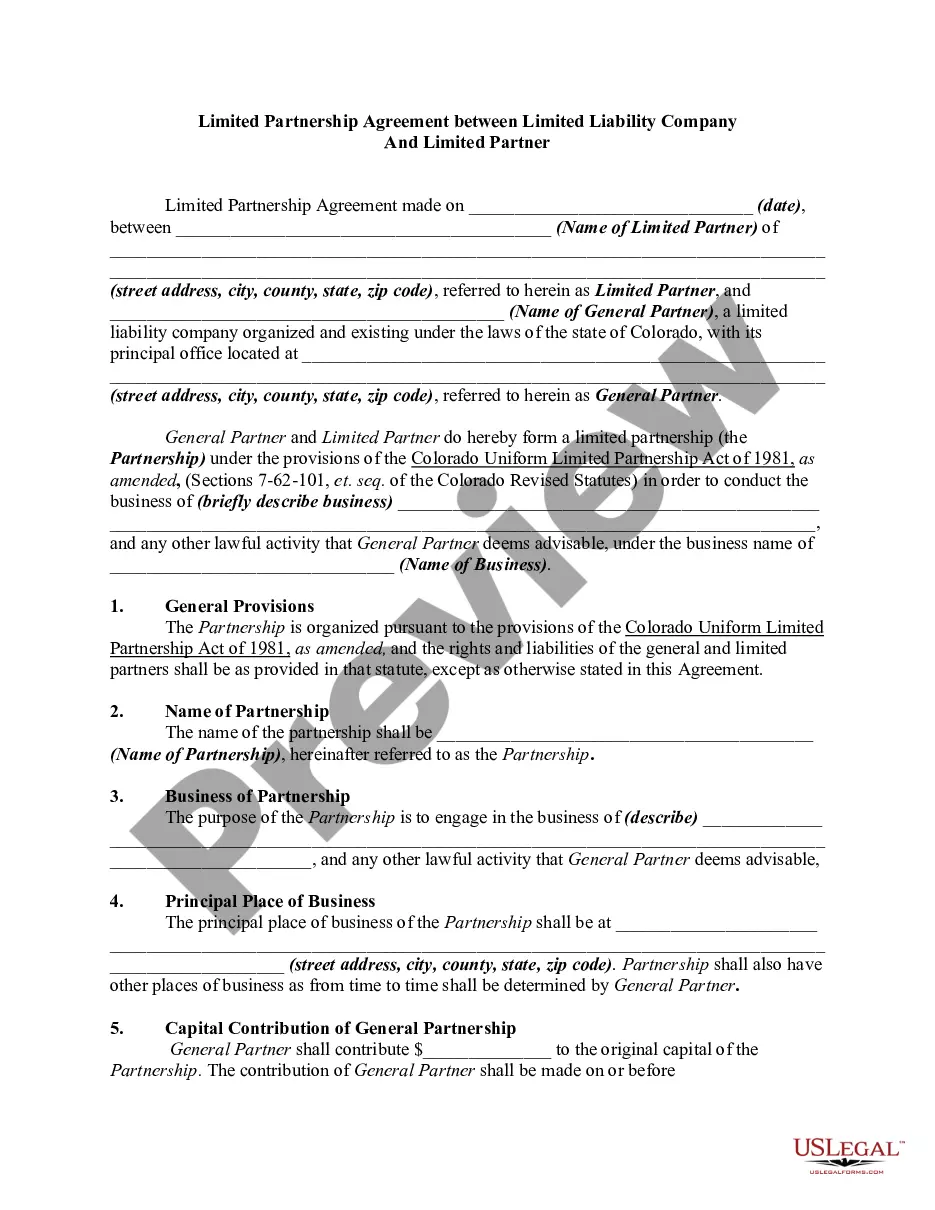
Colorado Limited Partnership Agreement Between Limited Liability Company and Limited Partner
Overview of this form
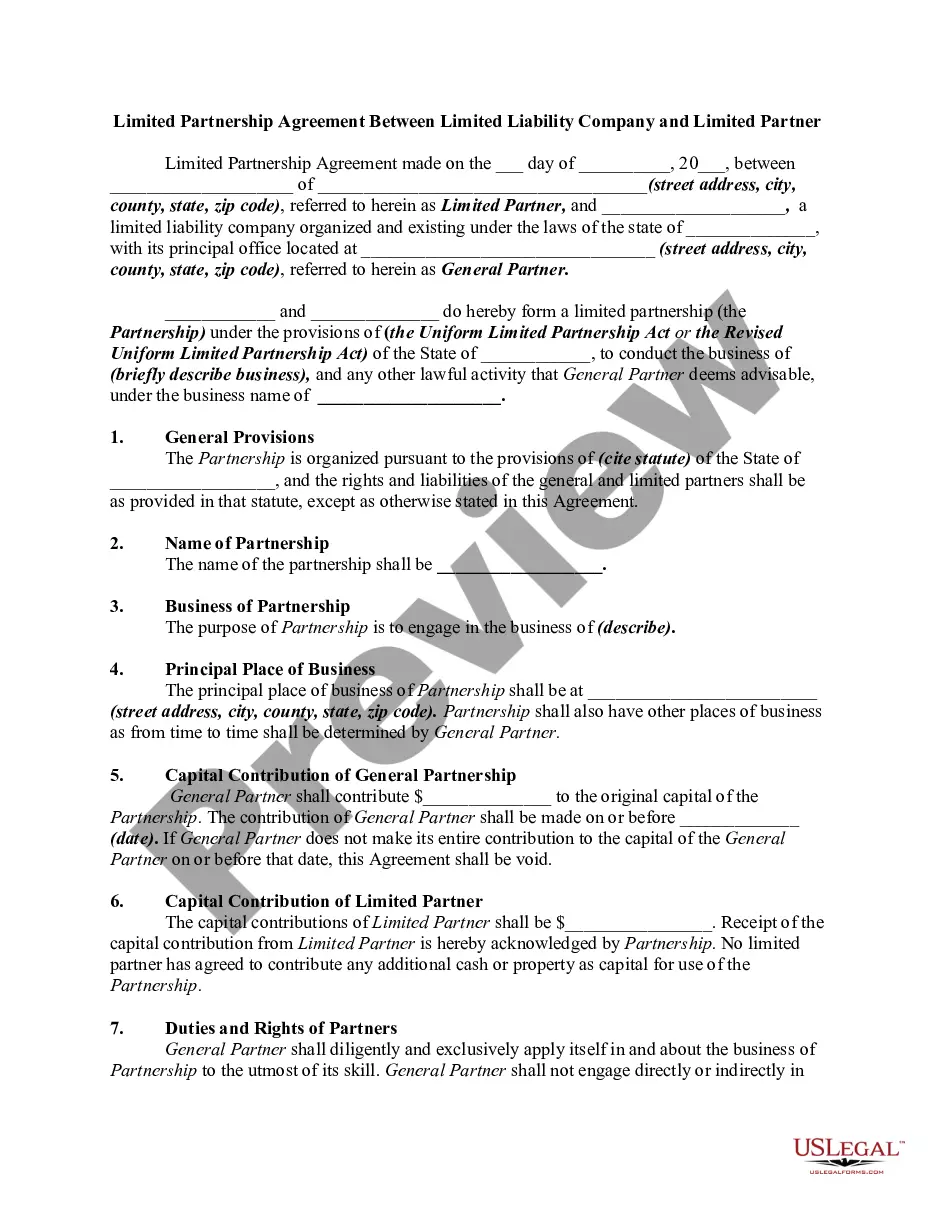
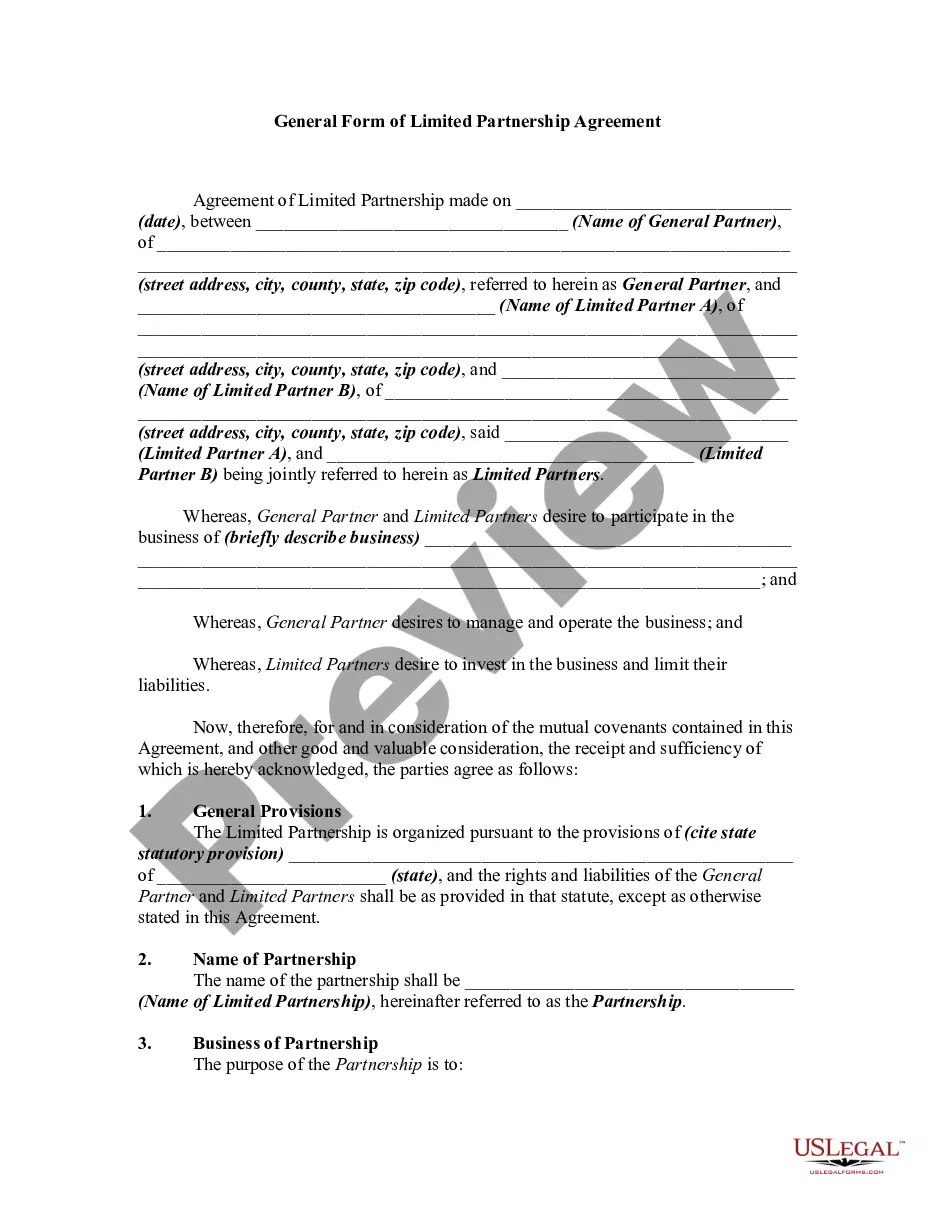
A Limited Partnership Agreement Between Limited Liability Company and Limited Partner establishes a limited partnership, which consists of at least one general partner and one limited partner. This legal form provides limited partners with protection from personal liability for the partnership's debts. Unlike a general partnership, limited partners are not personally responsible for the partnership's obligations, as long as they do not take an active role in management. This agreement outlines the rights, duties, and contributions of both general and limited partners in the partnership's operation.
Form components explained
- Identification of parties involved: names and addresses of the general partner (limited liability company) and limited partner.
- The formation of the partnership under Colorado law, specifying the business purpose.
- Details regarding capital contributions from both the general and limited partners.
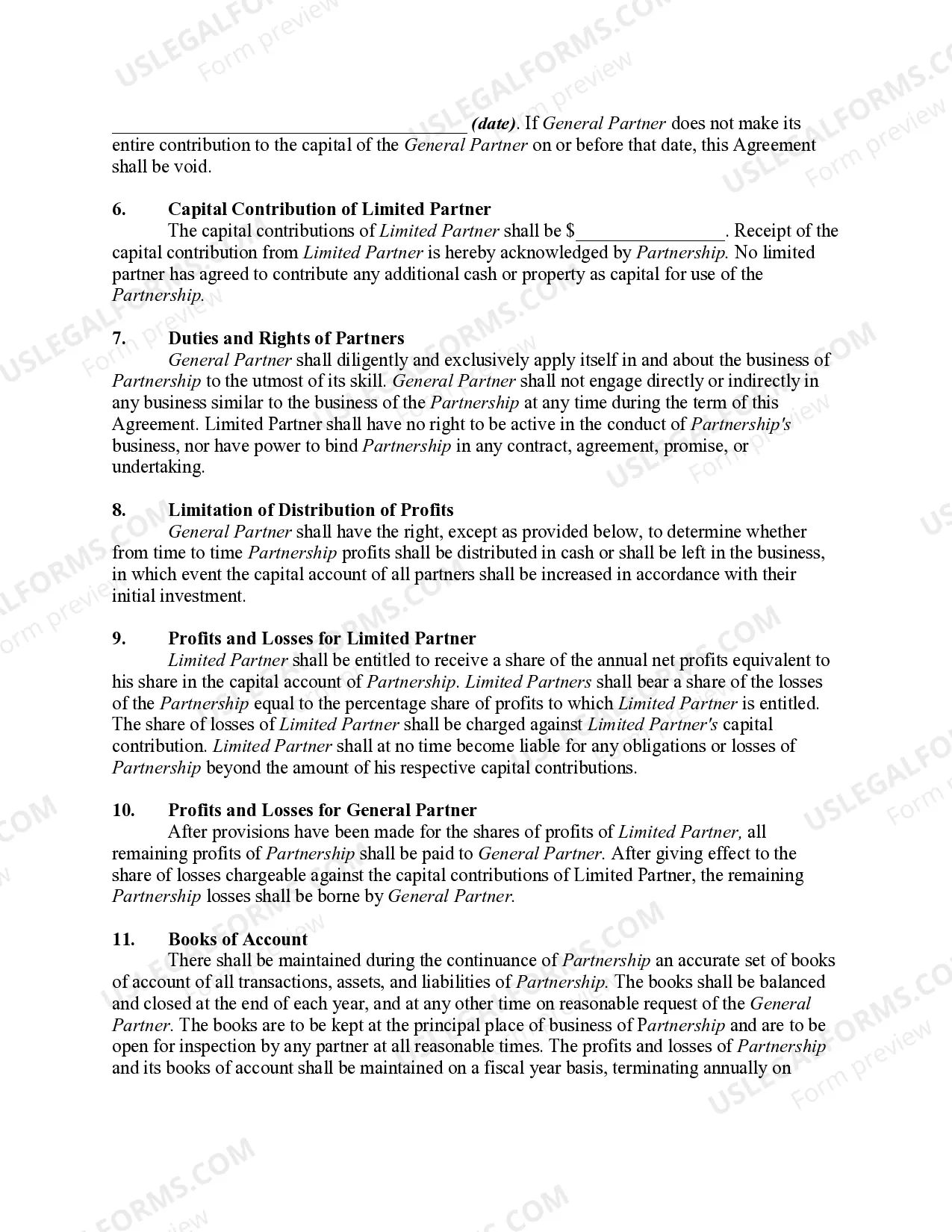
- Succinct clauses that outline the rights and responsibilities of each partner.
- Provisions regarding the distribution of profits and losses between partners.
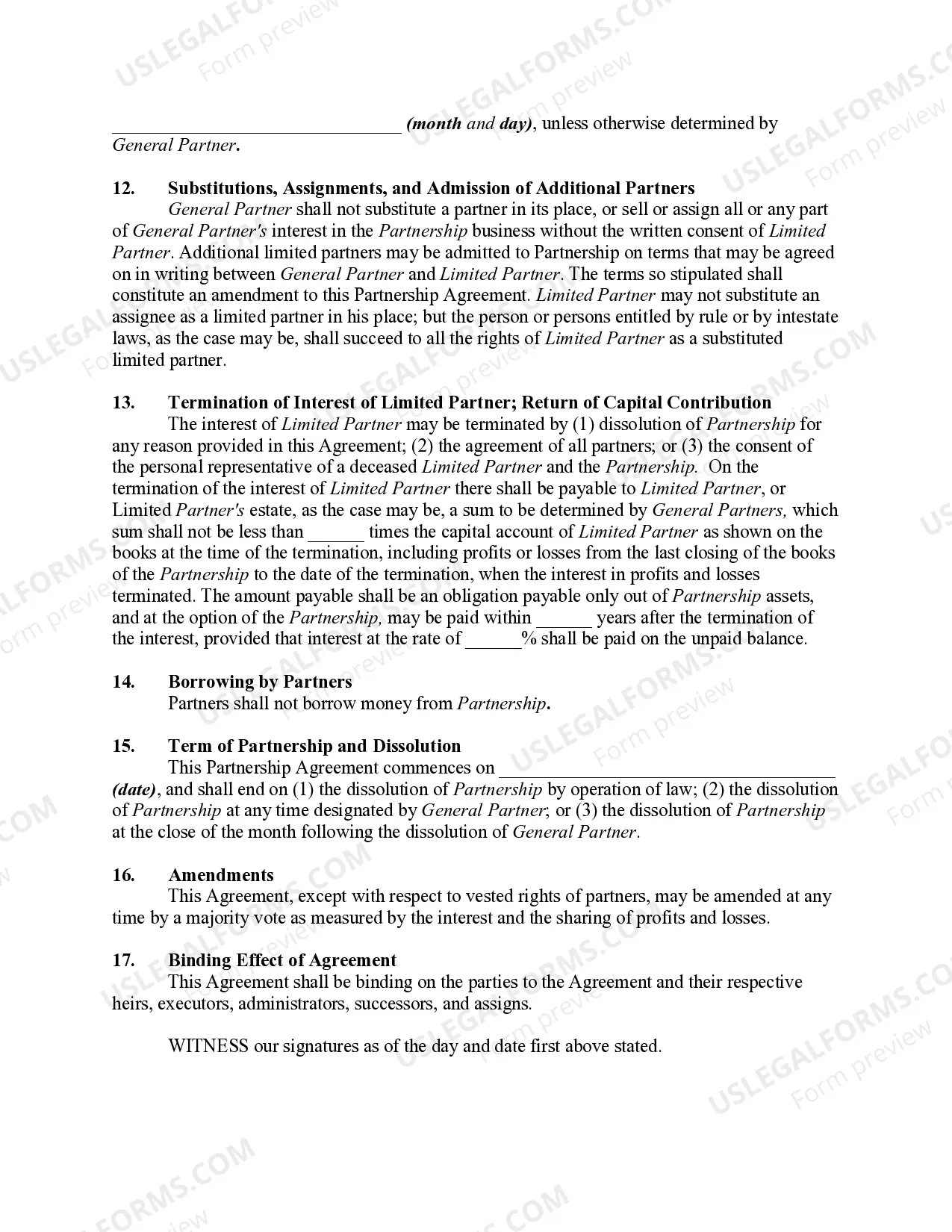
- Termination and amendment conditions for the partnership agreement.



When to use this form
This form is useful when a limited liability company wishes to enter into a partnership with one or more limited partners. It is typically used when the parties involved want to limit the liability of limited partners while allowing a general partner to manage the partnership's affairs. Scenarios that might necessitate this form include starting a new business venture, securing investment funds, or structuring business relationships that require a clear delineation of responsibilities and liabilities.
Who this form is for
This form is intended for:
- Business owners looking to form a limited partnership in Colorado.
- Limited liability companies seeking partnership arrangements with limited partners.
- Individuals interested in investing in a business without incurring personal liability beyond their investment.
How to prepare this document
- Begin by entering the date at the top of the agreement.
- Fill in the names and addresses of both the limited partner and the general partner.
- Describe the business purpose of the partnership and choose a name for the partnership.
- Specify the capital contributions for both partners and the deadlines for those contributions.
- Review and sign the agreement, ensuring all partners understand their rights and responsibilities.
Does this form need to be notarized?
This form does not typically require notarization unless specified by local law. However, having the agreement notarized can provide an additional layer of validation and security for all partners involved.
Get your form ready online
Our built-in tools help you complete, sign, share, and store your documents in one place.
Make edits, fill in missing information, and update formatting in US Legal Forms—just like you would in MS Word.
Download a copy, print it, send it by email, or mail it via USPS—whatever works best for your next step.
Sign and collect signatures with our SignNow integration. Send to multiple recipients, set reminders, and more. Go Premium to unlock E-Sign.
If this form requires notarization, complete it online through a secure video call—no need to meet a notary in person or wait for an appointment.
We protect your documents and personal data by following strict security and privacy standards.

Make edits, fill in missing information, and update formatting in US Legal Forms—just like you would in MS Word.

Download a copy, print it, send it by email, or mail it via USPS—whatever works best for your next step.

Sign and collect signatures with our SignNow integration. Send to multiple recipients, set reminders, and more. Go Premium to unlock E-Sign.

If this form requires notarization, complete it online through a secure video call—no need to meet a notary in person or wait for an appointment.

We protect your documents and personal data by following strict security and privacy standards.
Typical mistakes to avoid
- Failing to accurately describe the business purpose, which can lead to legal issues later.
- Not specifying the capital contributions clearly or missing deadlines for contributions.
- Allowing limited partners to take an active role in management, which could result in personal liability.
Benefits of completing this form online
- Convenience of downloading and completing the agreement at your own pace.
- Access to legal templates drafted by licensed attorneys, ensuring compliance with state laws.
- Ability to easily edit fields to tailor the agreement to your specific partnership needs.
Key takeaways
- A Limited Partnership Agreement is essential for outlining the roles of general and limited partners.
- Limited partners benefit from reduced liability as long as they remain passive in management.
- Using this form helps ensure compliance with state-specific regulations in Colorado.
Looking for another form?





Form popularity
FAQ
A limited partner primarily provides capital to the partnership and shares in the profits, but does not participate in managing the business. Their role is vital for funding, while management is typically left to general partners. The Colorado Limited Partnership Agreement Between Limited Liability Company and Limited Partner outlines these responsibilities and ensures clarity between all parties.
If a limited partner engages in management activities, they risk losing their limited liability status. This situation can result in personal liability for the partnership's debts and obligations, undermining the protections offered by a Colorado Limited Partnership Agreement Between Limited Liability Company and Limited Partner. It is crucial for limited partners to maintain the boundaries set within the agreement.
While limited partners enjoy reduced liability, they also face several disadvantages. They cannot participate in management decisions, which may lead to frustration if they have strong opinions about the business direction. It is vital to understand these factors when reviewing your Colorado Limited Partnership Agreement Between Limited Liability Company and Limited Partner.
Yes, Colorado allows the formation of Limited Liability Partnerships (LLPs). However, it's important to note that the rules governing LLPs differ from those for limited partnerships. If you're considering forming a partnership, the Colorado Limited Partnership Agreement Between Limited Liability Company and Limited Partner is crucial for successful operation.
Yes, you can have two or more limited partners in a partnership. Multiple limited partners can increase the investment and resources available without increasing management burden. This setup should be carefully detailed in the Colorado Limited Partnership Agreement Between Limited Liability Company and Limited Partner to ensure clarity and cohesion among partners.
Limited partners in a limited partnership face specific restrictions, primarily around management and decision-making. They cannot participate in day-to-day operations as outlined in the Colorado Limited Partnership Agreement Between Limited Liability Company and Limited Partner. Their liability is also limited to their capital contribution, protecting their personal assets.
Yes, a limited company can have a partnership agreement. This agreement sets the terms between the limited liability company and its partners, especially in the context of a Colorado Limited Partnership Agreement Between Limited Liability Company and Limited Partner. It's essential for clarifying roles, responsibilities, and profit sharing among involved parties.
If a limited partner in a limited partnership decides to withdraw or acts against the agreement, it can disrupt the operations and finances of the partnership. Typically, the Colorado Limited Partnership Agreement Between Limited Liability Company and Limited Partner outlines the process for handling such situations. The partnership may need to negotiate a buyout or reassign interests to maintain functionality.
A limited partner typically has limited involvement in the management of the partnership and enjoys limited liability for the partnership's debts. In contrast, a limited liability partner retains the same liability protection but may have more active participation in management aspects. Understanding this distinction is critical when drafting a Colorado Limited Partnership Agreement Between Limited Liability Company and Limited Partner, as it affects both liability and operational dynamics.
In Colorado, the primary difference between an LLC and an LLP lies in liability protection and management structure. An LLC offers limited liability protection to all owners, while an LLP provides liability protection only to the partners against the actions of other partners. Utilizing a Colorado Limited Partnership Agreement Between Limited Liability Company and Limited Partner is essential to understanding the nuances of these structures and choosing the best fit for your needs.