Attorney Fee Letter - Contingency Agreement
About this form
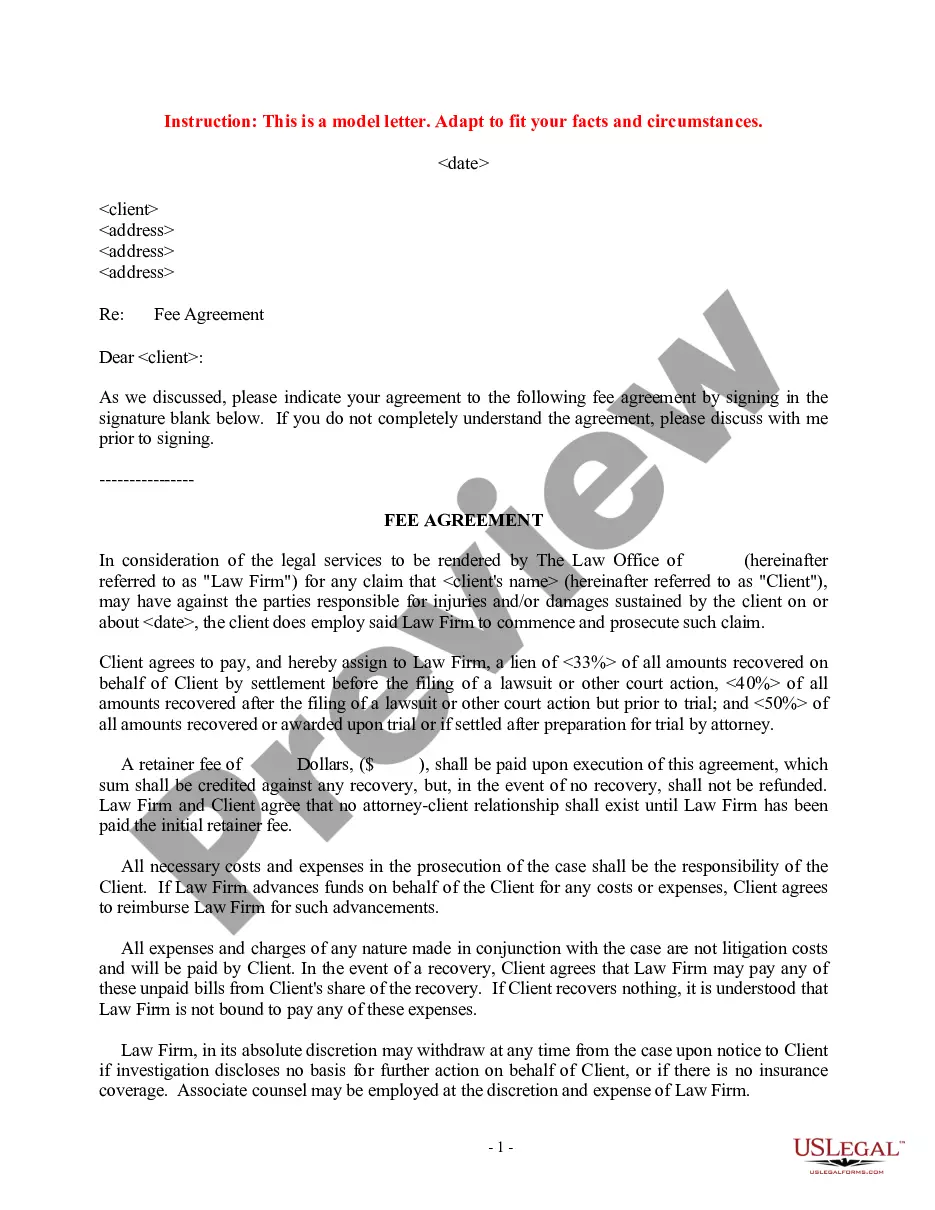
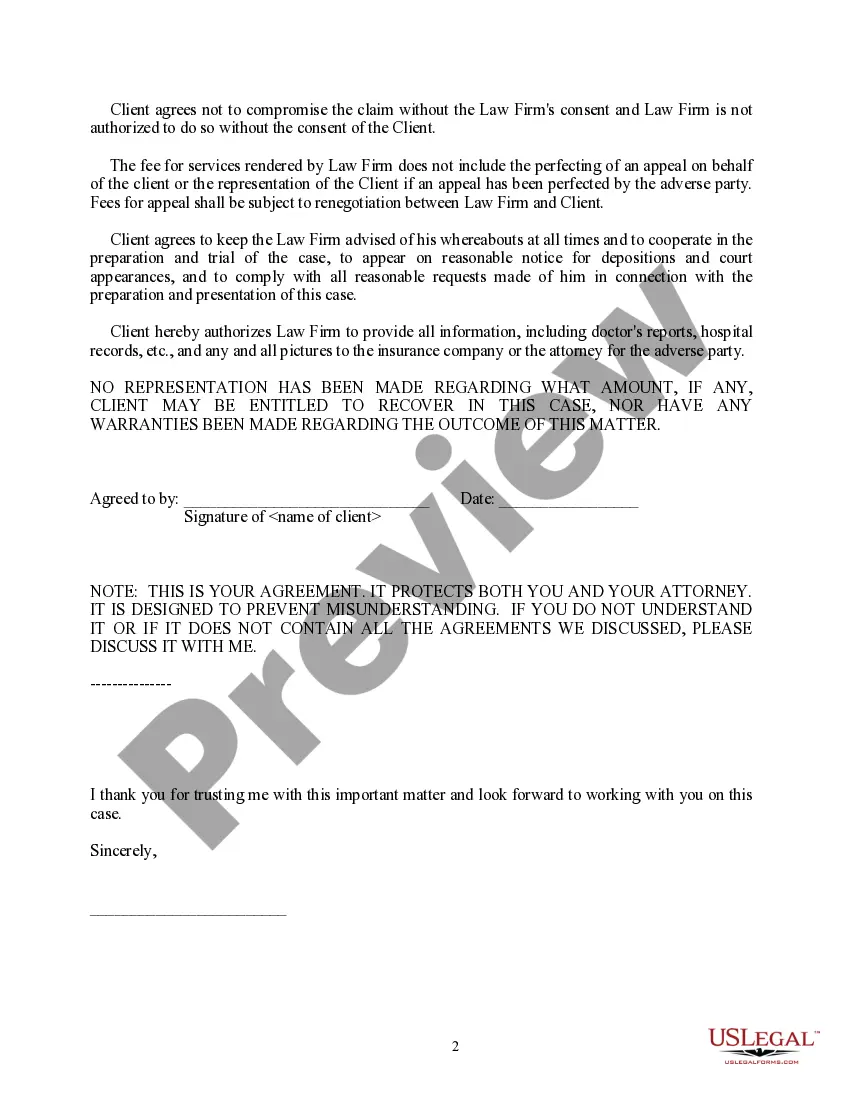
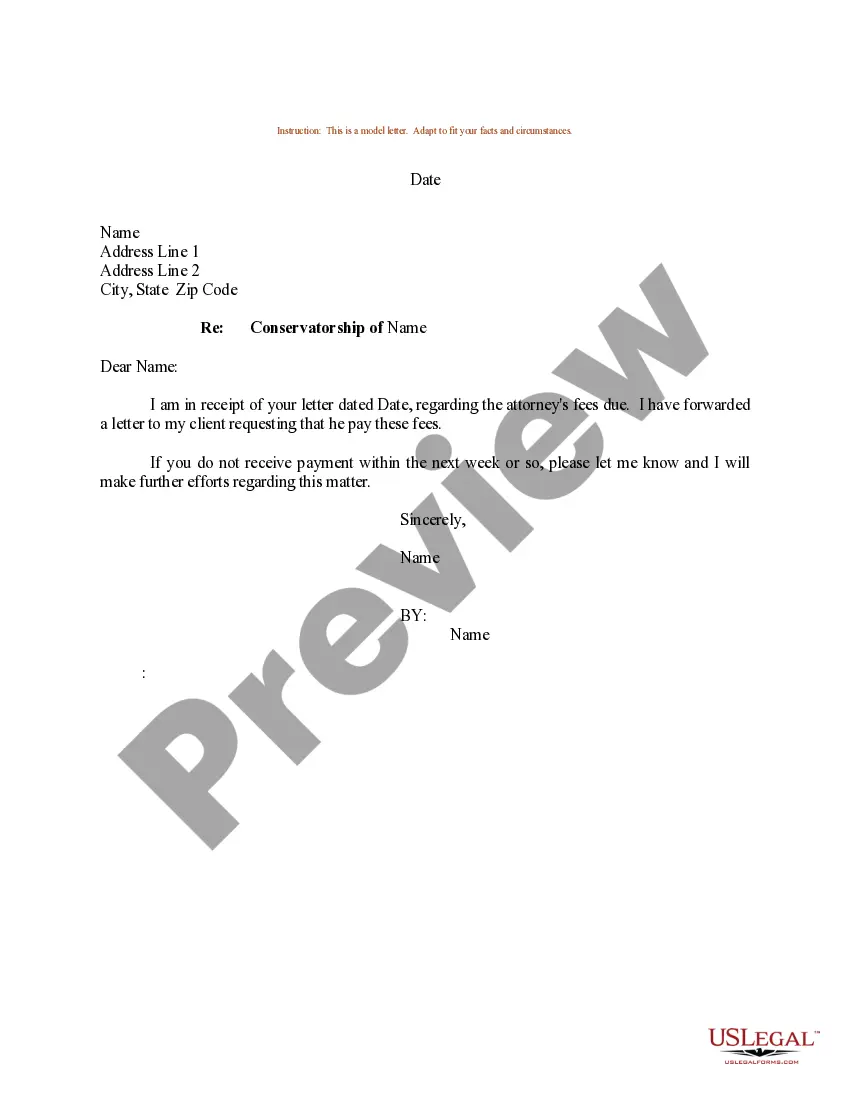
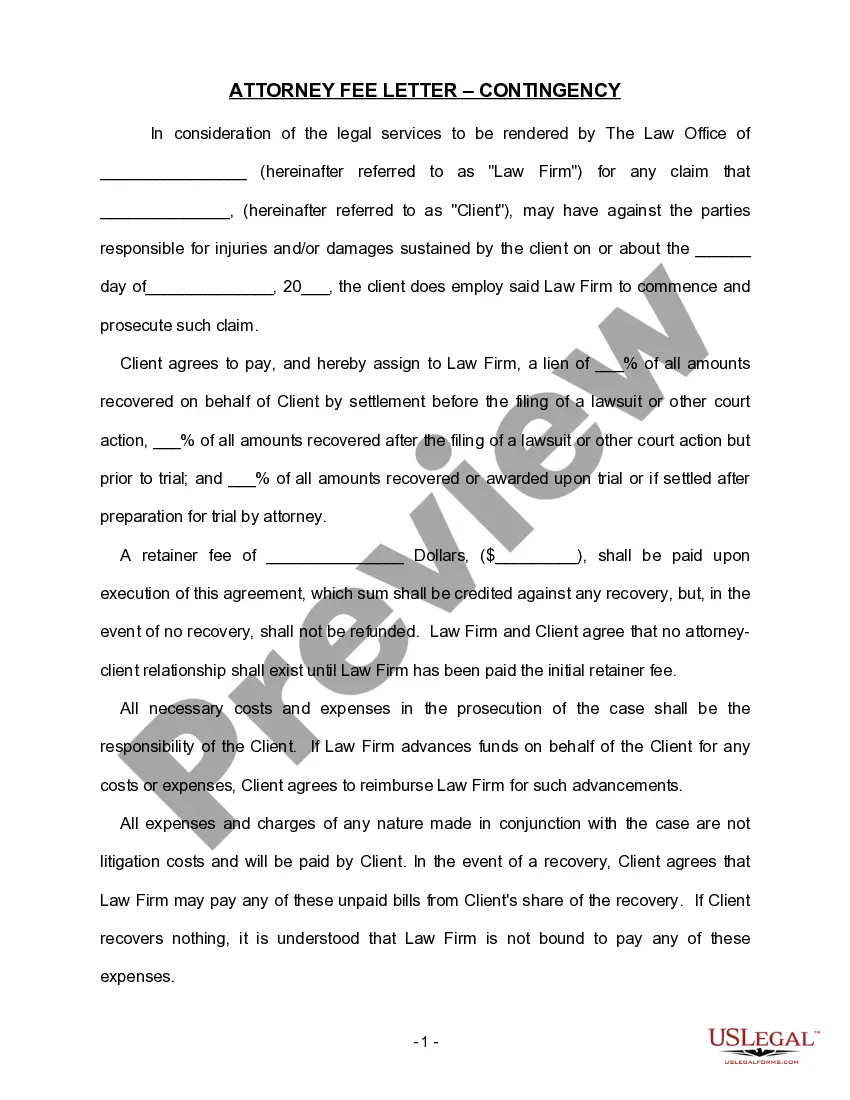
The Attorney Fee Letter - Contingency Agreement is a legal document outlining the fee structure between a law firm and a client in a contingency arrangement. This form serves as a clear agreement detailing the responsibilities of both parties regarding legal fees and expenses, distinguishing it from other basic fee agreements by specifically addressing contingency fees tied to case outcomes.
What’s included in this form
- Date of the agreement
- Client information, including name and address
- Statement of fee agreement indicating client responsibility for costs
- Conditions for law firm's withdrawal from the case
- Client obligations regarding cooperation and communication
- Authorization for the law firm to share information with other parties


When to use this form
This form should be used when entering into a contingency fee arrangement with a law firm. It is applicable in personal injury cases, claims for damages, or any situation where the client compensates the attorney based on the success of the case rather than hourly fees. Utilizing this letter helps ensure that both parties clearly understand their financial obligations before commencing legal action.
Intended users of this form
- Clients seeking representation on a contingency fee basis
- Law firms providing services under a contingency fee agreement
- Individuals unfamiliar with legal fees wishing to clarify cost responsibilities
- Clients wanting to prevent misunderstandings about payment obligations
Steps to complete this form
- Fill in the date of the agreement at the top of the form.
- Enter the client's full name and address accurately.
- Review and understand the terms outlined in the fee agreement section.
- Sign the document in the provided signature area, indicating agreement to the terms.
- Keep a copy of the signed document for your records.
Notarization requirements for this form
This form does not typically require notarization to be legally valid. However, some jurisdictions or document types may still require it. US Legal Forms provides secure online notarization powered by Notarize, available 24/7 for added convenience.
Get your form ready online
Our built-in tools help you complete, sign, share, and store your documents in one place.
Make edits, fill in missing information, and update formatting in US Legal Forms—just like you would in MS Word.
Download a copy, print it, send it by email, or mail it via USPS—whatever works best for your next step.
Sign and collect signatures with our SignNow integration. Send to multiple recipients, set reminders, and more. Go Premium to unlock E-Sign.
If this form requires notarization, complete it online through a secure video call—no need to meet a notary in person or wait for an appointment.
We protect your documents and personal data by following strict security and privacy standards.

Make edits, fill in missing information, and update formatting in US Legal Forms—just like you would in MS Word.

Download a copy, print it, send it by email, or mail it via USPS—whatever works best for your next step.

Sign and collect signatures with our SignNow integration. Send to multiple recipients, set reminders, and more. Go Premium to unlock E-Sign.

If this form requires notarization, complete it online through a secure video call—no need to meet a notary in person or wait for an appointment.

We protect your documents and personal data by following strict security and privacy standards.
Common mistakes
- Failing to read and understand all terms before signing.
- Not including important expenses that the client is responsible for.
- Overlooking the need for clear communication with the law firm.
Benefits of using this form online
- Convenience of instant access and download from anywhere.
- Editable formats allow customization to suit individual needs.
- Secure storage of documents for easy retrieval and sharing.
Legal use & context
- This agreement is enforceable in a court of law when properly executed.
- Failure to adhere to the outlined fee responsibilities may result in financial liability.
- Both parties should maintain copies for their records to avoid legal disputes later.
Quick recap
- Understand the fee structure and terms before signing the agreement.
- This form helps protect both the attorney and the client by clearly outlining responsibilities.
- Keep communication open with your attorney regarding any questions or concerns about the agreement.
Looking for another form?


Form popularity
FAQ
A contingency agreement is an arrangement between a plaintiff and a lawyer, stating that the lawyer will represent the plaintiff without money to pay up front. In these situations, the plaintiff pays the lawyer only if the lawyer wins the case.
In the majority of cases, a personal injury lawyer will receive 33 percent (or one third) of any settlement or award. For example, if you receive a settlement offer of $30,000 from the at fault party's insurance company, you will receive $20,000 and your lawyer will receive $10,000.
You can successfully negotiate contingency fees for injury cases if you are well organized and ready to give the attorney a good reason for the reduction. Some of the best reasons for reducing attorney fees include: Lowered risk for the attorney.
In a contingent fee arrangement, the lawyer agrees to accept a fixed percentage (often one third) of the recovery, which is the amount finally paid to the client. If you win the case, the lawyer's fee comes out of the money awarded to you.
The basic concept of the contingency fee agreement is that the client is out little or no upfront expenses; you as a client do not pay legal fees unless and until you win, and then the lawyer receives a percentage of your recovery as his or her fee. If you lose your case, there is no legal fee at all for the lawyer.
The standard contingency fee for an attorney is a percentage amount rather than a fixed amount. Most personal injury lawyers charge 33 1/3 percent if the case settles without filing a lawsuit and 40% if a lawsuit is filed. Most employment lawyers charge a 40% fee.
The standard contingency fee for an attorney is a percentage amount rather than a fixed amount. Most personal injury lawyers charge 33 1/3 percent if the case settles without filing a lawsuit and 40% if a lawsuit is filed. Most employment lawyers charge a 40% fee.
What is a typical percentage for contingency fees? In general, contingency fee percentages range from 33% to 40%, depending on the amount the client could potentially win, the strength of the case, and other factors. I have seen contingency fees as high as 50% (for small cases) and 15% (for very large cases).