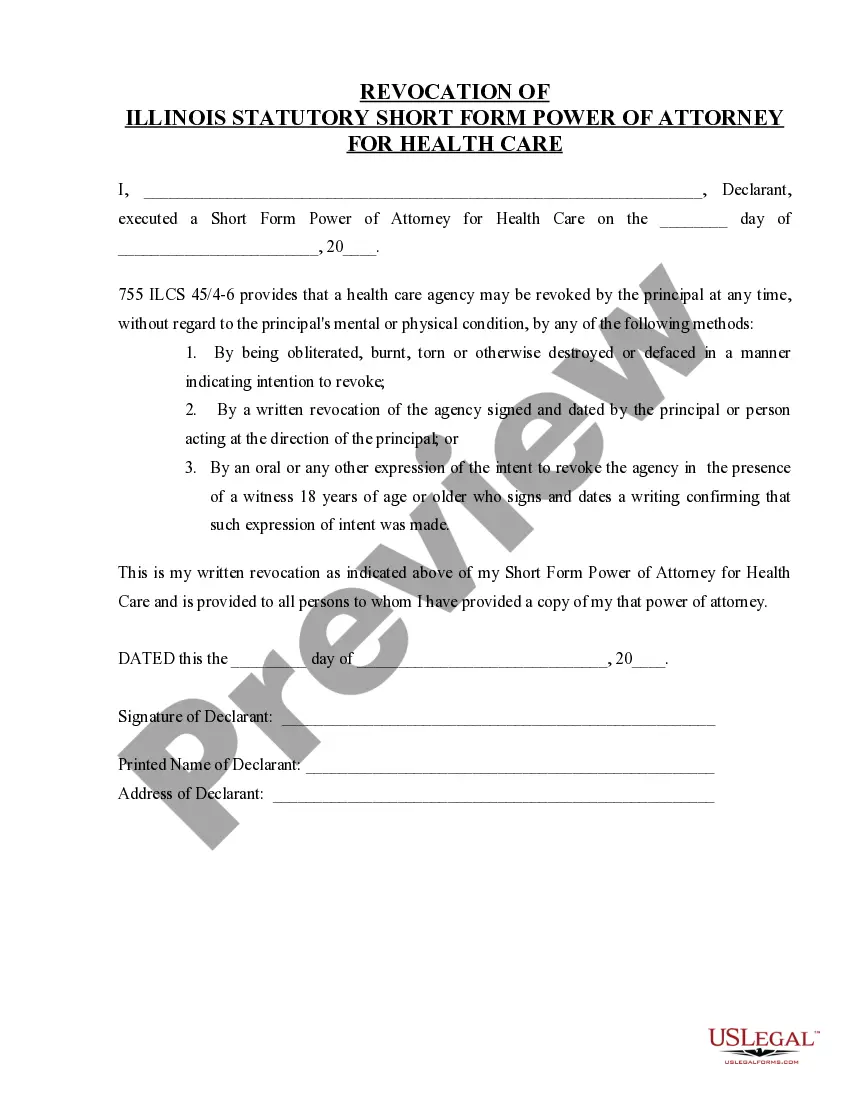
Merger Agreement for Type A Reorganization
About this form
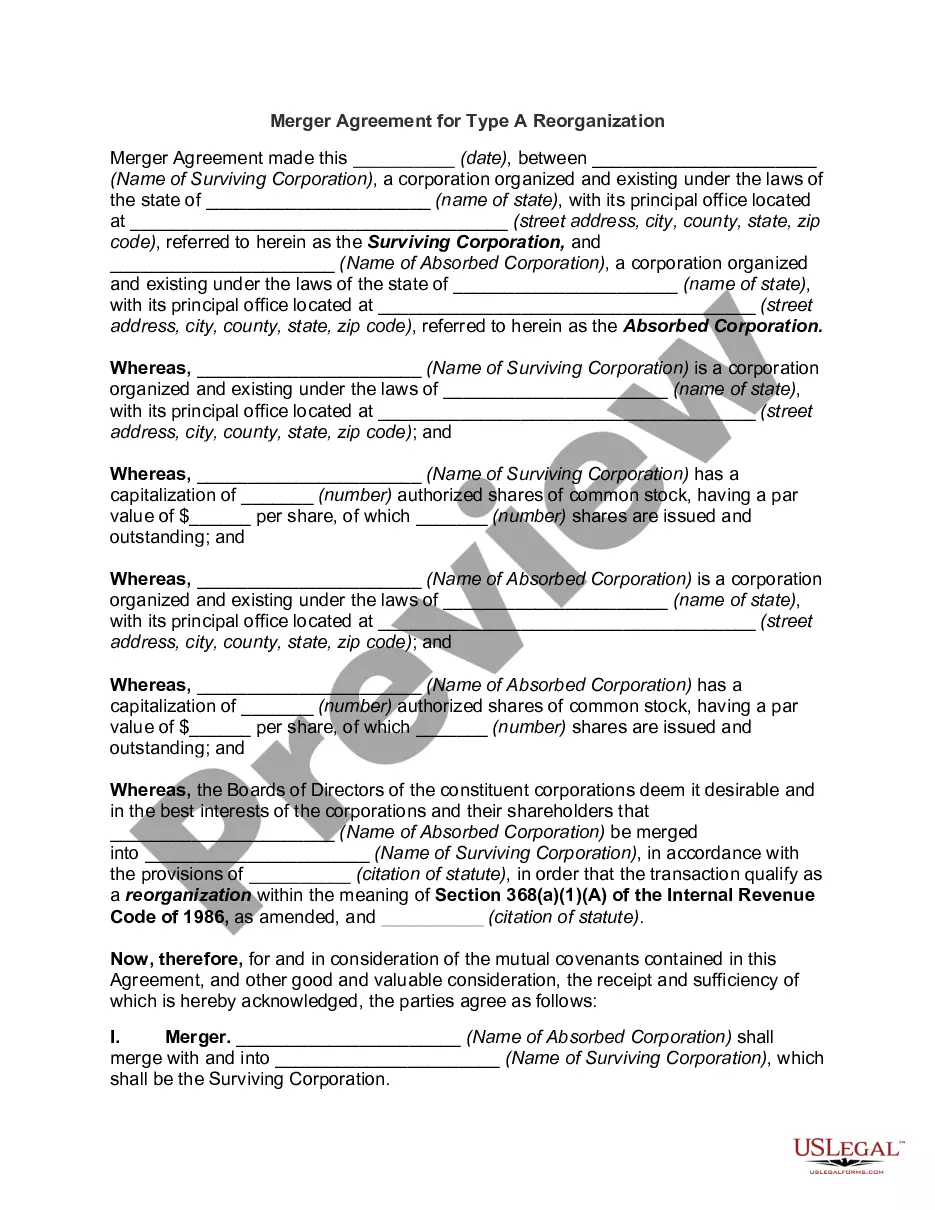
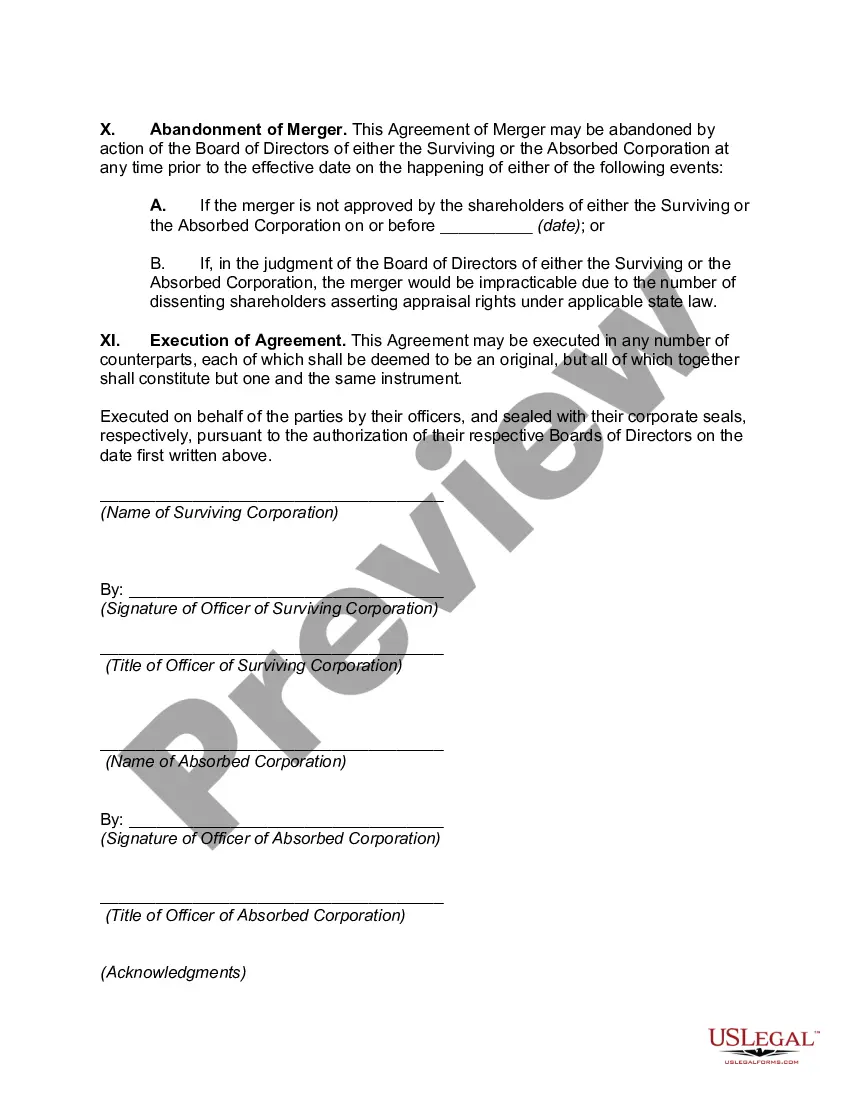
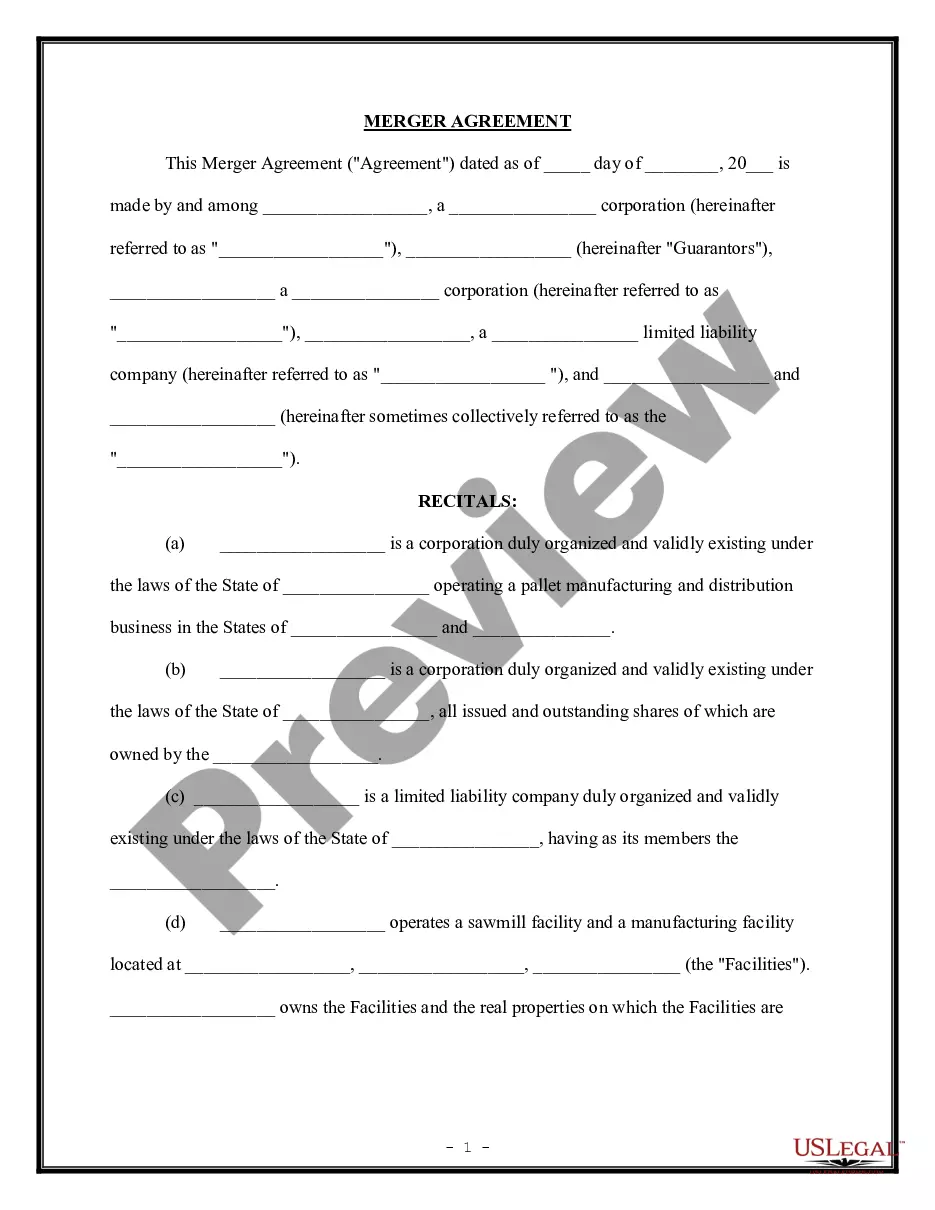
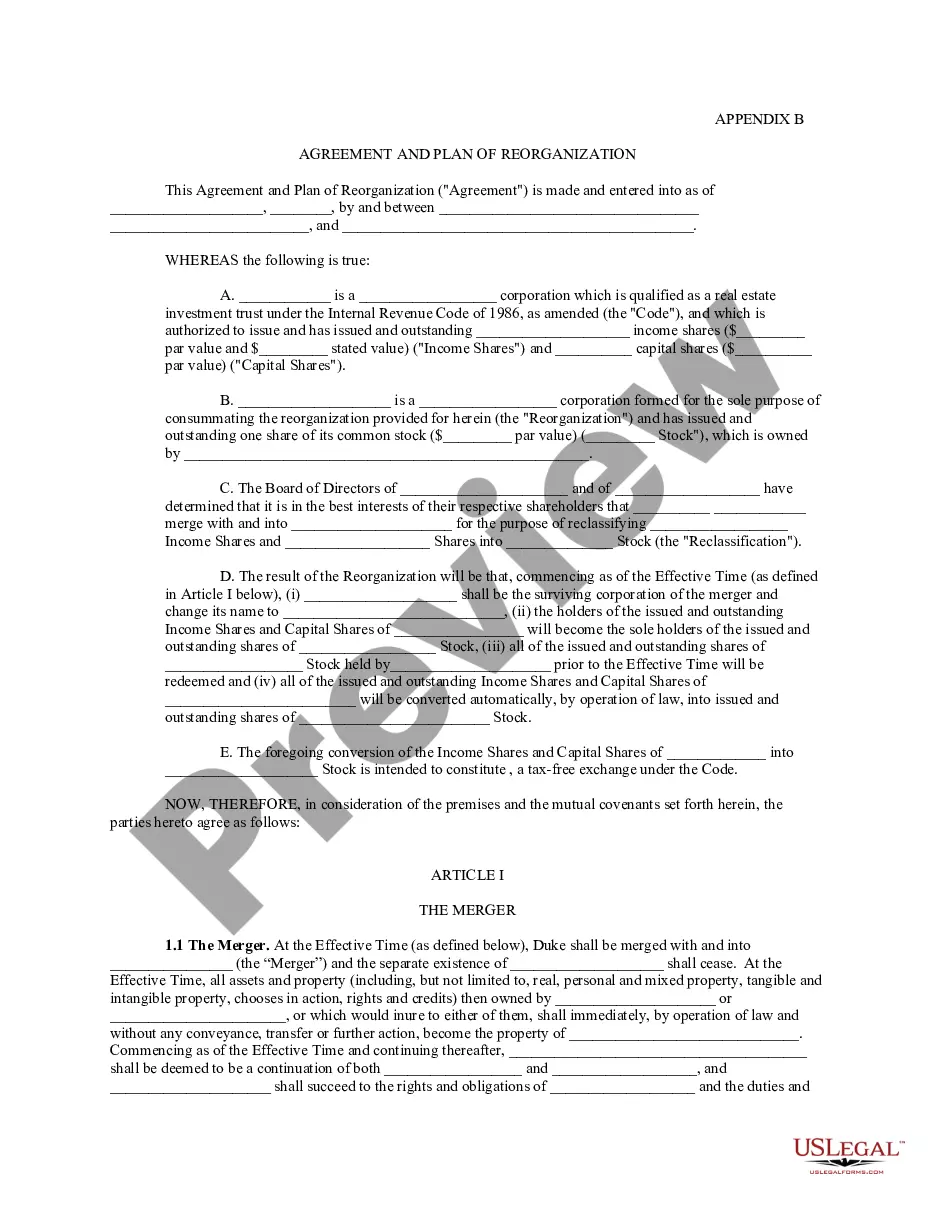
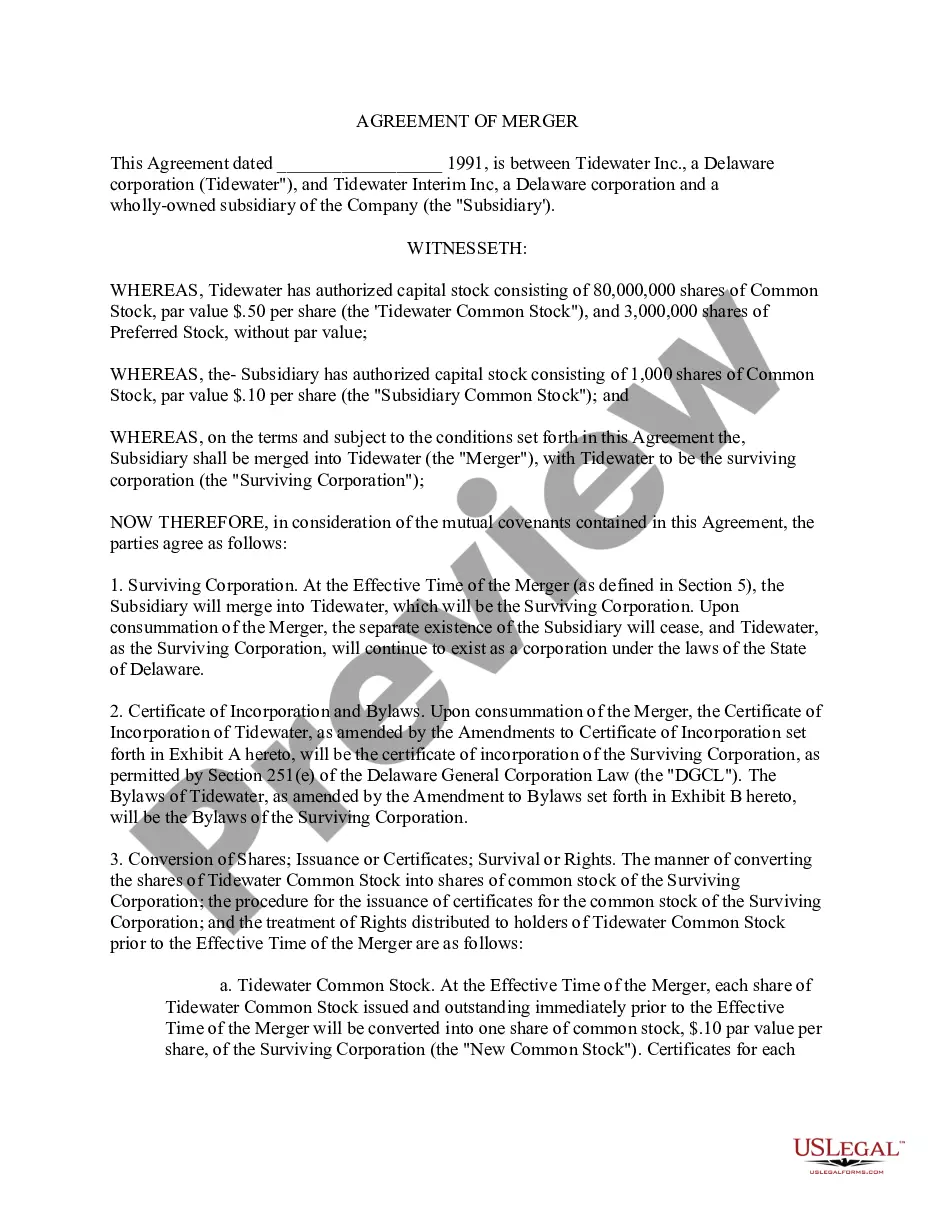
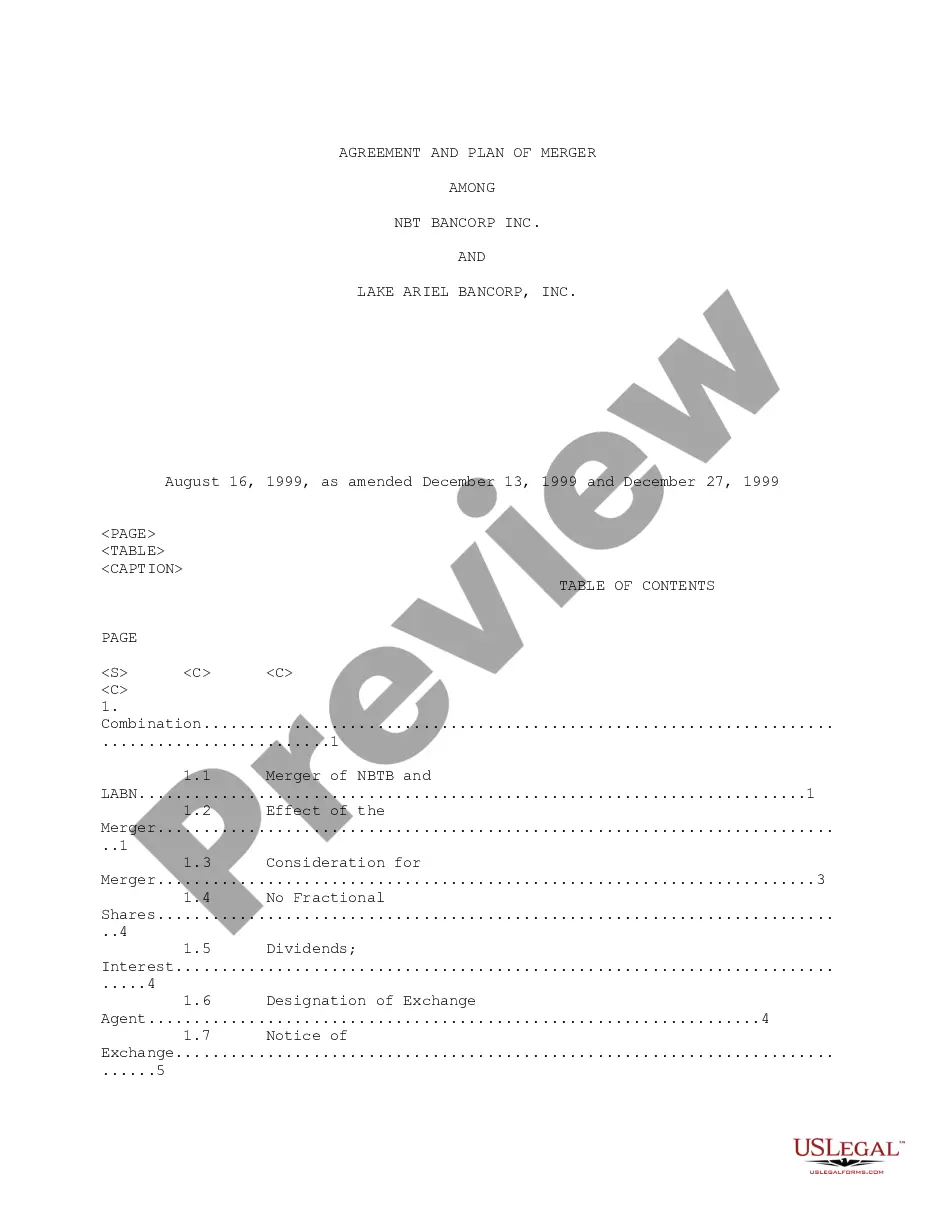
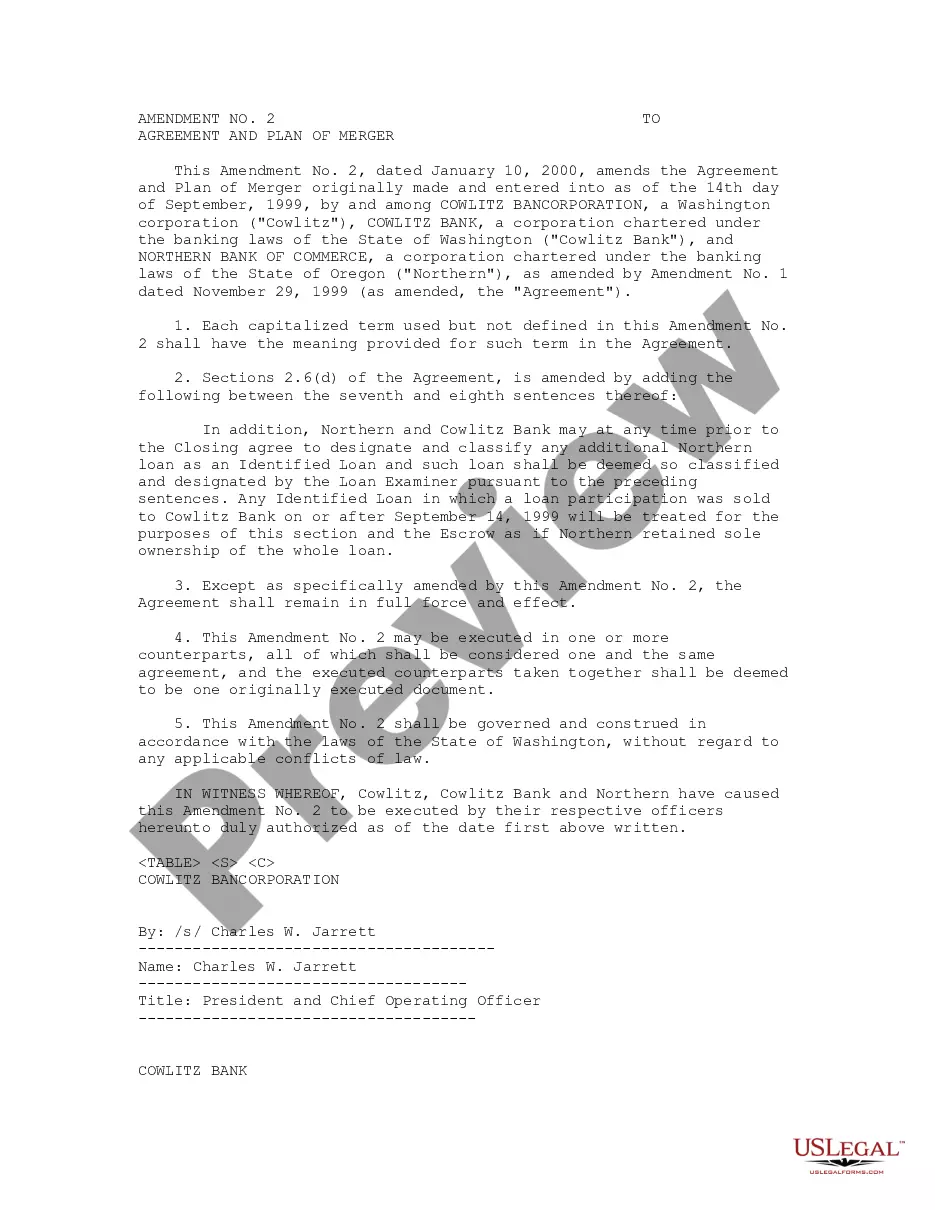
The Merger Agreement for Type A Reorganization is a legal document that establishes the terms under which one corporation merges with another, with one corporation surviving the merger. This agreement outlines the rights and obligations of both the surviving and absorbed corporations, ensuring that all legal prerequisites are met for the merger to qualify under applicable laws, particularly the Internal Revenue Code. Unlike general merger agreements, this specific form is tailored for Type A reorganizations, which have distinct regulatory and tax implications.
Form components explained
- Identification of the surviving and absorbed corporations
- Details of the merger terms and conditions
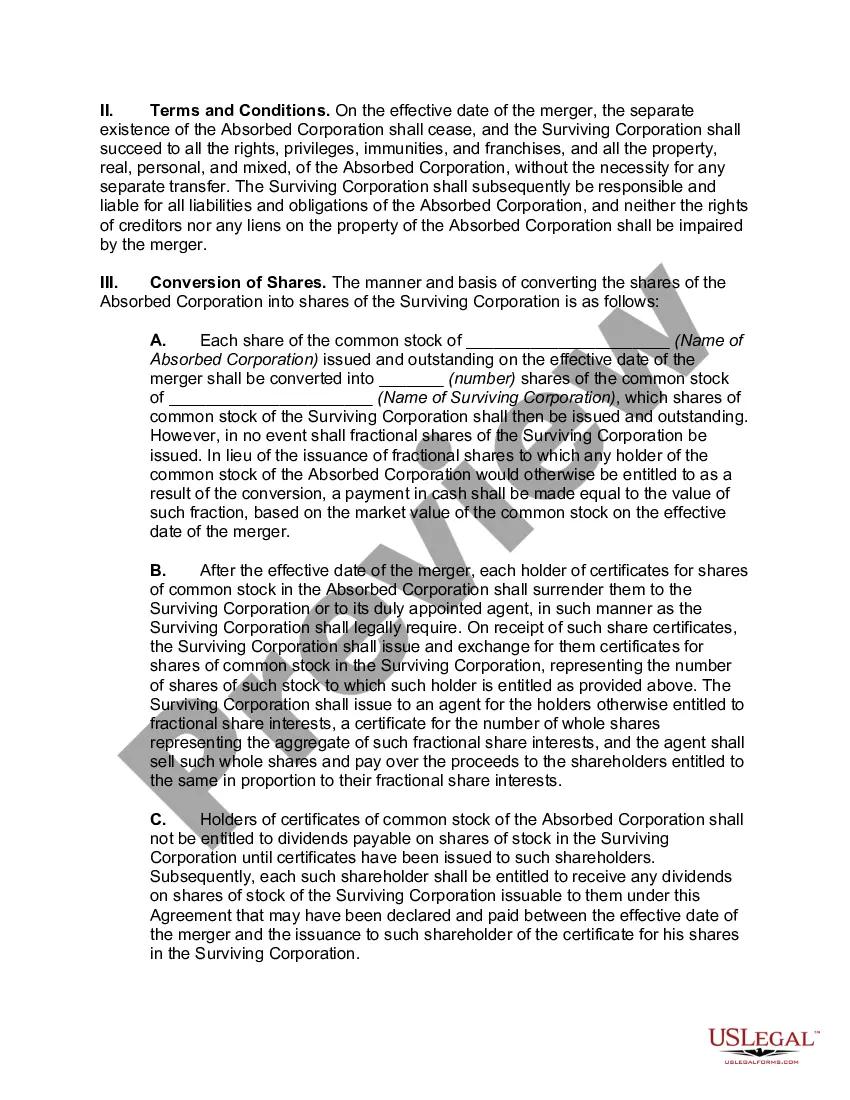
- Conversion of shares between the two corporations
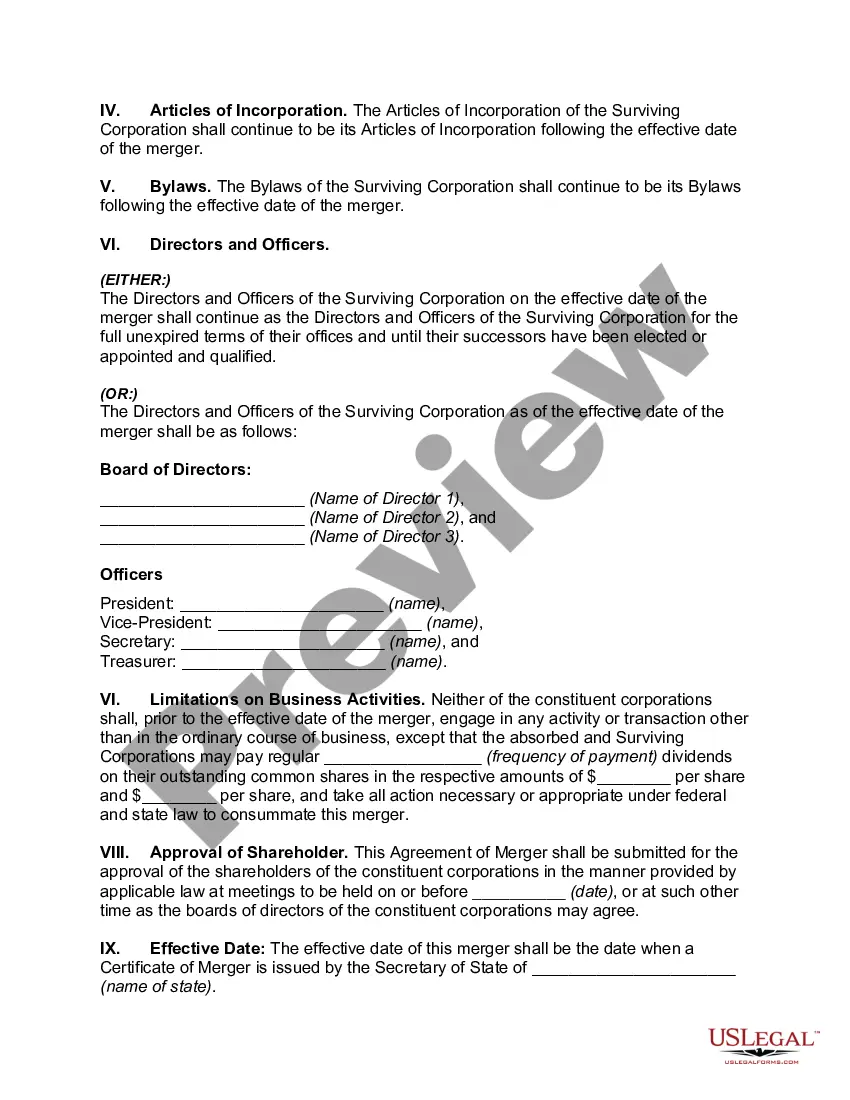
- Provisions for the directors and officers post-merger
- Approval process by the shareholders
- Effective date of the merger
When to use this form
This form should be used when two corporations agree to merge under a Type A reorganization. It is particularly applicable when the merger is deemed beneficial for shareholders and aligns with legal frameworks for corporate consolidations. Typical scenarios include corporate growth strategies, tax planning efforts, or when a corporation seeks to streamline operations by merging with a complementary business.
Who this form is for
This form is intended for:
- Corporations looking to merge with another corporation.
- Corporate legal teams working on merger agreements.
- Business owners and shareholders involved in the merger decision-making process.
- Attorneys specializing in corporate law and reorganization.
Steps to complete this form
- Identify the parties involved, including the names and addresses of the surviving and absorbed corporations.
- Fill in the details of capitalization for both corporations, including authorized shares and par values.
- Specify the terms of the merger, including how shares will be converted and any provisions for directors and officers.
- Obtain the necessary approvals from shareholders as outlined in the agreement.
- Complete the document by having the authorized representatives sign and date the agreement.
Does this document require notarization?
This form does not typically require notarization unless specified by local law. However, it is crucial to check specific state guidelines regarding corporate merger agreements to confirm any such requirements.
Get your form ready online
Our built-in tools help you complete, sign, share, and store your documents in one place.
Make edits, fill in missing information, and update formatting in US Legal Forms—just like you would in MS Word.
Download a copy, print it, send it by email, or mail it via USPS—whatever works best for your next step.
Sign and collect signatures with our SignNow integration. Send to multiple recipients, set reminders, and more. Go Premium to unlock E-Sign.
If this form requires notarization, complete it online through a secure video call—no need to meet a notary in person or wait for an appointment.
We protect your documents and personal data by following strict security and privacy standards.

Make edits, fill in missing information, and update formatting in US Legal Forms—just like you would in MS Word.

Download a copy, print it, send it by email, or mail it via USPS—whatever works best for your next step.

Sign and collect signatures with our SignNow integration. Send to multiple recipients, set reminders, and more. Go Premium to unlock E-Sign.

If this form requires notarization, complete it online through a secure video call—no need to meet a notary in person or wait for an appointment.

We protect your documents and personal data by following strict security and privacy standards.
Avoid these common issues
- Failing to properly identify the corporations involved.
- Omitting necessary details on share conversion and compensation for fractional shares.
- Not obtaining shareholder approval before the merger is finalized.
- Forgetting to specify the effective date of the merger.
Benefits of completing this form online
- Convenient access to the form from anywhere at any time.
- Editable fields allow for customized entries specific to your merger.
- Ensures compliance with current legal standards and requirements.
- Provides instant access to necessary legal advice and information.
Looking for another form?

Form popularity
FAQ
A type B reorganization as defined in Sec. 368(a)(1)(B) occurs when a parent corporation or its controlled subsidiary acquires the stock of a target corporation solely in exchange for voting stock of the parent corporation.
During a merger, essentially other corporate entities become a part of an existing entity. This can be useful for smaller companies merging into larger companies that have greater brand recognition and market traction. Conversely, a consolidation is when multiple companies join to form a new entity.
A merger is the union of two or more corporations, with one of the corporations retaining its corporate existence and absorbing the others. The other corporations cease to exist by operation of law. A consolidation occurs when a new corporation is created to take the place of two or more corporations.
A merger is a statutory and contractual combination of two or more entities or companies into one while consolidation is the contractual and statutory process where two or more entities, usually companies join hands to form a completely new, more solid, and stronger entity.
What is a Type A Reorganization? Type A reorganization is a statutory merger. This is a common form of combination in the mergers and acquisitions process. or consolidation. These are mergers or consolidations effected pursuant to state corporate law. A merger is a union of two or more corporations.
The main distinction between merger and dissolution in this setting is: In a merger you become the legal successor to the other organization while a dissolution creates no direct legal tie between the organizations; you are more akin to a beneficiary or simply a grantee of whatever funds they may have remaining.
Sec. 368(a)(1)(F) provides that an F reorganization is a mere change in identity, form, or place of organization of one corporation, however effected.The underlying goal is to ensure that only one continuing corporation is involved and that the transaction is not acquisitive or divisive in nature.
Type A reorganization is a statutory merger.Usually, mergers/consolidations occur on a consensual basis where the owners/operators/management from the target business help those from the purchaser to ensure that the deal is beneficial and profitable for both parties.