Extension Agreement among Debtor, Stockholders, Creditors, Secured Creditor, and Creditors' Committee -- Subordination of Creditors' Claims
Overview of this form
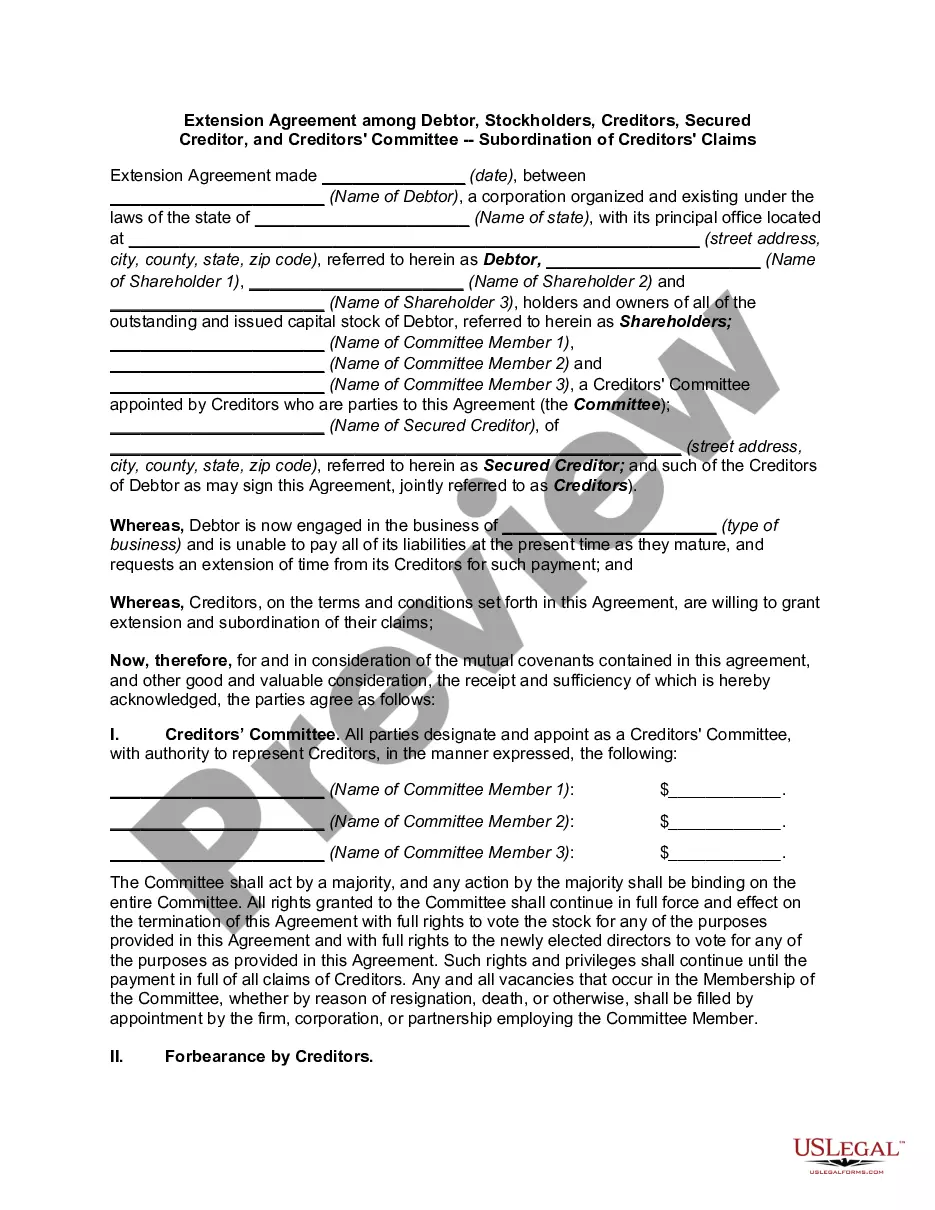
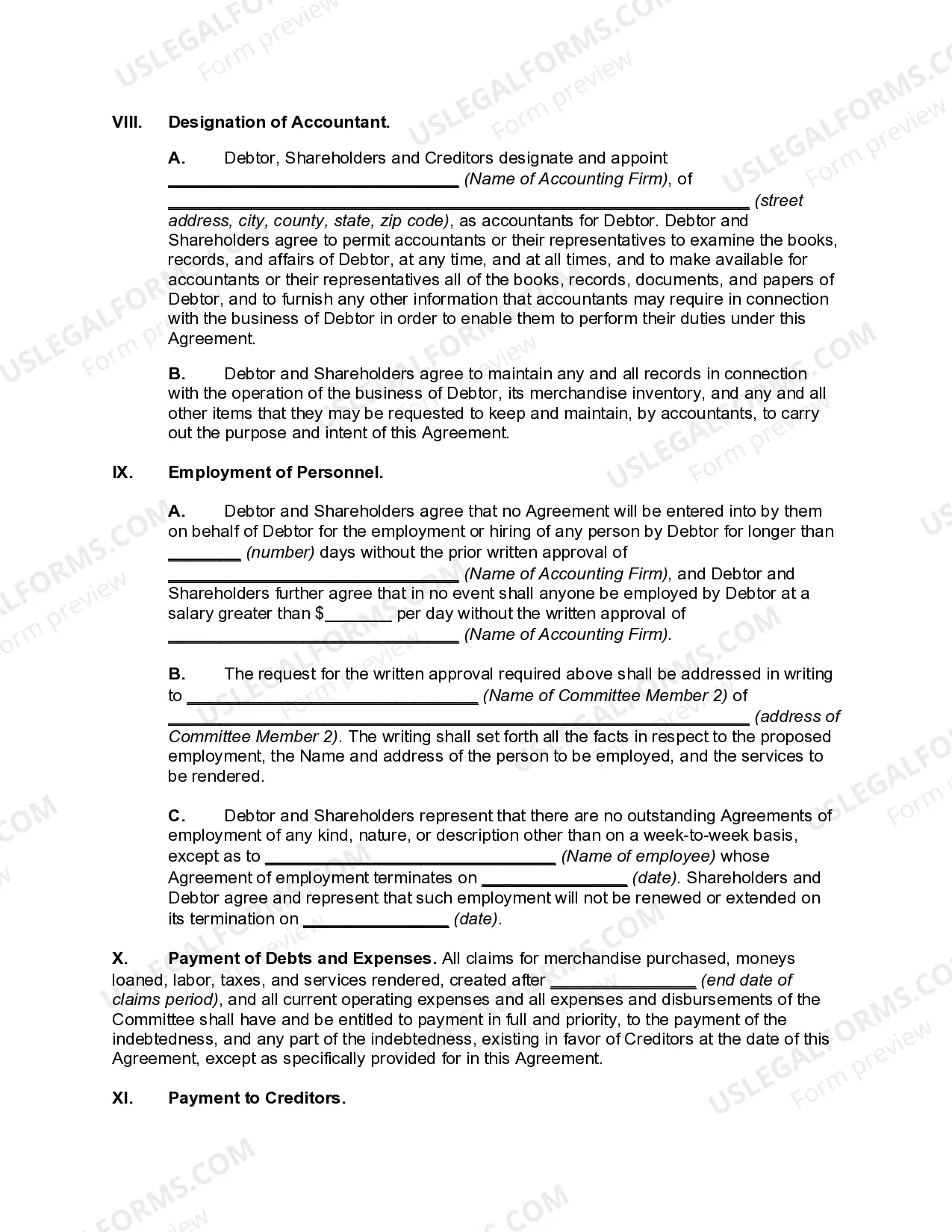
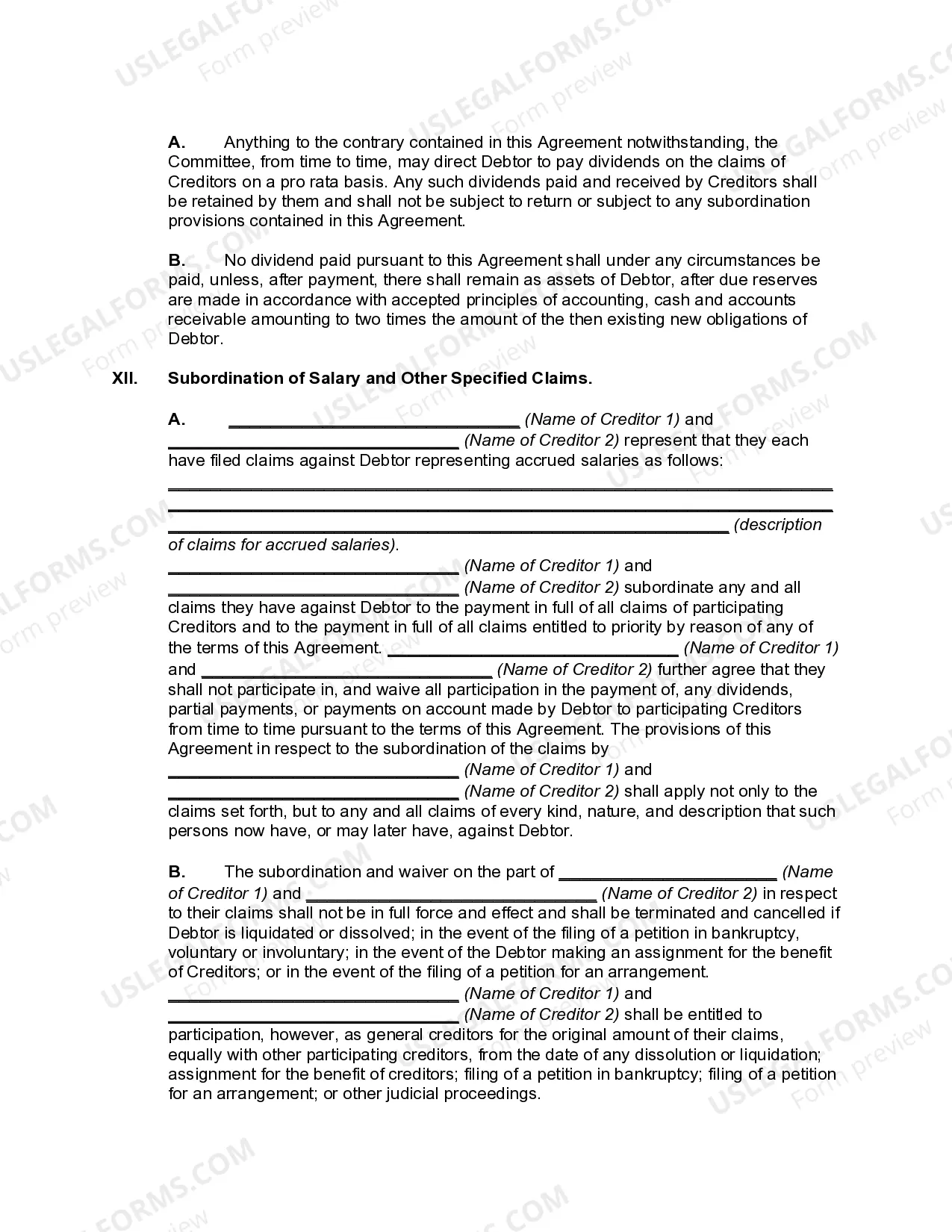
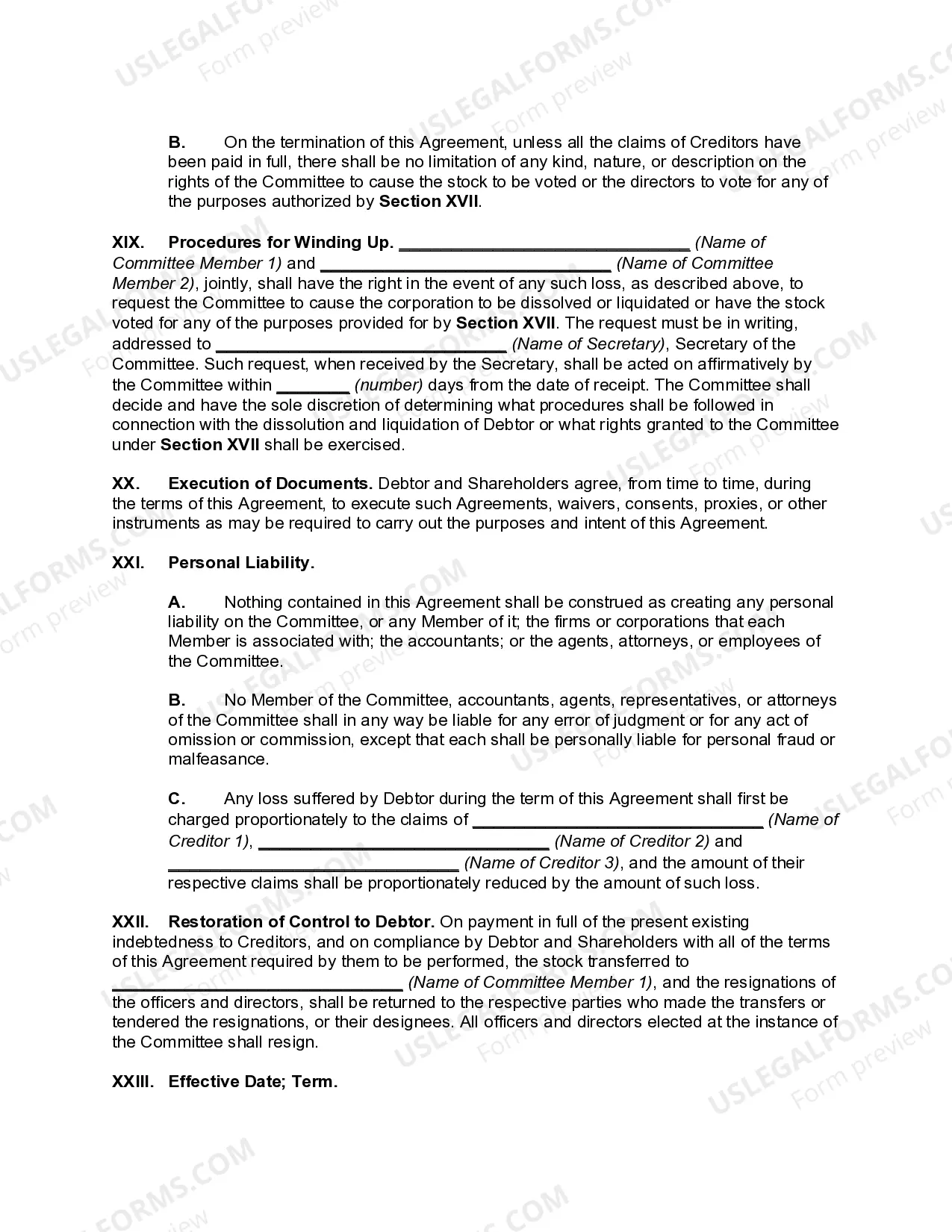
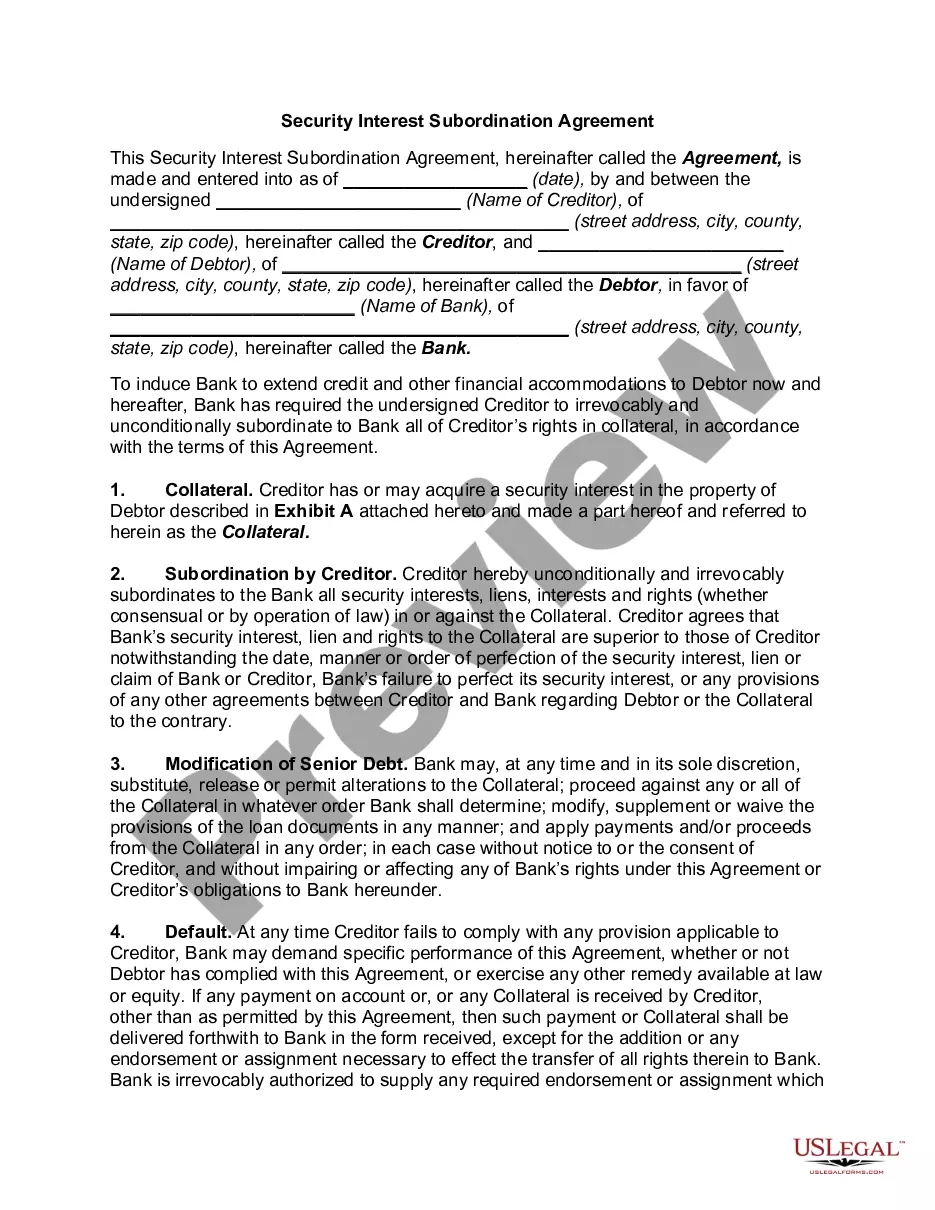
The Extension Agreement among Debtor, Stockholders, Creditors, Secured Creditor, and Creditors' Committee -- Subordination of Creditors' Claims is a legal document that outlines an agreement between a debtor and multiple creditors to restructure the payment terms on existing debts. This form allows creditors to agree to either extend payment terms or accept a compromise amount in full satisfaction of their claims, even if it's less than the total owed. Unlike traditional debt settlement agreements, this form specifically manages the rights and obligations of various parties involved in the agreement and establishes a creditors' committee to facilitate decision-making related to the debtor's business operations.
Form components explained
- Identifies the debtor, shareholders, and creditors involved in the agreement.
- Details the formation and authority of a creditors' committee to represent all creditors.
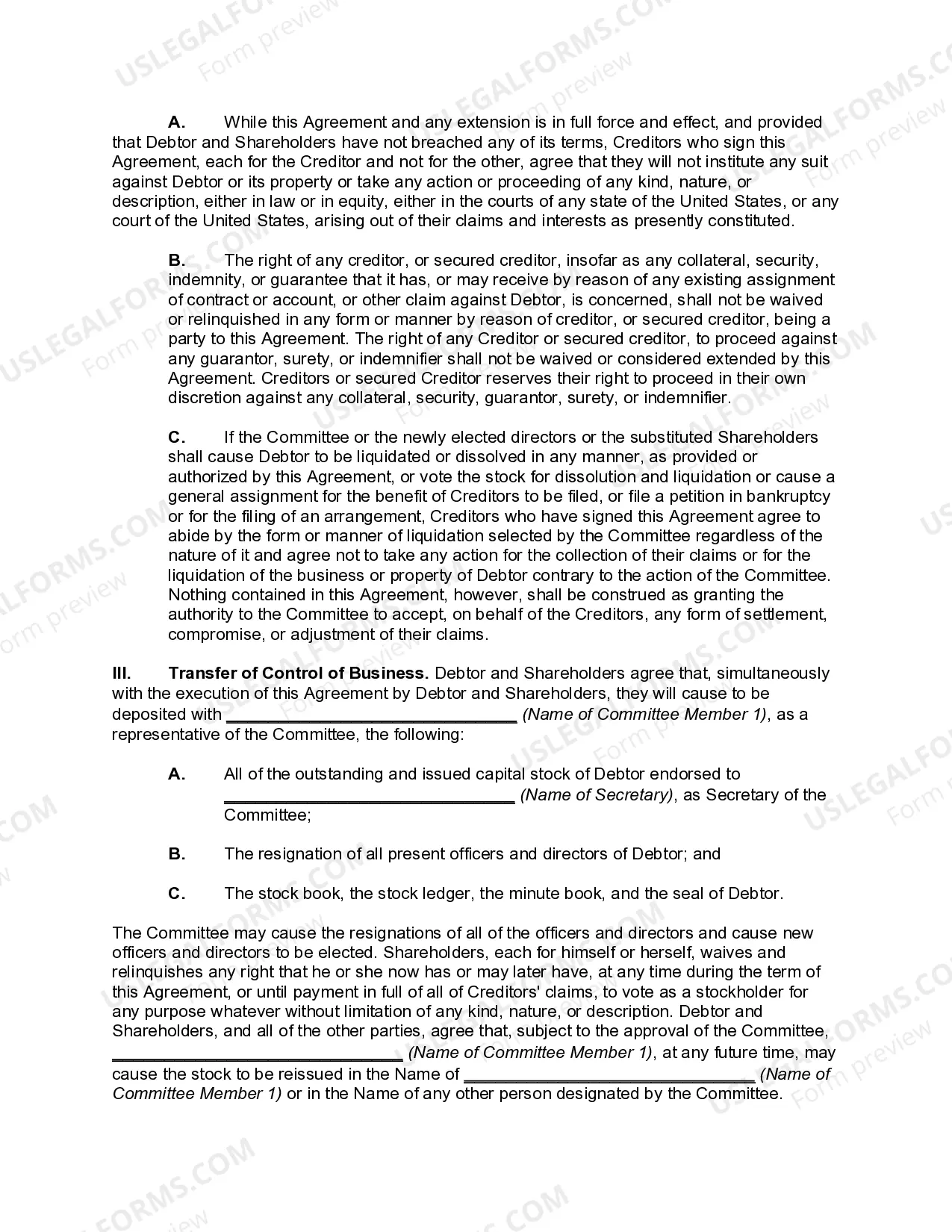
- Includes clauses on forbearance from legal action against the debtor while the agreement is in effect.
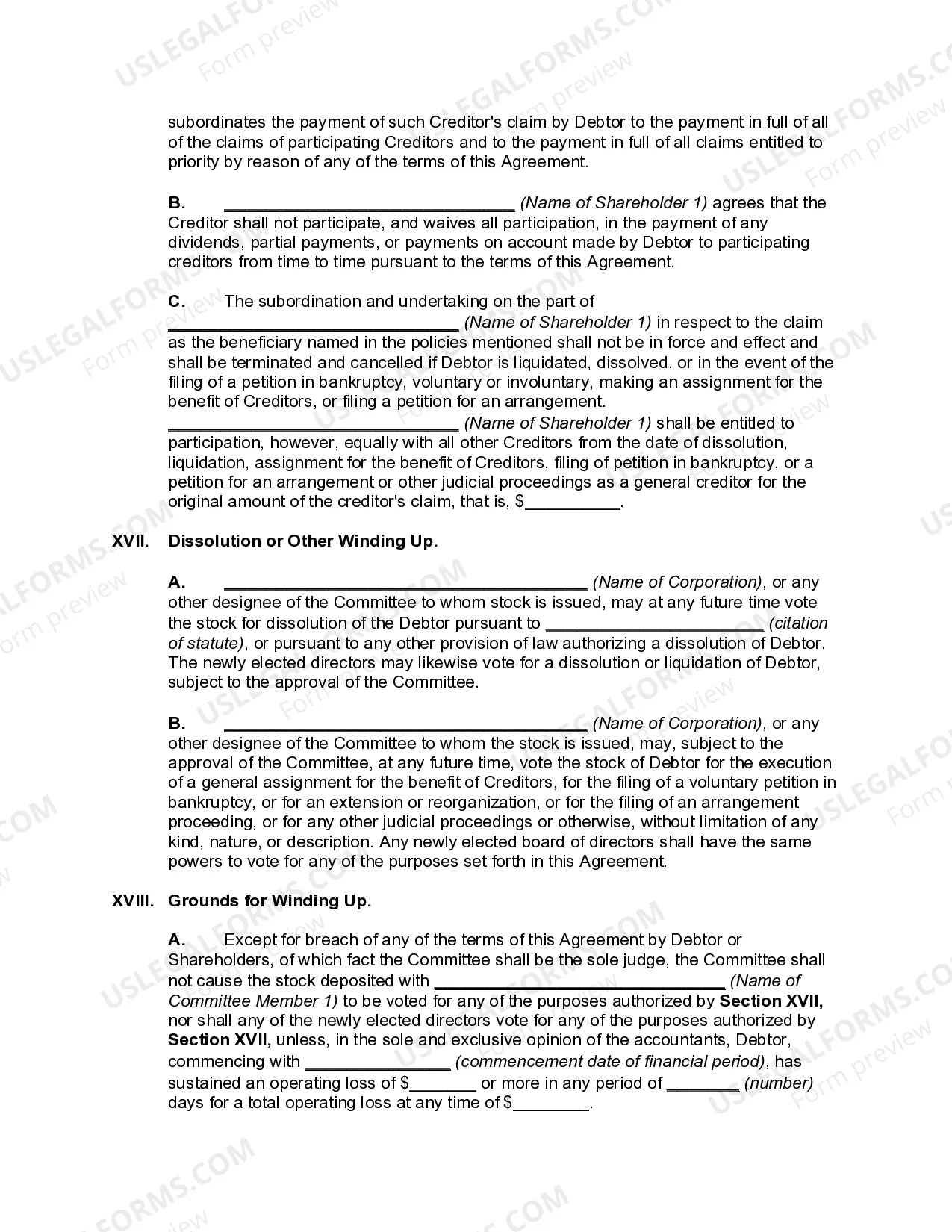
- Outlines procedures for transferring control of the business to the creditors' committee.
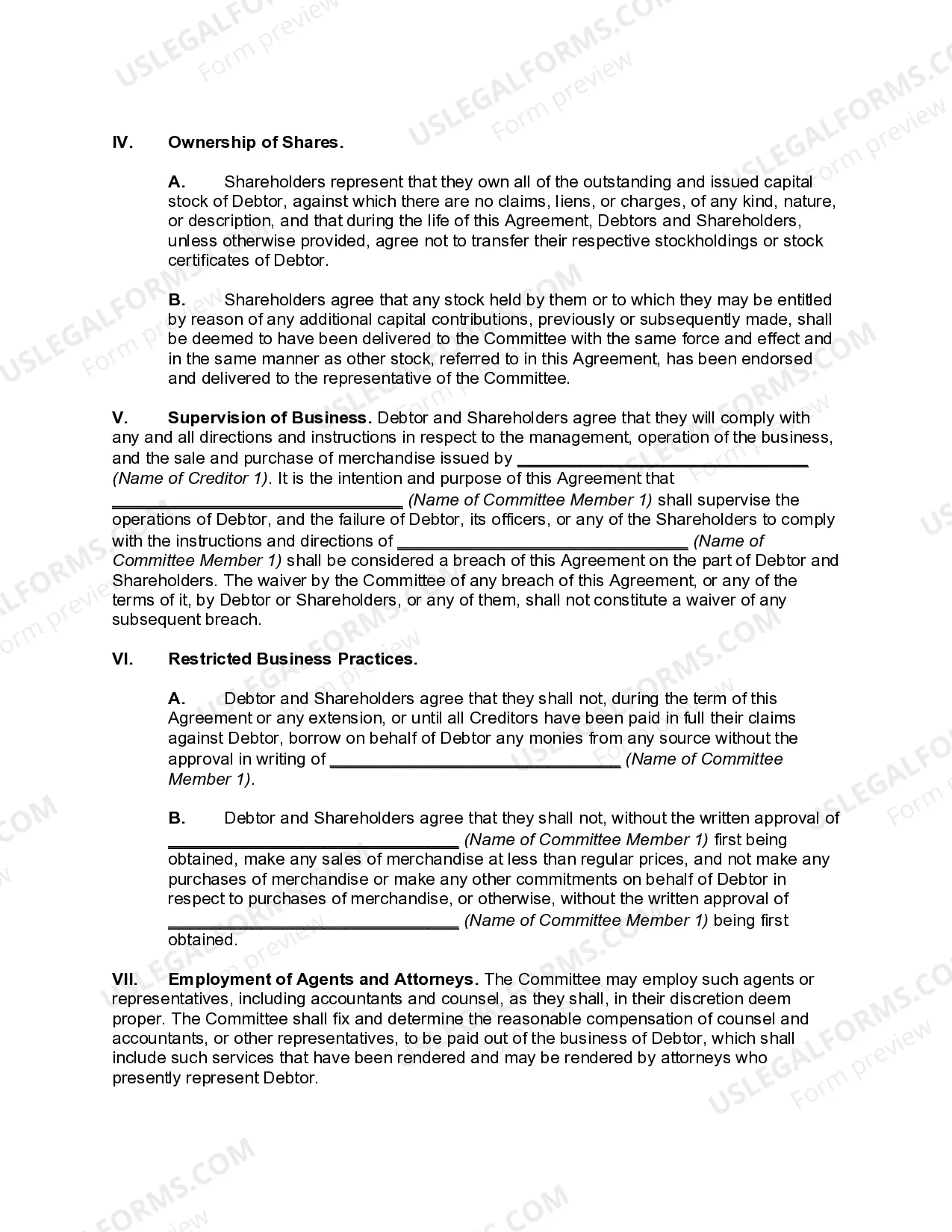
- Sets provisions for the payment of debts, including common priority rules among creditors.
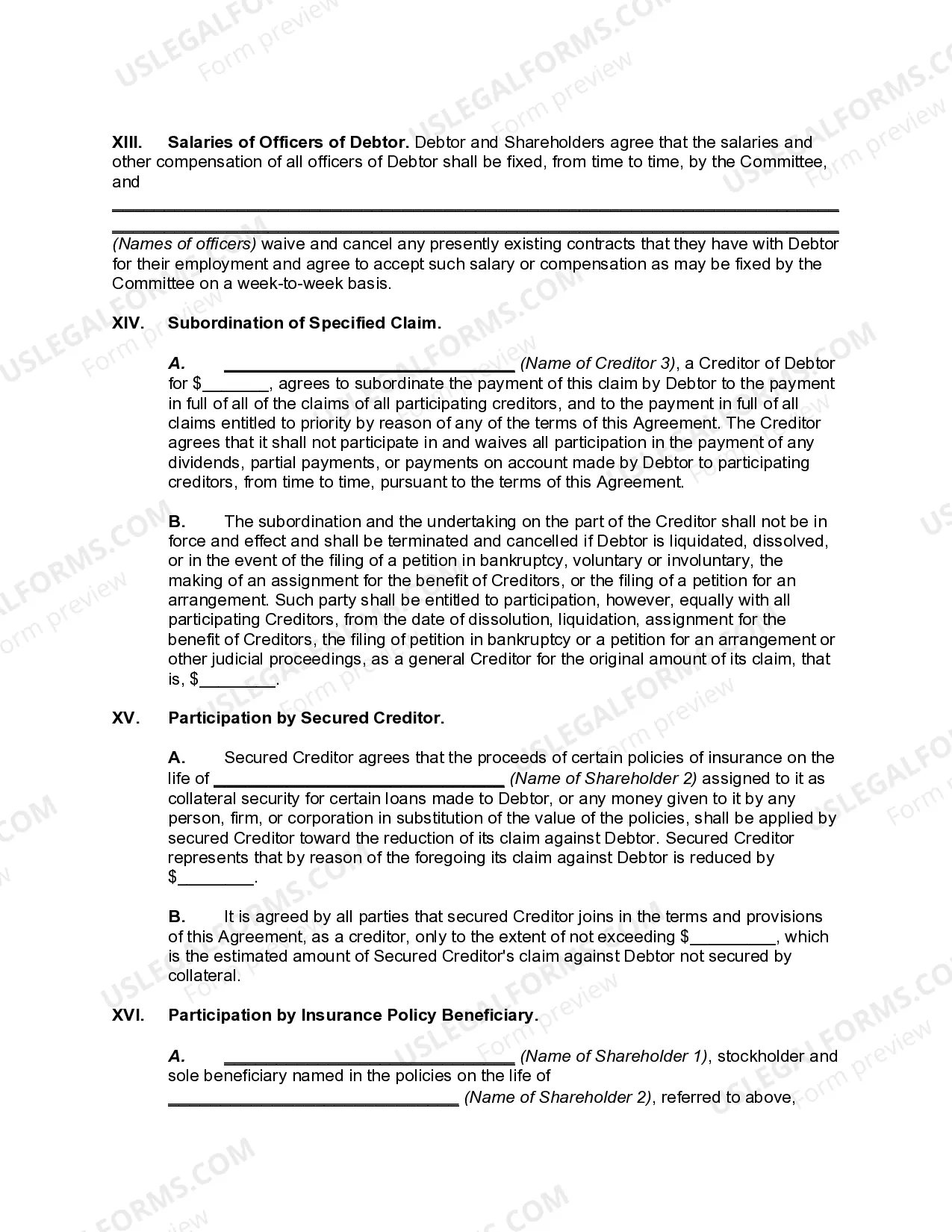
- Contains specific subordination clauses outlining the rights of creditors regarding their claims during repayment.
When this form is needed
This form is essential when a business finds itself unable to meet its financial obligations and is seeking relief from creditors. It is particularly useful in scenarios where the business is facing insolvency, and the debtor wishes to negotiate new payment terms with creditors or seeks to settle debts at a reduced amount. Utilizing this form can help avoid bankruptcy proceedings and provide a structured way to manage existing liabilities.
Who this form is for
This agreement is intended for:
- Businesses that are struggling with debt repayment and need to restructure their financial obligations.
- Creditors looking to reach an agreement on the payment terms related to their claims against a debtor.
- Shareholders who have a vested interest in the management and operational decisions regarding the debtor.
- Members of a creditors' committee tasked with managing the debtor's rehabilitation.
How to prepare this document
- Identify all the parties involved, including the debtor, shareholders, and creditors.
- Specify the date of the agreement and include the business's principal place of operation.
- Detail the terms of the extension, including the duration and conditions of payment extensions.
- Designate members of the creditors' committee and outline their authority to act on behalf of all creditors.
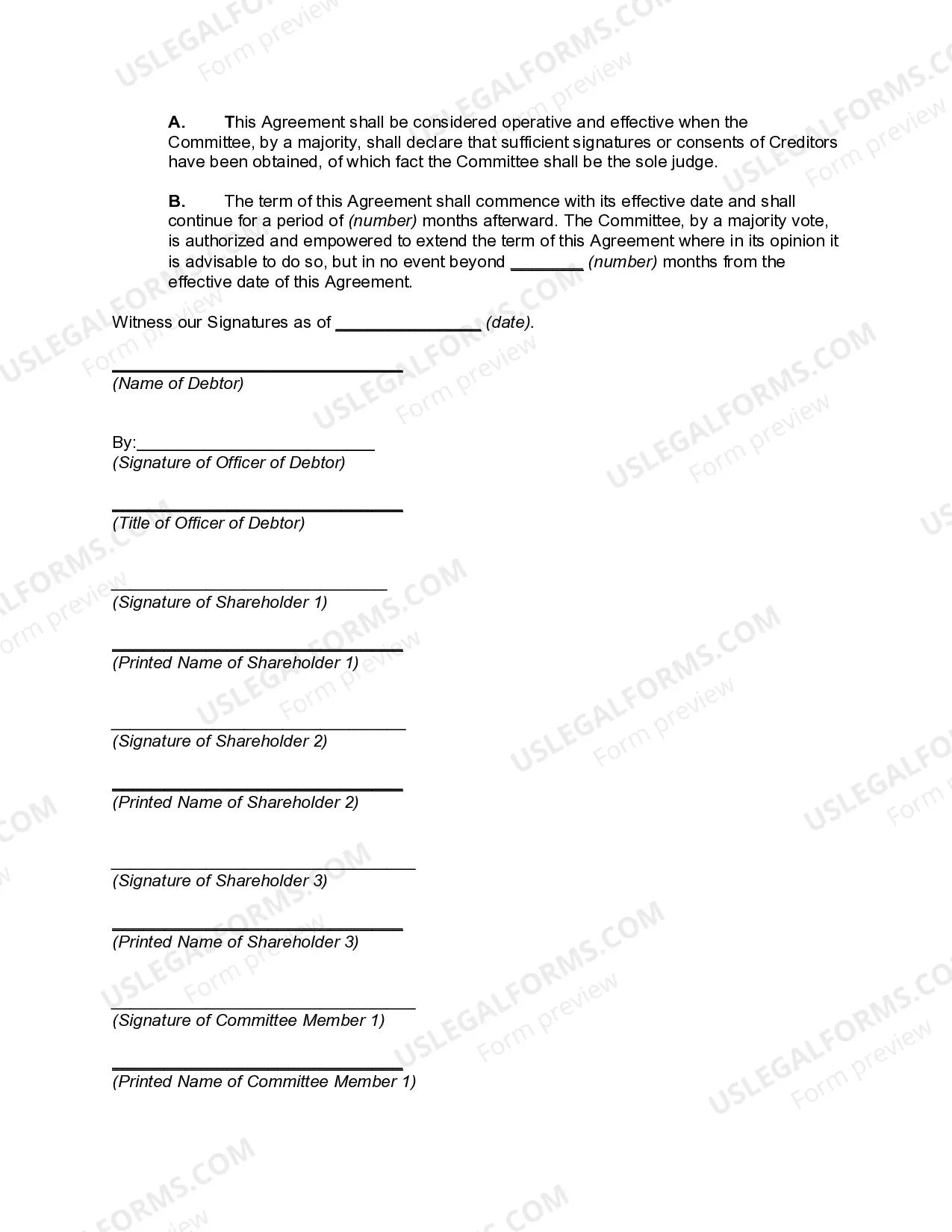
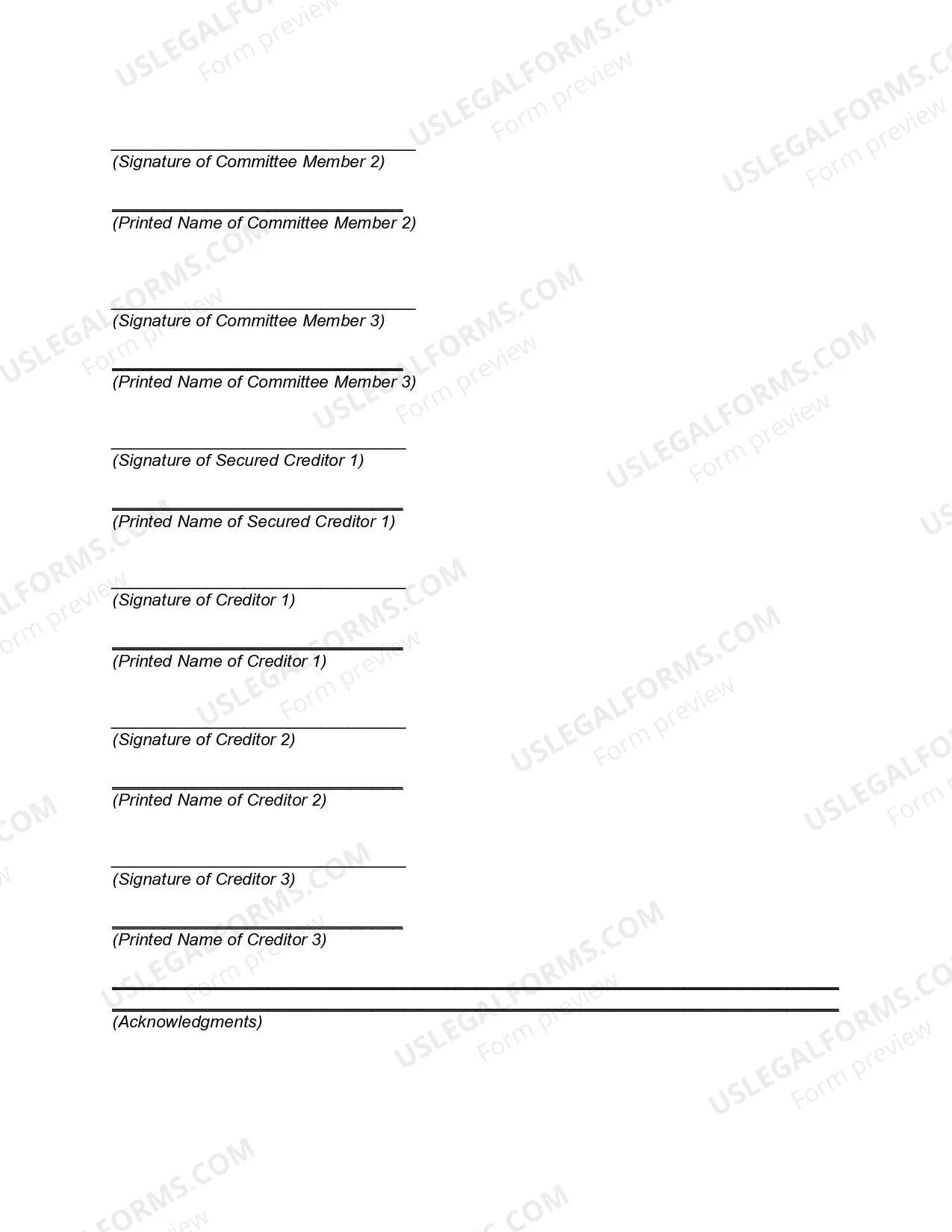
- Ensure all parties sign the agreement, indicating their acceptance of the terms.
Does this document require notarization?
Notarization is generally not required for this form. However, certain states or situations might demand it. You can complete notarization online through US Legal Forms, powered by Notarize, using a verified video call available anytime.
Get your form ready online
Our built-in tools help you complete, sign, share, and store your documents in one place.
Make edits, fill in missing information, and update formatting in US Legal Forms—just like you would in MS Word.
Download a copy, print it, send it by email, or mail it via USPS—whatever works best for your next step.
Sign and collect signatures with our SignNow integration. Send to multiple recipients, set reminders, and more. Go Premium to unlock E-Sign.
If this form requires notarization, complete it online through a secure video call—no need to meet a notary in person or wait for an appointment.
We protect your documents and personal data by following strict security and privacy standards.

Make edits, fill in missing information, and update formatting in US Legal Forms—just like you would in MS Word.

Download a copy, print it, send it by email, or mail it via USPS—whatever works best for your next step.

Sign and collect signatures with our SignNow integration. Send to multiple recipients, set reminders, and more. Go Premium to unlock E-Sign.

If this form requires notarization, complete it online through a secure video call—no need to meet a notary in person or wait for an appointment.

We protect your documents and personal data by following strict security and privacy standards.
Mistakes to watch out for
- Failing to include all necessary parties, which can lead to disputes during implementation.
- Neglecting to specify a clear timeline for payments, which can cause confusion later.
- Not consulting legal counsel, leading to potential non-compliance with state laws.
Benefits of completing this form online
- Convenient access to a professionally drafted legal document that is ready to use.
- Edit and customize the form easily to fit specific circumstances without legal fees.
- Instant download for immediate use, saving time compared to traditional legal services.
Looking for another form?

Form popularity
FAQ
Debtors are shown as assets in the balance sheet under the current assets section, while creditors are shown as liabilities in the balance sheet under the current liabilities section. Debtors are an account receivable, while creditors are an account payable.
A composition agreement is an out-of-court contract between a debtor and multiple creditors providing for the reduction or delay in payment of amounts owed by the debtor to the creditors entering into the composition.
An Individual Voluntary Arrangement ( IVA ) is an agreement with your creditors to pay all or part of your debts.
The first type of workout between a debtor and multiple creditors is called a composition. This is an agreement between a debtor and two or more creditors that each creditor will take less than the full amount owed in settlement of the debt.
Most of our debtor-creditor relationships arise from voluntary interactions. Examples include loans of all types, credit lines and the use of credit cards. When a person purchases a car and finances the cost, the purchaser is voluntarily incurring debt.
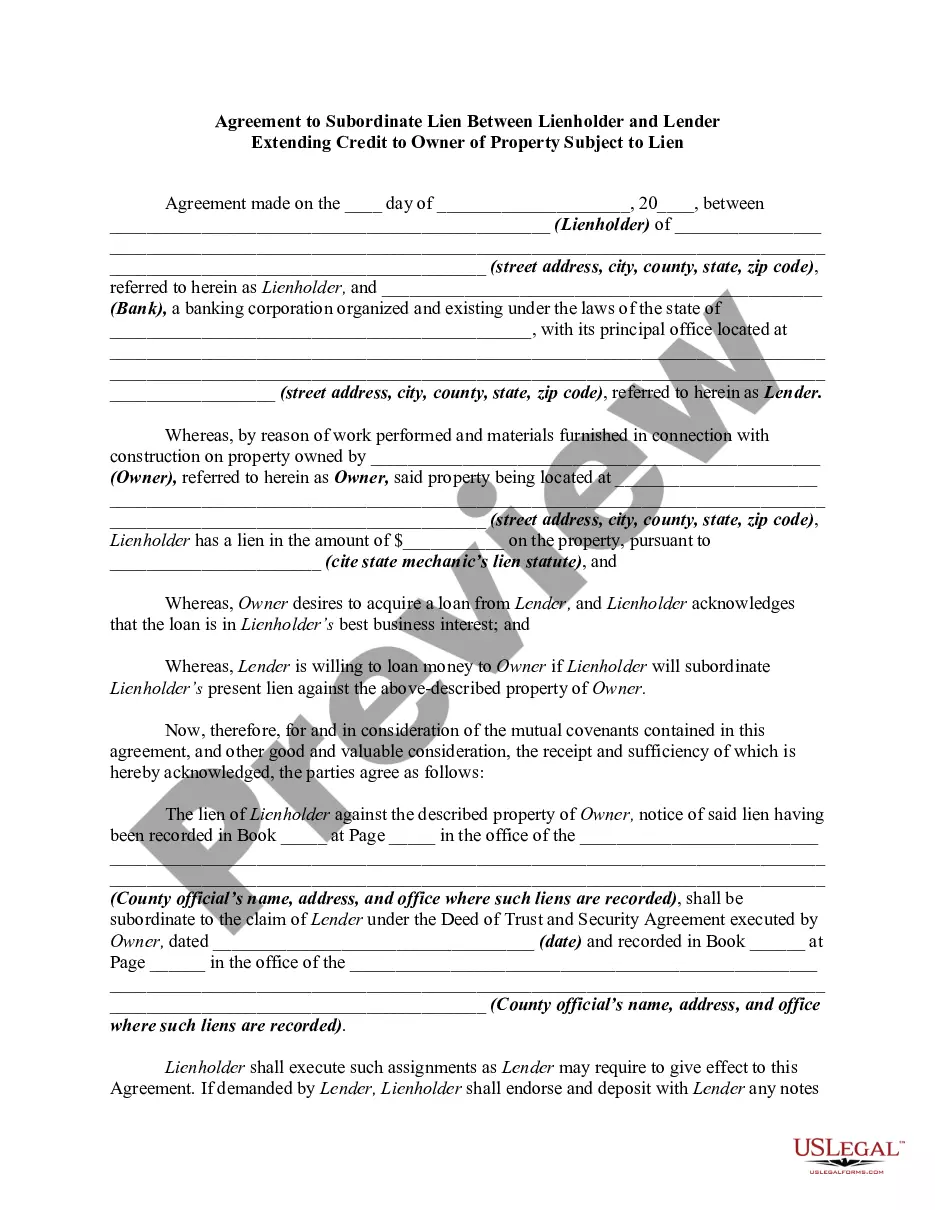
Subordination agreement is a contract which guarantees senior debt will be paid before other ?subordinated? debt if the debtor becomes bankrupt.
A debt agreement is a legal contract between a debtor and a creditor to settle outstanding debt. These agreements are used when the debtor cannot pay the full amount of debt and is facing bankruptcy. In a debt agreement, the creditor allows a debtor to negotiate down the total debt owed.