Louisiana Joint Custody Agreement
What this document covers
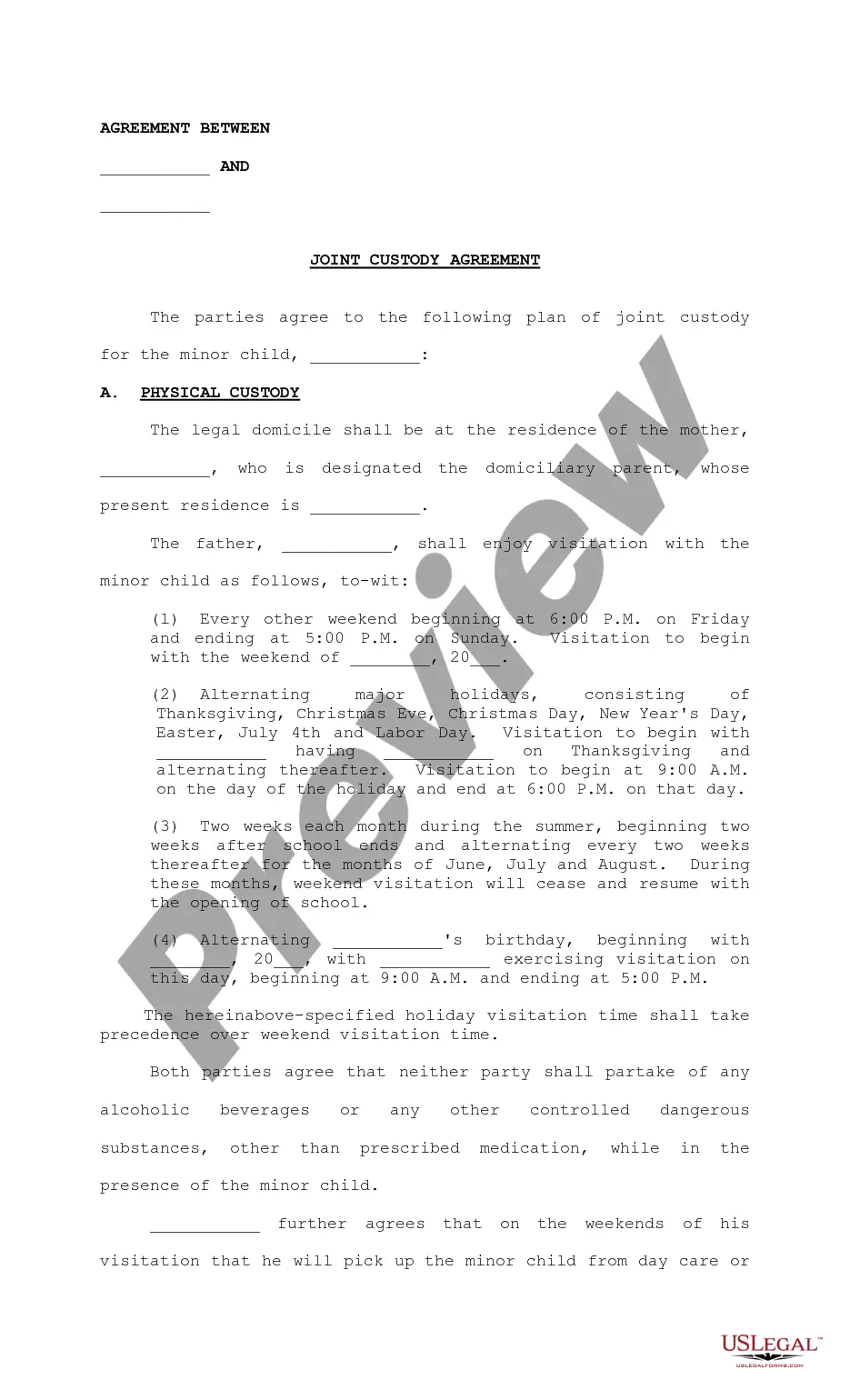
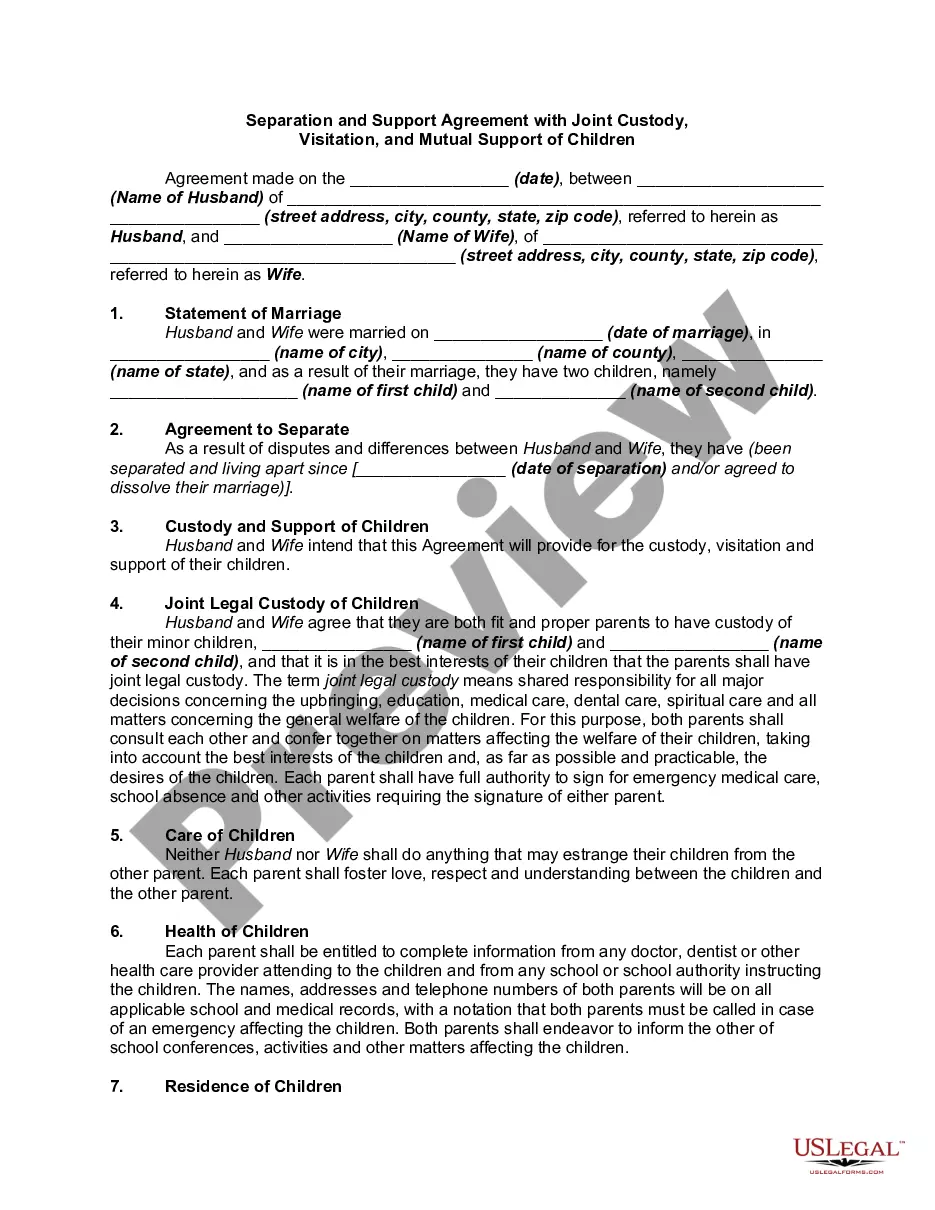
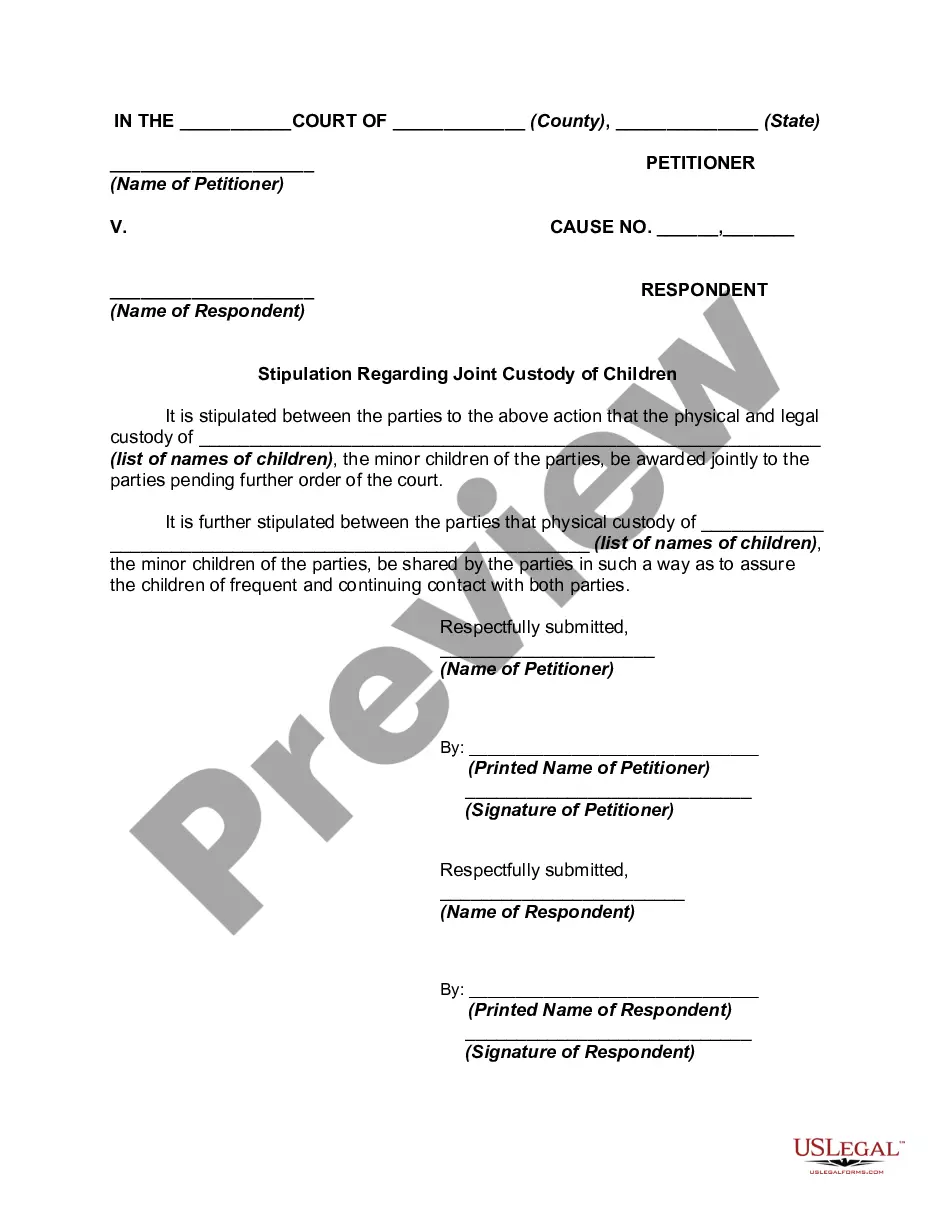
A Joint Custody Agreement is a legal document created between divorced parents to outline their parenting plan for a minor child. This form establishes the responsibilities of both parents, including visitation schedules, education decisions, and communication guidelines. Unlike a traditional custody order, this agreement emphasizes collaboration and mutual decision-making, which can help minimize conflict and create a stable environment for the child.
What’s included in this form
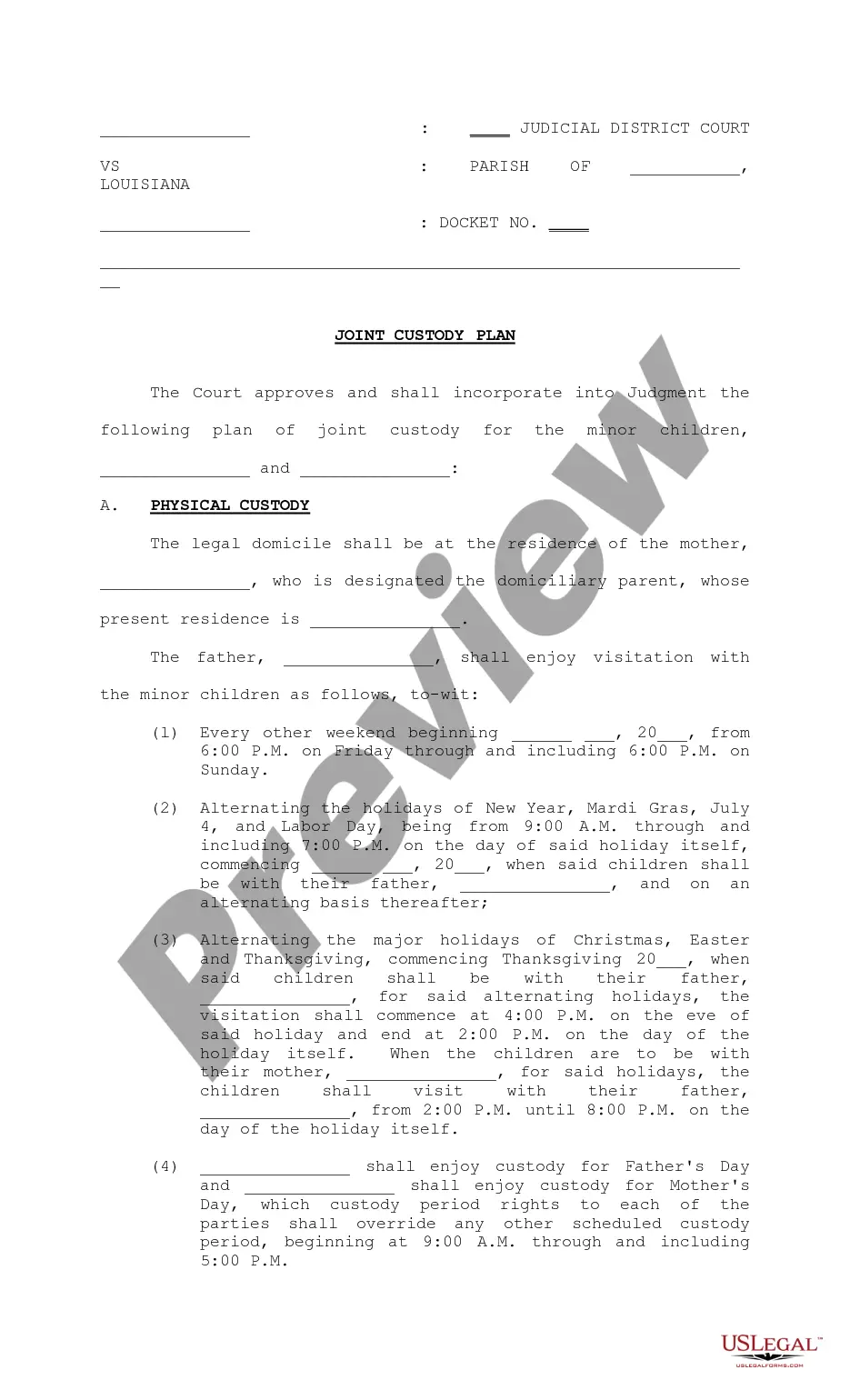
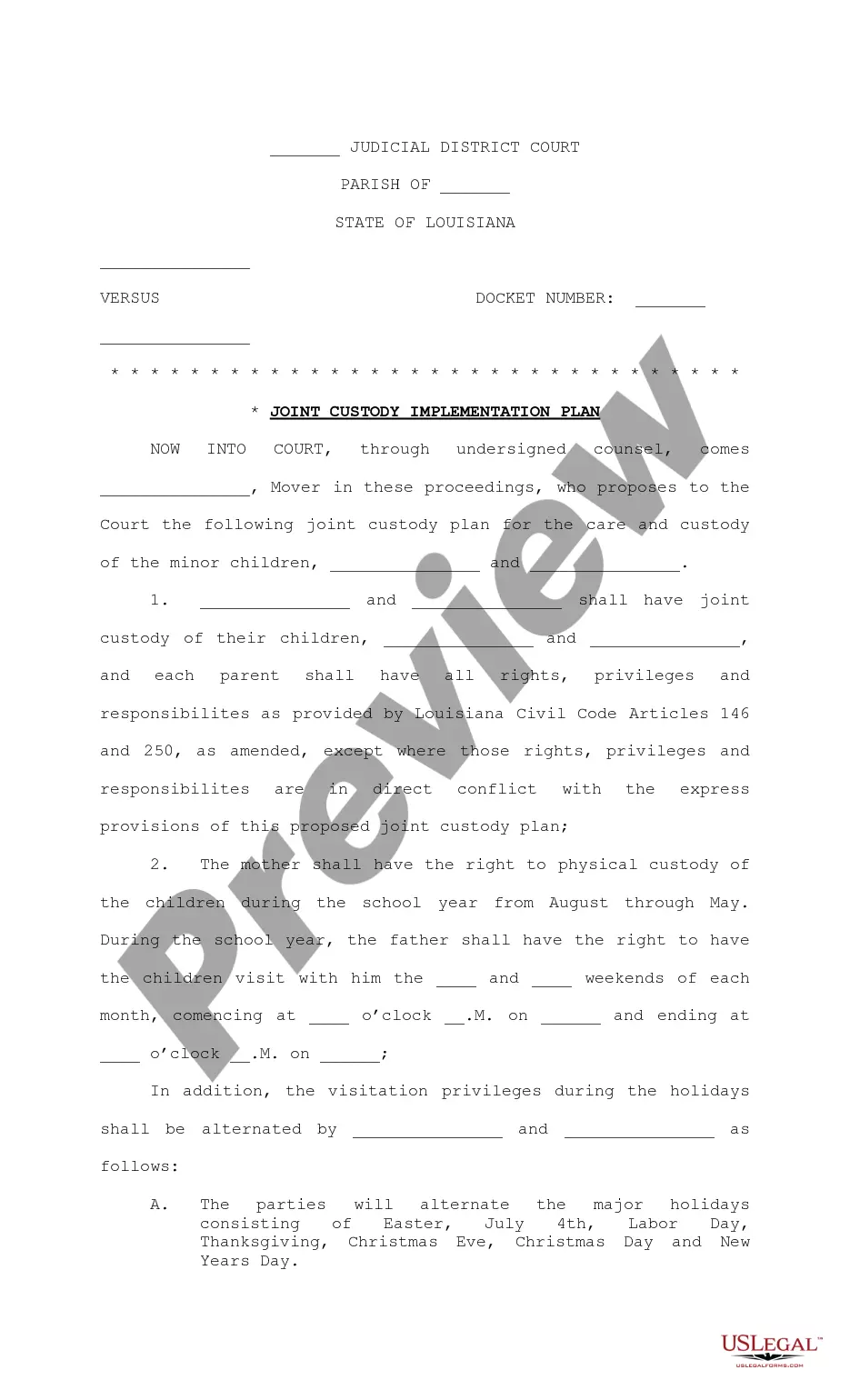
- Physical custody arrangement specifying the domiciliary parent and visitation schedule.
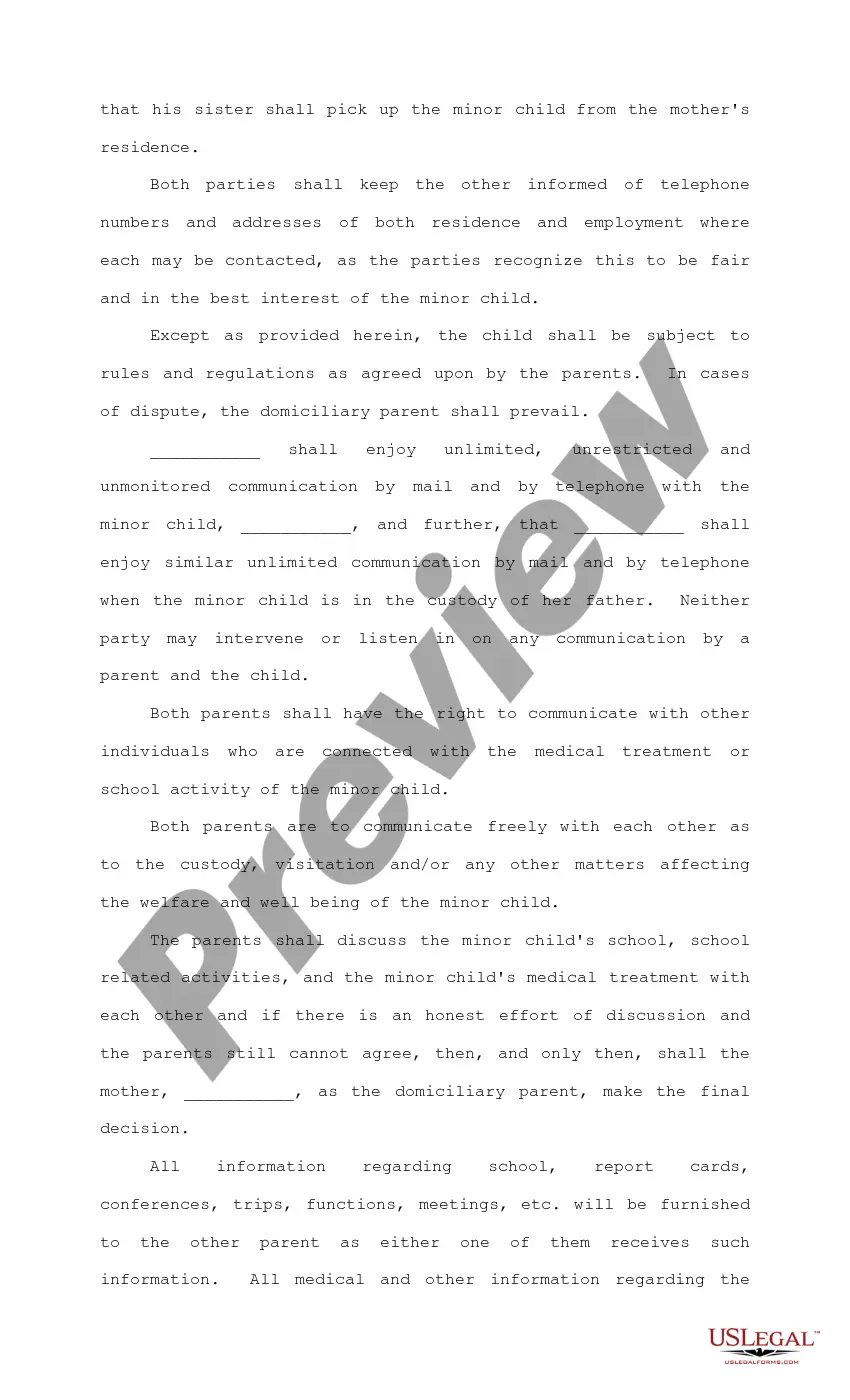
- Details on communication between parents and rights of the child to communicate freely with each parent.
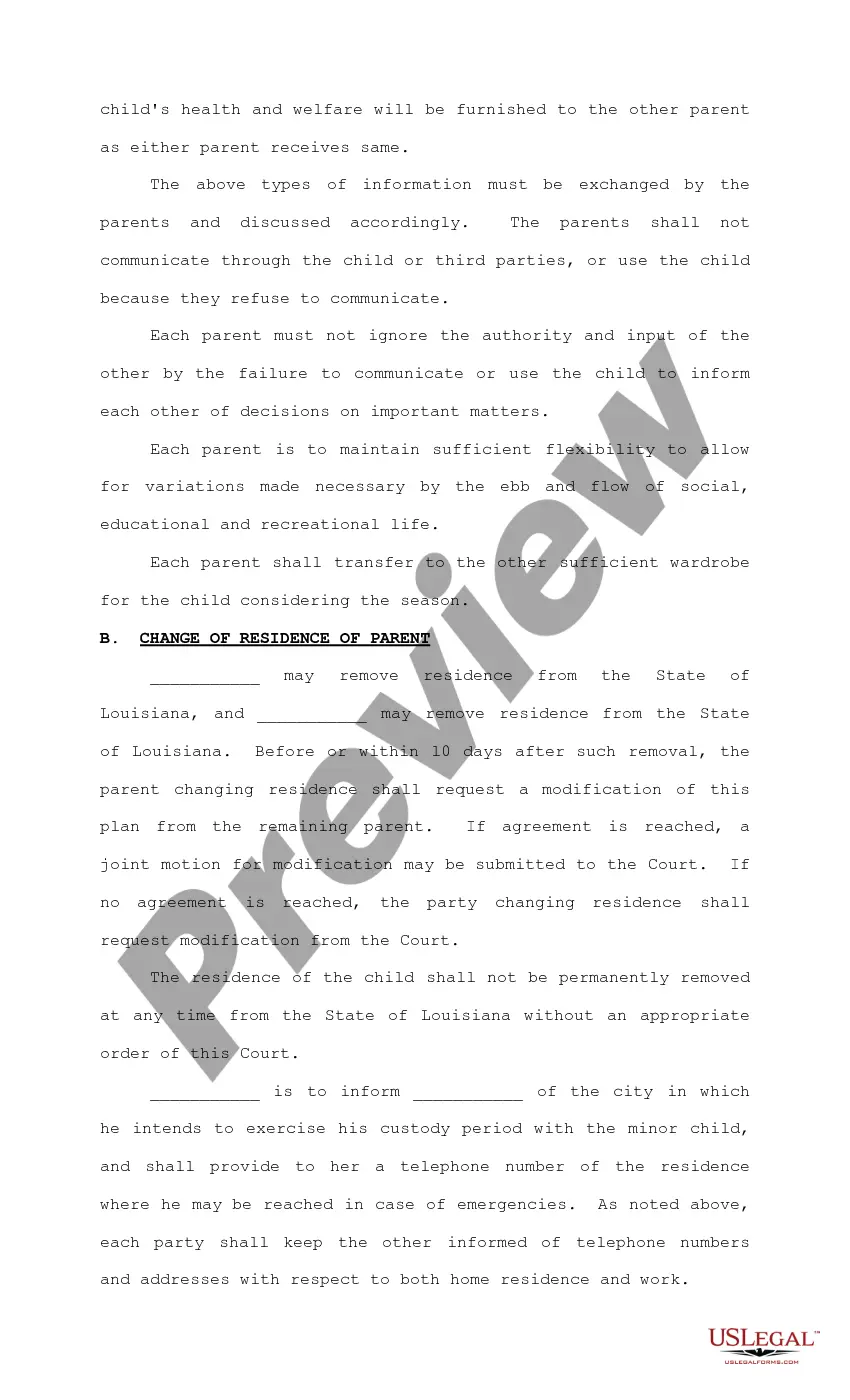
- Provisions regarding changes of residence and modifications to the custody agreement.
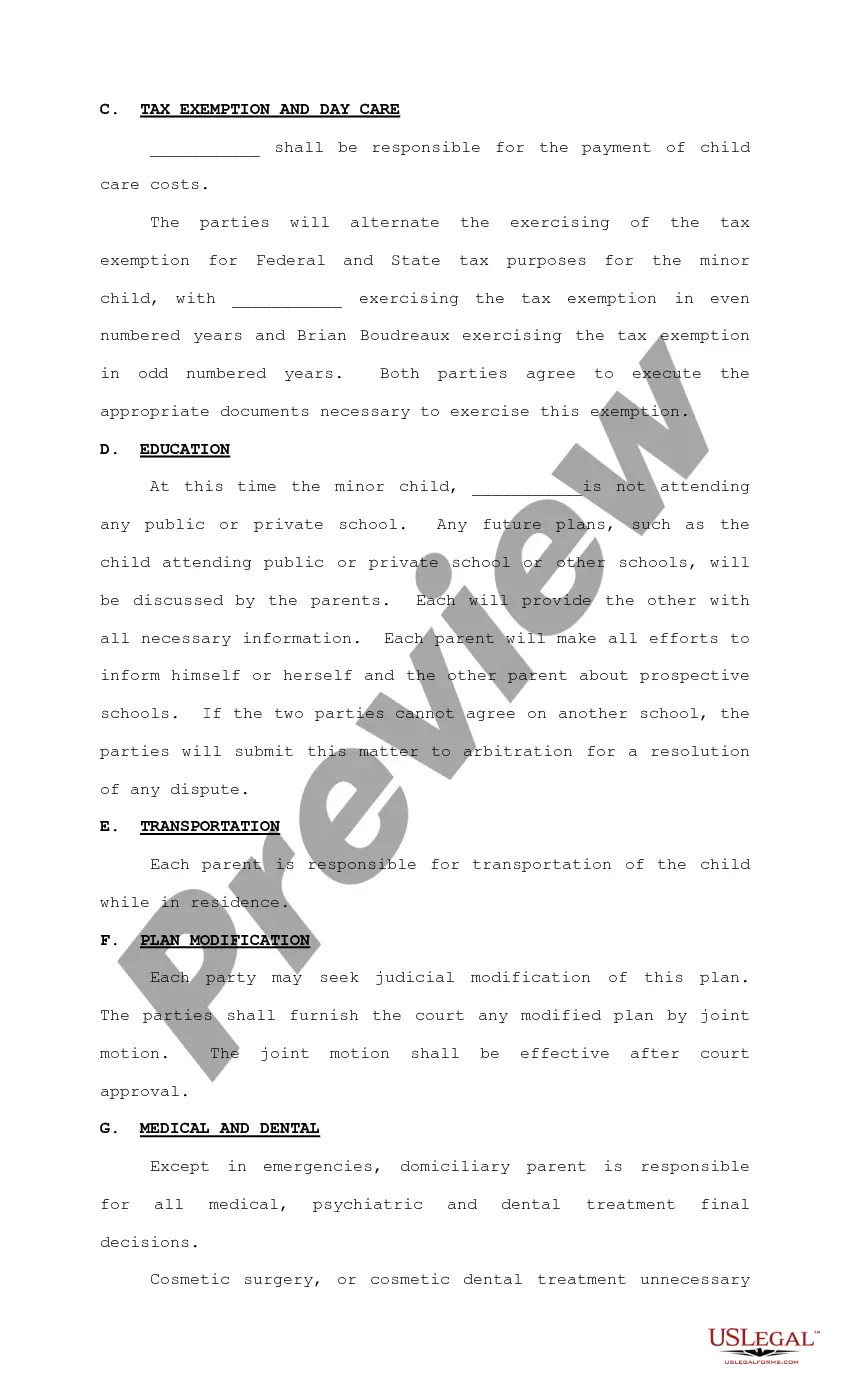
- Guidelines for tax exemptions, childcare costs, and education decision-making.
- Medical treatment responsibilities and communication about the childâs health.
When to use this document
This form is essential in situations where divorced parents want to establish a working custody arrangement that reflects their shared responsibilities and rights concerning their child. It is particularly useful when parents are amicable and prefer to maintain joint decision-making capabilities regarding their child's upbringing without court intervention.
Who can use this document
Joint Custody Agreements are suitable for:
- Divorced parents who want to share custody of their minor child.
- Parents seeking a clear framework for visitation and decision-making.
- Individuals looking to maintain a cooperative parenting relationship post-divorce.
How to prepare this document
To properly complete the Joint Custody Agreement, follow these steps:
- Identify both parents and provide the full name of the minor child.
- Establish the physical custody location and specify the visitation schedule.
- Outline any agreements regarding communication and decision-making for the child.
- Include provisions for changing residences and modifying the custody arrangement if necessary.
- Ensure both parents sign and date the agreement for it to be effective.
Is notarization required?
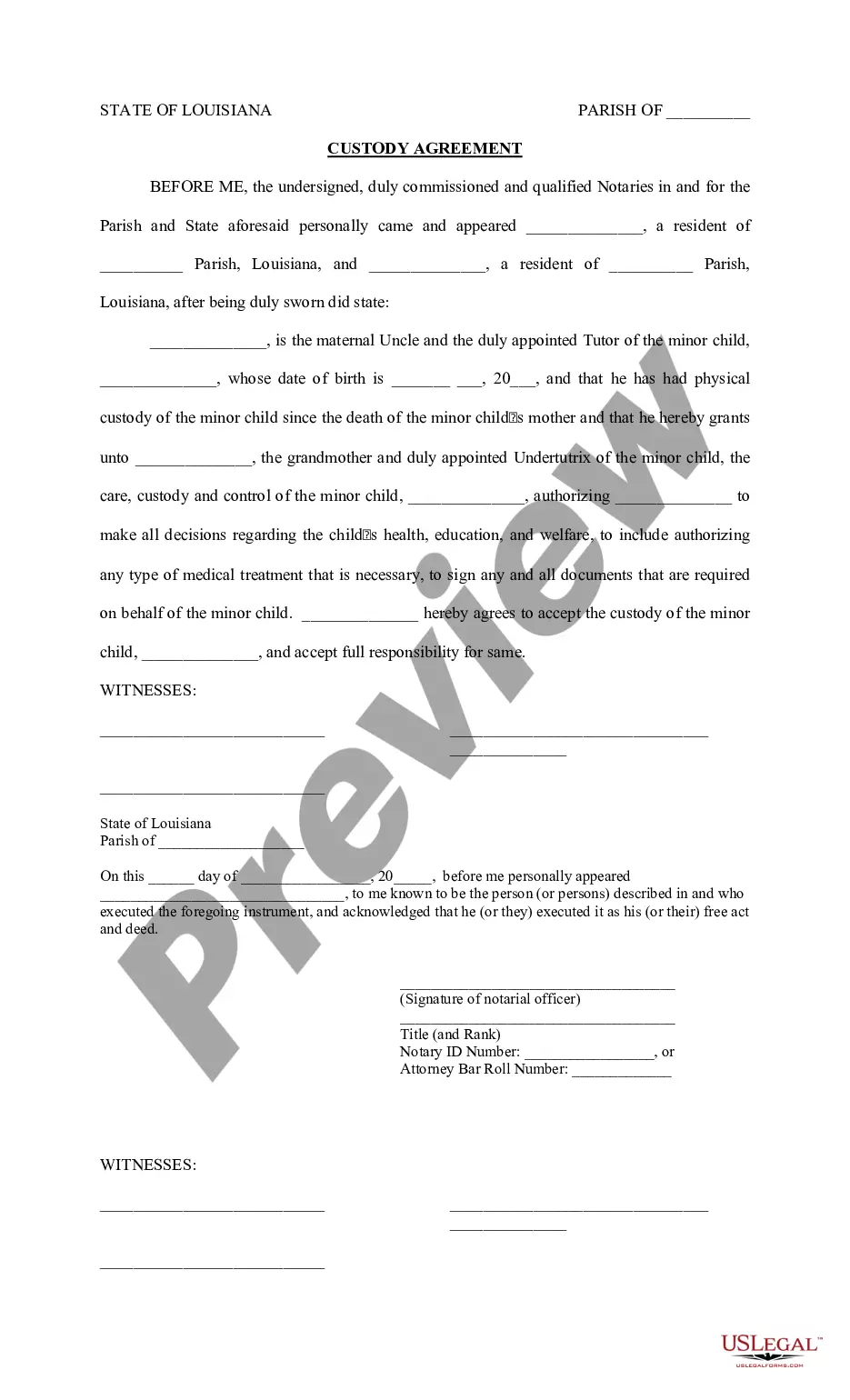
This form does not typically require notarization unless specified by local law. A written and signed agreement is generally sufficient for both parties to adhere to the terms set forth in the custody agreement.
Get your form ready online
Our built-in tools help you complete, sign, share, and store your documents in one place.
Make edits, fill in missing information, and update formatting in US Legal Forms—just like you would in MS Word.
Download a copy, print it, send it by email, or mail it via USPS—whatever works best for your next step.
Sign and collect signatures with our SignNow integration. Send to multiple recipients, set reminders, and more. Go Premium to unlock E-Sign.
If this form requires notarization, complete it online through a secure video call—no need to meet a notary in person or wait for an appointment.
We protect your documents and personal data by following strict security and privacy standards.

Make edits, fill in missing information, and update formatting in US Legal Forms—just like you would in MS Word.

Download a copy, print it, send it by email, or mail it via USPS—whatever works best for your next step.

Sign and collect signatures with our SignNow integration. Send to multiple recipients, set reminders, and more. Go Premium to unlock E-Sign.

If this form requires notarization, complete it online through a secure video call—no need to meet a notary in person or wait for an appointment.

We protect your documents and personal data by following strict security and privacy standards.
Common mistakes to avoid
- Neglecting to outline a detailed visitation schedule, which can lead to misunderstandings.
- Failing to communicate changes in contact information or residence to the other parent.
- Not addressing education and healthcare decisions adequately in the agreement.
- Overlooking the need for joint signatures which makes the agreement enforceable.
Why use this form online
- The form provides a structured approach to co-parenting and minimizes conflicts.
- It offers the convenience of being downloadable and customizable to meet specific family needs.
- Using an online legal form streamlines the process, reducing the time and effort required to create a custody agreement.
Key takeaways
- A Joint Custody Agreement helps establish clear parenting roles post-divorce.
- It includes essential provisions regarding visitation, healthcare, and education.
- The document is legally binding in Louisiana and can be modified as necessary.
- Clear communication and compliance with the agreement are vital for effective co-parenting.
Looking for another form?




Form popularity
FAQ
Because so much modern child bearing is non-marital, and because mothers of such children are much more likely to have a substantial relationship with their children than are such fathers, mothers of children born out of wedlock are more likely to be awarded custody.
In a joint custody arrangement, both parents are awarded legal custody of their child but not equal physical custody. Essentially, both parents have the rights and responsibilities of joint custodians (responsibility to confer, right to visitation, etc.) but they do not equally share the physical custody of the child.
Parents who don't live together have joint custody (also called shared custody) when they share the decision-making responsibilities for, and/or physical control and custody of, their children. Joint custody can exist if the parents are divorced, separated, or no longer cohabiting, or even if they never lived together.
In Louisiana, both parents must support their child's financial, emotional, and medical needs, even if the couple separates or divorces. This means that both parents remain responsible for expenses involved in raising their child. Generally, however, the parents' custody arrangement will impact a child support award.
There are two kinds of custody: legal and physical. Unmarried mothers will almost always receive primary physical custody of a newborn baby. However, unmarried fathers can and do receive joint legal custody of a newborn baby and visitation rights.
50/50 schedules work best when: The parents live fairly close to each other, so exchanges are easier. The parents are able to communicate with each other about the child without fighting. The child is able to handle switching between parents' homes.
Yes, because the law requires a non-custodial parent (that is, a parent who does not live with the child) pay a minimum amount of child support. That minimum amount is $100.00 a month for any number of children. But if your custody arrangement is shared or split custody, then there is no requirement.
Reasons for Not Gaining Primary Physical Custody Also, if one parent has substance abuse or mental health issues that would prevent the parent from providing proper care for the child, shared physical custody might be denied.
Joint custody can exist if the parents are divorced, separated, or no longer cohabiting, or even if they never lived together. Joint custody may be: joint legal custody. joint physical custody (where the children spend a significant portion of time with each parent), or.