Request for Account Verification During Audit
Understanding this form
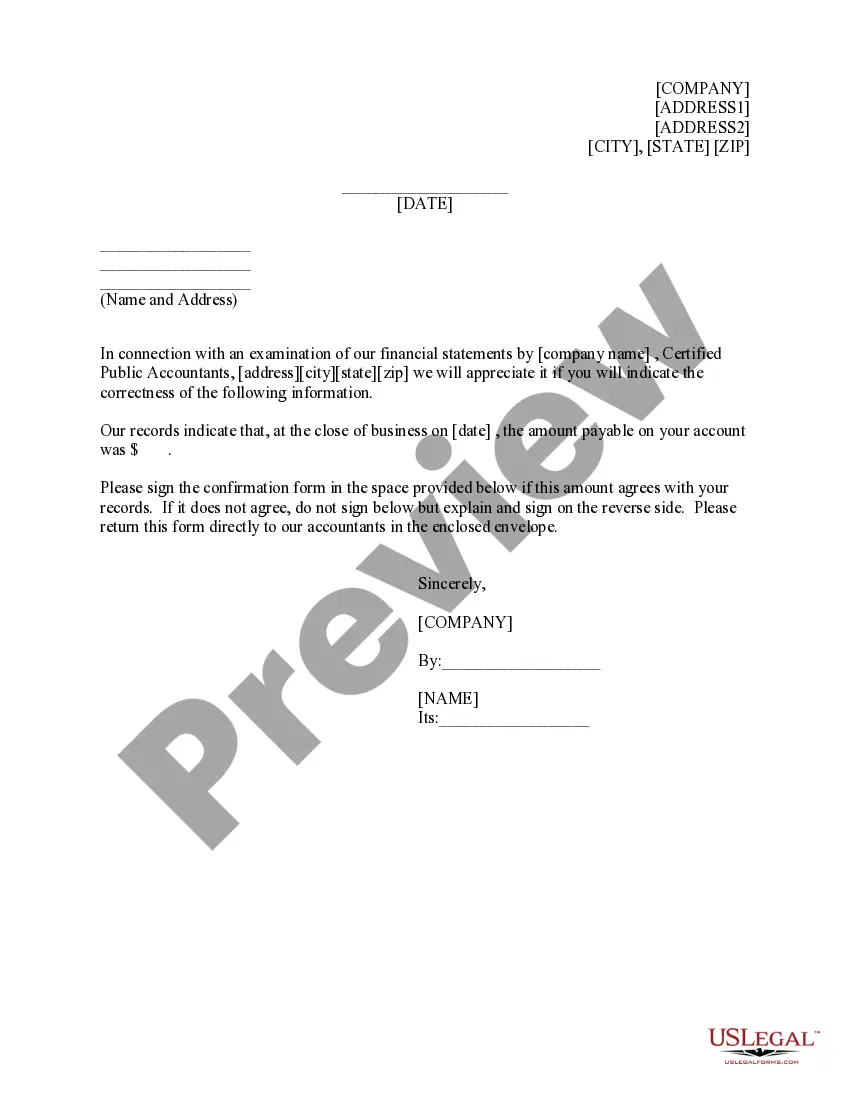
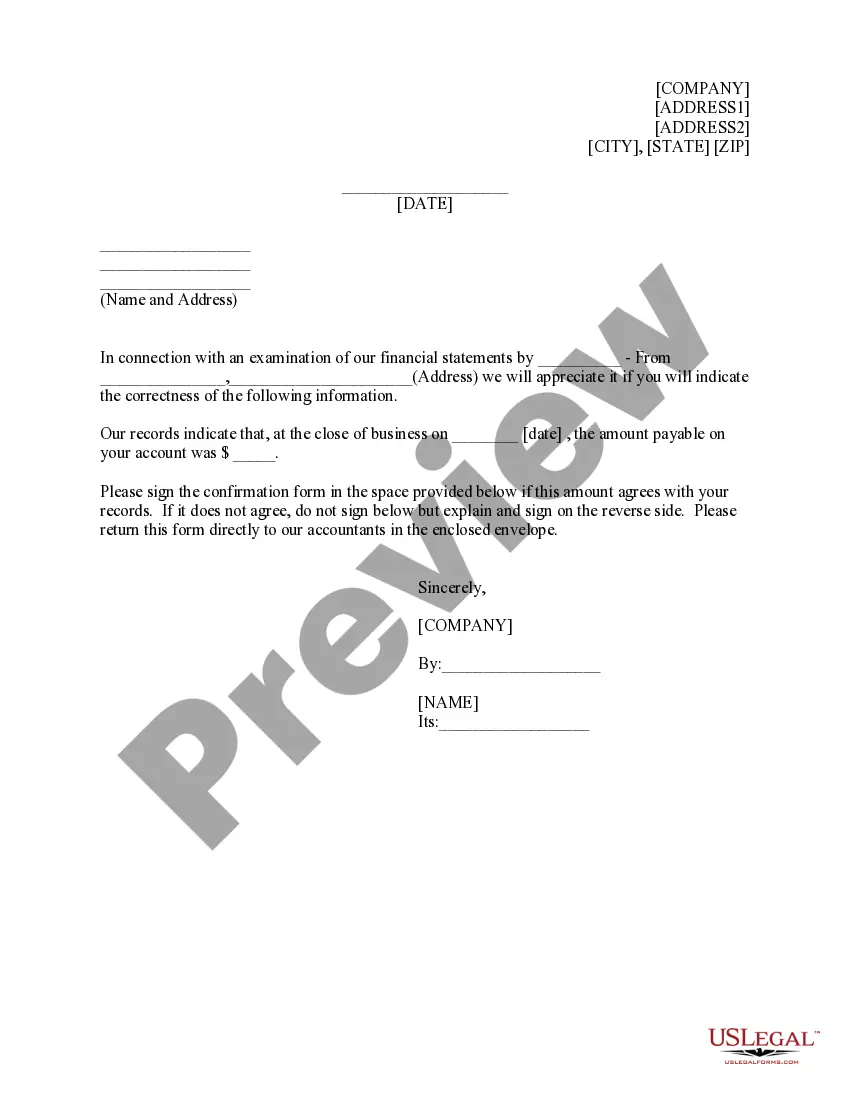
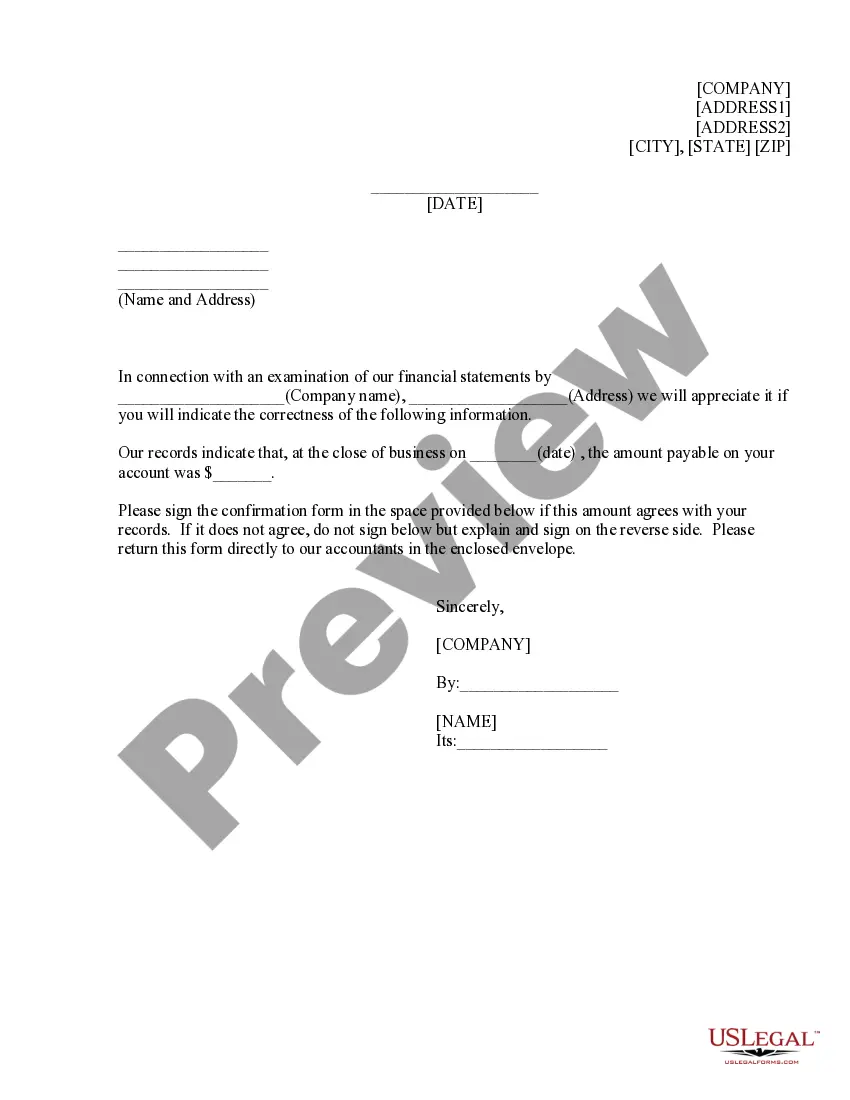
The Request for Account Verification During Audit is a legal form used to confirm the accuracy of financial records for an account during an audit process. This form differentiates itself from similar financial forms by its specific function in verifying outstanding account balances through direct communication with clients or customers. It serves as a vital tool to ensure transparency and accuracy in financial statements.
Key parts of this document
- Address section for the sender and recipient
- Date field to indicate when the form is issued
- Name and address of the accounting firm conducting the audit
- Account balance confirmation section
- Signature lines for agreeing or disputing the account balance
- Instructions for returning the form
When to use this form
This form is necessary when a company is undergoing a financial audit and requires confirmation from its clients regarding the accuracy of their outstanding account balances. During an audit, auditors often seek to confirm these amounts directly with account holders, making this form essential for ensuring the integrity of financial statements.
Intended users of this form
- Businesses undergoing an audit
- Account holders who receive this verification request
- Financial departments responsible for financial reporting and compliance
- Certified Public Accountants conducting the audit
Steps to complete this form
- Fill in your address and the recipient's address in the provided sections.
- Enter the date when the request is made.
- Specify the name and address of the accounting firm handling the audit.
- State the account balance as shown in your records.
- Sign the form if the balance is correct, or provide an explanation on the reverse side if it is not.
- Mail the completed form using the enclosed envelope to the accounting firm.
Does this document require notarization?
This form does not typically require notarization to be legally valid. However, some jurisdictions or document types may still require it. US Legal Forms provides secure online notarization powered by Notarize, available 24/7 for added convenience.
Get your form ready online
Our built-in tools help you complete, sign, share, and store your documents in one place.
Make edits, fill in missing information, and update formatting in US Legal Forms—just like you would in MS Word.
Download a copy, print it, send it by email, or mail it via USPS—whatever works best for your next step.
Sign and collect signatures with our SignNow integration. Send to multiple recipients, set reminders, and more. Go Premium to unlock E-Sign.
If this form requires notarization, complete it online through a secure video call—no need to meet a notary in person or wait for an appointment.
We protect your documents and personal data by following strict security and privacy standards.

Make edits, fill in missing information, and update formatting in US Legal Forms—just like you would in MS Word.

Download a copy, print it, send it by email, or mail it via USPS—whatever works best for your next step.

Sign and collect signatures with our SignNow integration. Send to multiple recipients, set reminders, and more. Go Premium to unlock E-Sign.

If this form requires notarization, complete it online through a secure video call—no need to meet a notary in person or wait for an appointment.

We protect your documents and personal data by following strict security and privacy standards.
Avoid these common issues
- Failing to provide an accurate account balance
- Not signing the form if the balance is correct
- Neglecting to provide an explanation if there is a discrepancy
- Forgetting to return the form to the proper address
Why complete this form online
- Easy access to fill and download the form from anywhere
- Time-saving; no need for in-person visits or mail delays
- Allows for editing and customization before printing
- Secure and reliable storage of the completed forms
Looking for another form?
Form popularity
FAQ
An audit confirmation letter is an inquiry sent by the auditor to a third party to establish the contents of the accounting records of the entity that is being audited.
A bank confirmation letter serves to assure all concerned parties in a business transaction that the bank's customer (the borrower) has, or has available, the necessary financial resources to conclude the transaction.
In many situations, both confirmation of accounts receivable and other substantive tests of details are necessary to reduce audit risk to an acceptably low level for the applicable financial statement assertions.
Auditing companies only need four simple steps to use Confirmation.com to request bank confirmation: Add new clients: enter the information of the client (company being audited) in the website. Add client account: select the type of bank confirmation and the correct respondent (i.e. bank)
It is a certificate required by auditors in forming an opinion on the company's annual financial statements or carrying out another kind of audit in the company.
Audit Basics: Confirmation Letters The auditor selects the items for which they will request confirmation.The auditor designs the confirmation requests and tailors them to specific audit objectives.The auditor communicates the confirmation request to the third party by sending out the audit confirmation letter.
There are two types of confirmations: A positive confirmation requests that the recipient complete a form confirming account balances (for example, how much a customer owes the company). A negative confirmation requests that the recipient respond only if the balance is inaccurate. 2.
Confirmation of accounts receivable is a generally accepted auditing procedure. The auditor should confirm accounts receivable unless (1) they are immaterial, (2) confirmation would be ineffective, or (3) the RMM based on other procedures is judged to be sufficiently low.